Audiobook Review Bites
Posted on May 18, 2017 4 Comments
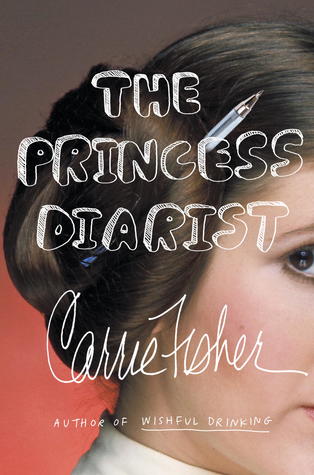 The Princess Diarist by Carrie Fisher
Genre: Autobiograpy
Publisher: Blue Rider Press (October 18, 2016)
Tiara’s Rating: 2.5 of 5 stars
Okay, I know that rating is kind of a middling rating considering that this is Carrie Fisher we’re talking about here, and she was only one of the most charming people in the world. But hear me out. Listening to this audiobook did a wonderful job of allowing listeners to see (hear) Carrie’s personality, and I did appreciate the sections of the book where her daughter (Billie Lourd) read directly from her diaries. Carrie narrates her own story with a humorous, sometimes self deprecating, honesty that Carrie was known for, and I loved the book for that. It was like having an intimate conversation with a friend about their life.
At the same time, I realize in retrospect, that I probably should’ve read/listened to some of her earlier memoirs before taking a plunge with this one. At the same time, though, the blurb for this book is a little misleading, making it seem like this might be an okay book to jump into before reading her other memoirs, which wasn’t the case for me. The blurb says this would be about things happening behind the scenes during the making of Star Wars, and while that is technically true this is more of a confessional about an affair she had during that time more than anything else.
In the end, I enjoyed this, but felt like this was missing something due to the nature of this book. I do have her other memoirs on hand that I’ll listen to soon for comparison.
Narrator: Carrie Fisher, Billie Lourd | Length: 5 hours and 12 mins | Audiobook Publisher: Penguin Audio (November 22, 2016) | Whispersync Ready: No

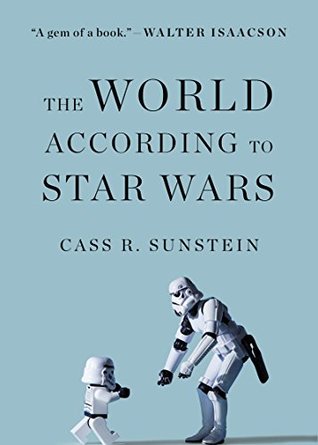 The World According to Star Wars by Cass R. Sunstein
Genre: Nonfiction
Publisher: Dey Street Books (May 31, 2016)
Tiara’s Rating: 2.5 of 5 stars
The World According to Star Wars is one fan’s analysis of the phenomena that is Star Wars and how it has impacted popular culture since the dawn of A New Hope‘s release in 1977. He examines how Star Wars has managed to have a cult following while being massively popular, and what he means by this that is, while there are many people who enjoy Star Wars, there is only a small percentage of the fanbase that are fanatical about it in a way that reminds you of the love that many lovers of cult classic books/games/movies/etc have. You know the ones who consume any and all media related to Star Wars and never tire of discussing the universe.
This book brought about quite a few mixed feelings in me. On one hand, I enjoyed listening to the many ways that the movies have been analyzed and the different theories that fans have about the movies and the universe that range from frivolous to deeply thoughtful. Sunstein even introduced me to some fan theories and ideas that I hadn’t considered before this book. On the other hand, sometimes this book can seem rather pompous and judgmental toward ideas that don’t seem to line up with the author’s own feelings about Star Wars. He seems to downplay the importance of the roles of some characters in favor of getting to the meat of his own opinion which could make parts of this book seem shallow.
In the end, this book reminded me of the type of fervent discussion you’d read on Tumblr. There’s nothing wrong with that. I’ve been part of some very good discussions on the site and often enjoy the thoughtful posts that people make regarding their fandoms on the site. However, they’re not the type of posts that I would necessarily say belong in a book.
Narrator: Kaleo Griffith | Length: 5 hours 44 mins | Audiobook Publisher: HarperAudio (May 31, 2016) | Whispersync Ready: Yes

Waiting on Wednesday: 05/17/17
Posted on May 17, 2017 13 Comments

“Waiting On Wednesday” is a weekly meme hosted by Breaking the Spine that lets us feature upcoming releases that we can’t wait to get our hands on!
Mogsy’s Pick
The Speaker by Traci Chee (November 7, 2017 by G.P. Putnam’s Sons Books for Young Readers)
Traci Chee blew me away last year with her debut The Reader, which became one of my top YA reads of 2016. With luck, the sequel will be just as well received.
 “Having barely escaped the clutches of the Guard, Sefia and Archer are back on the run, slipping into the safety of the forest to tend to their wounds and plan their next move. Haunted by painful memories, Archer struggles to overcome the trauma of his past with the impressors, whose cruelty plagues him whenever he closes his eyes. But when Sefia and Archer happen upon a crew of impressors in the wilderness, Archer finally finds a way to combat his nightmares: by hunting impressors and freeing the boys they hold captive.
With Sefia’s help, Archer travels across the kingdom of Deliene rescuing boys while she continues to investigate the mysterious Book and secrets it contains. But the more battles they fight, the more fights Archer craves, until his thirst for violence threatens to transform him from the gentle boy Sefia knows to a grim warrior with a cruel destiny. As Sefia begins to unravel the threads that connect Archer’s fate to her parents’ betrayal of the Guard so long ago, she and Archer must figure out a way to subvert the Guard’s plans before they are ensnared in a war that will pit kingdom against kingdom, leaving their future and the safety of the entire world hanging in the balance.”
Book Review: The Empire’s Ghost by Isabelle Steiger
Posted on May 16, 2017 24 Comments
I received a review copy from the publisher. This does not affect the contents of my review and all opinions are my own.
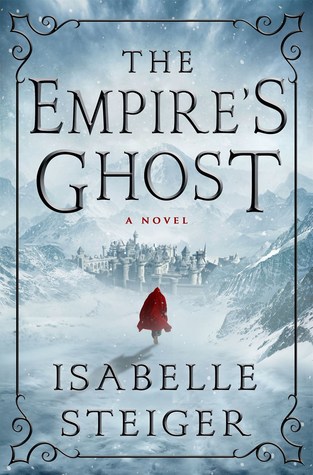 The Empire’s Ghost by Isabelle Steiger
Mogsy’s Rating: 3.5 of 5 stars
Genre: Fantasy
Series: Book 1
Publisher: Thomas Dunne Books (May 16, 2017)
Length: 432 pages
Author Information: Website
The Empire’s Ghost was a book that sounded right up my alley: an epic fantasy that touts a complex, multi-faceted story complete with a rich cast of characters and many points of view, not to mention the potential of a brand new setting filled with unique cultures and warring kingdoms—all set within a world where magic has once been lost but is ready to be found again. And indeed, it was a solid novel that delivered on all its promises, but it also had its share of stumbling blocks common to a lot of debuts—namely, that of trying to do too much.
The story opens on the empire of Elesthene, now just a ghost of its former glory. In the aftermath of the Ninist conquest, almost all traces of magic has been wiped clean from the world, leaving broken kingdoms behind to rebuild. However, it was only a matter of time until an ambitious leader like Imperator Elgar came to power and sought to create a new empire in his name, invading neighboring lands that have little hope of fighting back. In the kingdom of Reglay, young Prince Kelken clashes with his father on his idea for an alliance, refusing to risk his sister’s frail health in a political marriage. Meanwhile in Issamira, the richest and most powerful of the kingdoms, the royal succession is thrown into question following the disappearance of their crown prince. On the other hand, no such uncertainty exists in Esthrades where Lady Margraine has taken her father’s throne as his only heir—and is ruling with a determination to rival Elgar’s.
But far away from the royal courts and noble houses also stands the Dragon’s Head, an unassuming tavern tucked among the dank narrow streets of a rough and rundown Valyanrend neighborhood called Sheath. Its owner is a woman named Morgan Imrick who frequently gives shelter to the mercenaries and rogues in the area, and many of the regulars have become a group of friends. Not too many people in Sheath talk about their pasts, but when one of Morgan’s kitchen boys is arrested by the guard, certain difficult truths come to light. The Dragon’s Head crew inadvertently find themselves caught up in the tangled web of Imperator Elgar’s plans for domination, and are subsequently forced to carry out a special mission for him.
As you can imagine, there are a lot of perspectives involved, on account of the huge cast of characters. Normally, this would not be a problem—multiple POVs come with the epic fantasy territory, after all, and one of the advantages to writing a large cast is that you can quickly use them to create a rich and diverse new world. So, having a lot of characters in this genre is a good thing—but only if you don’t introduce them all at once. The first warning signs came early, when I felt I needed a dramatis personae to keep track of everyone in the prologue alone. It made getting into this novel difficult, mostly because so much of my energy was exerted towards trying to remember names without having to resort to building a spreadsheet.
With a large number of characters also comes a large number of plot threads. I enjoyed the story weaving Isabelle Steiger has done here, and by the end of the book I was really starting to appreciate how everybody and everything was coming together. Still, it took a long time for the big picture to come into focus, and while it was doing so, the narrative struggled to balance out the multiple plot lines. Some characters were parked for long periods of time, occasionally given short filler chapters (almost as if to remind us they still exist) while bigger, more important events were happening elsewhere. As the connections started to form, this also made some of the developments feel too convenient to be actually believable, what with all our key players encountering each other supposedly by chance in this vast empire.
Plus, in covering so many characters, the story may have spread itself too thin. Lady Margraine was probably the most fleshed out of everyone there, followed by perhaps Prince Kelken, while character development was disappointingly limited for the rest. Some, like Marceline, feel almost like a footnote. There were also others I would have liked to know better, like Elgar, especially since he is shaping up to be a formidable antagonist. Still, to the author’s credit, the characters that do stand out are superbly written. Lady Margraine, for all her irritating pomposity and claims to be bored, is a real force to be reckoned with and I am most excited with the future of her storyline. I’m sure the other characters and their individual plot threads will come to fruition in time, but for now, I find myself emotionally invested in only a few.
All told, The Empire’s Ghost is a solid entry into the epic fantasy genre and an admirable debut, though it does take bit of time and patience to realize the author’s vision for all her disparate characters and the great number of perspectives. The novel also has the distinct feel of an introduction, and a long one to be sure—many mysteries remain unsolved, and even with the big game changer close to the end, the final conclusion was underwhelming in the sense that no real resolution presents itself. That said, I will definitely be reading the next book, now that the basic setup for the series is complete. I expect the sequel will be throwing us straight into the action, and I’m looking forward to more revelations and answers.


Book Review: The Boy on the Bridge by M.R. Carey
Posted on May 15, 2017 32 Comments
I received a review copy from the publisher. This does not affect the contents of my review and all opinions are my own.
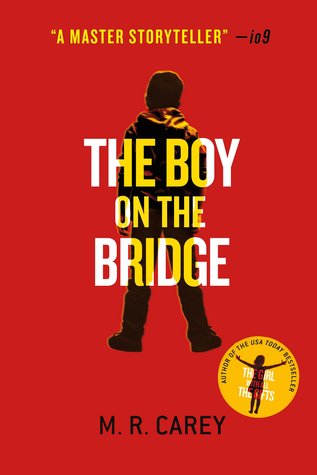 The Boy on the Bridge by M.R. Carey
Mogsy’s Rating: 4.5 of 5 stars
Genre: Horror
Series: Stand Alone/Book 2 of The Girl With All The Gifts
Publisher: Orbit (May 2, 2017)
Length: 392 pages
Author Information: Website | Twitter
Well, the question of whether M.R. Carey could catch lightning in a bottle twice has been answered. Not that I had doubted it much, but while The Girl with All the Gifts was met with much acclaim, I’d made sure to temper my expectations for its follow-up companion novel in the months up to its release. Given the infuriatingly vague publisher description, and with the newness of the whole idea, there were just way too many unknowns.
Thankfully, The Boy on the Bridge came through with flying colors. It might not have been quite as fresh as the original, simply because we know so much more about the world now, but the book still had plenty of surprises in store. Here’s what I can tell you: The Boy on the Bridge is something of a prequel to The Girl with All the Gifts but it can be read as a standalone (though I still highly recommend reading the books in their publication order). The world has been ravaged by the Cordyceps plague, turning much of its population into “Hungries” — effectively just another term for the walking dead. And yet, humanity still has hope that it will find a cure, sending scientists and other brilliant minds into the wild to see if they can bring back any helpful information.
The story follows one such expedition, made up of the scientists and soldiers of the Rosalind Franklin. Affectionately nicknamed Rosie, the armored tank/motor home/mobile laboratory is specifically built for many months of travel through the Hungries-infested wasteland that Britain has become. The key characters include Dr. Samrina Khan, the team epidemiologist, as well as an autistic boy named Stephen Greaves who is ostensibly accompanying her as her assistant. Though Stephen’s presence is unorthodox to say the least, none of the other scientists are about to question Dr. Khan’s insistence that the young man is special or that he can bring invaluable insights to their mission. Six soldiers are also along for the ride, charged with protecting the Rosie and her precious cargo of civilians, scientific equipment, and biological samples.
However, just a few weeks after their departure, Dr. Khan receives some life-changing news. But it’s too late to turn back now; she and her colleagues have a job to do, and the future of everyone—including the next generation—rests upon any useful data they can bring back.
If you were like me and found yourself completely in awe of the world in The Girl with All the Gifts, then you’re in for a treat. This prequel explores many aspects that were only lightly touched upon in the original book, and with the Breakdown still fresh enough on people’s minds, there’s a noticeable difference in the overall attitudes of the characters. While it would be a stretch to call this a happier book, the prevailing mood at the beginning is arguably still one of hope and measured optimism, and that despite the horrors the world has seen, humanity believes it can save itself and make everything right again. After all, this is what the Rosie was meant for, and in a strange way, the armored vehicle almost becomes a character in its own right, symbolizing that conviction.
Gradually though, the hope fades, followed by a stifling sense of desperation. Confine a group of scientists and a group of military personnel into the same claustrophobic small space for months on end, and you’re guaranteed to get some kind of friction. Throw in the pressures of their mission and the threat of Hungries and junkers, it’s a wonder that the team has survived together this long at all. While Dr. Samrina Khan and Stephen Greaves may have gotten the most attention simply based on amount of page-time, the ten other characters on board the Rosie also have their own personal background stories and fleshed-out personalities, leading to a lot of interesting dynamics. This aspect sets The Boy on the Bridge apart, enhancing the story with side-plots dealing with complicated friendships and enmities and details of secret alliances and betrayals.
Keeping in mind that all the events in The Girl with All the Gifts are still in the future, there’s also a lot the world doesn’t know yet, so the fears of the Rosie crew are understandable. If you’ve read the first book, this is where the mystery loses a bit of its grip, but it’s still easy to see how the stresses caused by the strange happenings can start to take their toll, once you put yourself in the characters’ shoes. The real shockers are all left for the end, because even though we already know that the Rosie will bring home no cure to save the world, it’s the whys and the hows of it that will ultimately be the most revealing. In fact, in some ways this makes the ending feel even darker and more unsettling, especially once the realization hits that everything we know about this world had rested on the outcome of this novel.
Whether you’re picking up The Boy on the Bridge as a newcomer or because you’re a fan of The Girl with All the Gifts, this one will be a fascinating tale guaranteed to pull you in. Highly recommended.

More on The BiblioSanctum:
Mogsy’s Review of The Girl with All the Gifts
Wendy’s Review of The Girl with All the Gifts
YA Weekend Audio: Flame in the Mist by Renée Ahdieh
Posted on May 14, 2017 29 Comments

I received a review copy from the publisher. This does not affect the contents of my review and all opinions are my own.
 Flame in the Mist by Renée Ahdieh
Mogsy’s Rating (Overall): 3 of 5 stars
Genre: Fantasy, Young Adult
Series: Book 1 of Flame in the Mist
Publisher: Listening Library (May 16, 2017)
Length: 10 hrs and 19 mins
Author Information: Website | Twitter
Narrator: Nancy Wu
On the surface, Flame in the Mist seemed like it had everything I ever wanted: a delectable premise complete with complex world-building featuring a setting inspired by Feudal Japan, as well as solid protagonists including a crossdressing heroine at its center who has even been compared to Mulan, the warrior woman from Chinese legend. And indeed, I wanted badly to love this book, but on deeper reflection, I feel it may have missed the mark here.
Mariko is the daughter of a samurai, fated to be a bartered off in a political marriage while her twin brother Kenshin, already a renowned warrior in his own right, will be the one to take up their father’s mantle. At seventeen years old, she is arranged to be married to the Minamoto Raiden, the son of the emperor’s favorite consort, and is packed off along with a full convoy to accompany her to the imperial city of Inako. On the way there, however, their wagon train is attacked by a group of bandits known as the Black Clan, and only by sheer luck does Mariko manage to escape the bloody massacre. With everyone thinking she is dead, for the first time in her life Mariko can finally take control of her own destiny. She learns that someone had hired the bandits to ambush and kill her before she can reach the palace, and now she’s determined to find out who.
Donning the disguise of a peasant boy, Mariko sets out to infiltrate the ranks of the Black Clan. But as she soon discovers, a life of banditry isn’t easy. The head of the gang, a wandering ronin named Takeda Ranmaru is a skilled fighter with a sharp mind who keeps a tight watch on his men, and his second-in-command is his best friend named Okami who is extremely loyal to his leader. Gradually though, Mariko gains their trust, allowing her a glimpse into the inner workings of the Black Clan as well as the dark history which led to the friendship between the two young men. Meanwhile, her brother Kenshin is also hot on Mariko’s trail, believing her to be still alive. In his persistence to track her down, he does not realize that his actions are threatening to expose Mariko and bring down everything she has planned.
To be clear, I did not think Flame in the Mist was a bad book. There were, however, a couple things that really bothered me. First was the character of Mariko, who was less than impressive, to say the least, considering how her much vaunted intelligence and cunning did not manifest. It actually pains me to see her character compared to Mulan, because Mulan was capable and did everything for the love of family, while Mariko was ineffective and was driven by her own pride and hubris. I think what nettled me the most was the fact we were constantly beaten over the head with how smart she was, or how she was always able to best her opponents because of her astounding talent for reading people and so on and so forth. This is exactly why authors should always try to show and not tell, not least because you want to avoid looking foolish when what you are telling is nowhere close to what is being shown. When I looked at Mariko, I saw a girl who wore all her emotions on her sleeve, who would turn into a tongue-tied idiot every time she was caught off guard (which happened a lot), and who couldn’t lie convincingly if her life depended on it. She would have been killed many times over if the leaders of the Black Clan had not inexplicably given her a pass for all her missteps and transgressions, and I simply could not be persuaded to believe Mariko could have made it as far as she did by means of her own limited judgement and insight.
Then there was the romance, which had all the poise and finesse of a reluctant skydiver being shoved out of plane. Too many YA reads are ruined for me these days because of poorly timed romantic developments, and you can add Flame in the Mist to that growing list. It felt too forced and rushed, not to mention the fact that Mariko’s choice of love interest also ended up projecting some major developments in the ending. If I could describe the romance here in one word, it would be: Hokey. The whole thing smacked of clichés, and sadly these hate-to-love stories have become so overdone and familiar in YA nowadays that if you’re not going to be adding anything new, I’m afraid I’m just not that interested.
Finally, while I was prepping for this review, I went back to look at my notes for The Wrath and the Dawn and couldn’t help but notice that a lot of my issues with the author’s writing have cropped up again in Flame in the Mist. I can’t really put my finger on it, but something about Renée Ahdieh’s writing still strikes me as trying too hard. For one thing, she seems overly fond of her flowery descriptions and overwrought metaphors, and while I was more forgiving of the purple prose in her debut, I guess I’m just a little less willing to overlook it now.
Despite my criticisms though, this book was a decent enough read, even with all its flaws. It is merely a disappointment because of its capitulation to convention and personally it’s a letdown whenever a protagonist fails to meet her full potential. But if you’re looking for a standard YA read to pass the time, Flame in the Mist is perfectly up to the task. I’ll put the sequel on my “might read” list for now, even though I’m pretty sure I know how things will play out.
Audiobook Comments: The audiobook didn’t work too well for me this time around, though it is through no fault of the narrator, Nancy Wu. She gave a great performance, and I enjoyed her narration here as much as I have enjoyed her narration in the past for other audiobooks like Eon: Dragoneye Reborn. As I believe I’ve mentioned before though, the audio format makes purple prose a lot more obvious, and the distraction kept me from fully enjoying the listen.

YA Weekend: The Sleeping Prince by Melinda Salisbury
Posted on May 13, 2017 2 Comments
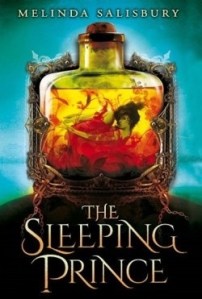 The Sleeping Prince by Melinda Salisbury
Genre: Fantasy, Young Adult
Series: The Sin Eater’s Daughter #2
Publisher: Scholastic Press (May 2016)
Author’s Info: melindasalisbury.com
Wendy’s Rating: 4/5 stars
Just look at that cover. With beautiful artwork like that, you’d expect the story to blow you away. Alas, it’s not that The Sleeping Prince, or its predecessor, The Sin Eater’s Daughter, are bad. But they are missing a certain level of oomph to truly uphold the elements the story presents. Instead, we get a slow burn — one that I have found still serves to keep me intrigued.
In the previous book, we were led through the life of Twylla, a young woman and a people tricked into believing she is something she is not. Here, we find the tricks of belief have taken a a new twist where fairy tales told to one group of people are in fact the altered histories of another. And now, the Sleeping Prince from those stories has awakened and is tearing apart the lands. This should be important to Errin, the heroine of this story, but she has other priorities. Her mother has been afflicted with a horrible illness or curse that causes her to do great violence even to her own child, but Errin’s loyalty is unwavering. Their situation reminds me of Angelfall, a book that I praised for having a young heroine who could focus on her responsibilities to her family without the high levels of selfishness that can sometimes infect YA books.
Since the disappearance of her brother, Lief, whose fate we know from The Sin Eater’s Daughter, Errin has been forced to keep her family afloat. It has hardened her, in that it is difficult for her to trust, which is reflected in the relationship she develops with the enigmatic Silas. You know how I feel about YA romance, so I’m pleased to report that this series has thus far passed the test. Errin’s distrust and her priorities means that romance does not overtake the plot, but instead, works as one of the many elements that make the story’s pieces come together in a very moving way.
Twylla makes an appearance here too. Readers who might have had difficulty with her apparent weakness before will find that she is greatly changed. Perhaps too much so, as I spent a lot of time trying to associate this new woman with the puppet princess from before. However, I finally came to appreciate that we get to see Twylla now through Errin’s eyes, rather than Twylla’s own. Once I got this perspective through my head, Twylla’s apparent personality changes made more sense.
The world building is where Salisbury falls somewhat short. There is little time spent on the details of what this world looks like, so my imagination is stuck with the basics. I’d also have liked a bit more flourish with the descriptions of the fairy tales and histories that play such a vital role. Still, the pieces and the characters in this series have wound together well enough to keep me intrigued.


Book Review: Ararat by Christopher Golden
Posted on May 12, 2017 20 Comments
I received a review copy from the publisher. This does not affect the contents of my review and all opinions are my own.

Mogsy’s Rating: 3.5 of 5 stars
Genre: Horror
Series: Stand Alone
Publisher: St. Martin’s Press (April 18, 2017)
Length: 320 pages
Author Information: Website | Twitter
Adam and Meryam are a newly engaged couple from very different backgrounds, but they have always bonded over their love of adventure. In recent years, they have even achieved moderate fame for their series of videos taken from their travels around the world. Now they are eyeing their next great challenge, an expedition to climb Turkey’s Mount Ararat after an avalanche has reportedly revealed a massive cave up high in the side of the mountain. Wasting no time, Adam and Meryam call upon an old friend to be their mountaineering guide, and together they begin a harrowing race up Ararat in order to be the first ones to discover its secrets.
However, what they end up finding in the cavern goes even beyond their wildest dreams. Within its depths, the couple discover the remains of a large ancient ship, which immediately raises the question: could this be Noah’s Ark, the great vessel that weathered the Biblical flood in the Book of Genesis? To answer this question, a full team is quickly assembled to excavate and study the find, with Meryam at its head as project manager. Included among the scientists and other experts is also a documentary crew, which is how, when a mysterious coffin is unearthed among the ruins, everything that happens next is captured on film.
Throwing caution to the wind, the coffin is pried open, revealing an ugly, desiccated corpse. It is immediately apparent to everyone present that this could not be Noah—for the body is twisted and misshapen, and the top of the creature’s skull is adorned with a pair of horns. The remains of the demon—for it is impossible not to think of it as such—puts everyone on edge, regardless of their religious beliefs. Soon, the tensions start taking their toll, with project members acting erratically and others going missing. Worse, there’s no escape, for a blizzard has swept in, leaving them all trapped on Mount Ararat with an evil force.
This is my first Christopher Golden novel, and I was not disappointed. Of course, it didn’t hurt that I’m a big fan of “snowbound horror”, which I truly believe is starting to become a bonafide subgenre of its own. The most effective stories of this type can make you shiver even while reading in the sweltering heat of summer or indoors beside a warm and cozy fire, if the author can convey the right type of atmosphere. There’s just something I find so creepy and oppressive about the isolation of wintry, sub-zero temperature settings, and happily, Ararat was no exception. Golden was able to capture the forbidding environment of the mountains, making it clear that, whatever may happen to our hapless characters, they are on their own.
I also enjoyed the novel’s premise. I think most people are familiar with the story of Noah’s Ark, but probably far fewer of us would expect it to be the topic of a horror novel. It made for a strange but suspenseful read, with just enough ambiguity to keep one guessing. Contrary to what one might think, the story is also very light on the religious themes, focusing instead on the human drama. Even without the threat of a demonic presence, trap a large group of strangers together in an inaccessible cave on the side of a mountain and inevitably you’ll see the fur start to fly. I was motivated to turn the pages simply because I wanted to see how everything would resolve, and in a way, the tensions and mistrust between the project members reminded me a lot of John Carpenter’s The Thing—all it takes is a bit of doubt and suspicion thrown into the mix, and even the strongest relationships can begin to fall apart.
Yet I do have one major complaint about this book, and that is the story’s pacing. From browsing reviews of Golden’s other works, it seems like a rather common issue among readers, and I couldn’t help but notice a lot of a similar pacing problems in Ararat. Namely, the author blew through things so fast that I barely had a chance to connect to any of the characters, and therefore many of their ultimate fates left me feeling unaffected. Character depth was also pretty much non-existent, with heavy reliance on telling rather than showing, and sometimes the difference between a good book and a great one is the effort and time it takes to develop these little details.
Still, Ararat was a solidly fun read, despite not meeting its full potential. It’s certainly no Dan Simmon’s The Terror, but these kinds of books are also satisfying in their own way, and not least because they are often guaranteed entertainment. If you’re simply in the mood to pass the time with a creepy thriller-horror novel complete with gore, violence, and a staggering body count, this book will get the job done well.

Audiobook Review: Cold Welcome by Elizabeth Moon
Posted on May 11, 2017 26 Comments
I received a review copy from the publisher. This does not affect the contents of my review and all opinions are my own.
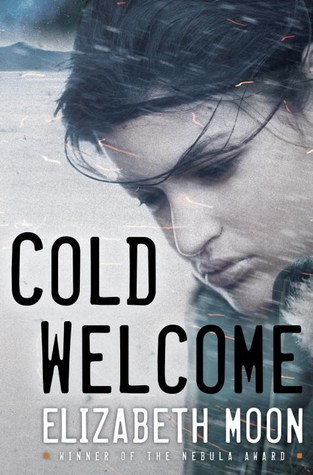 Cold Welcome by Elizabeth Moon
Mogsy’s Rating (Overall): 4 of 5 stars
Genre: Science Fiction
Series: Book 1 of Vatta’s Peace
Publisher: Audible Studios (April 11, 2017)
Length: 14 hrs and 1 min
Author Information: Website
Narrator: Brittany Pressley
Cold Welcome was my first Elizabeth Moon, and what an excellent surprise it was! Knowing little about the book, I dove right in thinking it would be your run-of-the-mill military science fiction, so imagine my delight when I found out it was more of a survival adventure.
The star of the novel is Admiral Kylara Vatta, a space-fleet commander returning to her home world of Slotter Key where a hero’s welcome awaits her. But when sabotage brings her shuttle down over the most inhospitable part of the planet, what greets her instead is death and rough icy seas. With most of the shuttle’s passengers dead from the crash, Ky and all those who are left on the life rafts must do what they can to survive until the rescue crews can reach them.
However, as time goes on, the hope that someone will find them before the winter sets in begins to fade. So far Ky’s leadership has kept them going far beyond what they expected, but soon the survivors will need better shelter and a new source of food. And yet when they make landfall on a rocky beach, they find their conditions are only marginally improved. This continent, apparently abandoned because of failed terraforming efforts, has little in terms of resources, but what the survivors do find is a secret military base that certain shadowy groups have gone to great lengths to conceal. Now there is a new fear that those coming for the survivors might not be their rescuers at all, but in fact the saboteurs looking to finish the job. Meanwhile, there are those in Ky’s circle of loved ones who still believe her to be alive, and thus begins a race against time to unravel the conspiracy before more lives are lost.
Like I said, Cold Welcome was my first novel by Elizabeth Moon, so I had no background knowledge of the story or any of the characters prior to starting. But even though it is actually the first book of a new sequel series to Vatta’s War, I still found it perfectly accessible as a newcomer to the world. The protagonist Ky hails from a powerful family that runs a large interstellar shipping corporation. Seeking a life outside Vatta Enterprises, however, she had enrolled in the Spaceforce Academy, only to be forced to resign and driven back to captaining an old trade ship for the family business. As luck would have it though, the military training she received came in handy during the war that followed, and she was able to bring victory to her side. All this was revealed organically in the brief introduction with no need for any awkward info-dumping, and soon the story was drawing me deeper into the drama and action.
Personally, I love sci-fi survival stories. They pit characters against the harsh environment—not an enemy you can just shoot. Ky’s shuttle ends up crashing into a vast ocean in subzero temperatures, and from there it’s just one disaster after another as Moon throws all kinds of dangers at our characters, from failing equipment to shark attacks. Often, survival stories also go hand in hand with space disasters, so as a bonus you get a good mix of thrills and suspense. But above all, I enjoy reading about the courage and resourcefulness of those who find themselves in a tight spot, and tales of group survival are even more interesting because of the different personalities and social interactions. And in the case of Ky’s group, tensions climb even higher when she starts suspecting a traitor in their midst.
What follows is a tale of adventure, but also a mystery as Ky struggles to keep everyone alive while attempting to root out their saboteur. I thought she was an amazing character who was intelligent, capable, but also wise enough to know she does not have all the answers. One of her first acts, which raised my esteem of her even more, was to learn more about her fellow survivors and take in account all of their skills and knowledge. They say that a good leader knows how to lead, but also knows when to follow, which is a principle Ky subscribes to as she defers to those who know more than her in certain areas. I love the sections where she attempts to keep the group running like well-oiled machine, relying on the routine of duty to distract themselves from their predicament. This is, after all, a military science fiction story as much as it is a tale of survival.
Why do I love Mil Sci-fi? Well, action and political intrigue are very good incentives, but I was also pleased to find that Cold Welcome encompassed all that and a whole lot more. It’s always nice to get something unexpected, even better when the surprise turns out to be so much fun, and after this book I can’t wait to try even more by Elizabeth Moon.
Audiobook Comments: I was lucky enough to receive the audiobook of Cold Welcome for review, and I thoroughly enjoyed it. The narration by Brittany Pressley, if not phenomenal, was well done and completely satisfactory. Overall I have no real issues with the production and I would recommend it!
Waiting on Wednesday 05/10/17
Posted on May 10, 2017 24 Comments
“Waiting On Wednesday” is a weekly meme hosted by Breaking the Spine that lets us feature upcoming releases that we can’t wait to get our hands on!
Mogsy’s Pick
The Genius Plague by David Walton (October 3, 2017 by Pyr Books)
I have enjoyed Walton’s sci-fi in the past, so I was intrigued when I found out about his new novel coming out this fall. I’m sure we’ve all read our fair share of books about nasty diseases, infections and outbreaks, but The Genius Plague sounds like a very different kind of story about a fungal plague pandemic. If you think you know where this will lead, you better think again….
 WHAT DOESN’T KILL YOU MAKES YOU SMARTER
What if the pandemic you thought would kill you made you more intelligent instead? In the Amazon jungle, a disease is spreading. To those who survive, it grants enhanced communication, memory, and pattern recognition. But the miracle may be the sinister survival mechanism of a fungal organism, manipulating the infected into serving it.
Paul Johns, a mycologist, is convinced the fungal host is the next stage of human evolution, while his brother Neil, an analyst at the NSA, is committed to its destruction. Is the human race the master in this symbiotic relationship, or are we becoming the pawns of a subtly dominating and utterly alien intelligence?
Top Ten Tuesday: Ten Things On Our Reading Wishlist
Posted on May 9, 2017 12 Comments

Top Ten Tuesday is an original feature/weekly meme created by The Broke and the Bookish. They created the meme because they love lists. Who doesn’t love lists? They wanted to share these list with fellow book lovers and ask that we share in return to connect with our fellow book lovers. To learn more about participating in the challenge, stop by their page dedicated to it and dive in!
This week’s topic: Top Ten Things On Our Reading Wishlist
As much as I rant and rave about things I would like to see in books and the reading the community, this topic still threw me for a loop. I didn’t want to just throw out anything while working on this. I wanted to be somewhat purposeful with this list, so I tried not to throw out all the things that randomly come up when I’m thinking about book-related things. The things that I chose for this list are things that have come up for me fairly often in the past few days/months/years.
- More Time – This is really my biggest wish for this year. This has been one of my biggest challenges with reading and trying to blog about books. Between family, work, and the million of other things I do most days, sometimes it can be really hard to do all the reading I’d like to do even with audiobooks.
- More Diversity – It gets tiring reading stories where writers can’t seem to write outside a bubble where only certain people, situations, and struggles exist. And trust me, I understand that some writers are afraid of reaching outside their scope and possibly offending people, but that’s why you have open dialogue with people, sensitivity readers, etc. There are resources to help writers if you’re committed to treating characters like people and learning about new situations, cultures, etc. Don’t let your limitations be your leash.
- More Nuanced Discussions – This is something that I’ve really only started paying attention to more as I’ve started blogging about books. I’ve always discussed books with others, but as I’ve ventured further into the realm of books, I find that I like to be more involved in book discussions that try to tackle issues in books, how authors handle them, and how readers respond to these things. I’ve been thinking about this a bit more as I’ve been keeping up with the dialogue for a few controversial speculative books and how readers are shaping this dialogue between themselves and the authors.
- More Speculative YA Books That Focus Less on Romance – If you’ve been reading this blog a while, you know I have a somewhat complicated relationship with YA romance in the speculative realm. It can be a bit problematic, and once the romance is established, the story tends to focus more on that than the original intent of the story. There are a few speculative YA stories I’ve read that don’t go over to the wayside once the love interest is established or who treat the romance as the secondary story that it, and I’ve enjoyed them more for it.
- Better Handling of Mental Illness – This is a bit of a pet peeve of mine in general with media villanizing mental illness. In speculative fiction that doesn’t take place in a modern setting or are set in made up worlds, there are so many villains who are obviously coded as having certain mental illnesses, and stories like these further reinforce the idea that mental illness is scary, evil, and uncontrollable. You don’t have to code a character on a certain mental illness spectrum for them to be evil. We see evidence of people doing terrible things to each other every day without villainizing some of our most vulnerable populations.
- More Fun Stories in a High Fantasy Setting – Don’t get me wrong. I love my dark stories, but there seems to be a trend of darkness in high fantasy for the past few years. Sometimes, I need a break from it, but I still want to wander through a fantasy world. When I find a story that is more lighthearted or comical in nature in a high fantasy setting, it’s like a breath of light after reading through such depressing, suffocating worlds. Maybe there are plenty of fantasy stories out there in this sort of setting, and I just haven’t found them.
- More Rounded Female Characters – There’s nothing wrong with the badass female or the strong female in literature. I welcome them, but the thing I think people forget when writing these characters is that they should still be rounded characters. There’s nothing wrong with giving these characters vulnerabilities. It’s okay if your female character isn’t someone who bring a guy down with a well-placed kick. It’s okay if they’re not much of a fighter at all. It’s okay if they don’t have some great destiny to be the savior of all things. You can write female characters who are transparent, vulnerable, authentic and they can still be interesting and relatable. Interesting people come in a variety of personalities and abilities. Female characters shouldn’t be any different.
- Less Trying to Explain Away Characters’ Very Bad Behavior – Every protagonist of a story can’t be a shining beacon of perfection. That would make for a very boring story and character. In fact, some of the protagonists that we meet have downright loathsome qualities about them, but I’ve noticed that instead of having a character work through a particularly nasty character flaw, authors would rather treat it like a cute quirk or try to make it seem like these attitudes/behaviors aren’t a big deal. In that same vein, I wish authors would stop being apologists for their supporting characters’, especially potential love interests, terrible behavior and attitudes. It’s just plain gross.
- Less Unnecessary Book Snobbery and Clique-ish Behavior – I never realized how terribly snobby the book community could be until I spent more time in the book community. Usually I would see it more in the book circles that pretend to like James Joyce and like to look down on speculative books or comics as not being capable of literary genius, but I’m starting to notice it more in the speculative book reading communities, too. Whether it’s book readers ganging up on people who were surprised by the red wedding in the television series Game of Thrones because the viewers wouldn’t have been so shocked if they’d “read the books” or mob mentality rearing it’s ugly head on Goodreads when a popular book reviewer/blogger decides they’re out for blood just because they want to be and the more impressionable readers follow suit for no other reason than to impress said reviewer, it’s getting to a point where I avoid certain places and topics and stick to a small circle of readers I trust for my sanity.
I kind of ran out of steam after hitting #9. I blame late not blogging and not enough sleep. What are some things serious or not so serious on your reading wishlist?


 The BiblioSanctum