Book Review: Luna: Wolf Moon by Ian McDonald
Posted on May 28, 2017 21 Comments
I received a review copy from the publisher. This does not affect the contents of my review and all opinions are my own.
 Luna: Wolf Moon by Ian McDonald
Mogsy’s Rating: 4 of 5 stars
Genre: Science Fiction
Series: Book 2 of Luna
Publisher: Tor (March 28, 2017)
Length: 382 pages
Author Information: Website | Twitter
Luna: New Moon was a wonder for me, a sensation. And following directly on its heels is this sequel, Wolf Moon, which picks right up from the shocking events at the end of the first book. As such, the usual caveat about potential spoilers for book one applies to this review, in case you haven’t had the chance to start this series yet and would like to approach it with completely fresh eyes (and I would highly recommend doing so as soon as possible!)
In the previous novel, we were introduced to the Dragons: five powerful, dynastic corporate families that control everything on the moon. Among them, the most recent to rise were the Cortas, making their members the newest targets for the four other rivaling families—the Mackenzies, the Vorontsovs, the Suns, and the Asamoahs. Now the Corta matriarch Adriana is dead, her legacy scattered like lunar dust to the winds. Eighteen months have passed, and the surviving Corta children have been divvied up and claimed like so much of the company’s other assets by the four remaining families. Even with the death of a Dragon, nothing has changed; the moon is still a lawless, hostile place to be, ruled by the political machinations of the most cutthroat and corrupt.
Unbeknownst to nearly everyone, however, a major Corta player has survived the destruction, and he is keeping a low profile while attempting to regain his strength in secret. Of Adriana’s children, Lucas has always been one of the most competent and cunning, and he is determined to rebuild Corta Helio to become even more powerful than before. But first, he’ll need to go to Earth—even if the journey itself could very well kill a lunar-born citizen like him, whose physiology has been so altered by the low-gravity environment of the moon. Still, in the war between the Dragons, it’s the children who suffer most. Lucas’ son Lucasinho and niece Luna are still alive, but only because of the protection offered by the Asamoahs, while his nephew Robson has become a hostage of the Mackenzies, and devastation seems to follow him wherever he goes.
It’s no surprise this series has been described as Game of Thrones on the moon. Ian McDonald has achieved something truly impressive here with Luna, creating a tableau filled with multiple subplots and crisscrossing character paths. The ongoing power struggle between the great Dragons is rife with political scheming and intrigue, with alliances constantly being formed and broken, and the character list in the back of the book is a veritable tangle of relationships showing a history of arranged marriages and shady backroom deals between members the five families. This sequel continues the trend that started with New Moon, exploring the twisted fates of those characters who were fortunate (or unfortunate, depending on your point of view) enough to survive past the stunning events of the first book.
Originally, I had thought Luna would be a duology, and I’m glad I found out otherwise before I started this book, or I might have been more frustrated by some of the meandering story threads and lack of real resolutions. Despite being a great read, Wolf Moon felt distinctly like a “middle book”, and it didn’t impact me quite as much as New Moon did. If I were to guess, I would say this was due to the character POVs. First and foremost, with Adriana dead, we lost one of the strongest voices from the first book, and this was a void I felt keenly. Moreover, while Lucas Corta struck me as one of the more important characters, his storyline was often relegated to the background especially in the middle section of the book. Ariel Corta also had a diminished role compared to the part she played in New Moon, while Wagner Corta, whom I admittedly have less of an interest in, got more attention this time around. That said, the two bright points for me were Lucasinho and Robson, and if there’s one silver lining to the loss of so many older Cortas, it’s that the members of the younger generation are finally getting their chance to shine.
As you can see, most of my feelings for this sequel are based off of my personal preferences for the different characters. Certain strengths have remained the same from New Moon though, chief among them the fascinating world-building. I am still in awe of McDonald’s vision of a highly individualistic lunar society, where those who prosper are the strong and the merciless. I also love the multilayered storytelling, and the fascinating lives of the diverse people who bring this rich world to life. Every detail should be savored and carefully digested, simply because everything about Luna is so comprehensive and intricate; blink and you might miss something important.
All told, despite not reaching the height of its predecessor, Wolf Moon is still a solid and worthy follow-up. If you enjoyed the ingenuity and the surprises of the twists and turns in New Moon, then you definitely will not want to miss this sequel.


More on The BiblioSanctum:
Review of Luna: New Moon (Book 1)
Book Review: Three Dark Crowns by Kendare Blake
Posted on May 27, 2017 11 Comments
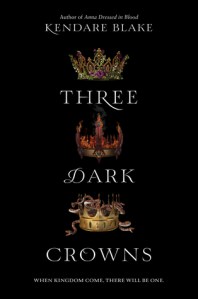 Three Dark Crowns by Kendare Blake
Genre: Dark Fantasy, Young Adult
Series: Three Dark Crowns #1
Publisher: HarperTeen (September 2016)
Author Info: kendareblake.com
Wendy’s Rating: 4 of 5 stars
Triplet queens are born to each previous queen, as the goddess commands. One a poisoner, one a naturalist, one an elementalist. May the strongest take her crown and the others perish by the queen’s hand. It is assumed that this year, Mirabella, with her fierce spirit and great elemental powers, will take the throne. Her sisters are weak. Katharine struggles with her poisoners gift and Arsinoe can hardly make a flower bloom, much less call an animal familiar.
The queens, separated since childhood, are resigned to their fate. That this ritual must dominate their lives is all that they live for, even the two who know they are not meant to win. Yet still, Arsinoe and Khatarine persist, either by their own will or the encouragement or coercion of their companions. The story is told from the view points of the three queens and several of these companions. Through their eyes, Blake shapes the different realms of the kingdom, as well as the nature of their worship and this age old ritual, and, of course, the queens themselves. At first, this constant back and forth is a bit ponderous and perhaps a bit confusing, but it was certainly necessary to the worldbuilding leading up to the night of their sixteenth birthday, when their battle for the crown truly begins. This climax does not happen until the very end so I must caution that this book requires patience, but I was quite pleased with the pay off and promise of more to come.
This book successfully kept me on my toes with its constant twists and turns. It is never quite clear who is working for or against each of the queens, and even those who seem to love them most can’t be trusted. Not that everything is about deep dark plotting and scheming — though there is a healthy does of that.
The entire concept behind the triplet queens is pretty creepy and the way each queen and those around them approaches the concept of having to kill her sister helps fuel the intrigue. And then there is the greater question of who is really running the show? The politics behind the three groups of magics is tangled up within the story but there’s a sense that there’s so much more going on that we don’t get to see. And by the end of the book when things finally come to a head, it’s clear that all of this has only scratched the surface of what the queens and their courts are capable of.
Three dark queens
Are born in a glen,
Sweet little triplets
Will never be friends
Three dark sisters
All fair to be seen,
Two to devour
And one to be Queen


Friday Face-Off: Mice
Posted on May 26, 2017 28 Comments
Welcome to The Friday Face-Off, a weekly meme created by Books by Proxy! Each Friday, we will pit cover against cover while also taking the opportunity to showcase gorgeous artwork and feature some of our favorite book covers. If you want to join the fun, simply choose a book each Friday that fits that week’s predetermined theme, post and compare two or more different covers available for that book, then name your favorite. A list of future weeks’ themes are available at Lynn’s Book Blog.
This week’s theme is:
“Of all the words of mice and men, the saddest are, ‘it might have been’…”
~ a cover featuring MICE
Mogsy’s Pick:
The Green Mile by Stephen King
The moment I saw the topic for this week, my first thought was MR. JINGLES! Who could forget the little brown mouse from both the book and the movie adaptation who made his home on the death row block of Cold Mountain Penitentiary, also known as “The Green Mile”? Originally published in six serialized parts before being republished as a single volume, the novel even has an installment called “The Mouse on the Mile”.
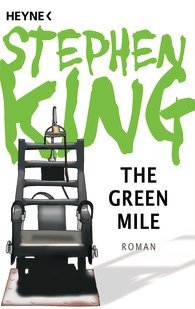
Disappointingly, I found far fewer covers featuring Mr. Jingles than expected, likely because publishers thought an electric chair made for more ominous, compelling imagery. There are too many covers for this book to showcase them all here, but I gathered what interesting ones I could find to compare and contrast.
The Green Mile
From left to right, top to bottom: Penguin Signet (1996) – Orion (2009) – Plume (1996) – Scribner (2000) – Orion (1999) – Pocket Books (1999a) – Pocket Books (1999b)
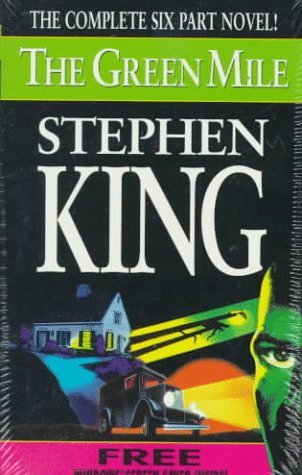
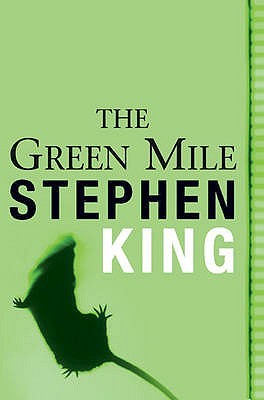
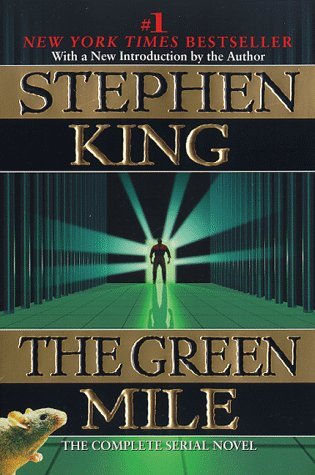
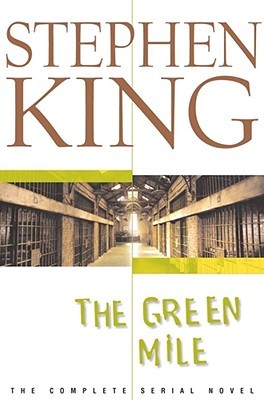
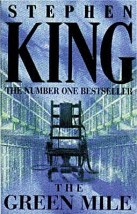

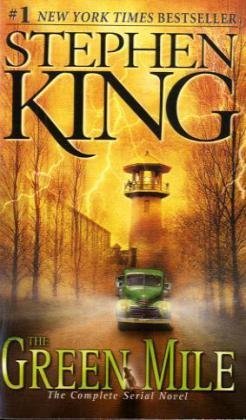
French (1997) – Spanish (2013) – German (2011)


Winner:
No one cover really stands out to be me this week, to be honest. But as you can see, certain themes and layouts are repeatedly used in a many of these designs, and the Spanish edition looks as if it’s making an attempt to take all these elements and mash it into one. Of all the “vanishing point” covers featuring the cell block, this is the most aesthetically pleasing to me, and I love that it incorporates Mr. Jingles (if you look really closely).
What do you think? Which one is your favorite?
Book Review: The House of Binding Thorns by Aliette de Bodard
Posted on May 25, 2017 23 Comments
I received a review copy from the publisher. This does not affect the contents of my review and all opinions are my own.
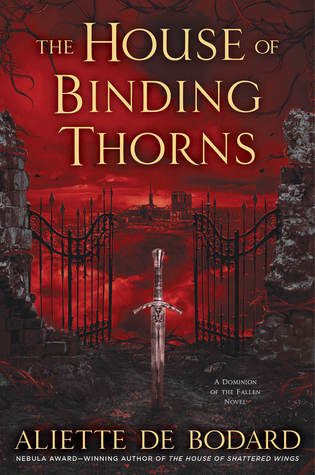 The House of Binding Thorns by Aliette de Bodard
Mogsy’s Rating: 2.5 of 5 stars
Genre: Fantasy
Series: Book 2 of Dominion of the Fallen
Publisher: Ace (April 4, 2017)
Length: 416 pages
Author Information: Website | Twitter
Ultimately, my second foray into the Dominion of the Fallen did not turn out the way I’d hoped, though to be fair, I did have a lot riding on this sequel. It’s true that the first book left me with mixed feelings, but I found the premise intriguing enough that I wanted to see where things would lead, and maybe give this series a another chance to sweep me off my feet. Regrettably, this did not quite happen—despite The House of Binding Thorns being a pretty decent follow-up. At the end of the day though, I simply found myself tripping over a lot of same hurdles as book one.
First of all, in spite of the suggestions that this can be read as a standalone, I would highly recommend against it. Definitely read The House of Shattered Wings first if you can; you will find the background information absolutely indispensable, especially in anchoring you to the setting. In the aftermath of the war between angels, the proud city of Paris is now only a ghost of what it once was, and the Fallen are now divided in several houses all vying for power among the crumbling ruins. Most of the characters here were originally introduced in the first book, including Madeleine, an alchemist suffering from an addiction to angel essence. Upon her return to House Hawthorn, their leader Asmodeus mercilessly purges that addiction from her, with the intention of sending her on a diplomatic mission to the dragon kingdom under the Seine.
Meanwhile, Philippe is also back, now mourning the loss of Isabelle, the fallen angel with whom he had shared a mental link. While searching for a way to resurrect her, he comes across Berith, another Fallen who claims to be Asmodeus’ sister. The exiled angel is currently keeping a low profile, hiding herself and her pregnant human lover Françoise from the chaos and poison of the clashing Houses. However, due to their familial connections, Berith may not be as well hidden from Asmodeus as she has led Françoise to believe, and in the escalating conflict between all the factions involved, it is becoming increasingly clear that no one will be safe from the violence.
Right away, I was struck by how little I remembered from the first book. I had to go back to my review of The House of Shattered Wings to remind myself who was who, and in doing so, I also noticed what I had written about the characters and how I’d struggled to engage with any of them. Unfortunately, this is a problem that persists; there are too many characters and not enough personality between them to justify so many, and the result is just a jumble of names and descriptions that I tried to but could not connect with on a deeper, emotional level. For this simple reason alone, the rest of the book fell apart for me, even though I admit from a technical standpoint, The House of Binding Thorns is probably a better book than its predecessor. However, I need to care about the characters to care about the story; without that foundation, it’s hard to get on board with everything else.
Furthermore, though I was impressed with the allegorical themes of post-colonialism, I’m not sure they came through well enough amidst all the noise. Paradoxically, the plot felt simultaneously too complicated and too superficial, overly simplistic. At times, The House of Binding Thorns felt very much like a “middle book”, in the sense that it is neither here nor there, striving to expand the story and characters beyond the first novel but ultimately falling short of achieving the desired result. Again, all the ingredients seem to be there—the history, mythology, philosophical discourse and world-building, etc.—and in many cases they even surpass their scope from the first book, but for the reasons I touched upon above, the story simply failed to “speak” to me.
In the end, I have a feeling that this might just be another classic case of “Good book, but not for me”. Still, despite not winning me over, I’m glad I gave this series another shot. Chances are I’ll probably sit out for the third book of Dominion of the Fallen, but I’m definitely not closing any doors to trying more of Aliette de Bodard’s other work in the future.

More on The BiblioSanctum:
Review of The House of Shattered Wings (Book 1)
Waiting on Wednesday 05/24/17
Posted on May 24, 2017 16 Comments

“Waiting On Wednesday” is a weekly meme hosted by Breaking the Spine that lets us feature upcoming releases that we can’t wait to get our hands on!
Mogsy’s Pick
Age of Assassins by R.J. Barker (August 1, 2017 by Orbit)
Who doesn’t love a story about assassins – or better yet, a story about assassins versus assassins! Not to mention, my pick for this week celebrates this month’s Tough Traveling theme oh so well…
The synopsis also makes this one sound like a lot of fun, in the style of a traditional epic fantasy. Plus, I’m always interested in trying debuts.
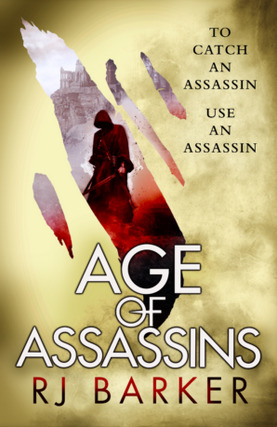 “TO CATCH AN ASSASSIN, USE AN ASSASSIN…
Girton Club-foot, apprentice to the land’s best assassin, still has much to learn about the art of taking lives. But their latest mission tasks him and his master with a far more difficult challenge: to save a life. Someone, or many someones, is trying to kill the heir to the throne, and it is up to Girton and his master to uncover the traitor and prevent the prince’s murder.
In a kingdom on the brink of civil war and a castle thick with lies Girton finds friends he never expected, responsibilities he never wanted, and a conspiracy that could destroy an entire land.
Set in a world ravaged by magic and the ambition of noblemen, this debut epic fantasy features a cast of assassins, knights and fools which will delight any fan of Brent Weeks, David Dalglish or Robin Hobb.”
Book Review: Carry On by Rainbow Rowell
Posted on May 23, 2017 9 Comments
 Carry On by Rainbow Rowell
Genre: Young Adult, Fantasy
Publisher: St. Martin’s Griffin (October 2015)
Author’s Info: rainbowrowell.com
Wendy’s Rating: 5 of 5 stars
Reading and/or writing fanfic is a fangirl/boy rite of passage and it’s the tie that binds Rainbow Rowell’s Fangirl together. As the main character of that story made her way through the trials and tribulations of family life, relationships, and her first year at college, it’s Cath’s fanfic that helps her through it all, with each chapter starting with an excerpt from “Carry On.” Those little excerpts offered glimpses in a fascinating Harry Potter-esque world that is now the main focus of this new book.
I enjoyed the Harry Potter series, but it’s not my fandom of preference. There are many things about the series that trouble me, more so because Rowling never really addresses them. Carry On is not only an excellent story in its own right, it serves as a very creatively powerful analysis of those problematic areas in Harry Potter. At the top of the list is the real villain of the story, Dumbledore. His character is known simply as The Mage in Carry On and he is the orchestrator of all things.
Carry On stars Simon Snow as the proverbial Chosen One who, unlike Harry, actually is a powerful mage himself. Also unlike Harry, he is not the centre of this story. Well, he *is*, but the other characters get their fair share of attention with chapters told from many different points of view that remind us of how important each and every character is — even the minor ones — within Simon’s story and as part of the mysteries and the great mage family war that threatens. Rowell explores their feelings and their opinions on Simon and the situation through dialogue and descriptions that are always on fire.
Carry On takes place during Simon’s last year at school, yet Rowell so easily paints a moving image of Simon’s life and all the elements surrounding it — past, present, and future — all in a single book. Of course I’d like to read more about his battle with the Chimera, or their kidnapping and other encounters with the Insidious Humdrum – the great evil that haunts them wearing Simon’s face. Yet when Rowell tosses out these encounters through conversations and recollections, I don’t feel at a loss for not having read them fully. Rowell has managed to wrap so much in a single book through crisp and pithy writing that is often funny, endearing, and powerful.
What would fanfic be without some hot and heavy romance? Harry’s relationships were always so meh to me, but once again, Rowell brings the fire in true fanfic style by forcing Simon to bunk with his mortal enemy, Baz, a vampire who, on the first day back at Watford School of Magicks, does the unthinkable: Baz does not show up, leaving Simon to fear the moment when Baz will leap out from a corner and attack. But is there more to these feelings? OF COURSE THERE IS and that’s really what we’re here for right? Because just look at that gorgeous cover. unf.

Book Review: The Berlin Project by Gregory Benford
Posted on May 22, 2017 21 Comments
I received a review copy from the publisher. This does not affect the contents of my review and all opinions are my own.
 The Berlin Project by Gregory Benford
Mogsy’s Rating: 3 of 5 stars
Genre: Science Fiction, Alternate History
Series: Stand Alone
Publisher: Saga Press (May 9, 2017)
Length: 480 pages
Author Information: Website
It’s hard to be a fan of alternate history fiction these days without running across your fair share of alternate World War II stories, but from the start, it was clear to me that The Berlin Project was a different breed. With a heavy focus on the historical details and science behind the building of the atom bomb, I confess this would not have been my usual kind of read at all. That said, I’m glad I read it, and as you will soon see, certain revelations eventually came to light that made me see this book—and appreciate it—in a whole new light.
Like many of its genre, The Berlin Project offers a fascinating glimpse into a crucial point in our history and asks the question, “What if?” Because of its scope and significant impact, World War II is especially rife with these scenarios, but rather than approach the theme from a conventional standpoint, author Gregory Benford instead asks, “What if the United States developed the atomic bomb a year earlier, in 1944?” As the story unfolds, it becomes clear that this is more than just a tagline for the book; a viable bomb at that time could have potentially set the US on a different path, and changed history in a lot of ways.
Through the eyes of the chemist Karl P. Cohen, a junior partner of the Manhattan Project, The Berlin Project tells the story of what might have happened had the Allies developed the first nuclear weapons in time to stop Hitler from killing millions of people. The book begins in 1938, following Karl as he returns from Paris, bringing home his new wife to meet his family. War is brewing in Europe, and the next few years sees Karl becoming more involved with the scientific community at Columbia University where he works. By the time the Manhattan Project is born, a number of famous scientists—many of whom were refugees from Europe—have already graced these pages including Albert Einstein, Enrico Fermi, Harold Urey, Leo Szilard, J. Robert Oppenheimer, Edward Teller and more. With Karl’s discovery of an alternate solution for creating U-235, the uranium isotope needed to sustain a fission chain reaction, the atomic bomb known as “Little Boy” became ready by the summer of 1944, and its intended target became Nazi Germany instead of Japan.
The publisher description markets this as a thriller, but in reality, all the gripping elements may be lost among the details. Rather than fast-paced excitement, I found instead an exhaustive narrative on the history of the early years of WWII, followed by an even more intimidating and lengthy account on the development of nuclear fission. The book’s first half covered events leading up to the formation of the Manhattan Project and the development of the bomb, a section which read more like a history textbook rather than science fiction novel (and the regular inclusion of historical photos and scientific diagrams did little to dispel this feeling, fascinating as they were). I didn’t dislike this part per se, but neither was I getting any sense that The Berlin Project was supposed to be a suspenseful thriller. Clearly a lot of research was put into this novel, with compelling pieces of trivia thrown in here and there, but I have a feeling readers with little interest in the historical or scientific subjects will have a rough time of getting into this story.
Fortunately, pacing improves in the second half. Let’s just say things don’t go nearly as smoothly as the Allies had hoped, following the bomb’s deployment in Berlin. Karl leaves the safety of the laboratory for fieldwork as a spy in Europe, and we finally come face-to-face with the horrors of war, which had been a background concern up to this point, happening far away from our protagonist’s life in New York. With this development, we are truly in unknown territory, as the war escalates and events spiral out of control. And yet, even with this change in tone, I still felt that there was a muted quality to the espionage and suspenseful elements, holding the story back from being a true thriller.
I did, however, mention in my intro about experiencing a turning point while in the middle of reading this book, and that was when I discovered the author’s connection to the protagonist and many of the other characters. As Benford writes in his Afterword, nearly all the people depicted in The Berlin Project existed. He met and knew quite a few of them. Karl Cohen was his own father-in-law! Suddenly, many of book’s idiosyncrasies which I’d noticed began to make a lot more sense, from its distinct tone of authenticity to certain quirks and habits attributed to the characters which sometimes struck me as too specific or out-of-the-blue to be made up. Every document featured in the novel is also authentic, including letters and other Cohen family correspondence. I found all this information to be extremely cool, and admittedly these revelations do have a way of lending a certain je ne sais quoi to this particular alt-history.
To be sure, The Berlin Project is different kind of book among its genre, and I think how you do with it will largely depend on your interest in its topics as well as a willingness to see the plot developments through to the end. All told, your mileage on enjoyment may vary, but it’s nevertheless a fascinating novel that I’m glad I got a chance to read.

YA Weekend: A Crown of Wishes by Roshani Chokshi
Posted on May 21, 2017 11 Comments

I received a review copy from the publisher. This does not affect the contents of my review and all opinions are my own.
 A Crown of Wishes by Roshani Chokshi
Mogsy’s Rating (Overall): 4 of 5 stars
Genre: Fantasy, Young Adult
Series: Stand Alone; Book 2 of The Star-Touched Queen
Publisher: Macmillan Audio (March 28, 2017)
Length: 14 hrs and 24 mins
Author Information: Website | Twitter
I picked up A Crown of Wishes after the fantastic read that was The Star-Touched Queen, and I’m glad I did. This is despite the book being a companion novel rather than a true sequel, because while the two may feature different stories and characters, they are the same in all the ways that count – in their creative vision and excellence.
Once upon a time in a kingdom called Ujijain there lived a prince named Vikram. Known as the Fox Prince, he was offered a chance to compete in the mysterious Tournament of Wishes held in the otherworldly realm of Alaka, city of Treasures and Wealth. It is said that winner will be granted any wish they desire—and being the adopted son of the emperor and merely regarded as a puppet prince, Vikram thinks he knows what it is he will ask for should he prevail. But first, he’s going to have to find a partner.
Enter Gauri, a warrior princess who attempted a coup against her tyrannical brother and failed. Now she is in exile and a prisoner of war, captured by her kingdom’s enemies and facing death. In Vikram’s eyes, however, she is the ideal teammate—fierce, strong, and powerful, she’s the perfect complement to his wit and cunning. Gauri, on the other hand, is less than impressed with Vikram’s naiveté and lack of fighting ability, and yet, if it’s a choice between execution and going off on a wild goose chase with some strange fool prince, she knows which option she’s going to pick. So together they team up and head off to Alaka, with every confidence that they will emerge victorious. But upon their arrival in the otherworld, Gauri realizes that the two of them may have gotten in way over their heads. Things work differently here than in the real world, with dangers taking new forms. Curses and other magical or supernatural threats abound, twisting their aspirations into desperation and destruction.
While I was reading, I just couldn’t help but think this is the book I wish Caraval had been. Thematically they are very similar, each novel featuring an otherworldly, magical competition at its center. The difference is, The Crown of Wishes does it so much better. In contrast to the frenetic, almost random structure of Caraval, this one instead features an organized, well thought out plotline which gradually expands beyond the two protagonists’ personal stories. In some ways, it reminded me of a series of integrated folk tales, focusing on Gauri and Vikram as they discover more about themselves and each other with the completion of each challenge. Not surprisingly, the end result is a book that feels significantly more impactful and emotionally complex.
Ultimately I gave The Crown of Wishes the same rating as I did The Star-Touched Queen, because I enjoyed both books equally. But just as the original does some things better, there are likewise areas where the follow-up tops its predecessor. Those who thought the pacing was too slow in the first book will probably find this to be less of a problem in The Crown of Wishes, for example. It is a much more action-oriented and plot-driven book, with sustained high levels of excitement as the tournament progresses through its various stages.
I also preferred the relationship dynamics between the main characters here, over the one between Maya and Amar in The Star-Touched Queen. In a word, Vikram and Gauri were adorable. While a love story like theirs is in no way unique in YA, I feel Roshani Chokshi deserves a tremendous amount of credit for her gift in dialogue writing. On not once but several occasions, I found myself smiling at the cleverness and sharp humor in the characters’ back-and-forth banter, and that is a rare thing for me indeed. There’s a sense of real chemistry between them, making this a more satisfying YA romance than most.
The world-building was also wonderful. If you enjoyed this aspect from The Star-Touched Queen, then you’ll be even more thrilled with the level of detail here, as it is another step up from the author’s debut efforts. I loved Alaka, and the aura of myth and mystery that surrounded it. In fact, at times it felt like an information overload, simply because the strange and magical descriptions would keep coming and coming. The deluge got to be a little too much at times, but overall I appreciated the introduction to this rich and beautiful setting.
When all is said and done, A Crown of Wishes delivered everything I hoped for in a follow-up to one of the top YA novels I read last year, and I highly recommend both books in The Star-Touched Queen sequence. I’ll definitely be keeping an eye out for the author’s future projects.
Audiobook Comments: Narrator Priya Ayyar did a fantastic job on the audiobook production of The Star-Touched Queen, which was I was so happy to see her reprise the role for the sequel. Her strong performance was one of the reasons why I decided to continue with this format for A Crown of Wishes, and I was not disappointed. Her reading was even better this time around, and once again she did great with the inflections and accents. I would not hesitate to recommend this series in audio.
More on The BiblioSanctum:
Review of The Star-Touched Queen (Book 1)
Mogsy’s Bookshelf Roundup: Stacking the Shelves & Recent Reads
Posted on May 20, 2017 45 Comments
Bookshelf Roundup is a feature I do every other weekend which fills the role of several blog memes, like Stacking the Shelves where I talk about the new books I’ve added to my library or received for review, as well as It’s Monday! What Are You Reading? where I round up what I’ve read since the last update and what I’m planning to read soon. Mostly it also serves as a recap post, so sometimes I’ll throw in stuff like reading challenge progress reports, book lists, and other random bookish thoughts or announcements.

Received for Review
As we head into summer, the activity in my mailbox has been crazy with ARCs and finished copies coming in hot and fast. I’m actually a little behind with cataloging all the newly arrived titles, but I’m definitely working on it. Thank you to the publishers for the following review copies received. For more details and full descriptions of the books, be sure to click the links to their Goodreads pages!

Inspired by the future imagined at the 1939 World’s Fair, Slaves of the Switchboard of Doom by Bradley W. Schenck was pitched to me as Fritz Lang’s Metropolis meets Futurama, which is just too damn cool. I’m planning a review for June and there’s a fun giveaway in the works too, so keep your eyes out for that! With thanks to Tor Books for the ARC.
Up next, a couple of ARCs from the amazing folks at Ace/Roc/DAW: The Legion of Flame by Anthony Ryan is the sequel to last year’s The Waking Fire and I’m really excited to continue the series. The Cityborn by Edward Willett is also a new one to me, though I think I’ve read some of the author’s other books published under another name. From the description, it sounds like a YA/Adult crossover sci-fi standalone, so that should be interesting! My thanks to the publisher for putting it on my radar.
Vanguard by Jack Campbell – I’ve been meaning to read Campbell’s military science fiction for a long time, and with his return to the Lost Fleet world with the start of a brand new series, I saw this as the perfect opportunity. With thanks to Ace Books for the finished copy.
Thanks also to Simon and Schuster for sending me this surprise finished copy of The Only Child by Andrew Pyper – I definitely want to read it! The story sounds very different from the only other book I’ve read by Pyper, but I’m interested in seeing how things will play out.
This finished copy of The Berlin Project by Gregory Benford was another surprise, courtesy of Saga Press as well as the kind folks at Wunderkind PR. I have a review of this World War II alternate history scheduled for next week, so stay tuned!

Earlier in the week I also received an unsolicited ARC of Cormorant Run by Lilith Saintcrow. I’ve not had the best luck with the author’s books in the past, but I have a pretty good feeling about this one, a post-apocalyptic sci-fi novel featuring trans-dimensional rifts and aliens. With thanks to Orbit Books.
As well, you all know how much I adore Western fantasy/paranormal novels especially with a horror bent – enter In the Valley of the Sun by Andy Davidson, described as a chilling tale of terror and suspense set deep in the Texas desert and recommended for fans of Joe Hill, Cormac McCarthy, and classic Anne Rice. My thanks to Skyhorse Publishing for the ARC!
Last week I also received this finished copy of Long Dark Dusk by J.P. Smythe, follow-up to the Arthur C. Clarke Award nominated Way Down Dark. I have the first book still on my to-read list, which I guess is getting bumped up now that the sequel is out. Maybe I’ll start it later in the week end even finish, since it’s such a short book. With thanks to Quercus.
Speaking of sequels, an ARC of Zero G: Green Space by William Shatner and Jeff Rovin also landed unexpectedly on my doorstep last week. William Shatner is well-loved for his role as Captain Kirk in this Star Trek-obsessed household, but I’ve not actually read any of his books. I confess I’m kinda curious about this series, and wouldn’t mind giving it a try if I have time. With thanks to Simon & Schuster.
I would also like to thank Pyr Books for this finished copy of Nebula Awards Showcase 2017 edited by Julie E. Czerneda – one day soon, I hope to check out one of these fantastic anthologies!
And finally, this is an interesting one: The Good Earth by Pearl S. Buck and illustrated/adapted by Nick Bertozzi is a graphic novel of the 1931 Pulitzer Prize-winning classic about a Chinese farmer and his family in rural China. I’ve never read the original, so maybe I should do that first before checking out this adaptation, but I’m definitely intrigued. With thanks again to Simon & Schuster.

And hey, maybe luck is with me again. Granted, these days I’m not entering a lot of giveaways because of all the books I have on my to-read pile already, but last month I couldn’t resist entering this one for The Space Between the Stars by Anne Corlett and I actually won an ARC. It’s so shiny and I can’t wait to check it out.
The next two books I actually received a while ago, with thanks to Simon and Schuster for Young Readers. Unfortunately, I’m not a big reader of Middle Grade books and chances are I probably won’t get a chance to get to them. Before I donate to the Children’s Library though, I thought I would see if I can find them new homes with any of my fellow bloggers. So if you’re in the US, send me an email if you might be interested in reviewing Amina’s Voice by Hena Khan or The Gauntlet by Karuna Riazi and I can send them your way!


Now quick, to the digital pile! I’ve been good, in the last few weeks the only NetGalley request I made was for The Beautiful Ones by Silvia Moreno-Garcia. My thanks to Thomas Dunne Books for approving me.
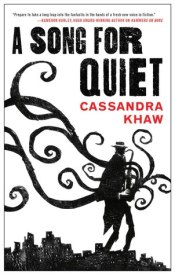
Plus, more goodies courtesy of Tor.com, this time e-galleys for Null States by Malka Older and A Song for Quiet by Cassandra Khaw. Both are sequels to books I have not read yet, I am so behind!
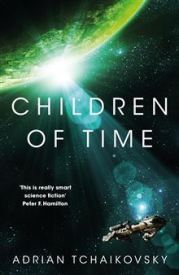
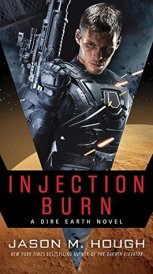
I also received several more audiobooks for review this week. I’m really excited about Children of Time by Adrian Tchaikovsky because for so long I’ve wanted to read something by the author, and I’ve heard some excellent things about this book. Next is Injection Burn by Jason M. Hough, the start of his new duology set in the world of his Dire Earth Cycle. And finally, I was so happy when I found out that the Laura Elliston series was getting audiobooks, I couldn’t help but request book two Blood Oath by Melissa Lenhard. I have the eARC as well, but something tells me I might enjoy it even more in audio. With thanks to Audible Studios, Penguin Random House Audio, and Hachette Audio.
Reviews
Here is where I do a roundup of my reviews posted in the last two weeks:
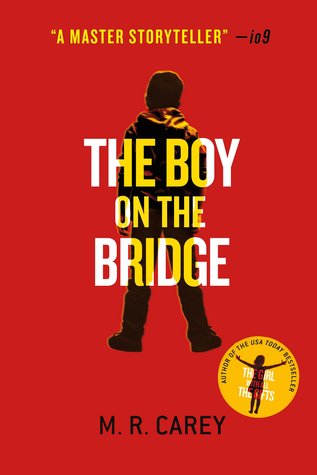
The Boy on the Bridge by M.R. Carey (4.5 of 5 stars)
The Last Iota by Robert Kroese (4.5 of 5 stars)
Cold Welcome by Elizabeth Moon (4 of 5 stars)
Ararat by Christopher Golden (3.5 of 5 stars)
The Empire’s Ghost by Isabelle Steiger (3.5 of 5 stars)
Hunted by Meagan Spooner (3.5 of 5 stars)
Flame in the Mist by Renee Ahdieh (3 of 5 stars)
Roundup Highlights:
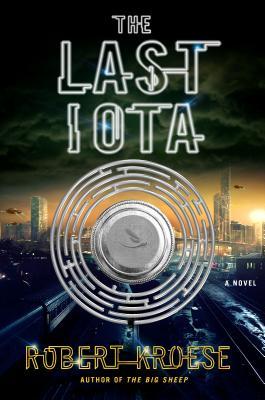
What I’ve Read Since the Last Update
Here’s a list of books I finished recently. Reviews for most of these will be up over the next few of weeks!
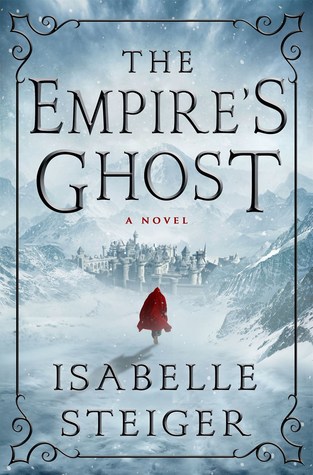
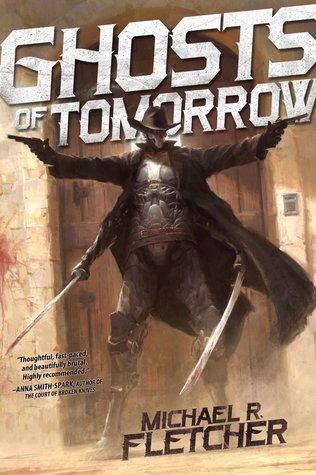


Have you heard of or read any of the books featured this week? What caught your eye? Any new discoveries? I hope you found something interesting for a future read! Let me know what you plan on checking out. Until next time, see you next Roundup!
Friday Face-Off: Plane
Posted on May 19, 2017 24 Comments
Welcome to The Friday Face-Off, a weekly meme created by Books by Proxy! Each Friday, we will pit cover against cover while also taking the opportunity to showcase gorgeous artwork and feature some of our favorite book covers. If you want to join the fun, simply choose a book each Friday that fits that week’s predetermined theme, post and compare two or more different covers available for that book, then name your favorite. A list of future weeks’ themes are available at Lynn’s Book Blog.
This week’s theme is:
“When everything seem to be going against you, remember that the airplane takes off against the wind, not with it ….”
~ a cover featuring a PLANE
Mogsy’s Pick:
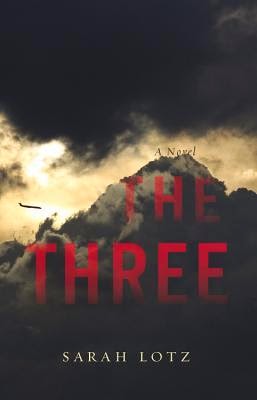
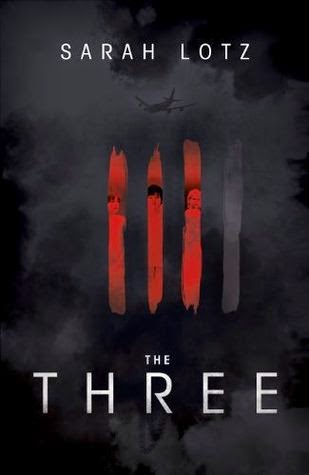
The Three by Sarah Lotz
There were several books I could have gone with this week, and almost every one of them featured a plane crash on the cover, making this a very stressful topic for me as an aviophobe. But even if I hadn’t already had a fear of flying, this novel would have instilled it in me. The Three is a horror/thriller about four plane crashes that changed the world. They all happened within hours, on the same day, on four different continents. Terrorism, environmental factors, equipment failure and human error were all ruled out, leaving aviation experts baffled as to what could have brought the planes down. Strangely though, in three out of the four crashes, a single child survivor is found amidst the wreckage.
It should have been impossible. No one could have survived those horrific crashes, but somehow, these children did. Dubbed “The Three”, some people claim that they are a miracle, while others are calling the mysterious plane crashes a sign heralding the End of Days, claiming that the children represent three out of the four horsemen of the apocalypse (but then where is the fourth? Might there be another child out there, waiting to be found?) Certainly, rumors of the disturbing things happening around the child survivors aren’t helping matters….
Okay. Deep breath, Mogsy. You can do this. Let’s take a look at the different covers I could find.
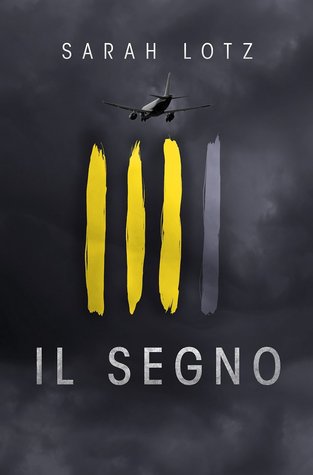
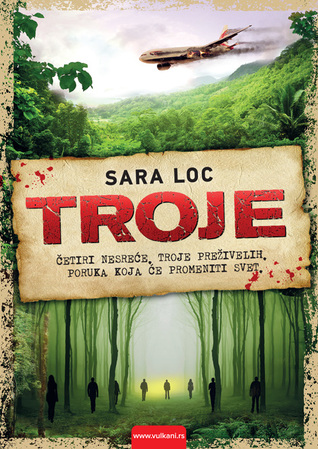
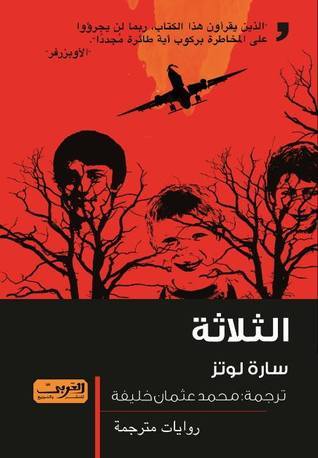
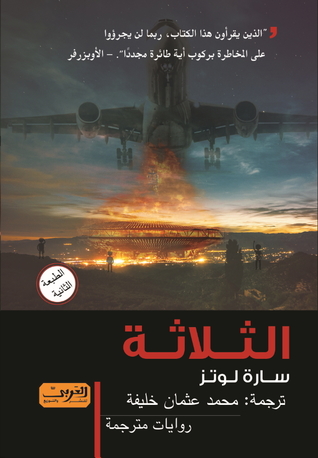
From left to right, top to bottom: Little, Brown and Company (2014) – Hodder and Stoughton (2014)
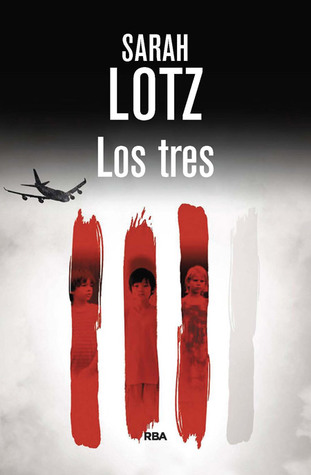
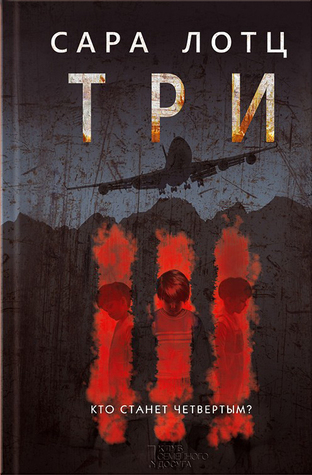
Spanish (2015) – Russian (2014) – Italian (2015) – Serbian (2014) – Arabic (2015) – Arabic
Winner:
I used to love the Hodder and Stoughton cover because of the subtle symbolism of the faded out “fourth tally”, but I have to admit, setting up this post and seeing the same motif used again and again on so many covers has somewhat dampened my fondness for it. I could have posted many more language editions, but they all pretty much this same image. So I’m going to go with the Little, Brown and Company edition this time, for its foreboding atmosphere. I like how the plane is so understated that you almost don’t even see it.
What do you think? Which one is your favorite?


 The BiblioSanctum