Waiting on Wednesday 06/07/17
Posted on June 7, 2017 15 Comments

“Waiting On Wednesday” is a weekly meme hosted by Breaking the Spine that lets us feature upcoming releases that we can’t wait to get our hands on!
Mogsy’s Pick
The Infernal Battalion by Django Wexler (January 9, 2018 by Ace Books)
This week, I’m waiting on the fifth book of Django Wexler’s Shadow Campaigns series. I’m already feeling preemptively sullen over the fact that this will be the last installment, but at the same time I’m excited because I desperately need to know how things are going to end!
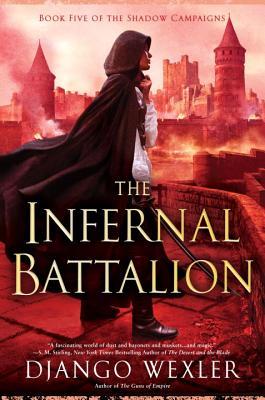 “The Beast, the ancient demon imprisoned beneath the fortress-city of Elysium for a thousand years, has been loosed on the world. It absorbs mind after mind, spreading like a plague through the north. The fell army it has raised threatens the heart of Vordan, and it is under the command of the Beast’s greatest prize: legendary general Janus bet Vhalnich.
As Queen Raesinia Orboan and soldiers Marcus D’Ivoire and Winter Ihernglass grapple with the aftermath of a hard-fought military campaign, they soon discover a betrayal they never could have foreseen. The news arrives like a thunderbolt: Janus has declared himself the rightful Emperor of Vordan. Chaos grips the city as officers and regiments are forced to declare for queen or emperor.
Raesinia must struggle to keep her country under control and risks becoming everything she fought against. Marcus must take the field against his old commander, a man who has seemed an unbeatable strategist. And as Winter recovers from her injuries and mourns her losses, she knows the demon she carries inside her might be the only thing standing between the Beast and the destruction of everything in its path….”
Book Review: Tyrant’s Throne by Sebastien de Castell
Posted on June 6, 2017 19 Comments
I received a review copy from the publisher. This does not affect the contents of my review and all opinions are my own.
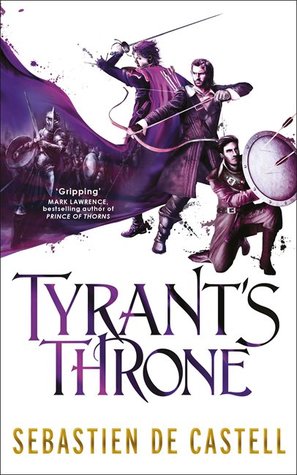 Tyrant’s Throne by Sebastien de Castell
Mogsy’s Rating: 5 of 5 stars
Genre: Fantasy
Series: Book 4 of The Greatcoats
Publisher: Jo Fletcher (UK: April 6, 2017; US: June 6, 2017)
Length: 601 pages
Author Information: Website | Twitter
It is no exaggeration when I say that a series like the Greatcoats only comes once in a lifetime, and now that it has come to an end, I am filled with a mixture of complicated emotions. On the one hand, I am extremely pleased with the conclusion, with our heroes and heroines getting the satisfying sendoff they deserved. On the other, I no longer know what to do with myself. Like many goodbyes, this one was bittersweet, and if it hadn’t been for the final words of the author’s postscript, I would be having a much harder time right now.
Picking up not long after the events of the previous book, Tyrant’s Throne sees Falcio val Mond and his allies continuing their efforts to put King Paelis’ daughter Aline on the throne of Tristia. To do so, he would need the support of the dukes, but unfortunately most of them would forsake their kingdom than to be ruled by a young girl. To make matters even more dire, talk of war is also brewing in the mountains. More and more, the penniless and starving common folk in the northern duchies are fleeing into neighboring Avares for their salvation, and in turn the Avareans are amassing their forces and weapons, taking advantage of the political turmoil in Tristia to launch an attack. As a tribal-based warrior culture society, the Avareans have never posed a real threat before because of their inability to organize, but a mysterious Magdan has risen up in recent years, uniting the war clans under a single cause. Worse, it is rumored that he is allied with Trin, the murderous traitor who has caused Falcio and his loved ones so much pain.
Traveling under disguise, our protagonist and his best friends Kest and Brasti embark upon a dangerous mission to the north with the intention to capture Trin and bring her back to Castle Aramor to face justice. However, in Avares, they encounter another unpleasant surprise—and this time, it’s a game changer that may bring Falcio’s dreams to ruin and jeopardize everything he has ever worked for. The Greatcoats now have to face a difficult choice, for unfortunately what is just and what is lawful does not always necessarily mean the same thing. But whatever the decision, what’s clear is that it needs to be made soon, for with Avares poised to attack, Tristia might not exist long enough for any of it to matter.
Still, even in the face of insurmountable challenges and impossible odds, the greatest foe Falcio val Mond will face in Tyrant’s Throne isn’t Trin or even the threat of a bloodthirsty Avarean horde. No, our protagonist’s worst enemy has always been himself, and now he faces the moment of truth. To understand the significance of this novel, one must also understand what makes Falcio tick, and while the first three novels have shown that he is a valiant and big-hearted person to his core, there is also a darkness and complexity in him that has been lying in wait to bring about his downfall. Let’s face it, as lovable as he is, Falcio is also be single-minded to the point of recklessness and can be infuriatingly prone to self-sabotage. Certainly, he’s made his mistakes, and now his demons have all come home to roost.
If you’ve been following this series, you’ll also know that Sebastian de Castell doesn’t go easy on his characters, putting them through all kinds of extreme situations. Only through this process though, do we get to see the true measure of his protagonist. Tyrant’s Throne is no different in this sense, and I’m warning you now, there will be several bombshells that will threaten to send Falcio over the edge—hell, they certainly nearly caused ME to lose control!—and there is no end to the shocking twists. At times, Falcio will be driven to think and do some despicable things, and I won’t lie, he even made me quite angry on several occasions. Yet at the same time, it’s hard not to feel for the guy. For as long as we’ve known Falcio, his character has been defined by his love for King Paelis as well as his respect for the rule of law. Now that those two pillars of his identity are at odds, his entire world has just been turned upside down.
As usual though, you can trust the author to have everything well in hand. I’ve heard that final books in a series are notoriously difficult to pull off, but dammit, he makes it look so easy. Everything I love about the previous novels can be found once again in this one, including the epic action, laugh-out-loud humor, daring heroics and inspiring gallantry. No one can make me flip between nail-biting despair and giddy fist-pumping exuberance the way De Castell can, sending my pulse racing with every high stakes plot development. The story is compelling and intense, featuring relentless pacing and an extraordinarily rich cast. All the characters I love (along with some dazzling new faces!) are back as well, ready to kick some ass and take some names, making Tyrant’s Throne a finale to remember.
As endings go, I really couldn’t ask for more. Sebastien de Castell is a rare talent, one of the most gifted storytellers to emerge in recent years and I hope he will continue to deliver more great books for a long, long time. It heartens me to know he has plans to return to the Greatcoats world, but even if this is the last we see of Tristia’s heroes and heroines, Tyrant’s Throne is the perfect ending to cap off this stellar quartet. The Greatcoats now sits in a place of honor on my bookshelf as one of my favorite fantasy series of all time.


More on The BiblioSanctum:
Review of Traitor’s Blade (Book 1)
Review of Knight’s Shadow (Book 2)
Review of Saint’s Blood (Book 3)
Book Review: The Refrigerator Monologues by Catherynne M. Valente
Posted on June 5, 2017 31 Comments
I received a review copy from the publisher. This does not affect the contents of my review and all opinions are my own.
 The Refrigerator Monologues by Catherynne M. Valente
Mogsy’s Rating: 3.5 of 5 stars
Genre: Fantasy, Superheroes
Series: N/A
Publisher: Saga Press (June 6, 2017)
Length: 160 pages
Author Information: Website | Twitter
Ever wonder what it’s like to be a girlfriend or wife of a superhero? The answer is not so glamorous in The Refrigerator Monologues, a new book containing a series of linked short stories by Catherynne M. Valente. Inspired by “Women in Refrigerators”, a term used to describe a trope used in many comic book plots involving the deaths, disablement, and disenfranchising of female characters to forward a male superhero protagonist’s storyline, this clever collection offers both a darkly humorous commentary on the subject as well as a vicious lampoon on these kinds of story arcs as a whole.
Meet the six women of the Hell Hath Club, all inspired by well-known characters in the DC or Marvel universes so that even passing fans of comics should recognize some of their origins. There’s Paige Embry, the brilliant and driven college student who saw her bright future snuffed out when she was thrown off a bridge by her superhero boyfriend’s arch nemesis. Gwen Stacy anyone? Or how about the powerful telepath and telekinetic, taken away at a young age for a school for special powered people to fight another group of special powered people by an ostensibly well-meaning professor, who later puts Jean Gre—I mean, Julia Ash on an otherwise all-male superhero team called the “Millennial Men”? And of course there’s also Samantha Dane, based off of Alexandra Dewitt, the girlfriend of Kyle Rayner whose gruesome manner of death in the Green Lantern comics is what inspired the “refrigerated” term in the first place.
The tales go on like this, each one exploring the background of a female character who has been killed, depowered, or generally dismissed in favor of the male superheroes (and in one case, a supervillain) in their lives. Now the six of them meet regularly in the afterlife, hanging out at a quaint little joint called the Lethe Café where they share their stories, support each other, and listen to the gargoyles bands play punk rock.
The Refrigerator Monologues was a quick read, offering brief but plentiful examples to illustrate the concerning trend in comic books of having bad things happen to female characters as merely a plot device. While these are entertaining stories, I’m afraid there’s also very little lightness to them. After all, the women portrayed here are meant to represent the victims of “lazy writing” and “stock storylines”, most of them reduced to playing second fiddle to their male superhero counterparts or as pet causes for their romantic partners. Valente shines a harsh, subversive light on the injustice and absurdity of these situations, from Gwen Stacy whose death has somehow become an inextricable and defining moment in the life of Spider-Man, to Harley Quinn who is forever standing resolutely by the Joker even after the bajillionth time he leaves her to rot in Arkham. The short vignettes here capture both the tragedy and comedy of the women’s fates by putting readers in their shoes.
I also thought the length and format of the book was perfect for the author’s vision. It is clear anything less would have failed to deliver the same level of poignancy, while a longer book containing more stories would have run the risk of being repetitive. The writing style here is very distinctive, aiming for biting humor and as much as snarky finesse, though after a while I found it difficult to distinguish the different voices of the women for they all seemed to speak with the same mannerisms. By the end, I was also feeling a little weary and heartsick from the underlying tones of sadness and dejection. For you see, this isn’t a book that “fixes” things, nor was it ever meant to be—I think Valente put it best in an article I once came across where she said (and I’m paraphrasing based on memory), “I might not be able to swoop in to save the damsel, but I can turn on the mic to let her scream.” You might read these stories expecting more anger and indignation from the characters, but ultimately the Hell Hath Club isn’t so much about fury than it is about a place where its members can come together to vent, grieve, commiserate, or simply to tell their personal stories and be heard.
In closing, I also want to give special mention to the world-building of Deadtown. Aside from being the most unique and interesting aspect of the book, this brilliant setting ties all the characters’ stories together and gives this collection a special touch. Being dead isn’t easy—you’re basically stuck wearing whatever god-awful outfit you were buried in for all eternity, and there are bizarre rules like how all food can only be made from plants and animals that have gone extinct, or that the only books available are those that have been forgotten to time, etc. Still, it isn’t all bad. Residents of Deadtown share the afterlife with a population of friendly gargoyles who sure know how to have a good time!
Finally, you certainly don’t need to be familiar with comics or comic book characters to appreciate this book, but knowing some of the context would probably help. Sharply droll and acerbic, The Refrigerator Monologues offers a look at the superhero genre from a rare but important perspective. Whether these stories make you laugh or cry, pound your fists or roll your eyes, at the end of the day they’re bound to evoke emotions and start some conversations. And sometimes, that’s all that really matters.

YA Weekend: Royal Bastards by Andrew Shvarts
Posted on June 4, 2017 26 Comments

I received a review copy from the publisher. This does not affect the contents of my review and all opinions are my own.
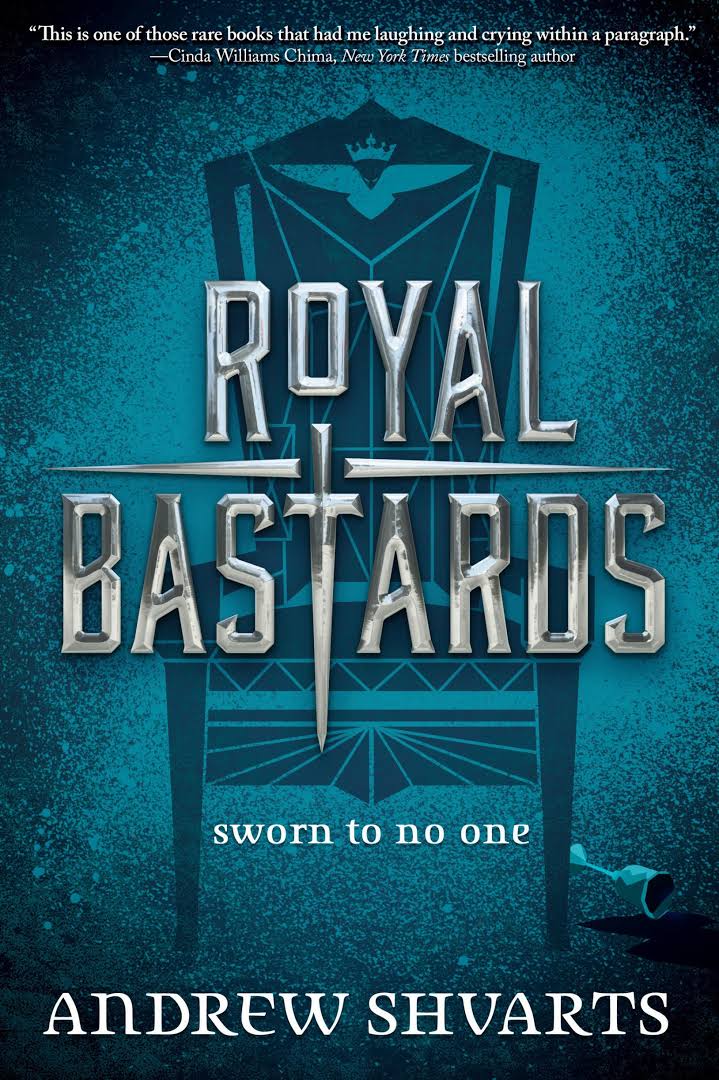 Royal Bastards by Andrew Shvarts
Mogsy’s Rating: 4 of 5 stars
Genre: Fantasy, Young Adult
Series: Book 1 of Royal Bastards
Publisher: Disney-Hyperion (May 30, 2017)
Length: 352 pages
Author Information: Website | Twitter
This book was a ridiculously entertaining read, putting me in mind of Marvel’s Runaways set in a fantasy world that is rife with Game of Thrones vibes. Characters tragic and comic, heroic and despicable all live within these pages, including beautiful princesses, warring kings, powerful mages, and of course, royal bastards.
As the daughter of Lord Kent of the Western Province and a Castle Waverly servant, sixteen-year-old Tillandra has always lived in a world of in-betweens. While common born and not his legitimate heir, Tilla was nonetheless loved by her father, who filled her childhood days with rides over the fields or to the forest, teaching and showing her amazing things. But ever since Lord Kent got married in a political alliance, that all changed. Once his new wife gave him trueborn children, his time spent with Tilla gradually dwindled to the point where he now barely gives her any attention at all. Tilla instead spends her day with her half-brother Jax, hanging out at the stables and drinking with the servants, though in her heart she still secretly dreams of the day her father will notice her again and perhaps even legitimize her as a trueborn Kent.
When the book opens, everything at the castle is abuzz with activity as preparations are made for the feast in honor of the visiting princess of Noveris from the ruling Volaris Dynasty. Although Tilla is invited to attend, her place in the great hall is with the castle’s other outcasts which includes Miles, an illegitimate son of House Hampstedt, as well as Zell, a Zitochi from the north who has been disowned by his warchief father. When Princess Lyriana makes her appearance though, she is nothing like any of them imagined. First, she shocks everyone by choosing to sit with Tilla and the others at the “Bastards’ Table”, and before long, she has convinced them to sneak her out of the castle after the feast to show her Castle Waverly’s beaches. However, what might have started out as an innocent late night excursion quickly turns into a nightmare as Tilla, Jax, Miles, Zell and Lyriana stumble upon a scene they were never meant to witness. Now their own parents have put a price on their heads, and the group is forced to go on the run to protect the princess and deliver back to her people. If they succeed, they’ll be able to clear their names, expose a vast conspiracy, and stop a war. But if they fail, it could spell the end of more than just their lives.
Royal Bastards was an interesting book—uncomplicated to be sure, and also unabashedly trope-filled. The writing style also has a simplistic tone and uses modern language, which initially made me think this might be a Middle Grade novel, until the swearing, violence, and sexual innuendoes quickly disabused me of that notion. For all that though, I found the author’s straightforward approach refreshing. What you see is what you get, with little attempt to be subversive or break the mold. I got the sense that Shvarts was just trying to tell a fun story about characters that he genuinely cared about, and in turn I was captivated by this book’s carefree aura, willing to be swept into whatever adventure awaits.
I’m happy to report the results were pleasantly and surprisingly positive. Sure, the characters are all textbook YA—the plucky heroine who yearns for parental approval, the broody warrior who’s always surly because “no one understands me!”, or the nerdy bookwork whom everyone dismisses until his knowledge saves all their lives, etc., etc., etc.—but happily, their individual charms more than make up for that. Despite the clichés, every single one of the Bastards had wormed their way into my heart, and by the end of the book I found myself invested in the outcome of their fates. Every triumph filled me with celebratory cheer while every loss and betrayal made me fume and rage inside. I very much cared about what happened to these characters, which made this one an easy read. Together with the fast pace of the plot, I just flew through this book.
I probably enjoyed Royal Bastards more than I should have. But books like this prove you don’t have to reinvent the genre to be successful; sometimes familiar ideas work just fine when you combine them with a story that’s fun to its very core (though you should still brace yourself for some eventual tensions and heartbreak) and characters who have great chemistry and infectious personalities. There are several major twists, a couple of which I coming a mile away, but that didn’t stop me from having a blast. If all this sounds good to you, I highly recommend giving this book a try. Personally, I can’t wait for the next installment in this planned trilogy.

Mogsy’s Bookshelf Roundup: Stacking the Shelves & Recent Reads
Posted on June 3, 2017 42 Comments
Bookshelf Roundup is a feature I do every other weekend which fills the role of several blog memes, like Stacking the Shelves where I talk about the new books I’ve added to my library or received for review, as well as It’s Monday! What Are You Reading? where I round up what I’ve read since the last update and what I’m planning to read soon. Mostly it also serves as a recap post, so sometimes I’ll throw in stuff like reading challenge progress reports, book lists, and other random bookish thoughts or announcements.

Received for Review
Thank you to the publishers and authors for the following review copies received. For more details and full descriptions of the books, be sure to click the links to their Goodreads pages!

So excited about this one! Huge thanks to Thomas Dunne Books for sending me this beautiful finished copy of A Gathering of Ravens by Scott Oden, a Norse mythology inspired historical fantasy starring an Orc protagonist.
Up next, a couple of surprise finished copies courtesy of Tor Teen: Night Magic by Jenna Black and Firebrand by A.J. Hartley are both sequels to great books I read last year, so I do plan to dive into them as soon as I can.
Also thanks to Subterranean Press for this trio of new arrivals: Bubba and the Cosmic Blood-Suckers by Joe R. Lansdale is described as a prequel to the classic story “Bubba Ho-Tep” and looks absolutely hilarious! Heroes and Villains by Lewis Shiner is a collection of three short novels and a fable featuring daring feats of adventure and suspense, and I’m especially looking forward to Penric’s Mission by Lois McMaster Bujold, third in a series of novellas starring the eponymous hero and his demon Desdemona. I love these characters and their quirky dynamic.

Inkshares is also coming out with a lot of great titles this summer and fall. From the awesome team at Wunderkind I received a copy of The Punch Escrow by Tal M. Klein, a futuristic sci-fi thriller about a protagonist who gets accidentally cloned during a teleportation machine mishap. There’s a lot of buzz about this one already, and I can’t wait to check it out. Then there’s Sparked by Helena Echlin and Malena Watrous which is a new one for me, but I am already intrigued by its spine-chilling synopsis. Thanks again publisher for putting this dark supernatural mystery on my radar!
And speaking of new-to-me books, I was surprised I hadn’t heard of Halls of Law by V.M. Escalada until it showed up on my doorstep, and needless to say I went to look it up immediately. From what I gather, it’s a mix of magic and military fantasy, which sounds sound up my alley. With thanks to DAW Books for the ARC; I’ll definitely be keeping my eye on this one.
Also thanks to Saga Press for this finished copy of Season One of The Witch Who Came in From the Cold created by Lindsay Smith and Max Gladstone. I’ve been loving these serialized novels from Serial Box, but I’ve been waiting for this collection to become available so I can binge read all the episodes.
Last but not least, a big thank you to Titan Books for sending me review copies of Warlock Holmes: A Study in Brimstone and The Hell-Hound of the Baskervilles by G.S. Denning. I’ve been curious about this series for a long time, and book one is already queued up on my reading list for June.
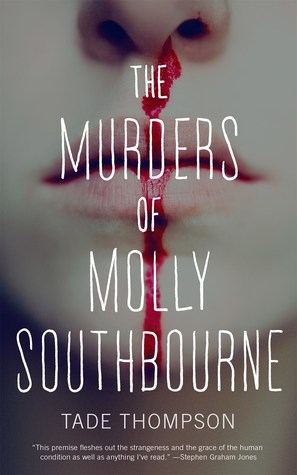
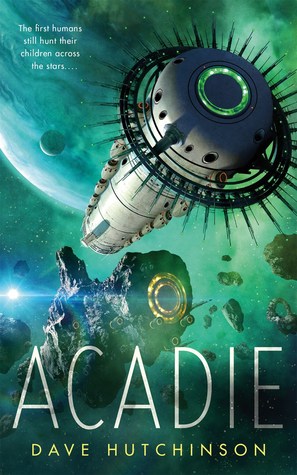


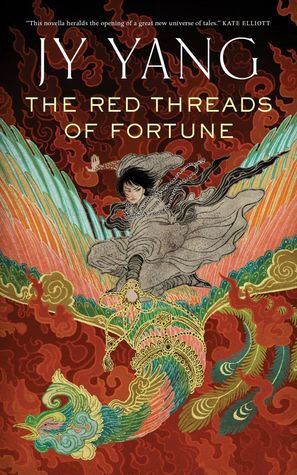
On the digital front, I’ve actually been really good these last few weeks and managed to hold off on requesting anything from NetGalley or Edelweiss, or even audiobooks. The kind folks at Tor.com have been been spoiling me though, turning my inbox into a treasure trove of upcoming gems. The Murders of Molly Southbourne by Tade Thompson looks so creepy and I can’t wait to read it, plus I’ve wanted to check out the author’s work for a long time. And talk about big things coming in small packages, Acadie by Dave Hutchinson is an exciting grand scale space opera in a novella-sized tale. Ruin of Angels by Max Gladstone is billed as the sixth installment of his Craft Sequence, and while I still have the previous book to read, you can be sure I’ll be tackling this one as soon as I’m all caught up. Finally, The Black Tides of Heaven and The Red Threads of Fortune by J.Y. Yang are a pair of linked standalone novellas from a new series called the Tensorate. I’m simply gobsmacked by the beauty of these covers, and I anticipate the stories within will be just as delectable.
Reviews
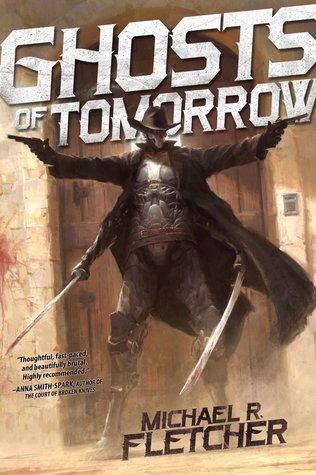
Here’s a roundup of my reviews posted since my last update. It’s been a pretty good couple of weeks, and coming out on top is Michael R. Fletcher’s brilliant and bloody cyberpunk thriller Ghosts of Tomorrow which takes the highlighted spot.
Ghosts of Tomorrow by Michael R. Fletcher (4.5 of 5 stars)
The White Road by Sarah Lotz (4 of 5 stars)
Luna: Wolf Moon by Ian McDonald (4 of 5 stars)
A Crown of Wishes by Roshani Chokshi (4 of 5 stars)
The Berlin Project by Gregory Benford (3 of 5 stars)
The House of Binding Thorns by Aliette de Bodard (2.5 of 5 stars)
Roundup Highlight:
What I’ve Read Since the Last Update
The following are books I’ve “unstacked” from my shelves recently. Reviews coming soon!



Have you heard of or read any of the books featured this week? What caught your eye? Any new discoveries? I hope you found something interesting for a future read! Let me know what you plan on checking out. Until next time, see you next Roundup!
Friday Face-Off: Moon
Posted on June 2, 2017 30 Comments
Welcome to The Friday Face-Off, a weekly meme created by Books by Proxy! Each Friday, we will pit cover against cover while also taking the opportunity to showcase gorgeous artwork and feature some of our favorite book covers. If you want to join the fun, simply choose a book each Friday that fits that week’s predetermined theme, post and compare two or more different covers available for that book, then name your favorite. A list of future weeks’ themes are available at Lynn’s Book Blog.
This week’s theme is:
“Shoot for the moon. Even if you miss, you’ll land among the stars”
~ a cover featuring the MOON
Mogsy’s Pick:
The Dark Side by Anthony O’Neill
The Dark Side is a gritty, dark, and violent futuristic sci-fi mystery thriller that takes place on the moon. Our protagonist Lieutenant Damien Justus is the patently incorruptible good cop from Earth who has just arrived in the lunar territory known as Purgatory, a place where the shadier your record is the better the chance you’ll flourish and thrive. Its capital, appropriately named Sin, is a haven for criminals and lowlifes who have come to the moon to escape their old lives, but now with a new sheriff in town, their days are numbered. Justus is here to clean up Purgatory, and to him, no one is above the law. Almost immediately, he’s tasked to investigate a string of assassinations targeting the movers and shakers of lunar society.
Meanwhile though, far from Purgatory in the Seidel Crater, a black-haired, black-eyed, black-tied, black-suited homicidal android takes his first steps towards self-discovery and a two-thousand kilometer journey of death and destruction. What does a psycho-killer robot murdering his way across the lunar landscape have to with Justus’ investigation? Ah, wouldn’t you like to know…but now, it’s cover time:
From left to right, top to bottom: English (2016) – Hungarian (2017) – German (2017) – Spanish (2017) – Chinese(2017)

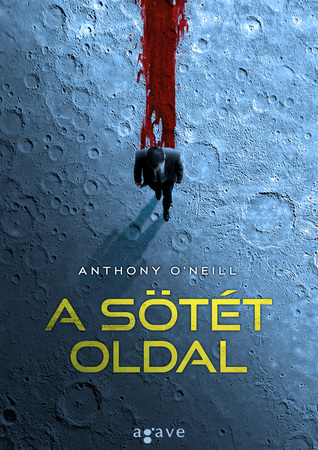
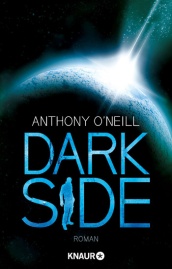
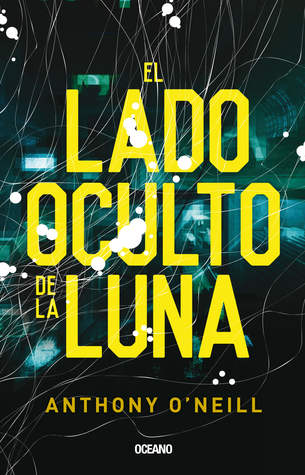
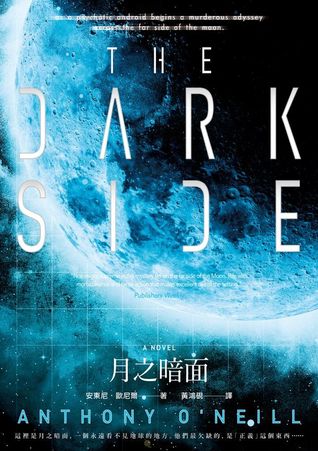
Winner:
My winner is the Hungarian edition, because how can you look at that and not wonder what the hell is going on in that picture? It’s also a very good depiction of the creepy, crazy, completely homicidal Mr. Black as he stalks his way silently across the desolate lunar surface.
What do you think? Which one is your favorite?
Tough Traveling: Non-Human Heroes & Protagonists
Posted on June 1, 2017 26 Comments
Back in 2014, the idea for Tough Traveling started with Nathan of Fantasy Review Barn who came up with the excellent idea of making a new list each week based on the most common tropes in fantasy, as seen in (and inspired by) The Tough Guide to Fantasyland, a tongue-in-cheek parody of the fantasy genre by Diana Wynn Jones. It was widely successful, with over fifty bloggers participating at one point before it went on hiatus. But now Tough Traveling is back, with huge thanks to Laura from Fantasy Faction for reviving the feature! Every first of the month we’ll be posting a list of books that fit a particular theme, with the next month’s theme also to be announced. Interested in participating? Well, grab your traveling packs and come along! You are welcome to post your Tough Traveling lists anytime during the month.
June’s topic is:
Non-Human Heroes & Protagonists
The Tough Guide assures us that HEROES are ‘mythical beings, often selected at birth, who perform amazing deeds of courage, strength and magical mayhem, usually against all odds.’ Furthermore, ‘if you get to meet a so-called Hero, she/he always turns out to be just another human, with human failings, who has happened to be in the right place at the right time (or the wrong place at the wrong time, more likely)’.
HOWEVER. For good or for evil, some of fantasy’s most memorable Heroes are not human at all. Some look human, but aren’t. Others may look monstrous, but be ‘human’ on the inside. Others still never pretend to be anything other than what they are – and why should they? In nearly all cases, we are likely to Learn Something from them – usually that appearances can be deceiving, or that the concepts of both ‘Human’ and ‘Hero’ are entirely subjective.

One might assume, considering my love for the Stone and Moon show, that the Raksura would be at the top of my list for this month’s topic, or even Vadrigyn, my new favourite protagonist from Larcout, but when I started brainstorming my picks, I realized that there was a connection between several of them. They met the non-human requirements, of course, but several of them still looked very human indeed. So I decided to focus my list on non-human heroes and protagonists who walk among us, unnoticed, but for that strange… something that gives them away….
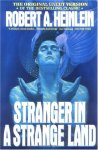 Stranger in a Strange Land by Robert A. Heinlein
His ancestry can be easily traced to earth, but Valentine Michael Smith is far more than the humans who traveled to Mars and subsequently gave birth to him. Though he looks like an adult, he is but a child on his homeworld, and has much to learn about humanity and our culture when he arrives here. Among the things he must learn is that humans are jerks and everyone wants to use him, especially since his birthright means he has quite a lot of political sway as well as a lot of money at his finger tips. The trick is figuring out who he can trust to make sure that nothing is taken advantage of.
 Elfland by Freda Warrington
From my original review: “For me, slipping into Elfland was like overhearing bits of an intriguing conversation. I sort of knew what the conversation was about, and was enticed to learn more as Warrington allowed me into this secret world of Aetherials – fae creatures living along side us in the human world.”
The Fox family are your normal, every day folk, but every seven years, they and the other Aetherials must renew their connection to their homeworld, lest they become truly human. And who in the world would want that?
 Wild Seed by Octavia E. Butler
Anyanwu is a “wild seed.” She has the ability to change her shape and become just about anything she wants. She is not quite the same as the creature known as Doro, but their differences from the humans they care for or prey upon, respectively, bring them together, even as Anyanwu struggles to separate herself from Doro.
 Daughter of Smoke and Bone by Laini Taylor
Karou’s bright blue hair is natural. The monsters she draws in her sketch book are real. She used to be one of them. She calls them her people. Her family. Karou is a chimaera. But there is so much more to her current existence in the body of a young art student that she does not know.
 The Host by Stephanie Meyer
A race of parasitic aliens travel the galaxy taking over the sentient beings of the worlds they meet. Now they have arrived on earth and “Wanderer” has taken over the body of a human named Melanie. But for the first time in all of her experiences, Wanderer has discovered a host that doesn’t exactly like having her there
Nimona by Noelle Stevenson
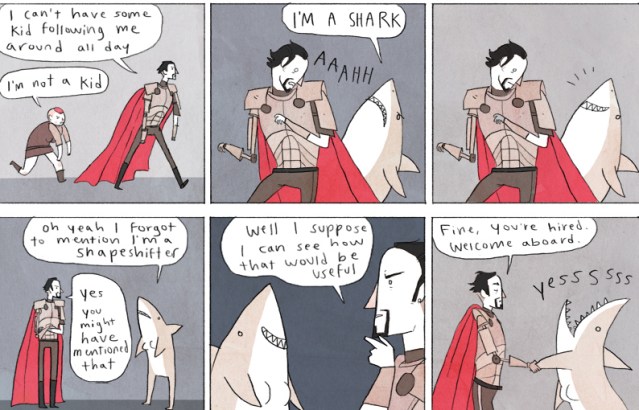


 The Grey Bastards by Jonathan French
LIVE IN THE SADDLE, DIE ON THE HOG! This rocking good book stars Jackal, a half-orc who is sworn to the The Grey Bastards hoof, one of the eight brotherhoods of former slaves that now live on the land known as the Lots. Shunned by humans but also hostile to the orcs, the mongrel bands are all that’s left standing between the city of Hispartha and the forces that want to see it fall. By the way, this book was also the winner in the Self-Publishing Blog-Off competition of 2016, and man oh man does it deserve that title. If you are a fan of dark fantasy, you need to read it.
 The Books of the Raksura by Martha Wells
Wendy might have passed on featuring this series, but hey, don’t mind if I do! Oh my gosh, the Raksura, guys. They have got to be some of the coolest, most original fantasy creatures ever. I personally picture them as being a bit like a form of bird-people, but in fact that are shapeshifters whose societies more closely resemble those of hive insects. A ruling queen is at the top, followed by lesser queens. Queens mate with fertile males called Consorts to produce royal clutches composed of Queens, Consorts and Warriors (infertile males and females that defend the colony). Together, these three types make up the Aeriat. They are winged and capable of flight. Then there are the Arbora, who have no wings but are capable climbers. They are made up of Teachers that oversee the nurseries and train the young, Hunters who provide food for the colony, Soldiers who guard the colony, and Mentors who are seers with magical abilities enabling them to perform tasks such as foreseeing the future or healing the sick and wounded. It’s all very complex, and in The Books of the Raksura you can read all about the ongoing dramas and inner workings of the Indigo Cloud court.
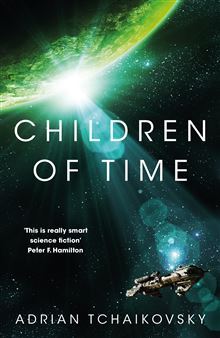 Children of Time by Adrian Tchaikovsky
Well, I just finished this novel, so even though it is sci-fi I still feel like I have to include it now that it’s fresh on my mind. Several major characters in this story are member of a race of giant spiders which were uplifted by a genetically engineered nanovirus during a planet terraforming mission gone bad. Ultimately, the spiders went on to evolve on this forgotten world, developing their own cultures, civilizations and knowledge. It is their home now, and they’re not taking too kindly to the assumptions of these strange looking humans who have showed up, thinking they can just take over and live on their planet.
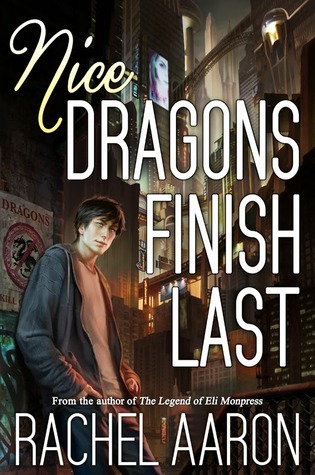
Meet Julius, the protagonist of this series. He’s a dragon. The youngest, smallest, most powerless dragon in the Heartstriker clan, actually. Still, he isn’t a pushover so much as he’s just downright terrible at being a dragon. For one thing, he’s nice, considerate, has no designs on taking over the world, all of which makes him an absolute failure in his mother’s eyes. After twenty-four years of watching Julius hide out in his room in the mountain, Bethesda the Heartstriker has finally had it. Sealing him in his human form, the dragon matriarch banishes her son to the Detroit Free Zone where he’s left to either get with the program or fend for himself.
 The Lives of Tao by Wesley Chu
Wendy featured The Host, a book about an alien who has taken over the body of a human. Here’s my own pick that features a version of this theme. This novel features Tao, an alien called a Quasing whose race crash-landed on Earth before the first organisms even made their way out of the ancient oceans. They could only survive in our planet’s atmosphere by hitching a ride in the living bodies of animals, and later, humans. And that’s how one day, a self-doubting, weak-willed, out-of-shape IT technician named Roen Tan wakes up with an alien voice in his head.
Join us next month for another edition of Tough Traveling! The theme will be:
Adepts
The Tough Guide defines an Adept as ‘one who has taken what amounts to a Post-graduate course in Magic. If a Magic User is given this title, you can be sure he/she is fairly hot stuff. However, the title is neutral and does not imply that the Adept is either Good or Evil.’
Waiting on Wednesday 05/31/17
Posted on May 31, 2017 20 Comments
“Waiting On Wednesday” is a weekly meme hosted by Breaking the Spine that lets us feature upcoming releases that we can’t wait to get our hands on!
Mogsy’s Pick
A Dragon of a Different Color by Rachel Aaron (July 28, 2017)
Book four of Rachel Aaron’s (also known as Rachel Bach) self-published series Heartstrikers finally has a release date and one hell of a gorgeous cover! I just can’t get over how good Julius and Marci look together on it, and is that a fiery baby dragon on her shoulder?! I can’t wait to catch up with them and everyone in Julius’ crazy family.
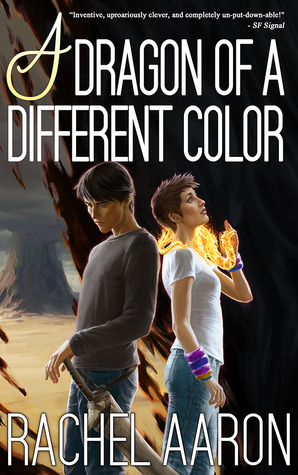 “To save his family from his tyrannical mother, Julius had to step on a lot of tails. That doesn’t win a Nice Dragon many friends, but just when he thinks he’s starting to make progress, a new threat arrives.
Turns out, things can get worse. Heartstriker hasn’t begun to pay for its secrets, and the dragons of China are here to collect. When the Golden Emperor demands his surrender, Julius will have to choose between loyalty to the sister who’s always watched over him and preserving the clan he gave everything to protect.”
Book Review: The White Road by Sarah Lotz
Posted on May 30, 2017 21 Comments
I received a review copy from the publisher. This does not affect the contents of my review and all opinions are my own.

Mogsy’s Rating: 4 of 5 stars
Genre: Horror
Series: Stand Alone
Publisher: Mulholland Books (May 30, 2017)
Length: 272 pages
Author Information: Website | Twitter
I’ve always held a bit of a fascination for mountaineering stories, which is really ironic considering my deathly fear of heights. Certainly I’ve never harbored any desires to scale anything more extreme than a steep hill, which is why when I first picked up Sarah Lotz’s latest novel about death and danger on Everest, I thought there would be little chance of her “ruining” mountain climbing for me the way she put me off from cruising for a whole year after I read her shipbound horror-thriller Day Four. And yet, books like The White Road still have this way of sending chills down my spine, even when I’m reading them from the warm, cozy comfort of my living room couch.
Our story begins in the winter of 2006, and protagonist Simon Newman and his roommate Thierry are a couple of slackers whose ambitions amount to nothing more than throwaway barista gigs at the local coffee shop and running their clickbait website on the side. At this point, YouTube stars and listicles are just starting to become a thing, and the two friends are hoping to grow their following enough to score a sweet advertising deal of their own. The idea for their big break comes when Simon first learns of the Cwm Pot caves in Wales, where several years ago a group of spelunkers had gotten trapped and died. Their site “Journey to the Dark Side” would become an internet sensation if Simon could go down there and come back with actual never-before-seen footage of the dead bodies, Thierry insists; it is the perfect material for their morbid audience.
Unfortunately for Simon, his venture into Cwn Pot ultimately ends in disaster. But while the incident leaves him traumatized, the salvaged footage from his harrowing experience along with the ensuing media attention does propel the website into the top ranks. Eager to take their newfound popularity to the next level, Thierry proposes the idea for another attention-grabbing stunt: Now that Simon has gone deep down underground in search of corpses to film, why not go the other way this time, and do the same thing on the highest point on earth? Mount Everest is said to be the final resting place of more than 200 people; the shocking reality is that there’s very little anyone can do for those who lose their lives at such altitudes, and their remains are often unrecoverable and left where they fell, sometimes for years and years. Surely it wouldn’t be too hard for Simon to go up there and capture more footage of a couple of dead bodies, which would undoubtedly bring even more traffic to their website.
But up above 8000 feet in the Death Zone, anything can happen. And the reality is, Simon did not emerge from Cwn Pot the same person. He is a haunted man now, after the things he’d seen in its terrifying depths, and he’s brought some of that darkness with him to the world’s highest open grave. The White Road is a story divided into three distinct sections, with the first focusing on Simon’s misadventures in the tight, twisty tunnels of the Welsh caverns. This, in my opinion, was the best part of the book. I read these first fifty pages or so feeling like my heart was stuck in my throat, the fear practically choking off my breath—and I’m not even a claustrophobe. If I had to go through even a fraction what Simon did, I would never turn a single light off in my house again, soaring electricity bills be damned. Sarah Lotz’s descriptions of the oppressive darkness and unbearably cramped spaces stirred up some of my deepest fears, and I couldn’t help but put myself in the protagonist’s place, losing hope as the underground water rose higher and higher.
Compared to that, the rest of the book almost seemed tame, even in Part II when Simon jets off to Nepal to climb Mount Everest. There are certainly plenty of frights in this section, though in a much different way than Cwn Pot. Here, we get to see the cold, merciless nature of the mountain, dispassionate about the fates of those who attempt the summit. A few years ago, I became obsessed with Everest-related history and literature after reading The Abominable by Dan Simmons, which was one particularly dark rabbit hole I fell into. I found plenty of amazing true accounts of great feats accomplished by great people, but just as plentiful were the traumatizing stories of death and disaster. Most of the fatal incidents on Everest occur in the mountain’s oxygen-starved Death Zone, which not only pushes a climber’s body to their physical limits, but also threatens to push their minds to the brink of madness. This is where some of the vagueness in The White Road comes into play. Are the strange things experienced by the characters merely the symptoms of altitude sickness, or are there supernatural shenanigans afoot? It could go either way, and the ambiguity contributes much to the suspense.
But while I really enjoyed The White Road, with perhaps the exception of the first section, I thought the book failed to pack the same punch as the author’s two previous novels, The Three and Day Four. This might have something to do with the structure, since the three disparate sections can make the story feel a little disjointed, especially in the beginning of Part II when we are introduced to an incidental character through a series of journal entries. There’s also an anticlimactic resolution, along with a few plot points that seemingly went nowhere and which I felt were implemented too awkwardly to be mere red herrings. Furthermore, Simon is not a very sympathetic character, and just when you think there’s hope for him yet, he pulls a reversal that makes you hate him all over again. Still, it’s hard not to feel bad for the guy, and Lotz makes getting invested in his story worth your time.
Is it any wonder why I’m such a big fan of the author and why every new book by her automatically gets added to my must-read list? A master of the horror genre, Sarah Lotz’s talents were especially in clear evidence in this novel with its atmosphere of tangible suspense and pure, icy terror. Thoroughly entertaining and astonishingly realistic, The White Road is a gripping, high-climbing thriller which will creep its way under your skin and stay with you for a very long time (…like fingers in your heart).
Book Review: Ghosts of Tomorrow by Michael R. Fletcher
Posted on May 29, 2017 16 Comments
I received a review copy from the author. This does not affect the contents of my review and all opinions are my own.
Ghosts of Tomorrow by Michael R. Fletcher
Mogsy’s Rating: 4.5 of 5 stars
Genre: Science Fiction
Series: Book 1
Publisher: Michael R. Fletcher (February 25, 2017)
Length: 396 pages
Author Information: Website | Twitter
Readers coming to Ghosts of Tomorrow from Michael R. Fletcher’s Manifest Delusions series will find its themes to be very different, I suspect. Interestingly though, this book actually predates Beyond Redemption, being a revamped and republished version of the author’s first novel, which was a futuristic cyberpunkish sci-fi dystopian called 88. Still, from the fascinating premise to the amazing setting and characters, it’s clear everything about this book is pure Fletcher—that is to say, grim, gritty, and violently gory. In a way, it’s good to know that some things have never changed. For a fan like me, it’s a comfort, even.
The story takes place in the near future, when most of the world’s countries have consolidated into continental trade unions in order to compete in the global market. Technology has come a long way too, with the advent of brain scans and the ability to transfer a deceased person’s mind into machines called chassis. Not quite human and yet not quite a computer, these scans have effectively become a source of slave labor. While they have sentience and retain most of the memories and personality they had in life, scans are more or less immortal and can be tweaked like any program, making them a highly sought after resource in almost every industry. Officially, people become scans voluntarily, but because demand outstrips supply, criminal organizations have capitalized by churning out their own black market scans in illegal crèches. It’s a horrifying process: children are either illicitly bred, bought, or stolen from their homes, put through forced conditioning, and then killed for their precious brains which are then scanned and sold. Certain boutique crèches have even sprung up, brainwashing and training children to become loyal, unquestioning fighters intended for combat and assassin chassis.
For his first assignment as a special investigator for the North American Trade Union, newly graduated agent Griffin Dickinson is tasked to crack down on such illegal crèches. Unfortunately, his inexperience also leaves him unprepared for the grisly consequences of failure. In another place, a seventeen-year-old Marine named Abdul is killed in the line of duty, but medics rescue enough of his brain and consciousness to give him a choice: become a scan and continue working for the military, or die for real. Meanwhile, the world says goodbye to Mark Lokner, founder and CEO of the world’s largest manufacturer of Scanning equipment. Before his death, he was also famously known for refusing to be scanned, though in fact, Mark’s mind lives on in Lokner 1.0, watching his own funeral from a hidden server stored in a secret facility in Redmond, Washington. And somewhere deep within mob territory in Costa Rica, the scanned mind of an autistic girl known only as 88 awakens to her new reality. Bought for an exorbitant sum from a black market crèche, her scan was originally acquired by the South American Mafia to manage and expand their vast business empire by seeking out patterns in everything from financial markets to sports betting pools. However, all 88 wants to do is find her mom. And unfortunately for 88’s masters, she has all the mental and technological resources at her disposal to break free of their virtual chains.
Books like Ghosts of Tomorrow make me wonder why Michael R. Fletcher isn’t a bigger deal in the world of science fiction and fantasy publishing. I don’t even enjoy cyberpunk all that much, but I fucking loved this. Dare I say, in some ways it even appealed to me more than his Manifest Delusions, and I certainly did not expect that when I started this novel. These are the kinds of stories I enjoy though, gripping narratives about darkly philosophical subjects with plenty of intrigue and in-your-face action and violence mixed in.
Speaking of which, do not read this book if you are squeamish or prefer only safe, happy, familiar topics—because here you will find the complete opposite of all that. Innovative and surprising at every turn, the story is as fresh, bloody and raw as a slab of butchered meat, and in truth, most of Fletcher’s work should probably come with a “Persons who are faint of heart should not experience this attraction” warning sticker. You would think I’d know to expect that by now, but even I was somewhat taken aback by the massive destruction and astounding death toll in this novel. And yet, it’s all part and parcel of the world-building—the casual dismemberments, decapitations, and massacres all feeding into this atmosphere of bleakness and chaos.
In fact, with the escalation in violence and stakes growing ever higher, you may even find yourself thinking, “No way, this has gone too far!” or “Nah, this isn’t gonna work!” But you’d be wrong. Under different circumstances, Ghosts of Tomorrow might have been just another mindless action novel devoid of any soul, but Fletcher’s talent with characterization turned this story into a gripping experience that I could emotionally connect with. While the most dangerous and powerful people in Beyond Redemption are the ones touched with insanity, the smartest and deadliest of characters in Ghosts of Tomorrow are those with the psychological maturity of children—because that is in fact what they are. Scans like 88 or Archaeidae are little more than frightened, emotionally damaged and uninhibited killer kids who see the world as a game board and human lives as expendable game pieces. Whether you love them or hate them, the author’s characters are always deep, complicated, and terrifyingly genuine.
Unflinchingly twisted and mind-bending, Ghosts of Tomorrow is a gem of a novel, guaranteed to get under your skin and stay with you for a very long time. Michael R. Fletcher has done it again, enrapturing me with another ripping good read.



 The BiblioSanctum