Book Review: Strange Practice by Vivian Shaw
Posted on October 5, 2017 20 Comments
I received a review copy from the publisher. This does not affect the contents of my review and all opinions are my own.
 Strange Practice by Vivian Shaw
Mogsy’s Rating: 4 of 5 stars
Genre: Urban Fantasy
Series: Book 1
Publisher: Orbit (July 25, 3017)
Length: 353 pages
Author Information: Website | Twitter
Admittedly, I was both excited and a little nervous about starting Strange Practice because of the mixed reviews, but as it turned out, I ended up really enjoying it. Swiftly paced at times, but also slow-moving at others, I can see how some readers would be put off by the story’s hodgepodge construction and eccentric writing style. Fortunately though, the book’s mix of humor, mystery, urban fantasy, and gothic horror ultimately struck all the right chords with me.
Our protagonist is Dr. Greta Helsing, a woman who hails from a long and illustrious line of monster experts, though her family has long dropped the “van” from their name. Following in the footsteps of her father, Greta is a doctor for the supernatural, specializing in providing care for London’s underground population of undead creatures, with patients ranging from vampires to mummies.
One day, Greta receives a request for help from her vampire friend Ruthven, who brings to her a special case. Another vampire has been gravely injured, and the patient is none other than Sir Francis Varney himself, from the famed Victorian era gothic horror tale. Varney had been stabbed by a mysterious cross-shaped blade, following an ambush in his home by an intruder with glowing blue eyes dressed in monk robes. At once, Greta can sense something wrong, and not least because the vampire is unable to heal from his wound.
After stabilizing her patient, Greta and her friends set their sights on figuring out the culprit behind the heinous attack. Meanwhile, there’s also a Jack the Ripper-like serial killer on the loose, targeting prostitutes and leaving plastic rosaries in their mouths as a calling card. Although the methodologies are different, our protagonist is concerned that the recent string of killings and the attack on Varney may be connected, and all too soon those fears are realized as Greta becomes a victim of blue-eyed monk herself.
I was completely charmed by this novel from the very first page. Greta is such a great character, with her selfless mission to carry on her father’s work in serving the paranormal community of London. Of course, her specialized clinic keeps her pretty busy, and as a result she keeps mostly to herself, both out of necessity (it’s hard explaining what she does for a living to any new people she meets) as well as from the amount of work she gets from trying to help anyone who comes to her for care. Fortunately, she has some very good friends around to support her, and we are lucky to meet several of them here as well, including Edmund Ruthven, the wealthy vampire whom she treats for chronic depression (and who has the distinction of being one of the first vampires in literature), as well as Fastitocalon, a demon who has been a friend of the Helsings for generations (known as “Fass” to his friends, he quickly became a personal favorite).
At first, Greta may seem aloof, but over time we start to see her compassionate personality come through, and even a little bit of her wry sense of humor. To be honest, I was surprised at how often the jokes in the dialogue made me chuckle. In some ways this reminds of Ben Aaronovitch’s Rivers of London, another series I love because of its dry, subtle, very British humor. As other reviews have noted, the language in Strange Practice is quite formal, despite the novel being an urban fantasy story set in the present day. The result is both strange and alluring, frequently transporting my mind back to the Victorian era, and the Ripper storyline simply added to this effect, even though the text is peppered with references to modern day amenities and technology.
However, I can easily see how this anachronistic writing style can be a deterrent for some readers. The prose got clunky at times, causing disruptions to the flow of the story, and unfortunately Greta’s medical jargon did little to help. Pacing was also slightly uneven, but certainly I’ve seen worse in a lot of other debuts, not to mention whenever things slowed down, I found that it was often due to character or relationship development and world-building, so I didn’t mind too much.
Overall, I was pretty happy with my time with Strange Practice. It read like an urban fantasy but with a very cool twist, and I took to the story’s unique blend of genre elements instead of being turned off by them like I had feared. That said, this probably won’t be a book for everyone, but for me it was quick read and I found it hard to put down. I’m already looking forward to the next one.


Waiting on Wednesday 10/04/17
Posted on October 4, 2017 16 Comments

“Waiting On Wednesday” is a weekly meme that first originated at Breaking the Spine but has since linked up with “Can’t Wait Wednesday” at Wishful Endings now that the original creator is unable to host it anymore. Either way, this fun feature is a chance to showcase the upcoming releases that we can’t wait to get our hands on!
Mogsy’s Pick
City of Bastards by Andrew Shvarts (June 5, 2018 by Disney-Hyperion)
I’m more excited for this than I thought, which should tell you how much I enjoyed the first Royal Bastards book. Sure, it was somewhat predictable and unabashedly trope-filled…but boy did I have a lot of fun with it. I still find myself thinking about the characters sometimes, wondering what they’ll be up to next in this sequel, which just goes to show, you don’t need to reinvent the genre to offer up a good read.
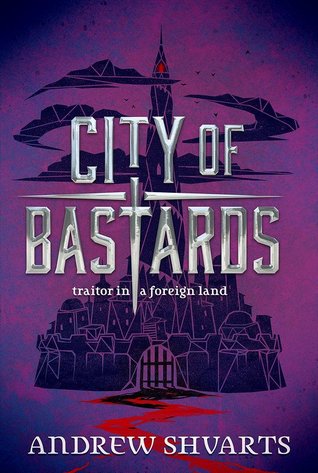 “While war rages in her Western homeland, Tilla of House Kent is far away, safely cloistered as a ward of the King in Lightspire. She’s best friends with the Princess, treated like nobility, and is even given a spot at the prestigious University, where only the Kingdom’s finest are educated. And yet, she finds herself unhappy, haunted by memories of her beloved brother, Jax, and plagued by a deeper sense of uncertainty, of not fitting in.
Her boyfriend, Zell, who is now a recruit for the City Watch, puts on a brave face to hide the pain of leaving behind his Zitochi identity, while Princess Lyriana, stripped of her role as Mage, has begun rebelling against her conservative upbringing: drinking, partying, and hooking up with random boys.
Then, Tilla returns to her quarters one night to find the cold body of her roommate. The girl was the daughter of an Eastern diplomat, well-known to be troubled, so the school has no trouble ruling it a suicide and sweeping it under the rug. Tilla doesn’t buy it. And despite the urging of just about everyone in her life, she can’t let it go. She digs deeper, along with Zell, Lyriana, and the Archmagus-to-be Ellarion, unearthing a conspiracy that goes from the highest of the nobility to the most dangerous depths of its criminal underbelly…and whose sinister mastermind is a face all too familiar.”
Guest Post: “If A Fungus Had A Brain” by David Walton + International Giveaway!
Posted on October 3, 2017 10 Comments
***The giveaway is now over, thanks to everyone who entered!***
 Today I am thrilled to welcome author David Walton to The BiblioSanctum to talk about his latest novel The Genius Plague, a science fiction-thriller about a fungal pandemic. I’m sure we’ve all read our fair share of books about nasty diseases, infections and outbreaks, all with a pretty bad prognosis for the human race. But this book has a special twist! What if an infection that you thought would kill you made you more intelligent instead? I had an incredible time with this tremendously smart and well-researched novel, which is why I’m excited to have David himself chime in on the very topic of fungi and give a glimpse into why they some of the hardiest life forms on the planet. The Genius Plague is out today and available wherever books are sold, so check it out! Don’t forget to also enter our giveaway which is open internationally! Happy reading!

IF A FUNGUS HAD A BRAIN
by David Walton
Science fiction is full of intelligent non-humans, whether aliens or computers or uplifted mammals. We’ve seen intelligent life floating in the clouds of Jupiter, inhabiting the inside of suns, or even entire intelligent planets. But nobody thinks a fungus could be intelligent, do they? An intelligent mold? Intelligent athlete’s foot? It’s ridiculous. Or is it?
Fungi are secretly dominating this planet. They stretch microscopic tendrils through acres of soil, infect plants and animals of all kinds, and survive in the harshest of environments. Many are microscopic, but some single organisms weigh more than a blue whale. More than a hundred blue whales. And live for thousands of years.
These gigantic fungi–the largest living organisms on Earth–are all but invisible in a walk through the forest. They stretch underneath your feet, in miles upon miles of mycelia, a giant neural network that routes information–as well as carbon, nitrogen, and water–to different parts of the forest.
Wait, you say. A neural network? You mean like our brains? Well, yes, in a way. Mycelia are not nerves, but they do pass complex information in a giant, connected network that makes sophisticated decisions. So, maybe that intelligent fungus isn’t so ridiculous after all…
In my latest novel, THE GENIUS PLAGUE, I take these true facts and spin them into a tale of a fungus that spreads far beyond the bounds of its Amazon rainforest home. Fungus can influence not only the plants of a forest, but the animals as well, taking up residence inside their bodies. This infestation sometimes benefits the animal, but it always benefits the fungus.
So what happens when humanity becomes part of the fungus’s sphere of influence? We breathe in its spores, which take root in our lungs and send microscopic tendrils into our brains. If we survive it, we benefit from the symbiosis with better intelligence, memory, and ability to communicate. The fungus has made humanity better… but at what cost? Is it serving our needs, or are we serving its? Are our choices truly our own?
I first started on the idea for this novel from the suggestion that wheat is the dominant lifeform on our planet, having domesticated humans and trained us, not only to plant wheat all over the planet, but also to carefully work to remove weeds, pests, and anything else that would interfere with its growth and survival. I started with the idea of a plant that spread and influenced people to work for its benefit, until a friend pointed out how ideally fungus met the criteria I was looking for. And so the intelligent fungus of The Genius Plague was born.
Look for THE GENIUS PLAGUE online or at your local bookstore!
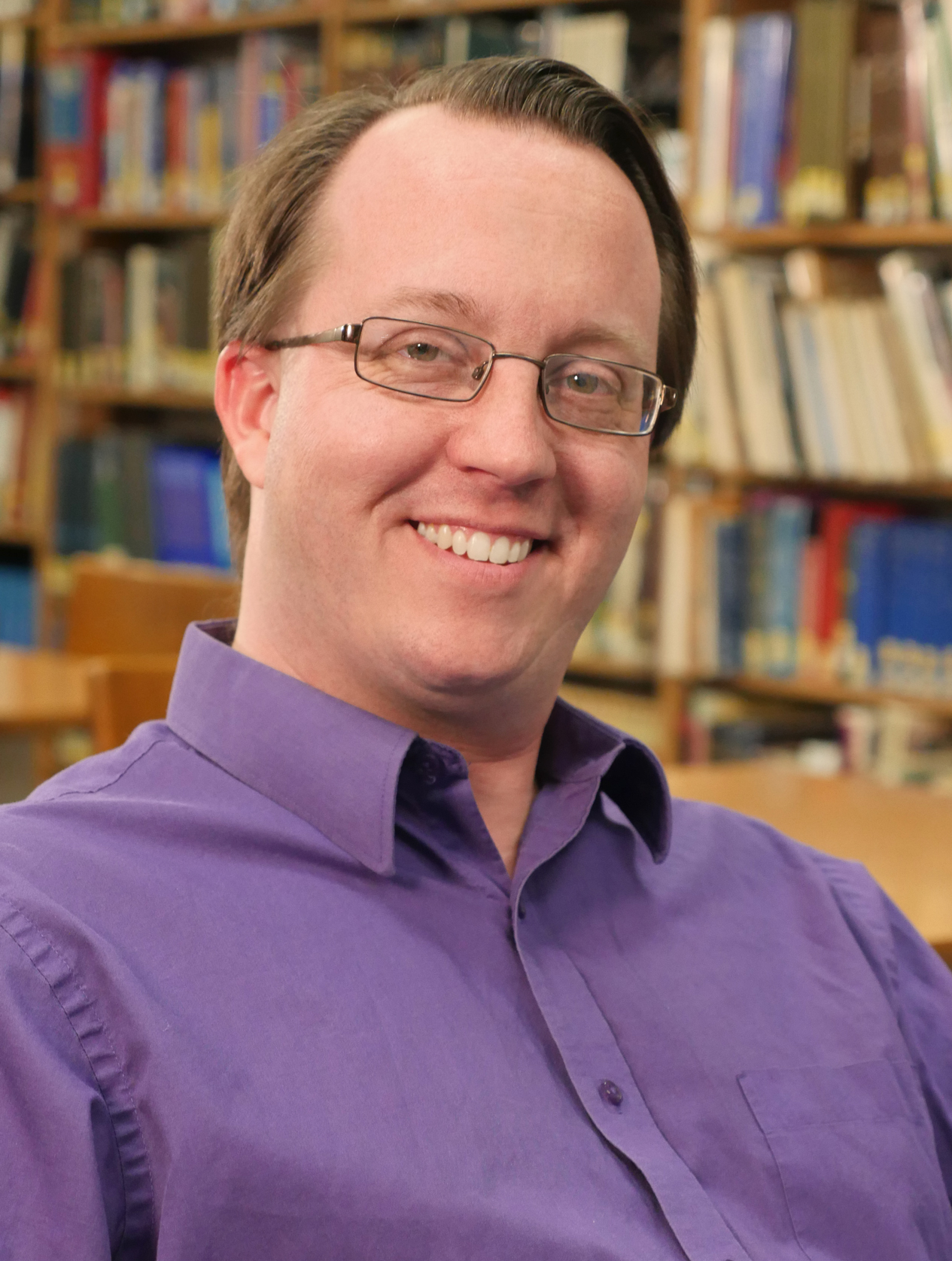 ABOUT THE AUTHOR
David Walton is the author of the international bestseller SUPERPOSITION, a quantum physics murder mystery, and its sequel, SUPERSYMMETRY. David’s first novel, TERMINAL MIND, won the 2008 Philip K. Dick Award for the best SF paperback published in the United States for that year. In his latest book, THE GENIUS PLAGUE, a pandemic threatens to destabilize world governments by exerting a subtle mind control over survivors.
“David Walton is one of our very best writers of science-fiction thrillers”
–Robert J. Sawyer, Hugo Award-winning author of Quantum Night
“This is the way sci-fi ought to be.”
—WALL STREET JOURNAL
David lives near Philadelphia with his wife and seven children.
The Genius Plague Giveaway
Interested in the book? Well, here’s your chance to win a copy of your very own! With thanks to the publisher, The BiblioSanctum has two print copies of The Genius Plague up for grabs! This giveaway is open internationally so everyone is free to join in the fun! To enter, all you have to do is send an email to bibliosanctum@gmail.com with your Name and valid Mailing Address using the subject line “THE GENIUS PLAGUE” by 11:59pm Eastern time on Tuesday, October 10, 2017.
Only one entry per household, please. Two winners will be randomly selected when the giveaway ends and then be notified by email. All information will only be used for the purposes of contacting the winners and sending them their prize. Once the giveaway ends all entry emails will be deleted.
So what are you waiting for? Enter to win! Good luck!
Book Review: 13 Minutes by Sarah Pinborough
Posted on October 2, 2017 39 Comments
I received a review copy from the publisher. This does not affect the contents of my review and all opinions are my own.
 13 Minutes by Sarah Pinborough
Mogsy’s Rating: 5 of 5 stars
Genre: Thriller, Mystery, Young Adult
Series: Stand Alone
Publisher: Flatiron Books (October 3, 2017)
Length: 320 pages
Author Information: Website | Twitter
No joke, I was left breathless and a little shaken after I finished this book, feeling like I had just stepped off the world’s scariest roller coaster. Being a fan of the author since her supernatural historical horror novel Mayhem, I knew full well her talent for writing thrills and dramatic suspense, but 13 Minutes was something else. This is Sarah Pinborough at her best.
The story told through the eyes of two teenagers, who are as different as night and day. Smart, rich, and beautiful, Natasha is the most popular girl in school. Then there’s plain and self-deprecating Rebecca, who used to be Tasha’s childhood best friend before she was unceremoniously replaced as they got older, the dynamics of high school being as fickle and hard-edged as they are. Now Tasha and her two new BFFs Jenny and Hayley are the new queen bees of the Brackston Community School hive, while Becca has been cast aside, relegated to the bottom rungs of the social ladder.
Then one day, everything changes. In the dark early hours of a winter morning, Tasha’s unresponsive body is pulled from the frigid waters of the River Ribble. Paramedics were able to revive her, but doctors say she was technically dead for thirteen minutes. When Tasha finally wakes up from her coma, she can only remember the horrible sensation of drowning, but nothing about what happened the night before or how she even ended up in the river in the first place. She does, however, have sick feeling that Jenny and Hayley might be involved, after noticing the strange way the two of them have been around her ever since she regained consciousness at the hospital. Convinced that she can no longer trust her best friends, Tasha turns to Becca for help.
What can I say, but that might be one of the most understated summaries I’ve ever written for a review. I can promise that the full plot of 13 Minutes is way twistier and more intense, but of course I can’t go into the details or that would be spoiling the surprise. Once again I am amazed how Pinborough can throw readers completely for a loop, making you think you know what’s going on before flipping everything on its head and presenting you with another angle. Each time I thought I had the answer, a plot twist would rear up and smack away my smug confidence, keeping me guessing yet again. Incredibly, all the clues were always there in front of me, but since Pinborough is so good at subverting tropes and expectations, I never saw them until it was too late.
Also, I would not hesitate to recommend this book to anyone, despite its official tag as a Young Adult novel. Unlike many of its peers in the genre, 13 Minutes does not pull any punches, nor does it talk down to its audience. On the contrary, it features a lot of mature themes, unflinchingly exploring the dark side of high school culture and revealing the all too vicious realities of being a teenage girl. Having been there and done that, I feel there’s definitely truth to the argument that girls can be just as nasty and cruel as boys when it comes to schoolyard bullying, with much of that aggression coming through in the form of manipulation and relational sabotage, which is no less emotionally damaging to the victim. My high school years were some of the best of my life, but I certainly don’t miss the petty squabbles and popularity contests. This book reminds me why, while also showing how much more extreme things can get in this age of social media and technology.
Still, I don’t want to make it sound like this novel is full of nothing but teen drama, because the story’s tone is definitely more in keeping with a psychological mystery-thriller. Pinborough allows us a look into the fascinating minds of her protagonists as the two of them navigate a minefield of high school politics—but just enough. Both Tasha and Becca are clever young women who share a love for chess playing and solving puzzles, but to be a good strategist also means keeping a lot of secrets, and between them there are plenty of hidden motives. These are gradually revealed as the tale unfolds, holding me rapt with every new development.
Needless to say, I loved this book to bits, and you can bet once the story sank its hooks into me, I couldn’t have put it down even if I tried. Of the half a dozen or so novels I’ve ready by Sarah Pinborough so far, I believe, without a doubt, that 13 Minutes is her finest work to date, blasting away my already sky-high expectations to become my new favorite book by the author. Brava, just brava.

Book Review: Magicians Impossible by Brad Abraham
Posted on October 1, 2017 25 Comments
received a review copy from the publisher. This does not affect the contents of my review and all opinions are my own.
 Magicians Impossible by Brad Abraham
Mogsy’s Rating: 3.5 of 5 stars
Genre: Fantasy
Series: Book 1/Stand Alone
Publisher: Thomas Dunne Books (September 12, 2017)
Length: 400 pages
Author Information: Website | Twitter
Brad Abraham’s Magicians Impossible is a fascinating debut that blends together many genres, reading much like a magic school story for adults wrapped in a part-urban fantasy, part-spy thriller package. The novel stars protagonist Jason Bishop, a 30-year-old bartender from small town New York who has always felt deep in his heart that he was meant for bigger things. For many, such desires are nothing more than a pipe dream, but unbeknownst to Jason, the potential in him has always been in his blood.
Shortly after the apparent suicide of his estranged father Daniel, Jason discovers that he is actually the son of two very power magicians. Daniel, whose real name was actually Damon King, was a secret agent for the Invisible Hand, a secret coven of mages involved in an ancient war against another shadowy society of magic users called the Golden Dawn. After Jason was born, Damon had concocted a cover story so that the boy would never suspect his parents’ true identities, and then he distanced himself, becoming an aloof and absent father in order to keep his son hidden from his enemies.
As a result, Jason grew up harboring a deep resentment for Damon, knowing nothing about his family’s origins. The existence of a magical secret world was a shock to him, when at his father’s funeral, a mysterious stranger representing the Invisible Hand named Carter Block appeared before him and revealed everything about their order. Carter also told Jason the heartbreaking truth: Damon King did not really commit suicide—he was murdered. Now the Invisible Hand needs Jason on their side to strike back against the Golden Dawn and to complete the work his father started, hunting down a powerful artifact that could help turn the tide of this magical war. But first, to prepare him for the battles ahead, Jason will have to undergo and complete his secret agent mage training—and he’s got a lot of catching up to do.
From the start, I was impressed with the presentation of Magicians Impossible and was struck by how incredibly cinematic it was. If you’ve ever wished for more action in your urban fantasy, then this is the book for you. Hints of what to expect are in the title’s reference, which practically screams the kind of dynamic excitement and edge-of-your-seat thrills typically found in Mission Impossible or James Bond movies. In keeping with the comparisons to Hollywood blockbusters, however, one should not expect to go in finding anything too original in the novel’s plot either, though to Brad Abraham’s credit, he does a good job casting his own brand of magic on familiar ideas by combining them with other elements or sprucing them up with new and wild twists.
The flow of the novel is also relentlessly driven and fun, though like many debuts, the pacing does encounter unevenness in some places. Many new authors tend to become too enthusiastic with their first novels, biting off more than they can chew by trying to do too much, and I sense a mild case of that here. Things start to drag as we move into the second half of the book, following Jason as he is inducted into the Invisible Hand. This section was weighed down by too much exposition into the smaller details while not providing enough of the background information needed to understand the bigger picture, leaving me a bit confused as to ultimate purpose of these magical societies and their much flaunted all-important war. Abraham’s ideas are certainly ambitious, but perhaps his attention was spread too thin trying to juggle them all at once.
That said though, if you were drawn to this book by the promise of explosive action and riveting spycraft, I seriously doubt any of these issues will bother you. The flaws are also relatively trivial in the greater scheme of things, especially in a novel like Magicians Impossible which makes no bones about its prime objective—to entertain the reader above all else. While the plot might not be all that extravagant and the twists might be on the predictable side, these weaknesses are offset by the delectable fantasy elements, family drama, magical espionage, adrenaline-pumping fight sequences, and globetrotting adventure. I had a good time with this novel and hopefully Brad Abraham has plans for a sequel in the works, because I wouldn’t mind a chance to return to this world.

Audiobook Review: Star Wars: Leia, Princess of Alderaan by Claudia Gray
Posted on September 30, 2017 13 Comments
I received a review copy from the publisher. This does not affect the contents of my review and all opinions are my own.
 Star Wars: Leia, Princess of Alderaan by Claudia Gray
Mogsy’s Rating: 4 of 5 stars
Genre: Science Fiction, Media Tie-In, Young Adult
Series: Star Wars Canon
Publisher: Listening Library (September 1, 2017)
Length: 9 hrs and 53 mins
Author Information: Website | Twitter
Narrator: Saskia Maarleveld
As far as I’m concerned, Claudia Gray has already proven herself capable of writing a damn good Star Wars novel, with fantastic examples like Lost Stars and Bloodline. So when I found out she was penning a new YA novel about Leia, it was automatically added to my must-read list.
The book, titled Leia, Princess of Alderaan, is a look back at the titular character’s early life as a daughter and heir to the throne of one of the most cultured, beautiful, and prosperous core worlds in the galaxy. Before she became a leader of the Rebel Alliance, before she became burdened by the guilt and grief that resulted from the destruction of her home planet, the iconic Princess Leia was vivacious and high-spirited young girl who faced every challenge with a determination to succeed. At sixteen years old, having just officially declared her royal service to Alderaan, Leia is preparing for a series of tests that will prove her worth in the areas of body, mind, and heart. The trials will involve grueling survival courses. Intense political training. Charity missions and relief efforts. Leia is resolved to master them all, and to make her adoptive parents proud.
Unfortunately though, her mother Breha and father Bail Organa appear to be distracted by other matters lately—like throwing dinner parties and other social gatherings with their allies in the Senate. Frustrated by their unwillingness to let her in on their activities, Leia decides to conduct her own investigations, and in doing so, unwittingly uncovers a network of rebel cells and activities operating right under the nose of the Empire’s leaders. And the greatest shock? It looks as if her parents—her peace-loving, diplomatic parents—are at the heart of it all. Realizing that they cannot shield their daughter from the truth anymore, Breha and Bail come clean, leaving Leia with the first of many hard choices she will make in her long and storied life. Will she embrace her parents’ work and help fight the Empire, or focus her efforts on protecting the citizens of Alderaan, her people that she has sworn to serve?
Needless to say, this a book that Leia fans will certainly not want to miss. On the timeline, it takes place in the Star Wars: Rebels era in the period leading up to the events of Rogue One and A New Hope. It is a formative year for Leia Organa, in which she will experience many firsts, including the first time she makes an appearance before Alderaan in an official capacity, the first time she is exposed directly to the harsh conditions of the Empire, the first time she hears about the rebellion, and—most unexpected of all—the first time she falls in love. The lessons she learns from her achievements (and mistakes) here will end up shaping the rest of her life.
And as Claudia Gray has already written a book about Leia, she knows the character inside out and I honestly can’t imagine any other top-class author writing about the Alderaanian princess as well as she does. Despite being a young adult novel, its themes are mature and serious enough that this can be enjoyed by Star Wars fans of all ages, not to mention the compelling plot and rich characters that held my attention from beginning to end. I enjoyed seeing this rare version of Leia, one that is still very much innocent and naïve, though as always, her heart is in the right place. She doesn’t realize what the Empire is capable of yet, and as such, her inexperience leads her to play dangerous games and fall into traps. This story, however, is also bigger than Leia, focusing on the efforts of Breha, Bail, Mon Mothma and the other secret allies in the Senate to fight back against the Empire. Not only do we get a lot of background information into Leia’s origins, we also get a wealth of history about how her resistance force started.
Lore buffs will also delight in the many references to all the movies, with Easter Eggs that go back even to the prequel trilogy. Those paying attention will notice a couple of familiar faces making surprise cameos, and some of the mentions made about Leia’s past in the films are given context as well. And because technically this novel falls under the umbrella of Journey to Star Wars: The Last Jedi, there may be some light foreshadowing related to Leia’s role in the upcoming movie. Bail Organa’s work in establishing the rebel network has been touched upon in many stories including this one, and there are perhaps hints here as to how his daughter will continue his legacy in the places he used to spend his time.
All in all, Claudia Gray is fast becoming one of my favorite Star Wars authors and I hope she will write many more. Leia, Princess of Alderaan is another important piece in the new canon, perfectly encapsulating the personality and spirit of one of the most beloved characters in geek fandom as she comes of age during a tumultuous time. If you love Star Wars and if you love Leia, you will need to read this book—period.
Audiobook Comments: Saskia Maarleveld may be a new narrator to me, but her credits include years of audiobook narrating and voice-over work, and this impressive amount of experience is apparent in her performance. She was a fine choice of reader for this audiobook, and I thought she did a fantastic job portraying young Leia.
Friday Face-Off: Heart
Posted on September 29, 2017 28 Comments
Welcome to The Friday Face-Off, a weekly meme created by Books by Proxy! Each Friday, we will pit cover against cover while also taking the opportunity to showcase gorgeous artwork and feature some of our favorite book covers. If you want to join the fun, simply choose a book each Friday that fits that week’s predetermined theme, post and compare two or more different covers available for that book, then name your favorite. A list of future weeks’ themes are available at Lynn’s Book Blog.
This week’s theme is:
“Faint Heart Never Won Fair Lady”
~ a cover featuring a HEART
Mogsy’s Pick:
Warm Bodies by Isaac Marion
I wanted to challenge myself this week by choosing something that’s unexpected, and this was a book I read a while ago which I haven’t thought about for a long time, but only came back to me recently as I was scouring through my shelves trying to come up with ideas for this topic. At its heart (haha), Warm Bodies is a “zombie book”, but it’s also definitely not your typical post-apocalyptic survivalist horror story involving gory encounters with the savage, brain-eating hordes. On the surface, the zombies here appear to of the usual shambling, moaning and in various-stages-of-decay variety, but dig deeper and you will find that they are able to maintain a semblance of a structured society. Communication between them is just good enough to allow things like organized hunts or a rudimentary class system, and zombie couples even have wedding ceremonies and are given zombie children to teach and raise.
The book also gives a plausible reason as to why zombies like eating human brains, explaining that it gives them a cerebral high while letting them relive the memories and experience the emotions of their victims. It is in this way that R, our zombie protagonist and narrator, becomes fixated with Julia, a girl he encounters on a routine hunt after killing her boyfriend and chowing down on his grey matter. And the rest, as they say, is history. “Faint Heart Never Won Fair Lady” indeed.
And now, time to look at the covers:
First row, from left to right: Random House Vintage UK (2011) – Atria (2011) – Spanish Edition (2011)
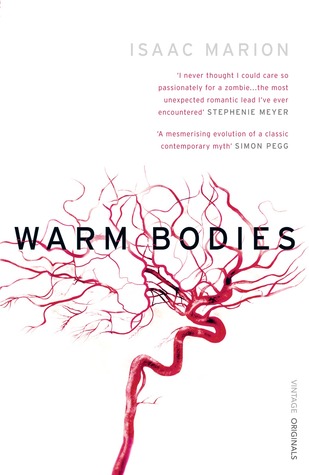
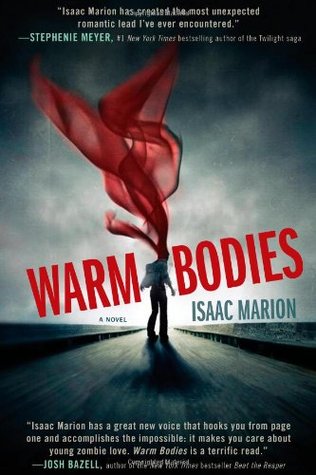
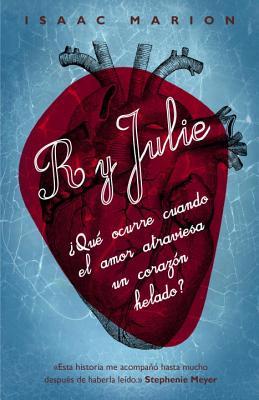
German Edition (2013) – Vintage (2013) – Turkish Edition (2011) – Italian Edition (2011)



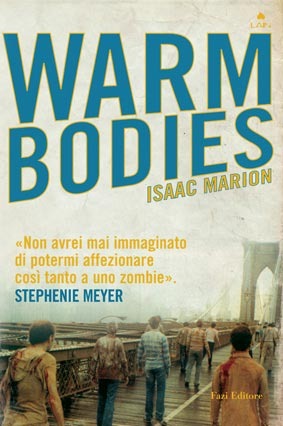
Winner:
I’m not in love with any of these, to be honest. But since I dislike the movie-edition covers, that helps narrows down my choice of winner. I’m going to have to go with the Spanish edition, which was also the cover that inspired me to use this book for today’s topic in the first place. It drew my eye, not to mention the fact that it brings to light the not-so-hidden “Romeo & Juliet” allusion.
What do you think? Which one is your favorite?
Book Review: The Salt Line by Holly Goddard Jones
Posted on September 28, 2017 25 Comments
I received a review copy from the publisher. This does not affect the contents of my review and all opinions are my own.
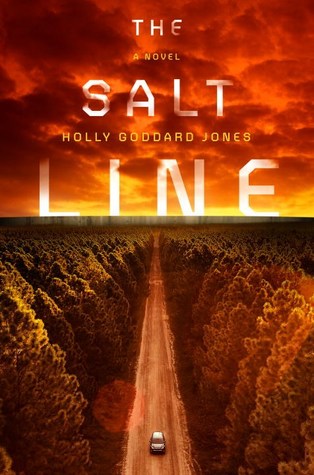 The Salt Line by Holly Goddard Jones
Mogsy’s Rating: 4 of 5 stars
Genre: Dystopian, Science Fiction
Series: Stand Alone
Publisher: G.P. Putnam’s Sons (September 5, 2017)
Length: 400 pages
Author Information: Website | Twitter
It’s a year for pleasant surprises, it seems. The Salt Line is a book that first caught my eye because of its thriller-dystopian premise, but it’s more than just that; author Holly Goddard Jones has created an exciting high-drama experience, the kind that would not go amiss in a Crichton novel, but her story also contains a high level of literary quality that challenges most genre labels.
Taking place in the not-so-distant future, The Salt Line features a world defeated by an enemy smaller than the size of a pea. The United States has even ceded most of its natural territories to this tiny terror, a tick that serves a as a vector to a deadly pathogen. Getting bit by one of these things is scary enough—their life cycle and what it does to the human body is like something straight out of an Alien movie—but the true killer is in fact Shreve’s disease, carried by a large percent of these ticks. For this reason, most people now live in safe zones in which these pests have been eradicated. These enclosed areas are separated from the wilderness, which is where the ticks thrive, by a physical wall as well as a burnt-out dead zone called the Salt Line, a large swath of land that has been purged of all life by fire and chemicals designed to keep the ticks at bay.
Still, there are people who live beyond the Salt Line—some by choice, others by necessity. Then there are the thrill-seekers who pay big money for their chance to go out there, to have a grand adventure to see what’s left of nature. Our story begins with such a group, receiving their first orientation from the tour company that’s being paid to bring them outside the quarantine zone. Those among the expedition include Edie, a former bartender in her 20s who somehow ended being roped into this dangerous excursion by Jesse, her reckless popstar boyfriend. Then there’s Marta, who may seem like just a simple housewife, except she is actually married to a notorious robber baron whose illicit activities she has endured for years because of her love for her children. And of course there’s also Wes, a young billionaire tech prodigy who founded Pocketz, the financial app that has taken the world by storm.
Most of the people on this tour are there because of what the company brochure promised—a chance to experience the untouched beauty of nature. For some, being able to witness sparkling waterfalls and sunrises without the filter of pollution is worth the hundreds of thousands of dollars and the risk of death from a tick bite. But for those mentioned, they have other reasons for wanting to take this trip. And when the expedition is waylaid by a group of rebels and held captive in an outer-zone commune called Ruby City, those secrets begin to come to light, with dire consequences for their chances of returning home.
The unofficial tagline for this book should be The Salt Line: come for the creepy ticks, stay for outstanding characterization and the in-depth exploration of social themes. Those who want suspense and intrigue will get plenty, but there’s no doubt that the novel’s strength is in its rich, character-driven narrative and fantastically written cast. Our key players are all fleshed out with robust back stories, complete with their individual moral dilemmas, conflicting desires, and other very human concerns (I especially loved Marta and Wes). They also come from varied backgrounds, representing the different strata of this troubled society with its extreme socio-economical class divisions. The arrival of the deadly ticks has altered daily life at all levels, impacting issues related to the environment, healthcare, immigration, technology, and more. Though the price of safety and security is high, many appear willing to pay it even if it means being trapped in poor circumstances.
Still, despite its social commentary, I appreciated the way our story maintained its focus on adventure and suspense. Love them or hate them, the characters are at the heart of this novel, and the ambiguities behind their ambitions are the fuel that drives the plot, keeping things engaging. All this and more are presented in a seamless package containing a fine balance of horror, dystopian, and thriller elements.
Would I recommend The Salt Line for fans of dystopian fiction? Yes, but with an added proviso that this genre description merely scratches the book’s surface—a good thing, in my opinion. I got a lot more out of the story than I expected, and enjoyed spending every tense moment in this world with its multifaceted characters. I wouldn’t hesitate to read another novel by Holly Goddard Jones in the future.
Waiting on Wednesday 09/27/17
Posted on September 27, 2017 17 Comments
“Waiting On Wednesday” is a weekly meme that first originated at Breaking the Spine but has since linked up with “Can’t Wait Wednesday” at Wishful Endings now that the original creator is unable to host it anymore. Either way, this fun feature is a chance to showcase the upcoming releases that we can’t wait to get our hands on!
Mogsy’s Pick
The Raptor & the Wren by Chuck Wendig (January 23, 2018 by Saga Press)
Of all of Wendig’s books that I’ve read, his Miriam Black series is by far my favorite. While the last volume wasn’t as good as the previous three, this next installment seems to indicate a return to the gritty, violent and horror-filled darkness that made me love the earlier books so much. I guess we’ll just have to wait and see what happens.
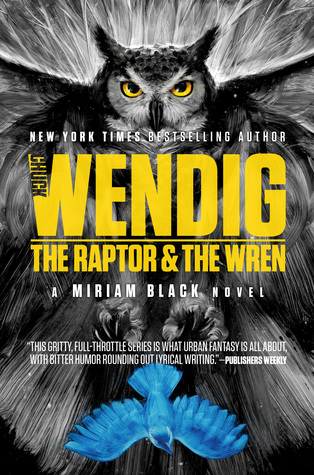 “In the fifth book of the “wildly entertaining” (Kirkus Reviews) Miriam Black series, Miriam continues her journey to find answers on how to change her fate and begin to make right some of what she’s done wrong.
Armed with new knowledge that suggests a great sacrifice must be made to change her fate, Miriam continues her quest and learns that she must undo the tragedies of her past to move forward.
One such tragedy is Wren, who is now a teen caught up in a bad relationship with the forces that haunt Miriam and has become a killer, just like Miriam. Black must try to save the girl, but what’s ahead is something she thought impossible…”
Book Review: An Unkindness of Magicians by Kat Howard
Posted on September 26, 2017 21 Comments
I received a review copy from the publisher. This does not affect the contents of my review and all opinions are my own.
 An Unkindness of Magicians by Kat Howard
Mogsy’s Rating: 3.5 of 5 stars
Genre: Fantasy
Series: Stand Alone
Publisher: Saga Press (September 26, 2017)
Length: 352 pages
Author Information: Website | Twitter
A solid 3.5 star read. Kat Howard enchanted me with her debut Roses and Rot last year, so I was excited to check out An Unkindness of Magicians, her sophomore novel about a hidden world of magic and power. In this “Unseen World”, members of elite magical houses come together every few years to duke it out in a tournament called the Turning, with each family represented by their chosen champion. Ostensibly held to place each house in a hierarchical order based on magical proficiency, the competition may in fact be a front for a more nefarious purpose, as this twisted and snappy tale will soon reveal.
Unlike Howard’s first novel which was written in the first person, An Unkindness of Magicians features a larger cast and bounces between multiple third-person perspectives. Our key players include Sydney, a relative unknown who bursts upon the scene with her extraordinary and unmatched talent with magic; Laurent, an outsider who hopes to enter the Turning for a chance to establish his own House; Grey Prospero, Laurent’s best friend who was disinherited from his House as the result of a serious and undisclosed transgression he committed; Harper, an independent magician determined to infiltrate the Unseen World to discover the truth behind her best friend’s mysterious death; and of course, there are also Miles Merlin and Miranda Prospero, two powerful House leaders who each have a stake in how the Turning plays out.
The situation gets a little muddy though, as the heirless House Prospero takes on Ian Merlin, the beloved son of Miles, as their champion. Left with no other choice, House Merlin must put forth Ian’s sister as champion, potentially pitting the siblings against each other in a fight to the death. Meanwhile, acting as a free agent, Sydney has decided to partner with Laurent and compete on his behalf, and Grey, who is taking a page from his best friend, has decided to try and establish his own House as well, by representing himself in the Turning.
That’s a lot to take in, right? But wait—there’s more, believe it or not. I haven’t even gotten into the “serial killer” part of the plot yet, involving magical women who are murdered for their power-infused finger bones. Then there’s the House of Shadows, a prison for slaves and sacrifices, because unfortunately, magic isn’t an unlimited resource and using it exacts a cost. This is where the Shadows come in, paying the price for the great Houses’ power. As a child, Sydney was a prisoner of the House of Shadows, but she survived and is on her way to winning her freedom, as long as she can fulfill her orders and emerge victorious in the Turning, even if it means having to kill Ian Merlin, whom she has become romantically involved with.
If your head is spinning right now, I don’t blame you; I felt much the same while reading this book, especially in the first half while I struggled to keep all the names and their relationships straight. There’s almost too much going on here for a mere 350-page novel, and as you can imagine, the story felt extremely rushed. Character development also suffered because of this, with the focus being so dispersed on the different storylines and people involved. As a result, I found it nearly impossible to connect with anyone, a stark contrast from my experience with Roses in Rot, which mainly centered on the main protagonist and the deeply compelling relationship with her sister. Possibly, Howard is still trying to find her feet when it comes to writing a large cast and multiple perspectives, finding a balance between pacing and characterization that works. Things were a little shaky with An Unkindness of Magicians, which failed to impart the same level of emotional impact due to weaker characters as well as the breakneck speed at which we whipped through important events.
That said, the story itself is fascinating, and so is the Unseen World in which all of these magical power struggles take place. Furthermore, the second half of the novel is stronger than the first half—not coincidentally, perhaps, since this is also where Howard begins to stitch together the many pieces of the plot. Once the bigger picture starts to take shape, this is when the author’s writing really shines. While her prose in this book is not as beautiful or as deft as it was in Roses and Rot, it does come through every now and then, especially during some of the story’s quieter moments.
All told, I didn’t think Kat Howard’s An Unkindness of Magicians was as meaningful or as gorgeously wrought as her debut, but it does make up for that in other areas, like having a fantastic premise and imaginative world-building. Lack of character development and uneven pacing are perhaps the novel’s main weaknesses, but in spite of that, I still enjoyed myself. I’ll continue to be on the lookout for the author’s future work.



 The BiblioSanctum