YA Weekend: An Enchantment of Ravens by Margaret Rogerson
Posted on October 22, 2017 18 Comments

I received a review copy from the publisher. This does not affect the contents of my review and all opinions are my own.
 An Enchantment of Ravens by Margaret Rogerson
Mogsy’s Rating: 3.5 of 5 stars
Genre: Fantasy, Young Adult
Series: Stand Alone
Publisher: Margaret K. McElderry Books (September 26, 2017)
Length: 300 pages
Author Information: Website | Twitter
An Enchantment of Ravens is a pretty standard Young Adult fantasy novel as far as the genre is concerned, but it was also exactly what I needed. Telling the story of a young woman who runs afoul of the immortal fair folk, the book featured just the right balance of magic, beauty and romance—and if the premise itself might sound a bit conventional, at least the plot was fun and always kept me entertained.
Our protagonist, Isobel, was only twelve years old when she began painting portraits for the Fae. Although they can live forever and are capable of creating breathtaking displays of glamour and other magic, the fair folk lack the ability to perform human Craft. Anything that requires art, design or construction—whether it involves writing a play, weaving cloth, or even baking bread—they simply cannot manage without all their efforts turning into dust. And so, this leaves the Fae with an insatiable thirst for incredible talents and skills like Isobel’s, and as a result her services have become highly in demand. Paying her with enchantments instead of money, her Fae patrons have helped Isobel support her aunt and two adoptive little sisters with their charms ensuring that they will always have food, shelter, and safety.
But then one day, Isobel is visited by Rook, the Autumn Prince—the first royal Fae patron who has ever contracted her for a portrait. Wanting badly to please Rook, she paints the prince exactly as she sees him, inadvertently capturing the mortal sorrow in his eyes, thus exposing his weakness to the entire Fae court. Furious, Rook kidnaps Isobel, dragging her back to his autumnlands to be tried for her crime. Along the way, they are harassed by all kinds of hostile creatures, from the minions of the Alder King and the Wild Hunt to the horrible barrow monsters that prove a match for even a Fae prince like Rook. Before long though, the two of them are beset with worse concerns. Relying on each other for their survival has resulted in Isobel and Rook growing close, but love between a human and a Fae is strictly forbidden, leading the couple to face some difficult choices.
I wasn’t all that impressed with the overarching plot, to be honest, for stories about young women being whisked off to the faerie realm by their kidnappers-turned-lovers have been done to death, and An Enchantment of Ravens does not deviate much from the usual themes. The romance didn’t sweep me off my feet either, and I was actually annoyed with Isobel at the beginning for becoming smitten with Rook so quickly. Also, both are saddled with such terrible emotional baggage from their pasts that I felt any chemistry between them was snuffed out before it could even begin.
That said, I still had fun, because it’s the little details that makes this book such an enjoyable read. For one I loved the fact that Isobel is artist, and her reverence for the craft made it easier to relate to her. I also quite liked how the Fae would compensate her for her paintings with enchantments, leading to some interesting forms of payment—like guaranteeing a certain number of eggs laid each week by the farm’s chickens, or a cord of firewood magically appearing on their doorstep every month. Being the resourceful young woman she is, Isobel has found a clever way to help her family thrive, though it means having to be extra careful with her wording when it comes to asking the Fae for her fee. The fair folk can’t lie, but they are still very devious and they like to play tricks on humans unless every possible loophole is covered.
Against my better judgment, I also found that I liked Rook. When he initially made his first appearance, I thought for sure he would be one of those insufferably arrogant and broody Fae princes, and for a while it really felt like that would be the case. The truth, however, came about once he and Isobel started journeying towards the autumnlands, especially following the attacks from all kinds of monsters while they were in the wilderness. In the face of these dangers, a vulnerable, clumsy and even inept side to Rook began to surface, making him feel more genuine and relatable. The fact that he wasn’t perfect also meant that there was less of a power imbalance between him and Isobel, with both characters having to rely on each other for survival, and I won’t lie, this equal footing made the kidnapper-hostage nature of their relationship somewhat easier to swallow. Light humor in their conversations also made Rook more endearing.
All told, I wouldn’t say there’s anything too “special” about An Enchantment of Ravens, but sometimes that it is a good thing, considering how many books I’ve read recently that have tried doing something new and different but ended up falling flat. At least you know what you’re getting with a book like this. I knew I wanted a fun and light fantasy about the Fae, and I definitely wasn’t disappointed.


Mogys’s Bookshelf Roundup: Stacking the Shelves & Recent Reads
Posted on October 21, 2017 29 Comments
Bookshelf Roundup is a feature I do every other weekend which fills the role of several blog memes, like Stacking the Shelves where I talk about the new books I’ve added to my library or received for review, as well as It’s Monday! What Are You Reading? where I round up what I’ve read since the last update and what I’m planning to read soon. Mostly it also serves as a recap post, so sometimes I’ll throw in stuff like reading challenge progress reports, book lists, and other random bookish thoughts or announcements.

Received for Review
Thank you to the publishers and authors for the following review copies received. For more details and full descriptions of the books, be sure to click the links to their Goodreads pages!

Glimpse by Jonathan Maberry – From a master of horror comes this forthcoming supernatural thriller about a woman who catches glimpses of her lost son in a pair of cracked reading glasses that she got from an old lady on a train. My thanks to St. Martin’s Press for the ARC!
Frankie by Shivaun Plozza – A surprise arrival courtesy of Flatiron Books, this contemporary YA novel features an angry and troubled teen girl who suddenly needs to pull herself together to find her missing half-brother, who might be the only person who can tell her more about her past. This one’s a little outside my usual genres, but it does look interesting.
Children of the Fleet by Orson Scott Card – Described as a new angle on Card’s Ender’s Shadow, this book is the first of a new series telling the story of the Fleet in space. Admittedly, I’m not too familiar with the Enderverse, so I’m hoping I won’t be too lost jumping into this one. My thanks to Tor for the finished copy.

Different Class by Joanne Harris – Lately I’ve become a lot more interested in reading psychological thrillers, so I immediately jumped on Different Class when the publisher contacted me about it. Plus, I’ll never say no to anything by Joanne Harris! With thanks to Touchstone Books.
Last Chance by Gregg Hurwitz – Thanks again to Tor Books for this sequel to last year’s The Rains, a YA zombie horror with an interesting twist. It’s true I had some issues with the first book, but the story was entertaining enough and I definitely wouldn’t mind continuing the series.
Breach of Containment by Elizabeth Bonesteel – This third installment in the Central Corps series follows the characters as they try to diffuse a shooting war between the galaxy’s major galactic military factions, until the discovery of a strange artifact changes everything. I haven’t read the previous books, so if anyone knows if this can be read as a standalone, let me know! With thanks to Harper Voyager for the surprise copy!

Next up, a trio of ARCs from the awesome folks at Subterranean Press! Penric’s Fox by Lois McMaster Bujold is another Penric and Desdemona novella, and you know how I just adore this series. There’s not much I can find about DJStories: The Best of David J. Schow yet, but it appears to be another anthology collecting the short fiction by the horror author. Likewise, I couldn’t find any info yet for The Tea Master and the Detective by Aliette de Bodard, but I’m definitely interested in this one because while I didn’t really enjoy the author’s Dominion of the Fallen series, I’m still interested in checking out some of her short fiction.

I’d also like to take this chance to shine a special spotlight on Star Wars: Stormtroopers – Beyond the Armor by Ryder Windham & Adam Bray, courtesy of Harper Design and the amazing publicity team at Wunderkind PR. As you know I am a huge Star Wars fan, so when this big and beautiful hardcover showed up, I was pretty psyched. Everything – and I mean everything – you ever needed or wanted to know about the iconic Stormtrooper, the Empire’s ubiquitous enforcer, can be found in this book. I spent every day since it arrived admiring the pages full of art, photos, and articles about topics ranging from concept design to fandom. Who were the Stormtroopers? Where did they come from? Why were they so willing to kill and die for the Empire? If you’re looking forward to the upcoming Star Wars: The Last Jedi movie like I am, this book is a great way to drum up even more excitement and is a must have for any die-hard fan. The back of the book even includes a sleeve with extras like reproductions of action figure backer cards, comic strips, storyboards, and a whole bunch of other cool goodies enclosed. Everything about this thing is incredible and its surprise arrival made my inner geek squee with joy.
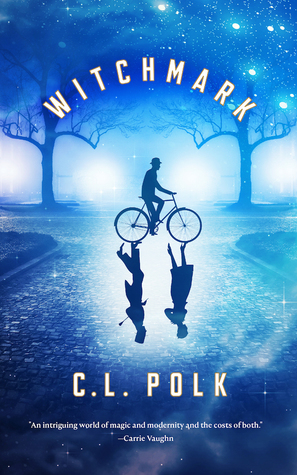



On to the digital haul, from Tor.com I received an e-galley for Witchmark by C.L. Polk. The description of it sounds absolutely gorgeous, featuring a mix of magic, romance, and intrigue. I hope I’ll get a chance to check it out closer to the book’s release date next summer.
NetGalley widgets received include The Realms of God by Michael Livingston from Tor Books. This is the third and final volume in the Shards of Heaven series, and having loved the first two books, I can hardly wait to find out how it all end. An invite for Killman Creek by Rachel Caine was also received with thanks to the author’s team and the publisher Thomas & Mercer. I’m so excited for this sequel to the incredible thriller Stillhouse Lake.
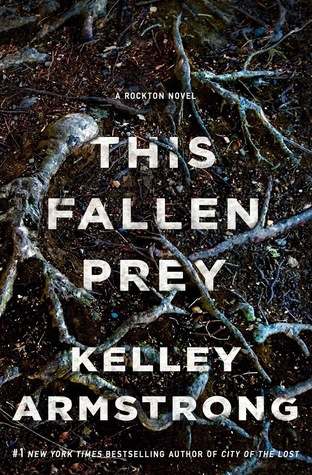
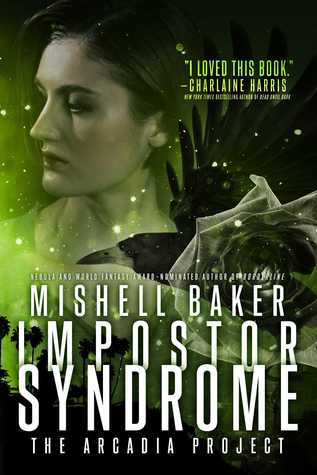
Also from NetGalley, I requested This Fallen Prey by Kelley Armstrong, book three in the Casey Duncan sequence. My thanks to Minotaur Books for approving me; I’m really enjoying this mystery series set in the off-the-grid, isolated Yukon community of Rockton, where people running from their pasts go to hide. Next up is another book three in a series, Impostor Syndrome by Mishell Baker, with thanks to Saga Press for the eARC. It continues the story of the Arcadia Project, following protagonist Millie Roper as she struggles to act as an intermediary between our world and the realm of the Fae while dealing with issues involving her own mental health. This is fast becoming one of my favorite Urban Fantasy series, and I’m really looking forward to reading more.
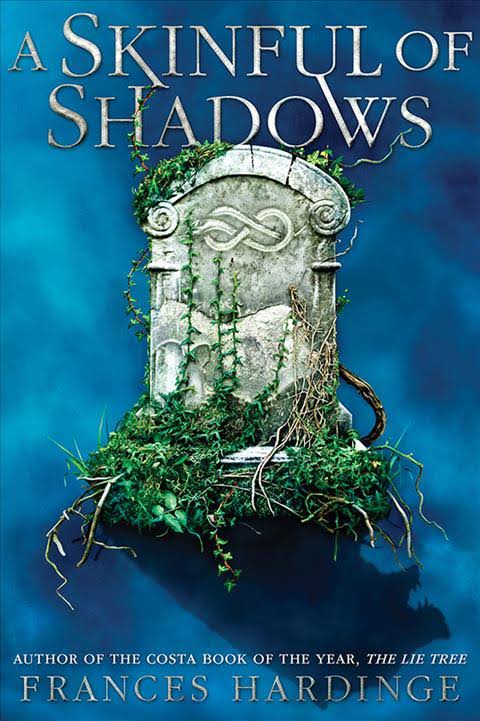
Not too many audiobook requests this week. From Listening Library though, I did request The Speaker by Traci Chee, the highly anticipated sequel to The Reader. From Audible Studios though, I also received A Skinful of Shadows by Frances Hardinge. I read my first book by the author earlier this year and loved it to bits, so I’m hoping this will be another winner!
Reviews
In this section, I do a quick summary of the reviews I’ve posted since the last update. These last two weeks have been pretty rough when it comes to ratings, with a couple of standouts and a lot more disappointments.
Sea of Rust by C. Robert Cargill (4 of 5 stars)
The Genius Plague by David Walton (4 of 5 stars)
Tower of Dawn by Sarah J. Maas (3.5 of 5 stars)
A Secret History of Witches by Louisa Morgan (3 of 5 stars)
Paradox Bound by Peter Clines (3 of 5 stars)
Autonomous by Annalee Newitz (2.5 of 5 stars)
A Plague of Giants by Kevin Hearne (2 of 5 stars)
The Blackbird Season by Kate Moretti (2 of 5 stars)
What I’ve Read Since the Last Update
I’m still working my through Brandon Sanderson’s Oathbringer, taking my time savoring it since I won’t be able to post my review until release date anyway, due to the publisher’s review embargo. Two weeks later, I’m only halfway done, but seeing as it’s a 1200+ page book, I feel like I’m making good progress. Once again though, this means fewer books finished this week. I’m going to have to do some serious catching up once I’m done!



Have you heard of or read any of the books featured this week? What caught your eye? Any new discoveries? I hope you found something interesting for a future read! Let me know what you plan on checking out. Until next time, see you next Roundup!
Friday Face-Off: Shadow
Posted on October 20, 2017 23 Comments
Welcome to The Friday Face-Off, a weekly meme created by Books by Proxy! Each Friday, we will pit cover against cover while also taking the opportunity to showcase gorgeous artwork and feature some of our favorite book covers. If you want to join the fun, simply choose a book each Friday that fits that week’s predetermined theme, post and compare two or more different covers available for that book, then name your favorite. A list of future weeks’ themes are available at Lynn’s Book Blog.
This week’s theme is:
“Me and my….”
~ a cover featuring a SHADOW
Mogsy’s Pick:
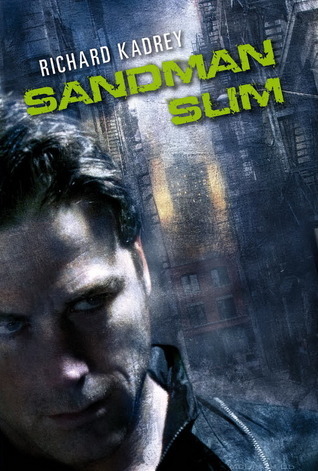
Sandman Slim by Richard Kadrey
If ever you find yourself in need an urban fantasy fix that involves grittier action and darker emotions, Sandman Slim has got you covered. While you may find him armed with a treasure trove of pop culture jokes and creative metaphors at all times, James Stark is not your typical charming, lovably snarky protagonist. After all, he’d just come from Hell following an eleven year stint as a hitman, finally escaping the pain and suffering only to end up in the scummiest part of Los Angeles. Now he’s angry and ready for revenge, determined to track down the ones who killed his girlfriend and sent him to the underworld.
Let’s take a look at the covers:
First row, left to right: Harper Voyager (2009) – Harper Voyager (2012) – Harper Voyager (2014)
Second row, left to right: Polish (2011) – Czech (2011) – German (2011)



Winner:
So many dark and broody covers! I think I’m going to have to go with the German (2011) edition for this one, which is just plain cool.
What do you think? Which one is your favorite?
Audiobook Review: Autonomous by Annalee Newitz
Posted on October 19, 2017 19 Comments
I received a review copy from the publisher. This does not affect the contents of my review and all opinions are my own.
Mogsy’s Rating (Overall): 2.5 of 5 stars
Genre: Science Fiction
Series: Stand Alone
Publisher: Macmillan Audio (September 19, 2017)
Length: 10 hrs and 27 mins
Author Information: Website | Twitter
Narrator: Jennifer Ikeda
I’m not having much luck with books this month. Autonomous was another highly anticipated sci-fi title that sounded very good from its premise, but ended up fizzling when the story fell short on the follow-through. Featuring a bold and daring female pharmaceutical pirate who makes a living bootlegging high-priced upmarket drugs in order to help the poor, I thought for sure this would be a winner, but ultimately neither the characters nor the plot turned out to be what I expected.
Meet Jack Chen, an anti-patent scientist who travels around the world in her submarine. Through reverse engineering, she is able to reproduce the most expensive drugs and make them widely available to those who can’t afford them, though her latest project appears to have hit a snag. The drug in question is Zacuity, which is supposed to increase productivity levels by making the subject feel good about work, making it a must-have for anyone hoping to remain competitive in the job market. However, a string of recent reports about people addicted to their jobs—to the point of insanity or even death—has gotten Jack a little worried. Horrified at the idea that her bootlegged drugs could have led to these lethal overdoses, she decides to do some investigating of her own. Before she can get far though, she is alerted to an intrusion on her submarine, leading her to meet a young indentured slave named Threezed who had stowed away along with his master in an attempt to steal Jack’s merchandise.
Meanwhile, the makers of Zacuity are also aware that the drug might be behind these tragic incidents, and they have plenty of reasons to keep the public from finding out that they are complicit. Since Jack’s pirating activities and efforts to find an antidote have been threatening to bring all of this crumbling down, they’ve hired a couple of agents from the International Property Coalition to take care of her and all the evidence. The two IPC operatives tasked to do this—a human named Eliasz partnered with a recently activated indentured military bot named Paladin—waste no time combing through Jack’s shadowy history for any clues that would help them track her down, and in time their work together gradually develops into a deeper emotional and physical closeness.
Autonomous gets us off to a good start, introducing a dystopian-like world in which nation states have all but disappeared, replaced by economic zones dominated by mega-corporations. As a Robin Hood-esque protagonist who targets drug companies to help the downtrodden, Jack Chen was someone I took an immediate liking to, and the fact that she smuggles her pirated pharmaceuticals in a badass submarine certainly didn’t hurt. Furthermore, when the addictive side effects of Zacuity came to light, they were at once so horrifying but so fascinating that I just couldn’t help but be drawn deeper into the story’s premise.
Unfortunately, that enthusiasm didn’t last. After a promising intro, the plot begins to fray around its narrative edges, abandoning the intrigue and suspense in favor of Jack’s relationship engagements and bedroom dalliances, both in her past and present. Granted, the author also attempts to weave in important societal messages and themes amidst all the drama, exploring everything from the exploitative practices of big pharmaceutical companies and their drug patents to the issues surrounding a commercial society that considers both sentient robots and humans as nothing more than chattel.
Indeed, there are a variety of relevant and topical discussions to chew on here, ranging from autonomy and free will to individual identity and gender roles. It’s all very interesting too, despite this story turning out completely different from what I’d expected based on the publisher description. Had the ideas been better executed, I might even have enjoyed it more, but in the end I get the sense this book is nowhere near as clever as it thinks it is. Any points it was trying to make were either garbled or lost in the sea of noise, and no other aspect of this story illustrates this better than the relationships between Eliasz and Paladin/Jack and Threezed. There are obviously parallels between the two, but if there’s supposed to be a takeaway here about the complicated power dynamics and the role of gender construct in matters of sex and romance, I’m not sure it got through very well, coming across as rather awkward and insufficient compared to other books that have tackled these topics.
I really wanted to like Autonomous—especially following a recent string of disappointing reads, I was really hoping for a good one—but what began with a great premise bolstered by some clever and interesting ideas ultimately became a dull and lifeless affair. That said, my patience is not the best these days and it’s possible my mood was a factor in my experience. Hopefully others picking this up will have a better time than I did.
Audiobook Comments: Jennifer Ikeda is familiar narrator to me, and I’ve enjoyed a lot of her performances in the past. It’s a shame I didn’t like Autonomous better, but I could find no fault in terms of her narration or quality of the audiobook production itself. I definitely would not overlook the audiobook edition if you prefer this format.

Waiting on Wednesday 10/18/17
Posted on October 18, 2017 19 Comments

“Waiting On Wednesday” is a weekly meme that first originated at Breaking the Spine but has since linked up with “Can’t Wait Wednesday” at Wishful Endings now that the original creator is unable to host it anymore. Either way, this fun feature is a chance to showcase the upcoming releases that we can’t wait to get our hands on!
Mogsy’s Pick
Drop by Drop by Morgan Llywelyn (June 26, 2018 by Tor Books)
Every once in a while I’ll be browsing through upcoming titles and come across a blurb that sounds so bizarre -and so intriguing – that I just can’t help but throw it onto my TBR. This was one of those books, a sci-fi novel with presumably apocalyptic themes given our society’s heavy reliance on plastics. Hope it ends up being as interesting as it looks.
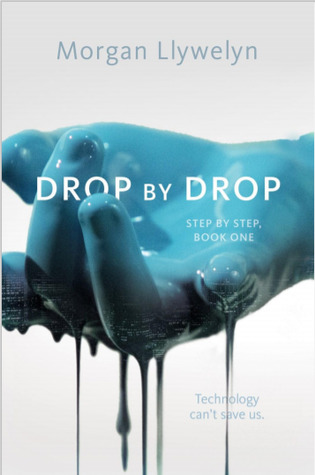 “The first science fiction novel from the bestselling author Morgan Llywelyn, a near-future thriller where technology fails and a small town struggles to survive global catastrophe.
In this first book in the Step By Step trilogy, global catastrophe occurs as all plastic mysteriously liquefies. All the small components making many technologies possible―Navigation systems, communications, medical equipment―fail.
In Sycamore River, citizens find their lives disrupted as everything they’ve depended on melts around them, with sometimes fatal results. All they can rely upon is themselves.
And this is only the beginning…”
Book Review: A Plague of Giants by Kevin Hearne
Posted on October 17, 2017 29 Comments
I received a review copy from the publisher. This does not affect the contents of my review and all opinions are my own.
A Plague of Giants by Kevin Hearne
Mogsy’s Rating: 2 of 5 stars
Genre: Fantasy
Series: Book 1 of Seven Kennings
Publisher: Del Rey (October 17, 2017)
Length: 640 pages
Author Information: Website | Twitter
Of all the things I expected to feel when I picked up Kevin Hearne’s new epic fantasy, boredom was not one of them. Unfortunately though, there it was, creeping up on me despite my immense efforts to give this book a chance. It actually pains me to admit this, because I love Hearne and he’s an awesomely funny guy who normally writes great stories, but as much as I tried and tried to like this, something about A Plague of Giants just did not work for me.
Granted, the book opened with a promising and energetic introduction, setting the scene for a charismatic bard to take the stage before a crowd of weary but optimistic survivors who have all gathered in the public square to hear him recount the history of the Giants’ War. By using his magic, a particular kind of kenning that allows the bard to take on the forms of different people, he begins adopting the physical appearances and voices of the book’s many characters, each of whom have a unique story to tell related to their experiences during the giants’ invasion. Subsequently, we are treated to a parade of these narratives presented to us one after another, letting us see a different character’s perspective each time.
The pattern is sometimes broken, however, with glimpses into the present as the bard, Fintan, becomes embroiled in drama resulting from his storytelling. His sections with Master Dervan, a scribe who has been tasked to record everything Fintan recounts, act like interludes to show the day-to-day happenings between each cycle of performances in the square.
Speaking as someone who believes that time jumps and multiple timelines should be employed both practically and sensibly, trying to navigate my way through this novel was a convoluted nightmare. The first few character POVs intrigued me, but as they gradually began to stack up with nary a sign how everything might be related, my interest swiftly plummeted. Even when the bigger picture started to come together, it was too late and my enthusiasm failed to come back. That said, it’s important to note that in his acknowledgements, Hearne mentions that serial storytelling was something he’s always wanted to try and I applaud him for his efforts. It’s only my bad luck that I happen to be antipathetic towards this particular format, and later I also felt that it was completely wrong for what the author was trying to accomplish.
I hate to say it, but characterization was probably one of the first casualties of this approach. Quite simply, I was inundated and overwhelmed by the sea of names and cultures which were all just given perfunctory nods before being swept aside in favor of frenzied action sequences, and as a result, nothing managed to stick. More authors need to realize that while including diversity is wonderful and important, if your characters are weak and underdeveloped, then the gesture itself loses a lot of its meaning and intent. Incredibly, out of the dozen or so character POVs, there was not a single person in this story I truly cared about. Not. A. Single. One. Usually, when it comes to me and books, that’s the kiss of death.
Still, it wasn’t all bad. For one, I was really impressed with the world of this novel, which consists of six different nations each with their own unique customs and cultures. Among those traditions is the magical gift of the kenning, of which there are five when this story begins, though later on a sixth is discovered by a character from Ghurana Nent, making it one kenning specific to the peoples of each nation. Rooted in natural magic, kennings can manifest as different powers depending on the element upon which they are based. While not everyone has a kenning, those who are blessed with it must be cautious not to use too much of their power, because the more they draw on it the more it robs them of their life span. Those who are not careful and who stretch the limits of their power can find themselves aging years in the blink of an eye.
Bottom line: A Plague of Giants is certainly an ambitious novel, which must have required a lot of planning and forethought. The incredible world-building is a testament to this, and also why it greatly pained me to have to write this negative review. When all is said and done though, I still maintain that priority should have been on characterization first, and the novel’s failure to do this in my eyes made it a tough read, one that I had to grudgingly force myself to finish even if it meant skimming through some sections. Maybe it was the format that completely ruined it for me, but I doubt I’ll be continuing the series even if the next book is presented in a more traditional and linear manner; I just can’t muster the interest to keep on going.
Looking at other reviews though, it appears readers either loved this book or didn’t, and as disappointed as I am to be in the latter camp, I would not discourage anyone from giving A Plague of Giants a try—especially if you’re a fan of the author’s Iron Druid Chronicles and would be curious to see what it’s like for him write something completely different. Here’s hoping you’ll have better luck with it than I did, but I’m sticking with his urban fantasy for now.

Audio and Book Review: A Secret History of Witches by Louisa Morgan
Posted on October 16, 2017 17 Comments
I received a review copy from the publisher. This does not affect the contents of my review and all opinions are my own.
A Secret History of Witches by Louisa Morgan
Mogsy’s Rating (Overall): 3 of 5 stars
Genre: Historical Fiction, Fantasy
Series: Stand Alone
Publisher: Audiobook: Hachette Audio; Hardcover: Redhook (September 5, 2017)
Length: Audiobook: 17 hrs and 32 mins; Hardcover: 496 pages
Author Information: Website | Twitter
Audiobook Narrator: Polly Lee
A Secret History of Witches is one of those stories that span many generations, following a magical line of women through the ages starting from early 19th century Brittany up to the end of World War II. Told in five parts, the story first begins with the life of Nanette Orchiére, the youngest of six sisters. Descended from the Romani, her family has always been persecuted for their heritage but also for their women’s gift of magic, as seen in Nanette’s grandmother, the powerful witch Ursule Orchiére. For the sake of her clan, Ursule had sacrificed her life when Nanette was just a little girl. Now the family lives on a secluded farm along the Cornwall coast, keeping to themselves lest they draw the attention of the town’s leery priest.
Still, the sisters fear that the Orchiére gift will die with their generation—that is, until Nanette falls pregnant following a brief tryst with a traveling farrier. The birth of a baby girl, named Ursule after Nanette’s legendary grandmother, gives them all hope that their magical lineage will indeed survive. And so, we continue the story with the life of this Ursule, following her as she learns the secret ways of her inheritance, until she too meets a handsome stranger and conceives a daughter, Irène, passing on her powers. Self-centered and viciously ambitious, Irène disdains the farming life and so goes on to charm her way into a marriage with a nobleman, giving birth to Morwen. And Morwen, after escaping to London in order to get away from her horrible mother, ends up finding love for herself, giving birth to Veronica in the early 20th century. Following in the footsteps of the Orchiére women who came before her, Veronica must also find her own way to her magic and claim her birthright. But even though more than a century has passed since this story first started and Europe is on the cusp of the Second World War, she will encounter many of the same challenges and uncertainties that her ancestors faced, despite the changing times.
Whether you’ll like A Secret History of Witches is going to highly depend on how you feel about multi-generational novels. Do you prefer stories that focus on just one or a few characters the whole way through? If yes, then this one might be a struggle, for the people you’ll get to know and connect with at the beginning won’t be around by the end, and with each generation there are new faces to meet, new stories to learn. While certain themes will persist through all of the characters’ lives as their magical power is passed from mother to daughter, each Orchiére woman will also have their own dedicated section of the novel containing a self-contained plot arc with individual developments and conflicts. My guess is that fans of familial epics or sweeping historical sagas will eat this one right up, but those who are unused to this format might find it a bit jarring.
Myself, I don’t mind novels spanning multiple generations, but this one could have been stronger if it hadn’t been so repetitive. Each section reads pretty much the same way: the character first learns about her family’s magic, is skeptical before becoming convinced, and inevitably there will be a handsome stranger to come along to sweep her off her feet, fathering a daughter on her. More frustrating to me is that for all that the Orchiére women boast of their magic, they only ever seem to use it to snag a man or to get pregnant, which seems like a waste of their powers. The author is also very heavy handed with the message about oppressive men whose fear leads them to hate, a theme that was already firmly established by the time Nanette’s section was over, so it just became exasperating by the third time this same diatribe was repeated from mother to daughter.
Is it any wonder then that my favorite Orchiére characters ended up being Irène and Veronica? Irène was a despicable, selfish, manipulative, and shallow person as well as a terrible mother, but at least her story felt very different from the others and that alone was enough to make her section the most interesting. As for Veronica, she may have used the gift for the sake of her love interest, but at least she also put it to good use in aiding the war effort, and it fascinated me to see how witches working together were able to affect the outcome of certain battles.
Overall, A Secret History of Witches was a book that started out strong, but eventually, the cyclical nature of the women’s stories became its main weakness. In the end, only a couple of the characters stood out. That said, Louisa Morgan’s writing is solid, and I still think this novel would be good choice for readers who enjoy historical fiction with a light touch of fantasy, or for those who enjoy the drama of family sagas.
Audiobook Comments: Much like the story itself, I thought Polly Lee’s narration was decent but could have been better. Some of her accents were a bit iffy, and I’m very sure that’s not how you pronounce “Samhain”. Still, there was nothing deal breaking about the performance, though I can’t help but think the audiobook might have been more immersive had they gone with multiple narrators, one for each different Orchiére character.

Book Review: The Blackbird Season by Kate Moretti
Posted on October 15, 2017 18 Comments
I received a review copy from the publisher. This does not affect the contents of my review and all opinions are my own.
 The Blackbird Season by Kate Moretti
Mogsy’s Rating: 2 of 5 stars
Genre: Mystery, Thriller
Series: Stand Alone
Publisher: Atria Books (September 26, 2017)
Length: 352 pages
Author Information: Website | Twitter
Maybe the publisher description led me to expect too much, or perhaps my standards for mystery-thrillers are simply much higher than they were before after reading so many fantastic novels in the genre this year. Whatever the case, The Blackbird Season just didn’t do it for me. To use one of my favorite phrases, everything about this book was “aggressively mediocre”—the mystery wasn’t too mysterious, the thrills weren’t that thrilling, and overall nothing about it really stood out.
If only the story had been as intriguing as the blurb promised. In the quiet mill town of Mt. Oanoke, Pennsylvania, the opening day of the high school baseball season is suddenly interrupted when a thousand dead starlings started raining from the sky. No one knows why it happened, but the disturbing phenomenon will soon also herald a series of unexpected events that will turn this small community upside down. It all begins when popular teacher, baseball coach, and—by all accounts—happily married husband and father Nate Winters is accused of having an affair with a student. The teenager in question is Lucia Hamm, a troubled loner whose white hair and obsession with death and the occult have led her classmates at school to nickname her the town witch.
Nate, however, is insistent on his innocence, claiming that he was simply being concerned with the wellbeing of his students, helping Lucia through some problems at home. His only crime is caring too much, he protests, and that everyone has merely gotten the wrong idea based on some blurry photos and vague text messages. But his wife Alecia Winters is not so certain. She knows beneath the “nice guy” façade, her husband is hiding many secrets, like the fact that he follows his students anonymously on social media, or that he can be an insufferable flirt. Their marriage is also on the rocks, worsening as Nate is suspended from work due to the investigation and Alecia is close to a nervous breakdown trying to care for their autistic five-year-old son. Then the unthinkable happens. Lucia disappears without a trace, and suddenly the allegations of rape turn into accusations of murder. As the whole town turns their backs on Nate, only one person has faith that he is innocent—Bridget Harris, a creative writing teacher at the school and also Nate’s trusted friend, who believes she has the evidence that would exonerate him.
The Blackbird Season wasn’t terrible, but for a mystery-thriller novel, it did fail the most important test of being exciting and fun. You can’t just throw together a bunch of good ideas and expect the magic to happen, there needs to be some follow through too, and this is where I feel the story faltered. For example, I was disappointed that the book blurb made such a big deal out of the mass death of starlings, which in the end turned out to be a peripheral event and played no essential role in the plot. Ultimately, it felt like a distraction to divert from the uncomfortable truth: that this story is just not that interesting.
On top of that, the pacing was sluggish and the characters were either too bland or too unlikeable to care about. Eventually, everything took on the feel of a made-for-TV drama, from the predictable small-town dynamics to the superficial protagonists with their perfunctory and clichéd flaws. First off, we have Nate, an all-around nice guy who is also incredibly naïve, to the point where actual uncertainty is created about his motives because you’re always thinking to yourself, “Surely no one can be this big of an idiot!” Too bad this was not the kind of suspense I was looking for. Next is Alecia, who I feel for because of her struggles as a mother with a disabled child who doesn’t get as much support as she needs. That said, she’s also so petulant, shallow, and bitter that it’s hard to relate to anything she says or does. I know that unlikeable character are pretty standard for the genre, but wow, this book was taking it to a whole other level.
The format also didn’t really work for me, though to be fair, I am often conflicted when it comes to narratives that bounce back and forth between past and present. I might have been more forgiving if the story hadn’t been such a slow-burn to begin with or if the mystery had been more compelling, but at the end of the day, the shifting timelines and changes in POVs only served to drag the pacing down some more. The final nail in the coffin though, was the ending. Predictable and anticlimactic, it didn’t leave me satisfied at all.
It’s lamentable, really, how much more The Blackbird Season could have been. It was not at all what I expected when I picked it up, feeling in the mood for a psychological thriller and hoping that this one would be a fast-paced heart-pounding read. At least the writing was fantastic, and I took no issue with Kate Moretti’s prose. To her credit, I had a pretty good idea of what she was trying to accomplish, but unfortunately it just didn’t quite happen for me. Hopefully, others will have better luck than me with this one.
YA Weekend Audio: Tower of Dawn by Sarah J. Maas
Posted on October 14, 2017 9 Comments
I received a review copy from the publisher. This does not affect the contents of my review and all opinions are my own.
 Tower of Dawn by Sarah J. Maas
Mogsy’s Rating (Overall): 3.5 of 5 stars
Genre: Young Adult, Fantasy
Series: Book 6 of Throne of Glass
Publisher: Audible Studios (September 5, 2017)
Length: 22 hrs and 39 mins
Author Information: Website | Twitter
Narrator: Elizabeth Evans
After my disastrous time with Empire of Storms, I wasn’t sure that I would be continuing this series, especially when I found out that there would be not one but two more books left until its completion. However, that was before I realized that Tower of Dawn would be focusing exclusively on Chaol Westfall, whose absence in the previous novel was one of the main factors that rattled my cage. Thing is, despite Chaol’s many faults, I still like him. I also consider him to be one of the better Throne of Glass personalities amidst this sea of unlikeable characters. And so, just like that, I was suckered in once again.
But flying in the face my initial concerns, this book actually turned out to be pretty good (it’s amazing what a difference it makes not having to put up with Aelin’s brattiness and endless self-absorbtion). Tower of Dawn is basically a story that runs alongside what we’ve been seeing from the point of view of Aelin, Dorian, and Rowan so far. While those peeps are off busy fighting a war, Chaol and Nesryn are instead traveling south to the land of Antica where they hope to convince more allies to join their cause. Moreover, it is said that the empire’s best healers dwell in kingdom’s Torre Cesme, and after having his lower body paralyzed from a magical blow that shattered his spine, Chaol is desperate to see if there’s anyone there who can cure him.
In fact, there is indeed someone at the Torre who has the specialized skills to help. Yrene Towers is a powerful healer who has recently treated a similar injury in another patient, with great success. As heir apparent to the Healer on High, she has completed many difficult trials to get to where she is today, but the task she receives now could be the greatest challenge she has ever faced. Tasked to oversee Chaol Westfall’s convalescence, Yrene is at first vehemently against the idea of treating the former Captain of the Adarlan Royal Guard, a man she considers an agent of the enemy that invaded her homeland when she was a little girl. Adarlan soldiers burned her mother alive, leading Yrene to flee her native land and ultimately end up in Antica.
In news that should surprise no one, Tower of Dawn is mostly a romance with 90% of the story concerned with how Chaol and Yrene eventually get together. Yes, there is some mystery and action involved as well as some political maneuvering, but these were mostly distractions to give readers the semblance of moving the series arc along. Still, let’s not kid ourselves—most are likely here primarily for the love story, and secondarily for Chaol’s redemption, so the question is, how did Maas do this time?
Well, I’m not going to lie, there are still a lot of aspects of her writing I find annoying, like her overly dramatic, flowery prose, or the fact that her characters all seem to follow a particular template. The story was also very clichéd, and for a book that was supposedly giving fans a chance to follow a different protagonist and visit a new setting, I frankly expected a lot more.
That said, this was still an enormous improvement over the previous novel. Maas may have taken her sweet time developing Chaol and Yrene’s relationship, but at least she always stayed on point, avoiding the lengthy and pointless conversations and meandering plot threads that plagued Empire of Storms. And while the romance itself was still eye-rollingly predictable, it deserves some credit for at least giving us some meaningful questions and themes to chew on.
In my time spent working in the rehabilitation field with individuals with disabilities, one of the main principles drilled into all of us care providers was the importance of client dignity. Kudos to the author, I believe she did her due diligence in researching the related issues, and I probably wouldn’t be surprised to learn if some of these efforts had involved actual conversations and interviews with people living with paraplegia. A lot of Chaol’s thoughts and emotions echoed closely to those from real clients I have worked with in wheelchair and seating clinics, immediately making his character feel genuine to me. Yrene, too, is like a representation of a caregiver’s guide of dos-and-don’ts as it relates to medical professionalism, exploring how her mistakes can affect Chaol. Hence, compared to the series’ other couples, I just felt like there was something a little deeper and more heartfelt to their romance.
My one big complaint, though? I did not like how Nesryn’s storyline was sacrificed for the main couple’s happiness. Oh sure, true to form, Maas made sure she was paired off with someone else, but as other reviews have mentioned, there is some serious grey area cheating happening here, and I’m still not sure how I feel about it. Strangely, infidelity as a plot device has never bothered me as much as some people, but in Chaol and Nesryn’s case, it was the way it was handled that didn’t quite sit right. Emotional affairs are not something to take lightly, and there were times I felt all the characters involved were really pushing the boundaries of appropriateness. That everything worked out in the end is irrelevant; it’s the principle of it that irked me. Plus, considering how it was Nesryn who carried out most of the difficult investigative work while Chaol was busy making moon eyes at his healer, she didn’t get nearly the attention or recognition she deserves.
Final thoughts? I make it no secret that I disliked the previous volume, but in truth, I’ve been unhappy with the series’ new direction since Queen of Shadows. So if nothing else, Tower of Dawn was a welcome reprieve as it meant simply taking a break from all the obnoxious Aelin drama, and overall this book was a much needed high point even if it was just a modest bump in rating. At the moment, I’m feeling way too cagey to say whether or not I’m looking forward to the next installment, but seeing as it will be the series finale, I will most likely read it for completion’s sake.
Audiobook Comments: As usual, Elizabeth Evans rocks. Her excellent performance has always been my main motivational reason to continue picking up these books in audio format. I actually thought they would go with another narrator for Tower of Dawn, perhaps a male one because of Chaol being the main character, but in the end I’m glad they didn’t. A new reader would have been interesting no doubt, but to me, Elizabeth Evans will always be the voice of this series.

More on the BiblioSanctum:
Mogsy’s review of Throne of Glass (Book 1)
Wendy’s review of Throne of Glass (Book 1)
Mogsy’s review of Crown of Midnight (Book 2)
Wendy’s review of Crown of Midnight (Book 2)
Mogsy’s review of Heir of Fire (Book 3)
Wendy’s review of Heir of Fire (Book 3)
Mogsy’s review of Queen of Shadows (Book 4)
Mogsy’s review of Empire of Storms (Book 5)
Friday Face-Off: Dragon
Posted on October 13, 2017 30 Comments
Welcome to The Friday Face-Off, a weekly meme created by Books by Proxy! Each Friday, we will pit cover against cover while also taking the opportunity to showcase gorgeous artwork and feature some of our favorite book covers. If you want to join the fun, simply choose a book each Friday that fits that week’s predetermined theme, post and compare two or more different covers available for that book, then name your favorite. A list of future weeks’ themes are available at Lynn’s Book Blog.
This week’s theme is:
“You have nice manners for a thief, and a LIAR!”
~ a cover featuring a DRAGON
Mogsy’s Pick:
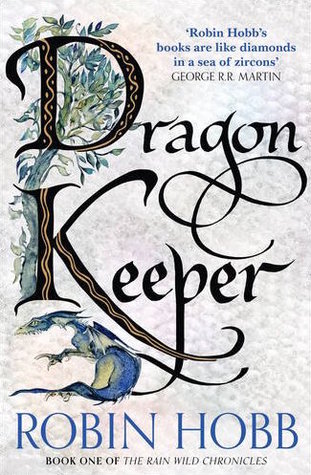
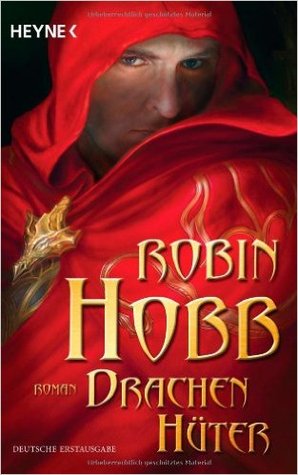
The Dragon Keeper by Robin Hobb
Out of all the different types of dragons I’ve encountered in fantasy, Robin Hobb’s dragons are perhaps some of the most interesting and unique I’ve ever seen. The Dragon Keeper is the first book of The Rain Wild Chronicles, which is a series that takes place in the author’s famous Realm of the Elderlings. The story begins with a group of sea serpents journeying upriver to cocoon themselves so that they might emerge as full-fledged dragons. They are overseen by the dragon Tintaglia, the last known of her kind, with the help of some humans on the Rain Wild Council. Together, the expedition travels along the river in the hopes of finding the legendary Elderling city of Kelsingra.
These, however, are not your typical dragons. Malformed and unable to take care of themselves, these pitiful creatures are as far away from the “magnificent and noble dragon” archetype as you can get. That said, being weak and helpless has not humbled them at all. Take the least flattering stereotypes about cats, and dragons are like that except a thousand times worse–belligerent, arrogant, petty, and squabbly. Still, they felt fresh and different for me, and I liked them a lot for that.
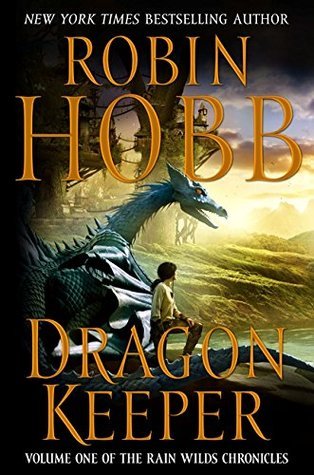
And now, time to look at the covers:
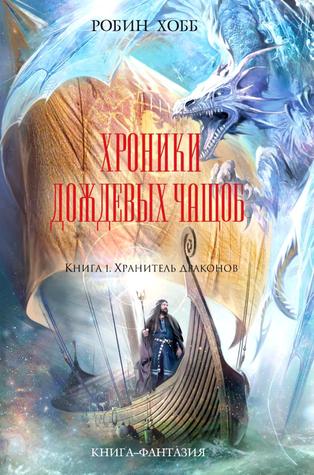
First row, left to right: Voyager (2009) – HarperCollins (2010) – Harper Voyager (2015)
Second row, left to right: German (2012) – Russian (2012) – Dutch (2016)


Winner:
While I do enjoy minimalist covers like the Voyager (2009) or Harper Voyager (2015) editions, my eye also couldn’t help but be drawn to the more colorful ones. Plus, I’m a sucker for the painted style that always makes me think of sweeping fantasy epics, so this week the clear winner is the Russian 2012 edition. It is a poor portrayal of the book, which makes the setting look cold and icy when the story actually takes place in a marshy forest (not to mention the vessels the characters traveled on were liveships, not Viking ships). Still, I really like the cool tones of this cover, and the dragon looks awesome, even though it, too, is a poor representation of the stunted, malformed river dragons in the story.
What do you think, though? Which cover is your favorite?


 The BiblioSanctum