Guest Post: “The Self-Publishing Catch-22” by M.D. Presley
Posted on March 5, 2018 33 Comments
 Today, the BiblioSanctum is excited to help spread the word about Sigil Independent, a new writing guild started by a group of self-published fantasy authors including many Self-Published Fantasy Blog-Off (SPFBO) alumni like Phil Tucker, Dyrk Aston, inaugural winner Michael McClung, and several other semi-finalists from the previous year.
The following is a part of their mission statement from their website:
“Like it or not, all self-published authors carry with them the stigma of being a self-published author. With the newfound ease of self-publishing, the traditional gatekeepers no longer hold utter sway and any individual with an idea, internet connection, and fifteen minutes for an upload can call him or herself an author. As such, many self-published books now inundate audiences with errors and amateurism the traditional gatekeepers never would have allowed.
However, as Mark Lawrence’s Self-Published Fantasy Blog Off has demonstrated, there’s also a lot of untapped talent out there in the self-published Fantasy realms, often catering to subgenres traditional publishers aren’t interested in. These self-published authors operate on par with their traditionally published peers but lack the means to achieve audience awareness as they endeavor individually.
To overcome this, SIGIL has formed a guild of like-minded self-published Fantasy authors intent on utilizing traditionally published best practices to ensure our audiences receive the best possible self-published product.”
Needless to say, it’s amazing that SPFBO continues to inspire initiatives like this, and one of Sigil’s founding members, M.D. Presley, has very graciously written us a guest post to help kick off their outreach. If you can, please give them a look and show your support by checking out other fun things on their website like this personality test or download a free sampler book to get to know their authors. In the meantime, I hope you enjoy this post by Mr. Presley!

THE SELF-PUBLISHING CATCH-22
by M.D. Presley
There’s a famous saying among screenwriters in Hollywood: “You can’t sell a script unless you’ve got an agent, and you can’t get an agent without first selling a script.” This little logical conundrum isn’t entirely accurate, but it does touch upon the truth that no producer wants an untested product.
The same catch-22 exists for authors as well in that, to get readers you need reviews, but to get reviews you need readers. But this paradox is compounded exponentially for self-publishers because we carry with us the stigma of being self-published. Because the author in question did not go the traditional route it’s implicitly understood this was because they could not make the qualitative cut.
Don’t believe me? Go check out your favorite book blogger and check out their review policy. Chances are it will contain some variation of this refrain “we do not accept self-published novels.” If the blogger is particularly open minded, it will include this addendum “we do not accept self-published novels unless we are already familiar with the author.”
And therein lies the rub: Self-published authors cannot get noticed by book bloggers unless they’ve already been noticed by said book bloggers. And being that word of mouth is the biggest driver in readers giving a new novel a shot, self-publishers are already several steps behind when it comes to launching a new book.

But one aspect of this interaction between authors and book bloggers/ reviewers bears greater scrutiny: What separates an unproven debut novel from a traditional publisher from an unproven debut novel from a self-publisher? The answer lies in the seal of approval of the publisher itself: If the reviewer knows and likes other novels from the publisher, it is expected that any new novels will be of equal quality.
Novels under a traditional publisher share a brand of quality, one that we at Sigil Independent seek to emulate. Although made up entirely of self-publishers, many of which you’ll be familiar with if you follow Mark Lawrence’s Self-Published Fantasy Blog Off since we sport many finalists in our stable, we at Sigil Independent retain full control over our works. In fact, Sigil members pay no dues since we’re not a business by any means.
Instead, we’re a guild that aims to create a shared brand of quality; if you’ve already enjoyed at least one of our authors (and honestly, you probably should have already if you regularly follow fantasy book bloggers), you can expect that our other authors are on par in terms of quality. If you’ve given one of us a shot, you should probably see if any of our other nine authors are your cup of tea.
 To aid audiences in discovering some of the best self-published fantasy out there, we at Sigil have issued a FREE 500+ page book containing samples of all our authors. And to make matters more interesting and connect readers with the book they are most likely to enjoy, we’ve set up a little questionnaire in the form of a Choose-Your-Own-Adventure story in the prologue (so, for goodness sakes, don’t skip the prologue!) which will immediately take you to the sample that will hopefully spark your new interest in self-published authors to help break that insidious catch-22 cycle.
Other quizzes, author bios, and freebies can be found at our website, www.sigilindependent.com. We can also be found on Facebook at Sigil Independent and Twitter @sigilindie.
 ABOUT THE AUTHOR
A Texan transplant living in California, MD Presley isn’t nearly as clever as he thinks he is. With a background in screenwriting, he fled to publishing with his flintlock fantasy series when the reality of Hollywood got to be a bit too much. A founding member of Sigil Independent, he also blogs weekly at the not-so-creatively-named www.mdpresley.com and tweets on occasion @md_presley.
And no, he’s not related to Elvis. Thanks for asking.
Book Review: Zero Day by Ezekiel Boone
Posted on March 4, 2018 23 Comments
I received a review copy from the publisher. This does not affect the contents of my review and all opinions are my own.

Mogsy’s Rating: 3 of 5 stars
Genre: Horror, Thriller
Series: Book 3 of The Hatching
Publisher: Atria/Emily Bestler Books (February 27, 2018)
Length: 322 pages
Author Information: Website | Twitter
Zero Day closes out Ezekiel Boone’s The Hatching trilogy, bringing an end to the spider apocalypse—though it’s anyone’s guess which side will prevail. Since emerging from an ancient egg sac unearthed beneath Peru’s Nazca Lines, these eight-legged menaces have multiplied into the millions, swarming the globe and paralyzing all aspects of life. In the United States, President Stephanie Pilgrim has carried out the unthinkable, targeting dozens of American cities with tactical nukes, but still the threat remains. All it would take is one single spider to get past their guard, and thousands more people would die.
The time has come for a more permanent solution, and humanity’s last chance lies in a theory postulated by Dr. Melanie Guyer who believes all the spiders in the world are linked through their queens. Her hypothesis is simple: kill the queens, and without their leadership, the rest of the swarm should lose their ability to coordinate their movements and die.
However, not everyone close to the President agrees with this plan, claiming that it is too risky. More drastic measures are proposed to destroy all the spiders and not just the queens, creating a rift within the U.S. government. Meanwhile, those around the world who have managed to survive the initial waves of death are continuing to hunker down or fight, doing what they can to prevent the further spread of what has been dubbed the “Hell Spiders”.
I had a fun time with this novel, but I’m also not going to lie; I expected more from a finale. Like the two previous volumes, this final installment is told through a number of different perspectives, showing us how the spider apocalypse is unfolding around the world. That said, most of the main storyline is centered on the American East Coast, where President Pilgrim and her allies face opposition and eventual revolt from dissenters within her own cabinet. As a result, many of the other POVs are greatly diminished, leaving some of the characters with no role in the conflict resolution whatsoever.
Needless to say, I found this disappointing, especially since a few of the characters I’ve come to love were only briefly mentioned or were given perfunctory page time just to remind us that they were still around. In addition, many of the POV transitions felt awkward and ill-timed, almost like the author was struggling to find a balance, and not entirely succeeding. Instead of flowing smoothly, the narrative kept being disrupted or derailed by these frequent POV switches, some of which didn’t even feel all that necessary.
Still, these issues paled beside the one flaw I could not overlook: there simply weren’t enough spiders! This distinct lack of arachnid-fueled action, especially in the first half, was probably my biggest complaint, and unfortunately, not even the ending which saw the spiders return in full force could really make up for it. Recall in my review of Skitter, where I had praised Boone for upping the ante by making things bigger, better, and bloodier. Compared to its predecessor, however, this book felt like a giant step back. Too much of the story was focused on the human vs. human drama, when the attention should have been given to the spiders (which, in my opinion, are the real stars of the show).
For these reasons, I felt Zero Day really missed its mark in terms of offering a satisfying conclusion. Not only did it skimp on the spiders, the plot also failed to bring anything new to the table, falling back on time-worn clichés like the Hive Queen trope and the good old military coup. And yet, for all its faults, the book was a quick read and provided solid entertainment, which is what saved it from a lower rating. All things considered, it’s probably worth finishing the trilogy if you’ve already come this far, because you’ll want to find out how things end. But while I’m not sorry I read Zero Day, it’s just a shame that the series didn’t end as strongly as it started, and I personally felt it was the weakest of the three books.


More on The BiblioSanctum:
Review of The Hatching (Book 1)
Review of Skitter (Book 2)
Book Review: A Time of Dread by John Gwynne
Posted on March 3, 2018 21 Comments
I received a review copy from the publisher. This does not affect the contents of my review and all opinions are my own.
 A Time of Dread by John Gwynne
Mogsy’s Rating: 4 of 5 stars
Genre: Epic Fantasy
Series: Book 1 of Of Blood and Bone
Publisher: Orbit (February 20, 2018)
Length: 512 pages
Author Information: Website | Twitter
This was my first time reading John Gwynne, and wow, he is the real deal, folks. Now I wish I had jumped on board his Faithful and the Fallen series when I had the chance. However, I am glad I was able to read his new book, A Time of Dread, which is the start of a new trilogy called Of Blood and Bone.
Set in the same world as Gwynne’s previous series, this novel takes place approximately 120 years after Wrath, its concluding volume. Thankfully, you don’t have to be familiar with anything that happened before, since this story is designed in such a way that even newcomers like me could pick it up with ease. Peace had finally come to the Land of the Faithful, following the defeat of Kadoshim hordes led by their commander Asroth. The race of warrior angels known as the Ben-Elim, who fought alongside the humans and giants to victory, now rule from their fortress of Drassil, hunting down the remnants of their enemy. The demonic hordes of the Kadoshim may be shattered and their leader imprisoned, but Asroth still has many faithful followers who are out there committing the worst kinds of atrocities, hoping that their side will one day rise again.
In true epic fantasy fashion, A Time of Dread is told through the perspectives of less than four characters, starting with Bleda, a young prince from a warrior tribe who was taken from his home to become a ward of the Ben-Elim in order to promote peace between their peoples. Feeling out of place at Drassil, he nonetheless trains with the other fighters so that he can fit in and help his hosts defend their fortress. Next up is Drem, a boy who was raised in the wilderness by his nomadic father, who taught his son all kinds of survival skills like how to trap and hunt. One day, Drem stumbles upon a number of mutilated corpses in the forest, a clear sign that demonic black magic may be at work. Then there’s Riv, another warrior-in-training within the walls of Drassil, who hopes to one day join her mother and sister in the ranks of the White Wings, the elite soldiers of the Ben-Elim. And finally, there’s Sig, who was apparently a side character in the Faithful and the Fallen series, but now she gets her chance to shine as a major POV. A bear-riding giantess, Sig is partnered with the Ben-Elim, patrolling the area for any threats.
This may seem like a lot to take in, but the novel starts off at measured pace and introduces each element of the world gradually, filling in its rich history and the characters’ backgrounds. This narrative steadily broadens as we move from within the confines of fortresses into the wider spheres beyond, focusing on the big picture and the roles our main characters play within this framework. Some of them are linked almost right away, such as the interactions between Riv and Bleda hinting at a burgeoning relationship between them, while others like Drem lie in wait in the sidelines until the time comes for his involvement in the story’s overall conflict.
Of course, as with most multi-POV books, I had my personal favorites like Sig. However, because of how well the author balanced character development, I felt I could connect with any of them no matter how often the focus switched between them. I found all of them equally compelling, my heart going out to Bleda for his bravery and determination to do what’s right no matter what, Riv for her genuine personality even though she can be quite temperament and impulsive at times, Drem for his independence and resilience to bounce back from tragedy and loss, and Sig for her loyalty and the great wisdom she has acquired over her long life. Each character had something useful to bring to the table, not to mention different reasons to cheer for them, and together they gave this book an eclectic assortment of personalities and viewpoints, keeping things interesting.
The only criticism I have is the slow pacing of the first half, but quite honestly, it’s a common enough pattern when it comes to epic fantasy series openers, so I’m certainly not going to hold that against the novel too much. There was also a lot of world-building to establish and plenty of characters to introduce, so the extra time spent on these details was necessary, not to mention the fascinating tidbits of lore revealed from the previous series also made it all worth it.
In the end, I’m glad I got to finally read John Gwynne, and A Time of Dread was a very good place to start. While the story may have been slower to take off, the second half of the book was incredibly thrilling and intense, leaving me thoroughly entranced and eager to continue the saga.

Friday Face-Off: Greek Mythology
Posted on March 2, 2018 30 Comments
Welcome to The Friday Face-Off, a weekly meme created by Books by Proxy! Each Friday, we will pit cover against cover while also taking the opportunity to showcase gorgeous artwork and feature some of our favorite book covers. If you want to join the fun, simply choose a book each Friday that fits that week’s predetermined theme, post and compare two or more different covers available for that book, then name your favorite. A list of future weeks’ themes are available at Lynn’s Book Blog.
This week’s theme is:
“The only true wisdom is to know that you know nothing”
~ a cover featuring something from GREEK MYTHOLOGY
Mogsy’s Pick:
Morning Star by Pierce Brown
This week’s topic was a challenge. The only book I could find on my shelves that even remotely fits the theme is Morning Star, and only because one of its editions features Ares, the Greek god of war, a likely reference to the Sons of Ares, the underground resistance group that fights against the Golds and their oppressive rule. In this final novel of the Red Rising trilogy, protagonist Darrow and his allies are risking everything to break the chains and unmake the world of their cruel masters.
Let’s take a look at the covers:
From left to right, top to bottom:
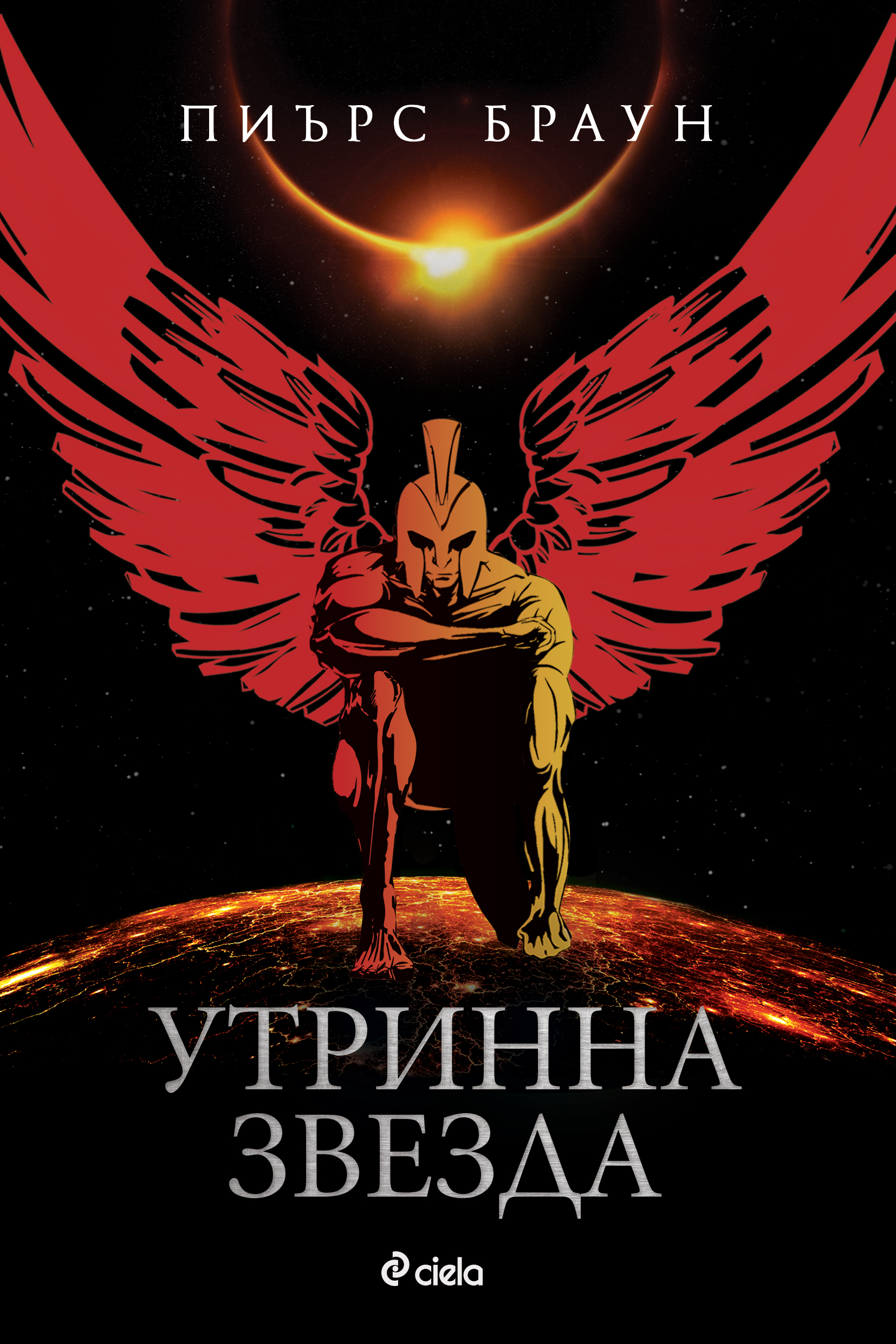
Del Rey (2016) – Bulgarian Edition (2017) – Greek Edition (2017)
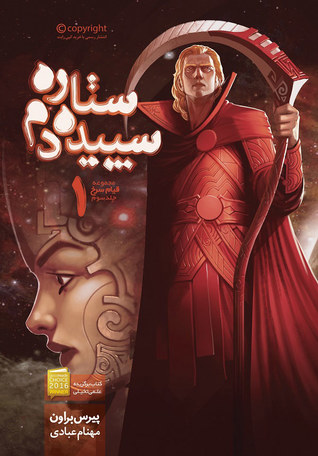
Persian Edition (2017) – Polish Edition (2016) – Serbian Edition (2016)




Winner:
I own the edition published by Del Rey, the cover of which I’ve never really liked, to be honest. It’s kind of boring, and doesn’t exactly scream “exciting finale!” if you ask me. Can’t say I love any of the other covers either, because most of them are either just as dull or way too busy. For my winner, I guess I’ll just have to go with the one I dislike the least, which is the Bulgarian Edition.
But what do you think? Do you have a favorite?
Book Review: Daughters of the Storm by Kim Wilkins
Posted on March 1, 2018 27 Comments
I received a review copy from the publisher. This does not affect the contents of my review and all opinions are my own.
 Daughters of the Storm by Kim Wilkins
Mogsy’s Rating: 3.5 of 5 stars
Genre: Fantasy
Series: Book 1 of Blood and Gold
Publisher: Del Rey (March 6, 2018)
Length: 448 pages
Author Information: Website | Twitter
Combining magical fantasy and family drama, Daughters of the Storm follows the lives of five royal sisters who could not be any more different—unless you count each of them struggling with a bevy of personal problems as something in common. Bluebell, the eldest, is a fierce warrior, who has her sights on becoming the first ruling queen. Next is Ash, whose mystical abilities are developing much faster than she can handle. Then there’s Rose, trapped in an unhappy marriage to a king in a neighboring land, when in fact her heart belongs to her husband’s nephew, who also secretly fathered her child. The youngest are the twins, Ivy and Willow, who are both inexperienced and naïve in their own ways. The former is a self-obsessed girl whose only source of happiness lies in what others think about her, and the latter has secretly become a passionate convert of a religion that her family disapproves of.
Growing up, the sisters have not been particularly close, following their own individual paths. But when news arrives that their father is dying, the five of them must reunite again and figure out what to do. Bluebell, who has always worshipped her father, is convinced that his illness is caused by dark magic and suspects her stepmother of being the one to curse him. To Bluebell’s further chagrin, her stepbrother has also arrived at the news of the king’s impending death, and she fears that he may be working with his mother to seize the throne.
Daughters of the Storm felt like it was written for fantasy fans who enjoy complex family sagas and reading about the ups and downs of strained sibling relationships. It felt like there was little conflict in the story otherwise, as the truth behind the king’s mysterious illness became revealed shortly after the introduction, not to mention we also found out the antagonist’s endgame just as early. While there was a smattering of action and intrigue thrown in here and there, this was definitely more of a family drama, though let me be clear: I don’t want anyone to think I’m using this description disparagingly. After all, family dramas can be wildly entertaining and addictive, if the characters are written well and the author succeeds in making me care about them. And considering how quickly I devoured this book, I’d say Kim Wilkins might be on to something here.
If Daughters of the Storm had a main protagonist, the closest would be Bluebell. As the oldest of the sisters, she is also the most accomplished (at least in my eyes). A warrior princess who has won many battles, she strikes fear into the hearts of men and even kings tremble at the sound of her name. Bluebell was also my favorite character, though I admit this might have something to do with the fact that all the other sisters were so unlikable. Not that Bluebell herself was perfect, but she did strike me as having a good grip on her life and knowing her priorities, which is more than I could say for Rose, Ash, Willow, or Ivy. The twins were the worst; just about everything they said or did evoked a powerful desire in me to slap or throttle them, and of course, this only increased my sympathy for Bluebell, the person whom everyone turned to when they needed help. Bluebell, who already had her hands full trying to keep her father’s kingdom from tearing itself apart, was always the one expected to fix things for her little sisters, and despite her harsh demeanor, her love for her family meant that most of the time she would try and do her best, even when the sheer stupidity or selfishness of her siblings threated to bring all her hard work tumbling down.
Still, my dislike of most of the characters notwithstanding, I did have a good time with this book. It would be more accurate to say I “loved to hate” many of the younger sisters, who were all infuriating in their own way, but that didn’t mean I didn’t have fun following their antics. The best characters are those who refuse to play by the rules—who do what they want, when they want—and you could indeed make the case that each of the sisters were unscrupulous and incredibly self-serving to some degree. What truly impressed me was how the author turned this aspect into the story’s greatest strength, since many of her dubious characters were also those who received some of the best characterization and development. Their stories were just as entertaining to follow, and I can’t say I ever grew tired of reading about what happened with them. In other words, cheering on the good guys is well and good, but sometimes, watching unlikable characters dig themselves deeper or get their comeuppance can be just as satisfying.
If this trend continues, I could probably be convinced to read the sequel. After all, I like my stories to focus on characters above anything else, and it certainly doesn’t get any more character-driven than this. Daughters of the Storm will not be for everyone—especially if you prefer action-oriented fantasy or are looking for something with a little more political intrigue—but if you are drawn to the irresistible call of tangled relationships and fascinating family dynamics, then this is the book for you.

Waiting on Wednesday 02/28/18
Posted on February 28, 2018 16 Comments

“Waiting On Wednesday” is a weekly meme that first originated at Breaking the Spine but has since linked up with “Can’t Wait Wednesday” at Wishful Endings now that the original creator is unable to host it anymore. Either way, this fun feature is a chance to showcase the upcoming releases that we can’t wait to get our hands on!
Mogsy’s Pick
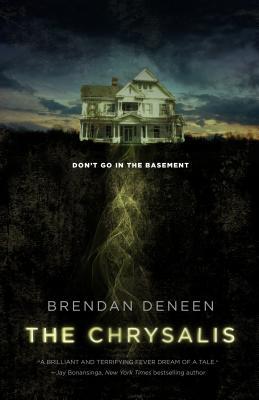
The Chrysalis by Brendan Deneen (September 4, 2018 by Tor Books)
It’s been a while since I’ve felt this excited for a horror novel, and this one, described as “The dark side of ‘adulting'” and of suburban life gone awry, sounds like it has some very interesting ideas to offer.
 “Forced out of New York City by rising rents and gentrification, barely-employed millennials Tom and Jenny Decker–an artist and a personal trainer–luck into an amazingly affordable, completely furnished house in the New Jersey suburbs.
Jenny doesn’t know there’s something hidden in the basement. Tom does. It soon has him in thrall.
The Deckers’ lives are suddenly on an upswing: Tom gets a big-bucks corporate job. Jenny, pregnant, opens a small gym catering to moms-to-be. They make friends despite their worries about becoming boring suburbanites. Tom regularly visits the basement, where the thing scrambles his senses and heightens his emotions, making him feel like a Master of the Universe.
Every upswing has its peak. After that, comes the fall. Tom’s is going to be hard and fast.
A fast-paced novel that combines chills, thrills, and a literal monster in the basement with commentary on love, marriage, and parenthood, The Chrysalis will entertain and frighten Millennials and Baby Boomers alike. No one ever really wants to grow up…but sometimes behaving like an adult is the only way to survive.”
Book Review: Winter Sisters by Robin Oliveira
Posted on February 27, 2018 15 Comments
I received a review copy from the publisher. This does not affect the contents of my review and all opinions are my own.
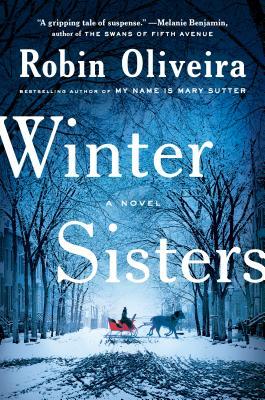 Winter Sisters by Robin Oliveira
Mogsy’s Rating: 4 of 5 stars
Genre: Historical Fiction, Mystery, Suspense
Series: Book 2 of Mary Sutter
Publisher: Viking (February 27, 2018)
Length: 416 pages
Author Information: Website
I picked up Winter Sisters thinking it would be a mystery-thriller, when in fact it turned out to be more of an atmospheric historical drama. That said, this was a poignant and fantastic novel; its plot, which started as a slow-builder, quickly saw its tensions rise to become a series of heart-pounding events, eventually culminating in a courtroom scene of epic proportions. Even better, this second installment of the Mary Sutter series can be enjoyed as a standalone without having to read the first book.
It is 1879, and the city of Albany, New York finds itself pummeled by one of the greatest blizzards of the century. Tragedy strikes the O’Donnells as both parents are killed, and in the whiteout conditions, their daughters 10-year-old Emma and 7-year-old Claire go missing. Mary Sutter, who is close to the family, is devastated by the deaths of her friends and the disappearance of their two little girls. Determined to find them, Mary writes to her mother and niece in Paris, who quickly return to America to join in the search effort.
For weeks, Mary and her relatives continue to ask questions and look around, refusing to give up on Emma and Claire despite pushback from members of their community. The police are no help either, having long since declared the girls dead, and a funeral was even held for them with their parents. A tip from an unexpected source, however, gives Mary a different but disturbing new perspective on her search. The more she digs, the more she discovers about the dirty secrets and corruption in her city.
Well, if you’ve read the book, then you’ll know what happened to the girls. If not, I’m not going to say, but I will warn that the details are awful and tough to read. This book is not for the faint of heart and if you know reading about terrible atrocities committed on innocents (especially children) will upset you, I would recommend against picking this up. The story is told in roughly three parts: first, the set-up with the blizzard and the disappearance of Emma and Claire; second, the search for the girls and the result of those efforts; and finally, the aftermath along with the criminal trial. The first part is probably the slowest, with the pacing picking up around halfway through the second. I won’t deny getting through the first half of the book was at times a struggle, but the courtroom drama at the end made it all worth it.
As stated above, you do not need to read the first book, My Name is Mary Sutter, in order to follow the story of Winter Sisters. As a matter of fact, the prime focus appears to be on the case of the missing girls, with all the characters involved feeling almost incidental. Mary, however, is like the glue that holds everything together; everyone has a connection to her in some way, so that readers get a wider and more detailed perspective. A former Civil War surgeon, Mary now operates a clinic with her husband, though she also defies the laws by giving treatment to those who would not otherwise have access to medical attention, such as prostitutes. As I have a soft spot for historical characters who are female doctors, Mary was a joy to read about, and I loved her fierce passion for her job and her conviction to do what’s right. In an era where the medical profession (and society in general) was dominated by men, our protagonist rebelled against social norms and fought hard to give girls and women a voice. It made me want to pick up the first book for a chance to get to know her better, as well as to read about her experiences in the Civil War.
Winter Sisters was also a gut-wrenching read at times, and there were certainly moments of anger, horror, or frustration where I just wanted to squeeze my eyes shut and scream myself hoarse. But there were also plenty of tender, touching scenes involving family and friendship, not to mention the role of love in healing from trauma. I thought the author treated all her characters with the sensitivity and patience they deserved throughout their personal and collective experiences, allowing us to connect to them on a deeply emotional level.
All told, Winter Sisters was a powerful, richly written novel. Robin Oliveira transports readers to post-Civil War era New York, delivering a historical drama that is both heart-rending and full of suspense. With the caveat that some of the more horrific and disturbing details can make this one too unbearable to read at times, I still think fans of courtroom intrigue will especially enjoy the book’s plot and the way it ends. If you’re anything like me though, you’ll probably find the characters and their relationships to be the novel’s greatest strengths. Overall, I enjoyed this novel and would recommend it with all my heart.
Guest Post: “Working Out The Rules of Interstellar Travel” by Gareth L. Powell
Posted on February 26, 2018 14 Comments
 Today the BiblioSanctum is pleased to welcome author Gareth L. Powell, author of Embers of War, the first in a three part science fiction series described to be perfect for fans of Ann Leckie, Alastair Reynolds and Adrian Tchaikovsky! The central character of the novel is a sentient starship, called the Trouble Dog. Following a brutal war and disgusted at herself for the role she played in the atrocities, she decides to atone by joining an organization dedicated to helping out ships in distress. Together with her new crew led by Sal Konstanz, a captain who actually once fought against Trouble Dog, they set out to investigate reports of a lost ship in a disputed system, hoping to save as many as they can. Published by Titan Books, Embers of War is now available wherever books are sold, so be sure to check it out! In the meantime, please enjoy this guest post by Mr. Powell on a most fascinating space opera topic – starships and space travel!
WORKING OUT THE RULES OF INTERSTELLAR TRAVEL
by Gareth L. Powell
Space travel is one of the staples of science fiction. Characters move from one planet to another. They set out into the starry unknown in search of adventure, glory, or vengeance—but as a writer, knowing how their starships work has a profound effect on the type of story we’re trying to write.
For instance, our first decision—whether our spaceships can fly faster-than-light or not—dictates the timescale of our story. If we decide to stick with the currently accepted laws of physics, it’s likely our heroes will have to enter some form of cryogenic sleep in order to prevent them dying of old age before they reach their destination. And if their journey takes more than a couple of decades, the world they left will be profoundly changed by the time they return, and some of their friends will have died in the interim.
Good examples of this temporal displacement can be found in Revelation Space by Alastair Reynolds, The Forever War by Joe Haldeman, and A Deepness In The Sky by Vernor Vinge.
However, if you’d like to move your characters from one place to another on a scale of days or weeks rather than centuries, you’re going to have to invent some sort of faster-than-light drive.
But, just as fantasy writers have to invent rules and limitations for the way magic works in their worlds, so SF authors have to work out a set a guidelines for how their spaceships behave. After all, if a ship can just go anywhere in the galaxy in the blink of an eye, there would be no way to defend planets or bases from attack. Hostile armadas could pop into orbit, unload a thousand warheads, and be a hundred light years away before the first one had exploded. Space battles would be impossible if ships could just leap away at any second. And how would economies function if you could import fresh produce from Betelgeuse as cheaply as buying it from the farm up the road?
Now, before you panic, I’m not asking you to describe exactly how your starship’s jump drives actually work. If you knew that, you wouldn’t have to write a book, as NASA would currently be showering you with money and asking you to build one! Instead, I’m suggesting you come up with some limitations. After all, you don’t have to be able to describe the inner workings of an internal combustion engine in order to know that your average car can’t travel at 8,000 mph or operate under water.
Classic ways of limiting FTL include putting upper limits on the distance a ship can jump at any one time, and forbidding jump engines from working inside a planet’s gravity well. In Larry Niven and Jerry Pournelle’s classic first contact doorstop, Mote In God’s Eye, resonances between stars mean jump engines only work if activated at a particular point within a system. In the TV series Babylon 5, most ships have to use a network of star gates, and only the largest ships have the power to open their own ‘gates’ into hyperspace. In both cases, it becomes possible to blockade a star system by occupying the jump point or star gate—and it can also lead to thrilling chases and battles, as ships try to slog across the system to reach the next gate or jump point. This kind of travel forms the basis of Jack Campbell’s Lost Fleet series, in which the remnants of a defeated navy have to travel the long way back through occupied territory, jumping from one system to the next while trying to avoid dead ends and ambushes.
In my new novel, Embers of War, I allow ship to take shortcuts through the ‘higher dimensions’—a place where the usual laws of physics are mutable and the speed of light can be exceeded. I liken the process to a dolphin leaping out of the water into the air. For a moment it finds itself moving through a different medium, where it moves faster because the water no longer drags on it.
However, in order to give my characters time to interact and get to know each other, I’ve had to impose a speed limit on higher dimensional travel. It isn’t instantaneous. In order to make the jump, a ship has to build up speed, kind of like the Delorean in Back To The Future. Then, once it’s in the hypervoid, its engines power it forward at roughly five light years per day. This means journeys can take days or weeks, and regular fuel stops need to be made to keep the engines powering the ships forward.
Whatever you decide, the way your starships move will shape your story, for good or ill. But learning to live with the limitations you impose will help make your story more interesting and authentic, and give your characters more obstacles to overcome.
 ABOUT THE AUTHOR
Gareth L. Powell is an award-winning author from the UK. His alternate history thriller, Ack-Ack Macaque won the 2013 BSFA Award for Best Novel, spawned two sequels, and was shortlisted in the Best Translated Novel category for the 2016 Seiun Awards in Japan. His short fiction has appeared in a host of magazines and anthologies, including Interzone, Solaris Rising 3, and The Year’s Best Science Fiction, and his story ‘Ride The Blue Horse’ made the shortlist for the 2015 BSFA Award.
Embers of War by Gareth L. Powell is published by Titan Books. You can find Gareth on Twitter @garethlpowell
YA Weekend: Honor Among Thieves by Rachel Caine & Ann Aguirre
Posted on February 25, 2018 26 Comments

I received a review copy from the publisher. This does not affect the contents of my review and all opinions are my own.
 Honor Among Thieves by Rachel Caine & Ann Aguirre
Mogsy’s Rating: 4 of 5 stars
Genre: Young Adult, Science Fiction
Series: Book 1 of The Honors
Publisher: Katherine Tegen Books (February 13, 2018)
Length: 480 pages
Author Information: Rachel Caine | Ann Aguirre
At first glance, I thought Honor Among Thieves was going to read like your typical paint-by-numbers Young Adult novel, but there were actually plenty of surprises to be had, and in the end I was pleasantly surprised at how much I enjoyed it.
The story, which takes place in the distant future of 2142, follows a teenager named Zara Cole, whose debilitating headaches as a child caused a schism between her and her family. After a traumatic experience, she became estranged from her parents and refused to relocate to Mars with her mother and sister, preferring to remain by herself on the mean streets of New Detroit. Although the world has seen a number of technological advancements since the arrival of the Leviathan, a race of sentient space ships that bestowed their vast knowledge on humanity, Zara has access to very few comforts, reduced to thieving in order to stay alive. But one day, she steals from the wrong person, landing her in the crosshairs of a dangerous man. Having already survived one attempt on her life, Zara decides to get herself booked into a detention center for wayward youth, thinking she’ll be safe behind jail walls.
What she did not expect, however, were the Leviathan. Each year, the aliens select a hundred individuals from the human population to join them in space in a kind of “exchange program” meant to promote and further relations between the two species. Called “Honors”, those who have taken part in the past have included great minds like artists, musicians, scientists, military strategists, and more. Never once have they called for someone like our protagonist, a petty thief from one of the lowest echelons of society, so it was a surprise to everyone when the Leviathan decided to name her an Honor. But while it is a dream come true for many, for Zara, the idea of being stuck in the belly of what is essentially a giant space whale for a whole year is just about the worst thing she can imagine. Still, when the alternative is to stay on Earth where her vengeful enemy can get to her anytime, the opportunity to get off planet is starting to look like her best chance for survival.
What follows is an exciting, but also at times emotional, narrative detailing Zara’s time on board Nadim, her Leviathan. As an alien race, these sentient ships are an interesting concept. They are first and foremost explorers, traveling through deep space to discover new worlds, offering their inhabitants the same proposal they gave Earth: partner with the Levianthan by letting them recruit their best and brightest for a year, so that each species would be able to share the knowledge and learn from each other. At the end of this period, Honors can also choose to join the Leviathan in a more long-term arrangement called the “Journey”, though few have gone down this path since it effectively means cutting off all ties from their home planet forever. Still, through this process, the Leviathan have rescued countless worlds, including Earth, from the brink of destruction and extinction. They are understood to be benevolent overseers who only want to help.
All this is thrown into question, however, in the time Zara spends with Nadim. Along for the ride is also another Honor named Beatriz, and over the course of the novel the three of them end up forming a tight and long-lasting bond. I loved them all, including Nadim, who is obviously nothing like your usual protagonist. Bizarre and otherworldly as he is, there’s also a familiarity about his character and situation. Like his passengers, he is young and inexperienced, desperate to prove himself. There are a lot of things about his fellow Leviathan that he doesn’t understand, so in many ways, he’s learning as he goes along, together with Zara and Bea.
There is also no romance per se in Honor Among Thieves, though Zara’s connection with Nadim is something unique and, in my opinion, so much more special than any conventional relationship. Not only is this type of bond new and different, it is also very unusual and a little eerie, which immediately piqued my curiosity to find out more. In fact, it was what drove me to keep reading, even through some of the slower paced sections in the first half of the novel which were less eventful action-packed. Because of the new ideas and the increasingly deepening friendships between Zara, Bea, and Nadim, I really never found myself bored.
Because of this, I would say my experience with Honor Among Thieves was a definite win. I got what I wanted in a new and different space adventure featuring cool aliens and complex characters who go on to form beautiful and meaningful relationships. The story also gradually builds to an exciting climax which comes complete with fast-paced action and the kind of space battles you just don’t get to see every day. If this is an indication of where the series is going, sign me up for the next one.
Mogsy’s Bookshelf Roundup: Stacking the Shelves & Recent Reads
Posted on February 24, 2018 28 Comments
Bookshelf Roundup is a feature I do every other weekend which fills the role of several blog memes, like Stacking the Shelves where I talk about the new books I’ve added to my library or received for review, as well as It’s Monday! What Are You Reading? where I round up what I’ve read since the last update and what I’m planning to read soon. Mostly it also serves as a recap post, so sometimes I’ll throw in stuff like reading challenge progress reports, book lists, and other random bookish thoughts or announcements.

Received for Review
There’s been a surge of activity in my mailbox these last two weeks, to the point where I haven’t really been able to keep up with the cataloging of new arrivals so the rest will have to be posted next Roundup. In the meantime though, here’s some of what’s been added to my shelves lately. My thanks to the publishers and authors for the following review copies received, and for more details and full descriptions of the books, be sure to click the links to their Goodreads pages!

I was so excited earlier this month when Disney-Hyperion reached out with an offer of City of Bastards by Andrew Shvarts for review. The first book was a lot of fun, and I enjoyed myself so much that even a year later I still find myself thinking about the characters and wondering what will happen to them. I’m thrilled that the sequel is in my hands now that I’ll find out soon. Thanks to the publisher for the ARC.
The kind folks at Orbit also surprised me with a couple of ARCs last week; first up is 84k by Claire North, a sci-fi crime novel that is looking as mind-bendingly awesome as a lot of North’s other works. I didn’t have a really good time with her last book, so I hope I’ll have better luck with this one. Then a few days later The Defiant Heir by Melissa Caruso showed up on my doorstep, which was very timely because I recently read the first book The Tethered Mage and it was oh so good! Really looking forward to diving into this sequel.
From Saga Press and the amazing Wunderkind PR team I also received a finished copy Pride and Prometheus by John Kessel. I loved this book, and here’s my review with all the reasons why, in case you missed it!
Next up are a couple of finished copies from Del Rey, both of which were surprise but welcome arrivals. I already had plans to read Daughters of the Storm by Kim Wilkins and actually got started with the book today, so I should be well into it or hopefully done by the time this post goes live. Tarnished City by Vic James is the second book of the Dark Gifts series and sequel to Gilded Cage which admittedly I struggled with last year, so only time will tell if I’ll be able to get to it. I did hope to give the second book a chance though, so I’m glad to have it on hand.

With thanks to Tor Books, I also received City of Lies by Sam Hawke. This epic fantasy debut has been on my radar for a while, so I was pretty excited to get an ARC!
A couple weeks ago I was also surprised with a hardcover of This Fallen Prey by Kelley Armstrong because to my knowledge I’d never gotten any review copies from Minotaur Books before. I happen to be a huge fan of the series though, and I thought this third installment was amazing. You can check out more of my thoughts in my review of the book here.
Also thanks to Subterranean Press for the following ARCs: Blood’s A Rover by Harlan Ellison is a return to Vic and Blood in the author’s 1969’s Nebula Award-winning “A Boy and His Dog”, which uses revised and expanded versions of the novella and short stories to assemble the full story. I was also super excited to receive Mira’s Last Dance by Lois McMaster Bujold, a Penric and Desdemona novella. I love these books, and as a bonus, this one is also the direct follow up to Penric’s Mission which I just recently read.
From DAW Books I also received Aliens Abroad by Gini Koch which unexpected to say the least. According to Goodreads, it’s the sixteenth installment in the series and I’ve never read any of the previous books so I don’t know if I’ll ever be able to get to this! Another package that arrived from the publisher was something I was familiar with, though: Lady Henterman’s Wardrobe by Marshall Ryan Maresca is the second novel of The Streets of Maradaine which is so far my favorite of the author’s Maradaine series, so I’m looking forward to reading more.
And finally, rounding things up is a finished copy of Blade and Bone by Jon Sprunk with thanks to Pyr Books. It’s the third volume of the Book of the Black Earth series and I’ve only read the first book so I’m a bit behind!
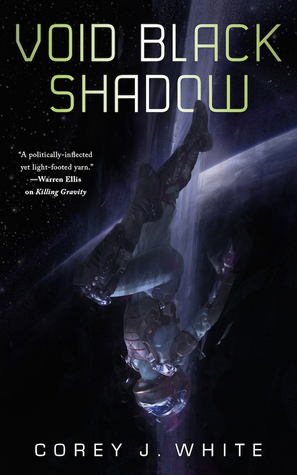
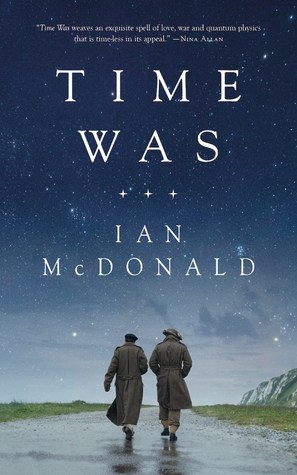
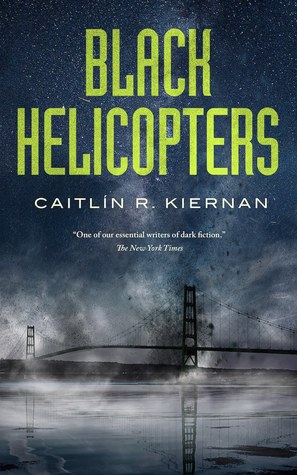
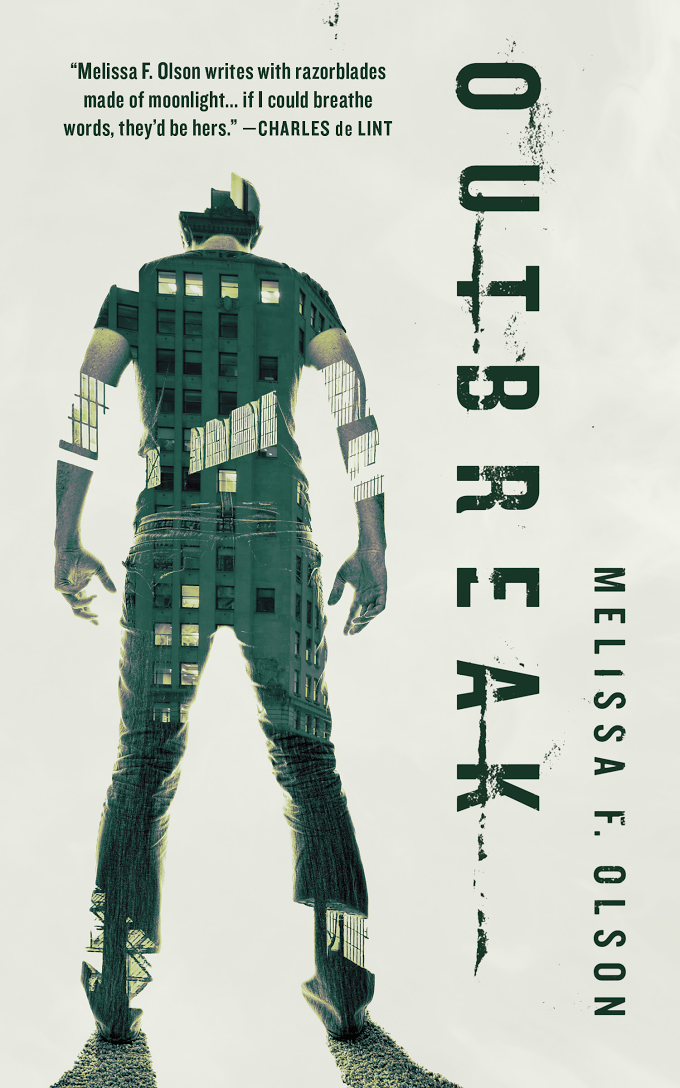


Another Roundup, another amazing batch of eARCs from Tor.com! Void Black Shadow by Corey J. White is the second book in the Voidwitch Saga, a sci-fi thriller series about a genetically-manipulated psychic supersoldier. I’m also excited to check out Time Was by Ian McDonald because I’m a big fan of the author and this one sounds like a powerful story. Black Helicopters by Caitlín R. Kiernan also sounds like an interesting novella, about an invisible war fought at the fringes of our world with a strong touch of Lovecraftian horror. And Outbreak by Melissa F. Olson is the third volume of the Nightshades series which I’m actually quite interested in, but I haven’t had the chance to start the first book yet.
Last week I was also sent an eARC of The Night Dahlia by R.S. Belcher by Tor Books along with an invitation to join a blog tour, so be sure to be on the look out for that later this spring! The novel is the sequel to Nightwise, an urban fantasy of gritty dark magic. I really liked it and am quite excited to continue the series.
And only one NetGalley acquisition this week! I saw that Saga Press had put up Trail of Lightning by Rebecca Roanhorse and just could not resist hitting the download button. I’m very much looking forward to this book and I hope it’ll be as good as it sounds.
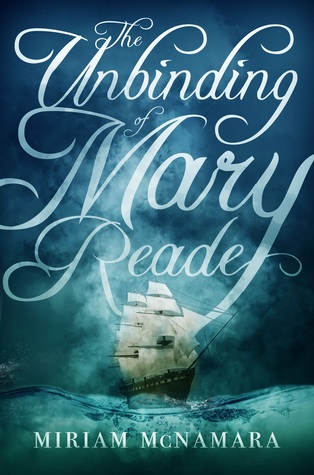
From Edelweiss I also on impulse requested The Unbinding of Mary Reade by Miriam McNamara from Sky Pony Press, based purely on my interest in the subject matter. This is a YA historical fiction about Mary Reade, who along with Anne Bonny are two of the most famed female pirates of all time.
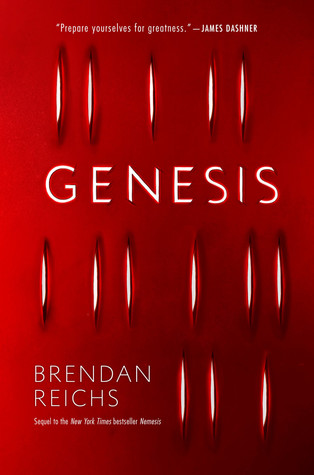
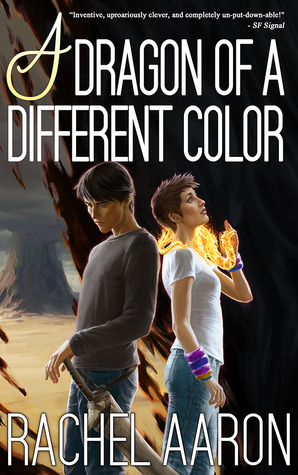
And in the audiobook pile, I just have a couple review copies with thanks first to Listen Library for Genesis by Brendan Reichs which is the sequel to Nemesis, a YA sci-fi thriller I read last year. I had some mixed feelings for the first book, but the story was so intriguing that I confess I’m kind of curious about what’s going to happen next. Finally, from Audible Studios I received A Dragon of A Different Color by Rachel Aaron which is the penultimate book in one of my favorite series, and I need to catch up before the finale comes out in about a week!
Reviews
A quick summary of the reviews I’ve posted since the last update:
Pride and Prometheus by John Kessel (4.5 of 5 stars)
Redemptor by Seth Skorkowsky (4 of 5 stars)
Semiosis by Sue Burke (4 of 5 stars)
The Hazel Wood by Melissa Albert (4 of 5 stars)
Gunpowder Moon by David Pedreira (3.5 of 5 stars)
Tess of the Road by Rachel Hartman (3.5 of 5 stars)
Into the Fire by Elizabeth Moon (2.5 of 5 stars)
Roundup Highlights:
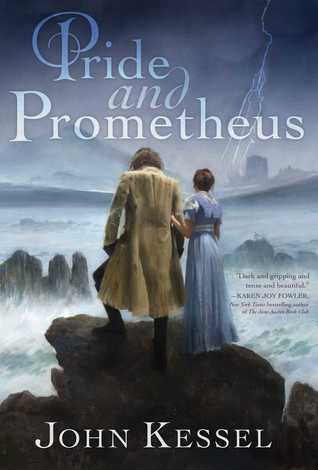
What I’ve Read Since the Last Update
Here’s what I’ve “unstacked” from the TBR since my last roundup post. Most have been reviewed already, and the rest will be coming soon.
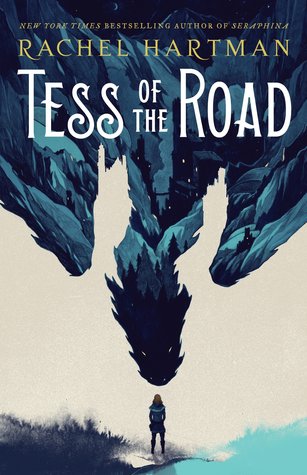


Have you heard of or read any of the books featured this week? What caught your eye? Any new discoveries? I hope you found something interesting for a future read! Let me know what you plan on checking out. Until next time, see you next Roundup!


 The BiblioSanctum