Review: Blood of Assassins by R.J. Barker
Posted on March 13, 2018 31 Comments
I received a review copy from the publisher. This does not affect the contents of my review and all opinions are my own.
 Blood of Assassins by R.J. Barker
Mogsy’s Rating (Overall): 5 of 5 stars
Genre: Fantasy
Series: Book 2 of The Wounded Kingdom
Publisher: Paperback: Orbit | Audiobook: Hachette Audio (February 13, 2018)
Length: Paperback: 480 pages | Audiobook: 15 hrs and 8 mins
Author Information: Website | Twitter
Narrator: Joe Jameson
In general, I find that most second books of a trilogy rarely live up to the first one, and so I foolishly thought this would be the case here as well. Well, I’ve never been happier that I was wrong. R.J. Barker has topped his first book with a spectacular sequel containing even more intrigue, more action, and more heart.
Several years have passed since the end of Age of Assassins, and in that time, many changes have come to the Tired Lands. Among the biggest of these is the ousting of Aydor, former heir to the throne, and now Rufra rules as king. War, however, still rages across the land, with three ambitious men all vying for the same crown. In the intervening years, our protagonist, the assassin-in-training Girton Clubfoot, as well as his master Merela have been traveling with a band of mercenaries, trying to keep a low profile amidst the conflict in order to escape the bounty hunters on their trail. But despite their best efforts, disaster finds them in the end, and with Merela incapacitated by a deadly poison, Girton has no choice but to return to Castle Maniyadoc at the behest of an old foe.
Still, coming back to Maniyadoc has its upsides. Girton is reunited with his friend Rufra, who has not forgotten our protagonist’s role in helping him become king. The problem now is keeping things that way, as rumors abound that Rufra has a spy among his inner circle. Girton has been tasked to root the traitor out, but this time he is on his own without his master’s guidance and advice. Furthermore, with Merela out of commission, there is no one to help him with his greatest secret—the fact he has the ability to wield magic, a crime that carries a penalty of torture and death in the Tired Lands. As the power in him grows stronger each day with no outlet for release, Girton fears that his control will fail him before he can save his friend.
Blood of Assassins has a similar premise to Age of Assassins, but this time the stakes involved are so much higher. To find the spy, Girton must also think like a spy—except he’s not very good at it. As an assassin, he’s more well-versed in the business of killing rather than the business of subterfuge and espionage. In the first book, he was also able to move around Castle Maniyadoc relatively unnoticed as just another squire, but now that he is lauded as King Rufra’s champion, staying under the radar has become impossible, making his job that much harder. Ultimately though, Girton’s greatest challenge will be to overcome his own demons. Without Merela’s counsel, there’s no one to steer him in the right direction or tell him when he’s letting his own emotions cloud his judgment, and he becomes his own worst enemy. Like an impulsive teenager, Girton often comes out swinging without thinking things through, and that lack of subtlety burns him more than once throughout the course of this tale.
What we’re seeing here is an older but not quite so wiser version of our protagonist who is trying to find his own way. Despite his blunders and occasional selfishness though, one just can’t help but feel for him. The last few years have not been kind to Girton, and he has suffered many losses which have challenged his worldview, even going as far as to make him change his fighting style. He has also become a lot more guarded towards Merela, because of the events in the last book that strained their relationship. Along with that comes a realization that his master is not invulnerable, and the possibility that he may lose her—to death or to abandonment—is a fear that drives him to take some reckless actions. All things considered, the level of character development and exploration we see here is quite astounding, and my feelings of endearment for our protagonist have only grown. In addition, Girton and Merela’s relationship continues to be one of the best master-apprentice dynamics I have ever encountered.
The best part of this book, though, is a possible spoiler so I can’t go into too much detail; suffice to say, I admire R.J. Barker so much right now for making me do a one-eighty on a particular character that I despised in the first book. It allowed things to build up to an epic finale, which had me holding back tears from all the different emotions roiling inside me.
Bottom line, Blood of Assassins is the kind of book you want to shout about from the rooftops at the top of your lungs and demand everyone you know to pick it up and read it. I’m beyond excited and a little nervous to read the final book in the trilogy, but if things continue trending in this direction, I have no doubt it will be a stellar conclusion.
Audiobook Comments: The awesomeness of this book was such that I could not bring myself to stop reading even when life got in the way. Fortunately, I was also able to listen to the audiobook while on the go, and I’m happy to say that this format provided just as much entertainment as the print edition. Joe Jameson is a seasoned narrator who has read for many other titles I’ve enjoyed in the past, and he’s once again delivered a wonderful performance in Blood and Assassins, providing the perfect voice for Girton.


More on The BiblioSanctum:
Review of Age of Assassins (Book 1)
Book Review: Lake Silence by Anne Bishop + Giveaway!
Posted on March 12, 2018 23 Comments
***The giveaway is now over, thanks to everyone who entered!***
I received a review copy from the publisher. This does not affect the contents of my review and all opinions are my own.
Mogsy’s Rating: 4 of 5 stars
Genre: Urban Fantasy
Series: The Others
Publisher: Ace Books (March 6, 2018)
Length: 402 pages
Author Information: Website
Lake Silence is the first book of a new spin-off series set in world of The Others by Anne Bishop, therefore making a great place to jump on board if you’ve ever played with the idea of checking these novels out. While the story takes place in a different town following a group of new people, it still shares many traits with the original series such as Bishop’s incredible world-building as well as her flair for creating compelling and dynamic character relationships.
This novel opens on the small village of Sproing (is that not just the cutest name ever?) where a rustic little property called the Jumble sits beside the calm shores of Lake Silence. Our protagonist Vicki DeVine is the proprietor, having turned it into a cozy resort after receiving it in a divorce settlement. There’s a catch though; the land it is built on actually belongs to the Others, also known as the terra indigene—powerful, paranormal creatures that have called Earth home long before humans came into the picture. Territory controlled by the Others are often governed by strict rules, but as long you are willing to abide by them, most of the terra indigene are content to live in peace with the humans living on their land.
For Vicki, the Jumble has become her pride and joy, after all the time and effort she has put into upgrading the place. Her first tenant is even one of the Others, a shifter named Aggie Crowe. But then one day, Aggie finds a dead body on the property, so naturally, Vicki calls the police. When the human authorities arrive, however, they only bring more trouble and worries. Suddenly, our protagonist finds herself suspected of murder, despite evidence showing that no human could have committed the crime. Worse of all, someone appears to be after the Jumble, and they’ll do anything to force Vicki off the property even if it means angering the Others and threatening the stability of their domain.
If you are a newcomer, Lake Silence will cover everything you need to know. It really is meant to be a fresh start, with only minimal references to the events that took place in the previous series. Admittedly, for those who are already familiar with the world, most of the introduction of this book will feel routine, covering the history of the Others and explaining the natural order of things. Still, that doesn’t mean there’s nothing of interest for old fans. Sproing is a very different setting compared to Lakeside Courtyard, and there are also plenty of new names to learn, new places to visit. I especially enjoyed meeting Vicki DeVine, a fascinating protagonist despite her struggles with a lot of personal problems and insecurities. After the first few chapters told from her point of view, I already knew I was going to like her more than Meg Corbyn from the original series. Perhaps it was due to the first-person perspective, but I immediately connected with her on a deeper and more emotional level.
That said, I noticed quite a few parallels to the first series too. Sproing may not be Lakeside Courtyard, but it does contain certain similarities and analogs to it such as the quintessential good cop, the charming little bookstore, its own population of elemental ponies, and the list goes on. Even the attitudes and personalities of the villains remind me of the ones I’ve seen before in the previous series. The author appears to have recycled a lot of her ideas, repackaging them to be used here. Even Vicki is a lot like Meg in some ways, in that she is a victim of past abuses so that her fragile nature leads the Others to think she must be protected. On the one hand, I don’t see a problem with a spin-off series retaining a lot of the tone, spirit, and themes of the original, but on the other, part of me had hoped for something a little different and more inspired.
Still, this being the first book, I’m optimistic that the characters and setting will get their chance to develop their own distinctiveness as the series continues to grow and evolve. Already, there appears to be character backstories to explore and more connections to be made. Plot pacing and levels of excitement are also off to a good start, and the way things ended in this installment got me all pumped up and ready for the next one. In sum, Lake Silence is a great book if you enjoyed the previous five novels in the world of The Others, but it also makes a perfect beginning for readers who haven’t read them and are curious to see what the fuss is all about.

More on The BiblioSanctum:
Review of Written in Red (Book 1)
Review of Murder of Crows (Book 2)
Review of Vision in Silver (Book 3)
Review of Marked in Flesh (Book 4)
Review of Etched in Bone (Book 5)

Lake Silence Giveaway
And now, time for the giveaway! With thanks to Ace Books, the BiblioSanctum has one hardcover print copy of Lake Silence up for grabs. By request of the publisher, this giveaway is open to residents of the US only. To enter, all you have to do is send an email to bibliosanctum@gmail.com with your Name and valid Mailing Address using the subject line “LAKE SILENCE” by 11:59pm Eastern time on Sunday, March 18, 2018 and we’ll take care of the rest.
Only one entry per household, please. The winner will be randomly selected when the giveaway ends and then be notified by email. All information will only be used for the purposes of contacting the winner and sending them their prize. Once the giveaway ends all entry emails will be deleted.
So what are you waiting for? Enter to win! Good luck!
YA Weekend Audio: Obsidio by Amie Kaufman and Jay Kristoff
Posted on March 11, 2018 24 Comments

I received a review copy from the publisher. This does not affect the contents of my review and all opinions are my own.
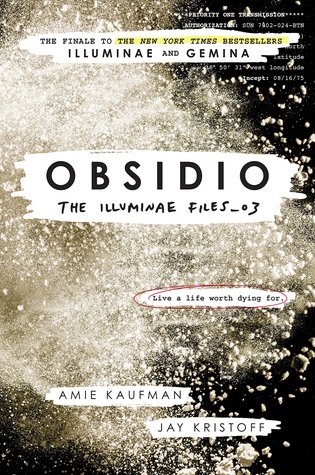 Obsidio by Amie Kaufman and Jay Kristoff
Mogsy’s Rating (Overall): 4.5 of 5 stars
Genre: Young Adult, Science Fiction
Series: Book 3 of The Illuminae Files
Publisher: Listening Library (March 13, 2018)
Length: 13 hrs
Author Information: Amie Kaufman | Jay Kristoff
Narrators: Olivia Taylor Dudley, Carla Corvo, Full Cast
Despite knowing beforehand that Obsidio was meant to be the final book of a planned trilogy, I was still hit with a wave of shock upon finishing the novel. It’s over. I still can’t believe it’s really over! As for why this particular ending affected me so much, I genuinely believe it’s because The Illuminae Files is one of those once-in-a-lifetime kinds of stories—a series that will stand in its own class, as time will prove, though I have no doubt plenty of imitators will try to duplicate its successes in the years to come.
As for Obsidio itself, the story is once again told in the epistolary style established by the first two books, presented as a collection of transcripts, journal entries, emails, chat messages, and other types of documentation. It picks up from the end of Gemina, following the four major characters that have already been introduced—Kady, Ezra, Hanna, Nik—while adding still two more in to the mix: Asha Grant and Rhys Lindstrom.
Unlike the previous installments though, this time the focus of the tale is split. One part takes place aboard the container ship Mao, which has taken in the thousands of survivors from the Alexander fleet and Heimdall Station disasters, including Kady and her friends. With no place left to go, the refugees’ only option is to return to Kerenza, a planet still being illegally occupied by the megacorp BeiTech.
But things on Kerenza have only gone from bad to worse in the seven months since the planet was invaded. BeiTech’s military now holds the entire population hostage, forcing miners to carry on working or else see their loved ones brutally killed. In spite of this, an underground resistance has formed, fighting back using methods like sabotage and subterfuge. As the death toll rises on both sides, tensions on Kerenza reach a fever pitch. This provides the backdrop for the second part of the story, starring our new protagonists Asha and her old flame Rhys.
Asha, who is Kady’s cousin as well as a fervent member of the resistance, now finds herself working in the hospital on Kerenza, hating everything that BeiTech and their military enforcers have done to her planet. So imagine her surprise when one day, in walks her ex-boyfriend whom she hasn’t seen in years, and he’s all decked out in said military enforcer uniform, representing everything she is fighting against. Rhys, on his part, is just as shocked to see Asha, though he can’t really understand why she is so disappointed and angry. After all, he’s just a new recruit, freshly assigned to Kerenza with no real grasp of the messy situation he’s gotten himself into. He certainly doesn’t want to fight Asha, but because of who his employers are, he might not have a choice.
Of the three books in the series, Gemina still probably ranks as my favorite. But just because I didn’t think Obsidio was as good as its predecessor doesn’t mean I didn’t still love it to bits! Clearly, as you can see from my rating, I enjoyed the hell out of this book. I thought this was a great read and a fantastic conclusion, even if we did lose a slight edge because of the split focus. The two previous books had the advantage of following exclusively one couple, while Obsidio needed to simultaneously keep track of no less than six characters, spread out between two very different settings. This also made it the most complex installment, with a lot of background information to cover. For all that, the authors still did an outstanding job keeping up the tensions and excitement, filling the plot with plenty of conflicts and plot twists.
Now this is where things in my review get a little tricky because I don’t want to give away any spoilers, but another notable character also returns in the form of the artificial intelligence known as AIDAN. He likes to wax poetic about heroes, villains, and monsters, but which one is he? I’ll let you read the book and be the judge.
In any case, if you’ve been enjoying the series so far, there is no doubt in my mind you’ll also love Obsidio. There is just as much action, passion, and heartbreak. One might even venture to say it is the deepest and most emotional of the three books. This is where everything ties together, and in many ways, it’s apropos that Kerenza plays a big role again, so that the saga ends in the same place it began. Like all good conclusions, Obsidio encourages the reader to think back upon everything that has transpired, reflecting on the characters’ victories and losses. The final pages filled me with a warm sense of satisfaction and fondness, and at the end of the day that’s all I can really ask for.
Audiobook Comments: Once more, I just can’t stress how amazing this series is in audio. Unlike most regular productions, the audiobooks for The Illuminae Files are performed by a full cast complete with sound effects, so that the experience plays out like an epic movie in your mind. For a book like Obsidio, actually getting to hear the voices of the characters made the story even more intense and urgent. All the narrators delivered stellar performances, and I truly believe the fantastic acting was what put this one over the top. Highly recommended.

More on The BiblioSanctum:
Review of Illuminae (Book 1)
Review of Gemina (Book 2)
Mogsy’s Bookshelf Roundup: Stacking the Shelves & Recent Reads
Posted on March 10, 2018 23 Comments
Bookshelf Roundup is a feature I do every other weekend which fills the role of several blog memes, like Stacking the Shelves where I talk about the new books I’ve added to my library or received for review, as well as It’s Monday! What Are You Reading? where I round up what I’ve read since the last update and what I’m planning to read soon. Mostly it also serves as a recap post, so sometimes I’ll throw in stuff like reading challenge progress reports, book lists, and other random bookish thoughts or announcements.

Received for Review
Happy March, everyone! I’m still kind of in catch-up mode, sop here are the rest of the books that made its way into my mailbox in the last couple weeks of February. My thanks to the publishers and authors for the following review copies received! For more details and full descriptions of the books, be sure to click the links to their Goodreads pages.

The awesome folks at Tor are kicking us off today with a couple new arrivals: Dayfall by Michael David Ares takes place in a dystopian future where the darkness of a nuclear winter has fallen over much of the eastern United States. Reviews seem to be a little mixed, but I still find myself curious to check out this sci-fi crime thriller. If Tomorrow Comes by Nancy Kress is the sequel to Tomorrow’s Kin, a cool story of alien first contact that I read last year. I enjoyed it a lot, so I’m looking forward to continuing the series. Next up are two Tor Teen arrvials: Pacifica by Kristin Simmons is a young adult fantasy about pirates, so I’m definitely all over it. I’m also very excited about this ARC of The Unfortunates by Kim Liggett. I loved her book The Last Harvest last year, and while this one is quite a bit different in terms of genre, I still can’t wait to read more of her work.
Courtesy of Ace Books I also received a finished copy of Lake Silence by Anne Bishop, the start to her spin-off series taking place in the same world as The Others. I had a great time with this one; my review should be up early next week along with a giveaway opportunity, so be sure to keep your eyes out for that!
With thanks to Saga Press and Wunderkind PR, I also received an ARC of The Tangled Lands by Paolo Bacigalupi and Tobias S. Buckell. I finally caught up to this one and finished it earlier this week, and as you can see from my review it wasn’t exactly what I expected, but I still had a good time.

Thanks also to Orbit for the following ARCs! I was pumped when this copy of One Way by S. J. Morden showed up unexpectedly last month; for a long time I’ve had my eye on this sci-fi thriller featuring a murder mystery involving a small crew of ex-cons working on Mars. And yay for Arm of the Sphinx by Josiah Bancroft! I’m looking forward to reading this second installment of The Books of Babel series.
Next up is this amazing looking book called Holmes Entangled by Gordon McAlpine. Described as a Sherlock Holmes-inspired quantum meta-mystery, it sounds fun and quirky and utterly fascinating. I just hope the quantum mechanics won’t be too much for me to handle! My thanks to Seventh Street Books! And from their sister imprint Pyr Books, I also received this ARC of a new-to-me book called Blood Orbit by K.R. Richardson. I see that it’s a sci-fi police procedural though, so consider me intrigued. My thanks to the publishers!
A couple weeks ago I was also thrilled to receive a surprise package from the wonderful team at Tachyon Publications, containing The Oddling Prince by Nancy Springer, a historical fantasy set in the ancient moors of Scotland. Its premise has a charming fairy tale-like quality to it, and already I’ve seen this one likened to the works of Juliet Marillier. I just hope those comparisons are true because this one sounds incredible.
And finally, rounding out today’s batch of new arrivals is The Silent Companions by Laura Purcell, described as a Gothic ghost story that creeps its way through the consciousness in ways you least expect. OOOoooOOOooohhh, creepy…and I love the sound of it! This one’s flying to the top of my TBR, with thanks to Penguin Books.
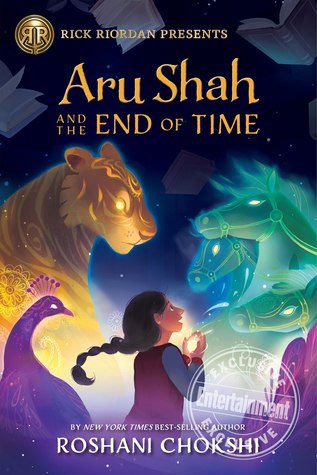
Thankfully my eARC and audiobook haul is not quite so big this week, because I really need to work on paring down my digital TBR. But of course I couldn’t resist requesting an audiobook review copy of Obsidio by Amie Kaufman and Jay Kristoff because this series is absolutely amazeballs in audio! Needless to say, I listened to it right away and loved it, and my review should be up tomorrow. I also decided to check out Aru Shah and the End of Time by Roshani Chokshi because I really enjoyed her Star-Touched Queen duology. This time she’s trying her hand a middle grade fantasy, and I think this one could be good. My thanks to Listening Library to these.
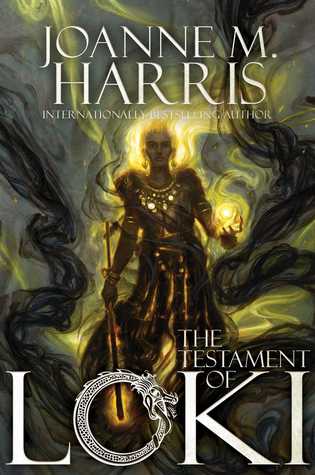
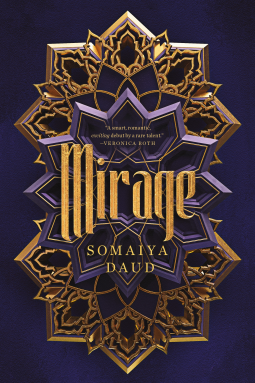
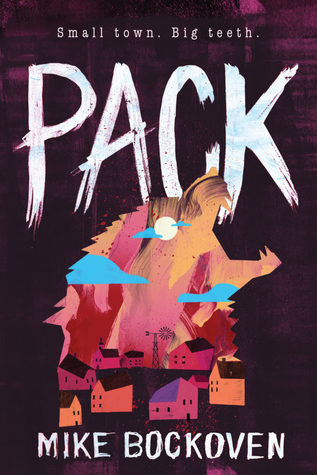
From NetGalley, I also finally caved and decided to grab The Testament of Loki by Joanne M. Harris. Might as well stop fighting it and just admit I really need to read this sequel to The Gospel of Loki. Throwing caution to the wind, I also requested Mirage by Somaiya Daud after learning more about it from several blogs recently. And in one final indulgence, after browsing Edelweiss one day, I requested Pack by Mike Bockoven. A supernatural thriller about werewolves set in a rural Nebraskan town, this novel has been likened to the works of Anne Rice mixed with pulpy, bloody horror. My thanks to Saga Press, Flatiron Books, and Talos for these.
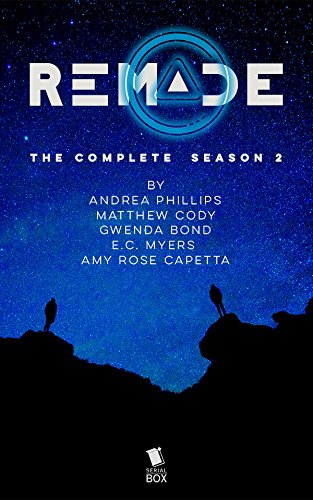
And finally, with thanks to Serial Box I received ReMade Season 2 by Matthew Cody, Gwenda Bond, Andrea Phillips, E.C. Myers, and Amy Rose Capetta, now that the entire season is complete. So far, this is probably one of my favorite serials from them and I look forward to continuing the next chapter.
Reviews
A quick summary of the reviews I’ve posted since the last update:
The Hunger by Alma Katsu (4 of 5 stars)
A Time of Dread by John Gwynne (4 of 5 stars)
Winter Sisters by Robin Oliveira (4 of 5 stars)
Honor Among Thieves by Rachel Caine and Ann Aguirre (4 of 5 stars)
Daughters of the Storm by Kim Wilkins (3.5 of 5 stars)
The Tangled Lands by Paolo Bacigalupi and Tobias S. Buckell (3.5 of 5 stars)
Zero Day by Ezekiel Boone (3 of 5 stars)
Interviews & Guest Posts
A huge thanks to the authors who stopped by The BiblioSanctum this week!
“Working Out the Rules of Interstellar Travel” by Gareth L. Powell
“The Self-Publishing Catch-22” by M.D. Presley

What I’ve Read Since the Last Update
Here’s what I’ve “unstacked” from the TBR since my last roundup post. I’m making up for lost time! Most of these have already been reviewed, and the rest will be coming soon.


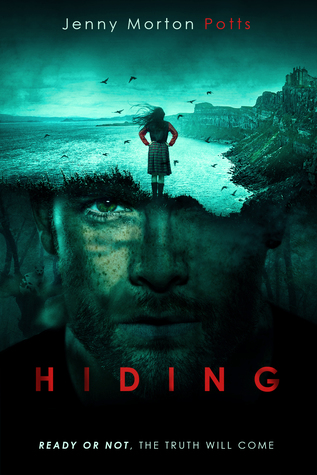


Have you heard of or read any of the books featured this week? What caught your eye? Any new discoveries? I hope you found something interesting for a future read! Let me know what you plan on checking out. Until next time, see you next Roundup!
Friday Face-Off: Sun
Posted on March 9, 2018 37 Comments
Welcome to The Friday Face-Off, a weekly meme created by Books by Proxy! Each Friday, we will pit cover against cover while also taking the opportunity to showcase gorgeous artwork and feature some of our favorite book covers. If you want to join the fun, simply choose a book each Friday that fits that week’s predetermined theme, post and compare two or more different covers available for that book, then name your favorite. A list of future weeks’ themes are available at Lynn’s Book Blog.
This week’s theme is:
“…but Icarus flew too close”
~ a cover featuring the SUN
Mogsy’s Pick:
Children of Earth and Sky by Guy Gavriel Kay
Like many of Kay’s stories that feature fictional analogs of real places in history, this novel is said to be inspired by the conflicts and intrigues of Renaissance Europe. Readers who are knowledgeable in the era will probably recognize historical elements from the fifteenth to sixteenth century. For instance, the Ottoman Empire has been re-imagined as the Osmanli Empire, and the most Serene Republic of Venice or la Serenissima Repubblica di Venezia has become the Republic of Seressa. Using this vibrant setting as a backdrop, Kay chronicles the lives of a disparate group of characters whose fates are all interwoven and connected like the threads of a tapestry.
Now let’s take a look at the covers:
From left to right, top to bottom:
NAL (2016) – Hodder & Stoughton (2016)
French Edition (2017) – Russian Edition (2016)

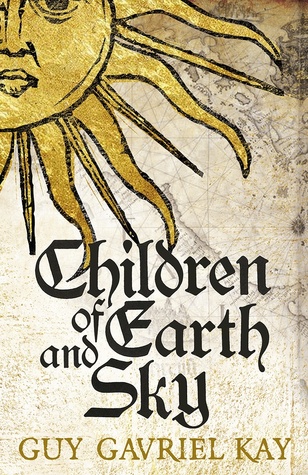
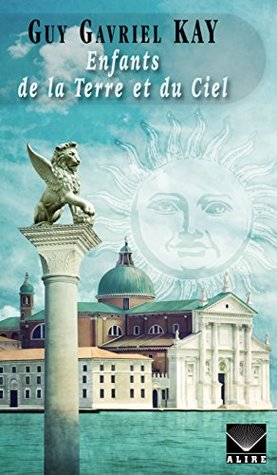
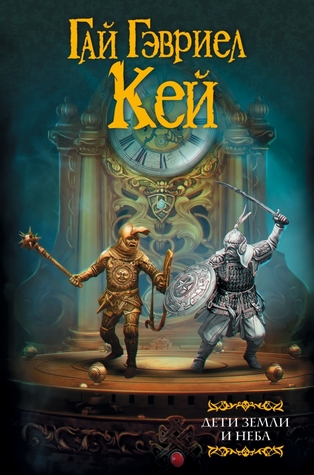
Winner:
I’m going to have to go with the edition I own here, the NAL cover from 2016. I love the gilded effect, which gives this cover an extra touch of class.
What do you think? Which one is your favorite?
Book Review: The Tangled Lands by Paolo Bacigalupi and Tobias S. Buckell
Posted on March 8, 2018 21 Comments
I received a review copy from the publisher. This does not affect the contents of my review and all opinions are my own.
The Tangled Lands by Paolo Bacigalupi and Tobias S. Buckell
Mogsy’s Rating: 3.5 of 5 stars
Genre: Fantasy
Series: Khaim novellas
Publisher: Saga Press (February 27, 2018)
Length: 304 pages
Author Information: Paolo Bacigalupi | Tobias S. Buckell
A couple things I didn’t realize when I first picked up The Tangled Lands: one, the world featured here was in fact introduced back around 2011 in the Khaim Novellas series, consisting of The Alchemist by Paolo Bacigalupi and The Executioness by Tobias S. Buckell. Two, this book actually turned out to be an anthology of sorts, containing four short stories which include the aforementioned two novellas. All four pieces take place in a shared world so there are some related events and characters, but generally speaking, they are each distinct and standalone.
After scouring my copy of The Tangled Lands, I couldn’t find this information about its format mentioned anywhere on the dust jacket, so hopefully my review will help readers decide if this is the type of book for you. Personally, it wasn’t until I realized that I wasn’t reading a traditional novel but in fact four separate stories, that I felt better able to gauge my opinion of the book as a whole.
THE ALCHEMIST
First up is the tale of the alchemist, a beleaguered man whom despite his hard work and genius is seeing his life falling to ruin. This opening story also introduces the world to the uninitiated—it takes place in the city of Khaim, the last remaining city in a fallen empire that has been choked by a fast-growing kind of bramble that feeds on magic. As a result, any kind of magic has been outlawed to prevent the bramble from encroaching any further, though some still risk their lives to use it when faced with no other options. This, unfortunately, is the situation our hapless protagonist finds himself in when his only daughter is infected with the seeds of the bramble, causing a lung disease that will one day claim her life. To save her, the alchemist must perform a magical spell regularly to heal her body.
But the alchemist also knows that he cannot keep this up forever. The problem is the bramble; if it can be destroyed for good, magic wouldn’t be prohibited anymore, and his daughter would live. So, he devotes all his time and efforts into developing a bramble-killing device called a balanthast, which he brings to the city leaders once it is complete. However, that’s when everything goes wrong.
Of the four stories in this book, this was probably my favorite. Part of it was being introduced to this world for the very first time, I’m sure, but there were also a lot of subtle nuances to be found here, from meaningful messages to deep questions to chew on. The Alchemist is very much a Paolo Bacigalupi story in that sense; I can always count on him to present interesting perspectives and provide plenty of discussion fodder. I also enjoyed the characters here. Regardless of what you think of his motivations or actions, the alchemist is written in a way that allows the reader to understand his dilemma and sympathize with him.
THE EXECUTIONESS
The second story is The Executioness, written by Tobias S. Buckell to accompany The Alchemist. In Khaim, those who are caught using magic are immediately put to the axe in a public beheading. Our protagonist in this tale is Tana, the city’s only female executioner, forced to take her father’s place and carry out his gruesome task on the chopping block. But after a brutal attack on her home by foreign raiders, she must embark on a difficult quest to save her children.
I have to say this one was a rather humdrum in terms of the plot—Tana gets picked up along the way be a group of fighters who are tracking the raiders, and she learns to use her executioner’s axe in combat, becoming an effective leader in the process. What stood out for me was the unique role of the protagonist, an executioness but also a middle-aged mother. Sadly, this latter aspect of her life was not as deeply explored as her time with the army, which I thought was a missed opportunity. We also didn’t get to see a lot of the world-building in this one—another disappointment considering how well done it was in the previous story, with its amazing look at the magic system.
THE CHILDREN OF KHAIM
Written by Paolo Bacigalupi, this tale begins what I would call the “aftermath” phase, showing the consequences of the events from the two previous stories. We now know the full effects of the bramble. Beyond breaking down infrastructure and society by bursting forth from city streets and sprouting in farmers’ fields, it also poisons people and make them sick—very sick. In this story, a young man fights to keep his sister alive after she succumbs to “bramble sleep”. But how far will he go to save her, when resources begin to dwindle, and the hope fades every day?
Unfortunately, for a story with such emotionally harrowing themes, this was another one that I felt missed its mark. Rare for Bacigalupi, the characters here just didn’t engage me, so I didn’t feel as connected to this story as I wanted to be. It was also the shortest tale, and that might have hurt it, being that there was not enough time to adequately develop the characters or the plot. After all, for a story of this nature, that’s rather important.
THE BLACKSMITH’S DAUGHTER
This closing tale by Tobias S. Buckell probably ranks as my second favorite in this collection. While it is dark and bleak, I nonetheless enjoyed it because of all its different layers. In this story, a blacksmith and his family are given only a fraction of the resources required to forge a set of armor for a wealthy duke’s son. The duke, fully aware of the unfairness in this situation, punishes the parents when they fail to deliver, thus forcing the couple’s daughter to complete the project or see her mother and father perish. However, the girl has her own plans, and risks everything to save her parents.
This one did not end the way I expected, and though it was also tough to read about the pain, suffering, and injustices committed by the elites on the serving class, I also enjoyed the unpredictable way this story unfolded. I also felt for the main character, my heart aching for her and the circumstances she has found herself in. Even though she was powerless, she still found a way to fight back, never giving in despite the hopelessness and impossible odds stacked against her.
Final Thoughts: The Blacksmith’s Daughter was perhaps a rather grim note to end the book on, but in a strange way, it also felt appropriate. Other than taking place in the world, the four these stories here are unlinked or can be read separately, and yet, a common theme does run through all of them. The concept of family features strongly in each tale, not to mention a central figure who sacrifices a great deal in order to save a family member.
That said, it didn’t feel like much was accomplished by the end of the book. These tales read more like mini vignettes following the triumphs and tragedies of the different characters—little slices of life in Khaim. It’s a neat idea, but going back to what I wrote at the beginning of this review, if you want to avoid disappointment, it’s probably best to consider The Tangled Lands an anthology rather than a novel or even a collection of constituent short stories that make up a whole.

Waiting on Wednesday 03/07/18
Posted on March 7, 2018 17 Comments

“Waiting On Wednesday” is a weekly meme that first originated at Breaking the Spine but has since linked up with “Can’t Wait Wednesday” at Wishful Endings now that the original creator is unable to host it anymore. Either way, this fun feature is a chance to showcase the upcoming releases that we can’t wait to get our hands on!
Mogsy’s Pick
Star Wars: Last Shot – A Han and Lando Novel by Daniel José Older (April 17, 2018 by Del Rey)
Holy crap, it’s a Star Wars book written by Daniel José Older, and it’s about Han Solo and Lando Calrissian! According to the publisher description, Last Shot will explore three eras in the lives of these two iconic characters ahead of the new movie Solo: A Star Wars Story. The hardback will also have a reversible dust jacket featuring the two cover designs:
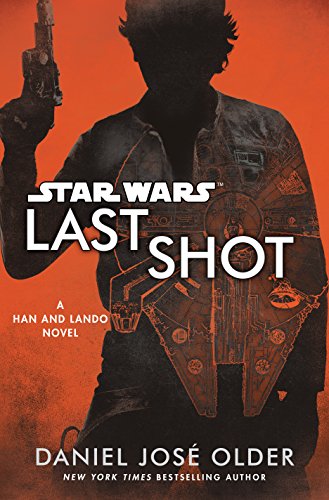
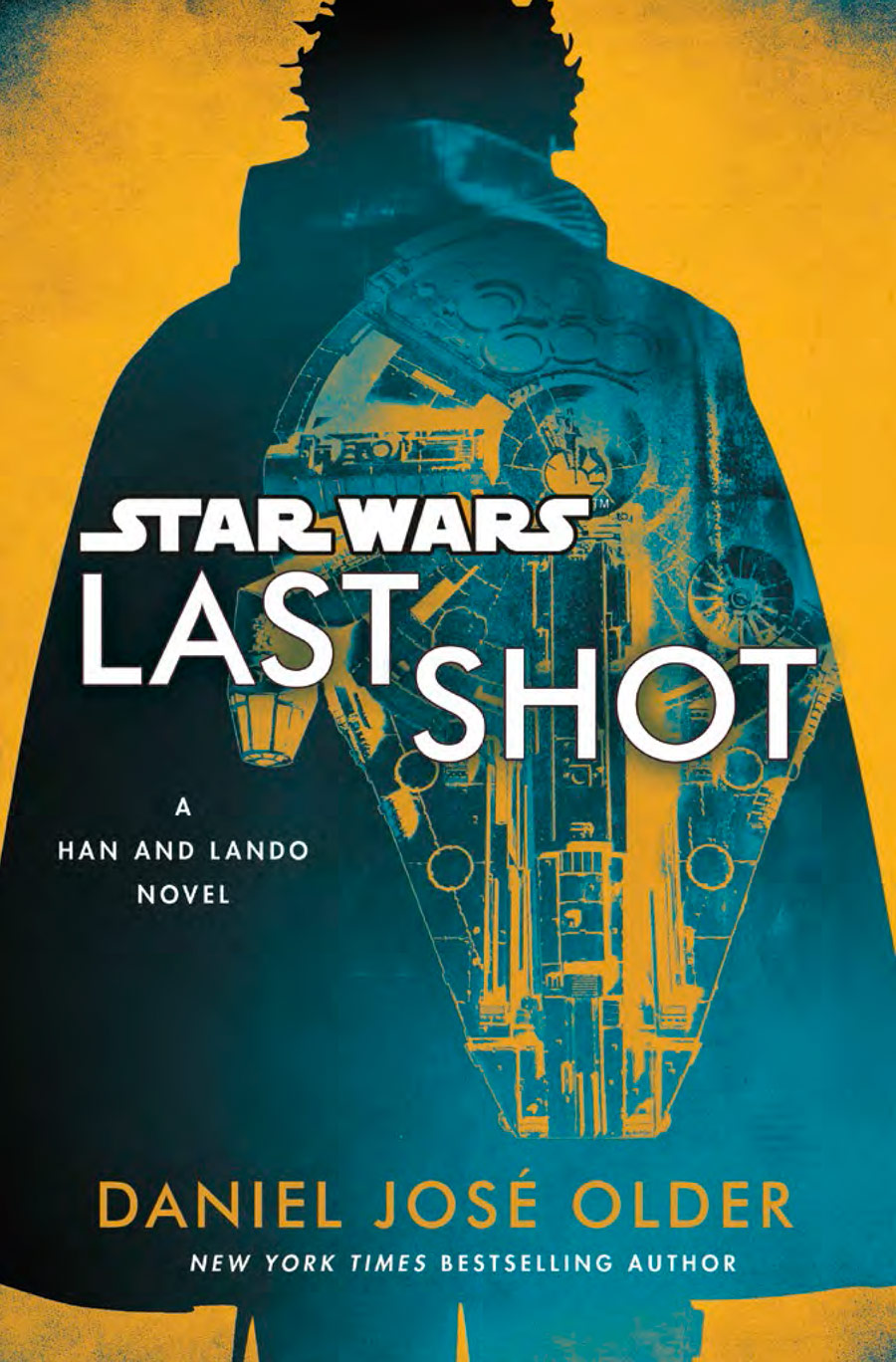
“Even the fastest ship in the galaxy can’t outrun the past. . . .
THEN:
It’s one of the galaxy’s most dangerous secrets: a mysterious transmitter with unknown power and a reward for its discovery that most could only dream of claiming. But those who fly the Millennium Falconthroughout its infamous history aren’t your average scoundrels. Not once, but twice, the crew of the Falcon tries to claim the elusive prize—first, Lando Calrissian and the droid L3-37 at the dawn of an ambitious career, and later, a young and hungry Han Solo with the help of his copilot, Chewbacca. But the device’s creator, the volatile criminal Fyzen Gor, isn’t interested in sharing. And Gor knows how to hold a grudge. . . .
NOW:
It’s been ten years since the rebel hero Han Solo last encountered Fyzen Gor. After mounting a successful rebellion against the Empire and starting a family with an Alderaanian princess, Han hasn’t given much thought to the mad inventor. But when Lando turns up at Han’s doorstep in the middle of the night, it’s Fyzen’s assassins that he’s running from. And without Han’s help, Lando—and all life on Cloud City—will be annihilated.
With the assistance of a young hotshot pilot, an Ewok slicer prodigy, the woman who might be the love of Lando’s life, and Han’s best and furriest friend, the two most notorious scoundrels in the New Republic are working together once more. They’ll have to journey across the stars—and into the past—before Gor uses the device’s power to reshape the galaxy.”
Book Review: The Hunger by Alma Katsu
Posted on March 6, 2018 29 Comments
I received a review copy from the publisher. This does not affect the contents of my review and all opinions are my own.
Mogsy’s Rating: 4 of 5 stars
Genre: Horror, Historical Fiction
Series: Stand Alone
Publisher: G.P. Putnam’s Sons (March 6, 2018)
Length: 400 pages
Author Information: Website | Twitter
The tragedy of the Donner Party is retold with a supernatural twist in The Hunger, a dark mix of historical fiction and horror. For context, in the May of 1846 a wagon train led by George Donner and James Reed set out from Independence, Missouri like so many other pioneer families hoping to settle a new life in California. Instead of following the typical route, however, the Donner Party opted to travel the new Hastings Cutoff, encountering poor terrain and other difficulties that slowed them down considerably, until they became trapped in heavy snowfall somewhere in the Sierra Nevada mountain range. Many of the party died, and some of the survivors allegedly resorted to cannibalism to stay alive.
Alma Katsu’s re-imagining of this journey—while staying true to many of the real-life people, places, and events—also plays to the mystery surrounding the terrible fate of the Donner Party, injecting a speculative element in the form of supernatural horror. While one could argue that the facts are already horrific enough, the author takes the suffering, terror, and dread even further still in this Oregon Trail story from hell that makes dysentery seem like a cakewalk. The Hunger follows several characters from the group of almost 90 members in the Donner Party, including Tamsen Donner, George’s wife; James Reed, the co-leader of the group; Mary Graves, a young woman from a large family traveling with the wagon train; and Charles Stanton, a bachelor traveling with the party with no relatives. In addition, periodic interludes are provided in the form of letters written by a journalist named Edwin Bryant, who has undertaken his own journey into the wilderness to conduct research on the mystical traditions of the Native American tribes living in the area.
Many of the other families are mentioned as well, bringing the number of people involved in this book to a staggering figure. The result? Virtually limitless potential for complex character dynamics and fascinating relationships. And indeed, Katsu made sure to take full advantage of this, giving her characters interesting backgrounds full of scandal, controversies, and mischiefs. For many, starting a new life also meant leaving the old one behind along with painful, unwanted memories. Flashbacks are provided for most of the major characters, explaining their reasons for heading west. These backstories also explained many of their motivations, and gradually revealed hidden pasts. After all, secrets don’t last for long in conditions such as these, where travelers lived cheek to jowl within cramped confines, sharing spaces with multiple families.
As you can imagine, disagreements and bitter rivalries also occurred pretty often, and these clashes only intensified as the Donner Party ran into more problems. In books like The Hunger, the horror aspect usually comes at you at multiple angles. First there is the stifling terror of the unknown, and of course people fear the supernatural because it is impossible to understand. But more frightening still is the underlying darkness of human nature that reveals itself when pushed to extremes. There are two kinds of monsters in this book: the literal kind, but also the kind that good people turn into when they feel trapped or if they or their families are being threatened. Stress, paranoia, and desperation all play a part in this tale, making the horrific aspects feel even deeper, more distressing and malignant.
From the moment the mutilated body of a missing boy is found at the beginning of the book, I was wrapped up in the story’s suspense. Graphic descriptions and scenes of violence are used to create horror, but as always, I found that the most nerve-wracking aspects came not so much from what’s written on the page, but rather from what we don’t get to see and from what’s implied. The author utilized these effects to great advantage, slowly dropping hints and details here and there, all the while sowing dissent among the party with spiteful rumors, arguments, and jealousies. An atmosphere of suspense was kept up for the most part, though because of all the POV switches and number of flashbacks involved, these tensions were frequently interrupted. However, this was just a minor nitpick, and besides, considering the amount of character development we got out of it, I deemed it to be a worthy trade-off.
The Hunger would be perfect for fans of dark historical fiction, especially if you are drawn to the period of American history which saw a great number of families leave their homes in the east for the west coast. Alma Katsu does not shy away from the details of hardship and sacrifice while on the trail though, so be prepared for a harsh and unflinching look at life as a pioneer. Readers with a taste for horror will probably enjoy this even more, and those familiar with the bizarre and macabre details of the true Donner Party will no doubt appreciate the author’s attempts to spice up the episode with a supernatural twist. All in all, a standout read.
Guest Post: “The Self-Publishing Catch-22” by M.D. Presley
Posted on March 5, 2018 33 Comments
 Today, the BiblioSanctum is excited to help spread the word about Sigil Independent, a new writing guild started by a group of self-published fantasy authors including many Self-Published Fantasy Blog-Off (SPFBO) alumni like Phil Tucker, Dyrk Aston, inaugural winner Michael McClung, and several other semi-finalists from the previous year.
The following is a part of their mission statement from their website:
“Like it or not, all self-published authors carry with them the stigma of being a self-published author. With the newfound ease of self-publishing, the traditional gatekeepers no longer hold utter sway and any individual with an idea, internet connection, and fifteen minutes for an upload can call him or herself an author. As such, many self-published books now inundate audiences with errors and amateurism the traditional gatekeepers never would have allowed.
However, as Mark Lawrence’s Self-Published Fantasy Blog Off has demonstrated, there’s also a lot of untapped talent out there in the self-published Fantasy realms, often catering to subgenres traditional publishers aren’t interested in. These self-published authors operate on par with their traditionally published peers but lack the means to achieve audience awareness as they endeavor individually.
To overcome this, SIGIL has formed a guild of like-minded self-published Fantasy authors intent on utilizing traditionally published best practices to ensure our audiences receive the best possible self-published product.”
Needless to say, it’s amazing that SPFBO continues to inspire initiatives like this, and one of Sigil’s founding members, M.D. Presley, has very graciously written us a guest post to help kick off their outreach. If you can, please give them a look and show your support by checking out other fun things on their website like this personality test or download a free sampler book to get to know their authors. In the meantime, I hope you enjoy this post by Mr. Presley!
THE SELF-PUBLISHING CATCH-22
by M.D. Presley
There’s a famous saying among screenwriters in Hollywood: “You can’t sell a script unless you’ve got an agent, and you can’t get an agent without first selling a script.” This little logical conundrum isn’t entirely accurate, but it does touch upon the truth that no producer wants an untested product.
The same catch-22 exists for authors as well in that, to get readers you need reviews, but to get reviews you need readers. But this paradox is compounded exponentially for self-publishers because we carry with us the stigma of being self-published. Because the author in question did not go the traditional route it’s implicitly understood this was because they could not make the qualitative cut.
Don’t believe me? Go check out your favorite book blogger and check out their review policy. Chances are it will contain some variation of this refrain “we do not accept self-published novels.” If the blogger is particularly open minded, it will include this addendum “we do not accept self-published novels unless we are already familiar with the author.”
And therein lies the rub: Self-published authors cannot get noticed by book bloggers unless they’ve already been noticed by said book bloggers. And being that word of mouth is the biggest driver in readers giving a new novel a shot, self-publishers are already several steps behind when it comes to launching a new book.

But one aspect of this interaction between authors and book bloggers/ reviewers bears greater scrutiny: What separates an unproven debut novel from a traditional publisher from an unproven debut novel from a self-publisher? The answer lies in the seal of approval of the publisher itself: If the reviewer knows and likes other novels from the publisher, it is expected that any new novels will be of equal quality.
Novels under a traditional publisher share a brand of quality, one that we at Sigil Independent seek to emulate. Although made up entirely of self-publishers, many of which you’ll be familiar with if you follow Mark Lawrence’s Self-Published Fantasy Blog Off since we sport many finalists in our stable, we at Sigil Independent retain full control over our works. In fact, Sigil members pay no dues since we’re not a business by any means.
Instead, we’re a guild that aims to create a shared brand of quality; if you’ve already enjoyed at least one of our authors (and honestly, you probably should have already if you regularly follow fantasy book bloggers), you can expect that our other authors are on par in terms of quality. If you’ve given one of us a shot, you should probably see if any of our other nine authors are your cup of tea.
 To aid audiences in discovering some of the best self-published fantasy out there, we at Sigil have issued a FREE 500+ page book containing samples of all our authors. And to make matters more interesting and connect readers with the book they are most likely to enjoy, we’ve set up a little questionnaire in the form of a Choose-Your-Own-Adventure story in the prologue (so, for goodness sakes, don’t skip the prologue!) which will immediately take you to the sample that will hopefully spark your new interest in self-published authors to help break that insidious catch-22 cycle.
Other quizzes, author bios, and freebies can be found at our website, www.sigilindependent.com. We can also be found on Facebook at Sigil Independent and Twitter @sigilindie.
ABOUT THE AUTHOR
A Texan transplant living in California, MD Presley isn’t nearly as clever as he thinks he is. With a background in screenwriting, he fled to publishing with his flintlock fantasy series when the reality of Hollywood got to be a bit too much. A founding member of Sigil Independent, he also blogs weekly at the not-so-creatively-named www.mdpresley.com and tweets on occasion @md_presley.
And no, he’s not related to Elvis. Thanks for asking.
Book Review: Zero Day by Ezekiel Boone
Posted on March 4, 2018 23 Comments
I received a review copy from the publisher. This does not affect the contents of my review and all opinions are my own.
Mogsy’s Rating: 3 of 5 stars
Genre: Horror, Thriller
Series: Book 3 of The Hatching
Publisher: Atria/Emily Bestler Books (February 27, 2018)
Length: 322 pages
Author Information: Website | Twitter
Zero Day closes out Ezekiel Boone’s The Hatching trilogy, bringing an end to the spider apocalypse—though it’s anyone’s guess which side will prevail. Since emerging from an ancient egg sac unearthed beneath Peru’s Nazca Lines, these eight-legged menaces have multiplied into the millions, swarming the globe and paralyzing all aspects of life. In the United States, President Stephanie Pilgrim has carried out the unthinkable, targeting dozens of American cities with tactical nukes, but still the threat remains. All it would take is one single spider to get past their guard, and thousands more people would die.
The time has come for a more permanent solution, and humanity’s last chance lies in a theory postulated by Dr. Melanie Guyer who believes all the spiders in the world are linked through their queens. Her hypothesis is simple: kill the queens, and without their leadership, the rest of the swarm should lose their ability to coordinate their movements and die.
However, not everyone close to the President agrees with this plan, claiming that it is too risky. More drastic measures are proposed to destroy all the spiders and not just the queens, creating a rift within the U.S. government. Meanwhile, those around the world who have managed to survive the initial waves of death are continuing to hunker down or fight, doing what they can to prevent the further spread of what has been dubbed the “Hell Spiders”.
I had a fun time with this novel, but I’m also not going to lie; I expected more from a finale. Like the two previous volumes, this final installment is told through a number of different perspectives, showing us how the spider apocalypse is unfolding around the world. That said, most of the main storyline is centered on the American East Coast, where President Pilgrim and her allies face opposition and eventual revolt from dissenters within her own cabinet. As a result, many of the other POVs are greatly diminished, leaving some of the characters with no role in the conflict resolution whatsoever.
Needless to say, I found this disappointing, especially since a few of the characters I’ve come to love were only briefly mentioned or were given perfunctory page time just to remind us that they were still around. In addition, many of the POV transitions felt awkward and ill-timed, almost like the author was struggling to find a balance, and not entirely succeeding. Instead of flowing smoothly, the narrative kept being disrupted or derailed by these frequent POV switches, some of which didn’t even feel all that necessary.
Still, these issues paled beside the one flaw I could not overlook: there simply weren’t enough spiders! This distinct lack of arachnid-fueled action, especially in the first half, was probably my biggest complaint, and unfortunately, not even the ending which saw the spiders return in full force could really make up for it. Recall in my review of Skitter, where I had praised Boone for upping the ante by making things bigger, better, and bloodier. Compared to its predecessor, however, this book felt like a giant step back. Too much of the story was focused on the human vs. human drama, when the attention should have been given to the spiders (which, in my opinion, are the real stars of the show).
For these reasons, I felt Zero Day really missed its mark in terms of offering a satisfying conclusion. Not only did it skimp on the spiders, the plot also failed to bring anything new to the table, falling back on time-worn clichés like the Hive Queen trope and the good old military coup. And yet, for all its faults, the book was a quick read and provided solid entertainment, which is what saved it from a lower rating. All things considered, it’s probably worth finishing the trilogy if you’ve already come this far, because you’ll want to find out how things end. But while I’m not sorry I read Zero Day, it’s just a shame that the series didn’t end as strongly as it started, and I personally felt it was the weakest of the three books.

More on The BiblioSanctum:
Review of The Hatching (Book 1)
Review of Skitter (Book 2)


 The BiblioSanctum