Mogsy’s Bookshelf Roundup: Stacking the Shelves & Recent Reads
Posted on April 7, 2018 36 Comments
Bookshelf Roundup is a feature I do every other weekend which fills the role of several blog memes, like Stacking the Shelves where I talk about the new books I’ve added to my library or received for review, as well as It’s Monday! What Are You Reading? where I round up what I’ve read since the last update and what I’m planning to read soon. Mostly it also serves as a recap post, so sometimes I’ll throw in stuff like reading challenge progress reports, book lists, and other random bookish thoughts or announcements.

Received for Review
My thanks to the publishers and authors for the following review copies received! For more details and full descriptions of the books, be sure to click the links to their Goodreads pages.

Kicking us off this week is a big batch from the amazing team at Tor Books: The Night Dahlia by R.S. Belcher is the second Nightwise novel and I’m excited to continue the series. Also thanks to the author for dropping by earlier in the week with a guest post for our part in the book’s blog tour! I also received a finished copy of The Queens of Innis Lear by Tessa Gratton, described as being inspired by both Game of Thrones and Shakespeare’s King Lear. Mere words cannot describer how badly I’ve been craving this novel. Next up is another book I’m super excited about, Head On by John Scalzi which is the stand-alone follow up to Lock In. I’m sure I’ll be reading this one soon. I also received a gorgeous finished copy of Fire Dance by Ilana C. Myer, a stand-alone set in the same world as the author’s previous novel, Last Song Before Night. I didn’t get a chance to read that one, so I’m thrilled at another opportunity to check out her work.
With thanks to Titan Books, I also received The Folded Land by Tim Lebbon from participating in the book’s blog tour last month, and the publisher also threw in the first book Relics, which that was awesome of them! I hadn’t read it yet, and I always prefer to start at the beginning of a series if I can, so this was perfect.

Huge thanks to Pyr books for an ARC of The Last Sun by K.D. Edwards, which has recently landed on my radar (and I’ve been seeing it pop up in a lot of other anticipated lists as well). It’s the start of a new fantasy mystery series and it also looks to be one of the publisher’s big upcoming titles, so I’m curious to see what it’s all about.
From the kind folks at Ace/Roc/DAW, I also received the following new arrivals: From Unseen Fire by Cass Morris was a book I actually featured once for Waiting on Wednesday, so I was overjoyed when a finished copy showed up. I’m also jumping up and down about Before Mars by Emma Newman, the third installment in her Planetfall sequence. It appears to be a standalone like the previous novels, so it’ll be interesting to see what new stories and characters the author has in store for us. I cannot wait to sink my teeth into this one.
Next up, a couple of cool surprises from Orbit! This mysterious looking ARC is Season of Storms by Andrzej Sapkowski, the highly anticipated English translation of The Witcher prequel which was originally published in Polish in 2013. I love this series! Traditionally, I’ve always done these books in audio though, so maybe when the time comes I’ll both read and listen to this one. Another unsolicited but very welcome arrival is One of Us by Craig DiLouie, a fantasy set in an alternate 80’s which appears to have a strong horror element and some heavy social themes. It certainly sounds interesting, so I might give it a try.
Last but not least, my thanks to Simon & Schuster for rounding out this week’s physical book batch with a finished copy of School for Psychics by K.C. Archer. I still can’t believe the release date is here already, meaning I’m super behind, but I still have hopes to fit this one into my reading schedule for April.


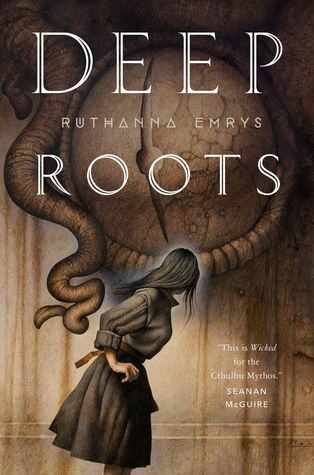
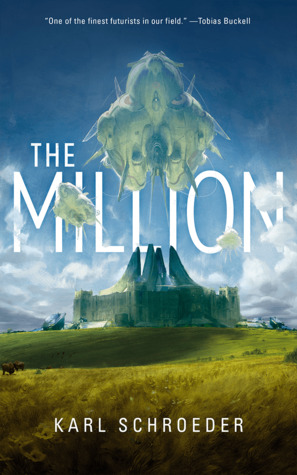


On to the digital book haul, my thanks to Tor.com Publishing for once again filling up my inbox with pure awesomeness. The Descent of Monsters by J.Y. Yang is the third installment of the Tensorate series which I’m sad to say I haven’t started yet, but every time I see these gorgeous covers I’m reminded that I should really a jump on these books. And it’s finally here, it’s finally here! Er, well, the eARC of Artificial Condition by Martha Wells is, at least. It definitely won’t be long until I dive into this second installment of the Murderbot Diaries, it feels like I’ve been waiting forever to read it. Deep Roots by Ruthanna Emrys is also a sequel, book two in The Innsmouth Legacy, a Lovecraftian horror series. And finally, The Million by Karl Schroeder is a sci-fi novella I’ve only recently found out about, and hopefully it’ll live up to its fascinating premise.
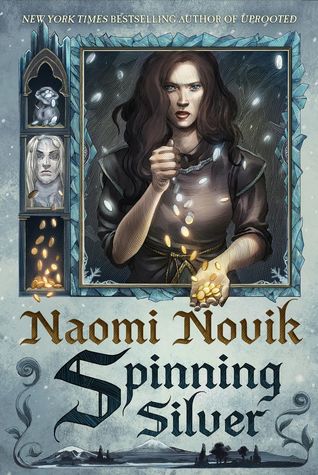
And I’ve been pretty good lately, only one NetGalley acquisition this week, but it’s one that I could hardly not request. Yep, it’s Spinning Silver by Naomi Novik. Thanks, Del Rey!
Earlier this week I was also contacted by the Apex Book Company with a pitch for Aetherchrist by Kirk Jones. It was the first time I’d ever heard about it, but wow, after reading the description I’m definitely intrigued.
And in the audiobook pile, my thanks to Audible for Last Dragon Standing by Rachel Aaron. I can’t wait to listen to this finale of the Heartstrikers series, I have a feeling it’s going to be great. Thanks also to Hachette Audio for a review copy of Defy the Worlds by Claudia Gray, I’m sure I’ll be listening to this sequel to Defy the Stars very soon. And finally, with thanks to Harper Audio publicity, I received Dread Nation by Justina Ireland. Civil War and zombies? Sign me up.
Reviews
A summary of reviews I’ve posted since the last update:
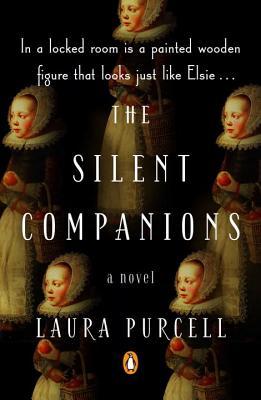
The Silent Companions by Laura Purcell (4.5 of 5 stars)
Children of Blood and Bone by Tomi Adeyemi (3.5 of 5 stars)
ReMade: Season 2 created by Matthew Cody (3.5 of 5 stars)
Lady Henterman’s Wardrobe by Marshall Ryan Maresca (3.5 of 5 stars)
Dayfall by Michael David Ares (3 of 5 stars)
The Feed by Nick Clark Windo (3 of 5 stars)
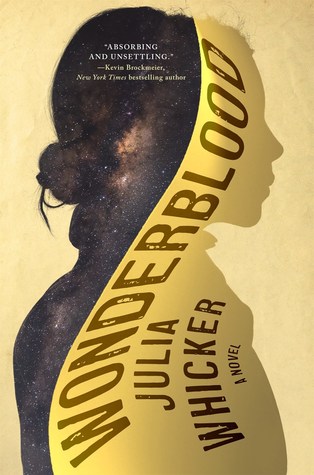
Wonderblood by Julia Whicker (2 of 5 stars)
Roundup Highlights:
Interviews & Guest Posts
A huge thanks to the authors who stopped by The BiblioSanctum this week!
Guest Post: “The Bastard in the Mirror” by R.S. Belcher
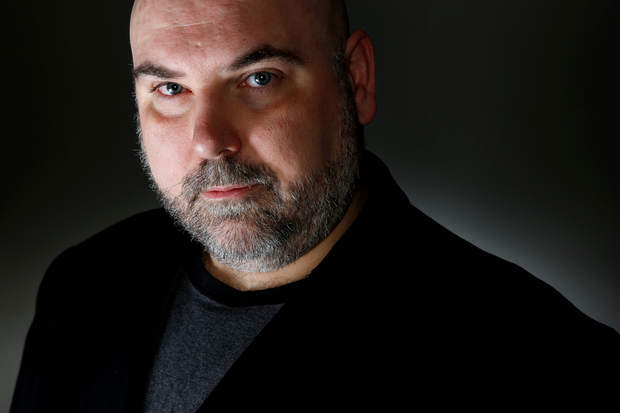
An Interview with RJ Barker, Author of The Wounded Kingdom Trilogy
What I’ve Read Since the Last Update
Lately I’ve been juggling reading with my other great passion, which is gaming. If you’re into multiplayer or online games, you’ve probably heard of a big release last month called Sea of Thieves, an action-adventure shared world game in which players can take on the role of pirates, sailing in crews of up to four. For the last two weeks, my husband and I and a couple of people in our gaming circle have been sailing around in a galleon chasing chickens, killing skeletons, hunting for treasure, and taking on other player crews in insane ship-to-ship battles. While the current content is a bit lacking and the quests become repetitive after a while, there’s no denying it’s a lot of fun especially if you’ve got a group of friends to play with (and let’s face it, who can say no to being a pirate?)

Admittedly, the game has been eating into my reading time, but I still managed to finish a good number of books since my last update. Audiobooks have been a convenient option for me too, for the times when I’m playing solo and I find myself in a lull while traveling between islands with no sails sighted on the horizon. Those calmer moments are the perfect opportunity to get some listening time in. Here’s what I ended up “unstacking” from my shelves, and you should see reviews posted soon if they aren’t up already.

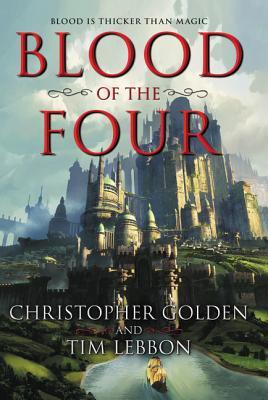

Have you heard of or read any of the books featured this week? What caught your eye? Any new discoveries? I hope you found something interesting for a future read! Let me know what you plan on checking out. Until next time, see you next Roundup!
Friday Face-Off: Family
Posted on April 6, 2018 17 Comments
Welcome to The Friday Face-Off, a weekly meme created by Books by Proxy! Each Friday, we will pit cover against cover while also taking the opportunity to showcase gorgeous artwork and feature some of our favorite book covers. If you want to join the fun, simply choose a book each Friday that fits that week’s predetermined theme, post and compare two or more different covers available for that book, then name your favorite. A list of future weeks’ themes are available at Lynn’s Book Blog.
This week’s theme is:
“After a good dinner one can forgive anybody, even one’s own relations.”
~ a cover featuring a FAMILY
Mogsy’s Pick:
Spoonbenders by Daryl Gregory
What do you get when you mix clairvoyance and psychokinesis with Cold War secret agents, the Chicago mob, shady con artists, and a dysfunctional family undergoing a crisis of zany proportions? You get Spoonbenders, a wildly original, humorous, and unexpectedly heartwarming tale of paranormal drama.
For a book that has everything though, the covers are surprisingly unimaginative, even if they are bright and colorful. Let’s take a look at them now:
From left to right, top to bottom:
Knopf Publishing Group (2017) – riverrun (2017)
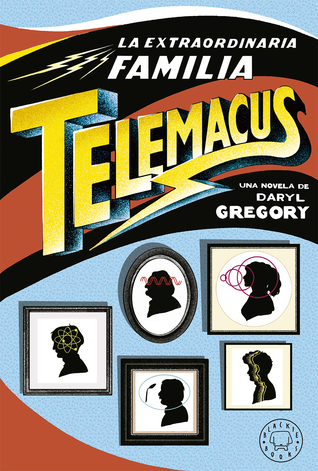
Spanish Edition (2018) – German Edition (2018) – Polish Edition (2018)




Winner:
I’m really not crazy for the “pictures on the wall” theme here, so naturally, my choice would have to be the riverrun edition. In spite of myself, I’m also enjoying the cheesy retro vibe I get from this cover; of all the choices here, it’s probably the one that best fits the quirky tone of the story.
But what do you think? Which one is your favorite?
Book Review: Wonderblood by Julia Whicker
Posted on April 5, 2018 15 Comments
I received a review copy from the publisher. This does not affect the contents of my review and all opinions are my own.
Mogsy’s Rating: 2 of 5 stars
Genre: Science Fiction, Dystopia
Series: Book 1
Publisher: St. Martin’s Press (April 3, 2018)
Length: 304 pages
Author Information: Website
It pains me greatly to admit I couldn’t get into Wonderblood, the latest entry into the flourishing genre of literary dystopian fiction. Debut author Julia Whicker writes beautifully, with her haunting—and haunted—world and characters enticing readers into a realm filled with harsh wonders and mysteries, where one can easily become lost in the cracks and crevices of time and place. Ultimately though, it came down to a matter of taste; I found the book too unsettling and strange, and coupled with the slow and dense plot, I had a very difficult time connecting with any of the characters or their motivations.
The story takes place in a post-apocalyptic future where much of the United States has become vast swaths of barren wasteland. In Cape Canaveral, Florida, a king and his circle of royal elites preside over the faithful who live among the crumbling ruins of NASA’s facilities and defunct shuttles. There, they await the return of their ancestors in “the Rockets”, an event prophesied to be their salvation. Meanwhile, across the south, the roving tribal bands called carnivals continue to do their bloody work based on the doctrine of Wonderblood, which directs its followers to carry out killings and beheadings—lots and lots of beheadings—in order to cleanse the land of its disease.
In one of these carnivals, a girl known only as Aurora is captured by Mr. Capulatio, the leader of a rival carnival who foresaw her role in his campaign to overthrow the king. Believing her to be pivotal to his rise to the throne, Mr. Capulatio keeps Aurora alive and makes her his new bride despite the anger and protestations from his first wife, the prophetess Orchid. Their sacred texts say that the Rockets will only return once the True King reigns at Cape Canaveral, so when two bright spots suddenly appear in the sky, Mr. Capulatio and his legions see it as a sign to start laying siege to the city. The royals on the other hand are mystified and unnerved by the outlaw carnival amassing outside their gates, the king sending his head hierophant and astrologers scrambling to interpret the appearance of the stella novae. No one knows for sure whether they are the long-awaited shuttles carrying their forebears, but most are convinced they are a harbinger for violent changes to come.
First, what I liked: Whicker’s prose is intensely rich and evocative, painting a stunning yet stark view of the dystopian future which serves as the backdrop to her grim tale. A strong sense pervades the reader that civilization has become a ruin for so long that the world’s real history has become virtually inseparable from myth. Some of these accounts include blood and viscera raining from the heavens and poisoning the land, resulting a deadly mad-cow like disease known as “Bent Head” which killed millions and mutated animals into monstrous creatures. The people’s understanding of science and religion has also been distorted and in some cases these concepts have been corrupted and combined, giving rise to certain bizarre social or cultural practices, like keeping shrunken heads as charms and worshipping space shuttles.
However, in spite of these fascinating elements, there were still a lot of holes in the world-building. Many of them are due to the limited perspectives of our characters, many of whom have insular outlooks and are operating within their own spheres of influence, presenting few opportunities to really expand and explore the world. Their voices also feel very aloof and detached, like Aurora, who doesn’t seem to possess any kind of drive or agency to affect her situation beyond the capacity of the space she’s thrust into. While a rough life of sexual assault and abuse at her own brother’s hands may have led to this acquiescent personality, it also meant that Aurora remained rather static and undeveloped throughout the story. Things didn’t go much better with the other characters either, and some of chapters taking place within the king’s court were a downright struggle to read because I didn’t feel like they did much to advance the plot or characters. The pacing would slow to a crawl in these sections so that it seemed like even after we hit the three-quarters mark, barely anything has happened at all.
Others might also find the book’s topics and themes disturbing. There’s no glossing over this dystopian nightmare, where the credo is kill or be killed. Rival carnivals fight for territory amidst this chaos and lawlessness reminiscent of a Mad Max-type world, and the winners are driven by religious zeal to capture and behead as many of their enemies as they can because of Wonderblood. The character Aurora also experiences rape and abuse, first from her older brother and then from Capulatio, who manipulates her by keeping her imprisoned and unaware of her fate. It’s a cruel and merciless world, so if you’re uncomfortable with the idea then it might be wise to stay away.
In sum, Wonderblood offers a uniquely imagined dystopian future replete with violent and dark themes. Julia Whicker can write well, as evidenced by her gorgeous prose, but unfortunately, the plot’s slow pacing and the lack of development and depth to the characters ultimately made this one an unsatisfying read. The lack of closure was also disappointing, with the open-ended nature of the conclusion making me suspect that a sequel will be forthcoming, though at this point I’m not sure I’ll continue because I’m just not feeling the story or the characters.


Waiting on Wednesday 04/04/18
Posted on April 4, 2018 13 Comments

“Waiting On Wednesday” is a weekly meme that first originated at Breaking the Spine but has since linked up with “Can’t Wait Wednesday” at Wishful Endings now that the original creator is unable to host it anymore. Either way, this fun feature is a chance to showcase the upcoming releases that we can’t wait to get our hands on!
Mogsy’s Pick
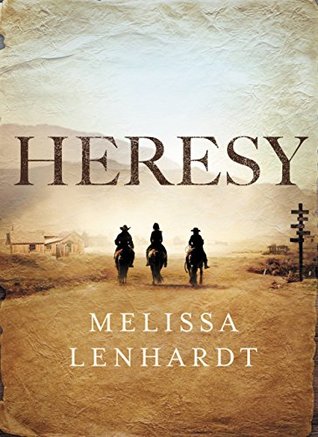
Heresy by Melissa Lenhardt (October 2, 2018 by Redhook)
Not the kind of book I usually feature, but as you know I am a huge fan of the author’s Sawbones trilogy, and I was hopping up and down with excitement when I found ot she was writing another Western about an all-female gang of outlaws tearing it up across the the American frontier.
 “The Parker-LaCour Gang. The first and only all-female band of outlaws in the American West. Ignored during their time. Written out of history.
Margaret Parker and Hattie LaCour never intended to turn outlaw.
After being run off their ranch by a greedy cattleman, their family is left destitute. As women alone they have few choices: marriage, lying on their backs for money, or holding a gun. For Margaret and Hattie the choice is easy. With their small makeshift family, the gang pulls off a series of heists across the West.
Though the newspapers refuse to give the female gang credit, their exploits don’t go unnoticed. Pinkertons are on their trail, a rival male gang is determined to destroy them, and secrets among the group threaten to tear them apart. Now, Margaret and Hattie must find a way to protect their family, finish one last job, and avoid the hangman’s noose.”
Book Review: The Silent Companions by Laura Purcell
Posted on April 3, 2018 21 Comments
I received a review copy from the publisher. This does not affect the contents of my review and all opinions are my own.
The Silent Companions by Laura Purcell
Mogsy’s Rating: 4.5 of 5 stars
Genre: Horror, Historical Fiction
Series: Stand Alone
Publisher: Penguin Books (March 6, 2018)
Length: 320 pages
Author Information: Website | Twitter
For fans of atmospheric Gothic horror, it doesn’t get much better than this. The Silent Companions by Laura Purcell is the kind of book that sneaks up on you like a cold draft. Soon after snaking its chilly tendrils down your collar and sending shivers down your spine, it’ll send you scurrying under the covers and make you want to stay there until the sun is up and the house is bright and warm and safe again. This is most definitely a story you’ll want to read in the light of day, when there are no shadows in which the things that go bump in the night can hide.
Set in 1865, the novel follows protagonist Elsie Bainbridge, owner of a London-based match factory that she co-manages with her younger brother. While her engagement to the heir of the distinguished Bainbridge family did cause a mild stir among the members of the gentry who felt she was marrying above her station, Elsie didn’t care—she was happy, in love, and relieved to be saved from the fate of spinsterhood. Mere months after the wedding, however, her husband Rupert dies under mysterious circumstances while making preparations at The Bridge, his family’s deteriorating estate out in the country. It was where the couple had hoped to welcome their first child.
Now instead of looking forward to a new life with Rupert, Elsie arrives at The Bridge grieving and pregnant, accompanied by Sarah, her husband’s peculiar cousin. The village is unwelcoming, her servants are rude and untrained, and the place is practically falling apart. At night, a strange hissing sound comes from the garret behind a closed door that won’t unlock to any key, but one day it suddenly opens to Elsie, revealing Bainbridge relics that have sat hidden for generations. Among them are a couple diaries dated from the 1600s, as well as a painted wooden figure of a little girl that looks so disturbingly lifelike that at first glance she could have been mistaken for the real thing.
After finishing this book, I went and did some googling, finding out tons of interesting information about these flat wooden oil-painted trompe l’oeil figures, known as “silent companions” or “dummy boards”, which were all the rage among aristocrats from the 17th through to the 19th century. Their exact purpose is still unknown, though everything from decorative use to security application by making potential burglars think someone is home has been floated by historians. Whatever the case, I find the concept behind them creepy as hell and reading this novel has not helped one bit. My skin still crawls from the memory of the spookier moments, and why anyone would want these wooden figures in their house with their unsettling gazes staring back at you is beyond me.
Needless to say, The Silent Companions was an intensely eerie and atmospheric read. It’s a bit of a slow-burner to start, as the story establishes itself because it is told in two timelines—one follows Elsie in the present as she is convalescing at an asylum following a series of tragic events, while the other is presented as a written account to her doctor about what she remembers happening to her. Interspersed throughout both narratives is also a third voice, taken from the diaries found in the garret. As the story unfolds, secrets within all three perspectives are gradually revealed, completing the full picture. One quickly learns not to take anything at face value when it comes to this book, with my own experience involving several complete reevaluations of everything I thought I knew about the situation and characters—which was pretty much every time a new surprise or revelation came to light. What’s even more impressive is that despite all the twist and turns, every piece of the puzzle ended up coming together seamlessly—planned and executed to perfection.
Time to put The Silent Companions on your wishlists, folks, for this is one Victorian ghost story you won’t want to miss. It’s portentous and gloomy, written in a subtle way that makes the dread creep slowly into your mind. It’s the type of scary that makes you feel on edge and nervous for the characters, and yet it’s impossible to tear your eyes away even when things become too terrible and tragic to watch. If you love horror fiction, especially books about hauntings, I just can’t recommend this one enough.

Guest Post: “The Bastard in the Mirror” by R.S. Belcher + The Night Dahlia Giveaway!
Posted on April 2, 2018 14 Comments
***The giveaway is now over, thanks to everyone who entered!**
 Do you ever find yourself drawn to the “irredeemable” protagonist? Have you ever come across an asshole character you just love to hate to love because they are just so complex and intriguing? This was how I felt when I first encounted Laytham Ballard, the star of the Nightwise series and a cynical and narcissistic trash-talking bastard who was capable of doing some truly terrible things. On April 3, 2018, Laytham will make his return in The Night Dahlia, the second installment in this dark and gritty urban fantasy series, and today The BiblioSanctum is pleased to take part in the celebration of the book’s imminent release with a guest post from the author R.S. Belcher himself as he discusses the creative process that went into creating his fascinating protagonist. I hope you enjoy, and if you’re in the US or Canada, don’t forget to enter the giveaway afterwards!

THE BASTARD IN THE MIRROR: WRITING AN IRREDEEMABLE PROTAGONIST AND HIS STAGGER TOWARD REDEMPTION
by R.S. Belcher
There are days where I hate Laytham Ballard, the protagonist of my second novel, Nightwise, and its sequel, my sixth novel, the Night Dahlia, releasing in April from Tor Books. Antiheroes are pretty much a dime-a-dozen in Urban Fantasy, but I wanted Ballard to be different, someone that would stick with my readers and induce a strong reaction. I think I succeeded.
There is no denying that Ballard is part of the “trench coat brigade,” the chain-smoking, foul-mouthed occultist detectives that folks like Alan Moore, Richard Kadrey, and Jim Butcher have been fundamental in creating as an archetype, but I wanted him to stand out from the crowd. I wanted Ballard to not have a heart of gold hidden under the dross of his demeanor. I wanted him to be a selfish, lying, arrogant, egomaniac, capable of sacrificing others to stay alive. Ballard started out wanting to use his legendary magical prowess to be a good guy, but, like many with vast power, he has fallen way past antihero, solidly into the realm of villainy.
It was a pretty big risk for a guy with one novel to my name at the time, to challenge my readers to invest in a bastard as a “hero” and hope they’d give a damn what happened to him. It has polarized my readers. Many dislike Ballard, others find him refreshing from the usual UF fare.
I think Laytham Ballard’s saving grace is that most folks can identify some of themselves in his struggle between doing what’s right and wrong. A reason for that connection is that Ballard is, in some ways, me. Nightwise and the Night Dahlia are the most autobiographical books I’ve written. I wrote them at difficult times in my life and there is a bit of catharsis and sympathetic magic sewn up into them. Readers can smell bullshit—they can feel what’s cut from the cloth of the writer’s life and what’s not and can feel a connection there to their own. It’s my job to tell a made-up story out of pieces of truth.
We’ve all fucked up, maybe not as hugely, or as often, as Ballard. We’ve all regretted what we did or didn’t do, and those who were hurt by us. As the years fall upon us, many get the feeling that it’s too late for redemption, too late to change the story, to fix our mistakes, or ourselves.
That’s the secret to writing Laytham Ballard. In a universe full of secret societies, and monsters and magic, his struggle to “be good”, to “do better”, to “not fuck up again”, is a human struggle, a real struggle, and hopefully, a struggle readers can empathize with.
In the Night Dahlia, you see who Ballard started out as, and how far he’s fallen. I do believe in redemption. There have been times in my life where I held to that belief like a grail. I have fallen many times, but I’ve gotten back up again every time. I think I have gained a little wisdom in that process. I think Lytham Ballard has too. Those days I don’t hate him quite so much, but don’t tell him that.
ABOUT THE AUTHOR
R.S. (Rod) Belcher is an award-winning newspaper and magazine editor and reporter. Rod has been a private investigator, a DJ, a comic book store owner and has degrees in criminal law, psychology and justice and risk administration, from Virginia Commonwealth University. He’s done Masters work in Forensic Science at The George Washington University, and worked with the Occult Crime Taskforce for the Virginia General Assembly. He lives in Roanoke Virginia with his children: Jonathan and Emily.
The Night Dahlia Giveaway
We hope this has piqued your interest in The Night Dahlia, and if so, you’re in luck! With thanks to the publisher Tor Books, The BiblioSanctum is pleased to be hosting this giveaway opportunity for one print copy of the book open to residents in the US and Canada. To enter, all you have to do is send an email to bibliosanctum@gmail.com with your Name and valid Mailing Address using the subject line “THE NIGHT DAHLIA” by 11:59pm Eastern time on Sunday, April 8, 2018 and we’ll take care of the rest.
Only one entry per household, please. The winner will be randomly selected when the giveaway ends and then be notified by email. All information will only be used for the purposes of contacting the winner and sending them their prize. Once the giveaway ends all entry emails will be deleted.
So what are you waiting for? Enter to win! Good luck!
Audiobook Challenge 2018: 1st Quarter Update
Posted on April 1, 2018 12 Comments

Spring is upon us (though it might not feel like it where I am, brrr!) and with it comes a quarterly update on what I’ve been listening to for the last three months in audiobook format. This time of the year often presents opportunities to enjoy even more audiobooks (not that a reason is ever required) as hours are spent spring cleaning, enjoying the outdoors, and finding ourselves in various other audiobook friendly situations. Here’s a quick look at the first three months of the 2018 Audiobook Challenge:
Challenge Details
- Runs January 1, 2018 – December 31, 2018. You can join at anytime.
- The goal is to find a new love for audios or to outdo yourself by listening to more audios in 2018 than you did in 2017.
- Books must be in audio format (CD, MP3, etc.)
- ANY genres count.
- Re-reads and crossovers from other reading challenges are allowed.
- You do not have to be a book blogger to participate; you can track your progress on Goodreads, Facebook, LibraryThing, etc.
- If you’re a blogger grab the button and do a quick post about the challenge to help spread the word. If you’re not a blogger you can help by posting on Facebook or Tweeting about the challenge.
Levels
- Newbie (I’ll give it a try) 1-5
- Weekend Warrior (I’m getting the hang of this) 5-10
- Stenographer (can listen while multi-tasking) 10-15
- Socially Awkward (Don’t talk to me) 15-20
- Binge Listener (Why read when someone can do it for you) 20-30
- My Precious (I had my earbuds surgically implanted) 30+
- Marathoner (Look Ma No Hands) 50+





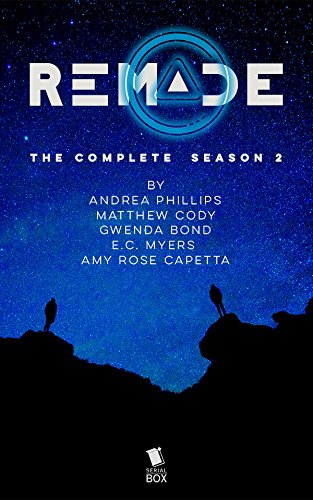
My current tally sits at 15 audiobooks completed, which is way better than I thought I would be at this point in the year. This have been very busy this winter though, and I often found myself relying on audiobooks in order to get any kind of reading done. At this rate, I should easily reach my tentative goal of My Precious by the end of the year, and hitting Marathoner is also very likely!
YA Weekend Audio: Children of Blood and Bone by Tomi Adeyemi
Posted on March 31, 2018 21 Comments

I received a review copy from the publisher. This does not affect the contents of my review and all opinions are my own.
Children of Blood and Bone by Tomi Adeyemi
Mogsy’s Rating (Overall): 3.5 of 5 stars
Genre: Fantasy, Young Adult
Series: Book 1 of Legacy of Orïsha
Publisher: Macmillan Audio (March 6, 2018)
Length: 18 hrs and 9 mins
Author Information: Website | Twitter
Narrator: Bahni Turpin
For me, Children of Blood and Bone is a book that almost lived up to the hype. That said, I wouldn’t say I was too disappointed, since I still enjoyed myself, though I do wish some aspects of the story could have been handled better because otherwise this would have been a near perfect read.
At its heart, the novel focuses on two sets of siblings. Zélie Adebola and her brother Tzain are of the Maji, hailing from an island nation where their people revere the life and ocean around them as well as the magic in their roots. Those who are born with white hair are known as Divîners, gifted with the power to do incredible things. But ever since King Saran of Orïsha outlawed magic and targeted the Maji for death, Zélie has been living a life of bleakness and oppression, facing harsh abuse and insults simply because of her features that mark her as a Divîner. But even though magic has all but disappeared in her world, the fire in Zélie still burns, fueled by the memories of her mother before she died in the king’s brutal genocide.
Divîners are also subjected to outrageous taxes merely for existing, so in order to prevent her family from going into debt and living in servitude for the rest of their lives, Zélie heads into the city to trade, only to find herself caught up in a scuffle at the market. In a twist of fate, she ends up on the run with Amari, the princess of Orïsha herself. The daughter of King Saran, however, is nothing like her father. Caught in the middle of her own escape, Amari teams up with Zélie to avoid capture by Prince Inan, who has been tasked by the king to bring his wayward sister back. Our four young protagonists—Zélie and Tzain, Amari and Inan—soon come together in a desperate gambit to return magic to the world, following the surprising discovery of a mysterious artifact that has the potential to change everything.
Children of Blood and Bone started off well, but the story hit a few rough patches after the introduction and before we reached the climax. I find that a lot of debut authors struggle with pacing, which is why I wasn’t surprised to find some of these issues leaking in once we approached the halfway mark. At this point, I also felt that Tomi Adeyemi became a little too self-indulgent when it came to her characters, and maybe someone should have come in with fresh eyes and an editing pen to trim back some of her more awkward attempts to be dramatic. There are a lot of remarkable and uncommon ideas in this book, so to have some of that uniqueness spoiled by a handful of stupid YA romance tropes was such a shame. It’s frustrating as well because the characters were well on their way to showing exceptional promise, yet the author ultimately felt the need to create artificial conflict in their relationships, and she ended up doing it by turning to the same tired tricks.
Overall, characterization was also great but sometimes it got a little shaky at the personality level. The story is told via multiple POVs and sometimes I would find myself forgetting whose chapters I was following, especially when it came to Zélie and Amari. On the one hand, I feel as though this shouldn’t have been surprising, since the story features two brother-and-sister pairs and hence the occasional moment of confusion is to be expected, but on the other, shouldn’t there be a starker difference between the voice of a Divîner who has spent her whole life subjugated versus that of a princess who grew up surrounding by royal luxury? Sure, both characters have faced individual hardships, but mixing up the two shouldn’t have ever been an issue.
While minor hitches like that ended up slightly dampening my enthusiasm for this novel, on the whole it was still a very good read. The praise is well deserved when it comes to some aspects like the world-building and magic which is genuinely one-of-a-kind and unexpected, but in terms of characters and plot, I didn’t find enough in them to become truly excited. It’s a common trend in YA I’m finding these days, where I’ll love the world and the lore but find myself feeling less enthusiastic for the story and protagonists because I want originality in the relationships and plot developments as well (or maybe I’m just asking too much). Things also dragged in places and generally the book was probably a lot longer than it had to be.
Children of Blood and Bone didn’t quite live up to the hype for me, but by and large I think most YA fans will adore it, so if you are curious about this one, you should try it. I can also understand why a new author might want to use certain popular tropes and play it a little safe with a first novel, but with her talent for world-building and the loveliness of her writing style, I think Tomi Adeyemi will be bringing much more to the YA genre after getting her feet wet with this debut.
Audiobook Comments: This was my first experience with the incredible Bahni Turpin as a narrator, and I thought she was fantastic in her performance. She was also great fit for this book, and by using different accents, voices, and tones she was able to perfectly portray the thoughts and emotions of the characters. I think the audiobook could have been even more immersive with multiple narrators though (one for each character POV), not to mention this would helped with my confusion between some of the Zélie and Amari chapters, but all in all, this was a great listen.

An Interview with RJ Barker, Author of The Wounded Kingdom Trilogy
Posted on March 30, 2018 17 Comments
Just in case you missed all the gushing in my rave reviews of Age of Assassins and Blood of Assassins, you should know that The Wounded Kingdom trilogy is fast becoming one of my favorite fantasy series of all time. The third installment, Blood of Assassins, is due to hit shelves later this year, and I’m looking forward to it so much that I’m already counting down the days to its release. I am so honored and excited today to welcome author RJ Barker to The BiblioSanctum to chat about his books, his writing process, and a whole lot more! Please enjoy our Q&A!
Hi RJ, thank you for the interview, we’re very excited to have you join us today!
Hi BiblioSanctum! I am thrilled to be talking to you. When I first signed with Orbit another writer told me ‘oh doing interviews will get boring really quickly’ but it so hasn’t. I am like an excited puppy every time.
 I’m so glad you’re excited too! First, I’d like to congratulate you on the success of The Wounded Kingdom trilogy. I’m loving it so far! Two of the books are out right now, with the third one to be released later this year. To kick us off, can you give us a quick rundown of what the series is about, and who the main characters are?
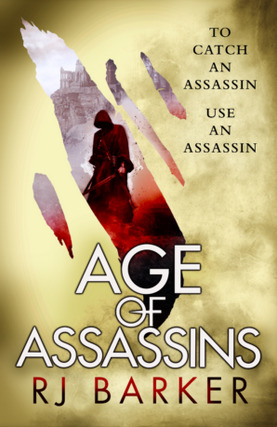
Yes! The books are, at heart, murder mysteries if you want to speak about pure plot, and each one stands alone in that way in that it tells a total story, you’re not left hanging at the end. The Main Characters are Girton Club-Foot, who is very martially skilled but not particularly worldly, especially when it comes to his peers, and Merela Karn, his master who is his teacher and a parental figure. Although the murder mystery might be the hook that starts you reading, their relationship is why you stay. Or I hope it’s why you would stay, anyway. Then, around them are a host of other characters all with various interlocking relationships that affect Girton, Merela and how the books progress.
Girton and Merela’s relationship is exactly why I’m so addicted to these books. What made you want to write a fantasy series about assassins? And what inspired you to include the mystery aspect?
I have no idea why I ended up writing a mystery about assassins. I can look back and sort of work it out but I really thought I was going to be an SF or Crime writer and then this idea, well, it just appeared. And it was INSISTENT. I wrote the first draft of Age of Assassins in about six weeks because it was just there, in my head and it all made sense. The mystery element I understand bit more cos as well as reading lots of fantasy and Sf when I was young I was brought up on sort of golden age Crime writers like Agatha Christie and Margery Allingham and the big draw in writing Age of Assassins was doing the whole sort of “drawing room” scene were you find out what was really going on. I love scenes like that, every time someone says ‘exposition is bad’ you should be allowed it hit them with a copy of an Agatha Christie. Well, maybe not hit, I’m not into violence. Maybe just give them a light tap on the head and say ‘not always, eh, mon ami?'[1]
Your protagonist, Girton Clubfoot, is one of the most genuine characters I’ve had the pleasure of reading. I also love his master-apprentice relationship with Merela, who is both a teacher and surrogate mother figure to him. Where do you find the ideas for your characters? Are any of them inspired by yourself or people you know in real life?
Everything is inspired by people I know or myself. When I started Age of Assassins, our little boy was about four and I was just becoming very aware of how important it is to watch how you are and how you treat this tiny forming human. Because we can ruin them without ever meaning to and there’s a lot of the experience of being a parent in AoA books. Also, I’ve always been a person who’s considered a bit odd, not in an unpleasant way or a way that made me unpopular but just in a way that left me aware I didn’t quite fit in, that definitely came in. And I’ve been very ill and that’s quite obviously wrapped up in Girton but, hopefully, the thing I bring most from me, and the people around me, is good people do good things. Though the world is grim, and bad things happen, good people do good things and it’s an important thing. Good people are out there doing good things every day.
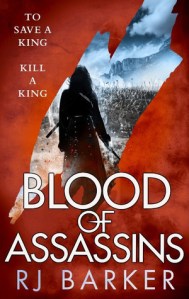 Blood of Assassins jumps ahead approximately five years after the end of Age of Assassins, and likewise it appears we will get another gap of many years between books two and three, according to the description of King of Assassins. In fact, the whole trilogy is told from the point of view of an older Girton, recalling the events of his past. How do you handle the challenge of writing about a character at different stages of his life like that?
My plan from the start was to have big gaps between the books. One of my favourite writers is Patrick O’Brian (who wrote the books Master and Commander is based on) and he tends to leave big gaps between books where a lot happens ‘off screen’ so to speak. So there was that.
Anyone who’s seen me read or do a panel will have noticed that I’m quite an easily-distracted person, too, so I needed to make sure I didn’t get bored and these gaps allow me to sort of reinvent everything for every book. But, I also wanted, from the start, to take quite a ‘classic’ fantasy story (in this case the rise of a king) and tell it from a different angle – that of someone more behind-the-scenes, who maybe you would never read about in the history books. So I had in mind the idea of taking three really pivotal moments from this king’s story, and where maybe in a classic fantasy narrative it would be all ‘and then he rode to the rescue in his shiny armour,’ in the wounded kingdom books I get to show all these people behind that who had just as much influence on what happened. But it felt really natural and the best way of doing what I wanted, which was to show people grow and change.
I’ve veered wildly away from your question haven’t I?
TL/DR. I stole from Patrick O’Brian.
Ha, that was awesome! Speaking of which, what were some of the best moments for you when writing this trilogy? And on the flip side, what were some of the most trying and difficult?
Oh, this makes me sound awful and quite irritating but it has all been pretty wonderful. I am so very aware how unlikely and lucky I am to be in this position where, for now, I am making enough from writing to live off and people seem to be enjoying what I am doing. I mean there are moments when I complain on social media but it’s all pretty light-hearted and when it comes down to it there is no way on earth writing is harder than eight hours in a call-centre, or working on a building site, or being trapped in poverty and worrying about where every penny is coming from. So what I am doing – my favourite hobby and getting paid – is kind of amazing, to me, and I wake up aware of that. When your biggest difficulty is that sometimes you’d actually rather be playing on the PS4 than doing edits then it’s not really a difficulty at all.
I understand, and I don’t think it’s awful or irrtating at all, and in fact it’s actually quite wonderful. Now that we’ve talked a little about your books, I also want to talk about you, the author! Can you tell us a RJ Barker Fun Fact, something about yourself that might surprise readers?
I think, maybe people who’ve only seen me at things and know me through that or social media might be surprised to find out that I am actually a really quiet person. I like nothing better than being on my own. I love people, and being around them, but I’d also be a really good hermit too. Apart from the growing a beard but ‘cos I’d be rubbish at growing a beard.
Which authors or books have been your greatest influences?
This will be A LONG LIST. Watership Down by Richard Adams, Iain M Banks’s Culture books, The Chronicles of Morgaine by C.J. Cherryh, Patrick O Brian’s Aubrey/Maturin books. C.J. Sansom’s Shardlake books, Robert Crais, John Connolly and James Lee Burke and Bernard Cornwell’s Winter King trilogy. And also the British comic 2000AD was a huge influence, particularly Slaine and Nemesis the Warlock.
Do you have other creative outlets besides writing? What hobbies or pastimes do you enjoy?
I love music. I was a (very bad) musician for a long time before I started writing and I listent o music all the time when I work or in the car or doing whatever I am doing. I’m really drawn to music that isn’t like me so angry and sinister music is my thing, even though I am possibly one of the least angry and sinister people you are ever likely to meet. Reading. Obviously. I love games too, mostly first person role-playing stuff and now I have finished the Wounded Kingdom books I am going back and playing the new Assassin’s Creed game which is great cos I love ancient Egypt and I am enjoying pretending to be a Medjay.
 I’ve been itching to play that one myself. I’m glad to hear the new AC’s good. Anyway, the final volume of The Wounded Kingdom trilogy, King of Assassins, is set to come out this summer, and I can’t wait! What’s next for Girton? Is there anything about the book you can share with us at this point, or tease what’s in store?

Well, there’s another big jump, sixteen years this time so we get Girton as an adult which has been nice to do as I wanted to slap him for at least half of Blood of Assassins. Quite a few people have said they wanted more about Merela and I kind of think about Age of Assassins as Girton’s book and King of Assassins as Merela’s.
We’re going to some very dark places.
Oh my goodness, that is seriously giving me chills. I’m also thrilled to hear about Merela, because I love her, LOVE HER. Are there any other projects you are working on currently, or have plans for in the near future, that you’d like to share (either writing or non-writing related)?
I’m working on a new thing that will be ship based. And for the special editions of the Wounded Kingdom books I’ve worked with an artist friend of mine called Tom Parker who is horrendously talented and I’d like to find an excuse for the two of us to work together on something. (He’s recently been doing some early concept sketches for the mounts form the books and they can be found on his Facebook page, Tom Parker Illustration.) I’m also always writing short stories and things and looking out for interesting things to do. I try not to stay no to stuff unless I really can’t fit it in.
It sounds like you’ll be busy! Thank you so much again for stopping by and sharing your time with us, RJ! Wrapping up, where can readers find out more about you and your work?
My twitter is a good place @dedbutdrmng or my Facebook author page is under @thatrjbarker. I’m in the midst of launching a website but I’m not sure if it will be up and running by the time this is up. It’s been lovely talking to you, thank you ever so much for inviting me.
FOOTNOTES:
- It’s like Poirot is IN THE ROOM.
RJ Barker lives in Leeds with his wife, son and a collection of questionable taxidermy, odd art, scary music and more books than they have room for. He grew up reading whatever he could get his hands on, and has always been ‘that one with the book in his pocket’. Having played in a rock band before deciding he was a rubbish musician, RJ returned to his first love, fiction, to find he is rather better at that. As well as his debut epic fantasy novel, Age of Assassins, RJ has written short stories and historical scripts which have been performed across the country. He has the sort of flowing locks any cavalier would be proud of.
Review: ReMade Season 2 created by Matthew Cody
Posted on March 29, 2018 12 Comments
I received a review copy from the publisher. This does not affect the contents of my review and all opinions are my own.
ReMade Season 2 by Matthew Cody, Gwenda Bond, Andrea Phillips, E.C. Myers, and Amy Rose Capetta
Mogsy’s Rating: 3.5 of 5 stars
Genre: Science Fiction, Young Adult
Series: Book 2 of ReMade
Publisher: Serial Box (March 29, 2018)
Length: 452 pages
Serial Box has published a number of gems since their launch, and to me, the most surprising has been their first foray into the Young Adult genre with ReMade, a futurist sci-fi thriller told in an episodic format similar to Lost. The first season was immensely enjoyable, and so with the second season now available in its entirety, I looked forward to continuing with the saga.
The second season sees our protagonists forging ahead in their new world—one that has seen them all “remade”. At the beginning, there were twenty-three, but since their run-ins with killer robots and other threats, their numbers are now considerably fewer. The group has also split up in the hopes of increasing their chances of survival. One team has decided to venture forth into unknown territory, searching for the human stronghold known as Sanctuary using coordinates found from the ruins of Arcadia, while the other team has opted to remain behind, giving time to those who need to recuperate as well as to maintain a defensible camp.
But then, one of the teams discovers something amazing. Led by Inez, the group comes across Jing Wei, alive and well, even though they all saw her die at the hands of a rampaging caretaker. Somehow, she had been remade again, sending Inez’s suspicions ringing, especially since this second version of Jing-Wei recalls nothing of her time with the group and is also accompanied by a robot of her own. Though Jing-Wei insists Sparky is harmless, the others are not convinced, terrified by his resemblance to the mechanical caretakers who have been slaughtering them. They decide it’s not safe to bring Jing-Wei back into their fold, in case she is on the side of the killer robots. As the search for Sanctuary intensifies and bears fruit, the characters also uncover even more secrets about their mysterious world, and of the artificial intelligence designed to run it—though unfortunately, none of the information they find spells good news.
Season two of ReMade contains fourteen episodes, and the first few were perhaps the most challenging to read. “Patch Job” kicked things off by dropping the bombshell about Jing-Wei, though the pacing immediately turned sluggish afterward as we returned to the flashbacks, killing whatever excitement had been created with the reintroduction of a character once thought dead. I understand that some of these pacing issues can’t be helped on account of the authors choosing to tell this tale via a very difficult format, though nonetheless, I’d expected a little more from an opening episode to a brand new season. Inez, whom I adored from the first season, also became an unbearable tyrant, and it was hard to reconcile the spunky courageous girl I knew with this power-hungry and out-of-control bitch queen who seems to have taken over her personality. Some minor character inconsistencies are to be expected when it comes to multi-author projects, but I was still surprised to see how unbalanced and paranoid Inez has become.
It wasn’t until around “Save Point”, episode four, where things started to pick up. No surprise that this is also the episode where the characters find Sanctuary. The pacing remained measured, however, as the group discovers that the human stronghold is not what it was purported to be. Again, we keep returning to the past in flashbacks, and certain characters have more interesting memories than others. Part of the problem is that we’ve covered some of the more dramatic and important ones back in first season, so the flashbacks in season two feel a lot more random and they don’t always seem to serve their purpose of explaining character motivations or personalities. Fortunately, there were still a few perspectives the authors had left in reserve, and we finally got to see them here, like in the case of Hyrum. Still, I have to wonder what will happen once we go through everyone, especially since the most interesting characters seem to keep dying off.
The highlights for me though were some of the later episodes, like “The Bones of Sanctuary”, “Siege Mentality”, or “Actus Reus”. Not only do we finally get some action, these episodes are the ones that start fleshing out the series, focusing on the group’s interactions and future plans. The tone also becomes more emotional as the characters start to form deeper connections with each other, including new romances and alliances. Previously relationships are also tested when one person betrays the group, and we are left on edge with questions as to how the characters will deal with the traitor. Gradually, the teens are starting to come around to the fact that they are the remnants of humanity, and the decisions they make here will set the course for what’s to come.
Overall, it was another great season, though perhaps not as strong as the first. The opening episodes probably wouldn’t have kept me waiting in anticipation each week, though some of the more exciting ones towards the end of the season might have, and this unevenness in serial novels is why I typically choose to read them once they are complete in a collected edition format. With the way things have unfolded in this second season, I’m looking forward to reading the third.
More on The BiblioSanctum:
Review of ReMade (Season One)


 The BiblioSanctum