Book Review: The Queen of Sorrow by Sarah Beth Durst
Posted on May 17, 2018 29 Comments
I received a review copy from the publisher. This does not affect the contents of my review and all opinions are my own.
 The Queen of Sorrow by Sarah Beth Durst
Mogsy’s Rating: 4 of 5 stars
Genre: Fantasy
Series: Book 3 of The Queens of Renthia
Publisher: Harper Voyager (May 15, 2018)
Length: 432 pages
Author Information: Website | Twitter
A couple years ago when I picked up The Queen of Blood, I had no idea it was going to grow into a series I would enjoy and love so much. Two more books later, the Queens of Renthia trilogy is now complete, and what an incredible journey it has been with this strong cast of powerful, fascinating women and the world of dangerous spirits in which they live.
In the first book, readers got to meet Daleina, a young Queen candidate who came from a humble background with less than stellar magical abilities. However, hard work and tragic circumstances ultimately led her to the throne of Aratay, her forest kingdom. Book two introduced us to another Queen, but Naelin is as different from Daleina as night is from day. Middle-aged and a mother of two, Naelin is naturally gifted with immense power, but without the years of formal training most candidates receive, her magic is raw and untamed. Unlike Daleina, she also never wanted to be Queen, content just to raise her family in seclusion and quiet.
It is highly recommended that you read the first two books before jumping into The Queen of Sorrow. While theoretically The Queen of Blood and The Reluctant Queen can be considered standalone companion novels, this third one on the other hand is the culmination of events from both and will tie everything together. Be aware that this review might also contain possible plot details for the previous books if you’re not caught up yet. Aratay now has two queens, and with Naelin sharing the responsibility of keeping the vicious spirits of the natural world at bay, Daleina believes her kingdom finally has a chance at peace. But then Naelin’s children are kidnapped and taken to neighboring Semo, a country ruled by none other than Queen Merecot—once Daleina’s friend and former schoolmate. Needless to say, their relationship has soured since Merecot tried to kill Daleina and take over Aratay, but it appears the Semoian queen is far from done with her scheming. Filled with a mother’s rage and sorrow, Naelin ends up tearing the land apart in her desperate attempt to take back her stolen children, leaving the kingdom in worse shape than ever before.
I just want to say I love these characters. Sarah Beth Durst continues to impress with her deep explorations into Daleina and Naelin’s personalities and motivations, and in The Queen of Sorrow, we also have the added treat of getting to know the series antagonist. Yes, the clever and manipulative girl we first met in The Queen of Blood before she was kicked out of candidate school has become a force to be reckoned with. I knew we hadn’t seen the last of Merecot, and I was glad this book gave her character such detailed attention. She now joins the ranks of my favorite complex villains of all time. Even though she is a megalomaniacal conniving narcissistic kook, you can’t help but feel for her. Despite her detached and calculating view of the world, Merecot’s twisted actions are ultimately all for the sake of her country and people.
And indeed, Durst examines how far each queen would go to achieve everlasting peace. For Merecot, it may be a numbers game. For Naelin, however, it’s her children’s lives above all others. One thinks with pure logic, while the other reacts with pure emotion. With Naelin having shown that she is willing to let the entire world burn as long as it means her own children will be spared, Merecot’s methods might even start to seem sane, and yet, I also believe it would be much easier to sympathize with the former’s viewpoint if you are a parent. At the end of the day though, it’s probably safe to say that neither queen possesses the qualities of a good leader, and so Daleina can be seen as the mediating force between their two extremes.
The author presents this trio of personalities so well, that I think it might be my favorite aspect of this novel, but I also adore the supporting cast and their relationships with the protagonists. There is some light romance involved, but I’m happy to say it’s only a small part of a bigger picture containing more complex and dynamic relationships. I enjoyed seeing how this concluding volume brought many of those connections to fruition, even the ones involving more minor characters. In fact, some of those peripheral characters ended up being my favorites, like Garnah or Hanna.
Bottom line, I think it’s safe to say if you enjoyed the first two books, then you will love The Queen of Sorrow. The book builds to an incredible climax and finale, one that will be intensely rewarding to readers who have followed the story since the beginning. All the characters have grown so much and have triumphed over so many obstacles and hardships, it’s hard not to feel a deep sense of joy and satisfaction at this beautiful conclusion even as I sadly bid farewell to the series. The Queens of Renthia has made me a fan of Sarah Beth Durst for life though, and I will look forward to her future projects with great enthusiasm.


More on The BiblioSantum:
Review of The Queen of Blood (Book 1)
Review of The Reluctant Queen (Book 2)
Waiting on Wednesday 05/16/18
Posted on May 16, 2018 21 Comments

“Waiting On Wednesday” is a weekly meme that first originated at Breaking the Spine but has since linked up with “Can’t Wait Wednesday” at Wishful Endings now that the original creator is unable to host it anymore. Either way, this fun feature is a chance to showcase the upcoming releases that we can’t wait to get our hands on!
Mogsy’s Pick
Ship of Smoke and Steel by Django Wexler (January 22, 2019 by Tor Teen)
To my excitement, the cover to the first book of Django Wexler’s upcoming new YA series was revealed earlier this week. I’m a huge fan of the author, who has shown incredible versatility with a wide range of genres as well as writing for many different age groups, so I’m already confident I will love this one. Plus, it’s a heist story!
 “Ship of Smoke and Steel is the launch of a cinematic, action-packed epic fantasy trilogy for fans of Leigh Bardugo and The Legend of Korra.
In the lower wards of Kahnzoka, the great port city of the Blessed Empire, eighteen-year-old ward boss Isoka comes to collect when there’s money owing. When her ability to access the Well of Combat is discovered by the Empire—an ability she should have declared and placed at His Imperial Majesty’s service—she’s sent on an impossible mission: steal Soliton, a legendary ghost ship—a ship from which no one has ever returned. If she fails, her sister’s life is forfeit.“
#FearlessWomen: By Fire Above by Robyn Bennis Spotlight & Exclusive Excerpt
Posted on May 15, 2018 7 Comments

Women are shining in every genre of speculative fiction, and it is no longer enough to say “Women arehere.” Instead, #FearlessWomen everywhere are taking a stand to say “Women will thrive here.”
Highlighting major titles from bestselling authors V.E. Schwab, Sherrilyn Kenyon, Jacqueline Carey as well as titles from acclaimed and debut authors such as Mary Robinette Kowal, Tessa Gratton, Sam Hawke, and Robyn Bennis, #FearlessWomen will be a coordinated social media celebration encouraging fans to start a dialogue about women in publishing, their worlds, their voices, and their unique stories.

By Fire Above by Robyn Bennis
 By Fire Above is the rip-roaring new adventure in Robyn Bennis’s Signal Airship military fantasy series that Patricia Briggs hails as “full of sass and terrific characters.”
“All’s fair in love and war,” according to airship captain Josette Dupre, until her hometown of Durum becomes occupied by the enemy and her mother a prisoner of war. Then it becomes, “Nothing’s fair except bombing those Vins to high hell.”
Before she can rescue her town, however, Josette must maneuver her way through the nest of overstuffed vipers that make up Garnia’s military and royal leaders in order to drum up support. The foppish and mostly tolerated Mistral crew member Lord Bernat steps in to advise her, along with his very attractive older brother.
Between noble scheming, under-trained recruits, and supply shortages, Josette and the crew of the Mistral figure out a way to return to Durum—only to discover that when the homefront turns into the frontlines, things are more dangerous than they seem.
Exclusive Excerpt
Mistrals’ starboard rail might have been the wettest place on the hurricane deck, if not the entire world, but Bernat clung to it with one hand as tightly as he held his safety line in the other. Apart from drawing some small comfort form the familiar place, he felt a vague sense that this was his station, and as important a station as any other aboard the ship—the pesky fact that he had no official function notwithstanding. Besides which, he wasn’t sure he’d be able to make his way anywhere else in the dark, with the ship being buffeted and the deck swinging randomly underfoot.
Below, the streetlights of Kuchin were just visible through the clouds, still lit inside their ornate glass casings. They went by at a fantastic speed, and rather more sideways than Bernat would have preferred. “Are we meant to be moving right to left?” he asked.
“Yes, actually.” Josette must have seen his incredulous expression in a flash of lightning, for she went on, “With our steamjack in the condition it’s in, it’s too late to run straight away from the storm. It’ll only sweep us in. So we’re going to use the storm’s own vortex to slingshot around the worst of it and come out the back.”
Her unrattled confidence made him feel quite a bit better. “So you’ve done this before?”
She didn’t answer, but only looked briefly toward him in the darkness, and he hoped to God she was rolling her eyes, or at least shooting him a nasty expression. Anything, really, but the cocky smirk he was imagining—the one that said she was learning as she went.
About the Author
 Robyn Bennis has done research and development involving human gene expression, neural connectomics, cancer diagnostics, rapid flu testing, gene synthesis, genome sequencing, and systems integration.
She wrote most of The Guns Above within sight of Hangar One at Moffett Airfield, which was once the West Coast home to one of America’s largest airships, the USS Macon.
She currently resides in Madison, WI, where she has one cat, two careers, and an apartment full of dreams.
You can find her online at according2robyn.blogspot.com or on Twitter at @According2Robyn.
Join the Conversation
 Tor Books’ handles across Facebook, Twitter, and Instagram (@torbooks) will be using the hashtags #FearlessWomen (and #FearlessFantasy and #FearlessSF) to promote excerpts, exclusive content, quizzes and giveaways beginning in May. There will also be exclusive giveaways at BookCon, San Diego Comic-Con, and New York Comic Con. Follow Tor Books online, join the conversation – and get reading!
Be sure to also check out the other blogs on the #FearlessWomen tour to read more exclusive content and reviews!
This is a Metaphor | Dark Faerie Tales | Cherry Blossoms & Maple Syrup | Sci-fi Chick | Books, Bones, & Buffy | Tenacious Reader | Itching for Books | Across the Words | Fantasy Literature
Book Review: The Night Dahlia by R.S. Belcher
Posted on May 14, 2018 19 Comments
I received a review copy from the publisher. This does not affect the contents of my review and all opinions are my own.
 The Night Dahlia by R.S. Belcher
Mogsy’s Rating: 4 of 5 stars
Genre: Urban Fantasy
Series: Book 2 of Nightwise
Publisher: Tor (April 3, 2018)
Length: 368 pages
Author Information: Website | Twitter
The Night Dahlia returns to the dark world of Laytham Ballard, a man introduced to us in the first book Nightwise as “a cynical bastard who stopped thinking of himself as the good guy a long time ago.” Fans who enjoyed reading about the jaded, nihilistic perspective of our fallen hero will be glad to know this second installment is just as tantalizingly dark with all its action-packed and emotional twists.
While technically, The Night Dahlia is the beginning of a new mystery and can be read as a standalone without Nightwise as a prerequisite, I still highly recommend reading the books in publication order to get the full impact. There are developments by the end of this book that will make a lot more sense if you have followed the character’s journey from the beginning. This time, Laytham has been charged by the powerful fae mob boss Theo Ankou to track down his daughter Caern, who has been missing since she was 13 years old. As this was almost a decade ago, the trail has long since gone cold, but our protagonist has a reputation for having a number of magical underground connections and a knack for always finding what he needs. Because of this, Ankou is convinced that Laytham will succeed where all his other investigators have failed.
Provided with a near limitless amount of cash as well as an elf bodyguard named Vigil Burris to both protect him and keep him in line, Laytham embarks on his search for Caern, a mission that will take him from the stunning and luxurious islands of Greece to the seedy underbelly of Los Angeles’s nightclubs and porn industry. Along the way, he’ll face the many demons of his past, which includes a few bitter enemies as well as some former friends.
R.S. Belcher continues to be one of the best when it comes to dark and gritty urban fantasy, going places where most authors in this genre only dare dream about. He is bold and unafraid of pushing the boundaries, especially when it comes to his protagonist. As we learned in Nightwise, Laytham Ballard is more than just a conflicted anti-hero; at times he can be downright dastardly and villainous. Just when you think he’s coming around, he’ll show you how wrong you are by defaulting back to the aggressive, selfish and cowardly creature that he is. He’s someone you can never depend upon to keep a promise, someone who would sell out a friend at the drop of a hat if it means saving his own hide. To his credit though, he’s also self-aware enough to know he’s a despicable shitheel which is probably why he intentionally prevents anyone from getting close. You won’t want to get on his bad side either, because he can also be a cruel and vengeful bastard, having been known to go to frightening extremes just to settle a score.
For all that though, Laytham is still a fascinating character to read about, and while his world is a pretty grim and messed up place to be, everything about it piques my curiosity to learn more. The author’s creativity is on full display here as every page is steeped with magic and the paranormal—the kind where the Fae are a powerful drug running crime syndicate, Aztec wizard gangsters rule the streets, and even the infamous serial killer Charles Manson makes an appearance as a lunatic mage who creates monsters out of thoughts and nightmares. The wondrous and the fantastic are everywhere, even in the most hellish and most hopeless scenarios. As such, The Night Dahlia is not always an easy book to read, especially when it portrays situations that are uncomfortably close to some of the awfulness experienced in our own real world. That is immediately evident as the novel opens on a horrific scene of school shooting, in which a nine-year-old boy becomes possessed with the spirt of a psychotic killer and is made to commit mass murder. That enough should tell you the tone of these books. This isn’t merely dark urban fantasy; this is urban fantasy that frequently treads into horror territory.
But while this series may be filled with pain and suffering, there is also growth and a chance at redemption. Laytham knows he’s a terrible person, but perhaps owning up to his flaws and mistakes is the first step to doing better, and being better. His character is the embodiment of that dark place in all our psyches, the part that most of us try to ignore or pretend is not even there. In a way, that makes Laytham feel very genuine and human, so even when he is at his worst, you can’t help but feel for him on some level, even if it leaves a bitter taste in your mouth to admit it. Complex characters like that get to me every time, though, so I never once considered throwing in the towel, even if I personally find it difficult to relate to the protagonist. I was also pleased to see, by the end of the novel, that there may be hope for Laytham Ballard yet.
Perfect for readers of gritty and in-your-face dark urban fantasy with tinges of horror, the Nightwise series will ignite the imaginations and test the mettle of even those who think they’ve seen it all. The Night Dahlia follows marvelously in the tradition of the first book, with R.S. Belcher giving his fans more of what they love.
More on The BiblioSanctum:
Review of Nightwise (Book 1)
Book Review: The Defiant Heir by Melissa Caruso
Posted on May 13, 2018 15 Comments
I received a review copy from the publisher. This does not affect the contents of my review and all opinions are my own.
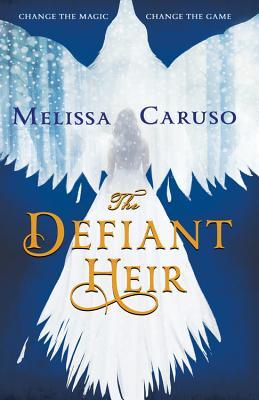 The Defiant Heir by Melissa Caruso
Mogsy’s Rating: 4 of 5 stars
Genre: Fantasy
Series: Book 2 of Swords and Fire
Publisher: Orbit (April 24, 2018)
Length: 560 pages
Author Information: Website | Twitter
I’m always a little nervous going into a sequel to a book I loved, especially when the story and characters are still fresh in your mind. Knowing you are jumping into a new adventure that can change the course of everything you know or shift the game as swiftly as the weather is sometimes a terrifying thing.
But as it turned out, I had an amazing time with Melissa Caruso’s The Defiant Heir. In fact, I pretty much couldn’t ask for more out of a sequel. In the first book, The Tethered Mage, readers were introduced to a historical fantasy setting reminiscent of Renaissance Venice, along with an irresistible cast which includes our protagonist Lady Amalia, a young noblewoman finds herself becoming a Falconer to the fire Warlock Zaira. Forever linked together by a magical bond neither of them wanted, Amalia nonetheless tries to make the best out of the situation, and although Zaira’s initial pushback was hard and aggressive, eventually she too started to come around to their new reality.
Friendships, however, are not forged overnight. There’s still plenty of conflict—both individually and between them—for Amalia and Zaira to work out, and this is where this sequel comes in. The Defiant Heir continues to develop the characters’ relationship by setting them on a quest to gather information behind enemy lines, with success only possible if both women can pull all their knowledge, skills, and abilities together to work as one. All this is also set to a backdrop of imminent war, as the seventeen Witch Lords who rule in Vaskandar gather for a rare conclave in the aftermath of the events that transpired in The Tethered Mage. As the scion of one of Raverra’s most powerful families, Amalia has been groomed to take her mother’s place on the Council of Nine since birth, even though she would much rather be ensconced in a library with a pile of books or tinkering with new contraptions in a workshop. But now the time has come for her to formally enter politics and take on the responsibilities of her role as La Contessa’s heir, even if it means giving up the things she loves.
I’m a big fan of stories that put characters to the test, because they always have the most compelling conflicts. Which path will a person take when faced with life-altering choices? Do they follow their sense of duty or their heart? What lengths will they go to achieve their goals? For Amalia, life has changed a great deal ever since becoming a Falconer. She has made a new friend in Zaira, even if that friendship is still complicated and somewhat precarious. She’s even found love with her fellow Falconer, Lieutenant Marcello Verdi. But as mad as they are for each other, a future together just isn’t in the cards, and that was even before Amalia decided to increase her efforts to follow in her mother’s footsteps. As the daughter of La Contessa, she must put the needs of the country before her own desires. And if her country needs her to play spy and court alliances, she’ll have to do that too, even if those duties require her to serve beyond her experiences and limits.
Amalia, however, is not the kind of person to give up when the going gets hard, which is what I loved about her character in the first book and she continues to show the same kind of persistence in The Defiant Heir. She’s also measured and calculating, preferring to keep all her options open, even if it does leave her personal life a bit of a mess. That said, it’s wonderful to see a flawed but genuine and intelligent female protagonist who displays such strength in the face of crushing social pressures, and still be a good, kind, and sincere person.
But once again, Caruso shows that her greatest strength is writing relationships—and a good thing too, since each and every single one of the story’s multiple threads have a basis in the character dynamics. Amalia loves her mother and wants to please her, which fuels her determination to be a good heir. She loves Marcello, but must put her feelings for him aside to allow herself to be courted by Kathe, a Crow Lord who is debonair and charming, but still pragmatic enough to understand how such a relationship would serve both their purposes. Then there’s the Falconer-Falcon bond between Amalia and Zaira, which has developed into something much deeper and more complex. They’ve put their lives in each other’s hands, and both women have learned to trust more because of it. Zaira has even let herself open up and grow closer to Terika, another Falcon. This particularly sideplot has expanded the scope of her character in many ways, showing a side of the cantankerous fire warlock that we’d only begun to explore by the end of the first book. All these relationships were woven together to form an intricate web of personal stories within a greater narrative, which made this book a joy to read because we got to watch each character grow.
Fans who enjoyed Caruso’s debut will find even more to please them in The Defiant Heir, a sequel that further explores the world and all the characters we’ve come to know and love. In addition, it’ll take us to new locales and introduce us to new players, adding even more depth to series. With this second volume of Swords and Fire, Melissa Caruso is well on her way to making a very big splash in the fantasy genre, and I can’t wait for the third book to get here.
More on The BiblioSanctum:
Review of The Tethered Mage (Book 1)
Book Review: Space Opera by Catherynne M. Valente
Posted on May 12, 2018 22 Comments
I received a review copy from the publisher. This does not affect the contents of my review and all opinions are my own.
 Space Opera by Catherynne M. Valente
Mogsy’s Rating: 3.5 of 5 stars
Genre: Science Fiction
Series: Stand Alone
Publisher: Saga Press (April 10, 2018)
Length: 294 pages
Author Information: Website | Twitter
The first line of the description for Space Opera likens it to The Hitchhiker’s Guide to the Galaxy, and I think it’s an apt comparison because the influence of Douglas Adams clearly shows (and the author even acknowledges it). This is the kind of book that will make you simultaneously laugh and shake your head in amazement wondering how anyone could have come up with such crazy ideas. Considering how my first experience with a Valente novel was something of a downer (with The Refrigerator Monologues) this over-the-top and fun-filled romp through the galaxy was the breath of fresh air I needed.
Our story starts in the new future, when Earth suddenly finds itself visited by a bright blue, seven-foot-tall flamingo-like alien who offers humanity an opportunity to join the greater galactic civilization at large. However, after the disastrous results of a galaxy-wide conflict known as the Sentience Wars, these invitations are hardly going to be simply handed out to every new species they come across. So, what ultimately determines whether humans will be deserving of recognition and a place among the stars? The Metagalactic Grand Prix, a singing contest in which all prospective species vying for inclusion must compete to prove their worth. Come in dead last, and you will be deemed non-sentient and unfit to join the intergalactic community. Worse, your entire species will then be exterminated to prevent you from becoming a danger to yourself and others. (“Hey,” the blue alien bird thingy pretty much says to the people of Earth, “I didn’t make the rules. I’m just telling you all what’s up, so you better choose your representatives wisely if you don’t want your whole planet incinerated.”)
The good news is that the aliens are not just going to let the humans flounder, and they’ve even provided a helpful list of their favorite singers and bands—those they believe might have the best chance at success in the contest. The bad news is, pretty much everyone on that list is dead and gone, except for Decibel Jones and the Absolute Zeroes, a washed-up glam punk rock band who had one single hit in the mid-2000s before fading rapidly back into mediocrity. The band’s frontman, who was just getting used to being completely forgotten, is suddenly thrust back into the limelight as all of humanity’s hope now rests on his and his bandmates’ performance at the Grand Prix. Things aren’t looking too good for Earth, but at the very least, people are reminding themselves that they don’t have to win. Just as long as they don’t come in last, humanity has a chance! Unfortunately, Decibel “Dess” Jones isn’t even sure he has what it takes in him anymore, not to mention one of his band members, Oort St. Ultraviolet, is has become a weary middle-aged commercial musician with an ex-wife and two kids, and the other, Mira Wonderful Star, is dead, killed in a car crash. Everyone on Earth is now counting on what’s left of the Absolute Zeroes to get past all their insecurities and hang-ups in order to pull off a literal out-of-this-world performance—one that will mean either life or death for the entire human race.
Wow, where do I start? First: freaking awesome premise! But as this is Catherynne Valente, insanely and wonderfully creative ideas are pretty much a given. Her style can take some getting used to, especially in this case, where the novel is presented as an almost rambling narrative full of tangents and asides (some of which are just as interesting, if not more so, than the main story being told). In fact, the characters themselves even feel like mere footnotes at times—ancillary pieces of information tacked on to add more context to what’s playing out on the page. As a “characters first” kind of reader, I thought at first this would bother me, but that didn’t turn out to be the case. After all, how could I not be immediately drawn in by the wonders and fascinating sights of this amazing universe that the author has created? A small story in a big galaxy is how I look at this one. While it’s true that the book is more exposition heavy, and character development might be on the lighter side, Valente has really gone all out with her imagination and world-building here. Just reading about all the different kinds of unique alien species and cultures she has invented is worth the price of admission alone.
And then there’s the humor. It can be described as a mixed bag, but satire is definitely a major component. Valente spares nothing and nobody, poking fun at everything from sci-fi genre tropes to the absurdities of human existence. There are also pop culture references aplenty, as well as moments of slapstick comedy and just plain silliness. Admittedly, it can also become a bit too much at times, and I’ve noticed that the author has a tendency to get carried away, especially when she’s getting into a rhythm and doesn’t know when to hold back. Despite the story’s energetic pacing, things started flag for me in the last third of the book, quite possibly as a result of the novelty starting to wear off and fatigue settling in. Also, humor being so subjective, the strange and madcap nature of the kind in this book will mean that it won’t be for everyone. Your mileage may vary, and personally, I was able to enjoy the style and tone of the novel, but even I felt it ended exactly when it should have.
All in all, Space Opera was good fun—as you would expect from a novel with its loud and glittery cover, quippy tagline, and punny title. Its premise is most certainly guaranteed to be nothing you’ve ever seen before, full of lightness and frivolity, but there’s also a lot of heart and meaning. That said, I was still glad when the book finished when it did, before we started going overboard with the comedic shenanigans and lengthy asides. Valente might have wound up overdoing it in the end anyhow, but then managed to pull it back just in time for a satisfying conclusion.

Friday Face-Off: Dinosaurs
Posted on May 11, 2018 25 Comments
Welcome to The Friday Face-Off, a weekly meme created by Books by Proxy! Each Friday, we will pit cover against cover while also taking the opportunity to showcase gorgeous artwork and feature some of our favorite book covers. If you want to join the fun, simply choose a book each Friday that fits that week’s predetermined theme, post and compare two or more different covers available for that book, then name your favorite. A list of future weeks’ themes are available at Lynn’s Book Blog.
This week’s theme is:
“Dinosaurs eat man. Woman inherits the earth.”
~ a cover featuring DINOSAURS
Mogsy’s Pick:
Just One Damned Thing After Another by Jodi Taylor
So I had some real trouble coming up with a book for this week. Sure, I had a couple books by a certain late author whose dinosaur books have been adapted into movies by Steven Spielberg in mind, but I figured there’s a good chance they’ll be used by many others this week, and I wanted to try and find something a little different.
That said, the novel I ended up choosing was a surprise even to me, because even though I recall a section of the story that takes place in prehistoric times, I hadn’t expected it to have a cover that suits my needs. Just One Damned Thing After Another is a time travel story, starring a plucky historian named Madeleine “Max” Maxwell who gets recruited into a secret society of time travelers working undercover behind the façade of St. Mary’s Institute of Historical Research. The plot is very entertaining and filled with boisterous comedic hijinks, and one of the biggest perks of it was being able to absorb behind past events, people, and places. And like I said, the most exciting time period Max gets to visit will probably appeal more to dinosaur enthusiasts or paleontologists rather than history fans.
So, without further ado, let’s take a look at the covers. You kind of have to look really closely on one of them, but sure enough, there are the dinosaurs!
From left to right:
Smashwords (2013) – Accent Press (2013) – Night Shade Books (2016)


Winner:
This book has an interesting history. Originally self-published by Jodi Taylor on two download websites, that manuscript ended up being bought by the UK publisher Accent Press before going on to become a bestselling sensation across the UK and US. It’s not surprising therefore to see that the book’s first cover, the independently published Smashwords edition, is quite amateurish in its design. To be honest, the visuals actually aren’t that bad, but the atrocious typeface is what really reveals its self-pubbed roots. The 2016 Night Shade Book edition, which is the novel’s publisher in the US, uses some of the same original imagery on its cover, except it also cleans everything up and borrows the more attractive font from the UK version.
The clear winner here for me, however, is the Accent Press edition. I love the colors and the art style used, and as a bonus, it’s also the one with the actual dinosaurs! So, that’s my choice this week. But what do you think? Which one is your favorite?
Guest Post: “Real Phony” by K.R. Richardson + International Giveaway of Blood Orbit!
Posted on May 10, 2018 9 Comments
***The giveaway is now over, thanks to everyone who entered!***
 Today the BiblioSanctum is pleased to welcome K. R. Richardson who is the author of Blood Orbit, the first in a new science fiction police procedural series featuring a pair of savvy cops who use cybernetic implants and other cool tech to solve murder cases. We’re so thrilled to have the author join us today with a guest post giving some insight into the book’s fascinating characters, and we hope you’ll check it out! Blood Orbit is being published by Pyr Books and is now available wherever books are sold, so be sure to take a look. As well, we have an exciting giveaway for the novel, open internationally, so everyone can join the fun! Stick around for details at the end of this post!
ABOUT THE BOOK
Eric Matheson, an idealistic rookie cop trying to break from his powerful family, is plunged into the investigation of a brutal crime in his first weeks on the job in Angra Dastrelas, the corrupt capital city of the corporate-owned planet Gattis. A newcomer to the planet, Matheson is unaware of the danger he’s courting when he’s promoted in the field to assist the controversial Chief Investigating Forensic Officer, Inspector J. P. Dillal, the planet’s first cybernetically enhanced investigator. Coming from a despised ethnic underclass, the brilliant and secretive Dillal seems determined to unravel the crime regardless of the consequences. The deeper they dig, the more dangerous the investigation becomes. But in a system where the cops enforce corporate will, instead of the law, the solution could expose Gattis’s most shocking secrets and cost thousands of lives–including Matheson’s and Dillal’s.
REAL PHONY
by K.R. Richardson
“She’s a phony. But she’s a real phony. You know why? Because she honestly believes all this phony junk that she believes.” — Martin Balsam as “O.J. Berman” in Breakfast at Tiffany’s.
Writers are liars: we make shit up and “sell” it to readers. But in making it up, we’re striving to make our stories feel as real as possible, sometimes to tell a truth by using a carefully constructed and believable lie—a real phony. It’s tricky, because real life is full of boring bits, coincidence, and things that make no damned sense at all, but if we write those, readers don’t buy in. Fiction has to adhere to a consistent internal logic, it has to move along at a nice clip, and it has to satisfy in ways real life just doesn’t. In making up worlds, creatures, characters, plots, and so on, we need to create those real phonies.
In the case of characters, they need, like Holly Golightly, to believe their improbabilities, to be solidly rooted in their internal inconsistencies as well as their internal and external conflicts. Rocket from The Guardians of the Galaxy wouldn’t work if he didn’t own the improbability of a three-foot-six-inch, upright-walking, talking raccoon with the insanity and inner fury to tote a bazooka around in his coat—you’d be pissed off too. His in-your-face attitude about it hides his confusion and misery, and allows him to be more than the trope of “cute talking animal.” He has logic (however whacked-out). He has conflict. He has drive. He is consistent in his inconsistency and he is believable because his actions persuade us that he is complete, and honestly believes every violent, crazy action he takes is utterly logical and necessary; even when he’s putting one over on someone, he feels it had to be done. Also, he talks to trees—mostly in four-letter words—because in the mind of an angry, uplifted raccoon, Groot makes perfect sense.
Frank Herbert persuaded readers that a dangerous desert planet had a resource even more precious than scarce water: Spice, a mysterious substance with strange powers that was guarded by vicious worms that had a strange relationship to the spice they guarded and the people who lived closest to it. Herbert’s world was internally logical and consistent even in its inconsistency (at least for the first book or two) and when readers discovered the real nature and origin of Spice, they may have been a bit disgusted, but they believed in the truth of it and the universe it fueled. The implied nature of people, their relationships to their world and to the numinous aspects of their societies was consistent, and presented with logic and belief tempered with conflict (inner and outer.) It wasn’t simply handed to the reader with the note that they must believe it; belief was built by character action and thought as well as the physical evidence of Dune’s universe. They believed, and so, we believed.
When the writer or the characters don’t really believe all the “phony junk” required to convince the reader that the author’s world and premise are possible, they go too far to convince. The world or the character doesn’t speak clearly and convincingly for itself, but explains too much, hedges too much, and hopes that a plethora of clever verbiage will distract from the underlying shabbiness.
I’m not saying, it’s all right to be sloppy about your characters or world building. But I am saying, “the perfect is the enemy of believability.” Embrace the flawed, the messy, the quirky, and, occasionally, the outright bizarre. Balance it, use it, let it color the facts of your story, characters, and world into believable truths, those real phonies that make the story deeper, more resonate, and more full of wonder.
ABOUT THE AUTHOR
K.R. Richardson is the pseudonym of a bestselling Washington-based writer and editor of Science Fiction, Crime, Mystery, and Fantasy. A former journalist with publications on topics from technology, software, and security, to history, health, and precious metals, Richardson is also a lifelong fan of crime and mystery fiction, and films noir. When not writing or researching, the author may be found loafing about with dogs, riding motorcycles, shooting, or dabbling with paper automata.
Blood Orbit Giveaway
We hope this has piqued your interest in Blood Orbit by K.R. Richardson, and if so, you’re in luck! With thanks to awesome folks at Pyr Books, The BiblioSanctum is pleased to be hosting this amazing giveaway opportunity which is open internationally, so come one come all! To enter for a chance to win one of three print copies of the paperback up for grabs, all you have to do is send an email to bibliosanctum@gmail.com with your Name and valid Mailing Address using the subject line “BLOOD ORBIT” by 11:59pm Eastern time on Thursday, May 17, 2018 and we’ll take care of the rest.
Only one entry per household, please. The winners will be randomly selected when the giveaway ends and then be notified by email. All information will only be used for the purposes of contacting the winner and sending them their prize. Once the giveaway ends, all entry emails will be deleted.
So what are you waiting for? Enter to win! Good luck!
Waiting on Wednesday 05/09/18
Posted on May 9, 2018 19 Comments
“Waiting On Wednesday” is a weekly meme that first originated at Breaking the Spine but has since linked up with “Can’t Wait Wednesday” at Wishful Endings now that the original creator is unable to host it anymore. Either way, this fun feature is a chance to showcase the upcoming releases that we can’t wait to get our hands on!
Mogsy’s Pick
Mass Effect: Annihilation by Catherynne M. Valente (September 4, 2018 by Titan Books)
Mass Effect.
Catherynne M. Valente.
‘Nuff said.
 “An official tie-in to the hit video game Mass Effect: Andromeda, written by award-winning and New York Times bestselling author Catherynne M. Valente
An official tie-in to the hit video game Mass Effect: Andromeda. As the Quarian ark Keelah Si’yah sails toward the Andromeda galaxy, it carries 20,000 colonists from several races including the Drell, Elcor, and Batarians. Along the way a routine check reveals that many of the Drell colonists have died in their cryopods, and a pathogen is discovered. It begins to jump species, then the ship’s tech begins to fail, making it clear that this is no accident. It’s murder, and the perpetrator is still on board. The ship’s systems rapidly degrade, and panic spreads among the colonists. To make matters worse, the virus yields a terrible swelling of the brain that causes madness, hallucinations, and leads to violence. If the ship’s crew can’t restore their technology and find a cure, the Keelah Si’yah will never make it to the Nexus.”
#FearlessWomen: Death Doesn’t Bargain by Sherrilyn Kenyon Spotlight & Exclusive Excerpt
Posted on May 8, 2018 11 Comments
Women are shining in every genre of speculative fiction, and it is no longer enough to say “Women are here.” Instead, #FearlessWomen everywhere are taking a stand to say “Women will thrive here.”
Highlighting major titles from bestselling authors V.E. Schwab, Sherrilyn Kenyon, Jacqueline Carey as well as titles from acclaimed and debut authors such as Mary Robinette Kowal, Tessa Gratton, Sam Hawke, and Robyn Bennis, #FearlessWomen will be a coordinated social media celebration encouraging fans to start a dialogue about women in publishing, their worlds, their voices, and their unique stories.
Death Doesn’t Bargain by Sherrilyn Kenyon
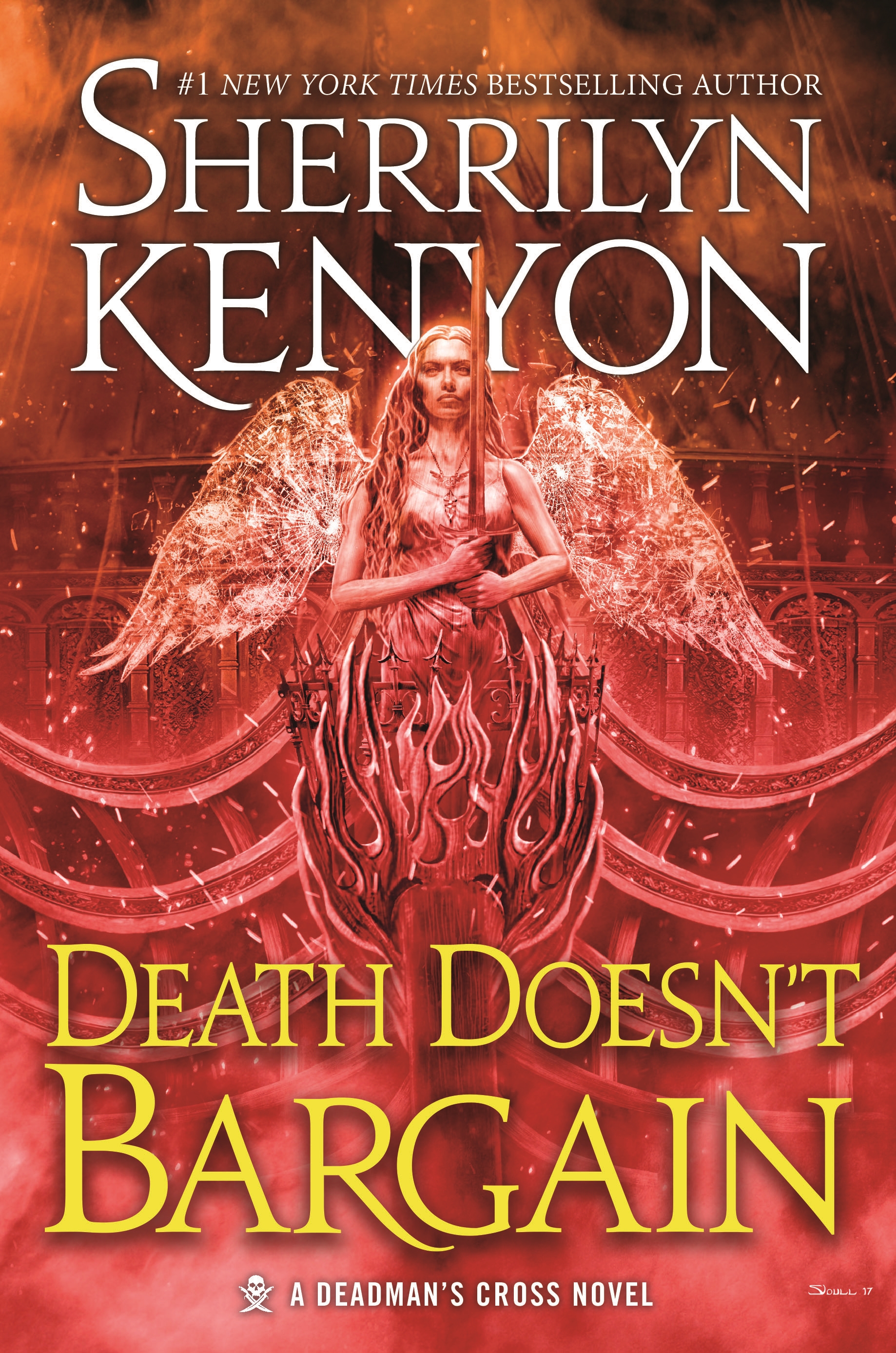 The Deadmen are back…
With DEATH DOESN’T BARGAIN, Kenyon again returns to the pirate ship Sea Witch, where Captain Devyl Bane, and his undead crew have set sail for eternity, searching for forgiveness and salvation. Together, they are humanity’s last hope to restore the gates and return the damned to their hell realms.
Many demons are beginning to break free of their eternal prison and are bent on mankind’s destruction. The worst of the lot is Vine, determined to claim their lives for taking hers. She will see the world burn…and has the perfect lure to destroy them all. One of their own.
Kalder Dupree has never known a day of mercy. Born to the cruelest of mer-races, he sacrificed himself for his crew and is in Vine’s hands. He expects no compassion or rescue.
Yet the young shipmate Cameron Jack is determined to set Kalder free. As a Hellchaser, it’s her calling, and she cannot allow even a not-so-innocent to be tortured for an act of kindness that spared her damnation.
To defeat evil, it sometimes takes an even worse evil, and Cameron is willing to do whatever she must to make this right. If Vine thought she had her hands full before, she hasn’t seen anything nearly as powerful as Cameron’s resolve.
DEATH DOESN’T BARGAIN delivers a sweeping epic saga sure to appeal to the millions of Kenyon’s Dark Hunter fans as well as anyone looking for a page-turning and high-paced adventure. It is a tale of passion and loss, emotions that wound and heal…and ultimate redemption.
Exclusive Excerpt
What aren’t you saying, my lord?”
“You’ve the blood of Michael in your veins, girl. While the others are strong, he’s one of the most powerful of all. His blood is straight from the Source itself. There’s no telling what such a bond could cause. The damage not just to you and your brother, but to the entire world.”
A shiver went down her spine as she considered his words. “You’re terrifying me.”
About the Author
 Sherrilyn Kenyon is a New York Times bestselling author and is a regular in the #1 spot. This extraordinary author continues to top every genre in which she writes. More than 70 million copies of her books are in print in more than one hundred countries. Her current series include The Dark-Hunters®, The League®, NevermoreTM, Lords of Avalon®, Chronicles of Nick® , and Deadman’s CrossTM. Her Nick ChroniclesTM and Dark-Hunters® are soon to be major media productions.
Visit her online at http://www.sherrilynkenyon.com.
Join the Conversation
Tor Books’ handles across Facebook, Twitter, and Instagram (@torbooks) will be using the hashtags #FearlessWomen (and #FearlessFantasy and #FearlessSF) to promote excerpts, exclusive content, quizzes and giveaways beginning in May. There will also be exclusive giveaways at BookCon, San Diego Comic-Con, and New York Comic Con. Follow Tor Books online, join the conversation – and get reading!
Be sure to also check out the other blogs on the #FearlessWomen tour to read more exclusive content and reviews!
This is a Metaphor | Dark Faerie Tales | Cherry Blossoms & Maple Syrup | Sci-fi Chick | Books, Bones, & Buffy | Tenacious Reader | Itching for Books | Across the Words | Fantasy Literature


 The BiblioSanctum