Audiobook Review: My Lovely Wife by Samantha Downing
Posted on April 20, 2019 21 Comments
I received a review copy from the publisher. This does not affect the contents of my review and all opinions are my own.
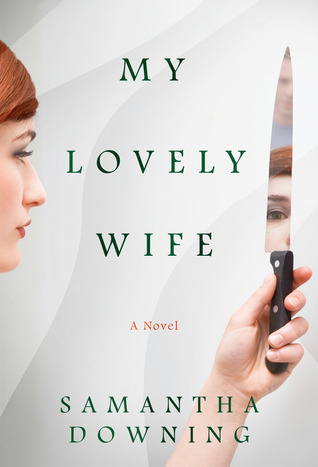 My Lovely Wife by Samantha Downing
Mogsy’s Rating (Overall): 4.5 of 5 stars
Genre: Thriller, Suspense
Series: Stand Alone
Publisher: Penguin Audio (March 26, 2019)
Length: 10 hrs and 13 mins
Author Information: Website | Twitter
Lately, I’ve been trying a new routine of following up disappointing reads with a thriller. As a genre, I find that they typically make for good palate cleansers, and as an added bonus they are usually fast-paced and addictive, giving me that much needed boost after a “blah” read to prevent slumps.
Which brings me to My Lovely Wife by Samantha Downing, which was exactly what I needed in my life. In fact, it did its job and more. When I first started this audiobook, all I’d hoped for was a standard psychological thriller. Honestly, I wasn’t expecting all that much, maybe something similar to the current crop of novels with a few variations on the same premise repeated over and over. Boy, was I surprised.
What I got instead was a completely brilliant, completely bonkers and clever psy-thriller of domestic suspense unlike any other I’ve read before. The official blurb described this one as “Dexter meets Mr. and Mrs. Smith” and I’ll let you decide how accurate that is. At the center of this story is a married couple, our unnamed protagonist and his wife Millicent, who have been married for fifteen years. Like many couples who have been together this long, they believe they’ve found the key to their marital bliss. But while some folks like to spice things up with surprise gifts or a naughty weekend, this husband-and-wife pair likes to put the spark back into their relationship by committing murder together.
Yep, you heard that right, though with the exception of their homicidal tendencies, our protagonist would have you believe he and Millicent are just like any normal average couple. They live in a great house, with two wonderful kids. He teaches tennis at the posh country club, while she sells real estate in their affluent neighborhood. As with all families, they have their secrets hidden behind closed doors and decisions made in the past that have come back to haunt them, even if theirs are more twisted and depraved than most.
More than this I’m reluctant to reveal, because as the saying goes, the less you know the better, and this absolutely applies to My Lovely Wife. The mindfuck starts right away as the first few chapters will have you second-thinking all your predictions as quickly as you make them. As I soon discovered though, pretty much every time I thought something felt clichéd, it managed to never turn out the way I thought it would.
This story is told from the perspective of Millicent’s husband, who is under no illusions that he’s married to a complete psycho. But the best part about this book is that you can’t take anyone at face value. As deeply as you might sympathize with him or as much as he might endear himself to you, our protagonist is no saint himself, no matter how hard he tries to sell us on his “meek husband” persona. He gets off on the idea of murder just as much as his wife, and worse, he does nothing to rein in her even darker appetites.
But the genius of this novel, and what Samantha Downing does so well, is giving the impression of the sheer normalcy of it all, even when you know in your heart just how messed up everything is. At the heart of this tale is a couple who is completely devoted to their family. On birthdays and anniversaries, they would go that extra mile to make the day special for their loved ones. During hard times, they scrimped and sacrificed to make ends meet. And as the kids grew older, there were the usual doctor’s appointments, soccer games, golf lessons. Millicent insists on only cooking organic. No cellphones or any electronics at the dinner table. The family will sit down to a movie night at least once a week. It’s all so domestic it almost makes you want to puke.
But of course, there’s that whole serial killer couple thing. In large part, this book is driven by the mystery behind the nature of the protagonist and his wife’s relationship. We’re also trying to figure out Millicent, who’s an enigma even to her husband. Like all couples, they have secrets they keep from each other, but even knowing this did not prepare me for all the shocks and thrills thrown at us towards the end of the book. Good luck putting it down at this point. I know I couldn’t.
All in all, My Lovely Wife was a fantastic read. Believe me, if I thought I could get away with praising this amazing debut without giving away too much, I would have written a whole lot more extolling its insanely fun and addictive plot and phenomenally developed characters. So instead, I’ll keep it simple: if you’re looking for a binge-worthy psychological thriller that stands out among the rest, you need this book in your life.


Friday Face-Off: School
Posted on April 19, 2019 24 Comments
Welcome to The Friday Face-Off, a weekly meme created by Books by Proxy! Each Friday, we will pit cover against cover while also taking the opportunity to showcase gorgeous artwork and feature some of our favorite book covers. If you want to join the fun, simply choose a book each Friday that fits that week’s predetermined theme, post and compare two or more different covers available for that book, then name your favorite. A list of future weeks’ themes are available at Lynn’s Book Blog.
This week’s theme is:
“It was the best of times, it was the worst of times.”
~ a cover featuring a SCHOOL
Mogsy’s Pick:
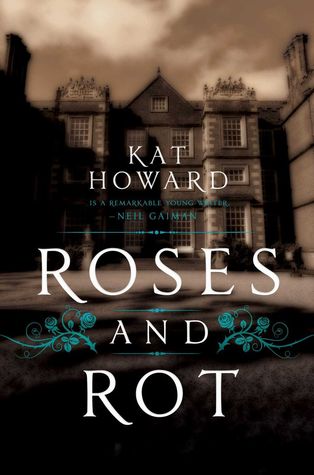
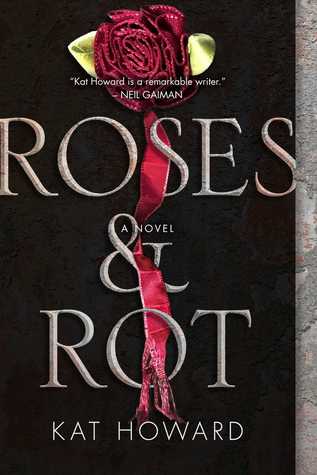
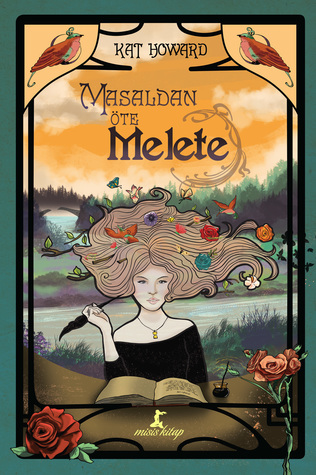
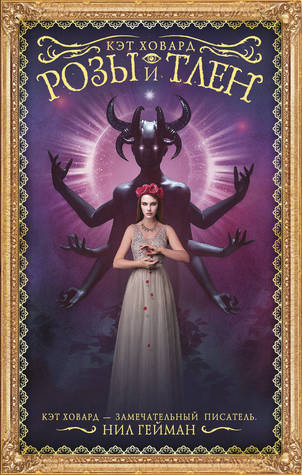
Roses and Rot by Kat Howard
Roses and Rot follows the lives of two sisters, both of whom are talented artists in their own fields. Imogen is a writer, while her younger sibling Marin’s passion is in dance. The two of them grew up together suffering at the hands of their cruel and abusive mother, but it was awkward and introspective Imogen who bore the brunt of the mistreatment. This prompted Imogen to leave home as soon as she was able to, using the money she saved in secret to attend boarding school, even though her own escape meant having to leave Marin behind.
Now nearly ten years later, the sisters are in their twenties and have seized upon an opportunity to reconnect. At Marin’s urging, Imogen applies with her to a prestigious post-graduate arts program at an institution called Melete, and both end up being accepted. The school is a dream come true, a quiet retreat in the scenic woods where fellows can dedicate their full attention to their art. Unfortunately, the peace doesn’t last. After a while, Imogen starts noticing strange things happening about on campus. Nature behaves differently at Melete, with the paths through the woods seeming to wind and shift with a life of their own, and she can never shake that unsettling feeling of being watched.
Turns out, there is more to the school than meets the eye. But how well do the novel’s covers reflect its mysterious vibes?
From left to right, top to bottom:
Saga Press (2016) – Gallery/Saga (2017)
Turkish Edition (2017) – Russian Edition (2019)
Winner:
This week’s covers feature a wide range of emotions, from melancholy and whimsy to horror and enchantment. Since the wonders and beauty of this novel reminded me very much of a fairy tale, I would say any of these would be quite appropriate for its themes. For the winner though, I would have to go with the cover I own because I just love its atmosphere.
But what do you think? Which one is your favorite?
Book Review: Holy Sister by Mark Lawrence
Posted on April 18, 2019 23 Comments
I received a review copy from the publisher. This does not affect the contents of my review and all opinions are my own.
Mogsy’s Rating: 4 of 5 stars
Genre: Fantasy
Series: Book 3 of Book of the Ancestor
Publisher: Ace (April 9, 2019)
Length: 368 pages
Author Information: Website | Twitter
And so another fantastic trilogy by Mark Lawrence has come to an end. I’ve said it before and I’ll say it again, though—there is something genuinely remarkable about The Book of the Ancestor, and not just because it felt like such a departure from the author’s previous trilogies. While this one might not be my favorite of his, nor do I think it’s as contentious or impactful as The Broken Empire or The Red Queen’s War, I do think it’s the most accessible of Lawrence’s work. More importantly, it also shows that he has a wide range of talents and he’s forging ahead in his career with no fear of stagnation, which is great news for readers.
Holy Sister continues the saga of Nona Grey, picking up from the end of Grey Sister which saw our protagonist and her fellow sisters and nuns from the Convent of Sweet Mercy barely escaping with their lives. It is told via two timelines, one in the present and one in the near past. The earlier one takes place three years earlier, following the harrowing flight from Sherzal’s palace. As you would recall, things ended quite intensely with Nona and Zole parting ways with the rest of the group to give them a fighting chance, while the two of them decided to set off onto the vast icefields of Abeth with their precious cargo.
The timeline in the present, on the other hand, follows Nona as she attempts to master her studies and prepare for the final confrontation with Sherzal as the invading armies march ever closer to their home. And here’s where things get a little wild. Along with the keen sense of sand running out in the hourglass, Nona and her friends have nearly completed their training and are expected to choose a specialization to pursue. But for our protagonist, who has manifested multiple talents and is skilled in many of the convent’s teachings, how will she choose which path to walk? And will she have time to decide, before war comes to destroy them all?
First, let’s get some of the awkwardness out of the way. I have never been a fan of dual timelines as literary device and I doubt I ever will, so I can’t say I was too thrilled when I realized Holy Sister was going this route. That said, it is hard to mind when it is done well, and if anyone can do it well, it is Mark Lawrence. For one, I was surprised to find that pacing wasn’t affected too aversely. I liked how the two timelines complemented one another, weaving back and forth like dancing partners completely in tune with each other’s thoughts and movements. When momentum in one timeline flagged, the other one will slip in and take over, re-energizing the narrative. In a way, the book actually felt like a cohesive whole despite the two alternating parts, indicating a massive amount of pre-planning and careful plotting.
And of course, I loved how the book expanded on everything that came before. This trilogy has been an epic journey chronicling Nona’s life from a peasant girl to become a novice at Sweet Mercy. And now, it is time for her and her friends to graduate. It is a momentous affair and I’m glad Lawrence gave it the attention it deserved. In addition to her education, Nona has also come a long way in her personal growth, maturing physically and emotionally. Reading about her relationships with the nuns and her peers has always been the highlight of the series for me, and one of the best things about The Book of the Ancestor is the central focus on female friendships and bonding. This is not only limited to Nona’s relationships either; the story also develops the relationships of the other women and their dynamics with each other. And since this is the final book of the trilogy, a lot of these emotions surrounding our characters feel even more heartfelt and intense.
In terms of criticisms, there’s nothing too negative I have to say. While I feel this series lacks some of the “weight” of the author’s previous trilogies, plus the fact the characters and writing style somewhat skews towards a slightly younger audience, The Book of the Ancestor is still a fantastic read and Holy Sister caps it off fantastically. Sure, our characters might act a little predictably at times and certain things might tie up a bit too nicely, but overall, rest assured the novel will answer many of your questions and provide the closure needed. Be sure to also pay attention for the climax and denouement, because things there moved very quickly!
All in all, this another highly entertaining and satisfying trilogy from Mark Lawrence! Again, if you’ve read The Broken Empire and/or The Red Queen’s War and you’re curious about The Book of the Ancestor, just keep in mind that it’s quite different. If you enjoyed Red Sister and Grey Sister though, I am sure will also love Holy Sister.

More on The BiblioSanctum:
Review of Red Sister (Book 1)
Review of Grey Sister (Book 2)
Waiting on Wednesday 04/17/19
Posted on April 17, 2019 15 Comments

Waiting On Wednesday” is a weekly meme that first originated at Breaking the Spine but has since linked up with “Can’t Wait Wednesday” at Wishful Endings now that the original creator is unable to host it anymore. Either way, this fun feature is a chance to showcase the upcoming releases that we can’t wait to get our hands on!
Mogsy’s Pick
The Shadow Saint by Gareth Hanrahan (January 7, 2020 by Orbit)
I’ve been waiting to feature this one for a while, and finally Orbit officially unveiled the cover last week!
 “Thieves, dangerous magic, and a weapon built with the power to destroy a god clash in this second novel of Gareth Hanrahan’s acclaimed epic fantasy series, The Black Iron Legacy.
Enter a city of spires and shadows . . .
The Gutter Miracle changed the landscape of Guerdon forever. Six months after it was conjured into being, the labyrinthine New City has become a haven for criminals and refugees.
Rumors have spread of a devastating new weapon buried beneath the streets – a weapon with the power to destroy a god. As Guerdon strives to remain neutral, two of the most powerful factions in the godswar send agents into the city to find it.
As tensions escalate and armies gather at the borders, how long will Guerdon be able to keep its enemies at bay?
The Shadow Saint continues the gripping tale of dark gods and dangerous magic that began with Hanrahan’s acclaimed debut The Gutter Prayer.”
Book Review: The Binding by Bridget Collins
Posted on April 16, 2019 24 Comments
I received a review copy from the publisher. This does not affect the contents of my review and all opinions are my own.
 The Binding by Bridget Collins
Mogsy’s Rating: 3 of 5 stars
Genre: Fantasy
Series: Stand Alone
Publisher: William Morrow (April 16, 2019)
Length: 448 pages
Author Information: Website | Twitter
The Binding by Bridget Collins was an okay book, but it could have been better. In its defense, I confess I probably would have enjoyed this a lot more if my patience threshold hadn’t been so low when I started this; I’ve had a recent run of bad to mediocre reads lately which has made me extremely finicky, and unfortunately, there are many things about this one that make it a very mood-dependent book.
But first, I did love the novel’s concept. I’ve always had a thing for “books about books”, and I thought The Binding deserves points for tackling the idea quite a bit differently. That’s because books in this world are nothing like the way we think of them, neither for knowledge or for pleasure. Instead, they are magical devices handcrafted by specially trained artisans called Bookbinders, who use books as vessels to take away and store a person’s worst memories. All the secrets and the pain and hurt and guilt that one can’t bear to live with, a Bookbinder has the mysterious power to erase and lock away, which has resulted in much fear and mistrust around the profession, and not surprisingly, books themselves are anathema and forbidden.
This was a lesson protagonist Emmett Farmer learned early on, when he was a young boy punished by his father for bringing home a book from the Wakening Fair, not understanding the gravity of what he’d done. But for as long as he can remember, Emmett has always been drawn to books, and soon enough, we get to learn why. What he’s always thought of as a debilitating condition which has prevented him from working efficiently in his family’s fields actually turns out to be a sign of his potential to become a Bookbinder. Before long, a letter arrives from an elderly Bookbinder named Seredith with a demand for his apprenticeship, and despite his reluctance to leave the farm, Emmett knows deep in his heart that he has no choice.
Under Seredith’s tutelage, Emmett learns the delicate art of binding. He also discovers the truth behind the books she creates, watching as customers arrive at her doorstep, beseeching the old Bookbinder to take away their memories and lock them up. But not everything is as they seem either. Soon, we get to see that the business of bookbinding is rife for abuse, with some engaging in the illegal trading of books while others misuse the services for their own nefarious purposes. Which brings us to Lucian, a wealthy young patron who visits Seredith’s shop one day. We won’t find out how until much later, but Emmett and Lucian’s lives are connected in some way, and in time we learn how a great disservice has been done to them both.
I have to say, The Binding was a deeply layered book. Again, I suspect that I would have enjoyed it a lot more had I had been in a better mood for a story like this, but there was also plenty about its execution I found aggravating. For one thing, the book is told in three parts, with some accompanying perspective and time shifts that I didn’t feel were written all that effectively. I liked the first part well enough, mostly due to Collins’ amazing characterization of both Emmett and Seredith, as well as the development of their master-apprentice relationship. This section also introduced a world of mystery that I found very enticing, making it hard to resist reading more.
But then came the second act, told via a flashback. Emotionally, I found it challenging to connect with this section—very unfortunate, considering how so much of what was covered here would play directly into the crux of the novel, revealed in the third and final act. My enthusiasm already dampened at this point, my apathy only increased as we shift POVs for this concluding section, which felt a world away from the magic and allure of the first act. Instead, we mostly got a lot of drama and anguish. I don’t want to spoil things too much, even though many of the reviews have already mentioned the queer romance and the tale of star-crossed lovers (though honestly, it’s quite obvious that the book was setting up for it), but essentially, I felt this last act failed to deliver the emotional intensity such crucial dissemination of events required, or it’s possible I just felt too disconnected from the POV to feel much of it.
My final verdict? I really thought I would love The Binding, given its fantastic premise. However, I struggled miserably with the shifts between the novel’s three parts, and as such, things did not go as smoothly as I would have liked. On a better day, I might have felt a little more magnanimous, but lately I’ve been burned by too many books that show early promise only to fizzle out by the end, and I was disappointed when this one followed the same trend. In all fairness, this wasn’t a bad book, but I do wish it had been more emotionally satisfying.

Book Review: Tiamat’s Wrath by James S.A. Corey
Posted on April 15, 2019 24 Comments
I received a review copy from the publisher. This does not affect the contents of my review and all opinions are my own.
 Tiamat’s Wrath by James S.A. Corey
Mogsy’s Rating: 4.5 of 5 stars
Genre: Science Fiction
Series: Book 8 of The Expanse
Publisher: Orbit (March 26, 2019)
Length: 534 pages
Author Information: Website | Twitter
As the penultimate book in the epic Expanse series, Tiamat’s Wrath gives one the feeling of an entire galaxy holding its collective breath—things aren’t so much happening as they are preparing the field for the final play. And yet, if you’ve been on this train since the beginning, you’ll know that James S.A. Corey, the collaborative team of Daniel Abraham and Ty Frank writing as one, isn’t going to let that get in the way of telling a full-force, action-packed and dramatic story. Sure, the end is just around the corner, but that doesn’t mean we can’t still blow a lot of stuff up and put readers through the emotional wringer in the meantime.
Given that this is the eighth installment of the series, it’s going to be pretty damn hard to give even a brief rundown of the premise without spoiling anything from the previous books, so I would highly recommend being caught up all the way to Persepolis Rising before proceeding. In fact, I would say it’s even more imperative considering how the last book carried us three decades ahead, offering a new beginning of sorts. That said though, you’ll still need to know everything that happened to fully appreciate the sheer magnitude of the events Tiamat’s Wrath, because this novel is the culmination of multiple intertwined narratives and a lengthy complex history. Earlier threads in the series are being drawn together as characters old and new are swept up in the chaos of a fast-changing universe.
Some more time has passed since the end of Persepolis Rising. The Laconian Empire has since become the dominant force in the galaxy, with former rogue admiral of the Martian navy Winston Duarte becoming the High Consul. More importantly, Laconia also controls the thirteen hundred or so alien gates that have opened to solar systems around the galaxy, giving them full access to the transportation network. In addition, the intensive research Duarte commissioned into the protomolecule has paid off, giving his military the most advanced ships humanity has ever developed, with the High Consul himself attempting to use the technological findings to achieve immortality.
What’s left of the crew of the Rocinante, now scattered to the four winds, is forced underground, with Naomi, Bobbie, and Alex fighting for the resistance. Meanwhile, Holden is being held as a political prisoner on Laconia and Amos has gone off the grid to try and get him back, even in the face of impossible odds. Things aren’t looking good for our characters, leaving them doing the best they can while praying something unexpected will happen for them to catch a break. And what do you know, something unexpected is exactly what comes to pass. Beyond the thousands of mysterious gates that have opened, some of them lead to dead systems. In one of these, an alien presence is stirring, not content to stand by while humanity continues to expand. A Laconian scientist, Elvi Okoye, uncovers disturbing details of an ancient genocide that might be related to this new alien threat, and at the heart of the empire, Duarte’s daughter Teresa finds herself prematurely thrust into the limelight as something astonishing and unforeseen happens to her father.
As we make our way steadily towards the grand finale, I found myself wrestling with a storm of feelings swirling within me. As enthusiastically as I awaited this novel, a part of me also never wanted this ride to end. As soon as I read the first sentence, I literally wanted to scream, because fucking hell, what a way to start the book, knowing full well what these four little words would mean to longtime fans of The Expanse. Cruel as it was though, I also knew that nothing could have me better for the tone of what was to follow, and the “beginning of the end” that this book would signify. This is where we must start saying goodbye, and clearly, the authors are not going to be gentle about it, and it says much about their talent when in response, all I can say is, please give me more.
And hey, lucky us, the revelation in the prologue was just the first of many more shocks to come. As you know, something BIG always happens in each of these books. Some event that makes you drop your jaw and think, holy shit, did that really just happen? On the relative scale of things, the “big event” that happens in Tiamat’s Wrath might not be as horrifically destructive or sensational as some of what we’ve seen in the series before, but it does give the reader an eerie sense of foreboding and a sick realization that, wow, humanity is soooooo screwed.
There are many remarkable moments like this in the book, and in fact, one of the things Tiamat’s Wrath does best is making the story feel like it’s in constant motion and packed with action. What’s more impressive is that this is happening even as the authors are spending lots of time pushing plot points and maneuvering characters around the place like pieces on a chessboard. Granted, many of surprises and twists they end up inflicting on us are painful, hitting readers right in the emotions. Here’s where the relationships between characters come into play, especially if you’ve gotten the foundation from the first seven books. Coupled with the joy to see familiar faces return to new roles is also the heartbreak of seeing them make their sacrifices and say their farewells. And it’s not just the old characters appealing to our deepest feelings of sympathy and compassion either; there are some new perspectives here too, endearing themselves into our hearts, making us feel as if we’ve known them forever, and of these, Teresa Duarte’s voice was probably the one touched me the most.
Ultimately, I don’t think there’s been another science fiction series that has come anywhere near to consuming me the way The Expanse has. It is, in every sense of the word, a phenomenon, capturing the imaginations of readers everywhere with its space-operatic intrigue and daring action, its intense thrills and wonder, as well as its human tales of courage and resilience. Tiamat’s Wrath is a gut-punching, ass-kicking, body-rocking installment that will leave you breathless. Bring on the final book.
More on The BiblioSanctum:
Review of Abbadon’s Gate (Book 3)
Review of Cibola Burn (Book 4)
Review of Nemesis Games (Book 5)
Review of Babylon’s Ashes (Book 6)
Review of Persepolis Rising (Book 7)
Novella Review: Miranda in Milan by Katharine Duckett
Posted on April 14, 2019 20 Comments
I received a review copy from the publisher. This does not affect the contents of my review and all opinions are my own.
 Miranda in Milan by Katharine Duckett
Mogsy’s Rating: 3 of 5 stars
Genre: Fantasy, Retelling
Series: Stand Alone
Publisher: Tor.com (March 26, 2019)
Length: 208 pages
Author Information: Website | Twitter
Miranda in Milan isn’t so much a retelling than a sequel, reimagining of the events after The Tempest by William Shakespeare, picking up the tale at the play’s end where everyone including the magician Prospero and his daughter Miranda are getting ready to head back to Naples. But instead, they end up in Milan. Miranda and Ferdinand are to be married in celebration of their triumphant return, and Prospero himself is to reclaim his dukedom. Rather than the joy she expected, however, Miranda is met with fear and distrust at her destination, shunned and shut away in her chambers at the castle. Whispers of Miranda’s resemblance to her dead mother Beatrice follow her everywhere, and she is forced to wear a veil to hide her face whenever she ventures outside.
Isolated and friendless, abandoned by her father who has gone on to do bigger things and with no word when her wedding will happen, Miranda begins to lose hope. That is until she meets her new maid Dorothea. As a Moor, Dorothea is just as ostracized as Miranda, and she doesn’t seem bothered by the rumors about the duke’s daughter. The two of them start to grow close, with the friendship swiftly blossoming to become something even more. Meanwhile, it appears Prospero has not been entirely truthful in his proclamations to abandon his magic. As everything begins to fall under the threat of his dark schemes, Miranda and Dorothea must work together to uncover the truth and save Milan.
In the original play The Tempest, Prospero is the main character, portrayed as an unfortunate exile. Miranda is but a mere side note, her actions and behavior completely dictated by her father. In Miranda in Milan, however, it is she who gets to feature as the story’s protagonist, while Prospero is cast as its villain. Admittedly, I might have been more taken with author Katharine Duckett’s direction of these roles had I not read 2017’s Miranda and Caliban by Jacqueline Carey. While there are many differences between the two books, at their heart, both shine the spotlight on Prospero’s kind and compassionate daughter, both reimagine her in a coming-of-age romance, and both depict her father as a domineering and menacing figure in her life. There are just enough parallels to invoke comparisons between how the characters, relationships and themes are handled, and in almost every way—e.g. character development, romance, world-building, storytelling, etc.—I felt Miranda in Milan fell short.
Part of the issue could be due to its length. At just a sliver over 200 pages, this novella had a lot to convey and yet not enough time to do it. I hate to say it, but this is why I’m typically wary of short fiction because more often than not, I come away from short works wishing they had been more, and this was one of those cases. To wit, there’s a lot going on in this book: first, the Shakespearean elements, and contextual details of the original play that had to included; second, there were the relationships—and that means not only of the romance between Miranda and Dorothea, but also the complexities and nuances in the dynamics between Miranda and Prospero, Miranda and Ferdinand, etc.; and third was the overall plot itself, which sought to incorporate a bit of mystery related to Miranda’s mother along with the intrigue and conspiracy of Prospero’s dastardly plans.
With all this in play, there was barely enough time to properly explore the world’s secrets or its magic, or go any deeper into characters’ backgrounds, personalities, and motivations. As a result of this, I have mixed feelings. On the one hand, I want to praise this book for its ambitions and its integration of so many interesting and rich concepts, but on the other, I can’t say it managed to develop any of them very well. This ineffectual build-up ultimately led to very little pay payoff and satisfaction, sad to say. For example, Miranda and Dorothea’s romance—which I considered to be the most notable aspect of this tale and thus expected quite a lot from—ended up being nice and sweet but also rather superficial and uninspired. As well, the ending which I thought contained several unique twists and revelations was nonetheless anticlimactic simply because the story’s foundations were not developed enough to make me feel much of anything for the characters or their conflicts. Miranda in Milan being Duckett’s debut, I also wasn’t surprised to run into pacing problems. Understandably, some things cannot be rushed, but I did feel the early sections of this book moved too slowly and were bogged down by unnecessary diversions.
All in all, I can’t say I loved this book, but that being said, I didn’t dislike it either. In the end, I think I just wanted more—more depth, more clarity, more detail. More feeling. It’s possible that tighter pacing and more pages could have provided all that, but as it is, Miranda in Milan gets an average rating from me, though I will keep watching to see what Katharine Duckett writes next.
Mogsy’s Bookshelf Roundup: Stacking the Shelves & Recent Reads
Posted on April 13, 2019 34 Comments
Bookshelf Roundup is a feature I do every other weekend which fills the role of several blog memes, like Stacking the Shelves where I talk about the new books I’ve added to my library or received for review, as well as It’s Monday! What Are You Reading? where I round up what I’ve read since the last update and what I’m planning to read soon. Mostly it also serves as a recap post, so sometimes I’ll throw in stuff like reading challenge progress reports, book lists, and other random bookish thoughts or announcements.

Received for Review
My thanks to the publishers and authors for the following review copies received, and be sure to click the links to their Goodreads pages for more details and full descriptions!

First up, a trio of titles that span a range of sci-fi subgenres: with thanks to Titan Books, I received Fleet of Knives by Gareth L. Powell, book two of the Embers of War space opera/military science fiction series which I’ve been enjoying a lot so far; with thanks to Tor Books, I received Luna: Moon Rising by Ian McDonald, the finale in a fantastic trilogy which has been described as Game of Thrones in space; and with thanks to Orbit, I received an ARC of The Girl Who Could Move Sh*t With Her Mind by Jackson Ford, a quirky mystery adventure of paranormal elements and superpowers.

Next, we have some epic fantasy, with thanks to Harper Voyager for sending along an ARC of Protect the Prince by Jennifer Estep, the sequel to Kill the Queen. I had a lot of fun with the first book last year, and I hope the trend will continue. A surprise paperback of Kin by Snorri Kristjansson also showed up earlier this month from the kind folks at Jo Fletcher Books across the Atlantic, I think because they had offered me an eARC of the sequel Council and I replied with a thanks but I haven’t read the first book yet. As you can imagine, I was thrilled because as you know I’ve been going on and on about how I wish this book would finally get an official US publisher. Needless to say I wasted no time in starting this book, and as of this writing I am about halfway through and enjoying myself immensely. And if you recall my Waiting on Wednesday feature a couple weeks ago, I was really looking forward to Shark Beach by Chris Jameson so it was to my joy and excitement that St. Martin’s Press replied to my request to say they would be sending an ARC. I probably won’t be starting this until closer to the release date, but I can’t wait.

From Henry Holt and Co. via LibraryThing, I was also lucky enough to score an ARC of The Daughters of Temperance Hobbs by Katherine Howe from their Early Readers program last month. Really looking forward to check this one out. And here’s something different: from Vintage Books came this gigantic volume called The Big Book of Classic Fantasy edited by Ann and Jeff VanderMeer. It is exactly what it sounds like, an anthology of stories ranging from the fairy tales we first heard as children to the classic fantasy works that have always been with us. I’ll be honest, I don’t know how likely I’ll read this whole thing, but for those interested, here’s more from the publisher description: “There are the expected pillars of the genre: the Brothers Grimm, Hans Christian Andersen, Mary Shelley, Christina Rossetti, Nikolai Gogol, Franz Kafka, L. Frank Baum, Robert E. Howard, and J. R. R. Tolkien. But it’s the unexpected treasures from Asian, Eastern European, Scandinavian, and Native American traditions–including fourteen stories never before available in English”. Pretty cool, right? And finally, from the awesome team at Subterranean Press, I received an ARC of a collection called The Best of Greg Egan, which should be of interest to fans of the author.
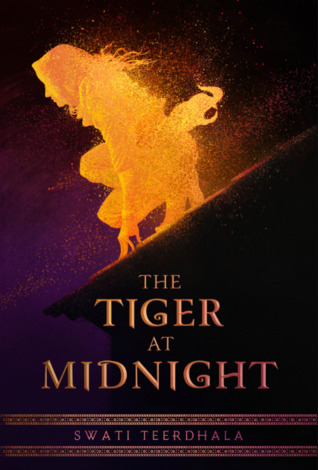
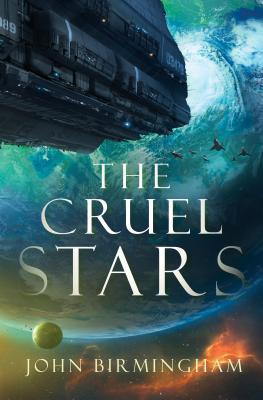
A rather light haul in the digital pile this week: courtesy of Harper Audio, I was able to snag an advanced listening copy of The Tiger at Midnight by Swati Teerdhala, and from Del Rey via NetGalley, I downloaded the eARC of The Cruel Stars by John Birmingham because I thought it sounded interesting.
Reviews
Here is a quick summary of my reviews posted since the last update:
Girls with Sharp Sticks by Suzanne Young (4 of 5 stars)
The Near Witch by V.E. Schwab (4 of 5 stars)
The Deepest Blue by Sarah Beth Durst (4 of 5 stars)
The True Queen by Zen Cho (3.5 of 5 stars)
The Night Visitors by Carol Goodman (2.5 of 5 stars)
The Luminous Dead by Caitlin Starling (2.5 of 5 stars)
Inspection by Josh Malerman (1.5 of 5 stars)
What I’ve Read Since the Last Update
Here’s what I’ve managed to “unstack” from the TBR since the last update. It’s been a busy couple of weeks, with my birthday last weekend, and unfortunately right after that I came down with a bad cough and fever. Despite the hurdles I still managed to finish a good number of books, some of which were pretty lengthy (though for some of these I had the help of audio during my recuperation). Reviews will be forthcoming.

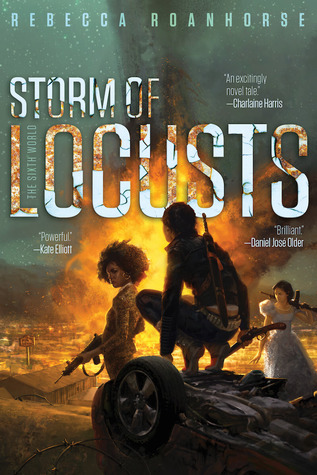
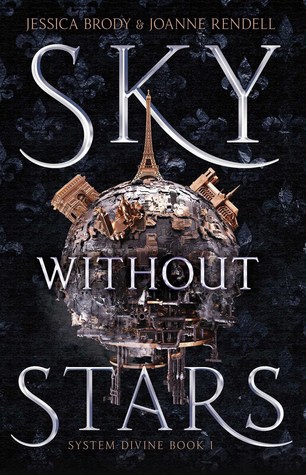

Have you heard of or read any of the books featured this week? What caught your eye? Any new discoveries? I hope you found something interesting for a future read! Let me know what you plan on checking out. Until next time, see you next Roundup!
Friday Face-Off: Longboat
Posted on April 12, 2019 25 Comments
Welcome to The Friday Face-Off, a weekly meme created by Books by Proxy! Each Friday, we will pit cover against cover while also taking the opportunity to showcase gorgeous artwork and feature some of our favorite book covers. If you want to join the fun, simply choose a book each Friday that fits that week’s predetermined theme, post and compare two or more different covers available for that book, then name your favorite. A list of future weeks’ themes are available at Lynn’s Book Blog.
This week’s theme is:
“Odin, Odin, send the wind to turn the tide.”
~ a cover featuring a LONGBOAT
Mogsy’s Pick:
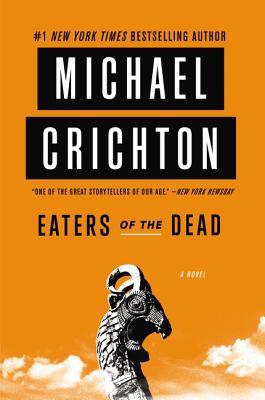
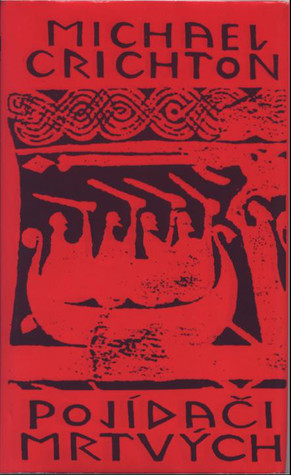
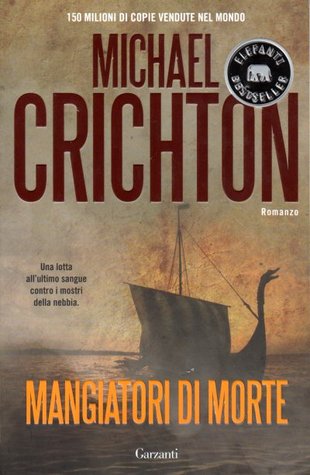
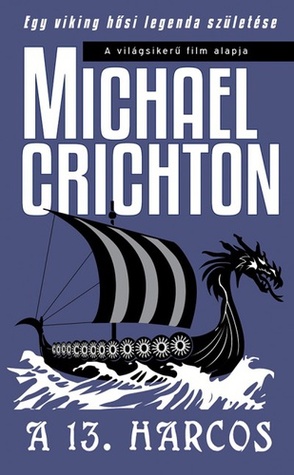
Eaters of the Dead by Michael Crichton
This week’s theme’s a toughie, so I’m bringing back a book I read long ago by the late Michael Crichton whose books I could always count on to be entertaining and smart. Eaters of the Dead is a historical fiction novel set in the early 10th century about a refined courtier from the Caliph of Bagdad who is enlisted by a party of rowdy Viking warriors to help them hunt a flesh-eating monster. It’s not the easiest of Crichton’s books to get into, since it’s written in the form of a journal and is essentially a retelling of Beowulf from an outsider’s point of view. It was also made into a movie called The 13th Warrior.
There are a lot of covers for this book, so I’m mostly going to concentrate on the nicer ones as well as those featuring longboats.
From left to right, top to bottom:
Alfred A. Knopf (1976) – Arrow (1997) – Ballantine (1998)

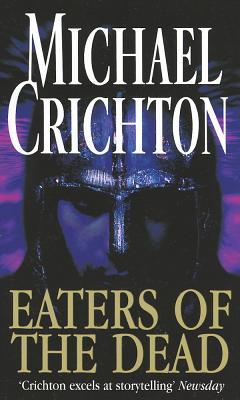
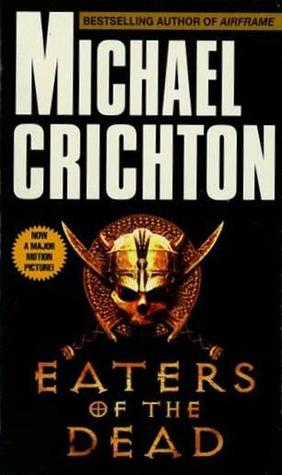
Ballantine (1993) – Harper (2009) – Ballantine Movie Tie-in (1998)


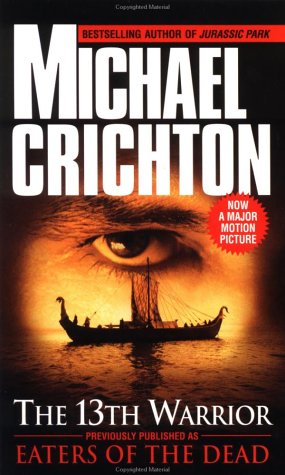
Harper Paperbacks (2016) – Avon (2006) – Czech Edition (1994)
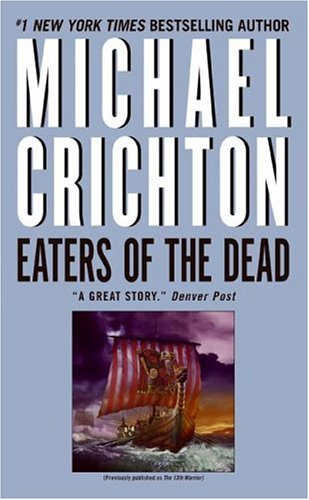
Spanish Edition (1988) – Estonian Edition (2009) – Polish Edition (1992)

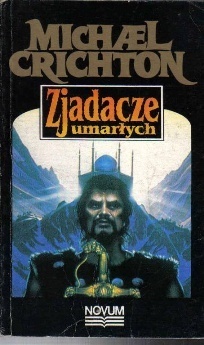
Portuguese Edition A (1997) – Portuguese Edition B (2008) – French Edition (2005)


Italian Edition A (2010) – Italian Edition B (2018) – Hungarian Edition (2015)

Winner:
Nothing’s really leaping out at me this week. But I have to choose one, so I think I’m going to go with the 2010 Italian edition because it’s the only cover that would make me grab the book off a shelf without knowing anything about it. It also like the image and art style because it looks like it could be an oil painting in a museum.
But what do you think? Which one is your favorite?
Book Review: Inspection by Josh Malerman
Posted on April 11, 2019 39 Comments
I received a review copy from the publisher. This does not affect the contents of my review and all opinions are my own.
Mogsy’s Rating: 1.5 of 5 stars
Genre: Horror, Mystery
Series: Stand Alone
Publisher: Del Rey (March 19, 2019)
Length: 384 pages
Author Information: Website | Twitter
While Inspection is only my second Josh Malerman, I’ve read enough and heard enough to know it is a crapshoot every time you pick up one of his books. With this author, you just never know what you’re going to get—an inevitable consequence of his creativity and unpredictable writing style. And unfortunately, this time I took a risk, but it didn’t pan out.
In a word, Inspection is strange. At the heart of this tale is a mad scientist couple seeking to raise a group of children to be the best that they can be, and in order to create these little geniuses, they have developed an experimental program called Parenthood and set up shop in the middle of the wilderness. As infants, twenty-six boys and twenty-six girls, each named for a letter of the alphabet, were placed in their respective facilities, separated by sex. Overseen by Richard, also known as D.A.D. to his charges, the Alphabet Boys have no idea that the girls exist—or any female, for that matter. Likewise, the Letter Girls who are tended by Marilyn, nicknamed M.O.M., are completely unaware of the existence of men or the outside world. Small differences in their education aside, both groups are raised without knowledge of the opposite sex, or any form of religion.
However, as the children gradually approach puberty, what happens when they start questioning their guardians and become more curious about the world around them? In the boys’ tower, 12-year-old J wants to be obedient and please his D.A.D., knowing that bad behavior gets children sent away to the “Corner” where they are never seen again. But at the same time, he can’t help but look out at the trees and imagine something more beyond. Meanwhile, in the girls’ tower, similar suspicions are starting to arise in K, whose boldness and intelligence has always led her to seek out answers. As expected, her quest for the truth eventually leads her to discover her male counterpart J, but it’s when their two storylines converge that things finally start to get interesting.
Still, as you can probably gather from the novel’s description alone, it’s complicated. To Malerman’s credit, his imagination knows no limits, and his ability to come up with these incredible ideas and push the boundaries of horror is what makes for fantastic reading for fans of the genre. I certainly don’t dispute the originality of Inspection, and I think that its premise makes for an intriguing thought experiment.
But that’s just it: this whole book is a singular great concept that sadly never materializes into anything I would call a coherent or engaging story. And yes, while I did say that things got interesting eventually, by the time it actually happens it was much too late. To call this book a slow-burn would be much too generous—it’s really more of a no-burn. If you were able to stay focused for the entire first half of the novel, then kudos to you. Unfortunately, I was unable to say the same, finding J’s depthless and rambling sections especially challenging to slog through. Only the occasional breaks provided by the perspective of Warren Bratt, an author hired to write all the “educational” books the Alphabet Boys read, kept me motivated enough to continue.
Also, calling this one a horror would be a bit of a stretch. It lacked the suspense and intensity I was expecting, which in turn fed into the slowness of the pacing. On another level, it put a distance between the reader and the characters, which made it even more difficult to get into the story. Things looked up once we were introduced to K’s perspective, possibly because I felt Malerman gave her a more compelling personality, but again, this improvement felt inadequate, coming in much too late in the game. The bloodbath of the ending was almost laughable in its absurdity and desperation, mainly because by that point, I just couldn’t bring myself to care anymore.
Honestly, I don’t know what could have made the book better. Its innovativeness and originality notwithstanding, the premise alone kind of dooms the story, I think. Some ideas are just better on paper than in execution, and I believe Inspection is a prime example. While this probably won’t prevent me from trying more of Josh Malerman’s books because I will always be drawn to unique stories, I’m sad to say I was sorely disappointed by this one.



 The BiblioSanctum