Top Ten Tuesday: Books About Books
Posted on August 20, 2019 40 Comments

Top Ten Tuesday was created by The Broke and the Bookish, a weekly meme that now resides at That Artsy Reader Girl. The meme first came about because of a love of lists. Who doesn’t love lists? The original creators also wanted their lists to be shared with fellow book lovers and to ask that we in turn share ours with them and connect with other book bloggers. To learn more about participating, stop by their page dedicated to it and dive in!
This week’s topic: Top Ten Books About Books
Since this week’s topic is all about our favorite tropes (commonly used themes or plot devices), I’ve decided to just focus with one today, and it’s one I find simply irresistible: Books about books! These are the stories that give books, libraries, and bibliophiles who love them a starring role. Is it any wonder that, as bibliophiles ourselves, we find them greatly appealing?
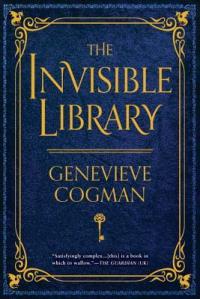 The Invisible Library by Genevieve Cogman
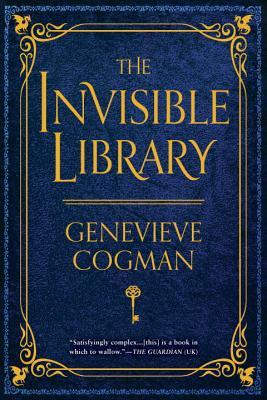
Speaking as someone who loves to read, I just can’t help but get these warm fuzzy feelings for books about libraries. After all, what could be better for an avid bookworm, than being immersed in a story about a place filled with books, books, and more books? Well, Genevieve Cogman’s The Invisible Library series does one even better. Oh, it features libraries, all right—interdimensional libraries, established across multiple worlds, all interconnected and run by a secret society of librarian spies! Collectively, this network is known as the Invisible Library, and their members are tasked with the utmost important mission: to procure and archive important works of fiction from all of the different realities, for the purposes of preservation and research. As soon as I heard the premise, I just knew I had to check it out! This novel ended up being an incredibly fun book which uses the idea of parallel worlds to great effect, allowing the reader to ponder its infinite possibilities. This particular story takes us to an alternate London with magic and paranormal creatures, but then who knows what might come next? The potential here is simply staggering. And of course, the Library itself is also fascinating concept, with librarians who can work magic by using a secret Language. (Read the full review…)
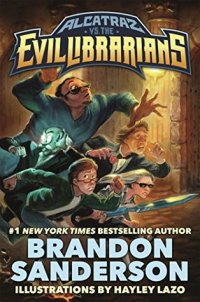 Alcatraz vs. The Evil Librarians by Brandon Sanderson

By the author’s own admission, this Middle Grade series is very different from his normal style and they tend to be a source of contention among his readers. But don’t let that stop you if you think this might be something you’ll enjoy! Personally, I jumped into this first book with reservations, but I ended up loving it to bits. Alcatraz vs. The Evil Librarians is the first in a fantasy adventure series featuring its eponymous protagonist who is narrating this book as its writer—“Brandon Sanderson” is just a front, you see. The real person behind this novel is a young boy named Alcatraz Smedry. He is thirteen years old and lives with his foster parents. He is also great at breaking things. It all began with an old bag of sand, mailed to Alcatraz on his birthday—the only inheritance left to him by his birth parents. But before you can even say “Gee, thanks mom and dad”, the bag is stolen by a member of the Librarians, an evil cult that knows the sand is more than it seems. For centuries, they have been controlling information and spreading lies to keep everyone blind to their dastardly plans of world domination, but now that Alcatraz has learned the truth of his birthright, he and his new allies are going to strike back at the heart of the enemy—by planning a daring mission to infiltrate the central downtown library. (Read the full review…)
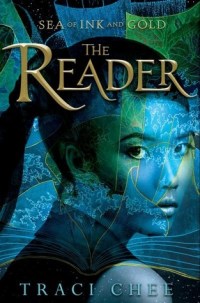 The Reader by Traci Chee

I was totally blown away by The Reader. Yes, I’d wanted to check it out after learning that it was a “book about books”, but what I got was simply far beyond anything I expected or imagined. The story introduces us to Sefia, a young girl traveling with her Aunt Nin through the wilderness of Kelanna. The two of them have been on the run for years, after the brutal murder of Sefia’s father at the hands of a mysterious group of assassins. They’ve survived so far by living off the land, hunting for meat and furs, trading at towns, and just plain stealing. That is, until one day Sefia makes a mistake, and attracts the attention of the guard. This also alerts the assassins who have been hunting them, and as a result, Aunt Nin is captured and taken away. For the next few years, Sefia tries to track down her aunt, using the only clue available to her—an odd, rectangular object that her father left to her after he died. Somehow, Sefia knows that this thing is the reason why she and Nin had been targeted. Later, our protagonist learns that this strange object is called a book, and struggles to remember the lessons that her parents had taught her when she was little. In a world where the written word means magic, and magic means power, there are those whose best interest lies in keeping society illiterate. But through painstaking effort, Sefia is able to piece together the mysteries of her past and begin comprehending the writing in the book, reading the stories within. (Read the full review…)
 Sorcery of Thorns by Margaret Rogerson
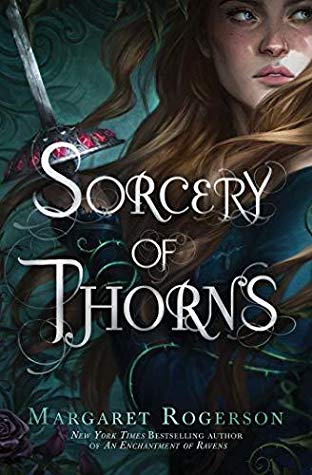
We begin this tale at the Great Library of Summershall, which has been a home to our protagonist Elisabeth Scrivener for as long as she can remember. Abandoned on its doorstep as a baby, she was raised among its shelves of magical tomes to be an acolyte by the librarians who work there. As a result, she grew up with a natural thirst for knowledge that frequently got her into trouble with her caretakers, who quickly became used to her way of being too curious for her own good. But one day, during her explorations of the library, Elisabeth stumbles upon a troubling discovery that points to a possible act of sabotage. An enchanted grimoire has been corrupted, turning it into a monster. However, with no other witnesses to the incident, Elisabeth herself is blamed for the crime and is consequently sent away to the city to face trial. Enter Nathaniel Thorn, the sorcerer tasked to escort her to the capital. Of course, while he’s heard of Elisabeth and her history with mischief, nothing could have prepared Nathaniel for the challenges to come. But with every new obstacle they face together, the two of them gradually warm to each other and learn how to cooperate. As they try to uncover the conspiracy threatening the Great Library, Elisabeth and Nathaniel are drawn into a dangerous web of lies and deceit. (Read the full review…)
 Ink and Bone by Rachel Caine
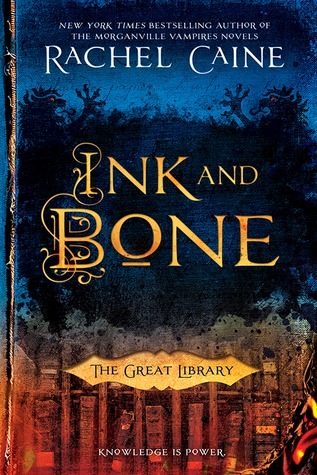
Ink and Bone tells a tale of alternate history. As we all know, the invention of the printing press had an enormous impact on humanity, revolutionizing the way information is acquired, processed, and spread. But what if that never happened? Imagine a world where Johannes Gutenberg’s creation never came to light, a world where great minds like him were systematically silenced every time a new proposal for a method of printing came close to being realized. Imagine no ink plates, no moveable type, no presses – all innovations that were deemed too dangerous by an all-powerful ruling class that seeks to gather and control all knowledge, deciding who should have access to it, how and when. Protagonist Jess Brightwell lives in such a world, where the only books that exist are original works or copies painstakingly written out by hand. By law they are all property of the Great Library of Alexandria, that powerful bastion of knowledge that never succumbed to destruction in this reality. The scholars of the Library strictly govern the distribution of books to the public, using a complex alchemical process to deliver content instantly to an individual’s personal Codex or blanks. As a result, traditionally bound books have become very popular on the black market, as has the illegal trade of smuggling them into the hands of private collectors and other rare book hunters. It’s risky, but the Brightwells have prospered in this business, and Jess’ father has decided to take it to the next level by sending his son into the Library’s service, hoping that having an inside man will benefit the family in the long run. (Read the full review…)
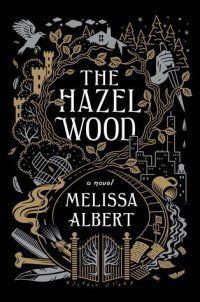 The Hazel Wood by Melissa Albert

Seventeen-year-old protagonist Alice Proserpine has never stayed in one place for long. Most of her childhood memories involve being on the road, staying with one family friend or another until her mother Ella decided that they had to move on. Alice has no idea, though she can guess from Ella’s tight-lippedness about her past that it might have something to do with the Hazel Wood, a magnificent home nestled somewhere in the woods of upstate New York. The estate belonged to Alice’s grandmother Althea Proserpine, an author who achieved cult celebrity with her book of fairy tales titled “Tales from the Hinterland”. It was probably no coincidence that no sooner had they received news of Althea’s death, Ella finally decided that they could settle down in the city and start a normal life. But Alice has trouble fitting in at the posh school she’s now enrolled in, where the closest thing she has to a friend is Ellery Finch, a somewhat geeky and awkward boy who happens to be an Althea Proserpine superfan. Alice, however, has never even read “Tales from the Hinterland”, for Ella had always forbidden her to seek out her grandmother or her work. NNut then one day, Alice comes home from school to find that her mother has been stolen away, and the only clue she left behind was a message: “Stay away from the Hazel Wood.” Getting a sick feeling that this has everything to do with her grandmother and her fairy tales, Alice turns to Finch, the only person she can think of who might be able to help her rescue Ella. (Read the full review…)
 The Night Ocean by Paul La Farge
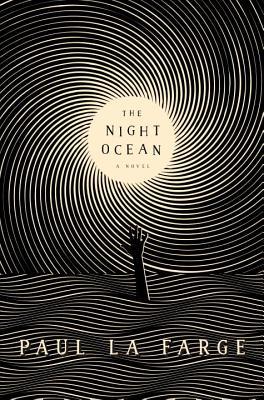
While The Night Ocean explores the life of H.P. Lovecraft, it does it in a most unconventional and bizarre manner, weaving fiction and history into a far-reaching chronicle that also ties in the lives of many other characters. It all started with The Erotonomicon. Said to be the erotic diary of H.P. Lovecraft but later claimed to be a hoax, almost all copies are said to be destroyed back in the 50s, but somehow Charlie manages to track one down. As a life-long speculative fiction fan and a writer by trade, Charlie wants to make his next book an investigative piece about the diary, a decision that ends up plunging him into an all-consuming obsession with Lovecraft, much to his wife Marina’s dismay. At the heart of Charlie’s project is a particular entry written in The Erotonomicon about a summer in 1934 involving Lovecraft and his friend Robert Barlow, a gay sixteen-year-old fan with whom the author stayed for a number of weeks while on a visit to Florida. Later known as the author and anthropologist R.H. Barlow, Robert also ended up collaborating with Lovecraft on several stories including “The Night Ocean”, which this book is named for. All told, I had a shockingly good time with this book. Because of its tangled nature, I doubt it going to be for everyone, but still, I highly recommend it if the description interests you. (Read the full review…)
 The Library at Mount Char by Scott Hawkins
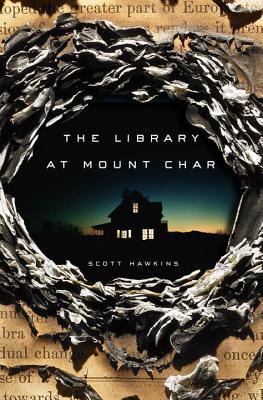
I’ve said it before and I’ll say it again: I don’t really do well with “weird.” I personally prefer stories that are more grounded, and anything that flirts with the abstract or pushes those metaphysical boundaries will give me pause. The first warning bells were raised when I read several reviews for this book mentioning a rampaging psychopath going on a killing spree clad in a purple tutu. Okay fine, maybe the bit with the purple tutu actually made me want to read this book even more. Still. Regardless, I was definitely prepared for some bizarre WTFery. Suffice to say, The Library at Mount Char isn’t exactly a book I can neatly summarize; the story is much bigger than the sum of its parts and it would be impossible to describe the scope of it in a couple paragraphs. Like I said, it’s weird, it’s strange, and more than just a little bit disturbing. If there’s a central character here, it would be Carolyn. She is a Librarian, but not in the way you would expect. Years ago, a mysterious man they call Father “adopted” twelve orphans and made them all his Librarians, much like apprentices of a sort, giving each child a catalog to study and become an expert in. Father’s methods were dark and cruel, and to his charges, he was like a god…a god they feared. But now Father is missing, and no one is quite sure what to make of the power vacuum he left behind. Just a word of warning here: this book contains extreme violence and gory content. If you know you don’t like that, best stay away. (Read the full review…)
 The Forbidden Library by Django Wexler
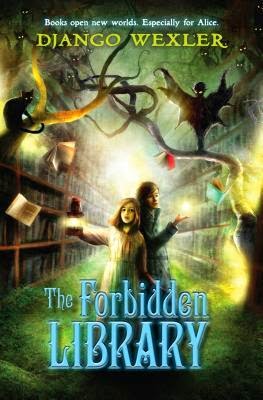
I’m a big fan of Django Wexler’s work, and well, I think it’s official: Wexler excels at pretty much any genre he tries his hand at. I was initially curious and maybe a little skeptical as to how he would handle a children’s novel, but this book was truly excellent. The story itself is fantastic, and as an avid bibliophile it’s hard for me to resist anything to do with libraries or reading about the wonderful books that take us to faraway places. As you’ll see, the metaphor of books as portals to new worlds is actually quite literal in this case. The plot follows main protagonist Alice, a young girl who discovers she has a very special power. Called “Readers”, people like Alice possess the ability to enter the worlds of certain books, which might seem great at first, until you realize these books serve as prisons to nasty creatures and the only way out again is if the Reader can defeat them. However, if a Reader is successful in defeating and binding a creature, he or she will escape and also have access to its abilities. Their spells are achieved by calling upon the creatures they control to channel it for them, and presumably a Reader can grow more powerful by defeating more creatures in “prison books” and taking control of their abilities. I thought this was a very sophisticated and inventive idea to explain how people like Alice derive their magical powers, and in many ways The Forbidden Library was more complex than I would have expected from a middle-grade novel. (Read the full review…)
 The Book of Hidden Things by Francesco Dimitri
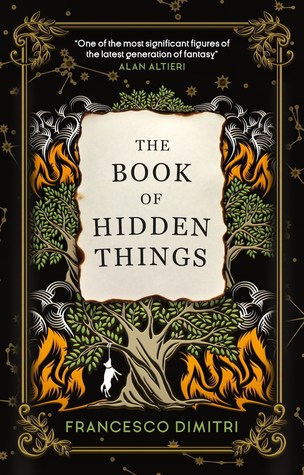
The Book of Hidden Things is a story about four childhood friends from a small seaside town called Casalfranco in southern Italy. After high school, they all left home to pursue their individual dreams, but before they parted, each of them agreed to a pact: that no matter what, the four of them will meet up in their hometown at the same place at the same time on the same date every year. Except this year, one of them doesn’t show. Concerned about their friend Art, the three others–Tony, Mauro, and Fabio–go around town, checking his house and asking people about him, only to find that Art has seemingly vanished into thin air. Worse, it appears he had been involved in some very dangerous activities just before his disappearance, like having an affair with a married woman, and growing and selling marijuana in an area where that kind of thing is heavily controlled by the local mafia. This unfortunately rules out going to the police for help. Instead, our three concerned friends take it upon themselves to carry out the investigation, discovering that Art had been in the middle of writing a book before he went missing. Whatever Art has gotten mixed up in, the answer seems to lie in untangling the strange kinds of research he has been doing for this secret project, a mysterious field guide called “The Book of Hidden Things.” I don’t think this book would be for everyone, but I for one found myself utterly captivated, and to say I was deeply invested in the plot and characters would be an understatement. (Read the full review…)
Book Review: The Warehouse by Rob Hart
Posted on August 19, 2019 24 Comments
I received a review copy from the publisher. This does not affect the contents of my review and all opinions are my own.
Mogsy’s Rating: 4 of 5 stars
Genre: Science Fiction, Thriller
Series: Stand Alone
Publisher: Crown (August 20, 2019)
Length: 368 pages
Author Information: Website | Twitter
I confess, I am a big Amazon consumer; I love my Prime shipping and being able to find great prices on practically anything at “the everything store”, saving me a considerable amount of time and money over the years. But sometimes, it does feel like every time I turn around the retail giant is rolling out yet another program to break into more markets, or they’re creating their own brands to compete against the very merchants they’re partnered with. No surprise, this has led to a lot of concerns, as evidenced by the accusations of Amazon becoming a monopoly, or the news articles with headlines like “Is Amazon Getting Too Powerful?” cropping up all over the internet.
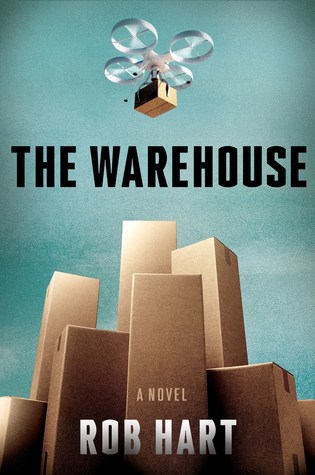
And it’s a fair question to ask as well as an interesting one to ponder, which I’m pretty sure is how the inspiration for this novel came about. The Warehouse by Rob Hart is clearly riffing on the tech giant with Cloud, a megacorp in the future that has completely consumed the American economy, becoming the only thriving company in this dystopian world ravaged by recession and high unemployment. Competition for work is fierce especially since the government can no longer be relied upon for any kind of social support, so naturally, desperate jobseekers turn to Cloud en masse in the hopes of scoring a position in one of their many sprawling warehouses. These facilities, in addition to serving as the company’s distribution and fulfillment centers, are also where employees eat, sleep and live when they’re not spending the long hours working on the floor. On top of room and board, workers also get healthcare and other benefits to go along with the job.
But the truth at Cloud is a lot more sinister. Through the eyes of three characters, readers are given insight into just what it’s like to work for the company. Paxton is the former owner of a once successful business which went bankrupt because it could not compete with the aggressive practices of Cloud. Now he finds himself employed by them, working as a security guard. Zinnia is another employee, though she’s at Cloud under false pretenses. Working as an undercover agent for a mysterious client, she has infiltrated Cloud to further her own agenda, one that involves getting close to Paxton to access the security privileges he has. And finally, every so often we’re also provided with a third perspective, that of Gibson Wells, the founder and CEO of Cloud himself. Delivering his messages via a series of updates to the public, he first reveals that he is dying, stricken with late stage cancer. Explaining that all he’s ever wanted was to make the world a better place, Wells begins telling his life story, describing the American Dream. From humble beginnings, he was able to become the most powerful man on the planet through sheer hard work and ingenuity. Meanwhile, the world is also holding its collective breath, waiting to see who he will name as his successor.
To start, the novel’s tagline of “Big Brother meets Big Business” is highly appropriate. Rob Hart’s depiction of a dystopian future where workers no longer have any rights and everything is about the bottom line is eerily disturbing, if for no other reason than how realizable the situation is if we no longer have the regulations in place to reign in large corporations. On top of that, Cloud is everywhere—in our media, in our houses, and in our faces. Consumers put up with it for the convenience, but for Cloud employees, working the job every day and trying to keep it is a like living through a waking nightmare. Every worker in a Cloud facility is monitored at all times and rated on a five-star scale like the inventory they process and ship out. And when you also live at the place you work, this means constant surveillance and absolutely no privacy.
I have to say though, for a thriller, The Warehouse did not pull me in immediately. The story is rather slow moving at the beginning, and overall very straightforward. Sure, the conditions at the Cloud facility were tense and disconcerting to read about, but they were also completely expected of a book like this which practically spells out its themes and intentions. For me, its initial appeal was mostly in the suspenseful atmosphere and mystery, of wondering what Zinnia is up to and what designs she has on Paxton. But for most of the novel, my favorite POV was Gibson Wells. You can tell Hart probably had a lot of fun writing the character. Gibson is a complicated man, and it was fun reading about his life even though you could tell there was something not quite right beneath that thick layer of charisma. He was a very well written character and surprisingly convincing, given the many aspects of his personality the author had to juggle.
But the second half of The Warehouse was undoubtedly its stronger half. The pace certainly picked up at this point, though I still wouldn’t call this one a standard thriller. And in the end, that might be one of the novel’s most appealing draws. I enjoyed that it read more like a sci-fi dystopian, one that features a fascinating premise that is at once imaginative and all too feasible, and I liked how the ending revelations pulled it all together.
Bottom line, a very good read, with a climax that was gripping and absolutely compulsive. I would recommend The Warehouse for fans of the genre, especially if you enjoy dystopian scenarios that get under your skin and make you think.


Novella Review: Ironclads by Adrian Tchaikovsky
Posted on August 18, 2019 24 Comments
I received a review copy from the publisher. This does not affect the contents of my review and all opinions are my own.
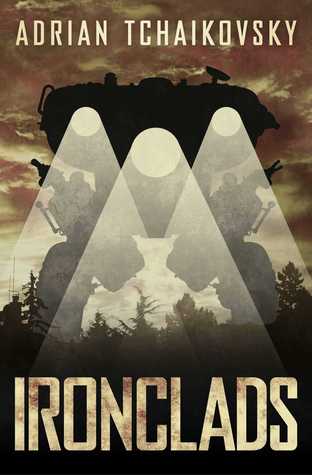 Ironclads by Adrian Tchaikovsky
Mogsy’s Rating: 3 of 5 stars
Genre: Science Fiction
Series: Stand Alone
Publisher: Solaris (November 7, 2017)
Length: 200 pages
Author Information: Website | Twitter
It’s always somewhat challenging to review a shorter work like this. Over the past year I’ve become quite a fan of Adrian Tchaikovsky which has led me to sample as many of his books as I found interesting, hence Ironclads. But considering the length constraints of a novella, developing a strong storyline and deep realistic characters can be tricky.
The book is set in a near-future version of our world in which the government of the United Kingdom has all but dissolved along with many other countries, bought up piecemeal by the powerful American corporate conglomerates. A new elite class has emerged, called the “Scions”—essentially the children of the super-rich who can afford the protection and security of mecha-like suits that make them practically invincible on a battlefield, which is pretty handy indeed with war raging all across the planet.
For the ordinary grunts like Sergeant Ted Regan, however, the fighting is as dangerous, brutal and ugly as it’s ever been. Now his squad has been called in for a special mission to investigate and track down a Scion who went missing somewhere in Scandinavia where the Americans are at war with the Nordic alliance. Together with his teammates plus a corporate liaison cast out by her bosses, Regan must trek across enemy lines to recover a lost rich kid whose supposedly impenetrable armor should have made him invulnerable.
As always, the author is a wizard with his world-building, constructing a strong framework in which to set this tale. The future in Ironclads is bleak, but also strangely alluring, in an imposing, terrifying kind of way. Yes, the inegalitarian conditions are horrific, but Tchaikovksy has also packed this dystopian world with a lot of impressive and awe-inspiring elements. In a word, his ideas are just so…well, cool. After all, it’s hard not to get excited over anything related to battle suits and giant robots and superhumans and the like.
Other aspects of the book are a bit light though, I’m afraid. Again, I understand the challenges of a novella when it comes to developing a solid plotline and full-bodied characters, but I didn’t feel like these areas were prioritized. Ironclads is heavy on the action, which isn’t necessarily a bad thing. But I also know that Tchaikovsky is capable of a lot more. Sure, the book is interesting enough and the action sequences help keep the momentum going, but at the end of the day, it’s nothing to write home about. Strip away the fascinating premise and the aforementioned cool world-building elements, and what you’re left with is a storyline that’s actually rather thin. And it’s the same with the characters. There’s not really enough time to explore them in any kind of keep or meaning way, so the narrative is forced to fall back on some predictable patterns, like old soldiering tropes and other clichés.
Don’t get me wrong, Ironclads wasn’t a bad book by any means, but let’s just say I knew what I would be getting when I went into this, and the quality of the experience ended up being in line with my expectations. There simply wasn’t enough time for the story and characters to develop into something more, and the heavy emphasis on action probably got in the way of that too. It’s also why I’m typically not big on novellas, though the excellent world-building by Adrian Tchaikovsky was definitely a highlight of this one. Fans will find Ironclads perfectly enjoyable, even if it’s not his most memorable work.

Book Review: This Is How You Lose the Time War by Amal El-Mohtar and Max Gladstone
Posted on August 17, 2019 26 Comments
I received a review copy from the publisher. This does not affect the contents of my review and all opinions are my own.
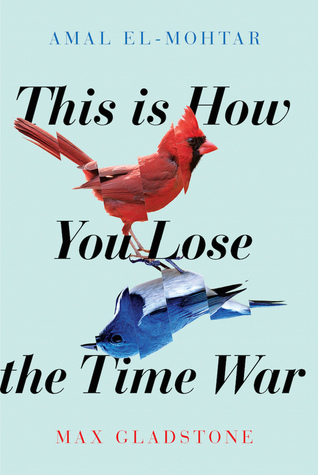 This Is How You Lose the Time War by Amal El-Mohtar and Max Gladstone
Mogsy’s Rating: 2.5 of 5 stars
Genre: Science Fiction
Series: Stand Alone
Publisher: Saga Press (July 16, 2019)
Length: 208 pages
Author Information: Amal El-Mohtar | Max Gladstone
Well, for such a short book, this one’s going to be a doozy to review. To be sure, This is How You Lose the Time War is a very imaginative novella, but the style and tone of it is so highly unusual, I doubt it would be for everyone. Honestly, when I picked this one up, I had expected to either love it or hate it—no in between. But in the end, I supposed it surprised me, both in the good way and the bad, and I’ll go into the reasons why in a little bit.
But first, here’s my best attempt at a summary of the story, which will be tough, because like I said, it’s not a very conventional one. At the heart of it is a relationship between two agents fighting on opposite sides of a time war. Red works for the Agency, a highly advanced technological society, whereas Blue represents the Garden, a world steeped in environmentalism and nature. The two factions have been locked in conflict for years, dispatching their skilled agents through time to influence and change the course of history, with neither side coming up on top. But then, in the aftermath of a battle, Red finds a note among the ashes, which reads: Burn before reading. Seeing it as the challenge it is, Red accepts, and what follows is, shall we say, a romance for the ages.
Most of this book is presented in a series of letters, running through a gamut of emotions as the communications between the two rivals turn from hostile to understanding and then to love. Back and forth their letters go between time and distance, sometimes taunting, sometimes playful, but always clandestine as to avoid detection by their superiors. Still, as careful as they are, somehow their secret correspondence has been discovered, and if caught, both Red and Blue will face deadly consequences.
As you can probably tell from this description, This is How You Lose the Time War reads less like a story and more like a conversation. Not surprisingly, the book also requires the reader to put themselves in a whole new frame of mind to appreciate it, focusing not so much on the plot and setting, but more on the characters as well as the tone and nuances of what they say and do. Not going to lie, for someone who prefers more conventional and linear storytelling styles, this was incredibly tough for me to do. I had several false starts with this book, picking it up and putting it aside a few times to wait until I was in a better mood for something so experimental and abstract. I wouldn’t strictly characterize this as strange, but it was definitely different.
I was also intrigued by the descriptions of the writing as beautiful, poetic and elegant, but sadly I was disappointed as I personally found it forced and distracting. Some of the prose was purple to the extreme, with the language in the letters coming across as overly mawkish and teeth-rottingly sentimental. Awkward plant metaphors and other descriptors that will make you scratch your head were thrown all over the place with shameless abandon. Interestingly though, it would seem the authors are cognizant of this at least to some degree, because there was even a comment by one of the characters poking fun at the flowery prose in their own letter. Still, regardless, the writing style really put me off, which took the wind out of the romance’s sails. As a result, I did not feel as connected to Red and Blue or their relationship the way a lot of other readers did, which is a shame.
Still, that the story—such as it was—even contained a romance was admirable. I think that was the element that surprised me the most, even if it did not resonate too well with me. But given a bit more time, and had the prose been a little more candid and less pretentious, I believe it would have worked. The premise of the book and idea between Blue and Red’s love story is just downright bizarre, but I do appreciate an unconventional romance. I was curious to know how it would unfold, and to see what other emotions will come into play as the relationship evolved. Ultimately. it was that interest which helped me get to the end.
But at the end of the day, I can only give This is How You Lose the Time War a middling rating because, well, it neither left me hot nor cold. I did enjoy the ending a whole lot, but overall my feelings towards the book were pretty ambivalent. While I was impressed with its innovative concept and can acknowledge its literary merit, the story’s style just wasn’t to my tastes at all. Red and Blue’s romance didn’t speak to me either, sad to say, though I’m sure the book will have no trouble finding an audience and lots of love.

Friday Face-Off: Feathers
Posted on August 16, 2019 20 Comments
Welcome to The Friday Face-Off, a weekly meme created by Books by Proxy! Each Friday, we will pit cover against cover while also taking the opportunity to showcase gorgeous artwork and feature some of our favorite book covers. If you want to join the fun, simply choose a book each Friday that fits that week’s predetermined theme, post and compare two or more different covers available for that book, then name your favorite. A list of future weeks’ themes are available at Lynn’s Book Blog.
This week’s theme is:
“The haft of the arrow had been feathered with one of the eagles own plumes.”
~ a cover that features FEATHERS
Mogsy’s Pick:
Antigoddess by Kendare Blake
After the plethora of options we’ve had to choose from for the past few weeks, I thought it would be a relief to go with a good old fashioned head-to-head today. That and I really couldn’t think of many books with “feather” covers, so this week we get Antigoddess by Kendare Blake, the first book of a Greek mythology inspired trilogy about ancient gods who walk among us–except now, they are dying. One by one, they are losing their immortality, meeting their ends in the most bizarre ways. Our protagonist Athena, for example, is experiencing her impending death by way of random feathers sprouting in her body like a form of aggressive cancer. This is making all the gods terrified, and in their desperation, some of are driven to insanity.
Now let’s take a look at the covers:
Tor Books Hardcover (2013) vs. Tor Books Paperback (2014)
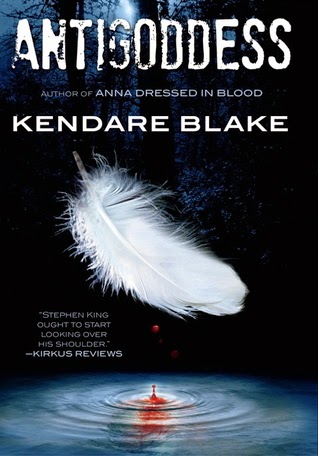
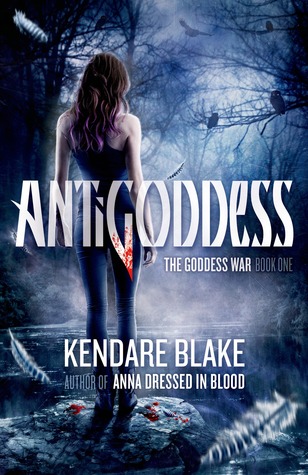
While both covers feature feathers, the original Tor Books cover shows a single white plume front and center, and after I read the book and found out about Athena’s plight, its significance certainly took on a more disturbing meaning. But I’ve never really liked this cover; it’s always seemed a bit plain to me. Maybe that’s why when Tor reissued the book in paperback they also gave it a brand spanking new cover. It screams “YA fantasy”, but I do still prefer it a lot more over the original.
But what do you think? Which one is your favorite?
Book Review: Aftershocks by Marko Kloos
Posted on August 15, 2019 24 Comments
I received a review copy from the publisher. This does not affect the contents of my review and all opinions are my own.

Mogsy’s Rating: 4 of 5 stars
Genre: Science Fiction
Series: Book 1 of The Palladium Wars
Publisher: 47North (July 1, 2019)
Length: 288 pages
Author Information: Website | Twitter
After how badly I crashed and burned with the last military sci-fi novel I picked up, I was a little nervous about starting Aftershocks. However, my worries were allayed as soon as I began reading the first chapter and was introduced to Aden, a former soldier who fought on the side that lost and who now finds himself held in a prison-of-war camp. Pulled into this scenario straight away, I learned more about this world as the story progressed: it has been five years since the brutal inter-planetary war ended with a peace treaty, beating back the once proud Gretians who had instigated the conflict. The system has been rebuilding itself ever since, though there is still a lot of bad blood and animosity among the different peoples. Many lives had been impacted by the war, and there are some survivors who will never forgive the Gretians for what they did.
Idina is one such person. She’s a Palladian with a grudge, now part of the occupying force on Gretia making sure history won’t repeat itself. For the past five years, patrols with her platoon have been quiet and uneventful, until one day they are ambushed by an unknown enemy. Idina watched seven of her squad mates die, and this was just one of more deadly attacks to come. In another part of the system, Lieutenant Commander Dunstan Park of the Rhodian Navy is in space guarding the seized Gretian fleet when suddenly, all the inoperative ships are destroyed in a series of explosions, billions of tons of firepower wiped out in an instant. It appears that the peace is not as stable as believed. And now, Aden receives the news from his prison overseer that his captivity is about to come to an end. Thousands of Gretian PoWs like himself are about to be released back into society, allowed to return to their homes. But Aden isn’t sure how well he’ll integrate back into the real world. After so many years, a lot has changed. On Gretia, their once proud military has been neutralized along with sanctions placed on their economy. Solvieg is a young executive who was just a child during the war, and after the fighting was over her father had the company he founded taken away from him. Now due to a loophole she can reclaim it back for her family, but with the current tensions in the political climate, she finds being in the public eye might not be the best idea.
Normally, I would have trouble reading an “afterwar” book. After all, it’s hard not to wish you were reading about the actual war instead of the aftermath, when all the fighting is done and all you’re left with is the tedious cleanup. But not so when it comes to Aftershocks. Marko Kloos looks at the question of “what now?” through the eyes of four very different but equally engaging characters, each of them providing a unique and interesting perspective. Military SF is a tough genre for me to begin with, but I was eased into the narrative with Kloos’ smooth writing style and his ability to make you care about the people you are reading about.
On the topic of characters, Aden was by far my favorite. Defeated but not broken, he offers a fascinating look into the mind of an ex-soldier who now must come to terms with the atrocities committed by the Gretians and make a new life for himself in a world that despises his people. But you might be happy to know his storyline is not as bleak as it sounds. A natural problem solver, Aden uses creative ways to get himself out of tight spots, taking readers on one adventure after another. My second favorite character was Idina, who isn’t shy about making her opinions on Gretians known. That said though, she’s no one-trick pony with a single feature that makes her special. Kloos’ characters are multi-layered and complex individuals who evolve with the story, as Idina illustrates. Even the other characters who might not have stood out as much, like Dunstan and Solvieg, have important roles to play, giving us a glimpse into other areas of the system as well as the culture and challenges in the post-war climate.
And that, in essence, is why Aftershocks worked so well for me. I loved Kloos’ world-building and how deeply everything felt connected. Our characters don’t live in a vacuum; they exist in a complex network of social and political interactions, with the environment affecting their actions and decisions. This to me is what good military SF is all about, not just long-winded descriptions of high-tech weaponry and war strategies. Yes, this book had its share of action and violence, but it was also balanced with incredible story development and character building. The setting gave me a sense of a living, breathing universe, one full of feeling and meaning. All of it made me want to know more.
Unfortunately though, Aftershocks closes rather abruptly, leaving us with a “to be continued…” ending and lots of unanswered questions. If you don’t like being teased like that, I would highly recommend waiting until the series is completed before reading this book. Still, while I won’t deny being slightly frustrated with the sudden cliffhanger, I thought it was worth it for the experience. This novel was a solid start to what promises to be a fantastic series, and I can’t wait for the sequel.
Waiting on Wednesday 08/14/19
Posted on August 14, 2019 16 Comments

“Waiting On Wednesday” is a weekly meme that first originated at Breaking the Spine but has since linked up with “Can’t Wait Wednesday” at Wishful Endings now that the original creator is unable to host it anymore. Either way, this fun feature is a chance to showcase the upcoming releases that we can’t wait to get our hands on!
Mogsy’s Pick
Smoke Bitten by Patricia Briggs (March 10, 2020 by Ace Books)
There may be talk about whether this series might be due for an ending, but until that day comes, I think some part of me will always be a bit excited for a new Mercy Thompson book!
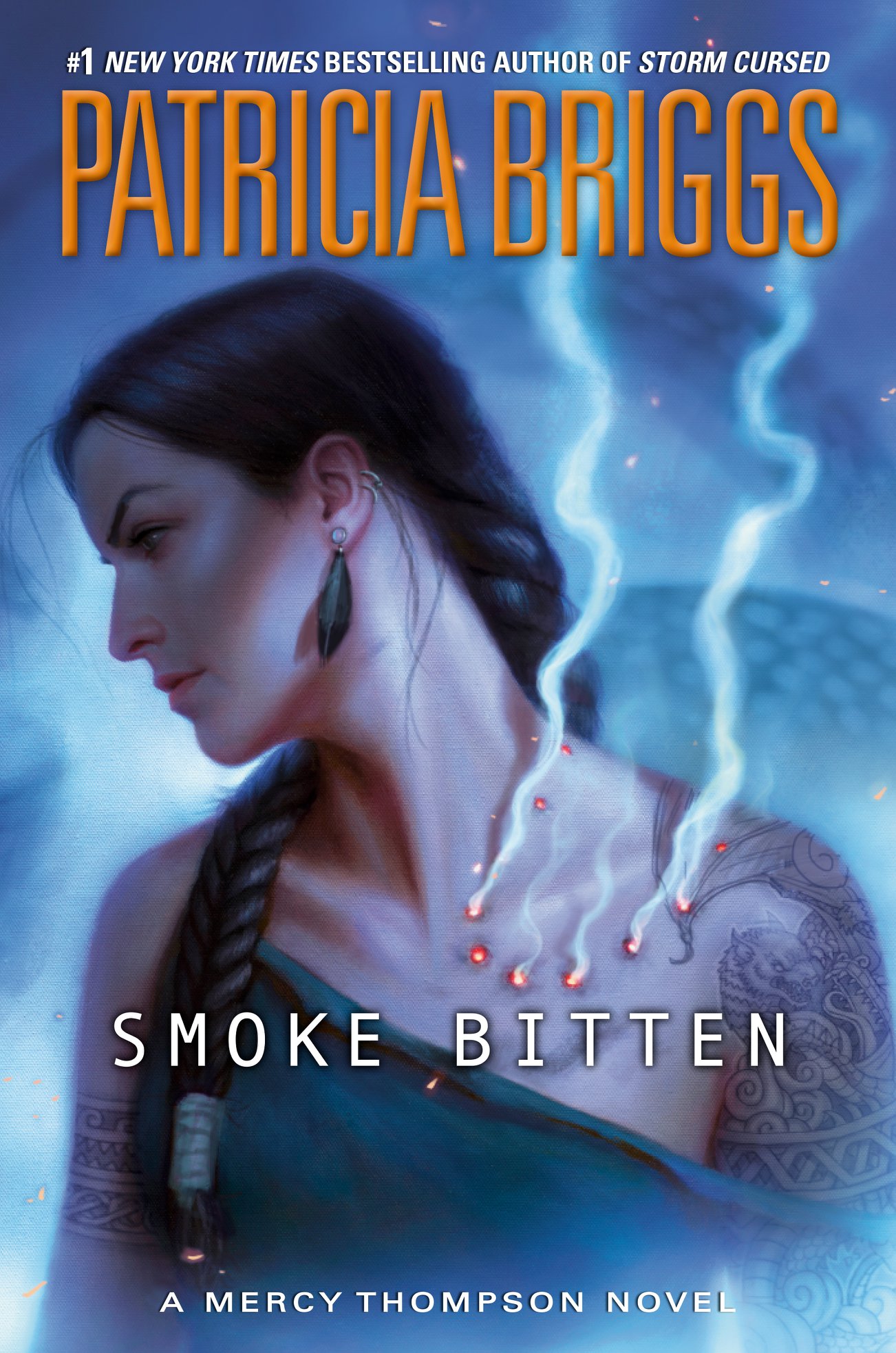 “Mercy Thompson, car mechanic and shapeshifter, faces a threat unlike any other in this thrilling entry in the #1 New York Times bestselling series.
I am Mercedes Athena Thompson Hauptman.
My only “superpowers” are that I turn into a thirty-five pound coyote and fix Volkswagens. But I have friends in odd places and a pack of werewolves at my back. It looks like I’m going to need them.
Centuries ago, the fae dwelt in Underhill–until she locked her doors against them. They left behind their great castles and troves of magical artifacts. They abandoned their prisoners and their pets. Without the fae to mind them, those creatures who remained behind roamed freely through Underhill wreaking havoc. Only the deadliest survived.
Now one of those prisoners has escaped. It can look like anyone, any creature it chooses. But if it bites you, it controls you. It lives for chaos and destruction. It can make you do anything–even kill the person you love the most. Now it is here, in the Tri-Cities. In my territory.
It won’t, can’t, remain.
Not if I have anything to say about it.”
Book Review: Do You Dream of Terra-Two? by Temi Oh
Posted on August 13, 2019 28 Comments
I received a review copy from the publisher. This does not affect the contents of my review and all opinions are my own.
 Do You Dream of Terra-Two? by Temi Oh
Mogsy’s Rating: 5 of 5 stars
Genre: Science Fiction
Series: Stand Alone
Publisher: Saga Press (August 13, 2019)
Length: 544 pages
Author Information: Website | Twitter
Not that such a great book deserves to be pigeonholed in any way, but Do You Dream of Terra-Two? by Temi Oh is a bit of a tough one to categorize. Like its title, there’s an element of the illusory, a pensive quality about it that inspires wonderment and hope, loses you in thought. Yes, it is a space adventure, but one that emphasizes the human drama rather than the action, though the plot also features a space disaster twist towards the end. In addition, despite the central characters being all in their early twenties and the tone of the novel giving off strong young adult vibes, the story tackles mature themes in a thoughtful, eloquent manner, increasing its cross-genre appeal. Whatever it is, something about this book just really spoke to me, because I loved it.
Set in a more technologically advanced version of our present world, the novel follows six young candidates for a highly competitive British space exploration program to establish a colony on far-flung Terra-Two, a pristine Earth-like planet possessing ideal conditions for life. Having spent years studying at the Dalton Academy for Aerospace Science since they were preteens, our six astronaut hopefuls have trained their hearts out for the opportunity, beating out millions of others across the country. But just days before the launch of their space vessel Damocles, a sudden tragedy strikes, altering the course of the mission forever. At the last moment, a backup candidate named Jesse is tapped to be the hydroponics replacement on the program, joining five other exceptional prodigies: Harry, pilot extraordinaire and commander-in-training; Poppy, language expert and a natural spokeswoman for the group; Eliot, a budding engineer; and sisters Astrid and Juno, two extremely talented and brilliant young women who have worked their entire lives for Terra-Two, though for very different reasons. Along with a few adjustments to the command crew which consists of a team of older and more experienced astronauts, the mission is saved and allowed to move forward as planned.
However, with emotions already raw from having to leave their loved ones behind and knowing that they will all be living within the tight confines of a spaceship for the next twenty-three years, the original five young candidates aren’t feeling particularly welcome towards the newcomer, resenting him for the way he joined their program. With such a long journey ahead of them, Jesse hopes that he will eventually be accepted, though getting used to life aboard Damocles is proving to be a rough process, with homesickness, self-doubt, depression and other personal fears plaguing each of them in turn.
As you can probably tell, Do You Dream of Terra-Two is a story more about relationships and the human experience than it is about space travel, even though most of it takes place aboard a spaceship. Admittedly, the science fiction elements are on the lighter side, glossing over much of the physics and specific details as it relates to Terra-Two—including how scientists learned so much about such a distant world and the technology to reach it—by simply providing the explanation that science has come a lot further in a much shorter period time in this universe than in ours. It also doesn’t explore the implications of this on other aspects of culture and society, leaving those areas hazy and indistinct.
At the same time, there’s an element of the mystical surrounding Terra-Two, going back to the namesake of our characters’ prestigious academy, Tessa Dalton. Long before anyone even knew to look for the planet, Tessa had visions of this untouched utopia in her dreams, and later when scientists found Terra-Two, they couldn’t help but notice the uncanny similarities to her descriptions. Consequently, some called Tessa a prophet, while others chalked her clairvoyance up to nothing more than mere coincidence and a chemical imbalance in the brain. But this background knowledge also sets a precedent for the dreams and visions our characters experience in this book, leaving readers speculating why it is happening and what it could mean.
But like I said, the focus is mainly on the dynamics between the six young adults of our crew, all of them starry-eyed, lacking in self-discipline and life experience, barely out of their late teens—what could go wrong? Except, of course, all these developments make for a fascinating, engaging read. The book addresses a number of topics including the yearning for social acceptance, dealing with feelings of inadequacy, mental health issues as a result of crushing expectations, relationship woes, and fears of the unknown. True, all of these are relatively common themes in coming-of-age fiction, but to the author’s credit, she tackles these conflicts in a way that doesn’t trivialize or overplay very real problems for the sake of sensationalism. The members of our young crew are all phenomenally fleshed out and fully realized, each one of them a complex individual with his or her own unique dreams, desires, and motivations. Just when you think they start to fall into predictable patterns, you learn something new about them that makes you change your perspective and view them in a whole new light.
As you know, stories that are first and foremost concerned with characters are very much my cup of tea, so despite some of its more vague and unconvincing aspects, I still felt a deep and irresistible connection to this novel. I also think it’s important to look at the big picture and recognize the kind of story Temi Oh wanted to tell. After finishing this book, I believe the concept of Terra-Two and the premise of traveling there was merely a backdrop for what truly mattered—the people and the lessons they learn about themselves.
And so, it’s probably no surprise that I, being a huge fan of books devoted to telling human stories, absolutely adored Do You Dream of Terra-Two? If you enjoy character-oriented tales with interesting relationships dynamics and lots of personal growth, then this is one you can’t afford to miss. A genuinely beautiful, emotional, and inspiring novel, this one moved me deeply and kept me riveted from beginning to end.

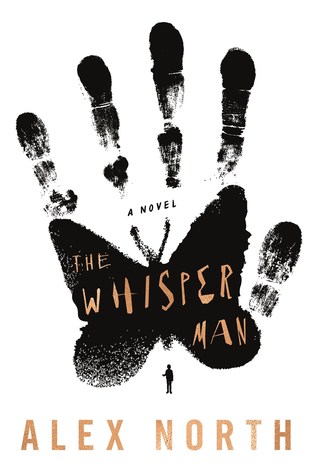
Book Review: The Whisper Man by Alex North
Posted on August 12, 2019 16 Comments
I received a review copy from the publisher. This does not affect the contents of my review and all opinions are my own.
Mogsy’s Rating: 3.5 of 5 stars
Genre: Mystery, Thriller
Series: Stand Alone
Publisher: Celadon Books (August 20, 2019)
Length: 368 pages
Author Information: Website | Twitter
Crime mysteries are another subgenre of thrillers that I’ve been checking out lately, and since stories about cold cases and serial killers are my jam, I knew I had to check out The Whisper Man by Alex North. This book has been getting a ton of attention lately, with lots of hype around it surrounding it and even a movie deal, so who can blame me for being curious.
In the small town of Featherbank in Britain, terrorized residents thought they could finally move forward and feel safe again after Frank Carter also known as “The Whisper Man” was caught and put behind bars. In the years he was active, the notorious child killer kidnapped and murdered five little boys. That was more than ten years ago, and life was just starting to return to normal there when the unthinkable suddenly happens—one evening, the parents of 6-year-old Neil Spencer realize that their son never made it back home after a short walk. But with Frank Carter in prison, it couldn’t be The Whisper Man this time, could it? Or is the town under threat from another serial killer, possibly a copycat or an accomplice of Carter’s who has remained on the loose after all this time?
Meanwhile, Tom Kennedy is a recently widowed author who has just moved to Featherbank, hoping to start a new life with his young son Jake. Seven years old and gifted with a vivid imagination, Jake has become even more reserved after his mother’s death, struggling with bullies and retreating into conversations with imaginary friends. But instead of getting better, Jake remains troubled at school and in the eerie old house they’ve moved into, telling Tom about the whispering he hears in the dark. After a frightening incident in the middle of the night, the police who are called are immediately alerted to some of the warning signs in Jake’s story. For Detective Inspector Pete Willis, the details are especially disturbing, for he was the one who worked on The Whisper Man case. One of the victims has never been found, and to this day Willis is still trying to persuade Frank Carter to reveal the location of the remains. Now in light of the disappearance of Neil Spencer and Jake’s terrifying encounter, it’s become even more imperative for the detective to solve the connections and catch the culprit.
If you’re looking for a nice atmospheric thriller, The Whisper Man will certainly deliver. But after reading it, do I think it’s worth the hype? Well, I think that would depend on the kind of reader you are. This past year I’ve been cutting my teeth on similarly themed books by C.J. Tudor, Lesley Kara and many others, so after a while you start to spot some of the same tonal patterns and plot elements—killer in a small town, difficult parent-child relationships, the imaginary friend angle, a dark thread of the supernatural lurking beneath the surface, etc., etc., etc. That is to say, at a certain point the novelty starts to wear off, and I think I’ve reached that place. I mean, I found nothing inherently nothing wrong this novel; it was well written, well plotted, and well presented. And yet, the story didn’t grip me like I thought it would. Perhaps I was expecting too much, but I found the overall plot of The Whisper Man to be fairly predictable (I saw at least two of the major twists coming a mile away) and subsequently, it’s hard not to feel underwhelmed.
Though of course, your mileage may vary. Obviously, seeing clichés everywhere and being able to predict certain outcomes caused me to enjoy this one a bit less, but there’s still a lot to love here. Alex North uses multiple perspectives to craft this tale, threading them together so they form a tight, cohesive narrative that is spot on with timing. I wouldn’t call this fast-paced exactly, but the story never feels slow because there’s always something interesting happening on the page. Character development is layered on gradually, as the events unfold. Clues are also doled out meticulously at just the right times. I also enjoyed the thick and moody atmosphere, which is so important for a story like this, and the supernatural element was also a welcome touch. Like I said, I have no complaints at all regarding the technical aspects of this book; North is clearly no stranger to the craft of writing, having previously written more crime novels under a different name according to his publisher profile, and I do like his style.
If only The Whisper Man had held more surprises for me, I probably would have adored this book. That said, I didn’t think it was bad at all, even if I don’t love it enough to gush about it. For a crime mystery, it had its interesting moments and provided an entertaining journey, and I had a good time. I can definitely see this one being a hit for many.

YA Weekend Audio: Soul of the Sword by Julie Kagawa
Posted on August 11, 2019 27 Comments

I received a review copy from the publisher. This does not affect the contents of my review and all opinions are my own.
 Soul of the Sword by Julie Kagawa
Mogsy’s Rating (Overall): 4.5 of 5 stars
Genre: Fantasy, Young Adult
Series: Book 2 of Shadow of the Fox
Publisher: Harlequin Audio (June 18, 2019)
Length: 15 hrs and 43 mins
Author Information: Website | Twitter
Narrators: Joy Osmanski, Brian Nishii, Emily Woo Zeller
Shadow of the Fox was one of those rare YA novels that lived up to all my expectations and incredibly, its sequel was even better. Soul of the Sword expands upon its predecessor in all respects, including some of my favorite features like the world-building and the exciting quest narrative.
Picking up from the end of the first book, the story returns to our characters continuing their mission to deliver the Dragon Scroll safely to the Steel Feather temple to prevent their foes from possessing its great powers. But now, there’s hitch in their plans. Without spoiling too much from the previous novel, let’s just say that our half-kitsune protagonist, Yumeko, has her own task at hand, one involving a new enemy, the demon Hakaimono who has possessed the soul of Kage Tatsumi of the Shadow Clan. To save her dearest friend, Yumeko must find a way to protect the scroll and drive Hakaimono back into the sword in which the demon had been imprisoned for centuries.
Meanwhile, poor Tatsumi watches helplessly as Hakaimono leaves a trail of death and destruction all the way to the Forest of a Thousand Eyes, where lurks another source of great evil. The Master of Demons will do anything to get his hands on the Dragon Scroll, including making a few unsavory alliances if it means being granted a powerful wish—an opportunity that happens only once every thousand years.
Soul of the Sword is the best kind of sequel, the ones that introduce many more conflicts and drive the stakes up even higher. The book is organized into several parts, with the first picking up from the Shadow of the Fox without missing a beat, drawing readers back into the magic and allure of this fascinating world inspired by Japanese mythology. I also found the plot to be more streamlined and less scattered, which gave a boost to the overall momentum.
But although I enjoyed the first part immensely, the second part was where things really took off. I make it no secret that I loved the quest narrative aspect from the previous novel, and I was thrilled when I realized that Soul of the Sword was going to run with this theme in earnest. Sure, I had fun with those little “side adventures” in Shadow the Fox, but with this sequel, you get the feeling that things are getting real. In addition to taking a more focused approach, the story also carries a more serious tone this time around, with the themes becoming darker and more mature. And yes, this includes more action but also more violence, and the author is certainly hot holding back when it comes to the graphic depictions of bloody death and gore.
And then there are the characters. While I had a good time with Okame, Reika, Daisuke and all the others here, for me it has always been and always will be Yumeko that’s my favorite. Her character has come a long way from the first book, where she started off as a sheltered acolyte who has spent her whole life in a temple raised by monks. She has learned a lot more about life’s realities since then, and I loved seeing her kitsune side shine through on occasion whenever she plays her little tricks. And yet, it also fills my heart with warmth that she has retained a lot of her innocence and the sincere, impassioned way she views the world. I admire how she gets the importance of the big picture, as well as her fierce loyalty to her friends.
Of course, I would also be remiss to end this review without mentioning the world-building, which was wonderful. Once again, Julie Kagawa has delivered an enchanting blend of high fantasy and Japanese cultural and historical elements. I especially enjoyed the mythological aspects, the way this book packs even more tales of creatures and demons of legend into the mix. Yumeko also got to display more of her powers, which I was happy to see, because I felt that was one big that that was lacking from the first book. So, if you’ve been hoping for more kitsune or shapeshifter action, you’ll be pleased!
Overall, I couldn’t be happier with the way Soul of the Sword turned out; it was everything I wanted in a sequel and more. As well, I was fortunate enough to listen to an audio review copy, which was also the format I received for Shadow of the Fox. I was quite impressed with the performances by narrators Brian Nishii, Joy Osmanksi, and Emily Woo Zeller from the first book, so I was glad they all returned to reprise their roles. This one wouldn’t have been half as immersive if it weren’t for their brilliant performances, so kudos to the three of them!

More on The BiblioSanctum:
Review of Shadow of the Fox (Book 1)


 The BiblioSanctum