Waiting on Wednesday 03/10/21
Posted on March 10, 2021 13 Comments

Waiting On Wednesday” is a weekly meme that first originated at Breaking the Spine but has since linked up with “Can’t Wait Wednesday” at Wishful Endings now that the original creator is unable to host it anymore. Either way, this fun feature is a chance to showcase the upcoming releases that we can’t wait to get our hands on!
Mogsy’s Pick
The Desert Prince by Peter V. Brett (August 3, 2021 by Del Rey)
Woohoo, it feels like I’ve been waiting for this forever! Set fifteen years after the demons war, we return to the same world as the Demon Cycle where a new darkness rises again, and I definitely want to be there to see it happen!
 “Fifteen years have passed since the end of the war with demons, creatures of darkness who have hunted the night and plagued humanity since time out of mind. The heroes of humanity’s hour of need have become legend, and those who remain struggle to escape their shadows.
Olive Paper and Darin Bales have grown up in this new peaceful world. Demons have been all but destroyed, but dangers still lurk for the children of heroes.
Olive, Princess of Hollow, has her entire life planned out by her mother, Duchess Leesha Paper: a steady march on a checklist to prepare her for succession. The more her mother writes the script, the more Olive rails against playing the parts she is assigned.
Darin faces challenges of a different kind. Though free to choose his own path, the weight of legacy hangs heavy around his shoulders. It isn’t easy being the son of the man people say saved the world. Everyone expects greatness from Darin, but the only thing he’s ever been great at is hiding.
But when Olive and Darin step across the wards one night, they learn the demons are not all gone, and those that remain hunger for revenge. Events are set in motion that only prophecy can foresee as Olive and Darin seek to find their own places in the world in time to save it again.”
Book Review: Forget Me Not by Alexandra Oliva
Posted on March 9, 2021 18 Comments
A review copy was provided by the publisher in exchange for an honest review. All opinions are my own.
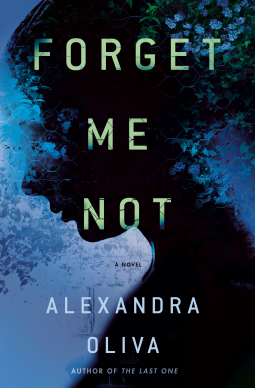 Forget Me Not by Alexandra Oliva
Mogsy’s Rating: 4 of 5 stars
Genre: Science Fiction, Suspense
Series: Stand Alone
Publisher: Ballantine (March 2, 2021)
Length: 320 pages
Author Information: Website | Twitter
The story of Forget Me Not was a twisted journey that took a while, and at times it was dark and difficult. Ultimately though, I have to hand it to Alexandra Oliva. Gradually, she manages to knit together a complex collection of themes and messages, pulling off a spontaneous transformation to deliver a stunning conclusion that is both heartfelt and thought-provoking.
The story follows Linda Russell, a young woman whose mentally and emotionally unstable mother who only birthed her and her twin for one very specific purpose—to try and replace another daughter, Madeline, who died years before. Growing up on a rural compound, Linda was raised in isolation and prevented from making any contact with the outside world. Her only companion was her sister, Emmer. The two of them were taught only to act like Madeline, talk like Madeline, become Madeline…until the day her mother finally snapped with the realization that her experiment to recreate her lost daughter was a failure, and that neither Linda or Emmer were true clones that will ever replace her.
From that day on, the girls were left to fend for themselves. But eventually, at the age of twelve, Linda finally escapes the compound, only to make headlines and become known as “Clone Girl” when social media catches wind of the incident and her tragic background. Traumatized and confused after witnessing something she was never meant to see, all Linda knows is that she is now alone, though she desperately wants to find out what happened to her twin. With the help of her estranged father and a counselor, Linda is set up in an apartment in Seattle where she can start life afresh with a new identity. Slowly, she begins to learn her way around the city, exploring technology and the internet, gaining the interpersonal skills needed to function in society. All goes well until her old house burns down, once more catapulting Clone Girl into the spotlight and reigniting public interest in her story. Not too surprisingly, the event causes Linda to feel more and more untethered, making her question the relationships she has built since being on her own, including her budding friendship with next-door neighbor Anvi.
Imagine growing up for the first twelve years of your life cut off from the rest of civilization, and the mother you so dearly loved and trusted only cared for you because she wanted to shape you into someone else. Imagine also being told over and over that you were not good enough and punished through no fault of your own. It’s enough to break anyone, let alone a young child. This is Linda Russell’s backstory, and the first half of the novel explores the young woman she became after escaping that neglect and abuse. Despite being rejected and tossed aside, she has found a new strength to continue, though not without considerable difficulty. Trust comes hard to Linda, and she cannot understand concepts like altruism or solidarity since she had never experienced them for herself. She also gets nervous in crowded places and especially in conversations with new people due to her lack of knowledge in reading social cues, and every day she lives with the anxiety of saying or doing the wrong thing.
In the first half, Oliva also begins establishing a number of plot threads as well as filling in the details of this futuristic world. On the one hand, this made the earlier parts of the novel feel rather slow, though on the other, I really enjoyed how the narrative was able to capture Linda’s state of mind in a way that felt genuine and believable. Some of the more fascinating moments involved the character’s exploration of technology, and her subsequent observations about the internet and social media had a slight feel of a cautionary tale. A highlight of this section was also Linda’s relationship with Anvi, not to mention how enlightening it was to view our protagonist through another’s eyes.
And then came the good part: what began as a steady, measured climb to the midway point turned almost immediately into a breakneck downhill race to the finish as everything the author had painstakingly built up in the first half comes to fruition. There were definitely a lot of twists—some I saw coming, some I didn’t. All I will say is that the slow-burn beginning was absolutely worth it, and that the revelations and conclusion will make you glad you stayed on until the end.
Following Alexandra Oliva’s debut The Last One, I must say I had some rather high expectations for Forget Me Not. Now that I’ve read it though, I won’t ever hesitate to pick up another one of her books. This was a pretty special novel, and for fans of suspense who appreciate character-focused stories and who won’t mind a slower ramp-up, this is one you shouldn’t miss.


Audiobook Review: Black Coral by Andrew Mayne
Posted on March 8, 2021 19 Comments
I received a review copy from the publisher. This does not affect the contents of my review and all opinions are my own.
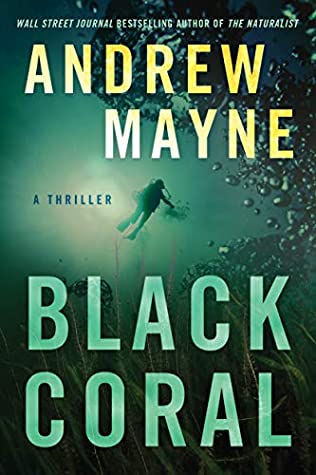
Mogsy’s Rating (Overall): 4 of 5 stars
Genre: Mystery, Thriller
Series: Book 2 of Underwater Investigation Unit
Publisher: Brilliance Audio (February 16, 2021)
Length: 9 hrs and 13 mins
Author Information: Website | Twitter
Narrator: Susannah Jones
Coming to this from Andrew Mayne’s The Naturalist series, Underwater Investigation Unit is definitely his tamer and more traditional police procedural crime thriller, though of course with the added hook of solving water-related mysteries and diving for evidence recovery in submerged crime scenes.
Black Coral is the second novel in the sequence, but can easily be enjoyed as a standalone. Once more we follow protagonist Sloan McPherson into the murky depths of South Florida’s water system as the newly minted Underwater Investigation Unit is called out to salvage a car wreck at the bottom of a pond. While diving near the accident site, however, Sloan inadvertently stumbles upon a second vehicle, this one much older. After hauling it out of the water, authorities determine it to be a van belonging to four teenagers who disappeared thirty years ago following a rock concert. Friends and family had wanted to believe the kids simply ran away, but from the waterlogged van’s contents emerges the tragic truth: all this time, the four teens had been dead inside, victims of an apparent accident.
But to Sloan, the evidence just doesn’t add up. Found among the van’s remains are suspicious items that make her question how its passengers really died. Every instinct is telling her there had been a fifth person there, whose identity and whereabouts are currently unknown. As the pieces start falling into place, Sloan realizes with a dawning horror that her investigations may be pointing to a possible serial killer still on the loose, whose activities have thus far remained undetected for the past three decades or more. Convincing others of her theory will take some work, though. So far, the only support she has is from her colleague Hughes and their boss George Solar, and with the UIU still in its fledgling state, this mystery might prove too much for them to handle.
Over the past few years, Andrew Mayne has become my go-to author for a guaranteed good read when it comes to the mystery and thriller genres. While I won’t lie, I’d been hoping for more of his attention to go to his Theo Cray series, Sloan McPherson has nonetheless been establishing herself as a worthy contender for new fan favorite. She’s an awesome character who is a diamond in the rough, flawed but easily relatable. Never one to back down from a challenge or to allow anyone to make her feel ashamed of where she came from, she knows her family is messed up but she’s also fiercely loyal to them and will do anything to be a good parent and a role model to her adolescent daughter. As for her position with the UIU, Sloan takes pride in her work and loves her job, vowing to seek justice for the victims and to never stop doing the right thing.
For what it’s worth, compared to some of the other works I’ve read by the author, this series also feels relatively more self-restrained and down-to-earth. That said, it’s important to note that we sacrifice none of the action and suspense for the heavier police procedural elements. The pacing definitely comes across as more methodical and slower to build, though the energy remains strong throughout, helped along by the numerous unexpected plot twists and red herrings. Personally, I also enjoy crime thrillers revolving around cold cases and catching serial killers, so for me Black Coral was a compulsive read even without the fascinating underwater and diving angle. Plus, from a giant alligator named Big Bill to hunting for bodies in the Everglades, the cultural and geographical characteristics of the south Florida setting had a huge role in making this one a memorable experience.
Bottom line, in Black Coral we have another winning mystery thriller from Andrew Mayne. I have yet to read a book by him I dislike, and fans of the author and the genre should take care not to miss the Underwater Investigation Unit books for a unique and compelling take on detective work and crime solving.
Audiobook Comments: Susannah Jones reprises her role as narrator for this sequel, and again she delivers a fantastic performance as the voice of Sloan McPherson. She most definitely has the ideal voice for a strong lead. These audiobooks are highly recommended.
More on The BiblioSanctum:
Review of The Girl Beneath the Sea (Book 1)
YA Weekend: A Dark and Hollow Star by Ashley Shuttleworth
Posted on March 7, 2021 14 Comments

I received a review copy from the publisher. This does not affect the contents of my review and all opinions are my own.
 A Dark and Hollow Star by Ashley Shuttleworth
Mogsy’s Rating: 3 of 5 stars
Genre: Fantasy, Young Adult
Series: Book 1 of A Dark and Hollow Star
Publisher: Margaret K. McElderry Books (February 23, 2021)
Length: 512 pages
Author Information: Website | Twitter
Lately, I have become much more circumspect about the YA books I pick up, especially debuts. However, there were several things going for A Dark and Hollow Star which made me decide to throw caution to the wind and just go for it.
But first, this book is an urban fantasy style story about the Fae. For hundreds of years, they have lived among humans in secret, using their powerful magics to successfully shield and hide themselves even in a bustling, built-up metropolitan city like Toronto, where the Unseelie have actually established their Court. Unfortunately, that fine balance is now in jeopardy, threatened by a series of ritualistic killings pointing to a possible serial killer on the loose—one who is specifically targeting Ironborn, the half-fae.
An Ironborn herself, Arlo Jarsdel has cause to worry. Even though she is descended from the royal fae bloodline through her mother, her father is a mortal, and her human heritage means she has yet to manifest any magical powers with which to defend herself. Caught between the two worlds, Arlo doesn’t feel like she belongs anywhere, and for the longest time, her only close friend was her cousin. However, that was before she meets Nausicaä, a mysterious Fury who had been exiled to earth for an unforgivable crime. But in truth, Nausicaä is on a mission of revenge, hunting the real culprit, and after the Fury saves her life, Arlo agrees to help her in her quest.
Meanwhile, out in the Nevada desert where the fae of the Seelie Court dwell, Prince Vehan is determined to prove his worthiness for the crown he must one day wear. He and his guardian Aurelian Bessel have caught wind of the Ironborn killings and believe that they are part of larger plot to further destabilize the peace between the fae and mortal realms. Together, Arlo, Nausicaä, Vehan and Aurelian must prevent the coming war from tearing their worlds apart.
As always, I’ll begin with the positives, and undoubtedly one of the strongest aspects of A Dark and Hollow Star is the world-building. While faeries in urban fantasy stories are nothing new, the sheer number of factions and characters involved in this book ensured a steady flow of interesting court dynamics and intrigue. It’s also clear that the magical systems and rules for Fae powers were inspired by certain gaming mechanics, particularly tabletop and roleplaying games, which are close my heart.
And speaking of topics that are near and dear to me, it thrilled me how so much of this novel took place in Toronto and read like a love letter to my hometown. The author made the setting come to life with her rich descriptions of the diverse neighborhoods and cultures of the city, displaying a natural talent for creating a breathing, pulsing milieu.
Now, as for what I thought could have been better, the characters immediately come to mind. Like so many new authors, I think Ashley Shuttleworth mistakenly believes that having good diversity equates to having good character development. The queer and transgender rep notwithstanding, I found these characters rather bland. When it comes to their personalities, they’re virtually indistinguishable from of sea of other angsty brooding YA protagonists that are riddled with clichés, not to mention they’re your typical boilerplate depictions of the Fae.
Then there’s the plot, which was full of bloat. Clocking in at more than five hundred pages, this book is significantly longer than your average YA novel and urban fantasy, and no wonder, given the amount of unnecessary repetition and overly elaborate description. The ham-fisted infodumps and other problems that stemmed from this resulted in unstable pacing, which also affected my enjoyment.
All in all, A Dark and Hollow Star was a mixed bag, with as many flaws as there are strengths. On the whole, overused character tropes and genre clichés made this one a run-of-the-mill YA fantasy, though to its credit, the book did get a lot of important things done right and will no doubt appeal to readers who are specifically looking for those aspects which it has to offer.

Bookshelf Roundup: 03/06/21: Stacking the Shelves & Recent Reads
Posted on March 6, 2021 30 Comments
Bookshelf Roundup is a feature I do every weekend which fills the role of several blog memes, like Stacking the Shelves where I talk about the new books I’ve added to my library or received for review, as well as It’s Monday! What Are You Reading? where I summarize what I’ve finished reading in the last week and what I’m planning to read soon. Mostly it also serves as a recap post, so sometimes I’ll throw in stuff like reading challenge progress reports, book lists, and other random bookish thoughts or announcements.

Received for Review
My thanks to the publishers and authors for the following review copies received, and be sure to click the links to their Goodreads pages for more details and full descriptions!

This one is new to me, but my thanks to 47North and the awesome team at Wunderkind PR for an ARC of Bacchanal by Veronica Henry, described a Depression-era historical fantasy about a mysterious traveling carnival. Now that it has officially caught my attention, I hope I’ll have time this spring to get to it!
With thanks also to Subterranean Press for an ARC of Collectibles edited by Lawrence Block which is a collection…about collecting! We all know how obsessive some collectors can get about their collections, and this one’s described as an anthology of stories about the darker side of an impulse we all share.
I’d also like to thank Titan Books for this gorgeous finished copy of All the Murmuring Bones by Angela Slatter, a magical novel of the Mer. I’ll be reading this one soon and featuring a review later this month, so keep an eye out for that.
Up next, it’s a parade of new arrivals from the kind folks at Orbit! I was very excited to receive an ARC of The Shadow of the Gods by John Gwynne, the first novel of the author’s new series called The Bloodsworn Saga. I also received a finished copy of The Unbroken by C.L. Clark, which I’m planning to read soon. I’ve been seeing lots of great reviews for it already, so I’m eager to get started. And finally, earlier this week I also received an ARC of Son of the Storm by Suyi Davies Okungbowa, a West-African inspired fantasy of magic and political intrigue. I’m very curious to try it!
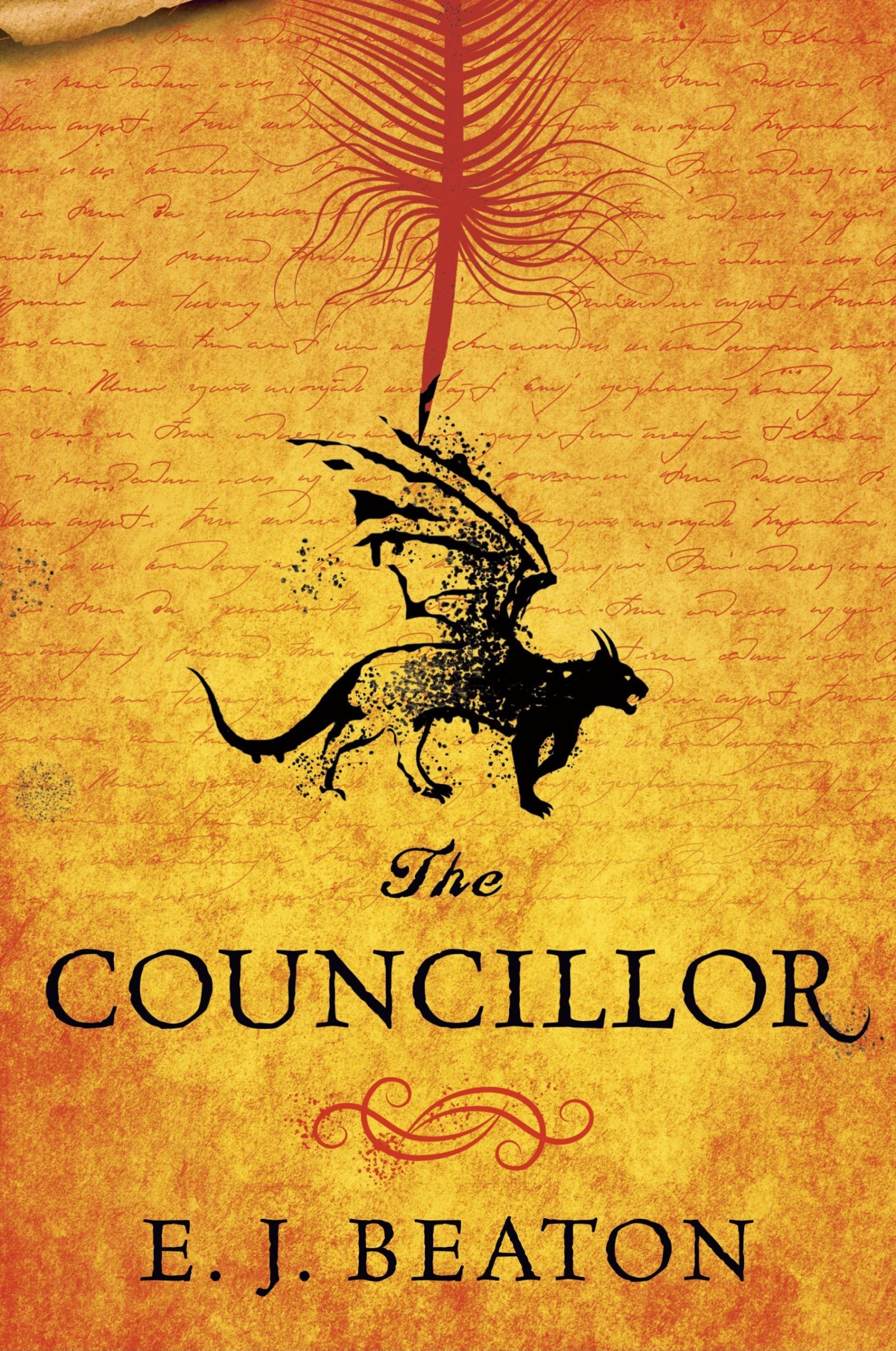
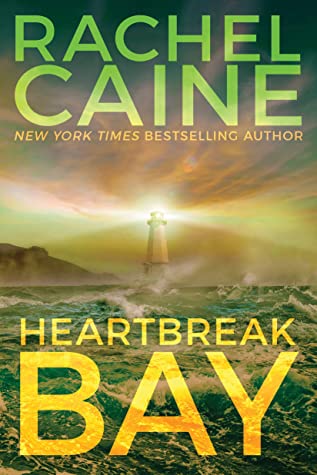

And wow, I guess I really went to town on the audio review copies this week. With thanks to Brilliance Audio, I received listening copies of The Councillor by E.J. Beaton and Heartbreak Bay by Rachel Caine. The latter is the final book of the Stillhouse Lake series as well as the last book the author completed before she passed, so I imagine it’ll be a bittersweet experience.
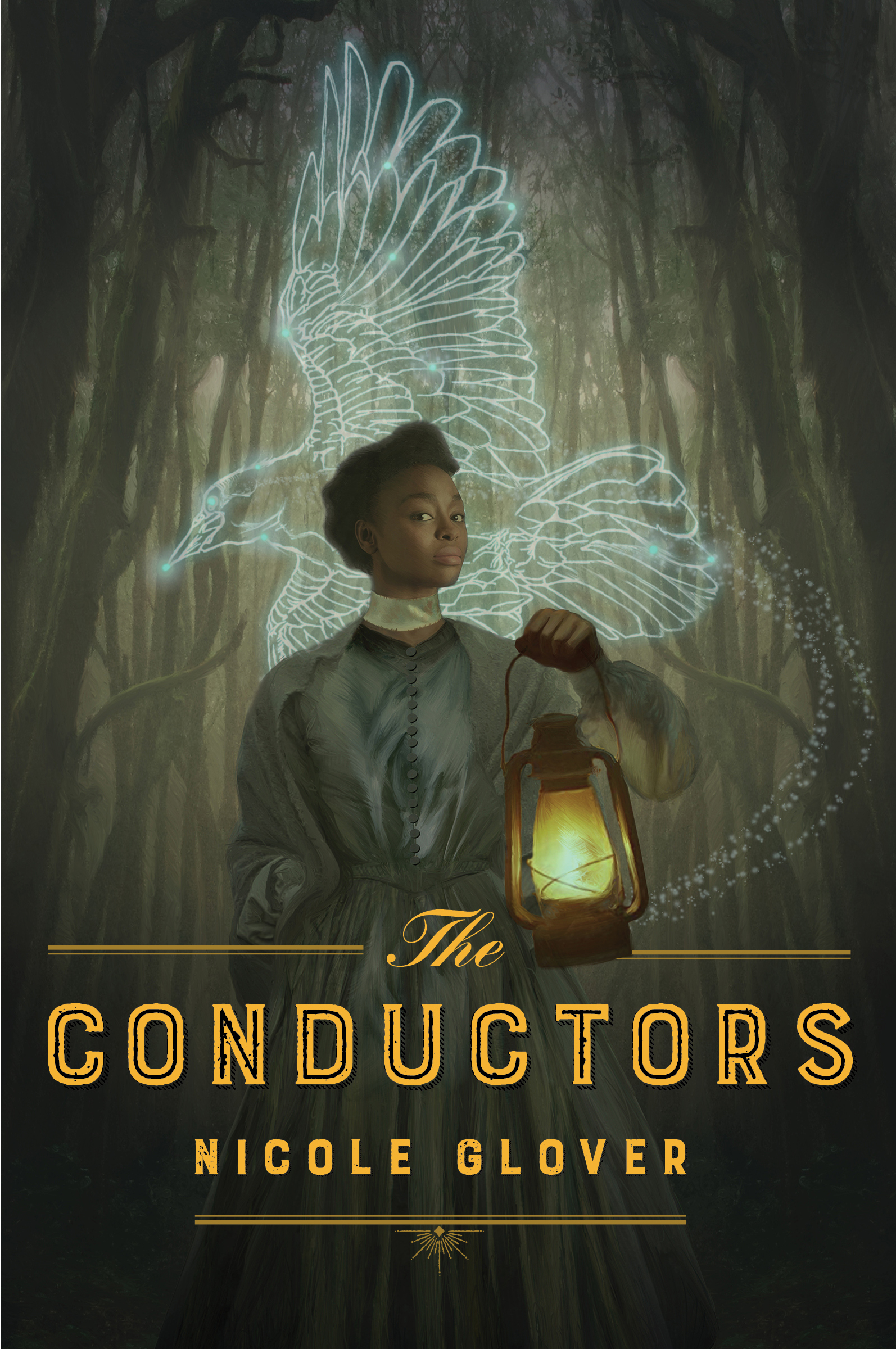
From Blackstone Audio, I also received The Conductors by Nicole Glover, a fantasy mystery set in post-Civil War Philadelphia. I knew very little about this book at first, but I knew the moment I read the synopsis there was no way I could resist snagging a review copy.
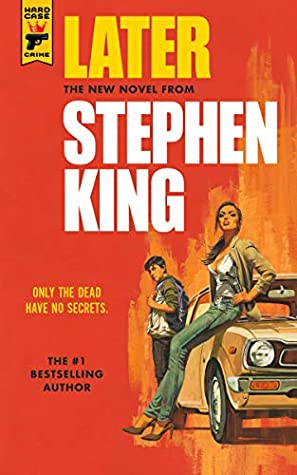
Also huge thanks to Simon & Schuster Audio for a listening copy of Later by Stephen King, a brand new novel of terror and secrets from the master of modern horror. I’ve already heard the story described as having echoes of his other books like IT or The Outsider, so boy I am just itching to get started.
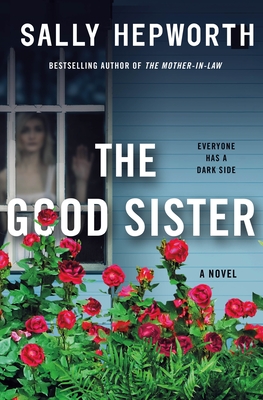
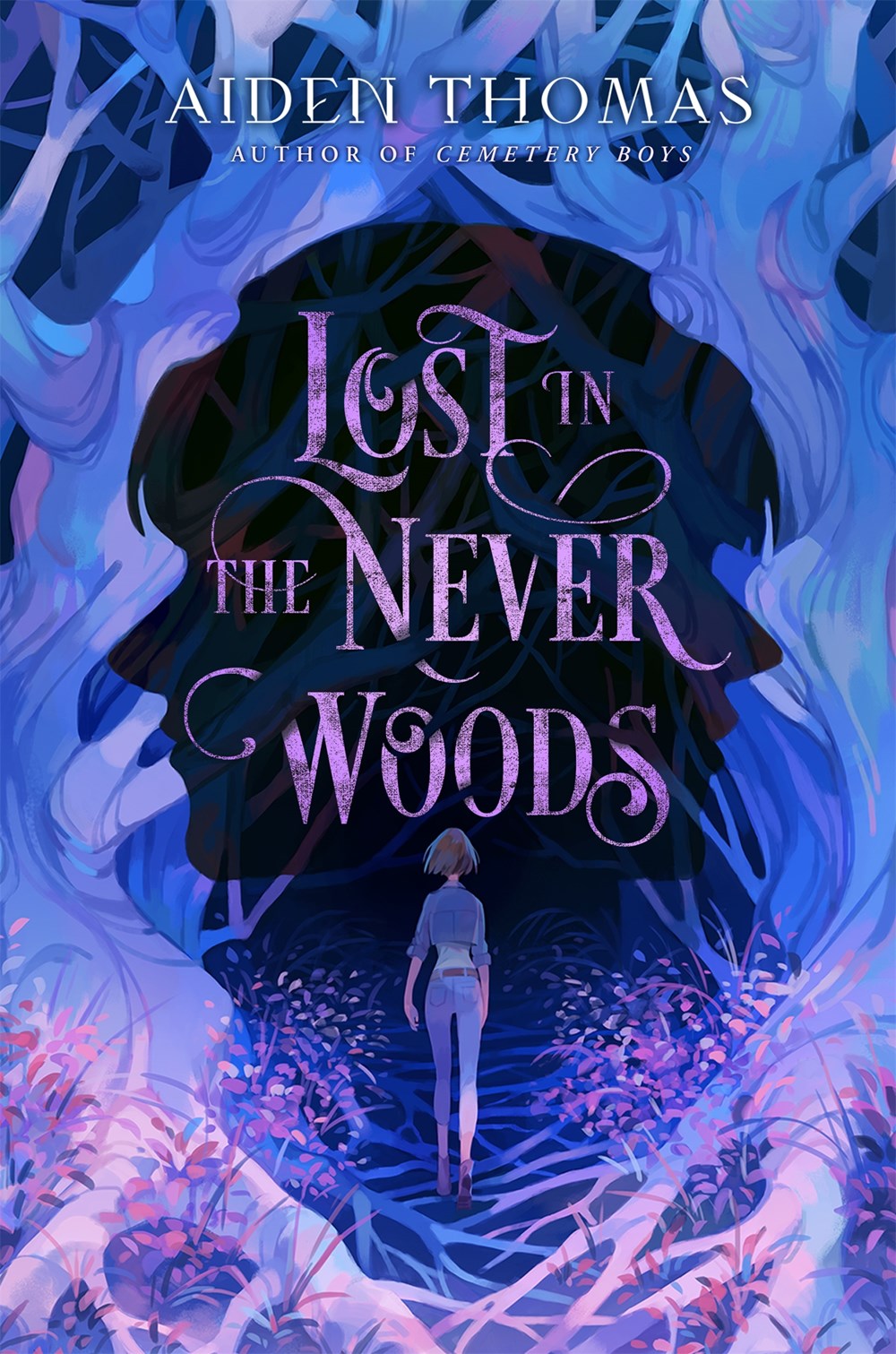
My thanks also to Macmillan Audio for ALCs of The Good Sister by Sally Hepworth, a mystery thriller about twin sisters who share a very big secret, as well as Lost in the Never Woods by Aiden Thomas, an dark, haunting retelling of Peter Pan.
And finally, thank you to Random House Audio for a listening copy of Star Wars: Victor’s Price by Alexander Freed, the third book of the Alphabet Squadron series. I still need to get to the second book, but my goal is to read all the new Star Wars canon novels at some point, so I’ll be catching up soon.
Reviews
Night of the Mannequins by Stephen Graham Jones (4 of 5 stars)
The Echo Wife by Sarah Gailey (4 of 5 stars)
The Strange Case of Eliza Doolittle by Timothy Miller (4 of 5 stars)
Guest Posts

This Week’s Reads
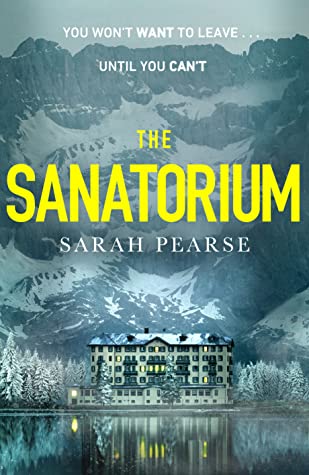
Have you heard of or read any of the books featured this week? What caught your eye? Any new discoveries? I hope you found something interesting for a future read! Let me know what you plan on checking out. Until next time, see you next Roundup!
Friday Face-Off: War
Posted on March 5, 2021 21 Comments
Welcome to The Friday Face-Off, a weekly meme created by Books by Proxy! Each Friday, we will pit cover against cover while also taking the opportunity to showcase gorgeous artwork and feature some of our favorite book covers. If you want to join the fun, simply choose a book each Friday that fits that week’s predetermined theme, post and compare two or more different covers available for that book, then name your favorite. A list of future weeks’ themes are available at Lynn’s Book Blog.
This week’s theme is:
~ a cover of a book about WAR
Mogsy’s Pick:
Rhythm of War by Brandon Sanderson
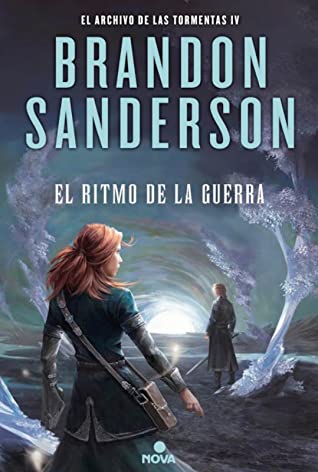
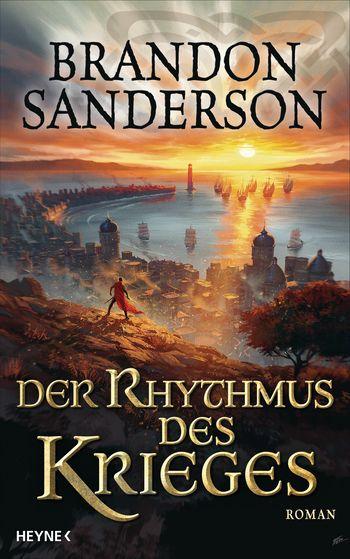
Today’s theme celebrates March as the month named for Mars, the Roman god of war. The interpretations allowed for this theme were many, from a Roman style cover or a cover featuring god or gods to simply a book about war. I’ve decided to go this latter route, and even picked a book with “War” in the title! Rhythm of War is the fourth book in the Stormlight Archives, and as the title implies, a brutal war has been raging for quite some time, almost to the point where the constant violence has become a way of life.
Let’s take a look at the covers:
From left to right:
Tor Books (2020) – Gollancz (2020)


Spanish Edition (2020) – German Edition (2020)
Winner:
I confess, I’m just a tad biased towards Michael Whelan’s art (and just get a load of the full wraparound cover!) but I have to say these are all winners!
But what do you think? Which one is your favorite?
Guest Post: “The Hidden Side of Darkness: The Second Bell and The Monsters of Slavic Folklore” by Gabriela Houston
Posted on March 4, 2021 11 Comments
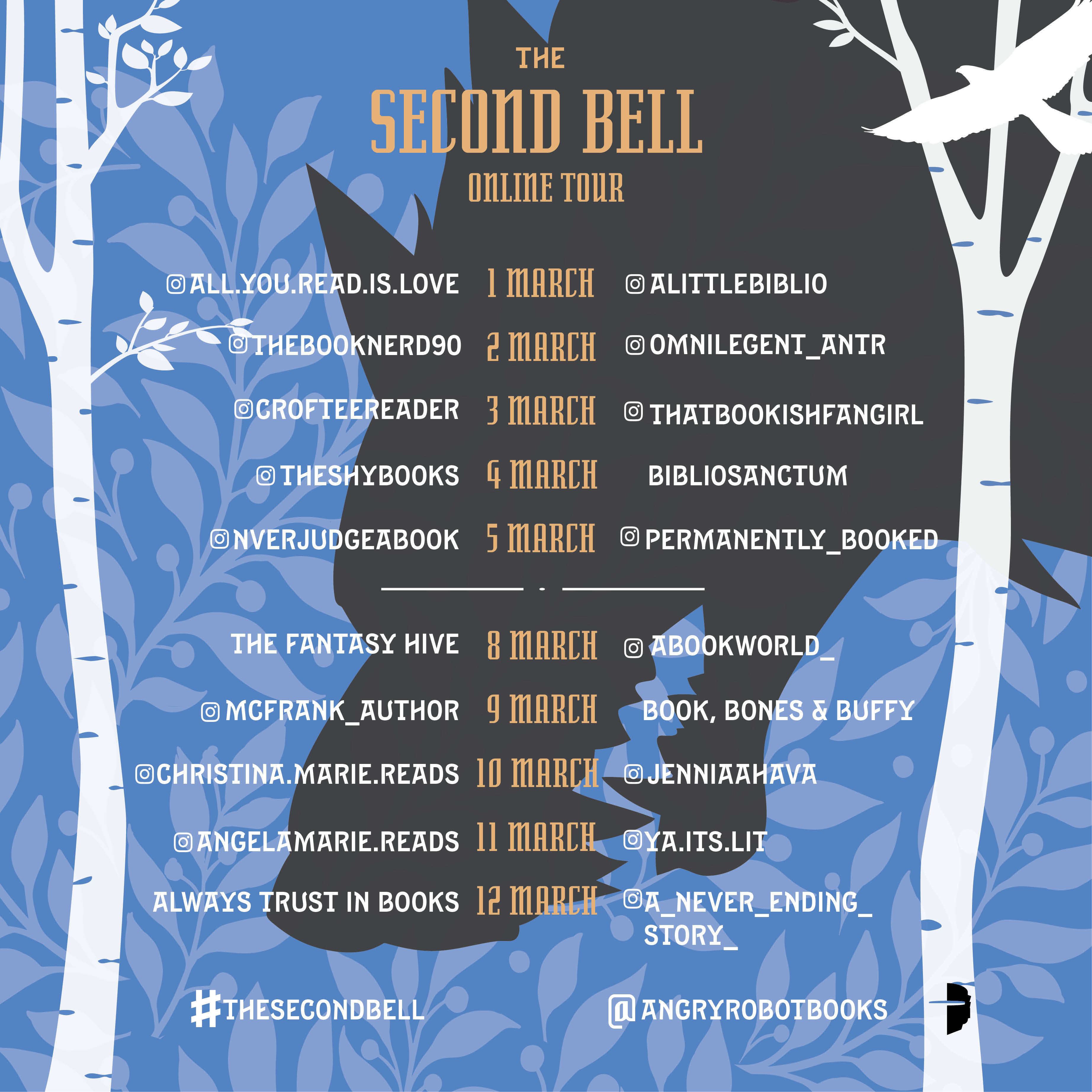
Today, we’re excited to welcome author Gabriela Houston to the BiblioSanctum as part of a blog tour to celebrate the release of The Second Bell, her new fantasy novel described as a Slavic His Dark Materials meets The Bear and the Nightingale. A folklore retelling exploring the themes of family and the strength and empowerment of personal belief, the book is published by Angry Robot and is due to hit shelves March 9, 2021 so mark your calendars! In the meantime, please check out this guest post by Gabriela and also be sure to visit the other stops on the tour!

THE HIDDEN SIDE OF DARKNESS: THE SECOND BELL AND THE MONSTERS OF SLAVIC FOLKLORE
by Gabriela Houston
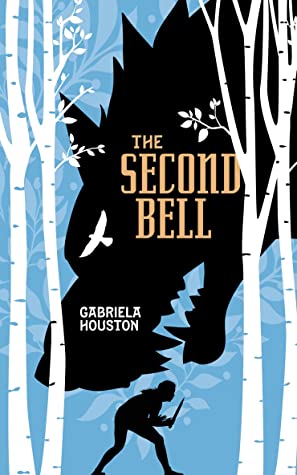 The world of Slavic folklore is without mercy, with little sentiment. The rules must be obeyed, where every new day is a battlefield against the dark forces of the spirit world. Nature is to be respected and feared.
Growing up with Slavic stories and folklore, I have always been fascinated by the dark, the hidden. Slavic mythologies and what we have left of the pre-Christian Slavic traditions, are invariably dark, disturbing even, ever mindful of the dangers lurking just beyond the trees, on the wind and in the water.
A Rusalka might pull you underwater, a Poludnica might cause a stroke, the Kikimora with her screechy scream might drive you mad.
Even the less bloodthirsty creatures, while they might not pull out your heart or gnash your bones, are hardly harmless and most often are at best indifferent to the lives of the humans.
Benevolent magic, where it exists in the old stories, is distinctly transactional and often resembles The Godfather-style “protection”. Lasownik, the dangerous spirit guardian of the woods, might overlook your presence in his forest if you bring him bread and eggs. Should you be less thoughtful, Lasownik has a wide repertoire of catastrophes to send upon you, including paralysis, sickness and a confusion that can stop you from ever going home again. The cat-shaped Gumiennik would protect the untwhrashed wheat, but that very touchy spirit will destroy the whole harvest or even burn down your barn should you disrespect it.
Perhaps those creatures were something else originally. But while we can mourn the lack of written records and reliable and consistent sources for the ancient Slavic customs and pantheons, on the other hand a world of stories and beliefs that grew from the bastardised and twisted mythologies gave birth to something perhaps altogether more interesting. After all, villains hold a fascination angels can only dream of.
And so my bedtime books told the stories of a forlorn topielec (a spirit of a drowned man), who in his search for love hatches a plan to drown a local beauty, except he is thwarted by her crafty mother and so left broken hearted; of a crow, who threatened a giant father with blindness by stealing his only eye so he’d give his only daughter to the crow to marry.
When a monster can be a hero, and their sadness and motives, however unreasonable, form the centre of the story, it creates a fascinating sort of duality to the storytelling, forcing the reader to, if not empathise, then to at least understand the villains while hoping they don’t succeed at the same time.
That ability to see beyond the mask of the monster; to counteract humanity’s capacity for othering, to me is at the heart of Slavic stories. Danger can be beautiful, monstrosity can be understood, commonality can be found.
When I was writing The Second Bell, I thought of how the strigas, in Slavic stories presented as pretty straightforward monsters with vampiric proclivities, and like most monsters residing in the shadows, hidden from view, are said to begin as children born with two hearts. And while we can remain emotionally detached from such a monster while they remain hidden, will this detachment fall apart when we meet its mother.
Danger is still there, but once humanity creeps in, once the bonds between a mother and daughter, between friends and a community are created and exposed, the darkness falls away, and a new story can be told.
ABOUT THE AUTHOR
Gabriela was born and raised in Poland, brought up on a diet of mythologies and fairy tales. She spent her summers exploring the woods, foraging and animal tracking with her family. At 19, Gabriela moved to London to study English Literature and obtained an MA in Literature and Modernity. She has worked as an assistant editor and as a freelance writer. Gabriela’s short stories have been selected for the Editor’s Choice Review by Bewildering Stories and have been featured on the Ladies of Horror Fiction podcast. She lives in London with her husband and two children.
Waiting on Wednesday 03/03/21
Posted on March 3, 2021 22 Comments
Waiting On Wednesday” is a weekly meme that first originated at Breaking the Spine but has since linked up with “Can’t Wait Wednesday” at Wishful Endings now that the original creator is unable to host it anymore. Either way, this fun feature is a chance to showcase the upcoming releases that we can’t wait to get our hands on!
Mogsy’s Pick
The Final Girl Support Group by Grady Hendrix (July 13, 2021 by Berkley)
Grady Hendrix’s horror stories tend to be as scary as they are quirky, often with a twist or meta-commentary, and looks like his next novel will be no exception. I like the sound of the concept and can’t wait to see how he’ll pull it off.
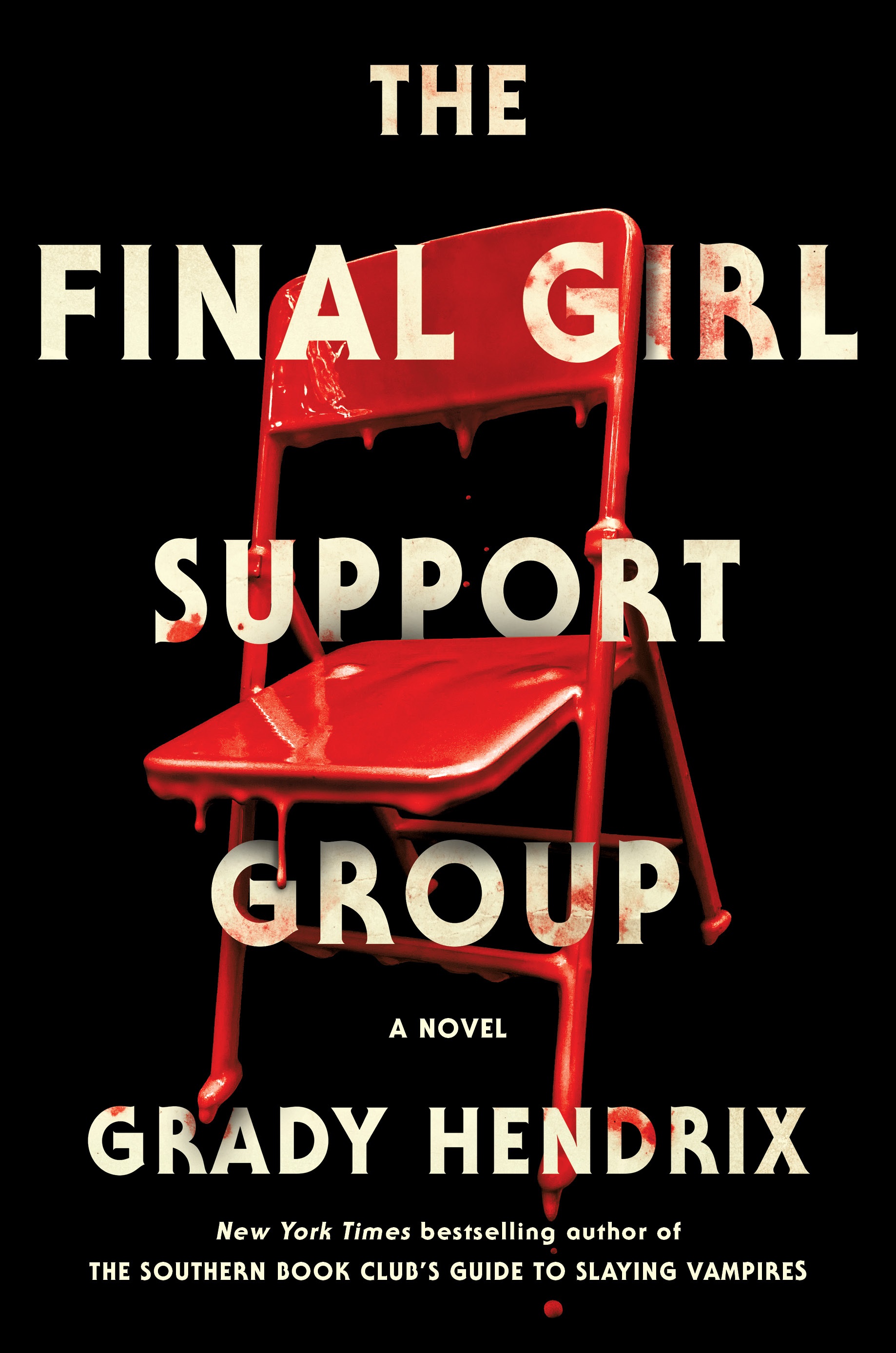 “A fast-paced, thrilling horror novel that follows a group of heroines to die for, from the brilliant New York Times bestselling author of The Southern Book Club’s Guide to Slaying Vampires.
In horror movies, the final girl is the one who’s left standing when the credits roll. The one who fought back, defeated the killer, and avenged her friends. The one who emerges bloodied but victorious. But after the sirens fade and the audience moves on, what happens to her?
Lynnette Tarkington is a real-life final girl who survived a massacre twenty-two years ago, and it has defined every day of her life since. And she’s not alone. For more than a decade she’s been meeting with five other actual final girls and their therapist in a support group for those who survived the unthinkable, putting their lives back together, piece by piece. That is until one of the women misses a meeting and Lynnette’s worst fears are realized–someone knows about the group and is determined to take their lives apart again, piece by piece.
But the thing about these final girls is that they have each other now, and no matter how bad the odds, how dark the night, how sharp the knife, they will never, ever give up.”
Audiobook Review: Night of the Mannequins by Stephen Graham Jones
Posted on March 2, 2021 24 Comments
I received a review copy from the publisher. This does not affect the contents of my review and all opinions are my own.
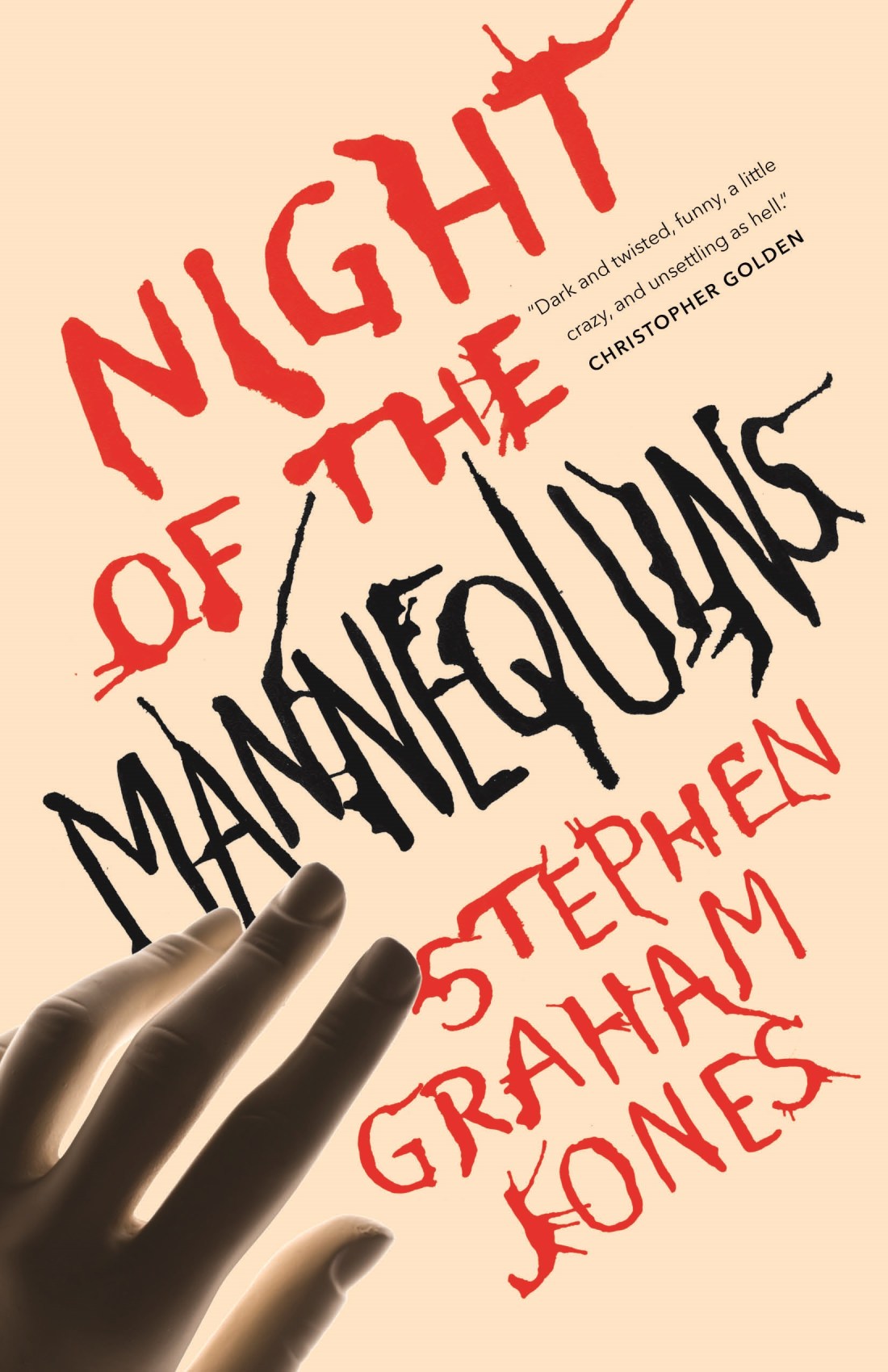 Night of the Mannequins by Stephen Graham Jones
Mogsy’s Rating (Overall): 4 of 5 stars
Genre: Horror
Series: Stand Alone
Publisher: Tantor Audio (February 23, 2021)
Length: 2 hrs and 58 mins
Author Information: Website | Twitter
Narrator: Gary Tiedemann
Night of the Mannequins was my second book by Stephen Graham Jones, and compared to The Only Good Indians, I would say it was most definitely more my cup of tea! Or at least it was, until the ending. But I’ll get into that later.
It all started with a prank. Our protagonist Sawyer, a teenage boy with too much time on his hands, is part of a group of friends who decided to have a little fun with one of their own. Some years before, the gang had been playing in the woods when they happened to come across a discarded plastic mannequin, the kind you typically find in any department store. Nicknamed Manny, the mannequin had been an endless source of amusement, but then the kids grew up. Manny has since been stowed in Sawyer’s garage, almost forgotten, but now the friends are in their last year of high school, and they’ve decided to bring their plastic pal out for one final stunt.
The plan was simple—or should have been, anyway. Recent shenanigans by the group had resulted in one of them, Shanna, working at the local cinema as punishment, inspiring the rest of them—Sawyer, Tim, JR, and Danielle—to play a trick on her, with Manny as the star of the show. Step one: smuggle the mannequin into the theater in pieces. Step two: reassemble him and dress him up in some old clothes. Step 3: place Manny into a center seat up in front, so that when Shanna comes by later to check ticket stubs, she would get the shock of her life.
However, much to Sawyer’s consternation and horror, that moment never arrives. Instead, the would-be pranksters all sit stunned at the back of the theater watching as, at the end of the show, Manny stiffly gets up and walks away. Not long after that, a semi-truck swerves off the highway and smashes into Shanna’s house, killing everyone inside. Everyone is calling it a random freak accident, just a sad case of wrong place, wrong time. Still, while it should have been impossible, Sawyer can’t help but feel with a sick certainty in his gut that Manny is somehow responsible.
In my very limited experience with the author, I can already tell he loves his ambiguous stories, blurring the lines between reality and the supernatural. Throughout this entire tale, you can never really trust what you’re seeing or hearing through Sawyer’s eyes because as you’ve probably guessed, he’s as unreliable as they come. The writing also reflects his frame of mind, presented in an almost stream of consciousness flood of memories, thoughts and observations. It likely would have been a struggle reading this book in print, but fortunately the style wasn’t as much of an obstacle with the audio format.
Due to the vagueness of the plot, it’s also very difficult to talk about it without giving too much away. There’s a dreamlike quality to it, which might be more accurately described as a nightmare as the story becomes stranger, losing much of its coherence the more it progressed. There’s really no better way to put it: it’s like a descent into madness.
In the end, that was what prevented me from embracing this book fully. The first half was nothing short of brilliant; I loved the chilling atmosphere and the horrific moment as you realized the prank involving Manny was not going at all as planned, and that there was definitely something freaky afoot. The final section of the book though, was very different. As you know, I’m not one to enjoy “weird” books. I just don’t do too well with “weird.” And well, that ending was WEIRD. Plus, the final revelations just weren’t that great. I had wanted more, especially since we were teased so hard with all the preceding twists and turns. The tensions by then were practically through the roof, but ultimately, the ending that we got wasn’t even a fizzle but more of a “huh?”
That said, this being such a short read/listen, I don’t know if the negatives were significant enough to really make a blip in my enjoyment. On the whole, I really liked the book’s concept and execution, creepy vibes and all. Since novellas aren’t typically something I prefer, I was also impressed how well this one worked for me, and I’ll be looking out for even more of Stephen Graham Jones’ work in the future.
Book Review: The Echo Wife by Sarah Gailey
Posted on March 1, 2021 28 Comments
I received a review copy from the publisher. This does not affect the contents of my review and all opinions are my own.

Mogsy’s Rating: 4 of 5 stars
Genre: Science Fiction
Series: Stand Alone
Publisher: Tor (February 16, 2021)
Length: 256 pages
Author Information: Website | Twitter
My one and only experience with Sarah Gailey before this had been River of Teeth, the first book of an alt-history hippo western novella series which I didn’t really get on with, so suffice to say I had no clue what I was in for with The Echo Wife, which sounded so different. However, one look at the wide range of genres and topics Gailey has tackled in recent years, it’s clear I’m also reading a very versatile and creative author, so I was actually feeling quite optimistic when I discovered this was a work of science fiction mystery and suspense.
Turns out, my hunch was correct. While The Echo Wife was certainly not typical of what I would expect from the genre, it hooked me regardless. We’re introduced to protagonist Dr. Eveyln Caldwell, a brilliant geneticist who specializes in cloning. At the start of the book, she is receiving an award for her contributions to the field, and we’re in her head as she reflects upon the journey and the sacrifices she’s had to make in order to get where she is today. For while her professional career may be in bloom, her personal life is in tatters. Years of putting her work before everything else has driven an irreversible wedge between Evelyn and her husband and fellow scientist Nathan, and now he’s made it clear she’s not the woman he wants anymore. He’s recently left her for someone else, a new wife who can give him what he’s always wanted: a family.
But what really sends Evelyn’s world crashing down is the other woman’s identity, who is soon revealed to be a clone of Evelyn herself. Still, while Martine may be physically identical to Evelyn, her personality is not. Nathan had programmed his new wife to be a more docile and compliant version of the original, and on top of that, he had also somehow managed to find a way to reverse a clone’s sterility, because Martine is very visibly pregnant when she confronts Evelyn for the first time. Angry and wounded, Evelyn subsequently unleashes a torrent of hurtful words at Martine, sending her scurrying home.
And that was the end of that—or so Evelyn thought. That very night though, she receives a frantic call from Martine, begging her to come over, and when Evelyn arrives, she finds Nathan dead on the floor in a pool of blood. Gradually, the story comes out. After her heated conversation with Evelyn, Martine had confronted Nathan on some of the subjects that were broached. He had turned violent, resulting in Martine having to defend herself. Now Evelyn has no choice but to help cover up the incident, because even if she didn’t feel slightly responsible for Nathan’s death, any police investigation would lead right back to her work and destroy her reputation and career.
Granted, this one took a little while to take off, but once we reach Evelyn’s point of no return, things just zip right off from there. And given the premise, of course you’re going to get a story that’s all about cloning! A good chunk of the action actually takes place in the lab as Evelyn takes us through the ins and outs of her research, and these turned out to be some of my favorite parts. Now might also be a good time to point out that Gailey plays pretty fast and loose with the science behind cloning, but that’s okay, because the point is not the technology, it’s the story and the characters. I especially enjoyed how the author explored the implications of Martine’s creation and the fact that her feelings and desires are no less real, even though they may have been “programmed” into her by Nathan, who had wanted her to be and act a certain way.
In this setting, we are not only steeped in a palpable atmosphere of experimentation, we are also granted little glimpses of insight into Evelyn’s personality (especially that bit with the breaking bones, yikes!) She’s clearly a driven woman, but under that cold, hard exterior is also a flawed and vulnerable person who can’t help but question her life choices even as she judges Martine for being her antithesis. Ultimately, I think the characters are why I enjoyed this book so much. The Echo Wife may have elements of a psychological thriller, but at the end of the day, it’s more of a slow-burn suspense than anything that will get your heart pumping. Evelyn was really the star of the show, her eerily cool demeanor adding to the forbidding atmosphere, though she is also a sympathetic protagonist. It helped that we got flashbacks to her childhood, which went a long way in explaining some of her hang ups. Then there were her interactions with Martine, and it’s clear that by the end of the book, the two of them have learned a lot from each other.
Sure, the ending was kind of slapdash and might have tied things up a bit too neatly, but by then I think the message has been established and, to be honest, the tensions up to this point were so elevated that I was just glad to have some relief. Obviously, I got what I wanted out of this psychological sci-fi suspense, and my experience with The Echo Wife turned out to be smashing success.


 The BiblioSanctum