Book Review: The Bone Raiders by Jackson Ford
Posted on August 29, 2025 10 Comments
I received a review copy from the publisher. This does not affect the contents of my review and all opinions are my own.
 The Bone Raiders by Jackson Ford
Mogsy’s Rating: 3.5 of 5 stars
Genre: Fantasy
Series: Book 1 of The Rakada
Publisher: Orbit (August 12, 2025)
Length: 477 pages
Author Information: Website
Jackson Ford is one of those authors I expect to bring a certain wild and irreverent energy to whatever he writes. I’ve only read one of his books before (The Girl Who Could Move Sh*t with Her Mind), but even so, I went into The Bone Raiders anticipating something at least a little cheeky, if the Billy Joel lyric splashed on the cover was anything to go by. On the whole, I would say I got what I wanted—a fun book whenever it leans into fantasy adventure and dynamic action—though not without a few bumps along the way.
The story takes place across the vast grasslands of the Tapestry, where the rise of a new Khan is reshaping its landscape. With the tribal clans who live there being forced into the empire or outright destroyed, caught in the middle are the Rakada, better known as the Bone Raiders. A notorious band of fierce female fighters, they eke out a brutal existence on the plains by raiding, stealing, and terrorizing the villages along the countryside, and needless to say, the expansion of the Khan’s influence is putting a damper on their activities.
Enter Sayana, who is one of our POV characters, a young member of the Rakada who finds herself thrown into a dangerous situation after a scouting mission goes sideways. Things only get worse when a giant fire-breathing lizard-like creature called an araatan crashes onto the scene. However, witnessing its fearsome power gives Sayana an idea so crazy that it might just work. What if the Bone Raiders could somehow tame the araatan and ride them into battle against the Khan’s encroaching forces? Surely no one would be able to stand against them then. But pushing her plan forward will mean first convincing the rest of the Rakada, and with morale already so low, not all of them are willing to put themselves at even more risk. Still, everyone agrees that something must be done. Because if they don’t fight back, Sayana and her people will be wiped out for good.
What really sold me on this book were the characters. They can’t be called heroes by any stretch (these are women who plunder, murder, and take pride in that reputation) but they make for fascinating protagonists. Call them what you like, but boring isn’t one of them. The group has a messy found-family energy, full of interesting rivalries and loyalties that feel authentic and lived-in. Sayana, for example, works well as the eager but painfully naïve youngest member, constantly challenging the hierarchy and butting heads with her elders in an effort to prove herself. On top of that, these relationships aren’t just playing out within the Bone Raiders but also on the other side of the conflict, making the entire story feel dynamic and alive, which stands out as one of the book’s greatest strengths.
But I would say the world-building is a mixed bag. On one hand, the Tapestry is an appealing setting, and Ford clearly drew inspiration from nomadic plains cultures to shape his clans and characters. But on the other hand, there’s not much beyond the surface dressing, and at times the world feels lightly sketched in rather than fully fleshed out. Here and there, we catch a glimpse of the wider empire outside, but these fleeting moments come without much depth, and the novel’s cultural details strike me as overly simplistic. So, if you’re looking for deep lore or richly layered world-building, you may find the background here a bit lacking.
Hence if I sound torn, it’s because I kind of am. I loved the araatan, possibly the book’s most creative element. In fact, I wish we’d gotten to see more of them. The final act is also excellent, delivering high-octane action, but this was only after a slower and repetitive middle section. Still, as this appears to be the first volume of a new series, I am curious to see where the story will take us next.
In the end, The Bone Raiders is a fun but uneven series opener. The characters and humor stood out, the giant fire-breathing lizards totally stole the show, but the world-building is noticeably sparse and some patience is definitely required to push through slower sections. I can’t say I loved it from start to finish, but I had enough fun that I’ll be keeping an eye out for the sequel.


Audiobook Review: Forget Me Not by Stacy Willingham
Posted on August 25, 2025 6 Comments
I received a review copy from the publisher. This does not affect the contents of my review and all opinions are my own.
 Forget Me Not by Stacy Willingham
Mogsy’s Rating (Overall): 3.5 of 5 stars
Genre: Mystery, Thriller
Series: Stand Alone
Publisher: Macmillan Audio (August 26, 2025)
Length: 9 hrs and 26 mins
Author Information: Website
Narrators: Helen Laser, Karissa Vacker
Stacy Willingham has made a name for herself by writing twisty atmospheric thrillers, and her latest, Forget Me Not, hits a lot of the things I usually enjoy—and with a Southern flair to boot. But while this audiobook was immersive and moody, it ended up being a mixed bag for me.
The story follows Claire, an investigative journalist in New York who has recently struck it out on her own, but things haven’t exactly gone to plan. Feeling like she’s just spinning her wheels, Claire is in the middle of trying to figure out her next move when she gets an unexpected call. It turns out her mother has taken a nasty fall and may need someone to help care for her for the next little while, so with little to keep her in the city, Claire decides to return to her hometown in South Carolina after many years of being away.
But there’s a reason why Claire has stayed away for so long. This place where she grew up holds nothing by bad memories, ever since her older sister Natalie vanished more than twenty years ago. Even though an arrest was made for her murder, many questions remained, especially since a body was never found. Now back in town, Claire is forced to confront all the things that remind her of that terrible time, including the nearby Galloway Farm, an old vineyard where Natalie worked just before her death. Driven by a sudden desire to feel closer to her late sister (and a desperate need for funds), Claire impulsively agrees to take a job there as a seasonal worker, hoping the fresh air will help clear her head. But the discovery of a dusty diary hidden away in the guesthouse where she is staying changes everything, when Claire realizes that its owner and content may hint at secrets that lead back to Natalie.
There are a lot of things about this book that worked, especially the audiobook edition which strongly emphasized the book’s mysterious atmosphere and the languid, halcyon vibes of the South. Galloway Farm might look picture perfect on the surface—acres of flavorful grapes growing on the sunbaked land—but the sense of isolation and the detachment of the vineyard owners make it clear there’s something very wrong going on underneath.
There’s also a creative approach happening here with the novel’s structure. Interspersed with Claire’s present-day narration are excerpts from the diary she’s found, but rather than presenting these entries verbatim, Willingham stylizes them as a separate timeline and narrative. This change makes it so that the writer of the diary pages feels more present and alive rather than a distant echo from the past, creating the sense that we’re witnessing events as they happen rather than piecing them together after the fact.
But here’s the major area where I felt the book faltered: pacing. For nearly half the book, almost nothing happens. The setup is way too drawn out as Claire struggles with her failing career, her strained relationship with her mother, then all of her uncomfortable feelings about being home. Even after she settles into life at the vineyard, the story takes a while to gain momentum as she slowly pieces together the puzzle of the diary and why it matters. Compared to the author’s previous books, there just doesn’t seem to be all that much here to drive a thriller, making the story feel unusually slow.
Without giving too much away, the ending was also very confusing, especially when trying to figure out the timeline and the tangled web of relationships. The story might have made up for its slow start with a climax packed full of shocking revelations, but it came all at once and at the cost of coherence. Because of certain elements in the mystery, making the connections was challenging, and the sheer density of the events and people involved made it harder to see how everything tied together.
Ultimately, Forget Me Not is a slow-burn thriller that might be a little too slow burning, which at times will test patience and strain believability. That said, it does well at setting the mood and may work for readers who enjoy suspense with Southern Gothic vibes. While I wouldn’t say this was anywhere close to Stacy Willingham’s best (for that, look to A Flick in the Dark) there is still plenty to appreciate here, especially if you check out the audiobook. A special note on the narrators: Helen Laser and Karissa Vacker both did an excellent job bringing the story and its characters to life, with inflections that made the dialogue feel engaging and natural. Even when the pacing lags, their performances kept me engaged, making this format a strong way to experience this book.

Book Review: The Executioners Three by Susan Dennard
Posted on August 22, 2025 10 Comments
I received a review copy from the publisher. This does not affect the contents of my review and all opinions are my own.
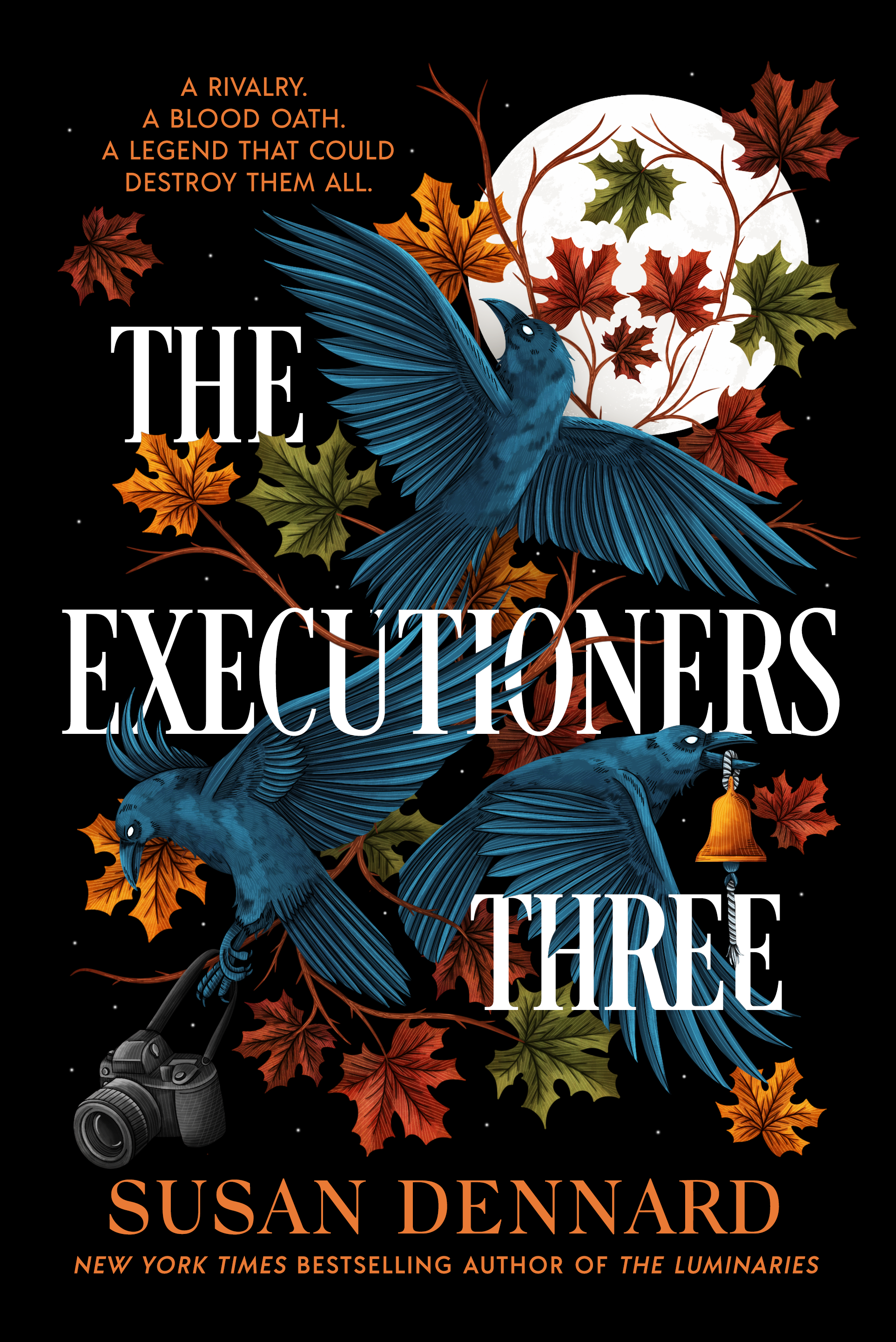 The Executioners Three by Susan Dennard
Mogsy’s Rating: 3.5 of 5 stars
Genre: Young Adult, Horror, Thriller
Series: Stand Alone
Publisher: Tor Teen (August 26, 2025)
Length: 304 pages
If you were a 90s kid like me, The Executioners Three by Susan Dennard is going to feel like a throwback in the best and sometimes the most frustrating ways. Blending urban legends, smalltown horror, and high school shenanigans, this book serves up equal parts nostalgia and intrigue. Although it does take some time to find its stride, I think readers will find plenty here to get hooked on.
The story follows Freddie Gellar, an awkward but exuberant teenage girl who never expected a single impulsive phone call to change her life. After all, she just thought she was doing her civic duty by phoning in a noise report to the cops. Instead, her tip winds up breaking up a rival school’s party in the woods, putting half their football team out of commission when they all get busted for underage drinking. Consequently, her actions also cause an escalation in the long-standing prank war between Berm High and Allard Fortin Prep. Overnight, Freddie is transformed from the unassuming outsider to prank queen, earning the admiration of the popular kids at school and even the attention of her longtime crush. For a while, it feels as though all her dreams have come true…until it doesn’t.
What began as a series of harmless tricks suddenly turns sinister with the discovery of a dead body. Soon after, another gruesome scene is found, making it clear something far more dangerous than high school drama is at play. Determined to uncover the truth, Freddie dives into her own investigation, aided by a cocky Fortin Prep boy named Theo Porter, who should be her enemy but isn’t quite acting like one. Clues unearth an old tale in the historical archives about the Executioners Three, a dark piece of local lore that might not be just a legend as everyone thought. As more unsettling events pile up, Freddie realizes more people she knows and cares about will die if she doesn’t put a stop to the lurking menace.
The best thing about the book is its tone. Freddie’s voice is fun and lively, even irreverent and sassy on occasion. But what can’t be ignored is the persistent undercurrent of darkness. Dennard balances small-town quirks and the frenzy of high school life against genuinely creeptastic moments, especially when we witness unsettling sights in the woods or when Freddie and her friends are confronting the horrifying legacy of the Executioners Three. Our protagonist’s frenetic personality might be something of an acquired taste, but she’s actually quite easy to root for once you get used to her. Smart, determined, and more than a little weird, Freddie’s wit adds charm to the narrative, especially when she and Theo are playing their banter off each other.
But for all its strengths, the book also had a few hiccups. To start, I felt the story took too long to get off the ground. The first act devotes a lot of time to high school dramatics and the silliness of prank wars, which, while useful for setting up the stage, starts to drag before the meat of the mystery finally kicks in. To be fair, the book becomes much stronger once things shift gears, but the slow buildup was definitely trying my patience.
The 90s references were another mixed bag. Nostalgia is fun, and I even had a smile for all the mentions of boy bands, X-Files, and ICQ here and there. But as they continued, it sometimes feels overdone to the point of gimmicky. Moments like where the constant name dropping bordered on parody, like the story was winking at us a little too hard. And finally, the central plot, while engaging, didn’t feel as impactful as I’d hoped, overshadowed by the barage of distractions created by feuding teenagers, high school relationship woes, and 90s overkill. There were times when the mystery actually felt like an afterthought, not nearly fleshed out enough to answer all my questions, and way too simple as to be easily predictable.
Final thoughts? The Executioners Three is a solid read that delivers small-town horror with urban legend vibes set to the great backdrop of the 1990s. But the balance between these elements isn’t always perfect. Still, if you’re a fan of Susan Dennard and YA thrillers—or even a retro addict on the hunt for your next Fear Street–style chiller—I’d definitely recommend giving this one a look.
Book Review: The Dead Husband Cookbook by Danielle Valentine
Posted on August 18, 2025 10 Comments
I received a review copy from the publisher. This does not affect the contents of my review and all opinions are my own.
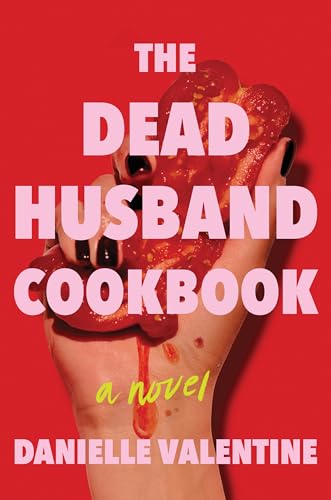 The Dead Husband Cookbook by Danielle Valentine
Mogsy’s Rating: 5 of 5 stars
Genre: Thriller, Mystery
Series: Stand Alone
Publisher: Sourcebooks Landmark (August 5, 2025)
Length: 352 pages
I’ve read several novels by this author under her various names (Danielle Valentine is also Danielle Vega), and as a self-described author of books for “tweens, teens, and adults,” she’s definitely covered a lot of ground. However, over time I’ve realized that while her YA horror is fun, it’s her adult novels that really grab me. With The Dead Husband Cookbook, she’s once again proven that point, delivering the same kind of thoroughly absorbing and addictive suspense that made Delicate Condition such a standout for me.
The story follows Thea Woods, an editor whose career is hanging on by a thread after costing her publisher a lot of money in the wake of a very public scandal. In fact, her boss has all but admitted to planning to fire her, except out of nowhere comes a second chance. Maria Capello, a celebrity chef whose own life has been marked by plenty of sordid rumors and scandal, has apparently decided to write a tell-all memoir, and for some reason, she has handpicked Thea to edit her book. Because this would be the opportunity of a lifetime for their small publisher, Thea is allowed to keep her job—for now. However, she can’t afford to make any mistakes. One wrong move, and it could ruin her completely.
Otherwise, Thea is actually quite thrilled to be working with Maria. She has no idea why she was chosen—they’ve never even met—but Thea has admired Maria since childhood, faithfully following her cooking shows and recipe books, which idealized the picture-perfect home life. Still, Maria comes with some difficult conditions. First, Thea must travel to the Capello’s remote upstate farmhouse to do the work. Second, she will surrender her phone and live with no reliable internet connection while she’s there. And third, she will only have access to the manuscript one chapter at a time, handed over at a pace set by Maria.
Despite all this, Thea tells herself it will all be worth it. After all, the memoir is all but guaranteed to be a sensation, not just because Maria is a household name, but because everyone is still obsessed with the decades-old mystery of her missing husband, Damien. Officially, Damien Capello’s death was ruled a suicide, backed by a note and Maria’s alibi the night of his disappearance, but that hasn’t stopped people from talking. Did Damien really kill himself, or was it something darker? Thea knows Maria’s memoir might finally reveal the truth, but how much does she really want to know about her idol? Is she truly ready to learn Maria’s secrets? And what will it cost her if she does?
From the description of the novel to its unnervingly vivid cover, I just couldn’t let this one pass me by! What really worked for me was the way the story uses its structure to build interest and tension. The bulk of the narrative follows Thea in the present day as she navigates life’s challenges—a demanding toddler, an oblivious husband, a financially strapped mother, and now a tanking career. But once Thea arrives at Maria’s farmhouse, the tone shifts, tightening into the claustrophobic, controlled atmosphere the older woman has created.
It’s here we begin to see excerpts from the memoir itself, and I thought these sections were brilliantly done. Packed with juicy behind-the-scenes details, each chapter also included delicious sounding recipes with clever titles that directly relate to Maria’s stories. I loved how these parts gave us Maria’s perspective, not to mention making my mouth water! At the same time, they raised more questions than answers. What exactly are Maria’s motives for writing the book, and why now after so many years of remaining guarded about her past? Is she being as candid as she claims, wanting to set the record straight? Or is she in fact choosing her words carefully, trying to reframe how the public sees her?
Another highlight for me was how nearly every element clicked right into place. Especially the food angle! Each recipe and culinary detail felt authentic and thoughtfully integrated, and not just a gimmick. Cooking tied directly into Maria’s storytelling and character, deepening the themes of memory, family, secrets, and even control. I couldn’t help but wonder if Danielle Valentine is a connoisseur herself, because it’s that, or she poured hundreds of hours of research into the culinary world. Either way, it paid off beautifully, contributing to just how well the entire novel was planned and put together, even when the plot ran full speed into realm of outrageousness. And yet, it worked because a good foundation had been laid, and of course it was also fun as hell.
Overall, The Dead Husband Cookbook is exactly the kind of addictive and slightly unhinged thriller that’s easy to devour in just a few sittings. Danielle Valentine has once again delivered a novel that feels both meticulously plotted and wildly entertaining. If you loved Delicate Condition or are simply in the mood for a dark and twisty page-turner, this is the perfect place to dig in.

Book Review: A Forbidden Alchemy by Stacey McEwan
Posted on August 15, 2025 7 Comments
I received a review copy from the publisher. This does not affect the contents of my review and all opinions are my own.
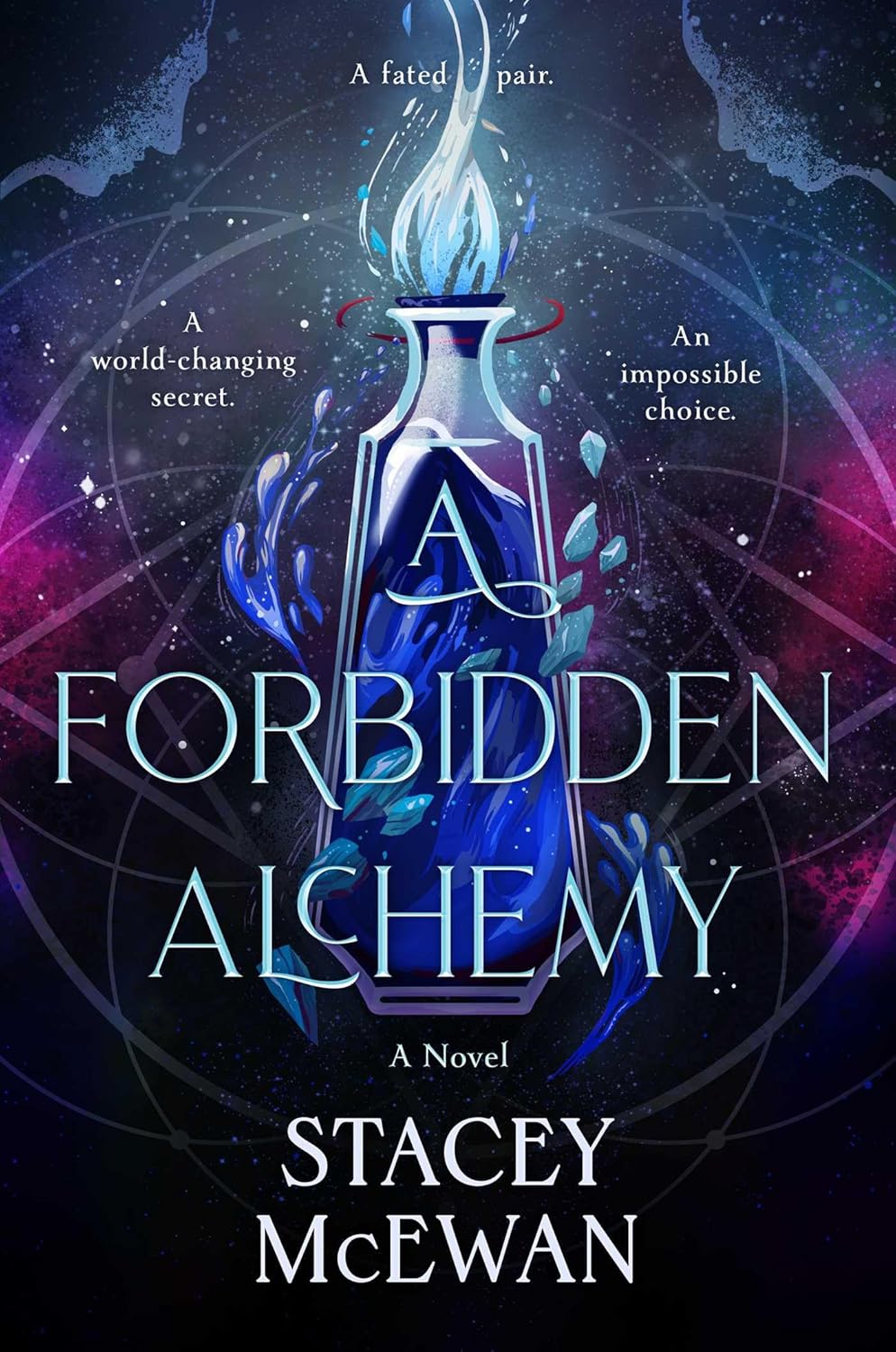 A Forbidden Alchemy by Stacey McEwan
Mogsy’s Rating: 4 of 5 stars
Genre: Fantasy, Romance
Series: Book 1
Publisher: Saga Press (July 1, 2025)
Length: 480 pages
Author Information: Website
Romantasy is everywhere right now, so much so that it feels like only a handful of titles are getting all the attention while many more just quietly slip through the cracks. One such book that almost flew under my radar is A Forbidden Alchemy by Stacey McEwan, and what a shame that would have been. It’s got everything from romance to grit, and with its rebellion plot with real bite, I was hooked good and fast into the world of its characters.
The story opens with Nina Harrow and Patrick Colson, two kids who grew up poor in struggling Craftsmen mining towns. But at twelve years old, all children are brought to the dazzling city of Belavere to test for magical potential, a moment that could change both their lives. Passing means becoming an Artisan, one of the privileged elite with the power to wield elemental magic. For Patrick, the possibility is exciting but not all-consuming, but for Nina, it’s everything she’s ever wanted: her one chance to escape poverty. But when they stumble upon a dangerous truth—that Artisans aren’t actually born with magic but are handpicked by a rigged system—their futures are set on very different paths.
Years later, the city finds itself on the brink of war. Nina, now an accomplished Artisan earth shaper, is reluctant to get involved, given the truth of her past that she has kept hidden for so long. Yet, she is inevitably drawn into the conflict, encountering the growing strength of the Craftsmen uprising, led by none other than Patrick. Even after all this time, their memories of one another—and the terrible secret they uncovered together— lingers between them. However, Nina has also built relationships during her time in magical training, and there are people she loves and must protect—loyalties that clash with a part of her heart still rooted in her humble beginnings. Before long, she may be forced to choose a side in a war where there are no clear answers.
A Forbidden Alchemy is one of those books where the romance and political plot are equally strong, avoiding stepping on each other’s toes. Obviously, the whole setup with the class divisions and the corruption at the heart of an unfair society are in no way new to the genre, but the attention to the details makes the background politics feel more than just window dressing. The fact that we meet both Nina and Patrick as children definitely helps, refining the idea that these are circumstances that have shaped them since the very beginning. The world feels lived in, having influenced and guided our characters’ choices and giving them motivation for the choices they make.
In some ways, this gives the romance an extra edge, considering Patrick and Nina aren’t just dealing with their complicated feelings for each other, but they’re doing it while being on opposites sides of a war. Admittedly, even the time jumps in the early chapters, while a little jarring, can work well in this context, showing how the years have made them the adults they’ve become, deepening the moments of connection and quiet yearning. That said, the presence of Theo, Nina’s first love, throws a slightly frustrating wrench into the mix. Personally, I felt the chemistry between Patrick and Nina were complex enough without adding even more tension through a sort-of love triangle, but that’s just me. I have never been a fan of that kind of drama, but of course, your mileage may vary.
And if I’m being picky, I would have also liked a bit more about the magic itself. We get plenty of history and politics, but a little more extra on Belavere’s backstory wouldn’t have hurt. Plus, more about idium! It’s only the mysterious mined substance that keeps the city running and makes all magic possible, after all. Still, that’s a small gripe. Everything else that matters about the world-building gets plenty of attention, making this an entirely compulsive and readable mix of fantasy and romance.
All in all, A Forbidden Alchemy is an engaging, character-driven start to a series that really deserves more attention. Definitely worth picking up for romantasy readers who enjoy elemental magic and enemies-to-lovers tension, and with a cliffhanger like that, you just know the wait for the next book is going to feel even longer.

Book Review: The Unseen by Ania Ahlborn
Posted on August 13, 2025 10 Comments
I received a review copy from the publisher. This does not affect the contents of my review and all opinions are my own.
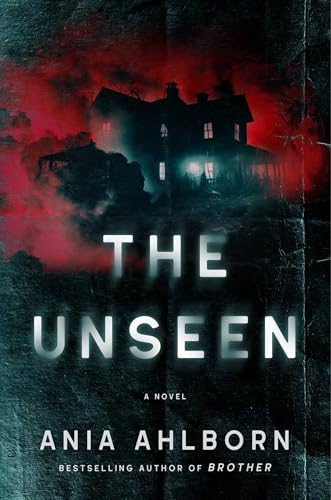
Mogsy’s Rating: 4 of 5 stars
Genre: Horror
Series: Stand Alone
Publisher: Gallery Books (August 19, 2025)
Length: 384 pages
Author Information: Website | Twitter
Horror enthusiasts, are you a fan of the “creepy kid” trope? If so, then The Unseen by Ania Ahlborn has got you covered. This is my fourth book by the author, and every time, I am left wanting to read more of her work. Simply put, she excels at blending domestic drama with supernatural suspense, and while this novel isn’t without some flaws, it nevertheless delivers on plenty of chills.
Set in an idyllic Colorado town already on edge from a string of missing child cases, the story follows Isla, a married mother of five who is still emotionally fragile from a miscarriage, the latest in a heartbreaking series of pregnancy losses. Despite having the large family that she’d always dreamed of, Isla still feels it is incomplete without a sixth child. In fact, the resulting depression had become so overwhelming and damaging to her mental health that temporary hospitalization had been required.
Now back at home recovering, Isla is outside one day when she spots a small, disheveled, and oddly proportioned boy stumbling around near the edge of the property. After coming to his rescue, she becomes instantly fixated. And when, a few months later, social services can’t locate any relatives, Isla convinces her husband Luke into fostering the boy. Naming him Rowan, they bring him into their home, despite Luke’s reservations and their children’s clear discomfort around the newcomer.
From the start, Rowan’s presence causes a ripple of unease around the house, driving the dogs into violent panic and making the other kids avoid him. However, this only makes Isla even more determined to make the new arrangement work. As her attention to Rowan becomes obsessive, more strange and frightening events begin to unfold, turning their home into a waking nightmare. Everyone can see that something is terribly wrong—everyone except Isla, who refuses or is somehow unable to recognize that Rowan may be at the center of it all.
The atmosphere was everything I would expect from Ahlborn, characterized by quiet moments heavy with dread and small gestures that feel slightly off. Not only is this novel unafraid to lean into the familiar horror tropes, it flat out embraces and capitalizes on them, tapping into the primal fears and uncertainties we all have as children. This is also combined with the anxieties of adulthood, especially parenthood, where the prospect of something being wrong with your child—or the way you raise your child—becomes an all-consuming worry that is as personal as it is supernatural.
That said, the multiple POV approach, while initially great for building tension, does eventually become a little repetitive and tiresome. For one thing, pretty much every one of Isla and Luke’s children have their own chapters, and through them we become aware of everything that’s strange about Rowan beyond his deformities and hair-raising behavior. As such, thanks to the kids, we’re repeatedly shown variations of the same realization: IT’S ROWAN! ROWAN IS THE ONE CAUSING ALL THE PROBLEMS! And yet, their concerns are dismissed time and time again, which stretches credulity given how quickly the scary incidents pile up. In particular, Luke comes across as a pushover, and it’s not long before readers start questioning how much a man can take before he finally fights back, especially when the safety and wellbeing of his children are on the line.
Still, even with these little hiccups, the story kept me fully engaged, making me excited to see just how far it was willing to push things. And push it does. It was impossible to look away during the final act, which is proof that Ania Ahlborn knows how to balance slow-burn dread with high stakes payoff. While opinions might be divided on the ending, I found it chilling and resonant, ultimately making The Unborn a memorable read that got under my skin and stayed there.
Book Review: Hemlock & Silver by T. Kingfisher
Posted on August 8, 2025 19 Comments
I received a review copy from the publisher. This does not affect the contents of my review and all opinions are my own.

Hemlock & Silver by T. Kingfisher
Mogsy’s Rating: 4 of 5 stars
Genre: Fantasy
Series: Stand Alone
Publisher: Tor Books (August 19, 2025)
Length: 368 pages
Author Information: Website
As someone who reads just about everything T. Kingfisher writes, I jumped into Hemlock & Silver with a lot of excitement—and, admittedly, sky-high expectations. And while it didn’t end up being one of my favorites, I still thoroughly enjoyed the ride. After all, she is one of those authors where even a “not a favorite” is still a very good read.
Billed from the publisher’s description as a “dark reimagining of Snow White, Hemlock & Silver is pure Kingfisher: quirky characters, intellectual curiosity, and a sprinkling of fairy tale inspiration. The story follows Anja, a healer who specializes in the theory and treatment of poisons. Armed with a chime-adder (their venom happens to be an ingredient in a great number of antidotes) and a regular habit of ingesting toxins to better understand their effects, her unusual methods have made her something of an oddity within her community. But one day, her quiet life is suddenly interrupted when the king himself appears at her door with a desperate request. Having recently suffered the loss of both his wife and one of his children, he’s now determined to save his only surviving daughter, Snow, who has fallen gravely ill. The best doctors in the realm have already been consulted, and not one of them can determine what’s wrong. Suspecting that Snow’s symptoms are from poisoning, the king is turning to Anja as his final hope.
Left with little choice, our protagonist agrees to investigate and is escorted to the isolated desert retreat where Snow has been sequestered since her mother and sister’s suspicious deaths. Once there, she begins careful observation of the princess, interviewing the staff, and testing all the food. When nothing turns up, and Snow is still sick, Anja is forced to consider other possibilities, including magical influences and the unsettling behavior of the mysterious, finely crafted mirrors that the late queen had brought with her from her homeland. Before long, Anja finds herself pulled into a hidden world that seems to defy all logic and her training, but it might be the key to unlocking what is ailing Snow.
Though “Snow White reimagining” is what it says in the blurb, Hemlock & Silver is in fact quite sparse when it comes to elements from the original fairy tale. Instead, it hones in on the concept of a magic mirror and turns it on its head in a very clever and original way. But because the book is more inspired by the spirit of the fairy tale rather than its storyline, I wouldn’t go so far as to call it a retelling, and prospective readers should know this going in, especially those with a soft spot for Snow White who might be expecting more faithfulness to the plot.
Still, what really stood out for me was the tone. As always, Kingfisher strikes a great balance between dark and unsettling themes, with just the right amount of wit to take the edge off. The pacing was spot-on throughout, and you know how I often nitpick slow beginnings, but even the early chapters of Hemlock & Silver stole my attention as we got to know Anja and how her unusual fascination with poisons began. She’s also a classic Kingfisher protagonist: smart, socially awkward, and just a tad too hard on herself. But there’s no doubting her deep commitment to her calling, and that passion is infectious. I always appreciate a competent main character, and Anja absolutely fits the bill.
The world-building was also fantastic, particularly the quiet presence of the animal saints in the background, whose lore added depth to the setting. That said, once we reached halfway point of the story and the mirror element took center stage, I did find myself struggling to fully grasp some of the mechanics. Whether due to the limited explanations or the rather vague descriptions, it wasn’t always easy to visualize how things were working, and occasionally I felt a little lost in the details.
But like I said, even though Hemlock & Silver isn’t my favorite T. Kingfisher novel, I genuinely don’t think she’s capable of writing a bad book—and this one still hit all the right notes for me. It’s a strong entry in the fairy tale inspired fantasy genre: a little weird and a little creepy, but also clever and funny, and best of all, deeply satisfying in the way it weaves together science and magic. If you’re a fan of Kingfisher’s work, or offbeat fantasy and clever takes on folklore in general, you need to pick this up.
Book Review: The Enchanted Greenhouse by Sarah Beth Durst
Posted on August 6, 2025 17 Comments
I received a review copy from the publisher. This does not affect the contents of my review and all opinions are my own.
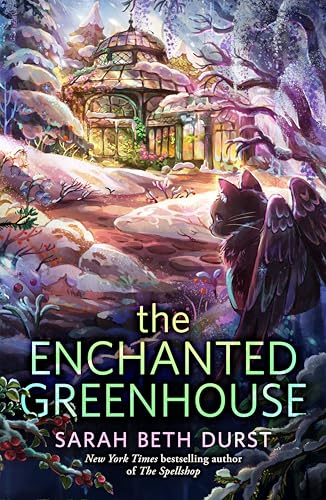 The Enchanted Greenhouse by Sarah Beth Durst
Mogsy’s Rating: 4 of 5 stars
Genre: Fantasy, Romance
Series: Book 2 of The Spellshop
Publisher: Bramble (July 15, 2025)
Length: 384 pages
I was so excited when I found out about Sarah Beth Durst’s plans for a companion novel to The Spellshop. A return to the world of one of my favorite books with a new cozy tale of magic and romance? Yes, please! Of course, you can still dive in if you are a newcomer, but those familiar with the first book will recognize the parable of Terlu Perna, a researcher at the Great Library of Alyssium who was turned into a statue for her use of unsanctioned magic. But she whose name was once just a cautionary tale now gets to have her own story of second chances and redemption in The Enchanted Greenhouse.
It begins with the crime and its punishment. A dejected but not entirely regretful Terlu is found guilty of illegally casting a spell to bring a spider plant to life (Caz!) and is sentenced to imprisonment as a statue. For how long, she doesn’t know, but she is only vaguely aware of time passing while her consciousness was locked into her wooden form. Then one day, light! And air! Terlu suddenly finds herself freed and back in her flesh form, but her surroundings are completely alien to her. She’s cold, confused, and all alone on a frigid little island, and all she can see around her are what appears to be a number of greenhouses containing dozens upon dozens of colorful and exotic plant species.
Soon, however, Terlu meets the island’s sole inhabitant, and apparently the one who had set her free. Yarrow, the taciturn caretaker of the greenhouses, was somehow under the impression that Terlu could help him restore the magic needed to maintain his plants, becoming disappointed when he learns she’s not who he thought she was. Still, he offers her sanctuary and promises to keep her presence a secret from the authorities, and in turn, Terlu resolves to help him figure out why the magic on the island is failing. After all, she is a librarian, and there’s no problem that can’t be tackled with a little research, some resourcefulness, and a lot of persistence—even if it means breaking the law again.
In true cozy romantasy fashion, The Enchanted Greenhouse gives our characters a second chance to find purpose, community, and perhaps even love. The focus of the narrative isn’t on conflict, and if there are any tensions at all, they lie in the smaller, more personal challenges. And it’s impossible not to be charmed here. Durst has an impressive stylistic range, mastering any genre with confidence and ease. Every book I’ve read by her has showcased a different strength, and she glides like a pro into this one, fully embracing the warmth and comfiness without sacrificing the emotions.
Speaking of which, the romance between Terlu and Yarrow is appropriately slow-burn, and awkward in all the cutest ways. Imagine two people with complicated pasts, both afraid of letting their feelings out because they have been hurt before. Calling it chemistry doesn’t feel right, exactly—maybe more of a stable equilibrium that’s constantly in balance, deepening slowly through shared kindness and purpose.
That said, The Enchanted Greenhouse is not without its flaws. The lighter plot is a doubled-edged sword, delivering a low-stakes experience that readers can kick back and relax with, but at times the pacing does grow too sluggish, especially when for the longest time it’s just Yarrow and Terlu on the island (the talking plants don’t really count when they are mostly there for comic relief and whimsy). Yarrow can sometimes be too impassive, leaving Terlu to do the heavy lifting when it comes to relationship dynamics. This might be why, despite sharing a world with The Spellshop, this installment doesn’t quite deliver the same emotional impact. Where The Spellshop featured a strong narrative hook riding on richer interactions with outside forces, The Enchanted Greenhouse focuses more on waging quiet internal battles with deep-seated doubts related to isolation and unresolved familial tensions.
And yet, I still love this world which continues to feel lived-in and full of vivid characters and wondrous magic. Despite it being slower and having slightly less of a pull than The Spellshop, The Enchanted Greenhouse offers a cozy, introspective return to a familiar and beloved setting. If you want to enjoy a low-key afternoon reading about the joys of small moments and personal growth, I recommend this gentle fantasy with a big heart.
More on the BiblioSanctum:
Review of The Spellshop (Book 1)
Book Review: The Library at Hellebore by Cassandra Khaw
Posted on August 2, 2025 11 Comments
I received a review copy from the publisher. This does not affect the contents of my review and all opinions are my own.
 The Library at Hellebore by Cassandra Khaw
Mogsy’s Rating: 2.5 of 5 stars
Genre: Horror
Series: Stand Alone
Publisher: Nightfire (July 22, 2025)
Length: 288 pages
Author Information: Website | Twitter
Time for another unpopular opinion, but despite the love I have for the dark academia genre, The Library at Hellebore didn’t really work for me—and for a pretty fundamental reason: I just couldn’t connect with the main character! While other aspects of the book had a lot of promise, if I’m struggling to get a bead on the people living through it all, then everything else tends to get lost, simple as that.
Story-wise, the novel takes place at the titular Hellebore Technical Institute, which actually is a prison disguised as a school for the magically gifted who are simply too dangerous to be allowed to roam free. Our protagonist, Alessa Li, is one such individual, forcibly enrolled after a violent incident involving her abusive stepfather. Here, she and her fellow students are supposed to be contained for the duration of their “rehabilitation,” where they learn to control their powers safely until they are deemed “normal” enough to return to the outside world. But one year later, instead of the freedom they were hoping for, Alessa and her peers find themselves hunted down on graduation day as Hellebore’s faculty quite literally begin attacking and devouring the student body.
As a bloodbath ensues, Alessa and seven of her classmates manage to flee to the school’s library and barricade themselves inside. But even then, they are not safe—for they have completely forgotten about the Librarian lurking in the stacks, whose hunger is just as deadly as the rest of the faculty’s. Trapped between the horrors outside and the monster within, the group of students are forced into an unthinkable bargain in order to survive: offer a human sacrifice each night, or risk being consumed themselves.
First, let’s start with the positives. The Library at Hellebore delivers an atmosphere that is both gorgeous and grotesque. If you’ve read the author before, you know how it goes; Khaw’s writing is always sharp and visceral and a little surreal, which pairs well with the book’s descent into body horror. It’s not an easy style, but it does a good job immersing the reader into the chaos and dread of Hellebore’s world. I also appreciated the novel’s unique angle on the well-tread dark academia genre especially when it was filtered through the distinctive tone of the writing, which helped convey the nightmarish nature of the setting.
Next, the so-so: While not completely deal-breaking, I was not crazy about the dual timeline structure alternating between Alessa’s early days at Hellebore and the present-day siege. Yes, it helped with building tensions as the two narratives gradually converged, but ultimately it was uneven and distracting, structurally damaging its own impact. We are also forced to learn the characters and the ins-and-outs of the school up front, making it feel like you’re always falling behind.
Another thing I was ambivalent about was Khaw’s actual prose, which was a little too purple in places. Every paragraph felt like it was dressed up to be a showpiece, packed with layers of pretentious metaphors and obscure vocabulary. Likewise, it was as if every big idea needed to be communicated in some profound, performative way, which didn’t actually make the story seem smarter—just harder to follow. At times, I found myself thinking, had everything just been stated plainly, maybe the reading experience would have been smoother and felt a lot less like it was trying to be an advanced lit course.
And now, what didn’t work for me at all: characters, characters, characters! As a protagonist, Alessa was honestly insufferable, vacillating between nihilism and self-righteousness with zero nuance. From the very beginning, I just wanted to tell her to get over herself. Then there were the others trapped in the library with her. Right now, I can’t remember a single one of their names to save my life or even describe any of their personalities, because they left so little impression. Despite the diversity in the cast, none of them felt genuine or emotionally real, and that’s what I really care about—not what their identity labels are or what kind of fancy powers they have.
In the end, perhaps the most frustrating part of all is this: on paper, The Library at Hellebore should have hit it out of the park. There was so much about it that I should have loved, and yet it fell flat. Bold and bloody it might be, but there was just no spark there to truly capture my attention, no strong characters to carry the narrative, and not enough cohesion to ground the worldbuilding or storytelling. Not going to lie, I probably would have DNF’ed this one had it not been such a quick read at less than 300 pages, so there was that, but I sadly still came away disappointed. I’m thinking that Cassandra Khaw just might not be for me.

Book Review: Bald-Faced Liar by Victoria Helen Stone
Posted on July 30, 2025 5 Comments
I received a review copy from the publisher. This does not affect the contents of my review and all opinions are my own.
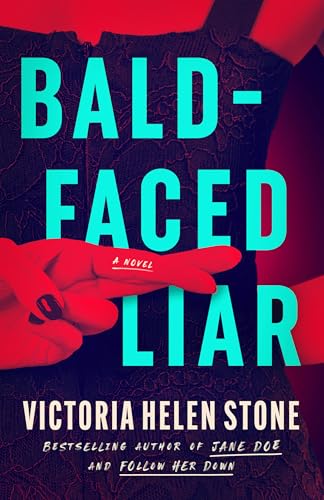 Bald-Faced Liar by Victoria Helen Stone
Mogsy’s Rating: 3.5 of 5 stars
Genre: Thriller, Suspense
Series: Stand Alone
Publisher: Lake Union Publishing (June 17, 2025)
Length: 300 pages
Author Information: Website
As you can probably guess from the title, Bald-Faced Liar by Victoria Helen Stone is a psychological thriller that explores the slippery nature of truth. But while there’s plenty of like here, especially in the way the author plays with identity and secrecy, this novel wasn’t quite as sharp or suspenseful as I’d hoped it would be.
Set along the sunny coast of Santa Cruz, Bald-Faced Liar follows a woman of many different identities. It’s why she’s grateful to be called Elizabeth, a versatile name that lends itself to countless nicknames and is common enough to allow her to fly under the radar on google searches. For most of her life she’s been on the run from her past, drifting from one city to the next, reinventing a new life for herself every time she moves. In Santa Cruz, she can blend in among the never-ending supply of tourists, whom Elizabeth also takes a certain voyeuristic pleasure watching from afar. Learning their names, scrolling through their social media feeds, and piecing together their dramas, she thrives on imagining the lives of others because her self-imposed detachment keeps her from participating in normal interactions herself.
Still, there’s a certain charm to her new home, and against her nature and better judgment, thoughts begin to creep in about putting down roots here permanently. After all, life is good, and dare she hopes she’s finally escaped the long shadow of her past? However, this sense of peace does not last. Cracks start to form in the carefully constructed illusion of her existence when she realizes someone is watching her. At first, it’s subtle—an anonymous online attack meant to sabotage her at work, followed by threatening messages in the mail. But soon, these incidents begin to escalate into more dangerous territory, causing Elizabeth to fear for her life. With no one to turn to—she’s lied to too many people for too long— she wonders if everything she’s been running from has finally caught up with her.
With such an eccentric protagonist, it’s safe to say that Bald-Faced Liar is the kind of story that runs on the strength of its quirky character work. When the book opens, we literally meet Elizabeth in a tight spot, eavesdropping on her neighbors and delighting in the scandalous details of their lives. From the start, it’s clear that while Elizabeth may appear outwardly ordinary, there’s something deeply broken beneath the surface. Her obsession with spying on others and the thrill she gets from uncovering their intimate secrets point to some unresolved trauma from her childhood. In fact, throughout the early chapters, the subject keeps popping up, leading readers to question: What exactly did she do to result in all the paranoia and constant lying? Was it something scandalous, a crime of some sort, or perhaps even something unforgiveable? At this point, all we know is that whatever it was, it turned her into a pariah and set her on her nomadic path.
On the story front, the novel also comes out strong. Because of all the questions hanging in the air, there’s a perpetual atmosphere of tension that lingers, especially as more side characters are added and the suspect list starts to grow. While none of the supporting cast are explored too deeply, admittedly this might have been a direct consequence of Elizabeth’s aloofness and guarded behavior. Regardless, several of them actually offered potential for surprising turns and red herrings. The setting of Santa Cruz also added a lot flavor, and the author did a good job of bringing the quintessential California beach town to life, making it easy to see why Elizabeth loved living here so much.
That said, the excellent setup of a slippery heroine caught in a web of paranoia eventually unravels under the weight of its own twisty plotline and shifting character tones. Take Elizabeth, whose moral ambiguity made her a fascinating study for the first half of the novel when you were never quite sure whether to hate her or root for her. But as the truth gradually came to light, it turned out the big bad reveal wasn’t nearly as damning as it was made out to be—at least, not to me. In fact, many readers would probably feel sympathy for Elizabeth, or, at the very least, not hold anything against her. Personally, I found her much more intriguing when I had a more conflicted response towards her. I hate to say it, but once her backstory filled out, she became less of an enigma, falling into a more familiar and clichéd role.
I also thought the ending overstayed its welcome just a little. After delivering a satisfying punch at the climax, the book probably should have wrapped up quickly on a high note, yet the extended denouement dragged on just enough to feel a bit silly, undercutting the tensions that the story had worked so hard to build.
Other parts of Bald-Faced Liar will strain your ability to suspend disbelief, but despite some hiccups along the way, this book still has a lot going for it. The writing is sharp and witty, and the pacing moves well. The story never forgets to stay entertaining, even when it’s straying into the absurd. It’s a thriller that walks a fine line between dark suspense and character-driven drama, resulting in a mixed bag for sure, but an interesting one.


 The BiblioSanctum