Book Review: The Spirit Thief by Rachel Aaron
Posted on June 23, 2013 Leave a Comment
 The Spirit Thief byRachel Aaron
Rachel Aaron’s The Legend of Eli Monpress is a series that has repeatedly popped up on my recommendations lists in the past; I swear every few weeks I’ll be browsing through suggestions on my online book stores or Goodreads pages as usual and this blue cover will show up, with the man’s face on it flashing his sly little smile at me. It’s like he’s saying, “READ ME! Come on, you know you wanna!”
Obviously, my curiosity gotten the better of me, or more accurately, World Without End’s Women of Genre Fiction Reading Challenge gave me the perfect excuse and motivation to finally pick this book up and read it. And I’m happy to report, I wasn’t disappointed.
The book begins with a kidnapping. Eli Monpress, the greatest thief of his age and also a talented wizard, has decided to pull off the greatest theft the world has ever seen, and what greater theft is there than the stealing away of a nation’s king? His plans to increase his notoriety fall through, however, when he unwittingly brings about political turmoil that could threaten the kingdom and even the spirits of the land. Miranda Lyonette, the spiritualist tasked to hunt Eli, ends up joining forces with him and his friends to put a stop to the evil forces before they can destroy everything.
I’ve noticed that in recent years, the genre of fantasy has evolved towards being darker and grittier, and on the whole I feel it’s a good trend. Still, every once in a while it’s still nice to see something like The Spirit Thief that’s fun, down-to-earth and makes you feel good after reading it. There’s a lighthearted feel to the story, but there’s also enough suspense in it to hook you. I for one found it very engrossing from the get-go.
I also found the magic system intriguing. The wizards in this world don’t perform magic directly per se; instead they make requests or set up arrangements with the spirits that exist in everything from mundane objects like doors to the natural elements like the air, lava, or even full bodies of water. Miranda the spiritualist, for example, maintains symbiotic relationships with multiple spirits who serve her, and in return she provides them safe places to reside and lets them feed off her magic.
My only issue is a minor one. It has to do with the characters and a feeling that they haven’t met their full potential. For one thing, the series’ eponymous character feels merely like a side character, and while Eli is described as roguish and charming, I can’t help but think of him as more cocky and annoyingly obnoxious. Maybe it has to do with how much he’s constantly described as “grinning”, and all I can picture in my head is that cover image every single time. The same goes for his companions Josef the swordsman and Nico the demonseed; both are very interesting, but don’t seem to feature prominently enough for me to truly care about what happens to them.
My feelings for the characters not withstanding, this was a good start to what looks to be a series I definitely want to keep reading. If the rest of the books are as entertaining and fun as this first one, I think I’ll enjoy it quite a bit.

Book Review: World War Z by Max Brooks
Posted on June 22, 2013 Leave a Comment
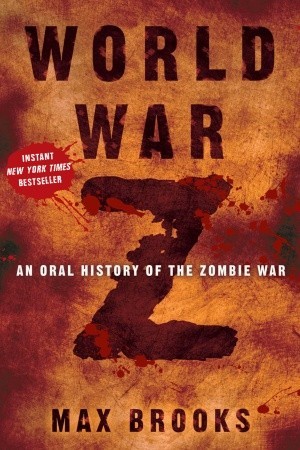
World War Z: An Oral History of the Zombie War by Max Brooks
The thing that sets this zombie story apart from the others I’ve experienced is right there in the title: WORLD War Z. So many other zombie stories are America-centric and work on the vague notion that the epidemic is occurring elsewhere in the world, but there is no interaction with anyone but the small pocket of main characters within the United States. Isolation is a huge part of those stories, which ups the tension and emotion, but it always bothers me that a global apocalypse seems to immediately reduce the world to a handful of people right from the start.
In this case, it starts with a handful of people in China, a small village identified as ground zero, the source of the epidemic, then moves throughout the world as the author interviews various survivors of the horrific events. Brooks has already compiled enough information for an official report on the events, but because of all the information he learned doing so, he is compelled to write a more human report. This is another difference about the book that appeals to me: few of the survivor stories are coming from the “regular” people. A lot of the stories come from people responsible for some of the major decisions and events that took place in the war. It is interesting to note how many interviews take place within various types of institutions, or comment on the breakdowns of the people in power after they are forced to make decisions that amount to the sacrifice of thousands of innocent human lives to contain and ultimately destroy the undead.
The nature of the recounts does not allow for a lot of emotional attachment to any of the characters and the emotions of the characters themselves has to be extrapolated by the reader based on the stories they tell. Ironically, my favourite story was the one of Paul Redeker. An apparently emotionless man who turned the tides of the epidemic in Africa through the implementation of a controversial plan.
I also really liked that this wasn’t just about fighting the zombies. It was a surprisingly in depth look at the various government and military institutions around the world. Their reactions to the event are very realistic and remained so throughout. And in the end, no one country could claim any kind of victory. There is also a lot of emphasis on the guilt that comes with “just following orders.”
Because the book occurs after the events, there is no sense of immediate danger. This might not work for some readers, and evidently, it doesn’t work for the upcoming movie, which clearly pits Brad Pitt against the zombies. I also notice that the zombies are more like freaky carpenter ants in the trailer, speedily climbing over each other to swarm their targets. There is a small moment in the book that describes the zombies as a “swarm,” which I suspect is what inspired the movie interpretation of their movement habits, but otherwise, the book maintains the shambling corpse that is zombie flick standard.
My book club is reading this book because of the upcoming movie. We’re curious to see how far it strays from the source material, as the trailer already seems to depict. I’ll check back later with my report!

Cover Lover: Revolution
Posted on June 22, 2013 Leave a Comment

Welcome to Cover Lover, a feature on this blog dedicated to book covers! For a long time, I’d wanted a place where I can share some of my favorite covers, or talk about any that might have caught my eye. So when I came across this idea on fellow gamer/book lover Angelya’s site The Oaken Bookcase, I jumped at the opportunity to adopt it as well. The “meme” was originally created by another friend of mine, Jaedia, on her book blog Once Upon A Time, so be sure to check out both their sites and take a look at some of the covers they have featured.
If you haven’t read Promise of Blood by Brian McClellan yet, you’re missing out. It’s got all the good stuff, its story encompassing an epic scope of events unfolding before a backdrop of war, politics and revolution. Not to mention the really cool magic system! Readers of adult contemporary fantasy should feel right at home in this world of Powder Mages and Privileged. You can read my full review here.
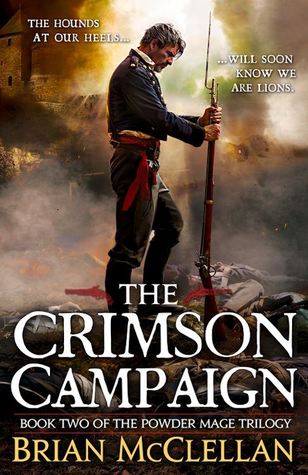
As you can imagine, I’m eagerly awaiting the release of the sequel The Crimson Campaign, which probably wouldn’t happen until early next year. For now, I’ll just have to settle for drooling over its cover image.
One word: sexy.
Comic Review: Dejah Thoris vol.4 by Robert Place Napton
Posted on June 21, 2013 Leave a Comment
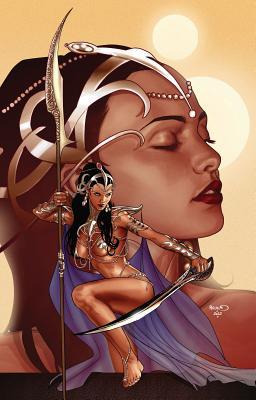
Warlord of Mars Dejah Thoris Volume 4: The Vampire Men of Saturn Tp by Robert Place Napton
My husband and I saw the John Carter movie and thought it was reasonably good. I didn’t expect the movie to hold true to the book, but I didn’t expect to dislike the book quite so much. Pulp fiction clearly doesn’t work for me, but apparently I’m as much a sucker for Dejah Thoris’ lovely face and jewel-covered pretty bits as John Carter and every male in her universe.
Eventually, I resigned myself to ignoring the attire, since no one else in the book noticed that she was almost naked. Even Dejah herself comments on how glad she is to have furry boots and a cape to keep her warm while she traipses through the ice and snow. The only person bothered by her almost nudity is me. The men and women (uh wait a minute… there weren’t any other women except for the three bloodslaves) of the story see beyond her T and A to the strong-willed, brave and noble woman behind them. Even the vampire who falls in love with her is in love with the passion and strength he tasted in her blood. Unlike John Carter in A Princess of Mars, he didn’t merely fall in love with her the moment he saw her boobies.
As the story goes, the Princess of Barsoom is on a self-imposed exile after being forced to commit murder under mind control. The guilt of her sins is mentioned initially, but eventually forgotten when she is kidnapped to Saturn by a race of vampires. At least she was able to get out of the snow. Edgar Rice Burroughs intricate political plotting and world building is sorely missing from this comic. The vampires are just evil creatures who subjugate the race of purple people and put Dejah in chains.
I suppose I was hoping that, in spite of the (lack of) clothing, the comics would take influence from the movie and make Dejah Thoris slightly more than just a trophy princess. Maybe a little more Red Sonja, perhaps. Dejah does get to be a self-rescuing princess, at least, freeing herself from chains that make her pose awkwardly not once, but twice (or was it three times?) in the story. But in the end, when the vampires threaten her kingdom of Helium on Mars, she is forced to unleash her ultimate power:selling herself to a man to save her kingdom.

Mogsy’s Super-Duper Ginormous Summer Reading List
Posted on June 21, 2013 Leave a Comment
Today is Summer Solstice, marking the longest day of the year and the beginning of summer for the northern hemisphere. I figure what better time, then, to throw together a list of books I plan on reading for the next three months?
Now, I’m not insane — I don’t actually expect I’ll be able to hit every single title on this list, but when the number of books in your TBR pile is in the triple digits it sure helps to prioritize. It’s always better to have more than to have not enough, that’s my motto. This should help organize my reading a little.
So, without further ado, away we go:
Audiobooks, Hardcovers, eBooks, Library Loans


The bread and butter — those titles I have on hand with me that are sitting at the top of my list of books I’m itching to read. A lot of them, like The Coldest War, Mockingbird, The Isle of Blood, The Blinding Knife, etc. are later installments of series I’ve really liked and am hoping to finish up or catch up a bit on this summer. Other highlights are Odd Thomas, a book that has been recommended to me by a ton of my friends, and American Gods because it’s seriously time to finally lose my Neil Gaiman virginity and read one of his novels. I’m also really hoping I can make time for The Winds of Khalakovo, which came with my pledge tier reward when I supported Bradley P. Beaulieu’s Kickstarter for the third book in the trilogy, The Flames of Shadam Khoreh.
Book Club, Events, Reading Challenges


The Drowning Girl is Levar’s Rainbow Book Club’s read for July and I’m really looking forward to it. This means there will be another added to this list when August rolls around, and between all the great choices up for voting I’m already having a tough choice deciding what I want to read for that month. Glamour in Glass, Songs of the Earth, and Of Blood and Honey will be the books towards my Worlds Without End Women of Genre Fiction reading challenge. And finally, I’m really looking forward to The Masque of the Red Death, which I’ll be reading later on in the spirit of Clockwork Summer, a feature my fellow blogger Hannah is planning, so keep an eye out for that. I’m not even sure that book is truly Steampunk, but that’s how a lot of people have categorized it and I’m just going to go with that.
Review Editions, Pre-release eARCs and Hard Copies


A couple books have found their way into my mailbox in the last few weeks, and of course there’s also the growing NetGalley backlog which I really want to chisel down before I’m tempted to request any more.
Can’t Wait Upcoming Releases


These are the highly anticipated books coming out between now and the beginning of September. Let’s just say August is going to be great month — or a bad month if you’re my wallet or bank account. Lots of great books are going to come out then, and two that I’m most definitely going to be snatching up on Day One are The Crown Tower and Emperor of Thorns, both expected to come out on August 6th. Seriously, I need those books in my life. August 6th is coincidentally also when Codex Born comes out. I swear, that one single day is going to utterly destroy my book buying budget.
Broken Homes is another book I really want to get my hand on on release day, but unfortunately it probably won’t be published in North America until early 2014. If the news about the audiobook is accurate though, I may be able to snag it from Audible.
Blood and Beauty is my one concession to Historical Fiction, because I have a thing for the Borgias. And then come the video game tie-in novels, which are my guilty pleasure. While The Time of Contempt is not technically a game novel, the books and the character are of course what inspired The Witcher games.
Gonna be a summer of great books!

Book Review: Blackbirds by Chuck Wendig
Posted on June 20, 2013 3 Comments
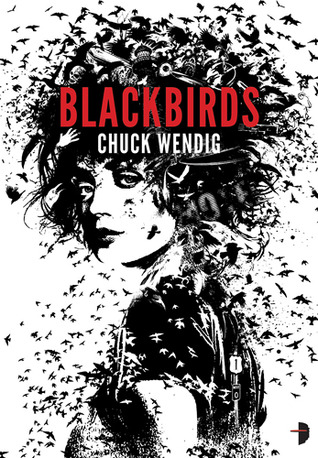
Oh man, what can I say about Miriam Black? Funny how Chuck Wendig was able to hook me on his Blackbirds female protagonist the way he couldn’t with Mookie Pearl in The Blue Blazes, my first book by this author. I may have mentioned my aversion for rough, brutish, brawn-over-brains characters like Mookie in my review of that book, but here I find myself completely taken with Miriam and her snarky, foul-mouthed, firebrand hellion devil-may-care badass ways. This chick had me at, “That’s me. My fair fuckin’ lady.”
Miriam also has a very special ability — she can foresee the manner in which a person will die and know exactly when, down to the very micro-second. All she needs is any skin-on-skin contact and the visions will trigger, the deaths playing out in her mind in their entirety but lasting only a couple seconds to anyone watching from the outside. She used to care, used to want to save others from their preventable demises, but quickly learned her lesson: What fate wants, fate gets. Now she’s a vagrant, hopping from city to city trailing those she knows will soon meet their end, so she can swoop in and rob them at the time of their deaths and no one will be the wiser.
Then one day she meets Louis, the random truck driver who gives her a lift and is the first person in a long time to show her even a hint of kindness. She finds she likes him, but then she shakes his hand and sees his death — in 30 days, Louis will be brutally murdered. Miriam is shocked; she’s seen hundreds of deaths from accidents, suicides, and health problems, but very rarely has she seen murder. And the kicker is, in her vision right before Louis dies, he looks up past his killer and calls Miriam’s name…like he sees her there.
It was difficult to put this book down. Obviously, the plot being such a tease was a major draw, but like I said before, I was also very much taken with Miriam. I still don’t know why, really; it’s not like I can relate to her all that easily since I am nothing like her, but I felt connected to her regardless. She’s definitely unique, and it’ll be a mistake going into this book expecting her to be just another independent, tough-as-nails paranormal fiction female protagonist. Miriam would probably just beat someone like her up, but only after cussing her out and drinking her under the table.
A lot of the criticisms I’ve seen directed at this book claim Miriam’s character doesn’t read like a “real girl”, but I have to disagree. Not only do I know women who act just like Miriam, I also think that her rough, trashy badass exterior reflects the kind of life she’s had growing up with her disturbing power, making her behavior and personality convincing and refreshingly honest. At the same time, I sense that underneath is someone more perceptive and complex, with a introspective, kind and caring side to her that you just have to dig a little bit beneath the surface to find. Okay, maybe make that dig A LOT beneath the surface, but I still know it’s there.
This book also made me start appreciating Chuck Wendig’s style a lot more than I had before. His writing, topics, and characters are infused with this attitude which to me is a little reminiscent of the transgressiveness in books one might find by authors like Chuck Palahniuk or Bret Easton Ellis. I also love the paranormal spin to Blackbirds, but I would also hesitate to categorize it as urban fantasy because it throws so many of that genre’s conventions out the window; my guess is that a person can be really put off by this book if caught completely unprepared by it.
Sometimes, it does feel like the book is deliberately out to shock you, what with some of its violent and graphic scenes as well as Miriam’s potty mouth, but I was strangely cool with it. The subject matter also had a way of making me feel deliciously unsettled, but it at least made this book memorable. I admit I was somewhat initially hesitant about tackling another Chuck Wendig book after enjoying but not being completely blown away by The Blue Blazes, but I definitely liked Blackbirds more than I thought I would.

Comic Review: Batgirl: Knightfall Descends by Gail Simone
Posted on June 20, 2013 Leave a Comment
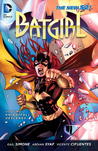
Batgirl, Vol. 2: Knightfall Descends by Gail Simone
Just dial F for Feelings on this one.
My second journey into a Gail Simone book, and let me just say, that I really enjoyed this book. Gail seems to have found her footing in this book and with the character. Much of the campiness that slightly turned me off was toned way down in this book. There was still some campiness there, but not to the same degree as the previous volume. This book follows Barbara on a series of encounters ranging from a run-in with the Court of Owls to the emergence of vigilante named Knightfall who may have been an innocent girl turned into a crazed “hero” intent on saving Gotham by purging it of its evil.
The thing I’m finding very interesting in these books is the storytelling format. So far, the volumes have been made up of various mini-stories rather than having one specific arc focus. I think the reason this works so well with Barbara’s story is because we watch as she adapts to these different situations while coping with the various thoughts and feelings she’s harboring.
Continuing with the theme from volume one, Barbara still stands on shaky ground. She continues to be a dichotomy. She’s still trying to come to terms with her capabilities as a hero, and she’s beginning to question “the system.” She questions if they’re contributing to the problem by protecting the “haves” and their investments from the “have-nots” rather than addressing the problem of poverty and the disproportionate gap between the two groups. She asks is she truly a hero in this respect?
She also comes face to face with very important parts of her past in the form of her mother, which started in the last volume, and one of the thugs who witnessed her crippling at the hands of Joker (an encounter that turned out differently than I expected). There’s also the issue of Barbara’s brother, James. She’s unaware that something is bubbling that will probably blow up on her soon. Throw in the fact that she’s still dealing with her survivor’s guilt and trauma, which tends to make her react in very emotional ways in some situations because she’s triggered.
A character that I’m rapidly becoming to enjoy is Melody McKenna, an investigator for GCPD whose story we learned more of in this volume. Barbara keeps insisting that Melody McKenna hates her. That is so not true, and it’s so obvious that it’s not. McKenna is upset with Barbara because of what happened with her partner after Barbara’s return. That’s obvious as well. However, while McKenna has an invested interest in Batgirl, she’s allowed Barbara on numerous occasions to do her thing. In this volume, McKenna seems to show that she fully grasps what happened with her partner is not Batgirl’s fault because she relates a situation where she acted in a similar fashion as Barbara with the same outcome.
I could chalk this up to Barbara’s current conflicting feelings, though, how she seems to take everything so personally and feel it so deeply. She feels every loss. She sees the situation with McKenna’s partner as something she should’ve handled better, so maybe this insistence that McKenna hates her is just a transference of her own harsh views of herself onto a tangible person/object.
My only complaint with this was In the Line of Fire, which is issue #9 and part of the crossover with the Court of Owls. This pissed me off so bad, but not because it was badly written. Truthfully, it was very good, and it was shaping up to be my favorite part of the book (now my favorite part is the Batwoman/McKenna/Batgirl team-up near the end), but it just ends without you really knowing what happens. I don’t think it really think this should’ve been included since it heavily depends on you reading issues from other books to get the full scope of what’s going on.
The other stories have an “ending,” except this one, and then the next story goes immediately into this Knightfall storyline, which will be resolved in the next volume. You’re left wondering what happened, if you haven’t read it, because it was obvious a big deal. However, it does say that you need to go to Batman #9, but still, I had to track down this Owls business to read soon. Remember, I said I wasn’t really trying to get into all this DCnU stuff, but DC is making me.
I think this is shaping up into a fine book. I like the sort of darker approach to her return. It’s not all sunshine and rainbows. Barbara has issues that have plagued her return and will presumably continue to plague her for a while. Watching her triumphs and failures, her insecurities, her growing confidence, makes her feel like a very believable character.

Book Review: Meeting of the Waters by Kim McLarin
Posted on June 19, 2013 Leave a Comment

Meeting of the Waters by Kim McLarin
The meeting of the waters is an actual natural event that occurs in Brazil. It’s where the water from the Solimões River (which is muddy) meets with the dark water from Rio Negro. They run side by side without mixing. I’ve seen pictures of it, but I hope to see it in person one day. The phenomenon is mentioned in the book and holds much significance to the story itself.
Porter Stockman, a white journalist from Philadelphia, goes to Los Angeles to get the story on the Rodney King riots. While there, he finds himself the target of a group of angry, black people. Fortunately, a black journalist, Lenora Page, saves him. When he finds out that she will be working at the same paper, he goes out of his way to show her his gratitude, which results in love.
I loved the characters in the book. You have Porter Stockman. His mother is overbearing. His father doesn’t seem to care about much, and his sister is a maverick. He spent his teenage years wondering what the hell he was going to do with his life. He likes to think of himself as a white person who doesn’t see race as an issue. He’s an all-around good guy. He’s believable, funny, and real. He doesn’t do all the right things, and he doesn’t do all the wrong things. He makes human decisions, which many authors tend to forget about.
Lenora is a very pro-black woman who can’t believe she’s falling for a white man. Her father left her family when she was young, and her mother is dealing with being bi-polar. Her younger brother still longs to find their father, but she’s given up all hope. She’s very proud to be a black woman, and she’s quick to let everyone know. She’s independent, smart, and sassy. She loves herself without being a stereotype, and honestly, a lot of women—of any race—could take a lesson from her.
The only thing that annoyed me about this book was Lenora’s preoccupation with race. I understand this was important to establish her character. She was trying to make Porter aware of the prejudices that people of color and biracial couples go through, but it turned into borderline obsessive after a while.
Being a woman of color myself, it even drove me mad. I definitely understood how helpless Porter felt. I could see the wedge she was driving into their relationship with race. It was tiresome, even for me – the reader. She manages to break a really good man, and by the time she realizes her mistake, things are already broken. Then they must choose what they really want.
Other than that, I loved this book. It really makes its reader thing about race relations. One of the most important questions posed in the book is not about Porter and Lee’s relationship itself, but the question of what makes a person racist. It’s not just a typical romance where two of the characters happen to be a different race. It really gets the readers thinking about the politics behind race.
Mogsy: Favorite Book Turned Into A Movie
Posted on June 19, 2013 Leave a Comment
In the end, I had to go with this one. After 20 years (holy crap, has it really been that long?!) the movie is still just as entertaining for me now to watch as it was in the theater the first time I saw it as a little kid, and it was based on what was, in my opinion, one of the best books by Michael Crichton.
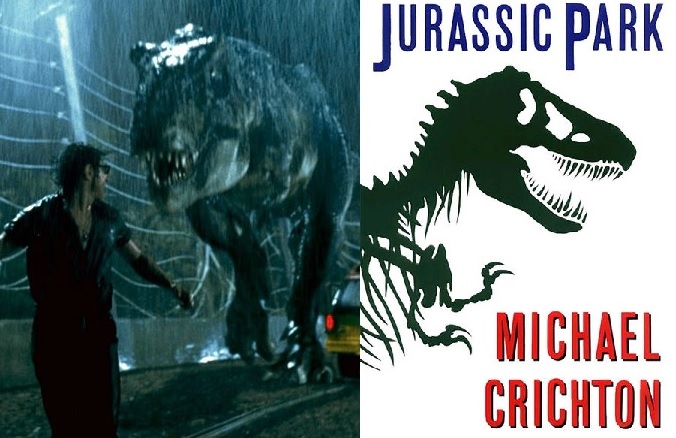
“You know, at times like this one feels, well, perhaps extinct animals should be left extinct.”— Ian Malcom, Jurassic Park by Michael Crichton


 The BiblioSanctum