Book Review: Ender’s World by Orson Scott Card
Posted on July 9, 2013 Leave a Comment
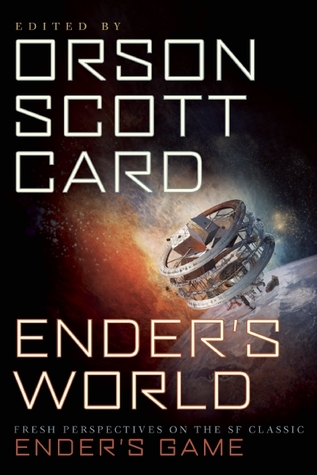
Ender’s World: Fresh Perspectives on the SF Classic Ender’s Game by Orson Scott Card
Ender’s World is a collection of essays on Orson Scott Card’s classic, Ender’s Game, which also features Q&As with fans, answered by Card himself. The introduction is written by Card and over those pages, he carefully analyzes and explains what the story of Ender’s Game and the character of Ender Wiggins mean and mean to him. He notes that none of this was in his head when he first wrote the short story decades ago. He just wrote what felt right, but as time passed and the book rose to its well-earned critical acclaim, his introduction shows just how much he cares for the character and the world he created. The collected works in this book identify people who have come to care for Ender and his Game as well, but for differing reasons. The variance in authors, from military strategist to TV show creator and more, indicates that Ender’s Game is a book that transcends the realm of science fiction and speaks to people of all walks of life.
My favourite essay was the first, “How It Should Have Ended,” where Eric James Stone laments that Ender’s story went on beyond his victory against the buggers to reveal a deeply depressed Ender who sought atonement in the sequels. In Stone’s first reading, he determined, like many, that the hero’s story should end with the victory parade. But when he read the book the second time and attempted to stop where he felt it should have ended, he realized he couldn’t. Because he realized that this story wasn’t just about a kid beating the odds stacked against him to create an elite team of soldiers, tricked into defeating a deadly enemy by willingly, but unwittingly sacrificing human lives – it’s a story about Ender Wiggins. A hero. A soldier. A child.
This is a theme that played strongly for me with Ender’s Game and its sequel, Speaker for the Dead because of my appreciation for Joseph Campbell’s The Hero With a Thousand Faces. I’m the person who forces herself to sit through the “Return to the Shire” at the end of Return of the King and loves Peter Jackson for including it even though, yes, it was pretty boring. But I will argue tooth and nail that it was necessary to show the path of the hero. There is no true victory celebration for a hero because the battle for him or her is always a Pyrrhic one. They might save their home and the people they love, but they sacrifice their souls to do so, leaving them no home to return to.
This is even more tragic for Ender because he is a child. He not only loses his home, but his childhood.
transformation of our children into heroes.”
Before I turn this into my own essay about what Ender’s Game means to me, let me simply recommend this book to any fan of the Ender saga. You may not enjoy or agree with all the points expressed, but hopefully you’ll appreciate just how deeply this story has reached for some and why.
With the movie coming out soon, it becomes that much more relevant and gives me high hopes for how true to the book the film will be. It is clear from his introduction that Ender is Card’s baby and he wouldn’t allow his beloved on to the big screen without his supervision and the utmost care and dedication from those to whom he hands Ender over to.
With thanks to NetGalley for providing the opportunity to read and review this book.

Cover Lover: Children of Fire
Posted on July 8, 2013 Leave a Comment

Welcome to Cover Lover, a feature on this blog dedicated to book covers! For a long time, I’d wanted a place where I can share some of my favorite covers, or talk about any that might have caught my eye. So when I came across this idea on fellow gamer/book lover Angelya’s site The Oaken Bookcase, I jumped at the opportunity to adopt it as well. The “meme” was originally created by another friend of mine, Jaedia, on her book blog Once Upon A Time, so be sure to check out both their sites and take a look at some of the covers they have featured.
This afternoon, I came home to an email from fellow blog contributor Wendy, who linked me to British cover art of Drew Karpyshyn’s upcoming epic fantasy Children of Fire, as it appears Amazon UK had just put it up.
OH MY FREAKING GOD:

Book Review: Three by Jay Posey
Posted on July 8, 2013 1 Comment
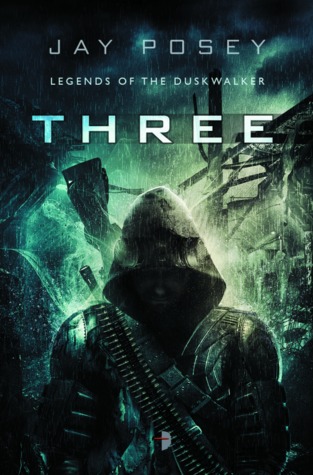
Expected Date of Publication: July 30, 2013
Thank you to NetGalley and Angry Robot for providing me with a pre-release copy of Three in exchange for an honest review. This futuristic, post-apocalyptic science fiction novel piqued my interest as soon as I saw it, and I knew even from reading its simple and brief description that I definitely had to check it out.
The story opens, introducing us to a world where society has crumbled and human activity only exists in pockets of safe zones across a devastated landscape. When the sun sets, creatures known as the Weir come forth and the night is filled with their glowing blue eyes and sounds of their electrifying howls. The setting is unmistakably post-apocalyptic and even has the slight feel of a western, but at the same time it appears a significant portion of technology has survived. Throughout this novel you will encounter characters utilizing high-tech weapons, implants, chems, mechanical limbs and the like.
The book features our eponymous protagonist Three, a lone gunman who has turned to bounty hunting to make a living. One day, he emerges from the wasteland to collect on a successful job and encounters a distressed woman pleading for help with her young son in tow. Three has always worked alone and prefers it that way, so he is surprised to find himself accepting the mantel of protector to Cass and her boy Wren. To keep themselves alive, the trio must go on the run to escape the merciless adversaries who are after them.
I remember finishing the prologue and being a little unsure about what to make of it, which really isn’t all that unusual given how it typically takes me at least a few chapters to get a feel for a book. But then I read the first chapter which introduces Three, and I was hooked. There’s just something about him that makes the reader want to learn more, his character being a man of few words notwithstanding. While Three may play to the familiar dangerous-looking-but-honorable-tough-guy archetype with simple and straightforward motivations, the author definitely knows how to present his character as someone you want to root for right away.
I also liked the trust and respect that develops between Three and Cass over the course of their journey. To me it felt really natural and gradual, even with the many trying yet justifiable obstacles along the way. Cass loves her son Wren and guards him with the ferocity of a lioness protecting her cub, so it’s such an engrossing process to see her views evolve as she begins to accept Three and make room for him in their lives.
I very much enjoyed the setting as well, which I talked a bit about at the beginning of this review. There are elements of it that will be familiar to readers of post-apocalyptic science fiction, but it also feels unique. My one regret is that the book didn’t provide as much context as I’d have liked, such as how the world became this way, how some of this strange and awesome technology came about, what gave rise to the Weir and where they go during the daytime and how they turn others into one of them, etc. None of this information is necessary to understand and follow the story, of course, but my curiosity gets the better of me sometimes, and it sucks having these questions hang at the back of my mind as I’m reading, especially for such a fascinating world.
Needless to say, for a debut novel, I thought this was very impressive. Three may be a little light on plot, but I like that it makes up for this with its fast pacing and well-written action sequences, sometimes alternating between the viewpoints of the various characters like you see in movies, creating this atmosphere of danger and suspense.
If his goal was to leave me wanting to know more about these characters and this world, then Jay Posey definitely succeeded. I wasn’t sure before if this was going to be a series and if there were going to be any more books, since the story’s ending tied up rather nice and neatly (which was a nice plus). But then some digging around showed me that Legends of the Duskwalker is indeed going to be a series, so I’ll be sure to be on the lookout for more by this author in the future. There’s still so much I want to know about the history of some of these characters, how they got to where they were, and what else is in store for them.

Audiobook Review: The Dead-Tossed Waves by Carrie Ryan
Posted on July 7, 2013 1 Comment

The Dead-Tossed Waves by Carrie Ryan
First of all, let me get this out of my system: dead people aren’t tossing anything. They are being tossed. In my head, this book is more accurately titled The Wave-Tossed Dead.
Secondly, this was an audiobook listen and while Tara Sands did a good job and her voice worked well for both the age of the characters and the target audience, I couldn’t help comparing at least some of the characters to My Little Pony…
With those diversions out of the way, I can move on to a proper review of the sequel to The Forest of Hands and Teeth.
The story takes place far into a dystopian future following “The Return,” an unexplained event that brought the dead back to life. Pockets of society remain, surrounding by the dead. Most are the typical slow moving zombies, but once in a while, without enough zombie presence, a “breaker” is created. I like that these zombies aren’t just about feeding. They are about infecting. A breaker’s birth and their speed and agility lends itself to this concept. Once a zombie here has infected someone with a bite, it eagerly and immediately seeks new prey, greatly increasing the threat if you can’t just kneecap a friend to buy yourself more time to escape.
The main protagonist is Gabry (Twilight Sparkle), daughter of Mary from the previous book. Gabry is Mary’s exact opposite. Mary was all about herself, oblivious of how her selfish actions basically ruined the lives of other. Gabry is hyper-aware of others and spends a lot of time going over her guilt and woulda coulda shoulda It can be annoying, but I weigh her against how infuriating a character her mother was and find that Gabry is at least tolerable. I had hoped this book would redeem Mary a bit with wisdom in her maturity, but nope. She’s still selfishly all about abandoning loved ones and responsibilities to fulfill her own needs.
Ryan presents both Mary and Gabry as fairly typical teens, and I think a teen would truly appreciate or at least understand their actions and even their selfishness. I have apparently reached the point in adulthood where I have forgotten that I may have been just like these girls and will instead just shake my fist and say “those damn kids!” with conviction.
Those damn kids (i.e. Gabry’s friends with Gabry nervously tagging along thanks to peer pressure) quickly launch the story with their adventure outside of the protective walls of Vista, resulting in an attack that forces Gabry on a dangerous path to save everyone else.
This book also introduces a cult of worshippers of the undead. I’m always wary of cults, because religious zealotry can tediously swallow up a plot. That wasn’t the case here and moreover, the cultists were treated respectfully in their descriptions, even taking into consideration some of their rituals.
The romantic plotline was fairly typical, though not cloyingly so. YA isn’t my usual genre, but I do like the way Ryan doesn’t pull punches with the darkness of her books. Don’t expect happy endings. As frustrating as Mary and Gabry can be, I respect that they and the events they deal with are all realistically handled.

Wendy: Most Overrated Book
Posted on July 6, 2013 Leave a Comment
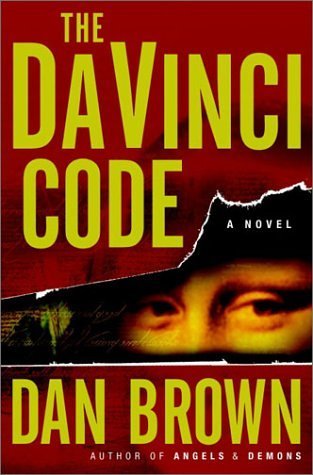
This book spawned my first rule about “bestsellers” – Don’t believe the hype, even if it comes from Oprah.
I read this when it first came out. A bunch of old university friends and new acquaintances met up at a nightclub and, chilling over drinks and music, found our mutual love of books. A fledgling bookclub was born, with this selected as our first read. Unfortunately, gathering plans failed to pan out so I will never know what they thought of the book. But it was only because of the tentative meeting that I bothered to finish it.
Setting aside the controversy that came with, there were some interesting ideas presented, but the writing was horrendous. It reminded me of my Nancy Drew Case Files collecting days, with Nancy clinging to a rope by her fingernails in each cliffhanger chapter ending. When I finally made it to the conclusion, I headed straight to the library to drop the book in the donation bin.
Graphic Novel Review: Batman/Huntress: A Cry for Blood by Greg Rucka
Posted on July 6, 2013 Leave a Comment
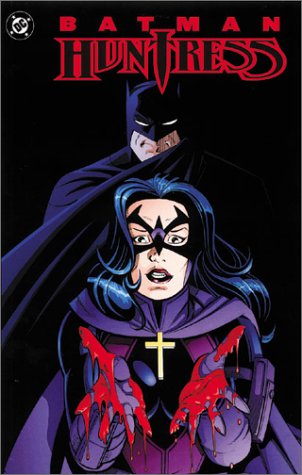
Born into a mob family, Helena Bertinelli lost her family at a very young, becoming the sole survivor with the Bertinelli last name due to a systematic assassination on her entire family. Years later, after being trained by a family of assassins who took her in while she was hiding in Sicily, Helena is inspired by Batman to become the face of fear, cutting down mob members, people who she’d thought of as her “family.”
At the start of this arc, she’s already taken down the men who killed her family, including the man who ordered the hit. However, she still has more questions than answers, and her unmethodical, vigilante ways have steered her down a path of anger and brutal violence, acts that have put her at odds with the Bat family. Now, someone is framing her for the murders of mob members, putting her in a direct collision course with Batman.
This was another recommendation from a friend. Greg Rucka is quickly becoming one of my favorite writers. This story was amazing and left me feeling much more satisfied with where it went and how it was resolved than The Hiketeia. Rucka has a way of getting to the heart of the character and making them seem so very real, so very human. He knows how to pace his action and character-building without sacrificing the of the enjoyment of the story by droning on and on.
You might as well call me a Huntress novice. Even though I knew of the character, I knew very little about her history—mainly because she seems to have many back stories. She was just never a DC character that I heard much about in my very little dealings with the DC universe. Rucka has taken this character, though, and given her a cohesive, complex story that really shapes her as a character. I came out of this arc with a new respect for Huntress and a newfound favorite DC heroine.
I hadn’t read any of No Man’s Land when I finished this and knew very little about the events that happened during that massive arc (just finished Batman: Cataclysm, as of this writing), but there was mention of how out of control she was during that, and it was shown in this story, too, but not nearly as brutal. She’s really at odds with herself here. She maintains her innocence, but doesn’t make it much of a secret that she’s glad these men are being killed. The mob has made her who she is, and she finds herself tasked with the duty of bringing down the “family” that destroyed her and took care of her while continuing to interact with them.
But this is a story about self-discovery and personal peace for Huntress as much as it is a story about her proving her innocence to Batman. I loved how her history, her background, was taken to make this such a complex history. She explains how things worked in her circle, how injustices are dealt with where she comes from. You see her hardness, her pain, juxtaposed against a woman who teaches high school in her day-life. So many layers were added to Huntress.
There was not one thing that was out of place in this story for me. There were no needless words or actions. Everything that was said and everything that was done helped the story progress and would’ve lacked if anything had changed in the story in the slightest. And just as with The Hiketeia and Wonder Woman, this provides a great basis for learning about Huntress and her struggle with everything that’s happened to her, and I came out of this story completely satisfied. It didn’t feel as if it could’ve gone in any other direction.

Book Review: Tess of the d’Urbervilles by Thomas Hardy
Posted on July 5, 2013 Leave a Comment
Tess of the d’Urbervilles by Thomas Hardy
Tess’s father, Mr. Durbeyfield, is jokingly told by a minister that his family is the direct lineage of an old, noble family that was once thought to be completely gone. There’s nothing left of the family’s land and fortune, except the family name (d’Urberville).
However, Mr. Durbeyfield and his wife see this as a chance to move up on the social ladder. They devise a plan to send their daughter to become acquainted with a rich woman who’s last name is d’Urberville. From then on, Tess is left to try to maintain her dignity and honor and to pick up the pieces of her broken life that resulted from her parents’ need to be important.
Hardy’s prose is cynical, yet heartrending. I couldn’t help feeling bad for Tess through all her troubles. This is not a happy novel. For a moment, you think that things will get better for Tess, but the fates seem to be against her.The landscape of the novel changes with the mood of what’s happening. The land itself almost seems to be a living person that he described. He uses vivid, beautifully described imagery to describe people and places in his novels. There are themes of theology (Hardy had internal conflicts with believing in God), virtue, the boundaries of love. He employs everything from Greek mythology to modern (or what was modern in his day) poetry.
There are no illusions of a happily-ever-after in this story. This was simply a beautiful novel, a novel that told the story of a woman trying to survive ambition while trying to follow her own heart.

Book Review: The Lives of Tao by Wesley Chu
Posted on July 5, 2013 1 Comment
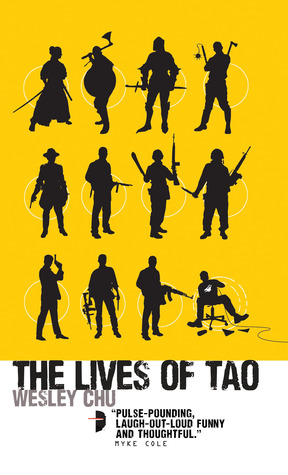
First, I would like to thank Netgalley and the publisher for allowing me to read this book in exchange for an honest review.
Roen Tan is an out-of-shape IT tech just trying to make it through the daily grind when he becomes the host of an advanced alien named Tao. When he finally becomes aware of Tao, Roen thinks he’s about to live the glamorous life of a super spy as Tao gives him knowledge beyond his measure and starts whipping him into shape with diet and exercise. Roen quickly learns that James Bond’s glamorous life is a complete fraud and that spy work is tedious, time-consuming, and nothing like a superhero movie. However, Roen does find himself with Tao’s help and begins to push past his safe boundaries.
The first thing you should know about me is I always root for the underdogs. I am a huge fan of unconventional heroes doing unconventional things, especially unconventional things they seem ill suited for. Roen fits all of those qualifications. Reading this story was like watching an awkward friend grow into a graceful swan. It was funny, endearing, and just a tad bit cute—all things considered. At the beginning of this story, Roen isn’t living more than he’s just existing. He wants a better life, but he’s not motivated to take the steps needed to achieve that until he becomes Tao’s new host.
Tao’s people have lived on earth long before humans were even conceived, and they’ve been working just as long to find a way off this rock. This has been a very slow process for them since their survival on Earth means they have to rely on host bodies to protect them and carry out the tasks necessary to their goals. As with any group trying to achieve a common goal, though, there’s dissension about how that goal should be achieved. For this reason, after many years of working together, Tao’s people split into two factions—the peaceful Prophus and the warlike Genjix.
Second thing you should know about it is that I love history, so I appreciated how Chu incorporated that into his story by having the Prophus and Genjix part of every pivotal moment of history and explaining a little bit about how their involvement shaped those moments. Tao, who is part of Prophus, admits that both sides have done some terrible things throughout history, but sometimes, you have to choose the lesser of two evils for the greater good. This is one of the things that Roen begins to struggle with as he becomes a better Prophus agent.
Roen made me laugh out loud and roll my eyes often at the same time. The character felt like the type of friend I’d call up and say, “Calm down, man. Breathe. Now, you go and be awesome, Roen.” He reminded me so much of someone I know who I could picture in Roen’s place doing the exact same things. Over the course of the story, he didn’t become some supreme super spy, but he grew as a person and as an agent. He came to terms with his new mission in life. Yeah, he did some amazing things during this, but through it all, Roen managed to continue to feel like an everyday person.
I loved Tao’s seriousness tinged with just a hint of humor, and I thought the story of his race and their struggle was interesting. Their role in history and the vast knowledge they possessed was a nice touch. Even though they seem to have all the elements there to be a super race, they’re still hindered by their divisiveness, vulnerability and lack of resources on a planet that they’re basically manipulating down this technological evolutionary path to aid their agenda. I wish I could’ve learned a little more about Tao’s people, but that’s such a small complaint for an otherwise fun book.
This was a wonderfully engaging story. The tone used felt very familiar, giving the story a very easygoing feel that kept me reading. It doesn’t seem to take itself too seriously, which was a welcomed break from all the grimdark I’d been reading lately.

Book Review: Robopocalypse by Daniel H. Wilson
Posted on July 3, 2013 2 Comments
Robopocalypse by Daniel H. Wilson
Robots determine that humanity is obsolete and must be cleansed. This is simple and common science fiction concept and one I have most recently been dealing with in Mass Effect. I spent a lot of time relating things back to the Morning War and Starchild and, most importantly, to Harbinger. Hell, this entire quote from the book might as well be Harbinger’s manifesto:
“I will murder you by the billions to give you immortality. I will set fire to your civilization to light your way forward. But know this: My species is not defined by your dying, but by your living.”
Had I read this at an earlier time in my life, the comparisons would have been to the Terminator saga or Bubblegum Crisis or Battlestar Galactica. As I said, the idea of our robot creations taking over for the sake of our salvation is not new and I can’t say this was a stunningly memorable entry into that theme.
One of the major problems I had with this book was its first person narrative. The chapters are retellings as documented by Cormac “Bright Boy” Wallace, a soldier in the New War against the machines. According to the story, at the request of the machines, out of respect for humanity’s resistance and resilience, surveillance footage was presented to Wallace that he may record the major events that led to the ultimate destruction of the machine leader. My suspension of disbelief had problems with the fact that there was surveillance to cover all aspects of the story told (even in the robot-free forest), and that Wallace was able to convey the emotions of the people as well. I would have preferred if the author had not bothered with the pretext of Cormac composing the stories of the heroes and allowed the heroes to tell the stories themselves.
That said, the format itself, sans Wallace being the one writing it, worked well enough, though I can’t say the characters were given much depth outside of the situations they were presented in. I appreciated that things didn’t dwell too much on getting to and from the various places and instead just focused specifically on the characters and exactly what actions made them heroes in the eyes of both humans and robots. Although, by the end of the book when there was a great distance to go and presumably there would have been hardships on the way, the format fell short. It became too easy to move from A to B to accomplish the goal.
Once again, the robot apocalypse concept is not new, but it was retold reasonably well enough to get the point across here. Robopocalypse covered many of the basics, including how humans will behave when faced with such odds, but it was, ultimately, a guide book: In case the robots get uppity, break glass.

Audiobook Review: The Way of Shadows by Brent Weeks
Posted on July 3, 2013 1 Comment
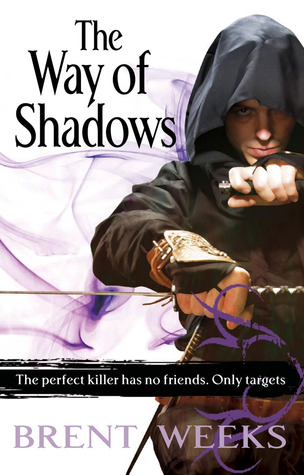
The Way of Shadows by Brent Weeks
This is the story of a young boy who discards his old life to become a not-so heartless assassin (aka wetboy), apprenticed to a heartless master assassin who eventually reveals that he was once like the young boy and more, but then love happened etc, mysterious past, etc., and finally, the inevitable fate of master and apprentice. Surrounding these two are several characters for the young boy to befriend, ensuring that he always fails the assassins’ number one rule of not caring about anyone. And finally, political machinations, a prophecy and foreign invasion to round out the background plot. Oh and some suddenly magic, but more on that later.
I wanted to like this book, based on the praise it has received, but as you may be able to tell by my tone, I was not unimpressed by the predictability and struggled to get through it over all. I listened to this as an audiobook book and although I wasn’t overly impressed with the narrator, I don’t fault him for being unable to make this book better through narration.
I assume I was meant to like the main character, Azoth, but I found his whining and hesitation tedious and I never did appreciate his motivation to apprentice to Master Durzo Blint in the first place. His downtrodden life was basic plotting and the boy lacked conviction. I also failed to understand why the leader of the group he belonged to found Azoth to be so special and talented that he wished to use him as an example of power. Basically, Azoth was set up by others to be more than the author ever let me see of him, before his transformation, or during. And after his transformation into a deadly assassin, he became so cliche, magically able to kill off a whole contingent of skilled soldiers all by himself to sort of save the day. At one point, Azoth “dies” – I’d warn you of spoilers here, but I did say this was a highly predictable book – and I found myself hoping that Weeks would surprise me and get rid of the annoying kid and just let me have more of Durzo. The mater wetboy was a very intriguing character and definitely the highlight of the book, especially when we get to learn little pieces of his past.
Somewhere along the way, magic shows up. A glowing sword choosing a master. Magi. Healers. A fireball or two. Immortality. Special “Talents.” It’s presence was enough for me to raise an eyebrow because the magic seemed to pop up from no where from time to time and serve no real purpose other than being magic, until the end when everyone was flinging it around like confetti.
Save for Master Blint, this book simply didn’t work for me.

About Us


Popular Posts


 The BiblioSanctum