Comic Review: Locke & Key vol.1: Welcome to Lovecraft by Joe Hill and Gabriel Rodriguez
Posted on July 22, 2013 1 Comment
 Locke and Key, Vol. 1: Welcome to Lovecraft by Joe Hill I grabbed the hardcover copies of these books the moment I saw them and warned the librarian that they would look lovely on my bookshelf. She politely reminded me that she has my address on file. I’ve heard good things about this series from friends, but I had no idea how good. In fact, I intended to wait until I’d finished all five volumes before completing a proper review, but after finishing volume one last night, all I could think was “ffffuuuuuuuuuuhhh…”
Fortunately, I’m of sounder mind today and can explain why I’m giving this entire series five stars before I am even finished with it. Volume one introduces the Locke family, with particular focus on the kids, Ty, Kinsey and little Bode. Their lives are destroyed by the brutal murder of their father and rape of their mother by two extremely troubled youths. In the aftermath, they move to the old Locke homestead, Keyhouse, in hopes of recovering some vague semblance of normality.
First of all, I have to speak about the art. This is a violent, brutal, frightening story that could easily have been depicted with much darker imagery typically attributed to the genre. However, Rodriguez’s more cartoony characters and bright colours make everything all the creepier once things really get going. Similar to Japanese manga, the large eyes of the characters can express a lot of emotion within a still image and intense emotional facial expressions and body language (or lack there of) are very important to all of the scenes.

There is also a great sense of stillness. Some of the panels repeat themselves, sometimes with minute changes, but always with a sense of time passing by slowly while the character contemplates the situation. I love that more than two entire pages were spent with Ty at the funeral home following his father’s death. A complaint I have with a lot of comics I’ve read lately is that they jump through the story. There seems to be so much more story they should be telling between each panel, but because of page constraints, they have to skip panels to get to the point. Locke & Key gets to the point without ever losing a panel along the way. I give credit to both artist and writer for this, as presumably Rodriguez is working under Hill’s instructions and clearly, Hill understands the show-don’t-just-tell power of the medium.
So the story goes, Keyhouse is an unusual place. Early in 6yo Bode’s exploration, he discovers a strange key and, when inserted into the back door, it causes him to die when he steps outside, becoming a ghost that’s able to move around the house at will, then return to his body with no harm done. As the story progresses, we learn that there are several other keys (beautifully front and centre on the covers of each volume) and that their father knew about the house’s secrets, but hid the keys for a reason. It is also implied that grown ups tend to forget the importance of such things, so its up to Bode to discover the secrets – especially if he wants to help the mysterious echo at the bottom of the well…
The story focuses mainly on the children, often times with their individual point of views encompassing an entire issue. Each copes differently with the loss of their father and their actions during the assault. Hill and Rodriguez delve deep into the exploration of their emotions, demanding that you feel for them and worry about their well being. The weight of Ty’s guilt is almost palpable and Kinsey’s angst is far more than just whiny, selfish teen mourning. And Bode’s innocent exploration leads to some of the creepiest and intense moments of all.
By the end of volume one, with the mystery box wide open and my compassion for the Locke children firmly established, it was only my responsible adultness that prevented me from staying up all night to read the other volumes in a single, spine-tingling go.

Book Review: Warbound by Larry Correia
Posted on July 22, 2013 Leave a Comment
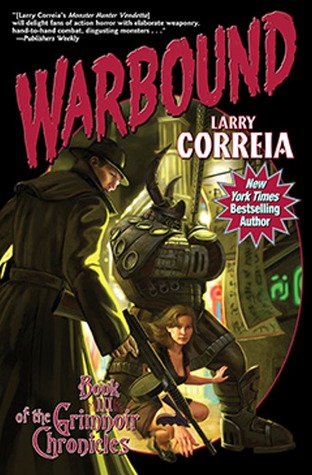
Expected Date of Publication: August 6, 2013
Thank you to Netgalley and Baen for providing me with an e-ARC of Warbound in exchange for an honest review. This is the third book of bestselling author Larry Correia’s Grimnoir Chronicles series, and because I had such a blast with the two previous books, I just couldn’t wait to get my hands on this one and find out the conclusion!
As you can probably guess, I highly recommend the rest of the novels in this series, Hard Magic and Spellbound — definitely read those first if you are interested in tackling the third installment. This being a sequel, the usual caveats will apply for this review regarding possible minor spoilers for the books that came before.
It is the 1930s in a world where a portion of the population possess magical abilities. Naming these people “Actives”, the American government is seeking a way to keep track of and control them, while the magical community and certain special interest groups fight back. One of these groups is the Grimnoir, a secret society of Actives who have dedicated themselves to protecting their own people from anti-Active violence as well as the world from magical threats.
In the course of their war against the Japanese Imperium, the Grimnoir have discovered the source of humanity’s magic actually comes from a cosmic creature dubbed the Pathfinder. It is a predator which devours magic, leaving whole worlds destroyed in its wake. Jake Sullivan, a Knight of the Grimnoir now leads a team to stop the Pathfinder, to prevent Earth from being its next victim. Faye Vierra, the young farm girl from Oklahoma with a sweetness and naivete which belies the fact she is the most powerful Active in the world is perhaps the Grimnoir’s only chance to succeed — but she is missing and on the run, hiding a dangerous secret of her own.
As with the two previous books in this series, I had myself a heck of a time trying to categorize or describe this novel. It is undoubtedly an urban fantasy, and also has elements of historical fiction and alternate history and even steampunk. The Grimnoir Chronicles is fun and full of action, but unlike Correia’s other series Monster Hunter International (which I also adore) it feels darker and a little more serious to me, thanks also to the few nods given to the genre of Noir fiction.
On some level, I also can’t help but think of these books as “Superhero fiction”. The characters in the Grimnoir are certainly not superheroes in the traditional sense, but it’s hard to read the blurb to these novels and not picture the X-Men and remember some of the comic series’ story arcs. The Actives’ struggles with discrimination, government control and the mistrust and fear of the populace certainly bring to my mind the Marvel mutants’ plight, and the Grimnoir society’s noble goals are similar to those of the X-Men for sure. Some of the Actives’ powers which comes from magic are even analogous to X-Men powers, like the manipulation of weather, elements like ice and fire, teleportation, telekinesis, etc. Despite all this, I’m still reluctant to call this series “superhero fiction”, but I’m guessing those who are fans of superheroes or comics will feel right at home with the Grimnoir books. After all, I did.
Speaking of powers, I’m amazed that even now in the third book we’re still being introduced to new types of Actives. Of most interest to me is the “Alienist” whom Jake Sullivan recruits for his team in his war against the Pathfinder. Again, I liken the plot of these novels to those story arcs in a comic book, and in a good way, because one of the coolest thing about this series for me has always been the Grimnoir characters’ use of their magic, working together and applying the almost limitless possibilities against their foes.
One of the downsides though, that in feeling like superhero archetypes, the characters also come off a bit like caricatures and underdeveloped. After three books, characters like Sullivan and Faye still feel predictable and flat like templates. Toru, the Iron Guard who had decided to join the Grimnoir in destroying the Pathfinder, is the worst when it comes to this. It always irks me somewhat when an entire group of people is painted with the same personalities, characteristics and cultural values, and I see now that Toru and the whole Imperium does not stray from the mold.
There’s also a lot going on in this novel, which can be good and bad. Because of the breakneck pace of this novel and all the things happening, my face was constantly buried in this book, that’s for sure. But with several plot threads going forward at the same time (there are at least four, including dealing with the government, Faye’s own struggle with her destiny as Spellbound, Jake Sullivan bringing the fight to the Pathfinder, and ending the Imperium threat) there may have been too much to cover, and the last 10% of the book felt really rushed, like it was eager to wrap everything up. This also made it so that several of those characters like Francis and Dan and Jane and Hammer that I liked so much in the previous books had much less screen time in this one.
All in all, I thought this was a great conclusion even if it wasn’t entirely satisfying, but I still think very highly of the Grimnoir Chronicles as a whole. If you’re looking for something fun and action-filled in the urban fantasy genre with great world building that’s also really cool but a bit different from the norm, I can’t recommend this series enough.

Book Review: The Book of Lost Fragrances by M.J. Rose
Posted on July 21, 2013 Leave a Comment
 The Book of Lost Fragrances by M.J. Rose
A few months ago, I was fortunate enough to receive a copy of Seduction by M.J. Rose to read and review, and I found I really enjoyed it. The novel was actually the fifth installment in a series called The Reincarnationist, and even though each book can be read as a one-shot, I’d learned that the protagonist Jac L’Etoile actually first appeared in the previous book. Long story short, I was intrigued enough by her character after reading Seduction that I was motivated to pick up its predecessor, and that’s how I came to read The Book of Lost Fragrances.
I went backwards in the reading order, so here we’re given a formal introduction of Jac L’Etoile and her brother Robbie, heirs to a preeminent French perfume company. Haunted by memories of her mother’s suicide, however, Jac moves to America to become a TV host of a show about mythology, leaving her sibling to take care of the family business.
Like all the other books in the series, this one explores themes around the idea of reincarnation and other paranormal occurrences. While going through the old archives, Robbie stumbles across a collection of ancient pottery shards and a family secret about a scent rumored to enable a person to remember past lives. Robbie has big plans for the discovery, but there are others who would do anything to stop them from happening. When Robbie goes missing, leaving the dead body of a stranger at the scene of the crime, Jac and her former lover Griffin North are drawn into the search, becoming embroiled in politics, suspense, passion, and a mystery that goes back thousands of years.
The first thing I gleaned about this book is that it suffers from a problem I also noticed in its sequel, except to a greater degree — the fact that there’s so much going on! We have multiple plot threads and multiple character points-of-view, and when some of these character perspectives are also past reincarnations, it just makes this book feel even more complicated and jumbled. In addition to Jac, Robbie and Griffin, we also have the story lines about the Panchen Lama, the members of the Chinese mafia, the Parisian police, flashback sequences involving a L’Etoile ancestor and his lover, flashback sequences about an affair in ancient Egypt involving Cleopatra’s perfume maker, sections about Jac’s past and her psychological disorder, sections focusing on Jac’s doctor Malachai…I think I’ve caught most of them, but it’s possible I still missed some.
Despite being called “A Novel of Suspense”, I didn’t find this to be very suspenseful at all, and I have a feeling this is because all the plot threads going on might have “watered” it down a little. I once saw an interview with M.J. Rose in which she said that booksellers often have trouble categorizing her books, and I can see why this would be the case since this series appears to cross multiple genres, including suspense, fantasy, romance, historical fiction, mystery and paranormal. I loved Seduction because it managed to incorporate all these genre elements and still made it work, but I didn’t think it did so much in The Book of Lost Fragrances.
In some ways, the writing and characters feel completely different when I compare the two books, almost like they were written by two separate people. TBoLF felt awkward whereas Seduction was incredible; it’s like the latter was a more refined and improved presentation of all the ideas put forth in the former. Perhaps it was because of all the subjects crammed into this novel, ranging from ancient Egypt to Chinese politics to Tibetan Buddhism, and how some of the character perspectives jump all over the place in history. The author tried to weave it all together, but it didn’t end up very well. The last few chapters of the book started to fizzle out after what I suppose was the climax, because it still had to wrap up all the other story lines.
Also, Robbie and Griffin had little to no presence in Seduction, which might be another reason why I liked that book so much more. I found both their characters extremely unlikeable in TBoLF; Robbie was more like a stubborn child than a grown man in many ways, and Griffin made for a very frustrating and unsympathetic romantic interest. I have to say though, M.J. Rose can write one hell of a love scene. That one torrid and intense chapter notwithstanding, I still couldn’t really get into the Jac/Griffin relationship at all, and that was even with the “eternal love” and “soulmates” angle the book was emphasizing.
Anyway, my opinion would be to save this one, and pick up Seduction instead if you can. And one final note: I half read this and half listened to the audiobook. If I could do it again, I wouldn’t have opted for the Whispersync bundle. Phil Gigante is a narrator I’ve listened to and enjoyed for many books in the past, but I admit was a little surprised he was chosen for this one, since it doesn’t seem like a book suited for his voice. He also mispronounces a lot of French words, which was a pretty big distraction.

Cover Lover: Aetherial Tales
Posted on July 20, 2013 Leave a Comment

In my most recent exploration of BookCloseOuts, the Aetherial Tales series by Freda Warrington was recommended to me. I immediately fell in love with the beautiful cover art and the reviews for the series convinced me that the story was well worth the purchase.


Review Bites: DNF
Posted on July 20, 2013 Leave a Comment
I make a point of finishing every book I pick up. There have been some that I haven’t made it through in the past, but since founding a book club and working on this site, I’ve felt compelled to make sure I get through every book, even if it sometimes means skimming pages of the less enjoyable ones.
But lately, I’ve had a few that, even after a significant chunk of pages under my belt, have failed to pull me in. I’m certainly not alone on this. Goodreads recently polled members on their “did not finish” reading habits. You can see the results here. It’s not uncommon for books to start slow and end extremely well, but in these cases, my problem has been as much with style as with content. The content might become more interesting later on, but can I endure the style for 200+ more pages?
Reading is supposed to be an enjoyable hobby. If the thought of picking up that book on my currently-reading shelf is weighing on me, it means I have to reconsider my life choices. My to-read mountain is filled with lots of other books that are demanding my attention, so why should I waste my time on books that are not pleasing me?
The particular books in question are all critically acclaimed, but acclaim does not mean they are for everyone and no one should ever feel obliged to finish, much less like a book just because the rest of the world does. I’d intended these books to be part of my Women of Genre Fiction Reading Challenge, but I’d rather free up their slots for more enjoyable reads.
These three books all have one thing in common though: They are unique entries into their genres – in fact, their individuality might even transcend their respective genres and for that, I can appreciate the acclaim they receive. But at the end of the day, they just aren’t for me. As LeVar Burton says, “Reading is a trip,” but these aren’t trips I really want to take.
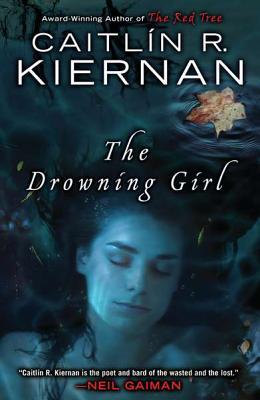
The Drowning Girl by Caitlin R. Kiernan
This is actually the book that made me decide to write this post and create a DNF shelf on Goodreads. A recent Nebula Awards nominee, it won the vote as this month’s read for my bookclub. While I like the concept of a haunted schizophrenic girl and the way art and fairy tales play so heavily in her memoiors of her own madness, I just could not take the writing. I didn’t even mind the moments where Imp seems to stop and instruct herself. I just didn’t enjoy the meandering, long paragraphs of her stream of consciousness.
This book is heading to my library for donation. hopefully someone else will find and enjoy it far more than I did.

Zoo City by Lauren Beukes
This is as far away from urban fantasy as you can get, which is what made it appeal to me. Zinzi December lives in Zoo City, a slum for criminals, easily identified by the animal familiars emotionally/psychologically bonded to them. The creatures are manifestations of their guilt, though not necessarily their culpability. Somewhere along the way, we eventually learn that Zinzi’s sloth is the result of her guilt over her brother’s death that she did not seem to have caused, which makes it a little difficult to understand why she was imprisoned in the first place.
Zinzi has a talent for finding lost things but the first client in the story ends up brutally murdered and Zinzi is suspected. Only, that is not the main story line. In fact, the story walks away from this entirely and I had to go back to see if I actually had skimmed pages without intending to. But nope. Apparently, we’ve moved on to Zinzi finding a lost pop star despite her usual refusal to track people.
Where things go from there, well, I’m curious, but not enough to continue for now. I also have issue with the writing style, which contains a lot of local (Johannesburg) vernacular that is difficult to comprehend as the context rarely offers clarity beyond a word being an obvious insult, in some cases.

The Blind Assassin by Margaret Atwood
Reading The Handmaid’s Tale in highschool and recently rereading and loving it made me want to finally try out one of Atwood’s other books. Unfortunately, this one resulted in disappointment. I actually did finish The Blind Assassin, but I did skim a lot of pages. Or, I should say, I loved The Blind Assassin, but I skimmed the pages that weren’t telling that story. This is a story within a story and I loved how everything tied together, but got tired of the monologues surrounding the story of the blind boy and tongueless girl. I just wanted to read about the latter!
An All New Red Sonja by Gail Simone
Posted on July 19, 2013 Leave a Comment
I love the movie Red Sonja. It’s a hunt-through-bargain-bins treasure that has been with me since the ‘80s, yet I’ve never read or even been inspired to read the comics. Until I learned that Gail Simone was going to be penning this issue (Does she have a thing for redheads?). This means no more excuses not to read about the metal bikini adventures of Red Sonja. It’s only fair, after recently checking out the other pulp fiction warrior princess, Dejah Thoris.
The book was introduced this Wednesday with six fantastic covers by female talents in the industry. These are my favourites, by Fiona Staples, Amanda Conner and Jenny Frison:

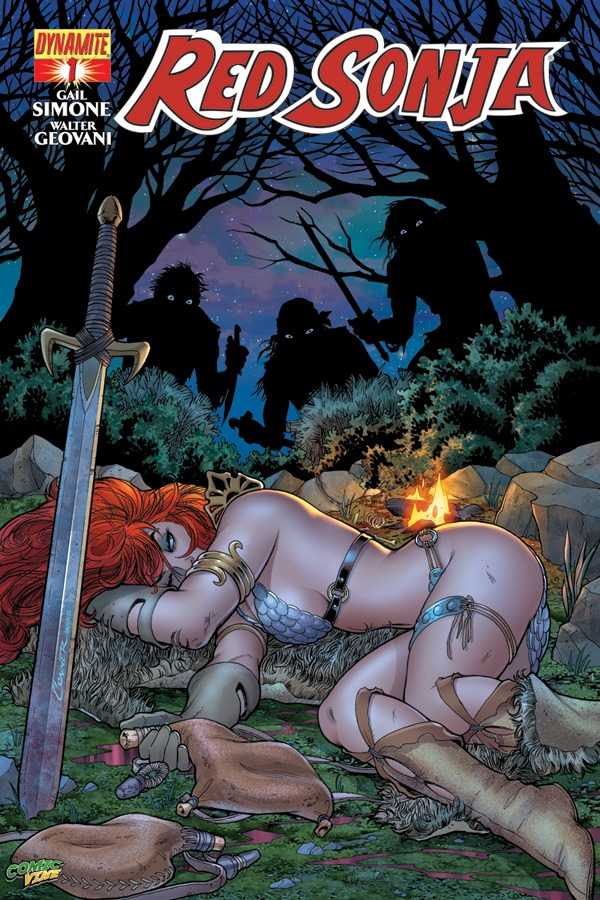
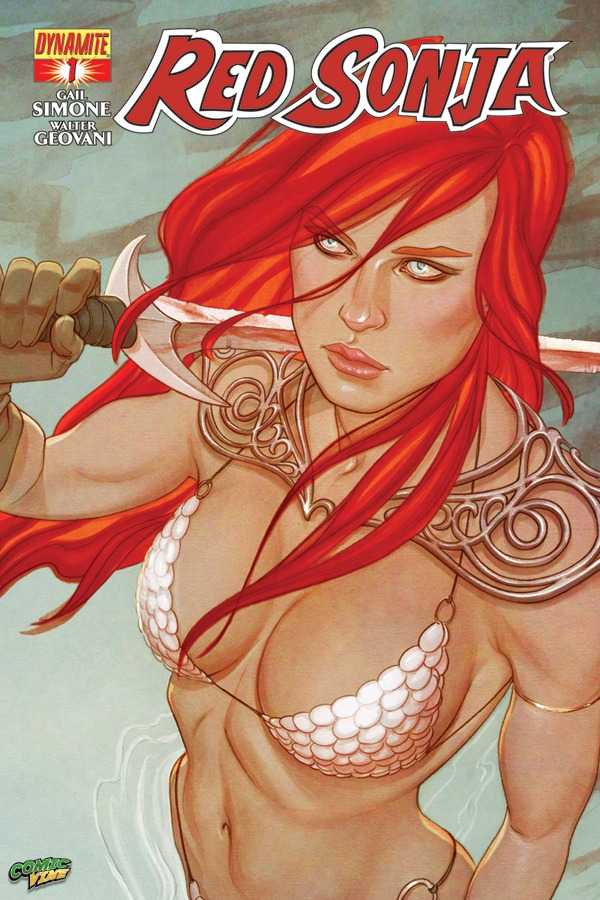
In a recent ComiXology interview, Gail Simone explained that this reboot presents a Sonja that is no longer the ice queen of the past. She’s still the woman that will kneel to no one, but earn her respect, and she will keep her promises. Save her from a captivity of fighting for her life everyday, then she’ll be willing to train your kingdom to defend themselves against a pending attack from a deadly enemy.
In her re-introduction, the deadly swordswoman is clearly deadly, her sword poking menacingly from the ground, but she is also clearly drunk, something that the previously stodgy Sonja would likely never have allowed. Her stupor is interrupted by would-be thieves and the predictable display of her prowess, in spite of her condition is revealed. It’s a fantastic scene though, perfectly hinted at in the second cover above, by Amanda Conner. At the end of issue one, we also get a look of this scene through the revelation of Gail Simone’s writing process for the first few pages.
Now that I’ve checked out both pulp princesses, the differences between them really are striking to me. Despite the similarities in barely there metal costumes, Red Sonja has always worn hers with far more nobility than Dejah Thoris ever thought she did. The new Dejah Thoris comics seem to have tried to make her more of a warrior woman, but they still rely on the damsel in distress/every male wants to get with her storyline. Sonja has always denied men, believing them unworthy of her time. In the reboot, she seems to be less about the misandry, but she remains a woman that I can respect. As in, metal bikini and deadly sword aside, her demeanour is of a person who takes and gives no quarter, demands respect and expects you to earn hers. Just because she has impressive cleavage (which is praised by her admiring twin acolytes) and is comfortable with her body and blade, doesn’t mean it’s there for anyone else’s purposes but her own.

Manga Review: Deadman Wonderland, Volume 4 by Jinsei Kataoka
Posted on July 19, 2013 Leave a Comment
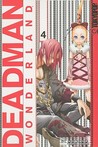
Ganta has gone through many changes since arriving at Deadman Wonderland and has overcome many challenges, but I was completely blown away by the story about the Scar Chain gang, which is yet another community within the prison. Their goal is to not escape the prison, but to destroy it completely. However, they’re hindered by betrayals and a person who seems to be immune to their powers. To me, this arc was flawless, a real masterpiece that brought a powerful emotional punch, and it’s a story that will stay with me long after I’ve finished reading this series. I wasn’t too thrilled about the introduction of the “rock super-monk” Genkaku or the Scar Chain gang when I first got into this, though. I thought things were going to take a schlocky turn. I didn’t think I was in for bad writing, but I didn’t expect it to be as well executed.
I’m happy to report that I was wrong. As I learned more about Genkaku and the Scar Chain gang leaders, the story just really culminated into a beautiful disaster of a narrative with so many complex issues weaved around each other to tell the story. Once I finished reading it, I needed a moment to process and reread parts that hit me the hardest, which were basically all of Owl’s parts near the end of the story. He was the breakout character for me, and later in that same arc, the brief glimpse of Genkaku’s background really added something intricate to him that made me reflect on who he was. Excellent volume.

Wendy: Favourite Classic Book
Posted on July 18, 2013 Leave a Comment
Comic Review: Flashpoint: The World of Flashpoint Featuring Batman by Brian Azzarello
Posted on July 18, 2013 Leave a Comment

Flashpoint: The World of Flashpoint Featuring Batman by Brian Azzarello
This book is a series of mini-arcs giving a glimpse of a world where Bruce Wayne’s Batman doesn’t exist. It asks: “What kind of ripples would’ve been made in the world if Bruce had been the one to die in that alley and not his parents?” Initially, I read “Batman: Knight of Vengeance,” and that was it. That’s all I wanted to read, I said vehemently. However, I finally decided to dive into the rest of the story and see what Bruce’s death changed beyond his parents lives.
 In “Batman: Knight of Vengeance,” Thomas Wayne has taken on the mantle of the bat, and he is far more brutal, unforgiving, and decisive than Bruce. While Thomas subscribes to hyper-vigilantism and toes the line of being crime boss, Martha’s response to Bruce’s death is far more extreme than Thomas’. This story was heartbreaking in so many ways. From the Waynes to Selina to Commissioner Gordon, it was so poignant and painful to read. I have to say that this is my favorite story in the book.
“Deathstroke and the Curse of the Ravager” follows the dread pirate Deathstroke who plans to profit off the turmoil that Wonder Woman and Aquaman have created, but first, he has to rescue his daughter, Rose, from his rival. To do any of this, though, they have to sail to Aquaman’s angry seas. What could go wrong there? I liked this more than I thought I would to be honest. It made Deathstroke very likable.
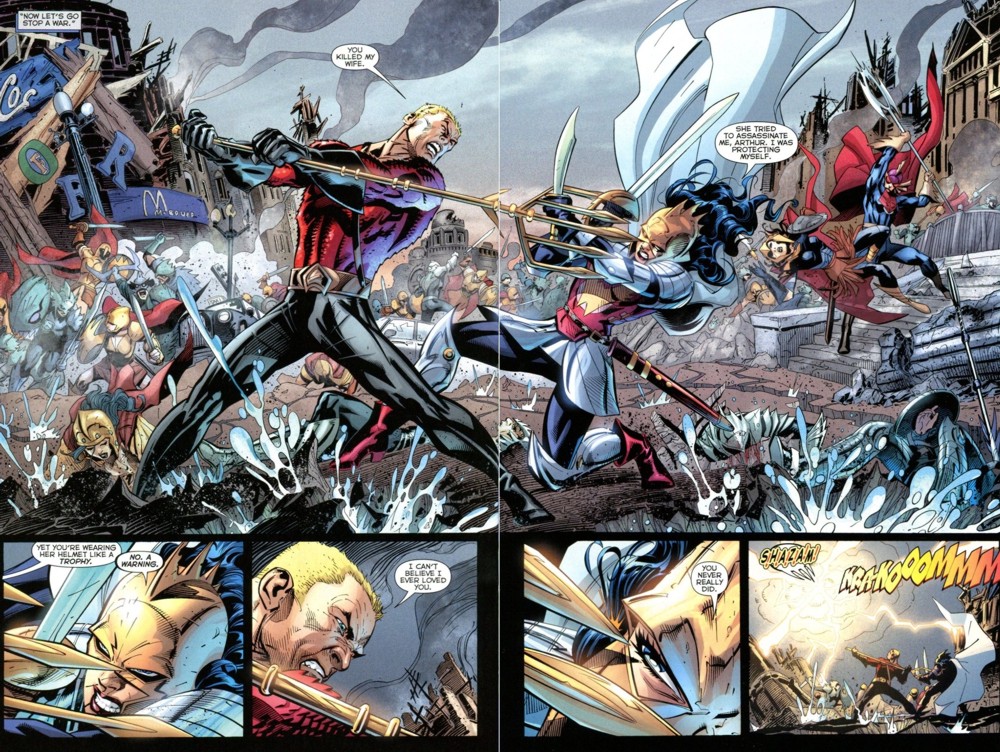 |
| These two cause so much trouble in this book. |
The last story “Secret Seven”… was maybe a little beyond my frame of reference. All I know is that a team is being formed to deal with the chaos on earth. I don’t want to call it a terrible story because it wasn’t… I don’t think. I just don’t have much experience with the character(s). It was a little offbeat, which I definitely don’t mind, but because I don’t have any real point to fix these characters, too, it was just… I’m not really sure how to describe it to be honest. I had way too many questions after reading this one, and I blame this on my ignorance of the characters.
Some would argue that these stories have no real connection and deal so little with Batman, but I disagree. They show that Batman, Bruce’s Batman, is both a blessing and a curse to the villains and heroes of the DC universe. It shows how his existence/non-existence shapes that world in broad terms. For instance, many of the villains lead drastically different lives. Some of them are already dead by Thomas’ hand. Some of the heroes are hardly what you’d call heroes at all. I do think that there needed to be more meat to this. The idea of what the world would be like without Bruce Wayne is a very fascinating question that this series only half-answered. However, I still mostly enjoyed this book.

Book Review: The Thousand Names by Django Wexler
Posted on July 18, 2013 4 Comments
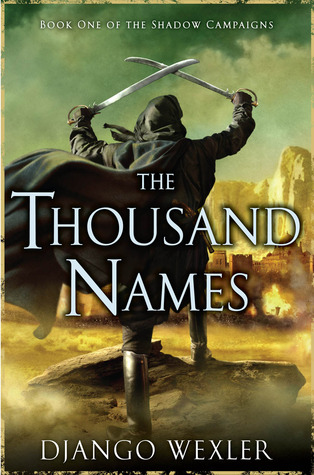 The Thousand Names by Django Wexler
Apparently, I love “flintlock fantasy”. The phrase, which according to Wikipedia has been around since the 1990s to describe a sub-genre of fantasy “set in a Regency or Napoleonic-era period”, admittedly only entered my lexicon just this year. But all this time, I knew deep in my gut that there simply had to be a term out there for this incredible and distinctly unique brand of fantasy with the musket-era setting that I so adore; I just never knew the name for it until now.
There’s just something so attractive to me about fantasy inspired by this period, mostly because of the fascinating historical ideas and imagery that immediately come to mind, themes like revolution and war, battles waged with gunpowder weaponry, discovering new worlds and colonialism, etc. That’s what first drew me to Django Wexler’s The Thousand Names. Just the first sentence in the blurb was enough to make me add this to my must-read list, and the positive reviews it received only made me bump it up to the top.
The book is mostly told through the perspectives of two soldiers, assigned to a sleepy desert colonial fort out in the fringes of the Vordanai empire. However, a recent uprising and subsequent takeover of the city of Ashe-Katarion by a local sect called the Redeemers has resulted in the outpost not being so sleepy anymore. Now the king of Vordan has sent reinforcements, and Captain Marcus d’Ivoire finds himself welcoming a whole new garrison of inexperienced recruits to join his Old Colonial troops. Then there’s Winter Ihernglass, a low ranking soldier who unexpectedly earns a promotion and comes into command — except getting more attention is the last thing Winter wants, given the fact she is actually a woman who masqueraded as a man in order to enlist and flee her past.
With the Colonials on the march to take back the city, both Marcus’ and Winter’s lives are in the hands of the newly arrived Colonel Janus bet Vhalnich, a military genius whose demeanor and tactics are unlike anything anyone has ever seen before. But despite the confidence and aptitude Janus exudes, it soon becomes clear there is a lot more to the mysterious commander. Marcus begins to suspect that his colonel’s objectives — and ambitions — may extend beyond simply defeating the Redeemers, encroaching into the realm of magic and the supernatural.
My experience with this book pretty much played out like a fast-paced and passionate relationship. The Thousand Names practically came out of nowhere for me; I’d probably only heard about it around a month before its release, leaving me not much time to anticipate it. Nevertheless, I went into this with higher-than-high expectations, and ultimately I have to say even those were met and exceeded. I fell in love with this book really quickly, probably within the first few chapters, especially after the two main characters were established. This might make me sound silly, but I won’t deny after turning the last page I actually couldn’t help but feel slightly lost and a bit melancholy, finding myself caught in a sort of “oh crap, I’m finished, what the heck do I do with myself now?” kind of fugue. I was just that addicted to this book.
Obviously, I loved the setting and the world-building. The writing had a way of putting you right there with the colonial garrison, so it wasn’t hard to sympathize with the characters and the foreignness of their situation or the awkwardness of being strangers in a strange land. I was also fascinated with the idea of this ragtag colonial army that’s made up of one-part green recruits and one-part jaded-and-couldn’t-care-less old veterans, and all the rules of warfare go out the window. The Redeemer forces may vastly outnumber the Vordanai, but the fact that the former is made up of mostly militia and over-confident Auxiliary troops gave their clashes plenty of suspense, and the detailed battle scenes in the desert are worthy of any military fantasy.
But the highlight of this book had to be the characters. I absolutely adored Winter; she was probably my favorite character, but Marcus wasn’t far behind either. What’s great about these two characters is that they feel deep and real, and are immediately the kind of people you want to like and to see succeed. Beyond that, everyone in this book also has secrets and mysteries, and so you just want to keep reading to find out more.
This even applies to the supporting cast. Most of them are pretty well fleshed out too, and I think the fact that Colonel Janus is my second favorite character in this book despite him not being a point-of-view character is a testament to that. The author also focuses briefly here and there on Jaffa, a character inside the city of Ashe-Katarion, giving insights into what’s happening on the side of the Redeemers. I felt this was important, as it gives us a look at the opposition, or else it’s easy just to think of them as a faceless enemy army.
All told, this book was hard to put down. For its length, I finished it in really good time, and it was one of those rare gems where I knew it would go straight onto my shelf of favorites even before I had reached the quarter-way point. Easily one of the best books I’ve read this year so far.


 The BiblioSanctum