Book Review: Emperor of Thorns by Mark Lawrence
Posted on July 29, 2013 1 Comment
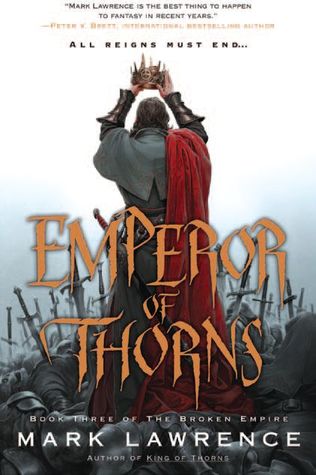 Emperor of Thorns by Mark Lawrence
Expected Date of Publication: August 6, 2013
This was a book I received from the publisher in exchange for an honest review, so thank you to Ace books and Penguin for this most excellent reading opportunity. The cover of Emperor of Thorns proclaims, “All reigns must end…” and I have to say, the prospect of getting my hands on this third installment of The Broken Empire series and finding out what will become of Jorg Ancrath made this one of my most highly anticipated fantasy novels of 2013.
I was not disappointed at all. A caveat for this review, though: this being the final book of the trilogy, the following summary and my subsequent thoughts may contain possible minor spoilers for the two books that came before. In any case, Emperor of Thorns would not serve as a good starting point for someone new to this series; best to start with book one, Prince of Thorns, in order to watch the main character grow and develop throughout the course of these books.
Indeed, Jorg Ancrath is twenty now; the boy prince has become a king, the ruler of seven nations. But where there is more, Jorg will always want it. He has set his eyes on becoming the emperor, a position decided only by vote during a truce period which comes every four years, when the rulers of a hundred fragmented kingdoms of the empire convene for an event called Congression. In the hundred years of the interregnum, however, no one candidate has managed to secure a majority of the vote.
But Jorg has plans to change all that. On his journeys across the broken land, he has made even more discoveries about the mysterious Builders of their past, and he will use their secrets and technology to suit his purposes. And yet, equally as ambitious and bloodthirsty as Jorg is The Dead King, watching events unfold from beyond the veil. Jorg may take care to guard his fears and weaknesses, but the Dead King and his necromancers and army of lichkin are waiting, ready to strike at Jorg where he is most vulnerable.
As with the previous book King of Thorns, this one also takes us through different timelines in Jorg’s life, with one thread following Jorg on his journey to Congression and the other focusing on events “Five Years Earlier.” There are time-jumps aplenty, which makes rereading the first two novels a fine idea, but the author also includes a handy little refresher crash course before the prologue. Or you might be like me: whenever I came to a memory or flashback sequence in this book, I found it easy to figure out when and where in time I am using clues like which one of Jorg’s companions or acquaintances are still alive! Those familiar with Jorg’s character likely won’t be surprised to hear you can form a rather complete history using the impressive trail of death and destruction he leaves behind, but more on that later.
Let me just say now that it has been a pleasure following Jorg on his anti-hero’s journey, watching him mature from a boy to a man. But Jorg has never truly been young in the first place, not really; he’s seen way too much death, betrayal, cruelty and brutality for that. Yes, he is a selfish, violent, deeply disturbed and deplorable character, but above all, he’s also honest and unashamed of everything he is. That and the fact the only predictable thing about him is his unpredictability made him a very interesting character to follow.
Still, I suppose you could say I’ve never really felt connected to Jorg, because believe it or not, I actually find it very hard to relate to someone I honestly think is quite insane. And the years since the first book have in no way cooled his temper or impudence. However, in spite of it all, I still like him. I can’t help but be drawn to this refreshingly original protagonist who calls himself a “broken boy” and wraps himself up in his anger to escape his past. So, can I really find it in myself to fault Jorg for going all Kill Bill Medieval-style on his enemies or anyone who even looks at him wrong? Not really, no.
The thing I love best about this series, though, is that nothing is as it seems. I’ve mentioned before in the past that the first two books contain relatively familiar fantasy ideas, except Mark Lawrence takes them all and spins them on their head. The third book is no different at all, and pretty much every chapter past the midway point contained something that made me stop reading, shake my head and go, “Whoa.” There are just so many unexpected surprises, and even the setting itself is a twist, which I remember was a huge mind-blowing moment for me when I read the first book. Emperor of Thorns explores that setting a lot more, and we’re seriously treading into genre-bending territory here.
And finally, WHAT AN ENDING. Needless to say, readers who have been following The Broken Empire up to this point will have no excuse to miss this. Even though Mark Lawrence wrote in his Afterthought that this will be the last book in this series, I don’t find myself overly upset. I’m actually quite satisfied with how everything wrapped up. I am just grateful there is an ending, and to me, it was perfect.


Book Review: Wounded Prey by Sean Lynch
Posted on July 27, 2013 1 Comment
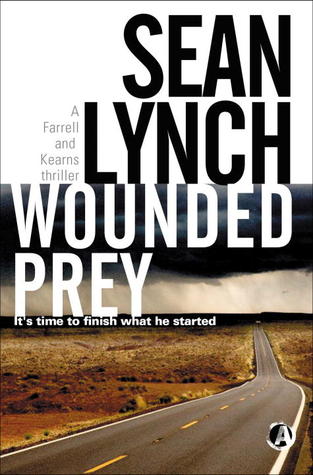
Wounded Prey: Introducing Detectives Farrell and Kearns by Sean Lynch
With thanks to NetGalley and Angry Robot for the opportunity to read this book in exchange for an honest review.
The Vietnam War provided the perfect opportunity for Vernon Slocum to unleash all of his twisted, murderous rage on the world, a product of his abusive childhood. His skills as a Marine earned him many medals and his commanders and squadmates recognized him as a man who got the job done – and who could easily end them if they questioned his more depraved actions. But when Slocum returns to the real world 20 years later, his kidnapping and brutal murder of a young girl isn’t going to go unnoticed.
The story jumps right in with Slocum’s depravity – and the valiant, but ultimately failed attempt by rookie deputy Kevin Kearns to save the girl. The FBI turns their attention on Kearns, as does the small town, whose thirst for vengeance will see Kearns burned at the stake for daring to survive where a little girl didn’t. Meanwhile, retired cop Bob Farrell recognizes Slocum’s MO and is not going to let him slip away again.
This is an introduction to Kearns and Farrell’s partnership and Lynch puts a unique spin on the old cop/green cop team up by binding them both so strongly together through the guilt of the little girl’s death. Kearns isn’t too happy with Farrell’s methods, but considering his new scapegoat status and his desire to catch the bad guy, he hesitantly goes along with Farrell’s less than legal methods.
Essentially, the two become vigilantes and I really liked the liberation it gives them – knowing the law and being able to slip over and under it without the use of a cape and tights. It also means that the two are as much criminals themselves, adding to the intensity of the hunt.
I really appreciated the authenticity of the characters and the situations. Lynch is clearly drawing on his career to pull together a dynamic and often gruesome story.

Book Review: Blood & Beauty by Sarah Dunant
Posted on July 27, 2013 Leave a Comment
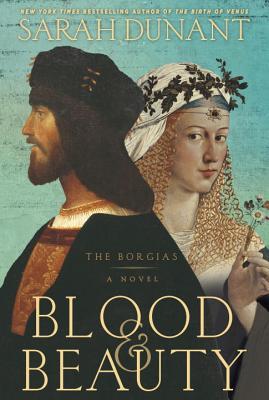
Blood & Beauty: The Borgias by Sarah Dunant
As you know, every once in a while I will find myself veering from my usual pattern of reading mostly sci-fi and fantasy and venture into the realm of historical fiction. I admittedly will do this for any interesting looking books about European royals or powerful families, especially those related to either the Tudors or the Borgias. Hence, this book.
Blood & Beauty focuses the Borgia family roughly between the years of 1492 when patriarch Rodrigo Borgia first began his papacy as Pope Alexander VI, and 1502 when his daughter Lucrezia Borgia married her third husband Alfonso d’Este, Duke of Ferrara. With scandals and rumors aplenty, this was an eventful decade for the notorious family, but also for the rest of Europe as well with their wars and ruthless politics.
First of all, I think that the author made a very brave choice when it came to using the third person omniscient point of view to narrate the story, even though there were both positive and negative sides to this. In getting to know the thoughts and feelings of all the characters in this novel, Sarah Dunant managed to convey the sweeping influence of the Borgias and acquaint us with practically everyone in the family. On the downside, because we don’t get to focus on any one POV for long, the connections the reader has with the characters also feel impersonal and distant.
This last point wasn’t much helped by the long sections of historical context and fact-dumping that were pervasive throughout the chapters, bogging down many parts of this book. This also made the novel feel more emphatic towards historical events rather than the characters, when I usually prefer it to be the other way around. On the other hand, this allowed us to see the bigger picture outside the personal dramas of the family, shedding light upon the political turmoil in other parts of Europe.
However, at times I felt like I was reading a dramatized history textbook. I would have preferred more emphasis on the characters; though, of all of them, Lucrezia did come across to me as the most well-rounded and fleshed-out Borgia. Still, Sarah Dunant pretty much played it safe with the rest when it comes to the exploration and interpretation of their personalities, and I wouldn’t have minded if she’d pushed it a bit further. I’m usually okay when historical fiction writers take liberties, as long as those liberties aren’t completely outlandish and are mentioned in an author’s note.
Anyway, no doubt this period of time was very interesting when it came to the Borgias, but history does show us that the fun doesn’t end there. It’s why I was glad to hear that Sarah Dunant’s already preparing a follow-up novel to this one. This is the first time I’ve read anything by her, and despite some minor issues I had with Blood & Beauty, I did enjoy it. I would be absolutely open to picking up the next book.

Book Review: Beguilement by Lois McMaster Bujold
Posted on July 26, 2013 Leave a Comment
Beguilement by Lois McMaster Bujold
I recently read Bujold’s The Curse of Chalion which teased me with the romance between Cazaril and the young Beatriz. Beguilement, part one of the Sharing Knife series, served almost as a sequel to that romance for me, giving me all the sexual tension and adoration that were only hinted at in Chalion. The romance spawns from the unfortunate adventures of Fawn when she becomes entangled with a deadly Malice and works with the Lakewalker, Dag, to save the world from the blight of evil.
I love the whole concept of the Malices, creatures that feed on life and cannot be killed but by the Lakewalkers and their very special ground magic, bound to the bone sharing knives they carry for just such a purpose. I love the lore of the Malice and of the Lakewalkers and Dag’s history, much of which we learn through Fawn’s naïveté and her endless curiosity. The world Bujold created is fascinating and I really wanted more of it. But all I really got was the courtship of Dag and Fawn.
The romance and the questions end up taking up 80% of the story, with all the excitement and danger of the Malice more or less wrapped up in the first part. I don’t mind a story that focuses on a prolonged romance, and I enjoyed the character development that went along with it. But when they finally get it on, I expected the overlying plot of Malices and bandits to rear their ugly heads again.
Nope. We get to meet the parents! And plan weddings! Oh and deal with ex-boyfriends too!
I haven’t checked the blurb for Legacy, the sequel, but I half expect the plot to cover the honeymoon, birth of children, marital counselling, the messy divorce, custody battles…

Book Review: The Crown Tower by Michael J. Sullivan
Posted on July 25, 2013 2 Comments
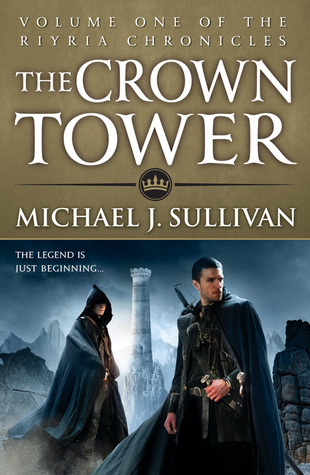 The Crown Tower byMichael J. Sullivan
Expected Date of Publication: August 6, 2013
A team, a partnership, working together…the Elves have word for it in the world of these books — they call it “Riyria”. If you’ve read Michael J. Sullivan’s excellent Riyria Revelations series already, you’ll know that Hadrian Blackwater and Royce Melborn weren’t always the dynamic duo we know and love, and that they certainly didn’t start off as friends. Now finally, with the story of The Crown Tower, we get to see how it all began.
I was honored to be able to read a pre-release copy of this book in exchange for an honest review. Thank you Orbit and NetGalley! Being quite the fan of Mr. Sullivan’s Riyria books and given the fact that Hadrian and Royce’s “origin story” was one that was hinted at throughout that entire series, being able to read this was one hell of a real treat.
The great thing is, even though The Crown Tower can be considered a prequel of sorts, it can also be read as a one-shot. We are introduced to Hadrian, a jaded and young directionless soldier returning home from the wilds of Calis after hearing about his father’s death. He agrees to meet with Arcadius, an old friend at the university who claims to have a message from Hadrian’s father before he died. Arcadius, however, inexplicably pairs Hadrian up with Royce, a depraved thief whose mistrust of everything and everyone is akin to that of a dog that has been kicked too often. The two men are sent on an incomprehensible task to steal a book…which sounds simple enough, if only they can learn to work together without killing each other first.
For newcomers to the world and characters of Riyria, this book will be a great starting point. Returning fans will probably be even more thrilled, as it basically has all the details about Hadrian and Royce’s first ever job together, and answers questions about how these two men — who arguably are complete polar opposites of each other — became a team. As an added bonus, we even get chapters focusing on Gwen, who ranks up there among my list of strongest female characters I’ve ever come across in fantasy fiction.
These are characters I’ve come to know well, and it’s just so great to be able to return to them again, even if it’s going back in time. My only regret is that Gwen’s sections feel a bit rushed and a little glossed over, though rationally I can kind of see why I found this to be the case. Her presence in this book is definitely required, but at the same time the main focus must remain on Hadrian and Royce’s quest. My excitement levels and hopes are lifted, however, for The Rose and the Thorn which is the follow-up to this, and it looks like it’ll have a lot more Gwen and maybe it’ll mean a deeper and more prominent role for her to play.
The thing I love about The Crown Tower is that it continues to read like all of the other Riyria novels in that they are fun, action-filled adventurous fantasy stories that have a traditional, straightforward and down-to-earth feel-good vibe. Hadrian and Royce are ever the source of good banter, even at this point where they still hate each other.
The book also has a feel of a puzzle piece that simply “fits”, falling into place and filling out the timeline of the Riyria books without feeling forced or tacked on, unlike certain prequels of certain franchises I won’t deign to mention here. You can tell with The Crown Tower as with all the books in the Riyria Revelations that the author has a grand plan, that everything happens for a reason and the presentation of it all is smooth and logical. The point is, I think this book would be great for any fan of fantasy, but if you’ve also read and loved the Riyria Revelations, this is a MUST-read.

Book Review: The Drowning Girl by Caitlín R. Kiernan
Posted on July 24, 2013 Leave a Comment
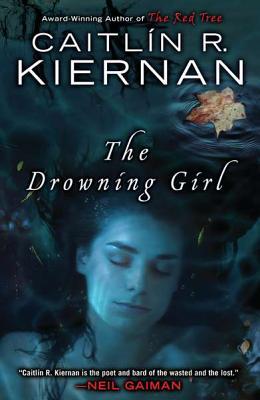 The Drowning Girl byCaitlín R. Kiernan
This novel was our book club’s choice for July, the theme of which was “Nominees for the 2012 Nebula Awards”. Though this book hadn’t been on my to-read list, nor had I a clue what it was going to be about, I’d looked forward to checking it out.
The Drowning Girl, described as dark fantasy and horror mixed with strong elements of magical realism, stars protagonist India Morgan Phelps, or Imp to those around her. Imp also has schizophrenia. As such, much of the novel’s themes are centered around the nature of reality and human perception, exploring the duality of fact vs. fiction or truth vs. myth.
The book gets a bit difficult to describe beyond that, because of certain factors like the writing style or the jumble of ideas within. Imp, being an unreliable narrator, had much to do with this. Suffice to say, The Drowning Girl is a ghost story viewed through the lens of mental illness, and is a rather provocative yet critical look into our understanding of consciousness and perception.
The way this story is narrated, which I initially fretted over when I first heard about it, actually turned out to be much less distracting than I thought. I won’t deny that at times it could be frustrating — indeed, by design the book lacks “flow”, and there were a couple chapters where I just wanted to grab my head and scream, “I just can’t bloody do this anymore!” Imp will also sometimes go on these long, rambling tangents and talk in circles. But still, it wasn’t that bad. For the most part, I think I was able follow the main thread.
As a literary horror novel or ghost story, however, it was a very subdued haunting and in my opinion fell a bit flat. Reading this, I became so absorbed by the intricacies and inner workings of Imp’s mind that everything else in the story became white noise, almost irrelevant. Which, I suppose one could argue, is the point. Whether or not it was what the author intended, I personally viewed this book as more of an in-depth character study of Imp rather than an actual tale of the paranormal.
In the end, I can’t say this book was my cup of tea. In spite of that, however, I can recognize its literary merits, and not the very least of those is the the bold and disjointed way the author chose to tell the story. This stylistic choice which at times annoyed the hell out me is also at the same time what I felt was the book’s greatest strength. From my time as an occupational therapy student working in an outpatient mental health clinic, one thing that’s always stayed with me is the constant struggle people with schizophrenia have with the breakdown of thought processes and their connection to what can be perceived. Reading Imp’s memoir brought me back to all the people I’ve met and worked with, and she feels very real in that sense. So while the writing style may be unconventional, it’s also very realistic.
Audiobook Review: You Only Live Twice by Ian Fleming
Posted on July 24, 2013 Leave a Comment
You Only Live Twice by Ian Fleming
My friend recently praised the audiobook narrations of Simon Vance. Unfortunately, my library’s inventory is small and Overdrive Media only allows me to download MP3s to my Nexus, further limiting my options to only two James Bond novels narrated by Vance. Since I have been wanting to read Bond books, I figured why not.
Shortly into the reading, my friend asked me what I thought of Vance’s performance. I informed her that there was no Simon Vance. There was only James Bond and Tiger Tanaka. Vance has definitely earned a place on my list of favourite audiobook narrators.
This is the twelfth Bond book, taking place shortly after the violent death of Bond’s wife of only a few hours. Bond physically survived the explosion at the hands of Dr. Blofeld, but the emotional effects are obvious. M is uncertain of what to do with his formerly best agent, until one doctor determines that what Bond needs is an impossible mission. This leads Bond to Japan and a friendship with Tiger Tanaka.
This is the last Bond book published by Ian Fleming in his life time, and it differs significantly from the film. There are no spacejackings and nuclear weapons in the book, but there are ninjas.
The story takes place not long after Japan’s defeat in WWII. The west is encroaching on the east, and not everyone is happy with subjugation. The samurai sense of honour remains. I enjoyed the insight into the Japanese culture, which was not as pretentious or derisive as it was in Michael Crichton’s Rising Sun. The back-and-forth between Tanaka and Bond is amiable and respectful, even when they are being negative or insulting to each other’s countries.
Bond’s mission changes significantly when Tanaka asks him to deal with the “Castle of Death” that has been built on a Japanese island, where a wealthy foreigner is harbouring a collection of botanical death and luring in Japanese citizens. A lot of their discussions deal with their differing views on suicide and honour. Although Bond does not get heavily into his emotions over Tracy’s death, there is a sense that the discussions about suicide and other aspects of Japan are definitely on Bond’s mind. Or, perhaps I was just projecting, because I wanted a little more of Bond’s internal struggle to come out. It does rear its head in the end, with good reason, but I wanted to see a bit more of his pain than Fleming allowed.
As this is a Bond book, there has to be a Bond Girl. In this case, it is Kissy Suzuki, a clam diver on the small island that becomes Bond’s base of operations. Throughout the book, he has numerous encounters with women and the book comments on his lascivious thoughts, but I found it interesting that the woman who is clearly intended to be a love interest, is treated with the utmost respect by Bond. Several moments in Kissy’s appearances were dedicated to Bond’s utter appreciation of her as a woman. The descriptions spoke as much about her body as they did about how her body suited her abilities and demeanor.
There is not a lot of action in this book. In fact, M informs Bond at the beginning, that the mission requires his wits, more than anything. When the mission changes, Tanaka denies Bond’s requests for the simplicity of guns, instead introducing him to ninjutsu and the art of stealth. I was a bit skeptical about this part, though I appreciated that Bond didn’t simply learn how to ninja over night. Or at all, really.
My only other complaint comes from two particular moments when mission information is provided to Bond. I expected the information to be summarized, but instead it was listed off in great detail that caused me to tune out a bit. That said, I do now have a long, handy list of poisonous flora and their resulting effects. Just in case.


Book Review: The Darwin Elevator by Jason M. Hough
Posted on July 23, 2013 Leave a Comment

The Darwin Elevator by Jason M. Hough
Skyler Luiken captains the Melville, a typical smuggler ship with a typical smuggler crew doing typical smuggler things. At least, that’s how it seems, but from the first few moments spent with Skyler, it’s obvious that he’s anything but the typical cocky captain that we know from scifi classics like Star Wars and Firefly. In fact, Skyler’s not a particularly good captain at all because he’s too damn nice. Well, not so nice that he’s annoying. No one likes *those* kind of nice people. But he’s just nice enough to make his crew question his suitability for the role of captain after their original captain simply walked away. It’s hard not to like Skyler. He’s a good man trying to take care of his crew in a bad situation. I wanted to give him a hug and let him know it would be okay, but what I really appreciated about the character was the way Hough made him vulnerable, without tipping him into the realm of needing our pity. He’s heroic, without having to go out of his way to prove himself a hero. Doing what has to be done simply comes natural to him, and he does it with awkward and charming competence.
With thanks to NetGalley and Del Rey Books for the opportunity to read an advanced reader copy! And to NaNoWriMo for providing the motivation for Jason M. Hough to get this incredible story out of his head and onto our bookshelf!

Review Bites: The Walking Dead Edition
Posted on July 23, 2013 Leave a Comment
The Walking Dead, Vol. 1: Days Gone Bye by Robert Kirkman
If you’re breathing, you’ve heard about The Walking Dead thanks to the critical success the television series has garnered. This book is basically about a group of survivors in Georgia trying to survive a zombie apocalypse. It focuses on the dynamics between the ever changing group as they try to survive their ordeal, not knowing where this path will ultimately lead them. Admittedly, I’m a little sick of zombies, and I have been for quite some time thanks to overexposure through books, games, and television/movies. However, every now and again, I’ll find something that’ll pique my interest in the genre, and I do love anything that explores characters and their machinations.
I’d been meaning to read this series for ages. However, I didn’t start reading this until the television show inspired me to get started. I think I didn’t rate this higher because my views of the comic have been tempered by the television series. It wasn’t a terrible comic. Far from it and I enjoyed it. The television series really added more depth of character while fattening up the story, of course. I loved how many of the scenes they did keep from this initial book. I just found that I thought the events in this book happened far quicker than I like because of the pacing I’d grown accustomed to with the television series, and the characters that I found compelling in the show felt very hollow here (ex: Carol and Shane). As I move forward with the series, my opinions may change, and I may be able to appreciate this without the television series looming over its shoulder.

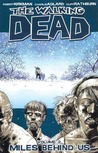
The Walking Dead, Vol. 2: Miles Behind Us by Robert Kirkman
Volume two follows the survivors as they make the decision to leave the camp near Atlanta and find a more secure location. The group has decided that, with the removal of Shane (who they were starting to distrust anyway), Rick should be their new leader. He isn’t asked if he wants this position. He’s just informed by Dale that the other survivors have talked, and they’re going to put this burden on Rick. Rick accepts the position without a fuss. He actually just says, “Okay then.” No questioning as to why this should happen, just meek acceptance. This volume also introduces the Greene family, Tyreese, and Tyreese’s daughter Julie (and her boyfriend, Chris).
I am really starting to regret not reading this series before watching the show. I’m typically able to separate comics books/books from their television/movie counterparts, but I think I’ve just been too spoiled by the show. I like these comics, but I’m not moved by them as I am the television show. As I said in my bite about the first volume, everything moves too fast. The story feels gutted to me because things are happening in such rapid succession. Where on the show certain events were built up, such as Rick increasingly becoming the leader of the group and eventually forming a Ricktatorship, the comic just seems to hands these events to the characters. However, I really do love seeing many of the scenes from the show in these books.
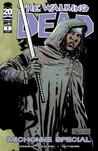
The Walking Dead: Michonne Special by Robert Kirkman
Disclosure. I’ve only read the first two volumes and, as of this writing, I’m reading the novel, The Walking Dead: Rise of the Governor. I figured it wouldn’t hurt to read this because it was going to be all about Michonne’s life before meeting up with Rick and the gang, and I wouldn’t be lost. Right? Ha!
The story begins with Michonne running home from work during the start of the zombie apocalypse. We meet her boyfriend and his idiot best friend (who inadvertently doomed the both of them). We learn that she turned them into her pet zombies to help her bypass the walkers. We learn that she talks to them to remind herself of who they were before turning and to have someone to talk, but that’s about it. After that, I’m guessing the rest of her story coincides with one of the comics in the main arc because she saves Otis and is granted admission into the prison. I don’t think it’s really accurate to say that this is a Michonne special since so few pages were actually dedicated to her actual personal story. It wasn’t poorly written, but just disappointing and misleading.


 The BiblioSanctum