Book Review: Stormdancer by Jay Kristoff
Posted on August 27, 2013 Leave a Comment
Genre: Young Adult Fantasy, Steampunk
Series: Book 1 of The Lotus War
Publisher: Thomas Dunne Books
Date of Publication: September 18, 2012
Author Information: Website | Twitter
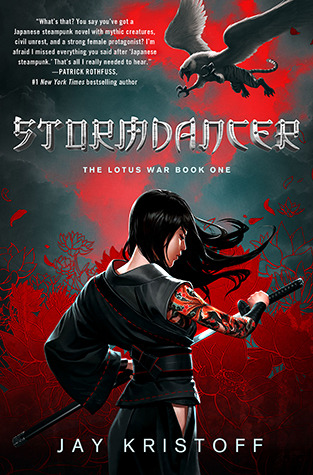
This was a refreshing read that stood out from all the steampunk I’ve been chomping through lately. I used to think this sub-genre and setting wasn’t for me, but that was probably before I realized how few steampunk books I’ve read actually incorporate that “steampunkness” so fully and completely as this book does. And it’s not just about the cool airships and armor and the wicked chainsaw katanas either (though all those things are indeed cool and wicked). The steampunk aspect is ubiquitous and feels like a living, breathing part of the story, going beyond descriptions of the mechanisms to actually touch upon the relationship it has with the whole society and industry.
But enough about the steampunk, because as brilliant as that is, it’s only one of the many reasons why I loved this book. I think the kicker is the feudal Japanese-inspired world as well as the author’s version on its myths and legends. In the center stage of Stormdancer is the arashitora, a “storm tiger” or griffin, which the characters Yukiko and the members of her father’s hunting team are tasked to capture for Shima’s megalomaniacal Shogun. However, the expedition is disrupted by a great tempest before they could bring one home, leaving Yukiko stranded and alone with one of the mythological creatures, and a furious one at that.
At is heart, the story is mainly about the friendship that develops between Yukiko and the arashitora Buruu, an unlikely pair who learns to trust and love one another after facing challenges together. While that’s not exactly breaking new ground, I still have to say there were a few surprises in the plot that kept things interesting. Once again, it’s the world that really pulled me in, and along with that the anticipation of seeing how the characters will prevail against the Shogun and his Lotus Guild. For a novel targeted at young adults, I am more than impressed with the whole package.
I suppose the only thing that gave me pause was the prose. I am torn when it comes to this, because so much of the writing was given to the world building, and surely no one can accuse the author of skimping on the descriptive details. In general, however, I found the prose needed getting used to, and also could have done with less embellishment.
Still, the book’s penchant to expound on everything was also both its strongest and weakest point. It may be the reason for its slow-ish start, but also gave life to in my opinion the best and most amazing scene in the whole book, which was the initial hunt in the storm at about a quarter of the way in. There’s pretty much no way you can read those vivid chapters and not be hooked afterward! All in all, a great book, and nothing’s going to keep me away from the next one.

Book Review: The Greyfriar by Clay Griffith and Susan Griffith
Posted on August 26, 2013 1 Comment
The Greyfriar by Clay Griffith and Susan Griffith
Genre: Fantasy, Steampunk
Series: Book 1 of Vampire Empire
Publisher: Pyr
Date of Publication: November 2, 2010
Author Information: Website
Note: I received a review copy of this book compliments of the publisher, in exchange for my honest opinions. Thanks, Pyr/Prometheus Books!
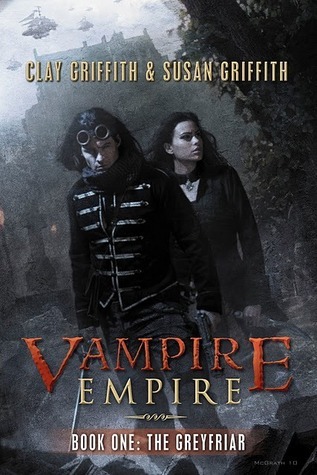
Vampires and steampunk! The former, obviously, is a topic that’s been wildly popular for years and years. The latter, as well, has been a sub-genre gaining more traction in the science fiction and fantasy world lately, hence it was only a matter of time that I would finally stumble across a book which unites both concepts in the foundation for its story! What did strike me as a pleasant surprise, however, was finding a book that does this so well!
The Greyfriar is set in an alternate history in which humans and vampires have been locked in a bitter conflict for more than a century. In 1870, the blood drinkers rose up to conquer the northern lands, driving the humans towards warmer climes. Now, the young princess Adele of Equatoria is to wed the famed vampire hunter senator of the American Republic, their marriage to be the start of an alliance to take back their lands. But shortly before the wedding, an ambush on the princess’ airship throws all plans into turmoil. Adele’s way home now involves a partnership with the Greyfriar, a semi-legendary figure who has become a symbol of humanity’s fight against the vampires.
Notice I say “partnership with” and not “dependency upon”, because as princesses go, Adele is far from your dainty damsel in distress and she can most certainly hold her own. In this book, both the main protagonist and also the enemy vampire warchief are female characters you would not be wise to cross, as each woman has about them a commanding presence in their own way. With Adele, I loved her for her independence, intelligence, fighting skills, as well as for her protectiveness and love for her little brother. All the characters here are pretty well written, but it’s extra nice having a heroine I genuinely like and enjoy reading about.
Still, while I’m steadfastly rooting for Adele, it’s hard not to be drawn to the vampires as well, with their fascinating empire, politics, family conspiracies and infighting among their peerage. The vampires in this book are atypical enough not to bore me, with their strange biological quirks allowing their bodies to be lighter and to “float” in the air, and it amuses me to no end how disdainful they are of human myths like the ones claiming vampires to be their own dead risen to life. Their culture is well defined, like everything else in this book’s world.
My favorite part, though, is the thread of romance woven through the second half of the book! Admittedly, as much as I enjoy love stories, romance in these types of books usually make me balk — like, seriously, why spoil a perfectly awesome action-adventure tale by forcing a contrived and cringe-worthy romantic side plot just for the sake of having it? And yet…I found that the love story in this book could not have been more natural and just completely appropriate, like it belongs. I don’t know what it is, but perhaps the fact that the authors are a married couple who have been writing and publishing together for years has something to do with this, because the attraction between Adele and Greyfriar felt passionate, gradual, sweet, real and — most importantly — earned. None of that insta-love nonsense.
Plus, not to worry if romance isn’t your cup of tea; as I’ve said, the romance is not the dominant focus and does not by any means overtake the entire story, and I liked how there were just as many if not more action-oriented battles and fight scenes in this book. In fact, my only wish is that the novel was better paced and balanced. After a very bombastic introduction, it wasn’t until halfway through the book that my enthusiasm spiked again, but once it did, you can be sure I was completely enamored. I read the second half all in one sitting, and loved every minute of it.
Wendy’s Book Haul: Fan Expo 2013 Edition
Posted on August 26, 2013 Leave a Comment
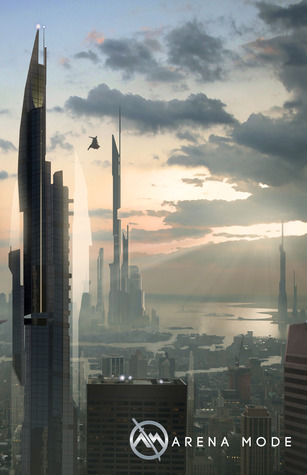
I’m just back from this year’s Fan Expo Canada (see my full report here!) where I picked up a few goodies, including Arena Mode, by Blake Northcott, whom we recently featured in our 10 Authors That Deserve More Buzz. I also got to spend a few minutes with Ms. Northcott and grab an autograph and pic and discuss future plans for the project. She had the covers of the next two books in the planned trilogy on display and they were breathtaking!
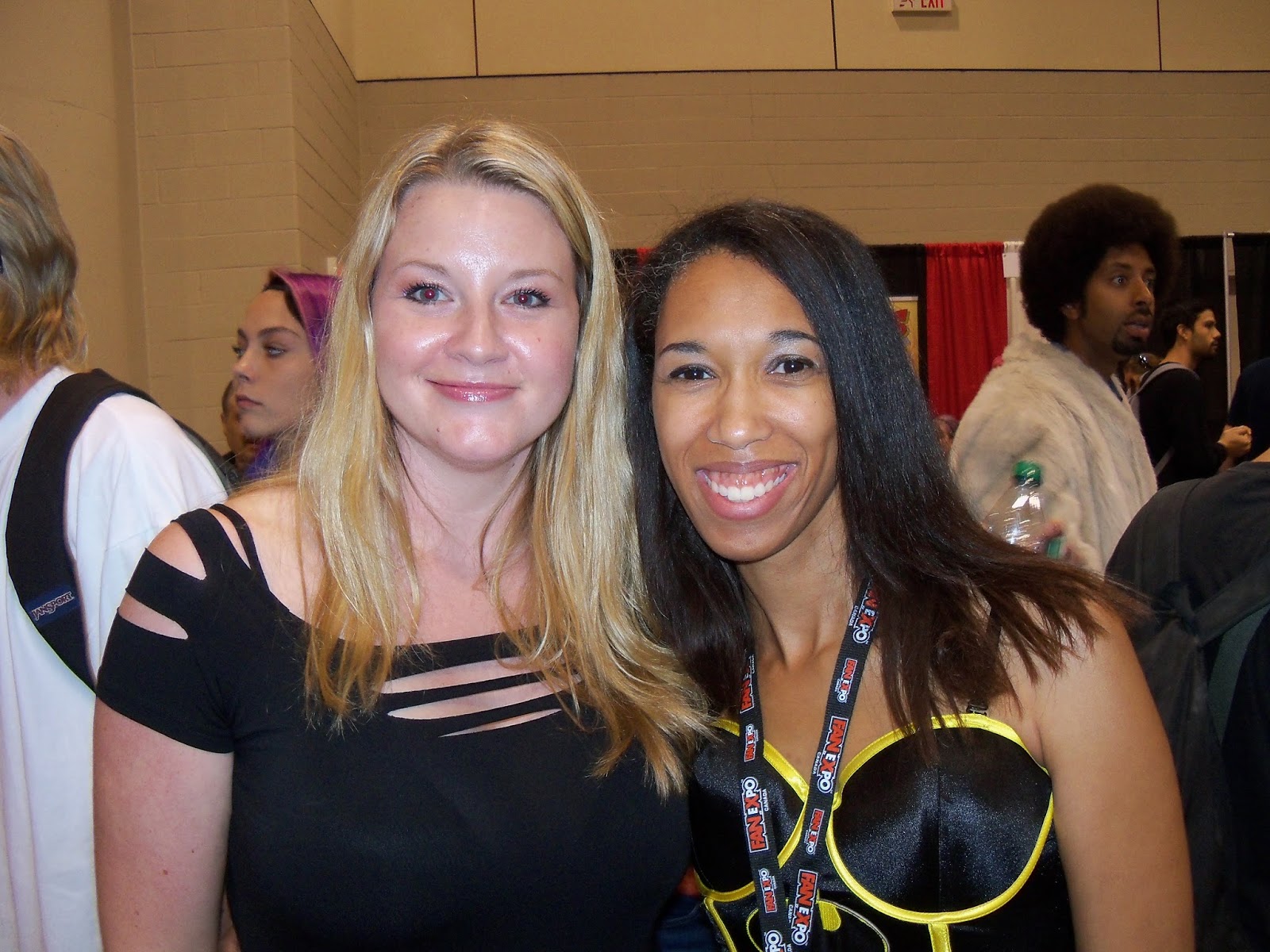 |
| Blake Northcott and Wendy B at Fan Expo Canada |
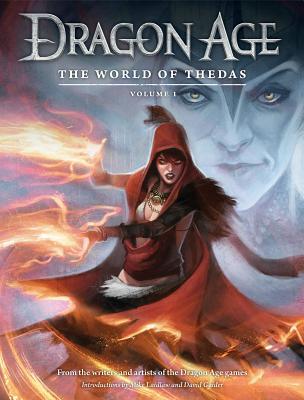
I dropped by my old comic book dealer, Labyrinth Books. Note that I use the word “dealer” in the truest drug addiction sense of the word, because the owner was skilled at finding all the right comics and paraphernalia to keep me coming back for more. Now he has a huge collection of art books, including concept art for many of my favourite games, such as Remember Me and Mass Effect. I obeyed my bank account though and only succumbed to Dragon Age: The World of Thedas, because it was not only an art book, but an encyclopedia dedicated to the game’s lore. I am happy to immerse myself in the lore as my cautious excitement builds for the third installment of the series, Dragon Age: Inquisition.
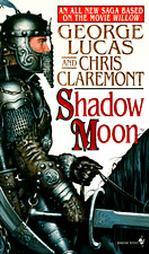
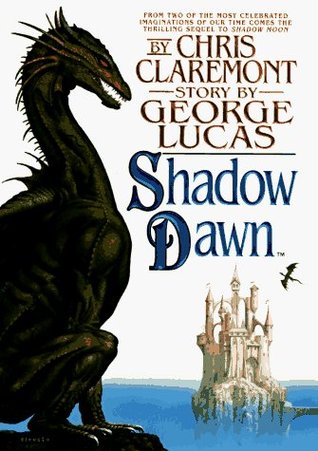
Finally, the Chronicles of the Shadow War series wasn’t purchased at the convention, but it arrived shortly before it and definitely fits the theme the convention promotes. A mention of Chris Claremont somewhere sparked sudden nostalgia, reminding me of the first book in this series, Shadow Moon, which I read a long time ago during my I Love George Lucas and X-Men era. I decided I needed to finish reading the series.

Book Review: Soulless by Gail Carriger
Posted on August 25, 2013 Leave a Comment

Genre: Fantasy, Paranormal Romance, Steampunk
Series: Book 1 of Parasol Protectorate
Publisher: Orbit
Date of Publication: October 1, 2009
Author Information: Website | Twitter
A total impulse read, I had absolutely no idea what to expect when I picked this up. I knew next to nothing about the characters or the story because believe it or not, I hadn’t even stopped to read the synopsis or description (which, when you’re a bibliophile, is like totally living life on the edge, I tell ya!)
But perhaps I’m overplaying my daredevilry. The fact is, it’s not like this Parasol Protectorate series hadn’t been on my radar at all, because I see it everywhere, from people reading it on the bus to copies at the checkout racks at supermarkets. So I had a pretty good idea that these books were wildly popular, and I’ll admit I’ve always been curious, especially ever since stumbling upon a description of it as a “paranormal comedy of manners”. That definitely conformed to my impressions of it after seeing that charming cover.
So, discovering that it was a novel about werewolves, vampires and other such uncanny creatures was a real treat for me, as was finding out about the Victorian steampunk setting. After all, this is territory I’m familiar and happy with, and the main character Alexia Tarabotti’s life as a “soulless” or “preternatural” sounded new and interesting enough for this book to be right up my alley.
As someone with her unique power, Alexia is able to negate the effects of supernatural beings simply by touching them, thus turning creatures like vampires and werewolves back into their human forms. I have to say I was just in love with this idea! In addition, the book also floated a really neat theory to explain the link between preternaturals and supernatural creatures, utilizing a concept that involves opposing forces and counterbalances. I know I’ve said this a bunch of times before, but I always enjoy seeing novel ideas like this in the paranormal fantasy genre.
In the book’s intro, Alexia’s condition as a preternatural was what allowed her to survive an attack by a rogue vampire. In her subsequent investigation into this incident with the werewolf Lord Maccon, they uncover cases of other rogues as well as a disturbing number of missing supernaturals, so now I’m getting really excited, seeing that an element of mystery is in this story line as well. All was going great…until I got to the romance.
Admittedly, here’s where my enthusiasm began to wane. Now that I’m finished the book, I would definitely classify Soulless as a paranormal romance more than anything. While I have nothing against that particular genre, I still must confess that a book tends to lose me when the relationship drama begins eclipsing everything else in the plot and becomes the main focus. And so when Alexia and Lord Maccon actually started making out and rounding second base on the dirty floor of a dank dark cell while they were being imprisoned by a gang of fanatical torturers, I kinda knew we’d reached my breaking point.
Pages upon pages describing the etiquette of courtship and totally inappropriate moments to get amorous notwithstanding, this was still a very good book. I’m open to the possibility of picking up the next book in the series if I’m ever struck by the mood to read a fun paranormal romance, especially now that I know what to expect!

10 Authors That Deserve More Buzz
Posted on August 23, 2013 1 Comment
This list was originally inspired by the post I stumbled across by M.L. Brennan who in turn was inspired by a Top Ten Tuesday by Danielle over at Coffee and Characters. So, you know all those times you read an amazing, incredible book, but then when you rush out to hit up your bookish friends to find out what they think you discover that – SHOCKER! – hardly anyone has read it or even knows about it? You know what we mean! That idea evolved into this topic, in which Mogsy and Wendy list some authors plus the books they’ve written that we think should be getting waaaay more attention!
Wendy’s Picks:
 BLAKE NORTHCOTT: I discovered Northcott’s first book, vs. Reality, via her Twitter feed, lured in by her sense of humour, obvious geek status and home girl pride. She writes novels about superheroes from a really unique angle. In fact, her first book was meant to be a comic, but when plans fell through, she converted it to a novel and has followed through with that concept for two more books in the series, plus an all new book, Arena Mode.

N.K. JEMISIN: The Killing Moon currently appears on numerous awards lists. I’m sure it’s there with good reason, but I couldn’t appreciate the book enough after reading her Hundred Thousand Kingdoms first. I loved that book so much that I read it twice within two months. A unique and diverse world with beautiful characters that have had a huge emotional impact on me. I haven’t started the second book in her Inheritance trilogy because I’m not yet ready for the emotional trauma!

JASON M. HOUGH: If you’re looking for a good place to jump into sci fi, or if you’re already a sci fi fan, get started on Hough’s new Dire Earth Cycle series. I think of it as down-to-earth sci fi that has all the necessary elements of space, technology and aliens, combined with action, drama, suspense and mystery. I love the diversity and the unpredictability that keeps me turning the pages.
MARTHA WELLS: Wells has already made a name for herself, writing within various popular fandoms, including the upcoming Star Wars: Razor’s Edge. But she has a number of books of her own that I bought in one big rush after finishing The Cloud Roads. Her worldbuilding is amazing and I love the physical and cultural uniqueness of her characters.
KAREN LORD: I love the subtly of Lord’s work. Her forays into science fiction (The Best of All Possible Worlds) and fantasy (Redemption in Indigo) might not seem to be science fiction and fantasy enough for some, but I really enjoyed her writing. Reading about her worlds and the characters within them made me feel like I was joining a bunch of friends on a comfy couch as they told me their tale.
Mogsy’s Picks:
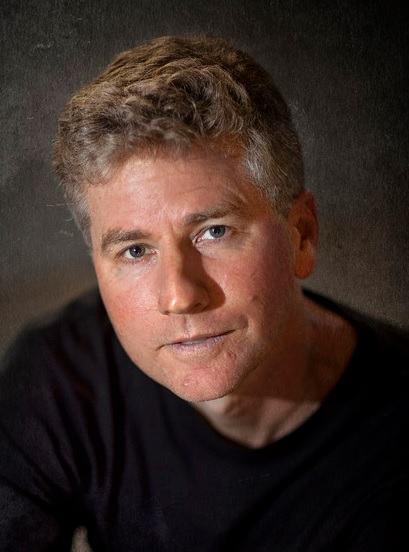
WILL McINTOSH: I recently finished a book that arguably was what motivated me to start up this post in the first place, Love Minus Eighty. If you’re looking to read a sci-fi novel guaranteed to give you a strong emotional reaction, then this one is it. It’s a very human story despite the futuristic high-tech setting, and it made me want to check out more of Will McIntosh’s work. My mind is still blown.
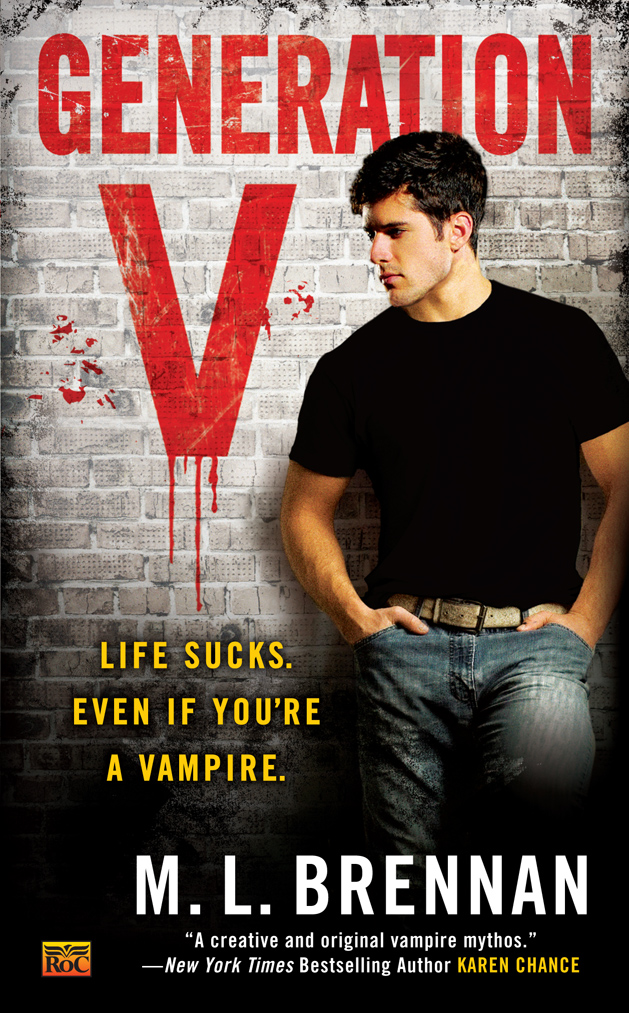 M.L. BRENNAN: And speaking of motivation to write this post, my discovery of M.L. Brennan’s own list was what clued me in on this topic in the first place. I thought, “How apropos!” because I knew if I had to make my own list of “Authors that deserve more recognition”, M.L. Brennan would definitely be on it. I read Generation V this summer and it’s already rocketed itself up my list of essential Urban Fantasy. She’s so funny and creative, and it comes out in her writing and characters. I just cannot stop raving about this book to everyone I know who loves UF!

BEN H. WINTERS: Being the author of the New York Times bestseller Sense and Sensibility and Sea Monsters, Ben H. Winters has already made quite a name for himself, but I still couldn’t help but notice that while a lot of my friends have his books on their to-read lists, only a few have actually taken the plunge! Though his “humor” books are probably still more well known, I personally adore his Last Policeman series which I’m glad to see is gradually gaining more attention.

TERESA FROHOCK: Seriously, whenever the topic of Miserere comes up, I find it really difficult to shut up about how amazingly good this book is. So, before I forget myself and write a whole essay about how much I love Teresa and her book, let’s just say that she single-handedly reaffirmed my decision to always finish every novel I start. Miserere takes its time to build up, but then rewards you in spades! The story is just so, so beautiful. And freakin’ look at that gorgeous cover! Read this, you must!

DJANGO WEXLER: You know how there’s epic fantasy, and then there’s EPIC fantasy? The latter goes beyond just transporting you to a different world and time, it also sweeps you up into an experience that’s truly grand, immense and awe-inspiring. Django Wexler’s The Thousand Names that I read earlier this year was one of those books for me. Keep an eye on this author and his series, because I have a feeling he’s gonna go places!
Wendy: A book you thought you wouldn’t like but ended up loving
Posted on August 22, 2013 Leave a Comment
Sorrows Of Adoration by Kimberly Chapman
Click here for my original review.
Book Review: The Coldest War by Ian Tregillis
Posted on August 21, 2013 Leave a Comment
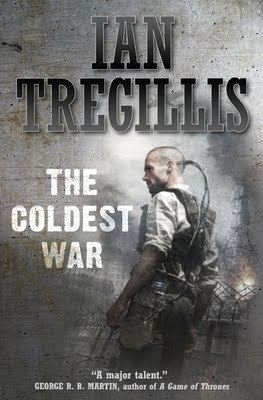 The Coldest War by Ian Tregillis
Genre: Science Fiction Fantasy
Series: Book 2 of The Milkweed Triptych
Publisher: Tor Books
Date of Publication: July 17, 2012
Author Information: Website | Twitter
Wow, did that seriously just happen?! Those were the words running through my head when I reached the very end of this book. Just when I thought this series couldn’t get any crazier with its genre-bending goodness, it decides to throw me for another loop (which in the context of talking about this book is a rather clever pun, now that I think about it. I’m just a little miffed now because I can’t explain it without spoiling anything!) The way I see it, as far as those shocking “I-NEED-to-know-what-happens-next” cliffhangers go, Ian Tregillis just raised the freakin’ bar.
If I had to go back and talk about the first book of The Milkweed Triptych, Bitter Seeds (see my review here), I’d probably describe it as an alternate history World War II novel with both fantasy and science fiction elements, mostly due to its main premise involving Nazi Germany’s lab-raised soldiers with superpowers versus the British’s warlocks and their demons. This second book still has all of that, except it takes place some twenty years later, and even though the war is over, Great Britain now finds itself locked in a precarious power struggle with the USSR.
Now Project Milkweed is threatened when they find out that Britain’s warlocks, the country’s greatest defense in keeping their enemy at bay, are being killed off by an unknown assassin. Meanwhile, a pair of super-soldier siblings who fought for the Nazis in WWII escape their Soviet prison and make their way to England. One of them is Gretel, the psychopath pre-cog who is still obsessed with manipulating the life of British agent Raybould Marsh. Even after more than two decades, she is still pulling the strings, nudging the future towards her own mysterious agenda.
By all accounts, I should have liked this book more, and I think I would have if it weren’t so utterly bleak. I know “Super soldiers vs. Warlocks” sounds like an interesting and unbelievably fun premise — which it most certainly is, don’t get me wrong — but part of me is still having trouble getting over how dark this series can be sometimes. While I’m no stranger to dark fiction with dreary themes, there’s just something about these books that unsettle the heck out of me and chill me to the bone.
I suppose depending on who you are, that can be seen as a good or bad thing. For example, in Bitter Seeds, I found that the disturbing ideas in the first book really worked in giving the story the hard edge it needed. I was able to transform those feelings of dread into suspenseful anticipation which kept me turning the pages, and also because I felt pity for the poor characters who have had such terrible things happen to them or are forced to make these awful decisions.
Unfortunately, my sympathy for the characters ran out and was largely absent for the most part in The Coldest War. The main players were mostly the same, but in the twenty-two years since the events of the last book, many things have happened to turn even the “good guys” into pretty despicable people in my eyes. While the main antagonist Gretel is still as evil as ever, I nevertheless had a difficult time bringing myself to muster up any enthusiasm to root for Marsh or Will this time around. There are no truly upstanding characters in this book, which normally isn’t a problem for me; I find I can be drawn to even the most morally corrupted of characters if they are written well, but I honestly couldn’t find anyone particularly likeable in this book, with the possible exception of Klaus, Gretel’s brother.
Story-wise, though, I am absolutely floored. The ending alone was probably worth all the frustrating moments the characters put me through, not to mention the next book presents the perfect opportunity for many of them to redeem themselves. That last line in the epilogue has got to be the most effective two words in the history of book endings. I can’t wait to pick up the third book for the finale, I MUST find out how it all ends.

Book Review: Love Minus Eighty by Will McIntosh
Posted on August 20, 2013 2 Comments
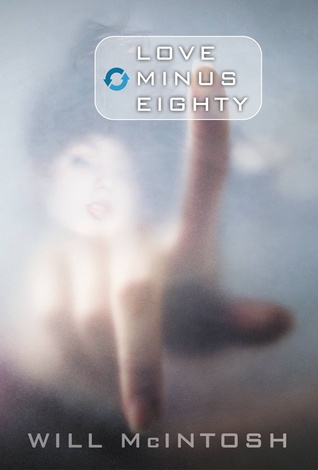
Love Minus Eighty by Will McIntosh
Genre: Science Fiction
Series: Stand-alone
Publisher: Orbit
Date of Publication: June 11, 2013
Author Information: Website
I have a confession to make: I’m a sucker for love stories. But not just any kind of love story would do, oh no, because I like my romance the same way I like my Fantasy — gritty, transcendent, in-your-face, plus it helps if it’s just a bit bizarre! Love Minus Eighty is definitely all this and more, as if you couldn’t already tell from its exquisite tagline, “A novel of love and death in no particular order”.
Decades from now, dwindling resources have caused cities like New York City to practically fold in and build upon itself, creating a social stratification system that’s even more segregated than what we know today. No doubt, the book paints a pretty bleak view of the future, but it’s especially bad if you’re one of the hundreds of dead women cryogenically frozen in dating farms, awaiting your lucky day when some rich man will like you enough to pay millions for your revivification before whisking you home to be his wife.
And seriously, to think some of my friends complain about internet dating! Online dating sites have got nothing on the nightmare that are these dating farms, which charge male suitors thousands of dollars by the minute to “date” the dead women, whose consciousnesses are “awakened” for the session before the plug is pulled again and they go back to their state of non-existing. Will McIntosh expanded upon this idea from his award-winning short story “Bridesicle” (because that’s what society in this world called the frozen women. Horrible, right?) for this novel, which follows a group of characters whose lives are all interconnected because of these dating farms.
What a disturbing and yet fascinating basis for a story, and it’s all set before a futuristic backdrop which seems so outlandish but feels familiar enough to make you feel uncomfortable at the same time. It’s a world of digital information and social media on steroids, where attention seekers can be trailed by thousands of literal “followers”, their floating user screens going wherever that individual goes. People wear systems on their bodies to connect them to the network, allowing them to call up and communicate with multiple contacts at the same time. The setting was so vividly described that at times I felt like I was watching a movie (oh why oh why can’t this be a movie?!)
But in spite of all the new technology, some things always stay the same. For one thing, people will still look for love, that timeless, formless, unshakeable deep connection to another soul. This makes Love Minus Eighty a sci-fi novel that’s definitely more about the human story and less about the science and technology. Questions like how the dead can be brought back to life, or how these dating farms even manage to revive dead women for short periods of time aren’t the point. Instead, what’s important is the emotional impact of the story, and subsequently, the ethical implications of keeping women on ice and in limbo, basically according human beings who have the potential to live again less rights than what you’d give a dog in an animal shelter.
I also have to say the focus on love and dating was a nice touch, not only as it’s something practically everyone can relate to, but also because it makes the characters and their motivations feel that much more poignant. It’s hard to really say whose perspective was my favorite — Rob, Veronika, Mira, and even a couple of the supporting characters — because they each had their own experiences which I found acutely heartbreaking and intense.
Of course, this book wasn’t perfect by any means, and I for one had issues with some of the dialogue as well as the pacing, especially with the way it led up to the ending. However, the mere fact that I’m usually so persnickety about these things but was still able to overlook them meant that ultimately for me, Love Minus Eighty was all about the story and its provocative ideas. Above all, I enjoy books that make me feel (and here’s where that whole “I’m a sucker for love stories” comes in), and this one was at once a very thoughtful commentary on the ways of the heart and just twisted enough for me to eat it up.

Cover Lover: Fearie Tales
Posted on August 20, 2013 Leave a Comment

Jo Fletcher Books recently posted the cover of the upcoming Fearie Tales, a collection of definitely-not-for-kids fairy tales twisted and retold by an amazing list of authors, including: Neil Gaiman, Garth Nix, Ramsey Campbell, Joanne Harris, Markus Heitz, John Ajvide Lindqvist, Angela Slatter and Michael Marshall Smith.
The exquisite cover is by Oscar-winning artist Alan Lee, who’s art will be featured inside the book as well!


 The BiblioSanctum