Book Review: Ghosts of ARCADIA by Ramsey Isler
Posted on November 8, 2013 Leave a Comment
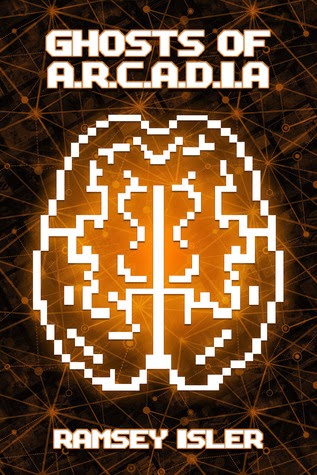
Ghosts of ARCADIA by Ramsey Isler
Genre: Science Fiction, Gaming
Publisher: Self Published
Publication Date: October 2013
Author Info: www.ramseyisler.com
ARCADIA is the most advanced video game ever created, going well above and beyond the concept of virtual reality by reading the users neural signals to create an impossibly real world. Millions donned the system’s technologically advanced headsets and stepped into ARCADIA, some even creating proxies to handle game play and interactions during their absence. But when ARCADIA is hacked, resulting in the slow leak of roughly twenty million dollars, the system becomes anathema.
The drama has died down since the hacks, but Unwired tech journalist Miguel Naciamento is certain there is a deeper story that others have overlooked. Determined to earn himself another Pulizter, Miguel pursues a few leads, including his former professor, now an FBI consultant on the case, Ivy Yuen, the game’s brilliant creator, and a gray hat hacker still devoted to the game.
As a gamer, ARCADIA’s concept appealed to me, though I would have loved to experience, through Miguel, some of the more involved games the story implied existed (… okay maybe it didn’t imply it… I just want to go virtual reality questing, okay?). The concept initially made me think of Ready Player One, where a similar system exists (though more easily accessible to the 99%). While I was initially disappointed that the ARCADIA system didn’t seem to involve more elaborate games, I came to appreciate the more Facebook/app like games that it employed. Considering how popular these games and apps are in our current reality, Isler’s implementation of them within such an innovative system makes sense as the focus.
Another major concept in ARCADIA that I liked were the proxies. My pixel people have come to mean a lot to me and many of them do reflect me in many ways. Imagine if you could truly create a character within a game system that *was* you! With this in mind, Isler’s prologue immediately grabbed me, beginning at the end of Miguel’s memoir as he says good bye to his proxy.
I think there were certain aspects of the proxies that could have been explored more, but everything still worked well within the story. My preconceived notions about this book continued to be derailed as Miguel explored more and more of ARCADIA and got to know the personalities involved in its creation and continued existence. This ended up being a very sweet, very human story that I really enjoyed.

Book Review: Arena Mode by Blake Northcott
Posted on November 7, 2013 3 Comments

Genre: Comic Books, Superheroes, Science Fiction, Dystopian Future
Series: Arena Mode #1
Publisher: Noösphere Publishing
Publication Date: June 2013
Author Info: http://www.blakenorthcott.com
What if superhumans were real? What if they came out of the closet to reveal themselves to the world? And what if, some of them were the 1% and accepted billionaire Cameron Frost’s opportunity to pit their superhuman powers against each other in a death match for a chance at a whole lotta money?
Matthew Moxon lives in this dystopian future and is thrilled to see his love of comic books turned into fantasy. Unfortunately, a brain tumour puts a downer on his life, leaving the Arena Mode tournament as his only option for a treatment that costs millions. The problem? Mox, as his friends call him, isn’t a superhuman. But he does have a valuable comic collection, as well as a best friend with questionable connections and that’s enough for Mox to buy his way into deceiving Cameron Frost into believing that he really is a superhuman.
Arena Mode is basically a comic book written in novel format and it’s a fun read for any comic book fan. Northcott is a card-carrying geek and obviously a huge fan of the comic industry herself. Her opinions on important topics like the prequels that shall not be named or Marvel’s misunderstanding of how death works sneak into the story in the form of Matthew’s own thoughts. (I’m perfectly fine with these opinionated moments since I share the same opinion).
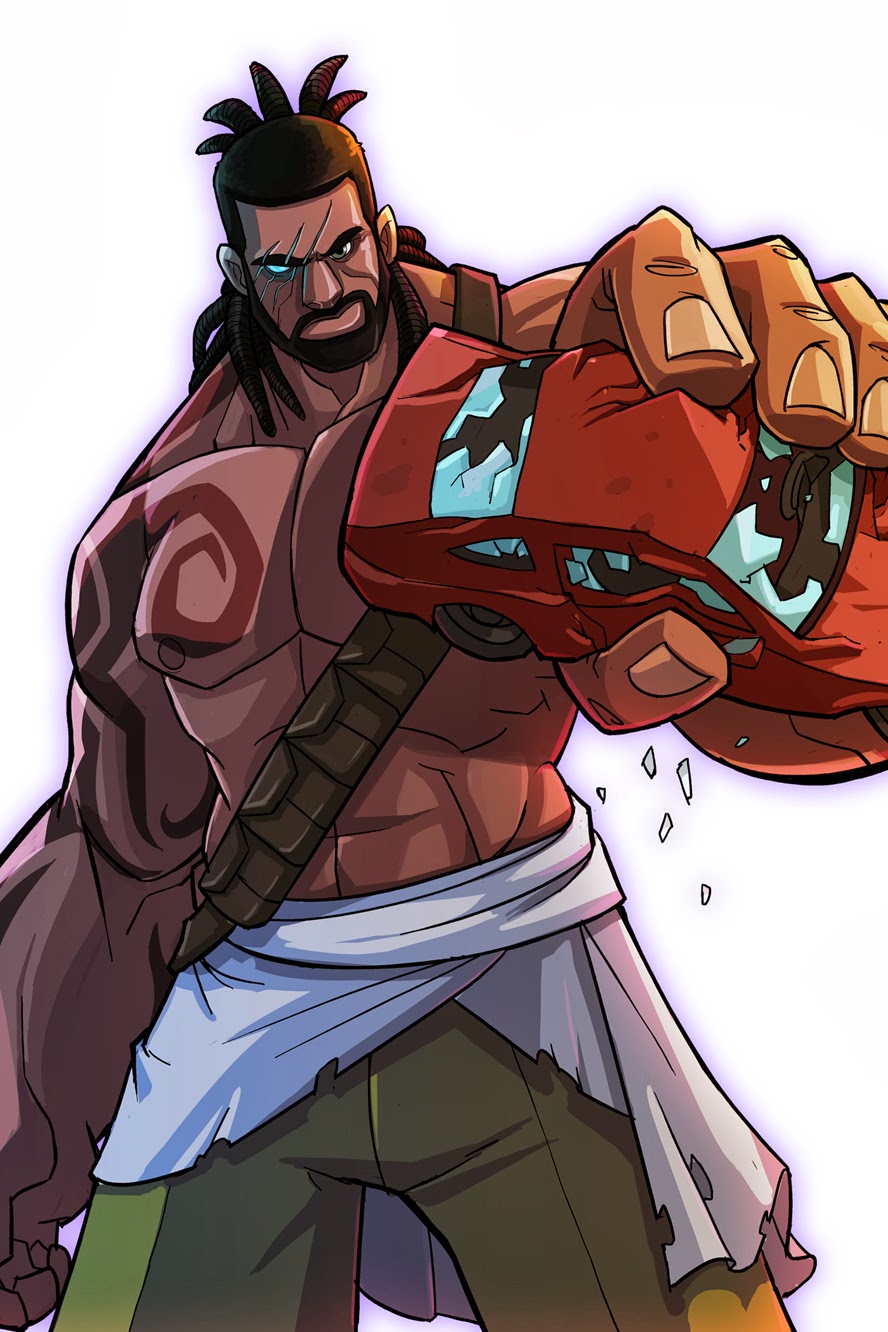 |
| “Sledge” |
I’m a very visual reader, easily able to picture just about anything in my head. Arena Mode’s unique style lends itself perfectly to my creative mind. But Northcott also has connections within the comic industry, giving the book its added punch in the form of full character illustrations and bios at the back of the book. Lucky Kickstarter supporters also received full colour character cards and other goodies to accompany their reading.
Each of the superhumans Matthew meets has a unique power set, though their abilities will be recognizable to comic fans. The key to making these characters unique is the way Northcott makes them more than just their abilities.
The Arena Mode battle itself was very interesting and tense, especially with Matthew having no powers, however I felt some of the battles, particularly the ones meant to be truly epic, were brushed over a bit too liberally. Again, I could picture these battles in my head, but in novel form, the details fell short.
The big reveal became evident about half way through the book, but it didn’t deter my enjoyment. Everything still flowed smoothly and interestingly, culminating in an ending that opens the door for some very intriguing events in the future.
Arena Mode is the product of a very successful Kickstarter. Its sequel, Assault or Attrition, continues with Northcott’s Kickstarter success. Want to know how she did it? Check out our interview!
Waiting on Wednesday 11/06/13
Posted on November 6, 2013 Leave a Comment
“Waiting On Wednesday” is a weekly meme hosted by Breaking the Spine that lets us feature upcoming releases that we can’t wait to get our hands on!
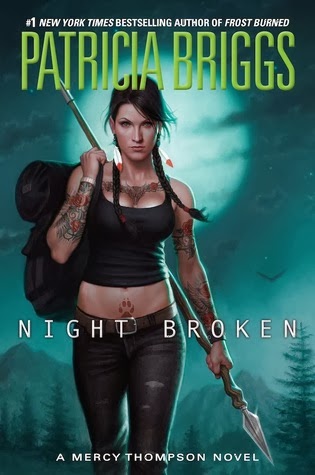 “An unexpected phone call heralds a new challenge for Mercy. Her mate Adam’s ex-wife is in trouble, on the run from her new boyfriend. Adam isn’t the kind of man to turn away a person in need—and Mercy knows it. But with Christy holed up in Adam’s house, Mercy can’t shake the feeling that something about the situation isn’t right.
Soon, her suspicions are confirmed when she learns that Christy has the farthest thing from good intentions. She wants Adam back and she’s willing to do whatever it takes to make it happen, including turning Adam’s pack against Mercy.
Mercy isn’t about to step down without a fight, but there’s a more dangerous threat circling. Christy’s ex is more than a bad man—in fact, he may not be human at all. As the bodies start piling up, Mercy must put her personal troubles aside to face a creature with the power to tear her whole world apart.
“Book Review: Masks by E.C. Blake
Posted on November 5, 2013 1 Comment
 Masks by E.C. Blake
Genre: Fantasy
Series: Book 1
Publisher: DAW
Date of Publication: November 5, 2013
Author Information: Website | Twitter
Masks is the very promising first novel of what’s shaping up to be a phenomenal series. And to think, at first I was tentative about approaching this book because (wait for it, silly irrational reason incoming) I was a little spooked by the cover! There’s just something so unsettling about the blank gaze of an empty mask, but I couldn’t deny there was a lot of beauty in this particular one too.
Thinking back on it now, I realize that the cover for this book is actually quite perfect. The story it contains within is indeed quite beautiful, but it also has its moments of darkness, as a lot of these types of books with dystopian-like settings tend to have. Masks features Mara Holdfast, a girl growing up in Aygrima, a land overseen by the all-seeing Autarch. In this society, everyone is require to wear a mask the day they turn fifteen. Through these masks, it is said that the Autarch and his Watchers can know the thoughts of every citizen, enabling them to put down dissidents and maintain everlasting peace and security in the empire.
Mara has known from a young age that she is Gifted; the magic that few are born with in this world runs strongly in her family. She has hopes to follow in her father’s footsteps and become a Master Maskmaker just like him, and looks forward to her masking day when she can finally become his apprentice. But then things go horribly wrong on her fifteenth birthday during the ceremony, and Mara is immediately labeled a traitor, not fit to be part of society. Everything Mara has ever known is ripped away as she is consigned to a wagon bound for the mines, where she will be forced into a life of imprisonment and slavery.
This is a story that had me riveted from beginning to end. The introduction with the build-up to Mara’s masking ceremony is probably one of the best I’ve ever read, because it really does a good job of grabbing your attention right away. And as if that wasn’t enough, the journey doesn’t ever slow down, constantly driving forward as Mara is whisked from one dilemma to another. While there are some elements to this story that are predictable, the question of where the main protagonist will end up next is always in up in the air, and I was held rapt by the multitude of possibilities that could happen.
I was also struck by the magic in this book, which goes hand in hand with my fascination with the idea of the Autarch using masks to control the population. At this point, not everything about the masks and magic is explained yet, and while I do have many questions, it also feels like the author is leaving lots of room to flesh it out in the next installment. Nevertheless, what’s established here already gives this book a certain uniqueness, and I’m excited to know more.
I’m also very much looking forward to the character growth of Mara. If there’s one thing I wasn’t particularly fond of about this book (and it’s a tiny thing), it was her constant questioning and second-guessing of herself. She also tends to dwell on things and appears to have the weakest stomach of any character I know, leading to a few instances of repetition in the narrative and a lot of vomiting on poor Mara’s part. On the other hand, I realize she is barely fifteen and has lived a relatively sheltered and privileged life before everything in her world turned upside down. In that sense, I really can’t fault her all that much. I expect there’s a lot potential for her in the next book though, as she develops into someone in a leadership position who has the ability to change things for the better.
I did ask myself after reading Masks whether or not I should categorize this book as Young Adult. The age of the protagonist along with certain factors like the not-so-subtle hints of a future romance or love triangle makes me want to say yes, and certainly I think the story could appeal to older teens. At the same time, the nature of the fantasy setting and characters that E.C. Blake has created sets this book apart from conventional YA, and so I think a wider audience can appreciate it too. I know I did…a lot!

Audiobook Review: The Dream Thieves by Maggie Stiefvater
Posted on November 5, 2013 4 Comments
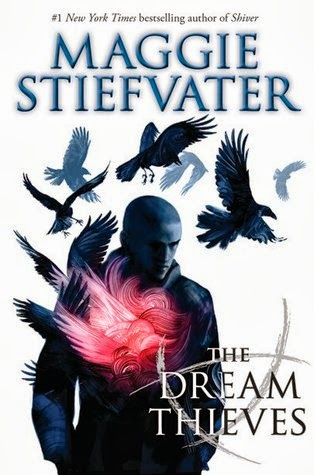
Genre: Supernatural, Young Adult
Series: The Raven Cycle #2
Publisher: Scholastic Inc.
Publication Date: September 24, 2013
Author Info: www.maggiestiefvater.com
Maggie Stiefvater did it to me again. As if I wasn’t already in love with Blue and her Raven Boys after reading the first book, the very last line demanded that I read the next right away (though I ended up having to wait for its release). The same thing has happened with The Dream Thieves, though now I have to wait until next year for an unnamed sequel.
Once again, I have to praise Stiefvater’s skill at painting her world. She manipulates descriptions such that they don’t simply invoke an image, but a feeling. This is most evident in my favourite character, Ronan Lynch, who takes a greater lead in the second book, after announcing his ability to take things from dreams. The Dream Thieves begins with the description of Ronan’s father, and subsequently his sons, where she depicts Ronan as “molten eyes and a smile made for war.”
Along with Ronan, is Adam, who’s sacrifice awakened the leylines and who’s circumstances have turned him into a dark and angry person. Noah, a sweet and self-conscious ghost, and Gansey, the leader of the group. The story continues their search for the Welsh king of Gansey’s obsession.
The psychic women of Blue’s household play a much greater role this time around. Their abilities are still required to help move things along, but they are more actively involved in events and in dealing with and even protecting the boys, who have become a regular fixture in their home. Their involvement takes some interesting and amusing turns when the enigmatic Gray Man is introduced. He is a deadly hitman hired to find the mysterious Gray Warren, but his involvement with the ladies reveals their ingenuity and just how closely knit the group is. Considering the Gray Man’s introduction, I was surprised when the word “endearing” popped into my head to describe the character and the subtleties of the eventual relationships that develop.
I will also use the word “endearing” to describe Noah and the relationship Blue and the boys have with him. It is firmly established now that he is dead and the circumstances of his death are horrible and brutal. He occasionally is forced, unwittingly, to replay these events, but beyond that, his friends simply accept him as one of their own who occasionally has to deal with the inconveniences of death and his connection to the leylines. There were some truly touching and some downright hilarious interactions between Noah and his friends that I really enjoyed.
But as I said, Ronan is my favourite and I treasured the opportunity to spend more time with him, as heartbreaking as it was. I have a fondness for broken people and Ronan most certainly is one. He is perpetually angry, but with damn good reason and we get to learn more and more about his secrets and who he truly is in this book. At first glance, words like nobility and loyalty wouldn’t easily be pinned on him, but there’s a lot of darkness that has to be scraped away in order to see what’s underneath.
The audiobooks for The Raven Cycle are narrated by Will Patton. While he does a good job with Blue and her household, I initially wondered why a male had been selected to narrate a book with a lead female character. Remembering that the first book is called The Raven Boys, I appreciate the choice, especially in the second book where the boys become the greater focus. That said, I was a little disappointed, in the way Blue’s role diminished. Now, not only is she a conduit for psychic powers, but she’s also the girl some of the boys are romantically linked to, particularly with the prophecy of true love’s kiss causing the death of her true love. This concern still hangs over the story, but Blue herself seemed less important overall.

Mogsy’s Book Haul
Posted on November 3, 2013 Leave a Comment
As you may know, NaNoWriMo kicked off this Friday, and in anticipation that the writing frenzy will be in full swing, I’ve slowly reined in on the new book additions in preparation for November. I’ll still be writing reviews, but I did want to make sure I’ll have enough time to devote to completing my NaNo goals again this year, and as such this could be my last regular book haul until this crazy month is over. We’ll see! For now I want to feature the following review copies that came to me over the last couple of weeks, as well as a few other new arrivals.

Copperhead – a surprise arrival from Tor, and it was like they read my mind. Copperhead is actually the sequel to Ironskin, which had caught my eye ever since it was nominated for the 2012 Nebula Awards. This book actually shifts its focus to a new character, so I took this as the perfect opportunity to jump on board. I’m glad I did, and my review can attest to that!
The Falconer – I was first drawn to this book by its stunning cover, and when Gollancz Geeks sent out an email offering copies in a giveaway, I was fortunate enough to snag one. Featuring historical Scotland and a fiery heroine fighting Fae, I found this one to be a lot of fun. Be sure to keep an eye out for the review in the coming weeks.
False Covenant – the first book of the Widdershins Adventures series Thief’s Covenant was a delight. With the third book coming out in December, I figure I had better catch up with the second book! With much thanks to Pyr for helping me out with that.
The God Tattoo – speaking of Pyr, here’s another surprise arrival, described as a short story collection from the world of the Twilight Reign books. I don’t do short story collections and anthologies often, but this seems like a good way to discover a new series!
Starhawk – Jack McDevitt has been writing books for a long time, but I’ve not actually read any of his books. So many of my friends have had nothing but good things to say about The Academy series, and so I couldn’t help but jump on Starhawk, described as a prequel featuring the first adventure of the character Priscilla Hutchins.
The Iron Wolves – Andy Remic’s previous Clockwork Vampire Chronicles earned the nickname of “the Tarantino of epic fantasy”, according to a post I read on Angry Robot’s site about this book, and so how could I resist? I love gritty heroes, hectic battles, and crazy plot twists, which this book promises in spades!
And now even more…



The Abominable – I loved Dan Simmons’ The Terror. LOVED IT. So when I saw he had a book called The Abominable coming out that had the same kind of historical-horror vibe to it, I knew I had to read it. I picked this up the week it came out.
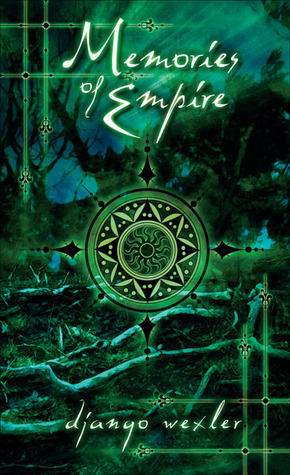
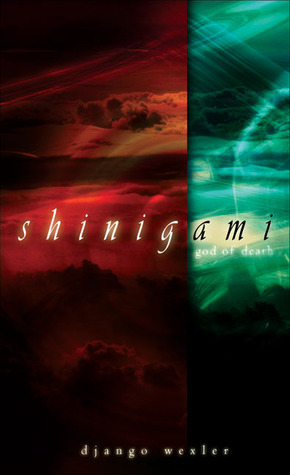
Memories of Empire and Shinigami – I still remember the first thought I had after reading The Thousand Names by Django Wexler, and it was “Damn, I need to check out more of this author’s work.” Unfortunately, his older books are quite hard to find, and I consider myself extremely lucky to be able to get my hands on both of these. So happy!
Fortune’s Pawn – and eARC I received because I very much enjoyed Rachel Aaron’s The Spirit Thief earlier this year, and I was curious about her new science fiction novel, with her writing as Rachel Bach.
The Cormorant – you have no idea how long I’ve been waiting for the day for this book to go up on NetGalley. As soon as I saw it up, I requested it. Can’t wait to revisit Miriam Black in this third book of the series.
Book Review: Armageddon’s Children
Posted on November 3, 2013 3 Comments
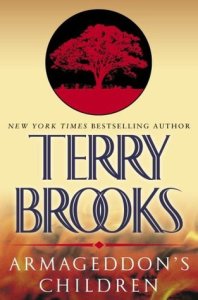 Armageddon’s Children by Terry Brooks
Many years ago, I tried to read The Sword of Shannara but the story and characters failed to capture my attention and I set it aside. I grant that I didn’t get very far into the book, but I had read enough by that time to know when a book just isn’t working for me, even that early on. Fastforward to the present and my brother is on the phone raving about the new Genesis of Shannara series. I trust his judgement, so here I am!
The Genesis of Shannara is, as the series title suggests, the beginnings of the world created by Terry Brooks. Shannara fans are likely to recognize characters, events and artifacts, but someone new to the series like myself, is by no means alienated. This is a clean introduction to this realm, and an introduction to the characters whom we will, presumably, be following through the series. Armageddon’s Children takes place in a post-apocalyptic earth, destroyed by the follies of man. Violence and mutation have reduced the human population to mere thousands. Many of the surviving humans live in compounds, some hide in ruined cities, but all are hunted by the various demonic (formerly human) creatures led by the “Old Man” at the bidding of the Void. We meet Logan Tom first, as he and his family attempt to escape an attack by once men and demons. Logan is orphaned in the process.
Logan’s tragic story is similar to many of the characters that follow, most of them teens or pre-teens or adults who were forced to grow up far too soon. The overwhelming theme is that these characters are survivors of their horrible reality and must stay one step ahead of the evil closing in on them in order to remain alive. My original complaint with the lack of interesting characters in The Sword of Shannara does not apply here. While I feel that the characters fit into various established tropes as – well, children of an Armageddon, they are still unique enough in and of themselves to be appealing and I enjoyed the way their stories and connections are unravelled as the book progresses.
As I said, this is an introductory novel and it very much plays out as one. The story establishes that the humans are being hunted by the Old Man and his minions and, eventually we are introduced to the quest that will bring the main characters together and move them forward. For this book, there is little progression in regard to that journey. This book is about letting us meet the main characters and grow to love or hate them as needed. Every major player, including the Old Man, is allowed moments to reveal their inner thoughts and motivations, as well as the events and people that have made them who they are. Many secondary characters also have back stories, strengthening the reader’s sense of attachment and understanding of just how awful this world is.
The original Shannara series is firmly seated in the fantasy genre, complete with swords and sorcery. Logan and his fellow Knight of the Word Angel Perez carry staves that are definite sources of yet to be fully explained magic, but otherwise, there is very little magic in this world just yet. The idea is that that the future world of Shannara comes from the one we know now, following this cataclysm – a concept that really intrigued me. I really liked the idea of the magic slowly leaking (back) in. Fire from a staff here, telepathy there. And when the elves are introduced, having hidden themselves away from humanity for centuries – even they do not display a significant use of magic.
Overall, I enjoyed this book, in that it does a good job of making you comfortable in its world and with its characters, and provides just enough mystery to entice you to continue on with the series to find out where this is all leading. For those who already know where it is all leading, I imagine it is nice to finally get the full details. For people like me who are new to the world, let’s just say I find myself looking forward to learning more about the genesis of Shannara. if I like this series enough, I’d not be opposed to trying The Sword of Shannara again.

Book Review: The Night Circus by Erin Morgenstern
Posted on November 2, 2013 2 Comments
 The Night Circus by Erin Morgenstern
Genre: Magic, Fantasy, Romance
Publisher: Double Day
Publication Date: September 2011
Author Info: erinmorgenstern.com
Open the pages of the Night Circus and you are immediately absorbed into a mesmerizing world that leaves you hoping La Cirque des Rêves will visit soon so that you may experience its wonders for yourself. The simplest explanation of this circus is to have you imagine your favourite incarnation of Cirque de Soleil, only, on a more subtle scale, its grandeur hidden within the elegance of its black and white world under the stars. Like other circuses and fairs, you will still find acrobats and contortionists and fortune tellers… And you will find illusionists.
 |
| Cirque du Soleil |
Within the setting of the circus, a competition plays out that is reminiscent of books like The Prestige, where two skilled magicians constantly try to one up each other. The difference here is that the magic is real, and that the “illusionists” in question do not directly compete against each other. Instead, they find and raise gifted children. The children are raised knowing their purpose, but not the venue or even their competitor. In this case, Celia Bowen and Marco Alexander end up intricately entwined within La Cirque des Rêves and they fall in love – something their callous fathers cannot fathom.
The lovers’ story is beautiful and tragic, but while they are at the heart of The Night Circus, theirs is not the only story being told. Everyone – from the clockmaker who’s love for the circus inadvertently forms the circus’ elite fan club, to the young boy wishing for a fairytale ending, to the red-haired twins born auspiciously on opening night, to the circus’ founders, to the fortune teller and the contortionist – is so intricately bound together within the circus. It was fascinating to see the characters and events slip in and out of the chapters in such a graceful and sensual dance. Somewhere along the way, I realized that even Time and the circus itself were like living, breathing characters.
The true magic of The Night Circus is that, like the circus itself, it cannot be pinned down. It cannot be easily lumped into any particular genre. It is all and it is none and its wonders and mysteries must simply be experienced…
Why We NaNo
Posted on November 1, 2013 Leave a Comment

Happy National Novel Writing Month!
What with this being a book blog and our involvement with so many wonderful authors, it might not come as a surprise that NaNoWriMo is a thing for us here. All three of us will be participating in this year’s event and are looking forward to all the excitement. As a result, we might be a little more quiet than usual, but with good reason!
Each of us has different reasons for participating in this event, and each of us is approaching it at a different level. Tiara is our resident veteran, with over a decade of NaNo-ing under her belt, Mogsy is an intermediate and Wendy is rolling in for the first time. Here’s what NaNo means to each of us.
TIARA WRITES: This will be my 10th year participating in NaNoWriMo. NaNo started out as something one of my friends mentioned to me way back when I was still in college. She thought it would be a fun challenge to participate in. She was right. My first foray into the challenge was a fanfiction that I jokingly wrote for the friends who were cheering me on. Thing is, that turned into a 70K word monster, but I chalk that up to plenty of time and ideas at the time. Those friends are still in my life, so to celebrate my 10th, I’m going to write a joke fanfiction for them again. I’ve successfully completed every year except one and that year was incomplete only because I had a house fire. I pick a theme every year for my story and work with that. One year it was erotica. Another year it was themed stories that tied together.
I NaNo every year because it’s fun and challenging. It’s like freewriting for a whole month with no reserves and seeing what I produce in that time. It doesn’t matter how well or how horribly I write. I don’t have to worry about revising or spend time obsessing over the details. I can put silly things in my story that may never see the light of day. It’s a bit of a stress reliever that allows me to dump whatever I want into the story and just go with it, and before I know it, I’ve blown through 50k words. It’s not really a big deal to me whether I hit the goal or not as long as I’m having fun with it.
WENDY WRITES: I’d vaguely heard about NaNoWriMo over the years, but never bothered to look into it because I never thought I could write an actual novel. That’s so much more than the short, short stories I’ve written in the past. I’ve scripted graphic novels and wanted to do Script Frenzy, but unfortunately, that’s been cancelled. But this year, I was inspired with the sudden realization that maybe I could write a novel with my friend Deacon in the same manner that I work with artists on my graphic novels. Then I was contracted to write a 20k word short story for a new video game. I was still daunted by the word counts, but as I snuggled up in bed with my laptop and my kitten, the words eventually started to flow and I realized that 20k wasn’t that hard. And if I could do 20k on my own, then why not 40k? 60k?
So this is my first official year doing NaNo despite my 2011 sign up. I’ve got a story outline ready to go that’s been sitting around for over a decade and I’ve got friends to help keep me motivated. I’m looking forward to doing something I never believed I could do and I’m confident that I can do it with the help of NaNo since I’m one of those people who work better with deadlines. Now to make sure I don’t get distr –
So when I first heard about NaNo, I thought, “What an excellent idea!” It provides the two biggest motivations that my personality is apparently wired for — 1) a deadline, and 2) friendly peer pressure. Each year, a bunch of people from my gaming circle and I embark on this journey to write 50K words, watching everyone’s progress on the site and cheering each other on. I’ve managed to reach my goal in both 2011 and 2012 thanks to the encouragement of friends, and I hope to “win” again this year.
As to why I NaNo? Well, besides the sense of accomplishment and satisfaction of finally seeing my ideas written down, it’s a great social activity and a whole lot of fun!
Book Review: Dead Until Dark by Charlaine Harris
Posted on October 31, 2013 Leave a Comment

 Dead Until Dark by Charlaine Harris
Genre: Horror, Mystery, Supernatural, Rural Fantasy
Series: Sookie Stackhouse
Publisher: Ace Books
Publication Date: May 2001
Author Info: www.charlaineharris.com
Wendy’s Rating: 3.5 of 5 stars – As far as strong female characters go, I’d put Sookie right up at the top with the best of them.
Sooo a few years back I tried watching True Blood and didn’t get far. Oh it wasn’t just the blood and sex for the apparent purpose of blood and sex. Well, maybe it was, but I’ve long since come to terms with the ways of the HBO. The problem was with Anna Paquin. I don’t know what it is, but since Rogue, I just haven’t liked her. And as Sookie Stackhouse, the Mary Sue every vampire wants, I sufficiently couldn’t stand her enough to not watch the show again. Give me a Lafayette and Tara spin off and I’ll be happy.
But Audible had the first Sookie Stackhouse book on sale so I decided to check it out. The first thing I have to say is that I honestly wasn’t expecting to like this book. Or rather, I honestly wasn’t expecting to actually like Sookie.
As far as strong female characters go, (the kind Joss Whedon is often praised for single-handedly creating), I’d put Sookie right up at the top with the best of them. She’s brave, as in, she’s willing to defend what is right, even at risk of her own life, but she’s not afraid to admit to her fears. She has standards and upholds them, even when her desires are urging her body to do otherwise. And I like that one of her greatest weapons is her smile.
Despite her disability (telepathy), she maintains a positive outlook and quite often, her smiles are genuine. But when faced with a threat or people who want to put her down, she battles them with a smile on her lips, that thankfully does not make her come across as dumb blond at all. Being able to say “FU” with a smile is a fine art.
Sookie is a waitress at a small town bar where ghastly murders have been occurring. The victims, all female and all a bit promiscuous, bare fang marks, which puts suspicion on the sudden influx of vampires in town. One such vampire is Bill Compton, whom Sookie immediately takes a liking to because she can’t hear him in her mind like she can everyone else. She rescues Bill from a couple intent on draining his blood for profit, and their relationship develops from there. And it actually does develop in a rather nice, old fashioned way (though I eventually did grow tired of the couple. I’m not sure Bill Compton could be any more boring).
There are a lot of interesting characters, though sadly, not enough Lafayette and no Tara at all. The story is told, first person, through Sookie, and her honesty paints interesting pictures for all of them and I liked the way the characters are developed in this way as she interacts with them throughout the story.
There was one questionable moment, where a certain character who cannot be named appears, but I’ll let that slide. Otherwise, this was a surprisingly enjoyable read. Is it enough to make me try out the show again… hmmm…


 The BiblioSanctum