Waiting on Wednesday 03/05/14
Posted on March 5, 2014 Leave a Comment
“Waiting On Wednesday” is a weekly meme hosted by Breaking the Spine that lets us feature upcoming releases that we can’t wait to get our hands on!

Now the nation’s fate rests with a broken Sun Summoner, a disgraced tracker, and the shattered remnants of a once-great magical army.
Deep in an ancient network of tunnels and caverns, a weakened Alina must submit to the dubious protection of the Apparat and the zealots who worship her as a Saint. Yet her plans lie elsewhere, with the hunt for the elusive firebird and the hope that an outlaw prince still survives.
Alina will have to forge new alliances and put aside old rivalries as she and Mal race to find the last of Morozova’s amplifiers. But as she begins to unravel the Darkling’s secrets, she reveals a past that will forever alter her understanding of the bond they share and the power she wields. The firebird is the one thing that stands between Ravka and destruction—and claiming it could cost Alina the very future she’s fighting for.”
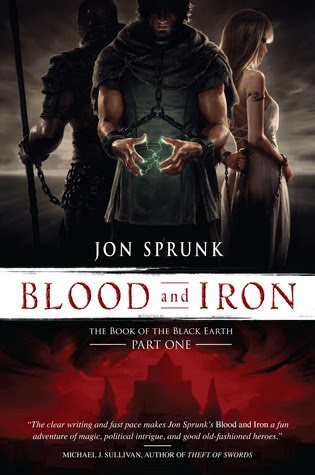
Book Review: Blood and Iron by Jon Sprunk
Posted on March 4, 2014 Leave a Comment
Genre: Fantasy
Series: Book 1 of The Book of the Black Earth
Publisher: Pyr (March 11, 2014)
Author Information: Website | Twitter
Mogsy’s Rating: 3.5 of 5 stars
When trying to make a good impression, the saying goes you should put your best foot forward as soon as possible, and that’s definitely true for books as well. The fact that Blood and Iron was a bit slow in doing so may have weakened it a little in my eyes, but it is by no means a bad book. Indeed there are a lot of strengths, ones that I think would have made this book even better if the narrative had seized full advantage of them and taken things all the way.

Book Review: Titan by John Varley
Posted on March 3, 2014 2 Comments
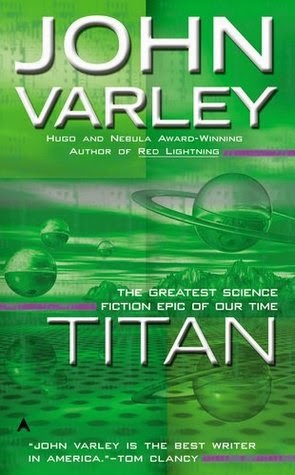
Titan by John Varley
Publisher: Berkley Books
Date of Publication: March 1979
Author Information: website
During an exploration expedition to the planet Saturn, Cirocco “Rocky” Jones–captain of the space vessel, Ringmaster–and her crew encounter an anomalous satellite revolving around the planet. The closer they get to the anomaly, the more they begin to realize that it’s actually a habitat of some sort. While trying to report their findings back to NASA, they are pulled into the satellite. The Ringmaster is destroyed, and Cirocco and her crew are rendered unconscious.
After spending some time in darkness, with no idea of how much time has passed for them in that unconscious state, the crew wakens naked, hairless, and separated (at first) in this strange habitat. The descriptions used during their time unconscious and their eventual awakening sort of seems to be some analogy to birth. However, their time in the darkness is terrifying for them, and instead of coming into this new world innocent, they still have much of their personality and memories in tact.
The planet has changed them, though, and some of them learn this faster than others. Many of them learn, they are able to communicate with various intelligent species that live on the planet. Cirocco learns that she’s able to communicate with a centaur-like race called Titanides who speak a music based language. The Titanides are locked in a bitter war with a race of winged creatures called Angels. They don’t know why they fight. They only know that when they’re close to one another they’re compelled to fight.
Cirocco learns about a controlling deity called Gaea from the Titanides. She takes a journey to confront this being.
Gaea is an interesting paradox. She really is something of a goddess to the planet. She is capricious and curious, and she uses her powers to satisfy her whims. She programmed the Titanides and Angels to fight for practice. She has a keen interest in humanity and knows that one day, because it’s in our nature, we will declare war on her. She doesn’t know how to fight, and fears that, even though she is powerful, she still would not withstand an attack from humans. She feels that humans are better prepared and better tacticians than she will ever be.
Because she doesn’t have the knowledge to prepare for war, she hopes that her warring races will be able to create the things–strategy, tools, and knowledge–needed for war through their own struggle.
However, she is facing another obstacle that complicates things. She’s going insane, and her “children” are rebelling. Here we have a being who is essentially a god whose “mind” has started to fracture into parts. She acknowledges that she is losing control of herself. There are other intelligent godlike beings on the habitat, beings that she spawned and calls her children–one of whom she considers her most rebellious and volatile, the one she blames for Cirocco’s crash.
This book wasn’t quite what I expecting. The first pages was all about the sex life of the crew, and I started wondering what I’d gotten myself into. Then, it settled into a more serious tone, but continued to throw me for a loop throughout the story. One minute, they’re having a very technical talk about a subject and the next they’re gawking at seeing their first centaur penis, which I’ll admit had me chuckling like a 12-year-old, but that’s what I liked about this book. While there is plenty of science for the sci-fi lover, Varley also incorporated mythic fantasy and quite a bit of humor into this story. He played around with the idea of gods, their relationship with their creations, and how fickle they can be.
This story challenged gender, race, and sexuality roles. Given the period it was written, when I compare it to some other science fiction books written around the same time and how they handled similar subjects, Varley’s stands out as being a bit more progressive and imaginative than most. I’d complained about another popular science fiction writer from that same period not knowing what to do with the women in his books and the distasteful direction he took with sexuality. So, I was a little afraid that this might be the same.
I really appreciated that Varley was able to write this book and realize that the hang-ups that people had about various social issues at that time probably wouldn’t matter much in the year 2025. He didn’t erase the issues or try to make everyone seem so PC about everything. There are moments when ignorance rears its head, but mostly, these issues are not taboo.
Of course, this book didn’t do everything right. There were times when it felt a bit too childish, campy, and kitschy. I could see where this book might annoy someone who wants a strict hard science/first encounter type story. It may be be a bit too whimsical and fantastic in scope for some science fiction readers. Personally, I didn’t like how one of the character’s eventual sickening and evil actions were explained and sort of pitied, for lack of better word, because it was easier just to blame the planet for his actions.
If you like science fiction stories that heavily blend science and fantasy, this book is worth checking out.

Book Review: Only The Good Die Young by Chris Marie Green
Posted on March 3, 2014 1 Comment
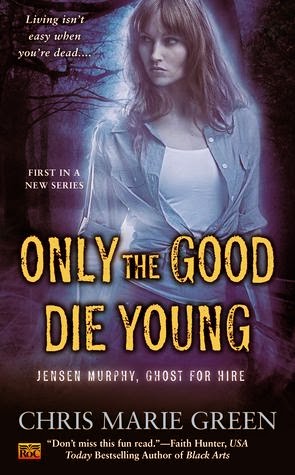 Only The Good Die Young by Chris Marie Green
Genre: Urban Fantasy
Series: Book 1 of Jensen Murphy, Ghost for Hire
Publisher: Roc (February 4, 2014)
Author Information: Website | Twitter
Mogsy’s Rating: 3.5 of 5 stars
Vampires, werewolves, and even faeries and ghouls populate the urban fantasy genre in abundance, but it’s not often that I stumble across a series centered around ghosts. Even rarer still to find a one that’s told from the perspective of a ghost, which is why I was initially drawn to this book.
Only the Good Die Young is the first of a brand new series by Chris Marie Green featuring protagonist Jensen Murphy, a twenty-three year old woman who was murdered in Elfin Woods sometime in the 1980s. Her death was so traumatic that not only did she lose all her memories of that night, her spirit was also trapped in a time loop and became an imprint until a psychic medium named Amanda Lee came along and snapped her out of it. Ever since then, Amanda Lee has been helping Jensen get up to speed on all that has happened in the last thirty years (unsurprisingly, our protagonist’s mind is totally blown by this whole internet thing).
The psychic has been keeping secrets, however. It turns out that one of the reasons she rescued Jensen was so that she could have access to a ghostly assistant, in the hopes that her spirit abilities could help identify the killer of one of Amanda Lee’s dearest friends who was murdered a few years ago. The main suspect was the victim’s ex-boyfriend. Convinced that he did it, Amanda Lee now wants Jensen to haunt the guy and scare the bejeezus out of him so badly that he will eventually break down and confess his crime.
Putting it that way, the plot sounds rather goofy, I know. I’m actually still coming down from the surprise of how light this book ended up being, since I was admittedly expecting something a lot darker given the brutal circumstances around Jensen’s death (someone in a creepy mask, wielding an axe, alone in the woods, etc.) Not that this book is all sunshine and rainbows either, but it definitely contains a lot less horror and bleakness, and instead a lot more humor and energy than I’d anticipated. For a ghost book, that is.
I have to say this one took its time to grow on me. I was so unimpressed by the main characters at the beginning, turned off by Jensen’s yielding nature and especially by Amanda Lee’s judgmental and cynical ways. Because someone designed a violent video game, he must be guilty of murder? People only adopt children from third world countries because doing it is a symbol of status? Oh my, get as far away as you can from this woman, Jensen, and do it as soon as you can. The fact that she just kept hanging around this Amanda Lee person made it difficult for me to continue reading.
But then, something happened. As Jensen also noted about herself, she grew a backbone. She stuck up for herself, found some new friends to hang out with. And how fun these new friends are! I loved the “ghost budders” Randy, Twyla, Scott and Louis, who teach Jensen what it is to be a ghost and what she can do. Ghosts in this series have some pretty cool powers, actually. They can induce hallucinations, imitate sounds and throw their voices around. They can enter dreams and sift through your memories. These abilities take a lot out of a ghost though, because they are made up of pure energy. To recharge, they have to draw from a source of electricity in order to juice up again. Some really neat ideas in here, and the imagery of Jensen and her fellow ghosts sitting on a power line is pretty funny!
Amanda Lee also didn’t turn out to be so bad after all. Of all the characters, she was probably the most invested in the outcome of the mystery, even more so than Jensen. As her character became more and more defined, it grew easier to see where she’s coming from even if I didn’t agree with her methods. At the end of this, the identity of her friend’s murderer comes to light, and the answer may shock you! I certainly didn’t see it coming.
So yes, I liked this book a lot more once it got going; certainly my feelings about it were more positive by the end, and I’m glad the plot ultimately sorted itself out. Still, there’s a bigger murder mystery to be solved here, that of Jensen’s, of course. Somehow, I have a feeling her story is going to be a part of a much bigger arc. Now that I’m fully on board, I’m looking forward to finding out.
Mogsy’s Book Haul
Posted on March 2, 2014 Leave a Comment

The Anxiety of Kalix the Werewolf – this week I’m stacking the shelves with a couple surprise arrivals and luck from February contests/giveaways. I was so happy to win this book by Martin Millar and I have Nathan from Review Barn to thank for hosting that giveaway! Review Barn has held some great giveaways, which speaking of, they’re actually running one right now for The Barrow (a fantastic book!) which I encourage you to check out.
The Well’s End – scored a copy of this ARC courtesy of the publisher from LibraryThing’s Early Reviewers program! Seth Fishman is the agent of a couple of my favorite authors, so he definitely knows what good writing looks like. I’m so excited to read his first novel The Well’s End which is YA and sounds right up my alley.
A Turn of Light – courtesy of DAW, this book came and I was surprised to see how thick it was. It will probably take a while for me read this, but from what I’ve seen others say about the story there’s romance and dragons and it just seems like all around the kind of high fantasy I really enjoy. Looking forward to this one.
My Real Children and The Pilgrims – I was psyched to win these ARCs from a publisher sweepstakes, and I’m especially excited about My Real Children. I’m ashamed to admit I’ve never read Jo Walton before this, and this book looks like a great place to start.
Words of Radiance – total shocker when this big boy showed up outside my front door earlier this week, unsolicited but heck I’m not complainin’! A HUGE thanks to Tor Books! Needless to say I was speechless with excitement and dug into it right away. Release in just two days! I’d already preordered the book, the ebook, and the audiobook (yes, I love this series that much!) and I’m practically counting down the hours.
The digital pile:


The Forever Watch – just when I thought I was doing such a great job clearing out my NetGalley pile. I totally blame Pabkins at MyShelfConfessions for this one, but she sold the description of the book to me and I have to admit it sounded pretty amazing!
Those Poor, Poor Bastards – I wholeheartedly jumped on board to review this one. Ragnarok Publications has published quite a few gems I really like, and who could say no to a book with a title that awesome?
Review Copy Cleanup – The #RCCleanup Wrap-up Post
Posted on March 1, 2014 Leave a Comment
Well, with February now over and the Review Copy Cleanup challenge coming to a close, it’s time to take a look at how I did for the last month. SPOILER ALERT! I did not complete my goals.
Still, I think that was to be expected. It’s always better to have too many books on a reading list than too few, is what I say, and even though I am what you would call a fast reader, I went into the challenging knowing I’ve loaded myself with more than I could probably finish in a month. There were a few really long books in my list, and not surprisingly those were the ones I procrastinated from picking up, tackling the YA titles and shorter ones first. I also made up for some of it by sneaking in a couple books that weren’t on the list.
The important thing is, I came close. And even more importantly, I had fun and it was nice chatting up other bloggers on Twitter and catching up on everyone’s progress. Plus, my to-review pile is looking distinctly more manageable now, which was why I did this in the first place. So, without further ado, the month’s final tally:
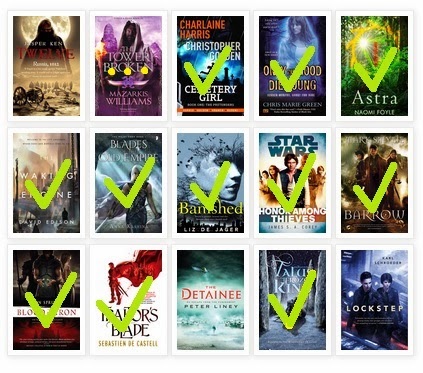
Cemetery Girl by Charlaine Harris and Christopher Golden – READ! Review coming soon.

Honor’s Knight by Rachel Bach – READ! Review here.
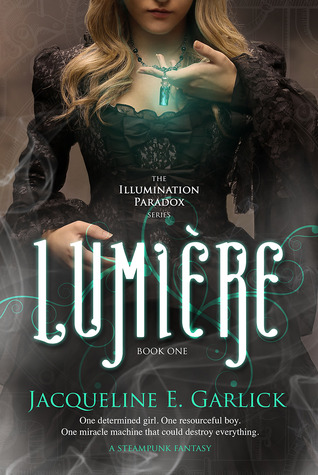
Lumiere by Jacqueline Garlick – READ! Review coming soon.
YA Weekend: The Burning Sky by Sherry Thomas
Posted on March 1, 2014 Leave a Comment
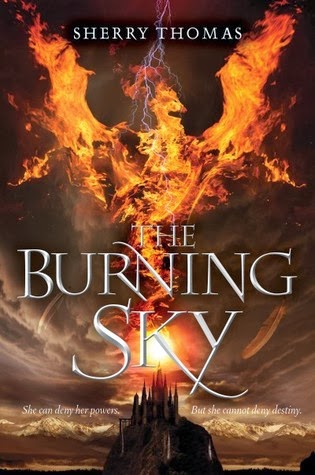
The Burning Sky by Sherry Thomas
Genre: Young Adult Fantasy
Series: Book 1 of The Elemental Trilogy
Publisher: Balzer + Bray (September 17, 2013)
Author Information: Website | Twitter
Mogsy’s Rating: 3 of 5 stars
The Burning Sky is a beautifully written novel, told in what I feel is a slightly more formal tone than most young adult fiction. The main plot itself — about a girl who discovers she is the greatest elemental mage of her generation and who now must avoid being taken by enemies that want her power — is actually quite straightforward, but the classical style adds on multiple layers to this fantasy story.

The Lives of Tao Livetweet! #LoTaoLT
Posted on March 1, 2014 Leave a Comment

I had so much fun livetweeting my reading of Miserere: An Autumn Tale with author Teresa Frohock, that I decided to try it again!
The Lives of Tao was selected as this month’s read for my little book club, and author Wesley Chu is on-call to comment and answer my non-spoilery questions. Be sure to check the hashtag #LoTaoLT on my personal account, @nightxade!
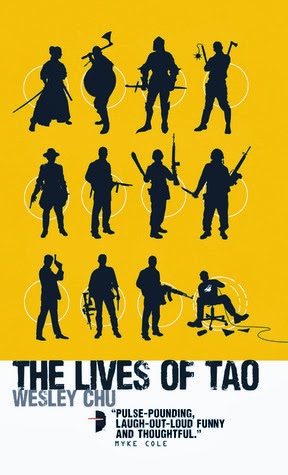
When out-of-shape IT technician Roen woke up and started hearing voices in his head, he naturally assumed he was losing it. He wasn’t. He now has a passenger in his brain – an ancient alien life-form called Tao, whose race crash-landed on Earth before the first fish crawled out of the oceans. Now split into two opposing factions – the peace-loving, but under-represented Prophus, and the savage, powerful Genjix – the aliens have been in a state of civil war for centuries. Both sides are searching for a way off-planet, and the Genjix will sacrifice the entire human race, if that’s what it takes. Meanwhile, Roen is having to train to be the ultimate secret agent. Like that’s going to end up well…
Book Review: Banished by Liz de Jager
Posted on February 28, 2014 Leave a Comment
Genre: Young Adult, Paranormal
Series: Book 1 of The Blackhart Legacy
Publisher: Tor UK (February 27, 2014)
Author Information: Website | Twitter
Mogsy’s Rating: 3.5 of 5 stars
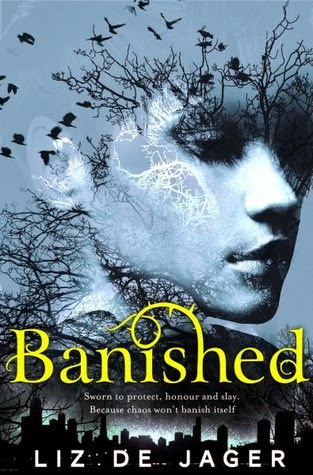
At first glance, Banished may seem like another relatively routine venture into the paranormal young adult genre, but dig a little deeper and you’ll find this first book of Liz de Jager’s new series has a few surprises up its sleeve.
Displaying shades of Buffy, the book follows Katherine “Kit” Blackhart, a teenager who hails from a family of monster hunters tasked to enforce the peace between our world and the supernatural realm called the Otherwhere. Upon returning from her first solo assignment, Kit is told to stay at the Blackhart mansion to recover while her cousins head off on another mission, leaving her home alone. One night, she wakes up to a kerfluffle in the woods and finds herself rescuing Thorn, a prince of the fae, from a vicious group of redcaps. Whee! Have I mentioned how much I love stories about the Fae?
Anyway, on the run from enemies who are out to capture the prince, the two of them escape to London where they hope to find help, since all of Kit’s extended family seem to have mysteriously dropped out of contact. From here on out, it’s a full-tilt, no-holds-barred roller coaster ride of insanity as Kit and her allies race from one place to another to figure out just what the heck is going on. There are sword fights, explosions and magic aplenty, not to mention a whole line-up of supernatural threats including goblins, chimera, and even a dragon! I think my ARC was about 400 pages, but looking back, the book ended up feeling like a much faster read simply because it. Does. Not. Stop.
Events certainly moved at rapid pace. For the most part, this was excellent, taking us on an action-filled journey with the story’s courageous and kickass heroine. But whew! At times I actually wouldn’t have minded some slower sequences, if anything just to take a breather and let some of the details of the world sink in. That said, the breakneck pace didn’t hinder my enjoyment much, even if I felt a respite here and there could have given the narrative more opportunities to fill in some important information.
Kit, for example, is wonderful as a main character, though I sensed there’s still so much I don’t know about her. We know she carries a pool of magic within her, but the nature of that power isn’t fully explained, and I’m still not yet clear on the whys and hows of it. It’s also revealed that Kit wasn’t always a part of the Blackhart family of monster hunters, and that she only came back to rejoin them after her grandmother who raised her passed away. We get frequent glimpses of Kit’s past about her time with her nan when she goes back to her memories, but not the full story about why she was taken away in the first place. So yes, there may be a bit of mystery here that might leave readers wondering, but my guess is that this will be further explored in the later books.
Because the story moved along so quickly, it also felt like Kit and Thorn barely had the chance to know to one another before their feelings for each other deepened. In between all the action, there really wasn’t much time to develop Thorn and give his personality more depth (this goes for some of the other supporting characters like Aidan as well), so I wasn’t entirely convinced that their relationship would have blossomed so quickly in just a few days. Kit and Thorn’s romance was perhaps the main thing that could have used more attention, but otherwise I enjoyed the dynamic between these two characters.
While prolific readers of paranormal YA probably won’t find anything too new in the overall plot, there’s still plenty of fresh ideas here to keep things interesting, not to mention a few twists and turns you won’t see coming. All in all, Banished was great fun. Despite some minor criticisms, I think it’s a great beginning to a brand new series, and the author is one I would definitely read again. I’m really hoping we’ll see more of Kit and the Blackharts’ history in the next book, and I can’t wait to see what else Liz de Jager has in store.
Book Review: Vicious by Victoria Schwab
Posted on February 27, 2014 3 Comments
Genre: Superheroes, Science Fiction
Publisher: Tor
Publication Date: September 2013
Author Info: www.victoriaschwab.com
Wendy’s Rating: 4 of 5 stars
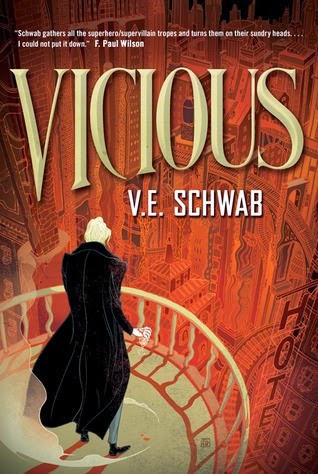
The way Schwab weaves the story and characters together is spellbinding, especially as she moves between the past and the present to paint a picture of Eli and Victor and their relationship.
Victor and Eli are young, brilliant college students on the edge of sociopathy, though Eli better hides his darker self behind a charming mask. In fact, it is the mask that attracted Victor to Eli in the first place, glimpsing the kindred spirit hiding behind the outward persona. The sneaking darkness is enough for Victor to overlook Eli’s irrational belief in God, especially when the two decide to play God in order to learn the mystery of E.O.s – Extraordinary human beings. E.O.s tend to keep to themselves, and the police and government do their best to keep their existence under wraps, but enough information has leaked out to spark Eli and Victor’s scientific interest.
Vicious references comic book super heroes and villains from time to time, while injecting some science and psychology that results in a pithy explanation of how superhumans are created. Once this is established and Eli and Victor succeed in turning themselves into E.O.s, the back and forth, past and present plot really takes off as the two former best friends go after each other with murderous intent.
It took me a while to warm up to the main character of Victor, from whose perspective the majority of the story is told. He is not meant to be a likable person, much less a likable character, and initially, I felt like Schwab was trying too hard to give us another empathy-free killer along the lines of Dexter Morgan. But as the story progresses, a lot of preconceptions slowly mutate into something else, particularly when Victor is joined by Mitch, his former cellmate in prison, and Sydney, a young E.O. they stumble across in their journey to find Eli.
The way Schwab weaves the story and characters together is spellbinding, especially as she moves between the past and the present to paint a picture of Eli and Victor and their relationship. We quickly come to understand the reason why they now hate each other so entirely, but their motivations are what Schwab teases through her thrilling back and forth storytelling process. The inevitable showdown between the two former friends is not at all predictable, as Schwab carefully introduces new elements all throughout the story that fit together like a perfectly crafted puzzle. Or rather, I should say that the final showdown is to be expected, but it becomes a race against chapters and time to find out exactly how it will all come together – and for whom it will all come together.


 The BiblioSanctum