Book Review: The Last Wish by Andrzej Sapkowski
Posted on April 10, 2014 6 Comments
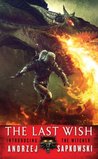 The Last Wish by Andrzej Sapkowski
Original Polish Title: Ostatnie życzenie (translated by Danusia Stok)
Genre: Dark Fantasy, Gaming
Series: The Witcher
Publisher: Hachette Book Group
Original Publication Date: January 2007
Related: www.thewitcher.com
Author Info: www.sapkowski.pl
The Last Wish is a collection of short stories that introduces Geralt of Rivia, better known – particularly to gamers like me – as The Witcher. I’m just a few chapters into the first Witcher game, slowly preparing myself for the upcoming release of The Wyld Hunt, but through my limited play and my vicarious play through my friend, I have a pretty solid feel for the game in general, and for the character and his world, specifically.
A witcher is a man taken from childhood into the service of this group and forced to undergo all sorts of dangerous alchemical trials that leave the man not quite human. The result is a lethal, seemingly cold-blooded killer whose purpose is to hunt the monsters of the world. Only, there are not many monsters left now, leaving few options for a witcher to earn his keep, and resulting in a reputation as little more than a cold-hearted mercenary for hire.

Players will recognize the first story from the opening scene of the game, which features Geralt fighting off a deadly striga. The game has perfectly captured Geralt’s skill, his balletic grace, and his determination, as well as other elements such as his use of alchemy. But what the game misses is Geralt himself. Not that the game character is not interesting, but by the nature of the game system, where the player works with a Geralt who has lost his memories and must choose various options as the game progresses, the gamer misses out on the things that make Geralt a really, *really* interesting character. He is a man of few words – but only in certain situations where he deems the words unnecessary. He will deliver messages by the blade, but he is not a man without morals. In fact, his personal moral code is often called into question as he deals with lesser and greater evils – many of which are not actual monsters, but human beings.
It’s also very interesting to note that several stories are actually intriguingly re-imagined fairy tales. Sapkowski skillfully writes them to bare little similarity to their original or Disney versions at first, allowing the details to slowly fall into place for the reader. My absolute favourite was the Snow White retelling.
Some of my other favourite stories are the ones where Sapkowski simply allows Geralt to talk, which he tends to do only with people (or his trusty horse, Roach) who can’t respond. Sapkowski lets Geralt express doubt, to question himself, and to just vent. He also has many acquaintances, each of whom reveal a little something about a man who initially seems to be a loner. It becomes apparent through his actions and his relationships, that there is a significant amount of depth to the character.
One thing the game most certainly takes liberties on is sex. Geralt is able to sleep with just about any woman, with the added bonus of collecting trading cards for each bedding. This Pokemon approach to sex and romance is very far from the book’s Geralt. The witcher most certainly has a healthy appreciation for the female form, but any moments where he has relations with a woman are all tastefully (and even amusingly) done.
The book is translated from its original Polish, but I don’t believed it suffered at all in the process.

Book Review: Irenicon by Aidan Harte
Posted on April 9, 2014 Leave a Comment

Nevertheless, the author did an incredible job providing a vivid backdrop for all the action and the emotion, deftly filling in the spaces with historical and cultural context. Harte has a very interesting biography, and no doubt his experiences in writing, art, and the media have given him a unique perspective with which to approach this trilogy. This first book is full of unexpected surprises, and how cruel is the last line, leaving me speculating! Distinctive and a little unconventional, this debut is a little tough to pin down, but I can also understand all the praise for it. I look forward to seeing how the writing evolves, along with how things will play out in the next book.

Waiting on Wednesday 04/09/14
Posted on April 9, 2014 Leave a Comment
“Waiting On Wednesday” is a weekly meme hosted by Breaking the Spine that lets us feature upcoming releases that we can’t wait to get our hands on!
I hope this one will blow me away like Will McIntosh’s Love Minus Eighty did. Looks promising, as i it looks like we once again return to social issues in science fiction, this time with story involving telepathic aliens and invasion.
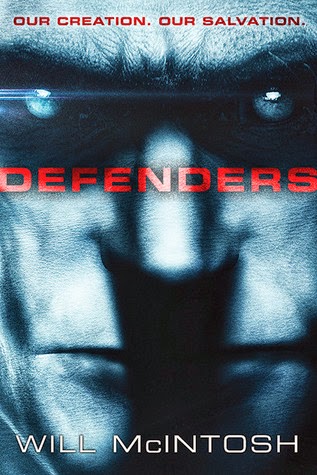
“When Earth is invaded by telepathic aliens, humanity responds by creating the defenders. They are the perfect warriors–seventeen feet tall, knowing and loving nothing but war, their minds closed to the aliens. The question is, what do you do with millions of genetically-engineered warriors once the war is won?
A novel of power, alliances, violence, redemption, sacrifice, and yearning for connection, DEFENDERS presents a revolutionary story of invasion, occupation, and resistance.”
Book Review: The Forbidden Library by Django Wexler
Posted on April 8, 2014 3 Comments
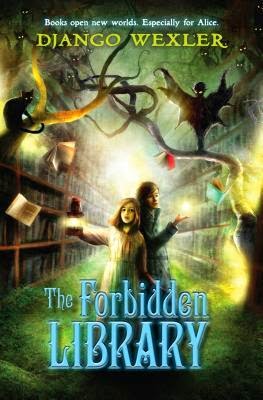
The Forbidden Library by Django Wexler
Genre: Middle Grade, Fantasy
Series: Book 1 of The Forbidden Library
Publisher: Kathy Dawson Books (April 15, 2014)
Author Information: Website | Twitter
Mogsy’s Rating: 5 of 5 stars
I’m a big fan of Django Wexler’s work. His adult epic fantasy The Thousand Names blew me away last year, putting him on my favorite author radar so I’ve been keeping an eye out for more from him ever since. This past year I’ve also read the first book of his new novella series John Golden, gone back to read one of his older published novels from a small press, and of course this one, The Forbidden Library, his upcoming middle-grade title.
Anyway, I think it’s official: Wexler excels at pretty much any genre he tries his hand at. I was initially curious and maybe a little skeptical as to how he would handle a children’s novel, but this book was truly excellent. The author shows his talent and versatility in The Forbidden Library, creating original worlds filled with all kinds of interesting creatures, bringing them to life with such rich and detailed descriptions. I have no doubt adult readers will be enchanted by the wonderful creativity and imagination found in here as well.
The story itself is fantastic, and as an avid bibliophile it’s hard for me to resist anything to do with libraries or reading about the wonderful books that take us to faraway places. As you’ll see, the metaphor of books as portals to new worlds is actually quite literal in this case. The plot follows main protagonist Alice, a young girl who discovers she has a very special power. Called “Readers”, people like Alice possess the ability to enter the worlds of certain books, which might seem great at first, until you realize these books serve as prisons to nasty creatures and the only way out again is if the Reader can defeat them.
However, if a Reader is successful in defeating and binding a creature, he or she will escape and also have access to its abilities. I thought this was a very sophisticated and inventive idea to explain how people like Alice derive their magical powers. Their spells are achieved by calling upon the creatures they control to channel it for them, and presumably a Reader can grow more powerful by defeating more creatures in “prison books” and taking control of their abilities.
The plot also had enough mystery to keep me constantly guessing; I could never be sure what everybody’s motives were. I felt for Alice and her predicament of being suddenly thrust into a strange environment where she couldn’t trust anyone, though she was far from helpless and I’m sure she had no need for anyone’s sympathy. Courageous and headstrong, Alice is a good role model for young readers, being a take-charge kind of girl who doesn’t take obstacles or setbacks lying down.
In some ways, The Forbidden Library was more complex than I would have expected from a middle-grade novel. While it had its fair share of levity (Ashes the talking cat will be a joy to many, for example — and not just to cat-lovers!), it also had its moments of darkness. Sometimes it’s both light and dark at once, as evidenced by the “Swarmers”, Alice’s horde of bizarre bird-like creatures that have the physical appearance and consistency of a rubber ball with legs. I confess, reading this made me want an army of Swarmers of my own — in spite of the fact they’re essentially a black mass of razor-sharp pecking beaks and I’d probably lose an eye. Like I said, the magical creatures found in this book and the sheer imagination behind them are a pure delight.
It’s moments like that which make me feel this is a book both kids and adults can enjoy. It certainly has that wide appeal! I’ve been trying to read a lot more children’s books/middle-grade books lately, taking note of my favorite titles to share with my daughter one day (who’s still a bit too young now, but it’s never too early to start her library!) Without a doubt, The Forbidden Library will be one of them.

Book Review: The Tropic of Serpents by Marie Brennan
Posted on April 7, 2014 3 Comments

The Tropic of Serpents by Marie Brennan
Genre: Fantasy
Series: Book 2 of Memoir by Lady Trent
Publisher: Tor (March 4, 2014)
Author Information: Website | Twitter
Mogsy’s Rating: 4 of 5 stars
As someone who loves the natural sciences and is fascinated with the study of animal behavior, I remember being thrilled to discover the exquisiteness of Marie Brennan’s A Natural History of Dragons. I’d been skeptical when I first picked it up, though. Written in the form of a memoir by the protagonist Lady Trent, I still recall wondering to myself how interesting could this book possibly be if it’s just going to be nothing more than a fictional old lady waxing nostalgic about a life of studying and research? But hey, dragons!
Needless to say, the book took me by surprise. By the last page, I was completely in love with the character of Isabella Camherst before she became the venerable Lady Trent. The unique and convincing narrative style added so much to the story, and I could feel her passion for dragons in every single word. I practically did a dance when I found out that a second novel was in the works, called The Tropic of Serpents which would chronicle the next chapter of Isabella’s pursuit of draconic knowledge by focusing on her time in the swampy jungles of war-torn Eriga.
“I set to work making a place for myself in Society, even if it was not the place Society intended for me.” ~pg. 328
Like the first book, The Tropic of Serpents is a tale of adventure, but it also explores the role of women in a society where the world of academia is still almost exclusively male. Isabella bucks social conventions to pursue her dream of studying dragons, while dealing with criticism as well as her own guilt for putting her research ahead of her family. There is a fine balance of emotional gravity to go along with the action and adventure in these books, something I relished. The narration also has an honest quality to it that’s really grown on me, suggestive of a “bare all” attitude from someone who knows she has contributed much to the field and is too old now in any case to give a crap about what anyone might think of her. Very refreshing!
Despite their similarities, there are a lot of differences between the two novels as well. Given that they are written in the form of a memoir, the many changes that occur over the course of this book lend a great deal of realism to Isabella’s character. After all, the aspects of one’s life do not remain static over time. Accordingly, we see growth in the character in terms of her personality, but also in her relationships with her companions and even in her scientific knowledge.
Which probably makes this a good time for me to bring up that I feel these books are about more than just dragons. The story is about Isabella’s life. It’s about her love of dragons and science. It’s also about the world she lives in, including its peoples, cultures, and politics. To tell the truth, the sequel is conspicuously light when it comes to any dragon action. There’s quite a bit of set up leading to Isabella’s expedition into the jungle known as the Green Hell, and once there, the record of the time she spends among the native Moulish people made sections of this novel read more like an ethnography. Of course, I was an Anthropology major so I ate this all up, but I also have to echo the thoughts of many others and agree that the first book featured a greater emphasis on dragons, while this one dabbled more in the history and politics of the setting.
Nevertheless, I am having a lot of fun with this series. There are details hinting at so much more to come in Lady Trent’s long and accomplished life and I hope to read about all her adventures. Anyone who has a deep passion or commitment to a calling will find a kindred spirit in the main character; it’s truly wonderful to find a strong female protagonist with such powerful conviction and presence.
Book Review: Sunstone by Freya Robertson
Posted on April 6, 2014 Leave a Comment
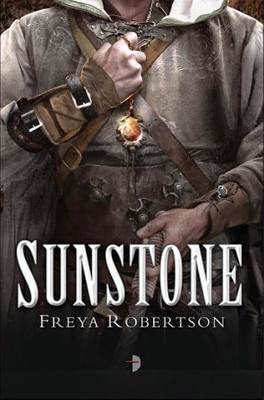
Genre: Epic Fantasy
Series: The Elemental Wars #2
Publisher: Angry Robot Books
Publication Date: March 2014
Wendy’s Rating: 3.5 of 5 stars
As always, Robertson’s world and character building is incredible. Anguis continues to enthrall me with its beauty and its many realms and unique people.
The events that occurred in the previous book, Heartwood, resulted in significant losses, but also in a greater understanding of the mysterious Arbor, the great tree that is the centre of the world of Anguis. Saving the Arbor brought the rival factions of Anguis together to serve and protect the tree and for a time, there was peace.
But everything changed when the Fire Nation attacked.
Now, 22 years after the Dark Water Lords rose up against the Arbor a new threat looms and heroes across time must do their part to stop the Incendi from razing the world with fire.
Readers of Heartwood will recognize many characters, including Procella, the noble military woman and former Dux and protector of the Arbor. Sadly, her husband, Chonrad, responds to a summons from the Arbor which brings about his death shortly before the book begins. But this story belongs to Procella and their three children, Orsin, Jolen and Horada, who each have their own roles to play in the events. We are introduced to several other new characters, including a young prince who is escorted to the Arbor as the Selected sacrifice, and a group of rebels seeking escape from their underground captivity.
As always, Robertson’s world and character building is incredible. Anguis continues to enthrall me with its beauty and its many realms and unique people. It is also interesting to see how Anguis differs as the separate time lines flow together. It still amazes me how Robertson can manage so many characters and their respective quests, without losing the depth and purpose of either.
Unlike the previous book, the undertaking of the three major quests is a much more organic process. Robertson’s video game – particularly (MMO)RPG – influence was far more evident in Heartwood, and proved a detriment to the storytelling when it came to the parcelling out of details and quests. I didn’t find that to be an issue in Sunstone, and particularly liked the implication of the Arbor’s sentience and manipulation of events (without it being an elaborate case of the tree orchestrating everything like Littlefinger). With the realm of Anguis and the Arbor mostly established, there is less need for the excessive detail Robertson provided previously. That said, Sunstone still suffers from an excess of tell over show, with the reader not being permitted to discern things on their own, or inner monologues that go on a bit too long. This makes the book a bit more pedantic than I’d like, though not enough for me to dislike the series over all. I am still very much intrigued by the Elemental Wars and am looking forward to what mysteries the Arbor will reveal next.
With thanks to NetGalley for the opportunity to read an advanced copy of this book in exchange for an honest review.

Mogsy’s Book Haul
Posted on April 6, 2014 Leave a Comment

Operation Shield – it was a great fortnight for books! Kicking of the list is Operation Shield from Pyr, the newest Cassandra Kresnov novel. I read the previous book 23 Years on Fire last year when it came to me unsolicited and that was how I discovered this wonderful series (and even though it was book #4 I was able to enjoy it without having to catch up with the ones that came before, double score!) so I’m looking forward to continue.
The Tropic of Serpents – I am loving these Lady Trent books because they have everything that makes an awesome series: an intelligent and strong female protagonist with true conviction, the passion for science and natural history, and of course dragons! I’ve been admiring the beautiful illustrations in all their glory in this hard copy, my deepest gratitude to Tor Books. Be sure to keep an eye out for my review, which should be coming right up.
The Goblin Emperor – this arrived from Tor last week as well, and I thought it was great! Be sure to see more of my thoughts in my recent review.
The Oversight – this ARC arrived unexpectedly from Orbit, and boy am I glad. At the time of this writing, I am just over three-quarters of the way through this book and I’m enjoying the hell out of it! I’ve been chasing my next five star read for a while now, and don’t want to jinx anything but this might be it.
Hollow World – until now I’ve only had the copies of this book from Michael J. Sullivan’s Kickstarter campaign. The book was released by publisher Tachyon last week though, several weeks ahead of the official date. This was such a wonderful book and I’ve been dying to share my thoughts on it for so long, and at long last my review finally went up this week. The coolest thing? I was thrilled to see I got blurbed in this print edition!
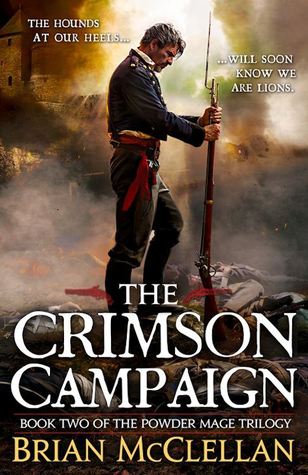


The Crimson Campaign – it was a great week for the digital pile as well, kicking off with an eARC of book two of The Power Mage trilogy by Brian McClellan.
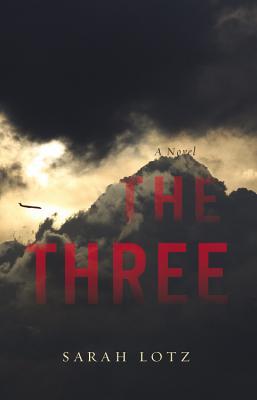
The Three – OMG OMG OMG I couldn’t believe it when I won an e-copy of this from a giveaway held by Little Brown. I’m positively itching to dig right in.
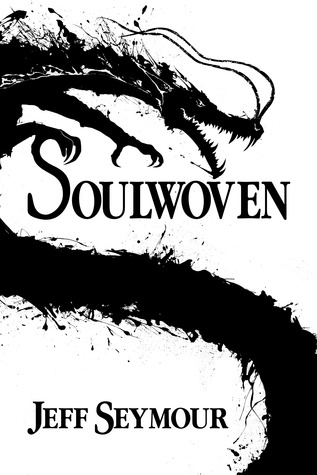
Soulwoven – this is another book that first began life as a Kickstarter campaign. I received an e-copy for review this week from author Jeff Seymour, who apparently was quite a fan of MMO games as well! Hooray for gamer writers!
Gemsigns – a copy of this book that was supposed to arrive with my print edition of the sequel Binary still hasn’t turned up yet, and I fear it may be lost (it’s so heartbreaking when that happens) but Jo Fletcher Books has kindly helped out by providing me with a digital copy for now and I couldn’t be more grateful!
Damoren – I always get excited whenever I get a new book to review from Ragnarok Publications. They are still new but already they’ve put out so many good titles I’ve enjoyed, and this debut from Seth Skorkowsky had me at “Exorcise” and “Demons”.
YA Weekend: The Living by Matt de la Peña
Posted on April 5, 2014 Leave a Comment
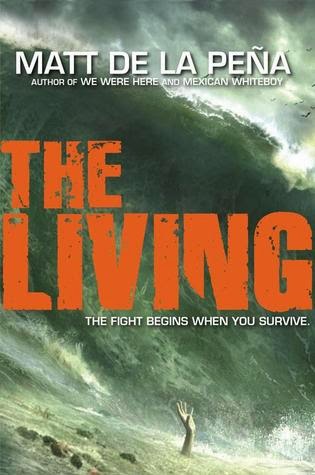
Genre: Young Adult, Science Fiction
Series: Book 1 of The Living
Publisher: Delacorte for Young Readers (November 12, 2013)
Author Information: Website
Mogsy’s Rating: 4 of 5 stars
This book first caught my attention because I noticed a blurb likening it to a Young Adult version of LOST – which was actually a show I really enjoyed before it turned all WTFery bizarre. The result however, was not quite what I expected. I wouldn’t say I’m disappointed, though; The Living wasn’t a bad book, just different.
I’m also not surprised to see that opinions are all over the place for this one. It is a book made up of several different sections that feel completely dissimilar from each other in terms atmosphere, setting, pacing. It is part disaster story and survivor narrative, but also with some hints of apocalyptic fiction and mystery. Try and imagine the movie 2012 meets Castaway, then maybe throw in a bit of 28 Days Later.
We start the story on a luxury cruise ship, which I thought was a rather unique and exciting setting. The international crew and passengers make for a very diverse cast, with characters hailing from all over the world. The protagonist himself, Shy, is a Mexican-American teenager whose home town is near the border, an area ravaged by a new illness coined Romero disease. Ever since the disease claimed his grandmother, Shy has been working for the cruise line in order to earn money to support his family.
Shy employed on board a ship and near Hawaii when “The Big One” hits, a megathrust earthquake that completely destroys the west coast of North America. The resulting tsunami sinks the ship, and while most perish, Shy manages to survive.
One more movie reference and I swear I’ll be done, but I just wanted to point out that The Living ruined cruising for me by traumatizing me the same way Final Destination did with air travel. The scenes leading up to, during, and after the sinking were gripping and terrifying. Which was probably why it felt so incongruous when this section was followed up with a part featuring days of drifting aimlessly on the open water as Shy is marooned on a lifeboat. This section had its moments too, but it had nowhere near the heart-pounding force or intensity.
I was also slightly disappointed when I got to the final few pages and found a wide-open ending, and what was a very obvious lead-in to a series. I’d hoped that this would be a stand alone, though I’d had my doubts even before I started when I saw the slimness of the volume. As I got closer and closer to the last page I already suspected the author wasn’t going to be able to wrap everything up.
In fact, as a first book to a planned series, The Living actually had the feel of very long introduction. But for all that, I still can’t deny it has me hooked — Matt de la Peña did a splendid job setting up an intriguing story and a lot of interesting relationships between the characters. I’ll most likely pick up the sequel when it releases.
Book Review: The Goblin Emperor by Katherine Addison
Posted on April 4, 2014 Leave a Comment
 The Goblin Emperor by Katherine Addison
Genre: Fantasy
Series: Stand Alone
Publisher: Tor (April 1, 2014)
Author Information: Website
Mogsy’s Rating: 4 of 5 stars
On a trip to China a few years ago, I got to visit the Forbidden City in Beijing. Surrounded by such a display of magnificent splendor and so much opulence, I wouldn’t be surprised if the whole tour group was thinking the same thing: how wonderful it must have been to be emperor, to be the son of heaven and have your word be law, all the luxury in the world at your fingertips and an army servants to cater to your every whim.
What would it be like to live a modest life, then to be suddenly elevated to such a position? The premise of The Goblin Emperor explores this very idea, following the life of the youngest, half-goblin son the the Elven emperor, a youth named Maia who has lived his entire life as a cast-off, far away from the business and affairs of the Imperial Court. But when his father and three older brothers all perish in an airship accident, being the next in line in the royal succession, Maia is plucked from exile to take his rightful place on the throne.
But for our protagonist, palace life and being emperor is not about the glamorous parties or eating fancy food and wearing fancy clothes. The Imperial Court is a whole new world for Maia, and his inexperience with running an empire is proving to be the least of his worries. Having been mostly forgotten in his exile, he arrives at the palace to find himself with no friends, no allies, and not even a clue as to how an emperor is supposed to act. Everyone seems to want something, and distinguishing obsequious flattery from genuine kindness is nigh impossible. Add to that, the airship crash than claimed the lives of his father and brothers turns out to have been no accident, and whoever assassinated the last emperor might be coming after Maia next.
Suddenly, being emperor does not sound like such a cushy idea anymore. The Goblin Emperor explores the role of a supreme ruler, but rather than focus on the glitz, Katherine Addison decides instead to paint a picture of uncertainty, frustration, and abject loneliness. Though he is surrounded by people at all times, Maia has no one to turn to and knows not who to trust.
And yet, the story also puts forward hope. Viewed as a character study, the book offers a unique perspective as well as a fascinatingly immersive experience. Maia is someone you can root for, and despite his moments of sadness and self-doubt, he possesses amazing strength at his core. A survivor of a horrible childhood who goes from being ignored to being the most important person in the empire, everything that happens affects and changes Maia, but his actions and feelings are always and ever guided by the goodness in his heart. There’s something to be said about a character who can forgive past cruelties and betrayal, and instead look to the future with optimism and a mind to mend fences and build bridges. As the story progresses, the nature of Maia’s relationships with others as well as his own reflections of himself begin to evolve, and that’s when the depth of his character really shines through. Who needs glitz?
Clearly, so much care and thought went into the writing of this book. If I could make one suggestion to the prospective reader, flip to the end of The Goblin Emperor to familiarize yourself with the naming conventions as well as pronunciation of words in the Elflands before tackling this book. Someone gave me the same advice and it was a huge help. Otherwise, a lot of the similar sounding names and complicated forms of addresses might prove confusing. It still took me some time to get used to the language and style, but at least knowing some information beforehand made it much less overwhelming.
Powerful and touching, The Goblin Emperor is a strong entry into the high fantasy genre. I loved the world building, including Addison’s inventive approach to elves and goblins as well as the intrigues of the Imperial Court. It’s a setting rife with plots, politics, and power-plays, though most of this is handled at a much more subtle, muted pace. As such, this won’t be a book for everyone, but readers who enjoy a more in-depth look into character portrayal and the setting will find plenty to love here. Highly recommended for fantasy fans looking for an introspective read and those who enjoy layers of complexity in their characters.
Book Review: Mistborn by Brandon Sanderson
Posted on April 3, 2014 3 Comments
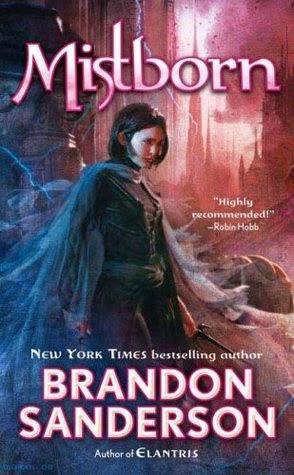
Mistborn: The Final Empire by Brandon Sanderson
Genre: Fantasy, Magic
Series: Mistborn #1
Publisher: Tor
Publication Date: July 2007
Wendy’s Rating: 3 of 5 stars
Anyone familiar with Brandon Sanderson’s prolific writing knows that he puts a lot of time and energy in to his world building. It’s truly amazing how detailed his worlds are and how he can possibly keep it all straight with all the books that he writes. He also has a penchant for magic and each of his realms has its own unique form of magic. In this case, it is Allomancy, the ability, unique to only a precious few, to use certain metals to produce certain effects.
Most Allomancers are only able to burn one of the eleven metals, but Kelsier, the survivor of the deadly mining caves of Hathsin, and Vin, the young thief, are Mistborn, able to utilize all of the metals to deadly effect. As members of the downtrodden race, the Skaa, they will use their abilities, Kelsier’s persuasive skills, and his reputation as the only survivor of Hathsin, they set about with an elaborate plan to free the Skaa from the god-like Lord Ruler.
Sanderson spends a lot of time on his world building and on detailing his magic. I’m usually able to forgive the tell don’t show – and am mostly able to do so here, but the over indulgence on these details is usually balanced out by interesting characters and a more intriguing plot – both of which are missing here. Kelsier and Vin simply failed to endear themselves to me. I felt nothing for their inner monologues and their pain and loss of loved ones, or for their ultimate goal.
I was somewhat interested in the logbook entries that precede each chapter, detailing the Lord Ruler’s journey to save the planet. That was an interesting character with depth and a story that intrigued me, though we only got to see him in sparse moments, and only through the point of view of Vin and Kelsier.
Still, I do own the other two books in the series, and am curious to see what happens next, despite most of the story being surprisingly tide up at the end Mistborn.



 The BiblioSanctum