Book Review: Nightmare Ink by Marcella Burnard
Posted on April 18, 2014 Leave a Comment
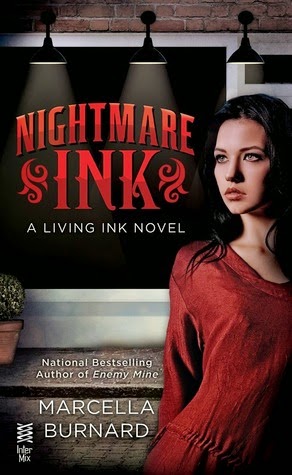 Nightmare Ink by Marcella Burnard
Genre: Urban Fantasy
Series: Book 1 of Living Ink
Publisher: InterMix (April 15, 2014)
Author Information: Website | Twitter
Mogsy’s Rating: 3.5 of 5 stars
Whenever I encounter cool, interesting new concepts in urban fantasy, it’s always like a breath of fresh air. I mean, I love vampires, werewolves, wizards and such, but it’s also nice to see something different every once in a while. And with this book, the idea of magical tattoos most definitely fits into the “that’s not something I see every day” category.

Interview with Django Wexler: Exploring The Forbidden Library
Posted on April 17, 2014 1 Comment
 We’ve got a great interview for you today. Please welcome Django Wexler, whose middle grade fantasy novel The Forbidden Library hit the shelves this week!
So you’ve already seen my review and heard me sing my praises, and now you want to know more about the author and the book? Look no further, as it is with great pleasure that I present to you my fun chat with Django about The Forbidden Library as well as his love for writing and fantasy fiction. Oh, and there will be cats. Mustn’t forget the cats!
Mogsy: Hello, Django! First of all, thanks so much for this interview!
Django Wexler: Happy to do it!
Mogsy: So tell us about The Forbidden Library. Pitch the book! What can readers expect to find in it, and why might fans of your adult fantasy be interested to read it too?
Django Wexler: The Forbidden Library is about a girl named Alice who sneaks down to the kitchen one night to find her father arguing with a nasty-looking fairy. When he mysteriously disappears a few days later, she’s sent to live with an uncle she didn’t know she had, in his odd old house with a giant library she absolutely must not go into. When she (of course) does, she finds out that both her uncle and his library are a lot stranger than they appear!
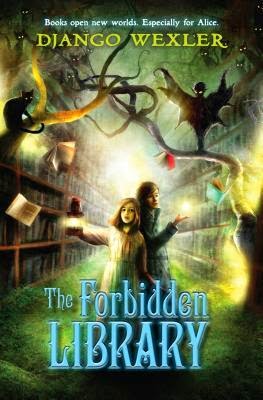 |
| US Cover |
Other things that are in the story: talking cats, dragons, The Swarm, strange maps, needle-elves, Ending, and books that suck you in. (Literally!)
I had a great time writing it. Even as an adult, I love well-written children’s fiction, especially fantasy – I’m a huge fan of authors like Phillip Pullman, Jonathon Stroud, J. K. Rowling (of course), Phillip Reeve, and so on. I hope that anyone else who understands that fantasy for young readers doesn’t have to be bland will enjoy it! There’s also a meta-level, if you’ve read a lot of this sort of thing. The original inspiration for the story was based on observations about the normal course of events in the Chosen One fantasy.
Mogsy: Well said. But I’ve been wondering and I think a lot of people will want to know too, why a Middle Grade novel? With your fond memories and love for well-written children’s fiction, did you start off having plans to write a book for this age group or did the idea for the story fit the category?
Django Wexler: It’s actually kind of a funny story – when I started, I didn’t know that there was such a thing as “middle grade” as a category. I had this vague idea that I was writing a children’s book, but that was it. What I wanted was something *short*, compared to The Thousand Names. I had a problem with everything I wrote ballooning out to become epic, and I knew I couldn’t commit to writing more than one book that size a year. So if I wanted to start another series, it had to be slim by comparison. (Forbidden Library is about 75,000 words, compared to Thousand Names’ 200,000.) Once I started writing it, it just felt right as a children’s book, although I didn’t change very much about my writing style. (I thought of it as leaving out sex, swearing, and gore.)
Then I sent it to my agent Seth, who thought it would work really well as a middle grade. We made a few changes – Alice’s age was adjusted a little, for example – and he sent it off to see if Penguin liked the look of it.
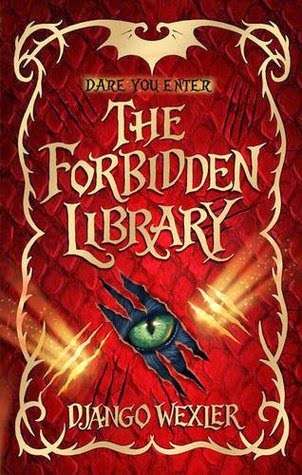 |
| UK Cover |
Mogsy: Actually, I’ve always been curious if there were special “rules” to writing Middle Grade (and you coming from writing adult fantasy might be in a unique position to answer). So like you said, no sex, no swearing and no gore, but really how how far could you go those and did you encounter any other limitations? Like maybe the story couldn’t be too dark?
Django Wexler: If there are special rules, nobody ever told me about them! Honestly, I didn’t think about it that much while I was writing it. I made a few decisions at the outset to keep things easy – a single point of view in a simple third-person past, no fancy mucking about with experimental narrative structure – and that helped keep the story on a pretty straightforward path. Other than that, I hoped that my editor would let me know if I’d done anything wrong! She did end up flagging a few things, mostly some vocabulary that was a little too much of a stretch, but on the whole we changed remarkably little. (At least, for that reason. We did plenty of edits for other reasons!) Certainly nobody ever told me it couldn’t be dark. I loved dark fiction when I was that age, so I really couldn’t go any other direction.
Mogsy: Clearly you are a lover of cats! They feature prominently in The Forbidden Library, and one of the most memorable characters for me is the talking cat Ashes. I also know from Twitter that you are a proud owner of two kitties! Did your draw much from your experience with them when writing Ashes?
Django Wexler: Everything is better with cats! I definitely did draw from my own personal cats. Anyone who has spent time with cats knows that they have a wide variety of weird little behavioral tics – the head-butt, the tail slap, the standing-in-front-of-you-to-trip-you-on-the-stairs, and so on. While Ashes talks, I wanted to make sure he also felt like a cat in terms of his behavior, rather than a tiny cat-shaped human.
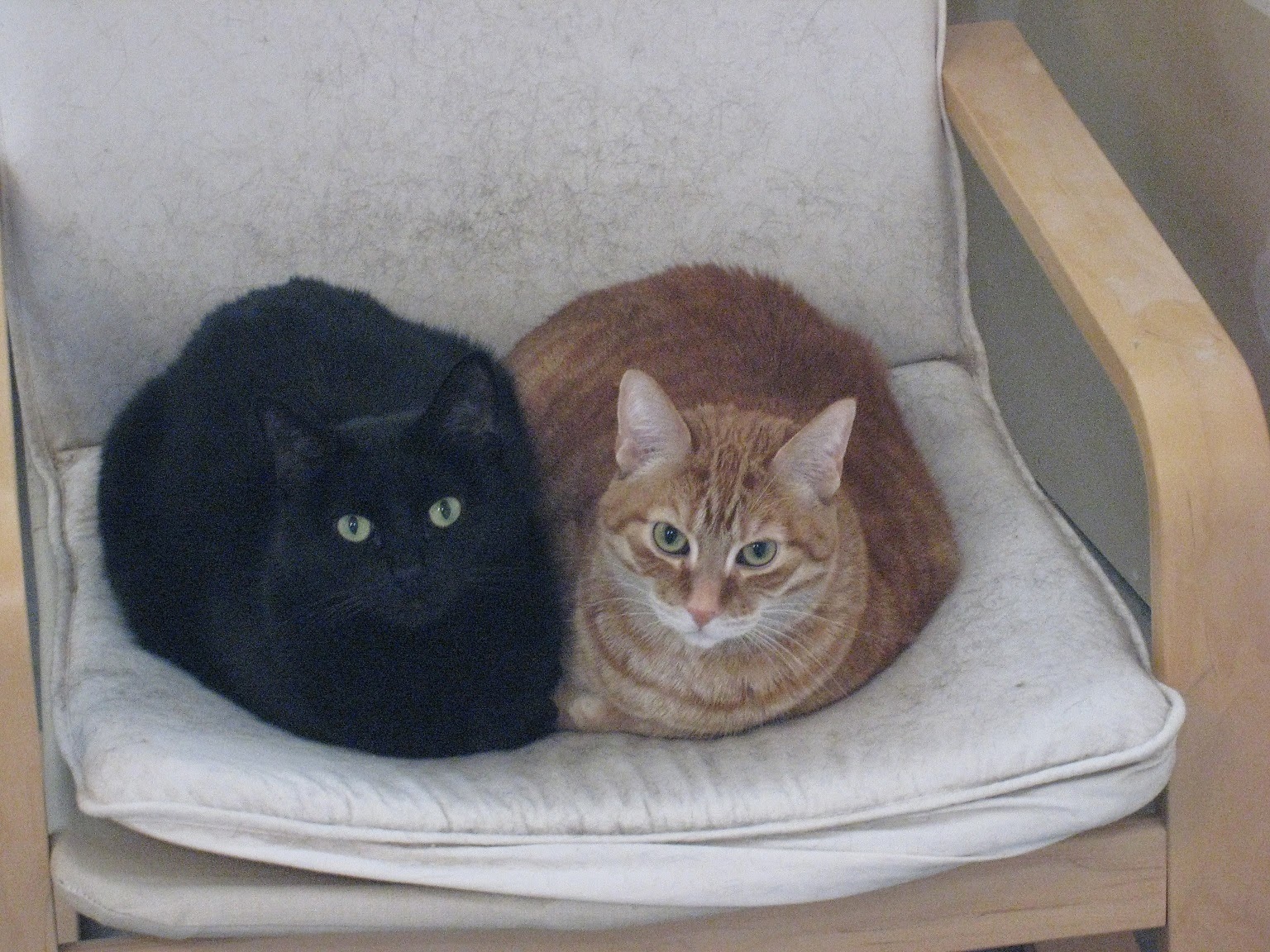 |
| Author’s cats: Sakaki and The Tomoes |
Mogsy: So in The Forbidden Library, people like Alice who are called “Readers” have the special power to enter books, defeat the creatures imprisoned inside and in doing so gain access to their abilities. Now, if you could do the same, with any book at all, what would it be?
Django Wexler: So, that’s a really tough question. The problem, which poor Alice has to deal with, is that you have to be able to defeat the creature inside the book in order to a) gain their powers and b) escape from the book at all! While I’d love to have the abilities of, say, Jonathon Stroud’s Bartimaeus, the chance of my beating him in a fight is pretty much nil. I would have to start with something really wimpy and work my way up. Maybe Terry Pratchett’s Bromeliad trilogy. I might be able to hold my own against people only a few inches high. (But what powers would they give me?)
Mogsy: Come on, I’m sure you can handle more than Nomes! But on that note, from Swarmers to a many-legged dragon, the book features a ton of very unique and unrestrainedly fantastical creatures. At the risk of sounding corny, but I just have to know, where do you get some of these wild but awesome ideas for them?
Django Wexler: It’s often hard to answer that question, of course. The rule I made going into the book was that I wasn’t going to use any “stock” fantasy creatures, in terms of dragons, elves, orcs or whatnot – it never sits well with me when everyone’s fantastic worlds all look kind of the same. So when I needed a creature of a familiar type, I put some thought into how I might be able to “twist” it a little, so that it would look or behave differently from the familiar presentation. So, for example, Vespidian is a fairy, but a very strange-looking and threatening one, rather than the twinkly, kindly things you might see elsewhere. (He also has the coloring of something poisonous, and his name is a reference to wasps!) The Dragon has no wings, so it looks very reptilian, but the multiple legs and horizontal rows of eyes are insectoid features to give it an alien touch.
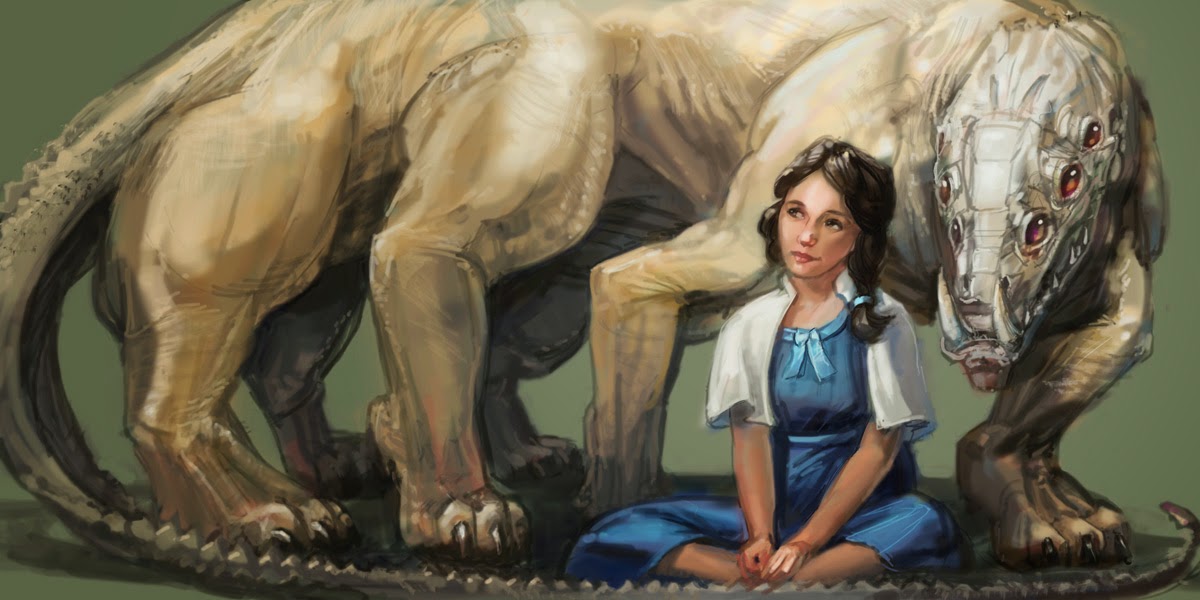 |
| Comissioned art of the Dragon by Nicole Cardiff (http://www.artofnicolecardiff.com) |
Some things I can’t explain, though. The Swarm looks like a flock of little black Kiwi birds, but sharing a single mind and purpose, a bit like a colony of insects. No idea where that came from!
Mogsy: Speaking of pretty pictures…what was it like to work on a book with an illustrator? What was your reaction when you saw some of the art?
Django Wexler: I love love love having illustrators work with my stuff. It’s really an amazing feeling to see someone else’s view of what you’re describing, in spite of (or maybe because of) the fact that it doesn’t look like what you were picturing. It made me really happy when they told me we were going to have internal illustrations in The Forbidden Library, and the results I think are amazing. The best part is the UK edition has a DIFFERENT set of illustrations, so I get to see ANOTHER artist’s cool take on the characters and monsters! Double the fun! (I’m hoping to have all the art up in a gallery on my website around the time of the release.)
In terms of actually working with the illustrator, the book was finished long before the art was arranged, so I didn’t actually have much interaction. In a couple of places where my descriptions were a bit unclear, they asked me for clarifications, but otherwise it was a matter of seeing what he came up with based on the text. I did make a few comments for historical accuracy, though!
Mogsy: So in the last year you’ve published an epic fantasy novel, the first of an urban fantasy novella series, and now a middle grade novel. One of the most impressive things I’ve discovered by reading your books is your flexibility in writing and storytelling. Do you just go where your ideas take you, or are there genres you’ve always known you want to dive into?
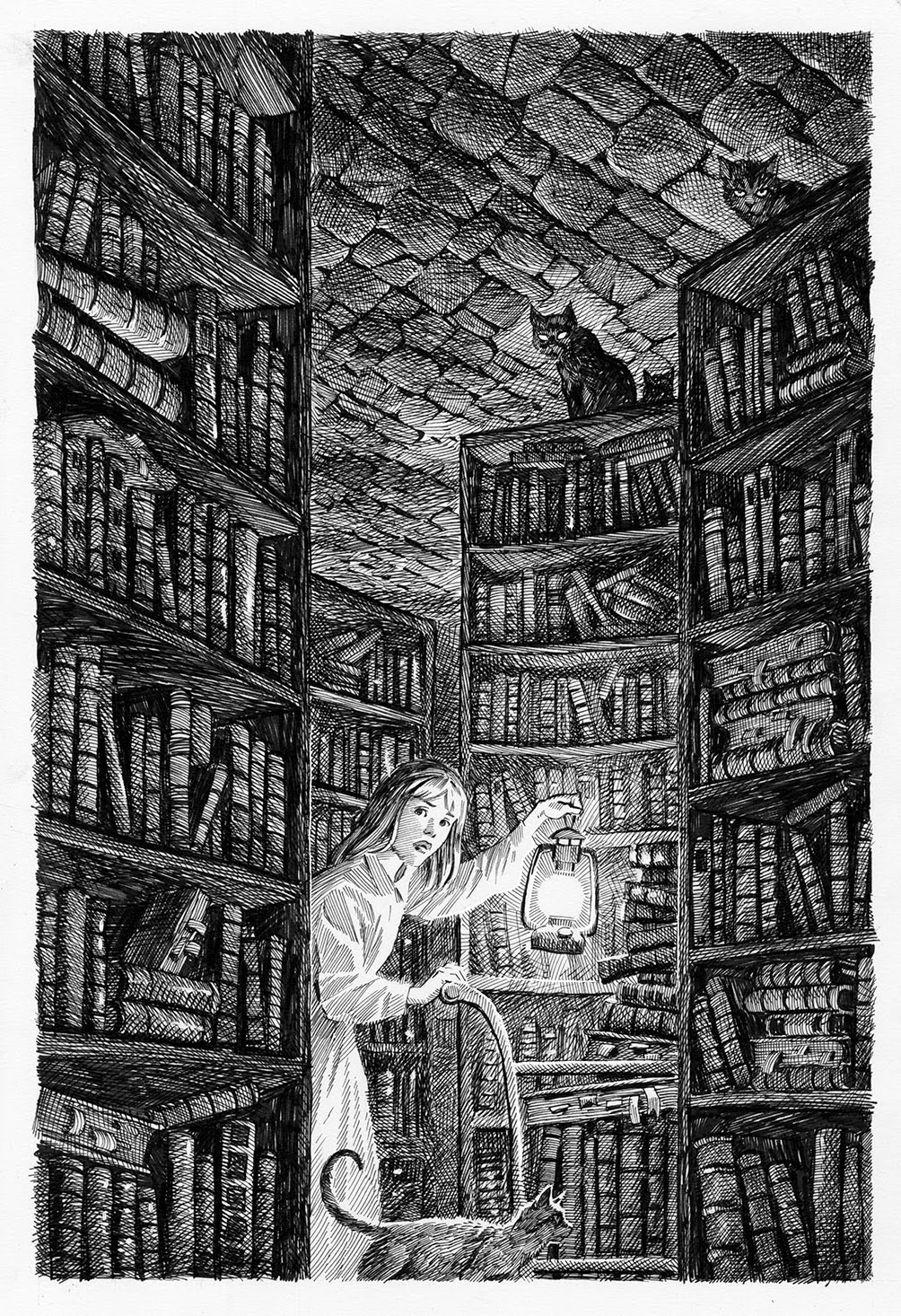 |
| Publisher image from UK Edition |
Django Wexler: I think mostly the former. I get ideas (so many ideas – I have an “Idea File” that’s now like thirty pages long) and try to plot out a story that seems like it works, then think about what genre it is. Sometimes I know from the idea what that ought to be – I have some stuff I want to write that’s definitely YA, for example. But genre in general is something that should be looked at as descriptive rather than proscriptive: it should be a useful tool for helping readers talk about books, and booksellers organize them on shelves, rather than something authors should feel bound by. So basically, I do what seems fun!
Mogsy: Great to hear that! So to wrap things up then, what’s next for Django Wexler? What’s occupying your time these days, both writing or non-writing related? Any exciting projects you’re working on currently or in the near future that you’d like to share?
Django Wexler: It’s going to be kind of a crazy year for me. In addition to the release of The Forbidden Library, I’ve got my novella John Golden, Freelance Debugger out now, and then The Shadow Throne, sequel to The Thousand Names, releasing at the beginning of July. That also means a ton of cons, including a trip to England for LonCon in August! I’m very excited.
As far as future projects go, I’ve got some fun stuff coming up. So far this year I’ve been finishing up editing on The Shadow Throne and working on the sequel to The Forbidden Library, along with a bunch of short fiction projects that will turn up in various anthologies. One I can already talk about is the BLACKGUARDS anthology coming soon from Ragnarok Publications, in which I’ll have a new Shadow Campaigns story. Next on the list is the first draft of the third Shadow Campaigns book, which still needs a title. After that … probably Forbidden Library #3! Non-writing-wise it’s just the usual: video games (Diablo III!), miniature painting, and anime. I’ve been writing a column on the latter over on SF Signal at Lost in Animeland.
Thanks for having me on!
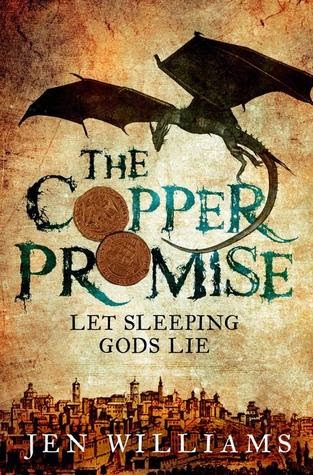
Book Review: The Copper Promise by Jen Williams
Posted on April 16, 2014 1 Comment

Waiting on Wednesday 04/16/14
Posted on April 16, 2014 Leave a Comment
“Waiting On Wednesday” is a weekly meme hosted by Breaking the Spine that lets us feature upcoming releases that we can’t wait to get our hands on!
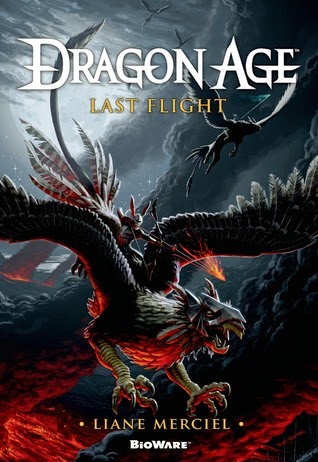
Dragon Age: Last Flight by Liane Mercial: August 12, 2014 (Tor Books)
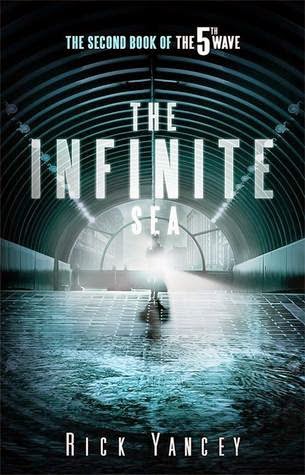
How do you rid the Earth of seven billion humans? Rid the humans of their humanity.
Surviving the first four waves was nearly impossible. Now Cassie Sullivan finds herself in a new world, a world in which the fundamental trust that binds us together is gone. As the 5th Wave rolls across the landscape, Cassie, Ben, and Ringer are forced to confront the Others’ ultimate goal: the extermination of the human race.
Cassie and her friends haven’t seen the depths to which the Others will sink, nor have the Others seen the heights to which humanity will rise, in the ultimate battle between life and death, hope and despair, love and hate.”
Graphic Novel Review: Sex Criminals Volume 1: One Weird Trick by Matt Fraction and Chip Zdarsky
Posted on April 15, 2014 2 Comments
 Sex Criminals, Volume 1: One Weird Trick by Matt Fraction and Chip Zdarsky
Genre: Fantasy, Romance, Sexuality
Collects: Sex Criminals #1-5
Publisher: Image Comics
Publication Date: April 29, 2014
Creator Info: www.mattfraction.com / zdarsky.tumblr.com
Matt Fraction dedicates this series to anyone who’s ever rubbed one out for the first time and the first issue opens with a couple having sex in the washroom, with the narrator, Suzanne, offering to explain and asking you not to judge. By way of explanation, she starts with her past and the death of her father, a seemingly random victim of a gun toting rampage. Her mother sinks into a life of tears and drink and Suzanne finds the only escape is underwater in the bathtub. One day, during her moments of seclusion, she makes an accidental discovery that involves touching herself—you know—down there. The result is not merely the incredible feeling of euphoria, but time actually stands still for her. She comes (lol) to call this phenomenon “The Quiet,” and tries to learn more about it. But there is little information available, and worse, no one seems to want to talk about it and asking the wrong people results in shame.

This might be a common experience for many. My birds and bees discussion was less discussion and more “here read this book,” wherein, This Book, had a blue cover, nice ’70s attired young teens smiling sweetly, and a big chapter on why masturbation is evil. In my aged wisdom and experience, I will be working from this book instead when it comes time to get more in depth about sex chats with my kids, however, we still live in a surprisingly prudish society. We love sex, but we’re still too ashamed to admit it. If that’s how you feel about the down and dirty, then this book actually *is* for you. Because you’re not alone in your interest in sex and, while your orgasms might not stop time (or do they?), I love the way Fraction calls us out on our shame and politely and humorously asks why we gotta feel this way.
I’m most familiar with Fraction’s work on the Hawkeye solo series where he takes the Avenger out of his role as a superhero and introduces us to an every day, self-deprecating guy with a penchant for doing nice things for people who could use a break, and getting himself in trouble for the right reasons. That same casual, personable feel exists in Sex Criminals, with characters that you can really empathize with.
So the “criminals” part. Right. That comes in when Suzanne discovers that her ability isn’t as unique as she thought. She meets Jon, whom she actually has a lot in common with and falls for even before she discovers that he can enter The Quiet too, (though he has another name for it). He gets to tell of his discovery of his ability, which a lot of guys can probably identify with. Jon has been using his time stopping abilities to cause a bit more trouble than Suzanne has ever imagined, and he convinces her to try it out for the sake of saving her beloved library. Unfortunately, they discover that they really, really aren’t unique in their abilities, as their antics are halted by the sex police.
Fraction’s sense of humour is light and fun. It’s impossible not to laugh at yourself through the course of the book, as much as you’re laughing at the characters and their situations. I’ve also learned the importance of reading *everything* in comics these days, but most especially comics that Fraction works on. His cheekiness spills into all the pages, cover to cover, and it’s great to see that Zdarsky shares that sense of humour, making for a great team.
Technically speaking, the story telling process is a bit troublesome. It begins with young Suzanne going through her motions, with older Suzanne fourth wall narrating over her shoulder. In present day, Suzanne occasionally breaks the fourth wall as well, looking at the ‘camera’ to deliver some lines. It takes a moment to grasp that, since narrative word boxes are also used to speak to the reader. This is not a deal breaking concern for me, though.
This is yet another winner from Image Comics, which continues to produce great, off the wall comics that push the boundaries of both the medium, and our sensibilities. Sex Criminals even earned itself an Apple ban, which means Fraction and Zdarsky are definitely doing something right.
Still not sold? Check out the first issue for free on Comixology.
With thanks to NetGalley and Image Comics for the opportunity to read an advanced copy of this graphic novel in exchange for an honest review.

Book Review: The Lascar’s Dagger by Glenda Larke
Posted on April 14, 2014 Leave a Comment
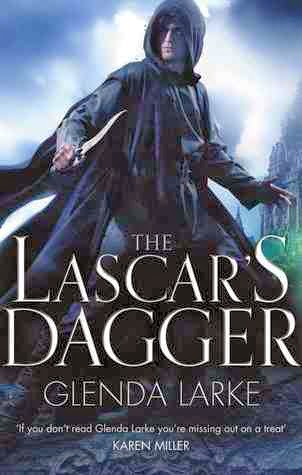 The Lascar’s Dagger by Glenda Larke
Genre: Fantasy
Series: Book 1 of The Forsaken Lands
Publisher: Orbit (March 18, 2014)
Author Information: Website
Mogsy’s Rating: 3.5 of 5 stars
The word “spy” has such heavy undertones, especially when it comes to genres in fiction. When I first picked up The Lascar’s Dagger by Glenda Larke, everything I knew about it came from its description, so I was surprised when it turned out not to be the kind book I thought it’d be. Not that I had an inkling of how a story about a cleric-intelligencer was going to play out in a fantasy setting in the first place; still, if not a gripping page-turner, I expected at least something faster paced. But at the same time, I wouldn’t exactly call this book slow, though it definitely had its ups and downs.
Apex Magazine Issue #58
Posted on April 13, 2014 Leave a Comment
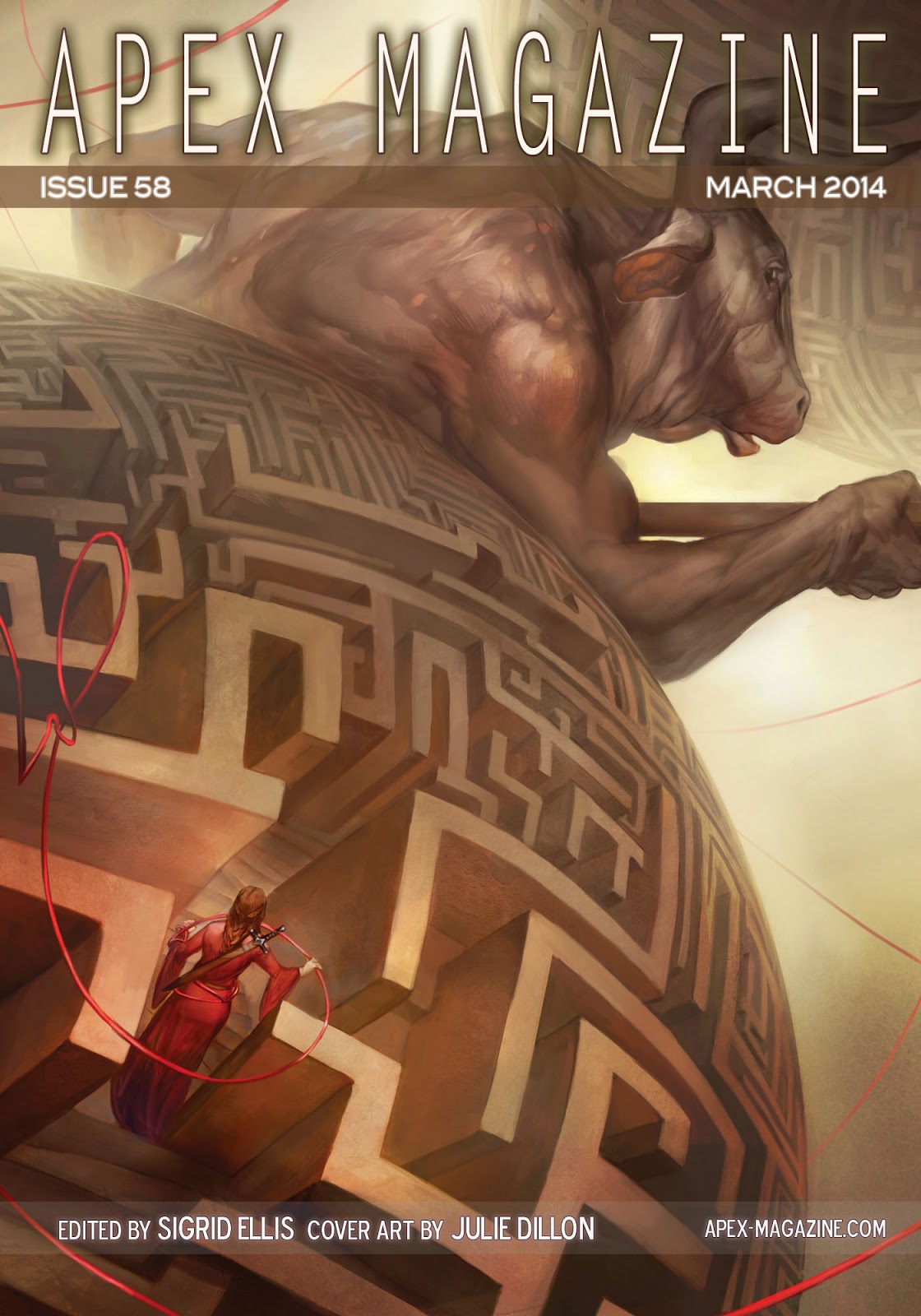

From April 3rd to 17th Apex Magazine will be showcasing guest posts, reviews, and interviews as part of their Operation Fourth Story digital magazine subscription drive. From now until the end of the event you can get a year’s subscription for only $17.95 direct from Apex or through Weightless Books. Their goal is to get 250 new subscribers, which will generate enough revenue to add a fourth piece of original short fiction to every issue. What’s more, if they reach their goal, one random subscriber will win a Kindle Paperwhite!
YA Weekend: The Winner’s Curse by Marie Rutkoski
Posted on April 12, 2014 Leave a Comment
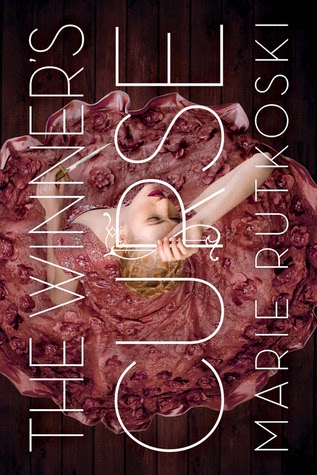
The Winner’s Curse by Marie Rutkoski
Genre: Young Adult, Fantasy
Series: Book 1 of The Winner’s Trilogy
Publisher: Farrar Straus Giroux (March 4, 2014)
Author Information: Website
Mogsy’s Rating: 3.5 of 5 stars
I admit it, I read this book for FORBIDDEN LOVE! Turns out though, it was not exactly the kind I had in mind. I expected a little more chemistry, perhaps? A little bit more of that “it’s you and me against the world”? The Winner’s Curse ended up giving me two lovers who actually spent more than half the book locked in conflict with each other, and so their romance lacked some of that je ne sais quoi which makes forbidden love so scandalous and delicious.
Meet the two star-crossed lovers in question: Kestrel, the seventeen-year-old daughter of a Valorian general, who one day visits a slave auction and spontaneously decides to buy Arin, a native of the Harrani lands her people conquered. Their meeting, however, was no accident. Unbeknownst to Kestrel, Arin is actually a high ranked member of a group of Harrani rebels, planted purposely at the auction to draw her in. As a slave in the Valorian general’s home, Arin would be in a position to gather intelligence and plan his people’s uprising.
What neither of them counted on was that their master and slave relationship would eventually evolve into friendship, deepening into love. But that journey was far from passionate for me; instead, it felt tepid and sometimes even bordered on awkward. It’s tricky creating chemistry when both your characters are torn between their loyalties to each other or their own people, and the story never managed to convince me that there was ever really any trust between Kestrel and Arin. Seeing as The Winner’s Curse is essentially a romance, that’s a pretty vital ingredient to be missing for me.
Okay, so their relationship was not as swoon-worthy as I would have liked, but no matter. The world, the characters and the story soon won me over, and I enjoyed this book a lot. While it is what I would classify as “standard” YA, it still contained plenty of surprises within its pages. I did love the setting, with the flavor of a historical fantasy. A martial civilization like the Valorians which also encourages women in their army fascinates me. If anything, I wish the scope of the story was bigger to encompass more of the events in the wider world. There’s a lot of potential for world building here; because of the narrow focus on Kestrel and Arin, we only get to see a tiny slice of what’s happening.
Forbidden Love just happens to be a trope I can’t resist, but the comments I made above notwithstanding, if you are a fan romance I would still highly recommend The Winner’s Curse. But if it’s excitement or a thrilling adventure you’re looking for, you might want to reconsider. The pacing is a lot more quiet, with a decent chunk of this book dedicated to getting Kestrel and Arin together, and it’s a gradual process not achieved through any wild or fierce means. There’s perhaps a slight pick up in pace in the final handful of chapters, but keep in mind the story itself isn’t about providing a lot of action, it’s about character development and building a relationship. The careful way in which Marie Rutkoski does it is undeniably this book’s crowning glory, and even though the romance itself fell a bit flat for me, I’m sure for many others it will be the most engrossing aspect.
Despite the shaky love story, I really liked this novel, and I’ll no doubt pick up the next book when it comes out. I’m still holding out for an exception forbidden romance to emerge triumphant from this series, and I think it still has a chance, not to mention things end just as the story gets even more interesting.
Book Review: Scourge of the Betrayer by Jeff Salyards
Posted on April 11, 2014 1 Comment

Scourge of the Betrayer by Jeff Salyards
Genre: Fantasy
Series: Book 1 of Bloodsounder’s Arc
Publisher: Night Shade Books (May 1, 2012)
Author Information: Website | Twitter
Mogsy’s Rating: 4.5 of 5 stars
If you want to see a cool way to tackle dark fantasy, look no further than this novel. It’d been sitting on my shelf for a while, and earlier this month I finally picked it up. It didn’t take more than a few pages for me to realize I was looking at a very special book.
Jeff Salyards’ approach to storytelling gave me a very unique experience. For one thing, I thought I had a pretty good bead on what I like in my fantasy — you know, the things I enjoy and don’t enjoy about the genre, etc. Well, that was before this book came along and turned everything upside down, making me rethink my own preferences.
Example the first: I’d always thought I preferred answers to any mysteries, but Scourge of the Betrayer was a book that provided scant detail about its story right from the start, leaving many questions open even once we were well past the midway point. But guess what? I found myself totally okay with this. More on this in a sec.
Example the second: Precious little words were wasted in the telling of this story, which didn’t come as a surprise to me after taking in account the relatively modest page count. I usually assume this means the author won’t be going into too much detail about the world or its characters. Of course, I was wrong with this one. What struck me was the fact that even though Jeff Salyards ever only gave just enough information for the reader to follow along, the world-building never suffered.
There was a good balance, plain and simple. What should have been a frustrating experience instead had me completely riveted. Not unexpectedly, the characters had a lot to do with drawing me in; after all, dark tales such as these tend to feature gritty, nasty personalities that nonetheless exude a certain charm. We have Arkamondos, a young scribe hired on to chronicle the exploits of a rough band of Syldoon warriors led by the formidable Captain Braylar Killcoin. Why Arki is there among this crew, or what the Syldoon are up to in the first place are questions that remain a mystery for quite a while, but the winning characters and the promise that I was going to get better acquainted with this crazy lot were reasons enough to stick around to find out more.
In a way, the players are more important than the plot. The story works well told from Arki’s perspective in the first person, especially since Salyards doesn’t hold anything back with his bold and unflinching style. We are privy to his protagonist’s every thought and emotion, riding along in Arki’s head as he experiences everything from his most awkwardly humiliating moments to the terror and disgust he feels towards the brutal violence of his Syldoon companions. The more ugliness this meek and bookish scribe gets exposed to, the more compelling his character becomes. Arki’s personal growth takes center stage, and his relationships with Braylar and the inscrutible scout woman Lloi go a long way in also enhancing that journey.
The author took a huge gamble when he chose to approach the story this way, but it certainly paid off. The book is a refreshing change from the usual dark fantasy; it’s fast-paced and energetic without sacrificing world building or character development. A lot of reviewers have compared it to The Black Company, and in truth I’d do the same except I honestly felt that Scourge of the Betrayer was a much better book. I liked Glen Cook’s series, but didn’t get into his characters or take to his writing the same way I took to Jeff Salyards’. Scourge hooked me right away, and even though the ending was somewhat abrupt, my overall feelings for the book are extremely positive. I’m glad the release of book two is just around the corner, because I can’t wait to continue Arki’s story.

Cover Lover: Apex Magazine Operation Fourth Story!
Posted on April 10, 2014 Leave a Comment

Cover Lover was originally created by our friend and fellow book blogger Jaedia at Once Upon A Time, and since then we’ve adopted it as a feature here to talk about the covers that strike our fancy.
Today I’m going to be sharing some of my favorite covers from Apex Magazine. I’m really excited to be taking part in their drive this month in their Operation Fourth Story! For more information about it, you can also check out this post from the Little Red Reviewer.
Very soon I will be reviewing one of Apex Magazine’s recent issues, but for now check out some of this awesome artwork which has graced their covers in the past. You can see more here, though I these ones are among my faves:
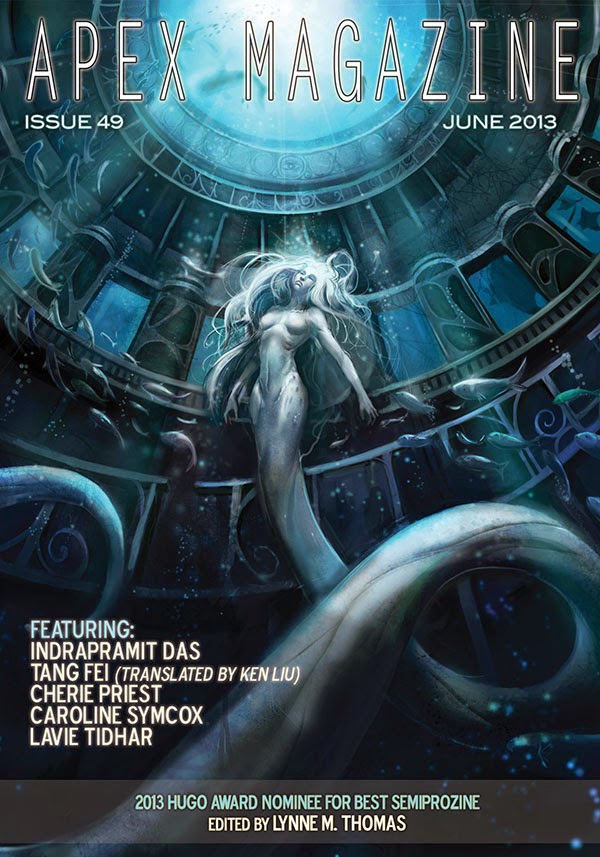 |
| Underwater by Julie Dillon, Issue 49 |
There’s just something about underwater scenes that draw me in. Maybe it’s all the blue, oh I love blue. And mermaids too. Look at the gorgeous lighting and the atmosphere it creates in this one.
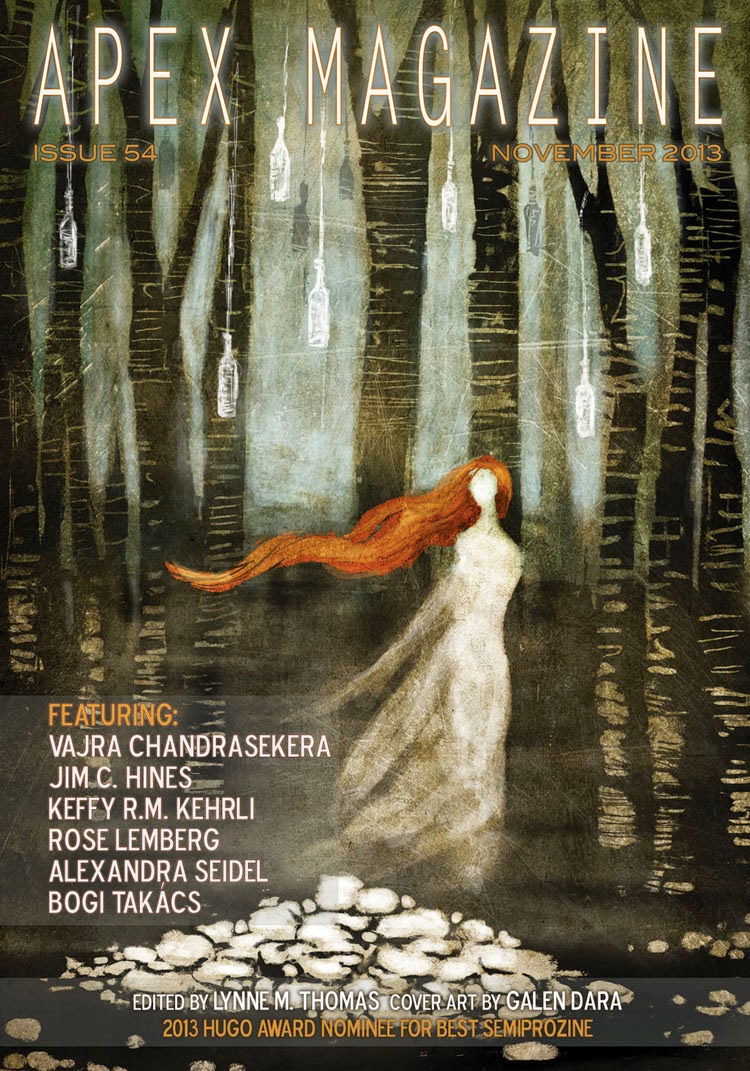 |
| Cover art by Galen Dara, Issue 54 |
From the oceans to the forest, another favorite of mine is this one from issue 54. When looking through these covers, I notice so many of these images exude this creepy yet whimsical vibe that I just love.
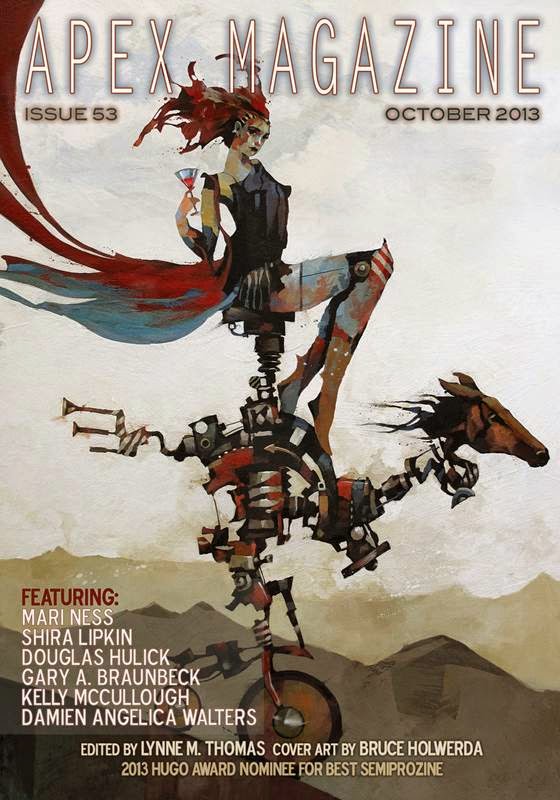 |
| Cover art by Bruce Holwerda, Issue 53 |
Speaking creepy and whimsy…I really do tend to lean towards the whackier side of things when it comes to art I enjoy. As an artist myself, my style is more realism, so I really admire those who can come up with seriously offbeat ideas.
 |
| Mistaken Identity by Ken Wong, Issue 46 |
While most of the subjects in these covers are fantastical in nature, I am amazed by the range and variety of styles and tones. I love the color contrasts in this, and the title of the artwork makes me wonder…
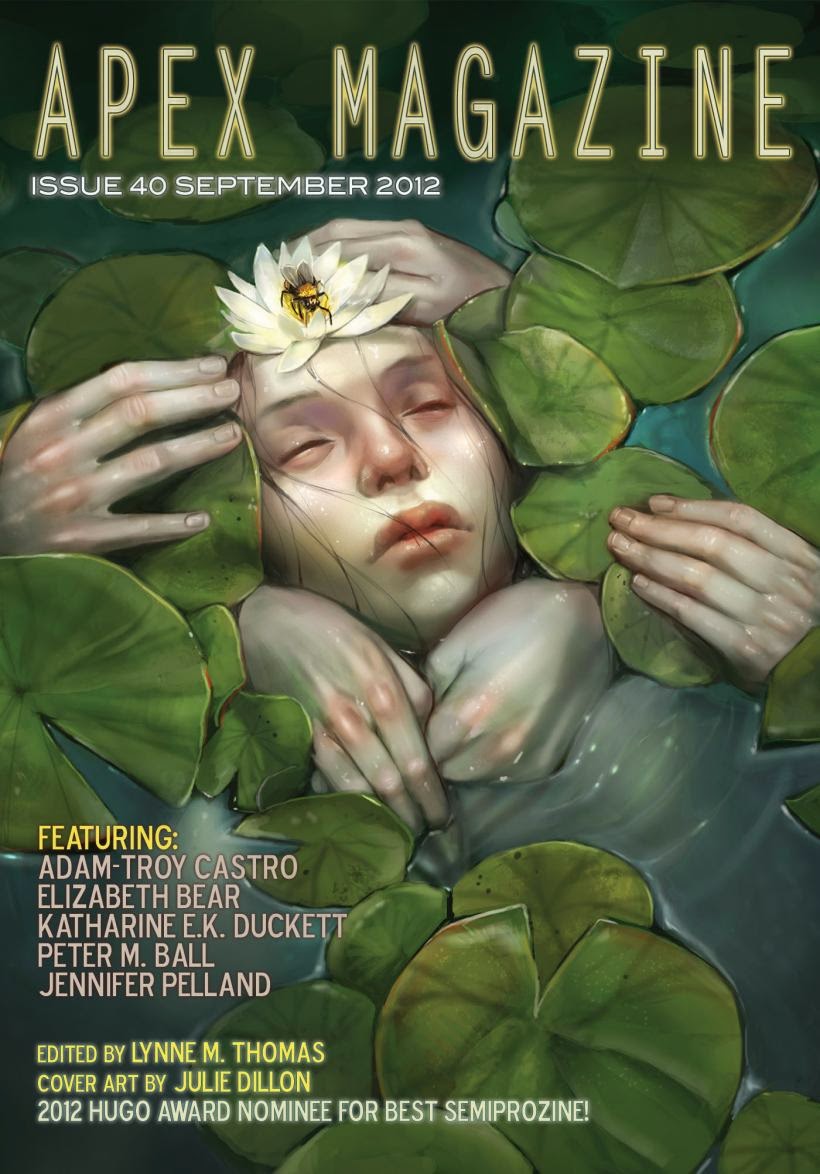 |
| Surface by Julie Dillon, Issue 40 |
And finally, I just have to share this one. I hadn’t even heard of Apex Magazine before Andrea’s Apex blog tour back in February. This image was used in a lot of the postings and so I’m afraid it will always be forever associated with the magazine in my mind. Not that it’s a bad thing at all! It’s a stunning piece, and so evocative. The covers that so often catch my attention are the ones that make me think, “Just what the hell is going on here?!” and this one definitely fits the bill. It’s also one of my absolute favorites. The artist Julie Dillon has done some amazing work for Apex, and there’s actually an interview with her in the March issue. Check it out!


 The BiblioSanctum