Mogsy’s Book Haul
Posted on April 26, 2014 Leave a Comment

Wolfhound Century – I’m actually not sure how this book has slipped my interest for so long, but it wasn’t until the recent release of the sequel that I finally started looking at the reviews and damn it just sounds so interesting. So excited that I won book one in a giveaway!
World of Trouble – The Last Policeman series is simply awesome and totally underrated. It’s about a policeman who is determined to do his job to the very last second even as a killer asteroid is hurtling towards earth threatening to destroy all life in just a few months. I received the ARC of this third and last book of the trilogy from LibraryThing’s Early Reviewers program and something tells me it’s going to be explosive.
Veil of the Deserters – earlier this month I read and enjoyed Scourge of the Betrayer and was delighted when I got offered the exciting opportunity to review an ARC of the sequel. My thanks to Night Shade Books and Jeff Salyards! I loved the first book and I’ve heard the second is even better, so I’m super psyched.
Thief’s Magic – thus far the only Trudi Canavan book that I have under my belt is the first book of her Black Magician trilogy, and I know she has at least one other trilogy and a few other works that are based in that world. At first, I thought that was the case with Thief’s Magic as well, but apparently it’s a completely new start to a new story, and so I couldn’t resist checking it out. My thanks to Orbit Books!
The Shadow Throne – last but not least, I am over the moon about this ARC of the sequel to The Thousand Names. Even though it’s not releasing for a few months yet, I couldn’t help it, I dug in right away.


Half a King – I actually got this from Netgalley last week along with what seems like half the spec fic blogosphere, but I’d prepared my last book haul post early in preparation for a weekend trip so it didn’t make it in. Something tells me it’s going to be my last eARC from NG for a while, at least until I finish reviewing some of my current requests. I just really couldn’t resist this one though.
The Remaining and Malice – this week I also have audiobooks in the digital pile. I got some Audible coupon codes a few days ago, so what did I do? Decided to put them towards a couple Orbit audiobooks, of course.
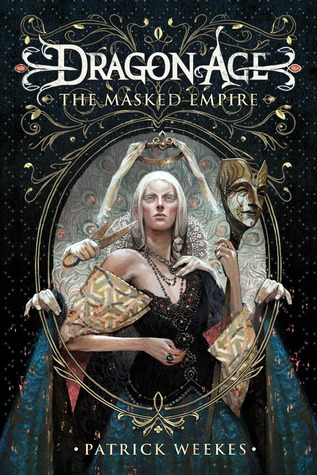
Dragon Age: The Masked Empire – so is anyone else excited about Dragon Age: Inquisition? Earlier this week the October release date was announced along with a sweet new gameplay trailer. The original plan was to read this one right before DA:I to get myself pumped up, but I’ll probably crack before then. Regardless, I probably could have waited to buy this book, but I was still soaring rather high on the news and grabbed the Kindle version to go with the others. It’s the first DA novel not written by David Gaider, but Patrick Weekes is an awesome writer too.
Comic Review Bites
Posted on April 25, 2014 Leave a Comment
 The People Inside by Ray Fawkes
This is a unique, poetic graphic novel that uses the medium in a seemingly simple way at first glance. The “story” is told through windows into the lives of several different couples of various backgrounds and arrangements as they move through the many different stages and nuances of their relationships. From first kiss, to safe words, to babies, to brutality, to divorce, happiness… the different couples go through all sorts of different moments in their lives as time goes by. The simplicity of image and form does not take away from the depth of the emotion presented and there are moments—both beautiful and painful—that any reader and sympathize or truly identify with.

 Three, Vol. 1 by Kieron Gillen
Set after Frank Miller’s 300, we are introduced to a Sparta that is not quite as pleasant and honourable as it once was. At the bottom of the scale, treated as less than slaves, are the helots. But three helots manage to escape the wrath of a legion of Spartans, after massacring the group and their esteemed leader. They are hunted for their actions, and in the course of their journey, we learn bits and pieces of actual history, as well as some of the secrets of the main characters, one of whom is more than he seems.
It is an interesting and somewhat informative story, but the amount of detail overwhelms the actual story. I never really understood why the Spartans would spend such time and resources hunting down three slaves, or why they felt the need to massacre the helots in this village in the first place. The character relationships were confusing, and it becomes unbelievable when one the slave with the warrior past takes on all those Spartans.

 Star Trek: Khan by Mike Johnson
Ever wondered how Khan Noonian Singh came to be, and, more specifically, how he came to be a white guy? Well this graphic novel sets out to answer the burning question that I actually hadn’t been asking because I was totally fine with just listening to Benedict Cumberbatch say words. Turns out he was actually a young, Indian amputee who, among others around the world, were taken from their lives of destitution and placed in a special (not)eugenics program. Singh showed particular leadership aptitude, among other traits, and eventually took over and led his people to a new world order that the 24th century came to know as the Eugenics War. There is little information available about the event, so Captain Kirk, Spock and the people at the tribunal against Khan after the events of the movie, Into Darkness are just going to have to take Khan’s word for it.
Each issue begins at the tribunal, then falls back in time as Khan unravels a rather uninspired backstory involving superhuman children growing up to literally take over the world. We know they are superior in intelligence and physicality, but what I had really wanted to know, was why Khan considered them his family and went through such pains over the 72 survivors after the Eugenics War. Toward the end of the story, we vaguely touch on this, but having him toss around the word “family” a few times doesn’t really make it so when the story doesn’t really give us moments to reveal how much he supposedly cares for them, one way or the other. At most, they are people who works with and some of them, he fights with and kills. But he otherwise does not develop strong relationships with any of them.
Finally, the revelations about Admiral Marcus’ discovery of Khan and his friends on the Botany Bay and subsequent usery of Khan’s skill is lackluster and filled with as many questionable holes as the movie itself. But, while the movie was entertaining enough for me to overlook these problems, this comic is, unfortunately, rather unfulfilling.

With thanks to NetGalley for the opportunity to read advanced copies of these graphic novels in exchange for an honest review.
Tough Traveling: Assassins, Guild of…
Posted on April 24, 2014 1 Comment

The Thursday feature “Tough Traveling” is the brainchild of Nathan of Review Barn, who has come up with the excellent idea of making a new list each week based on the most common tropes in fantasy, as seen in The Tough Guide to Fantasyland by Diana Wynn Jones. Nathan has invited anyone who is interested to come play along, so be sure to check out the first link for more information. Compulsive list-maker that I am, I’m very excited to take part!
This week’s tour topic is: Assassins, Guild of…
The second most frequent guild after the Thieves Guild. Indeed, it is possible that these are the only two, and that in Fantasyland crime is the sole organized activity. They are said to be very good at their job, which is of course killing people for money, and to proceed on all occasions with strict regard for laws and protocol.
Holy crap, this one is actually tougher than I thought. I can come up with books I’ve read about individual assassins aplenty, but a whole guild of assassins? That’s going to take some thinking to get to five (my own personal goal for these lists).
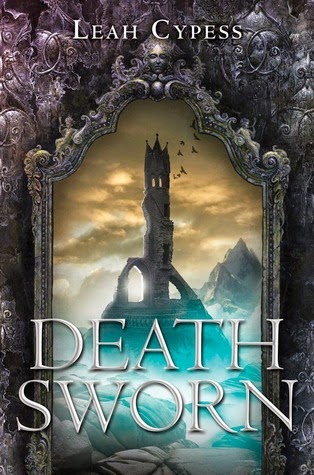 Death Sworn by Leah Cypess – I went digging into my recently read pile and this was the first example I came across. The assassins in this book are a secret guild, and they live and train in caves their whole lives. Their leader is a real nasty guy, but his men are loyal. If he orders any of them to jump to their deaths, you bet they will. Death isn’t anything to them. Assassinations are not murder, merely tools because each kill presumably serves a greater purpose.
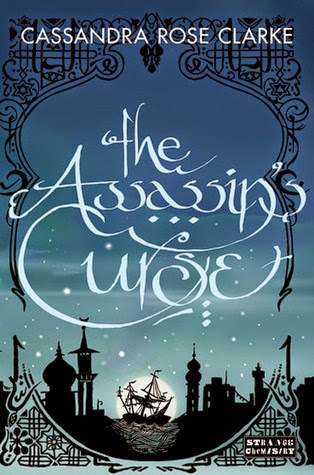
The Assassin’s Curse by Cassandra Rose Clarke – This book is about pirates and assassins (insert joke about a meme here). A young pirate abandons her parents and her ship to avoid being married off to another clan, and the jilted suitor’s family puts out a hit on her. She then winds up binding herself and the assassin Naji together by accidentally saving his life. If I remember correctly, Naji is a member of a notorious sect of assassins, so even though the story mainly focuses on him, I’m going to count it.

Blades of the Old Empire by Anna Kashina – Let’s get away from YA for a second. This book features a group called the Majat Guild. Their member ranks are named after gemstones, with Diamond denoting a warrior as the best of the best, but all of them are extremely skilled in the deadly arts. I’m actually not sure they count strictly as assassins — more like mercenaries, perhaps — but because they can be hired out to do anything from bodyguard work to killing someone, I’m going to count it. And hey, the second book is actually called “The Guild of Assassins“, so there!
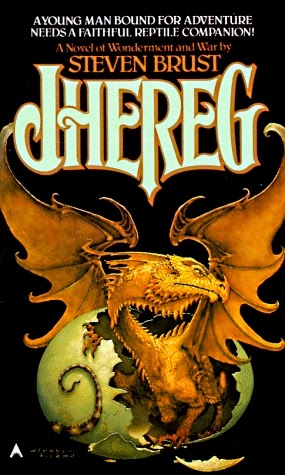 Jhereg by Steven Brust – Actually, when I read the title of this topic, my mind immediately went to these Vlad Taltos books. Vlad is a hired killer, member of House of Jhereg, a house whose membership is not based on bloodline or tribe like all the other houses. You can even buy yourself into it if you have the money. Despite being noble house, it’s known to be associated with shady characters and even shadier crimes. Think of them as the mafia of the fantasy world. Need an assassin? Look up a Jhereg boss.
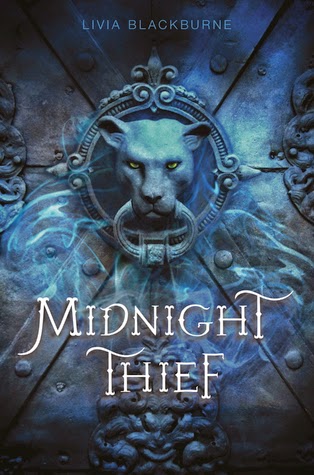
Midnight Thief by Livia Blackburne – I’m actually going to cheat a little here, since this book won’t come out until the summer and even though I have the ARC I haven’t formally read it yet. But I’ve read the prequel novella Poison Dance (which stars James, an assassin in a guild called Assassin’s Guild!) so I think I have a pretty good idea what to expect in this one too. Even though the the story will shift focus to different characters, I know the guild will appear again in Midnight Thief for sure.
Whew! And that’s five. Like I said I’m limiting myself to only books I’ve read or at least I’ve more intimate knowledge of, but I’m sure there are a lot more I’m missing or forgetting. Now I wish I’ve been more diligent with tagging my books with appropriate labels on my Goodreads shelves.
Book Review: Written in Red by Anne Bishop
Posted on April 23, 2014 10 Comments

Genre: Urban Fantasy
Series: Book 1 of The Others
Publisher: NAL (March 5, 2013)
Author Information: Website
Mogsy’s Rating: 4 of 5 stars
I’m glad I gave this book a shot. I have to admit, I’ve not had the best experience when it comes to Anne Bishop (I really wanted to like Daughter of the Blood in her Black Jewels series, but just couldn’t seem to get into it) so I initially shied away from Written in Red. However, after multiple recommendations and even an assurance or two that it is very different from Bishop’s epic fantasy, I was finally convinced to pick it up.

Waiting on Wednesday 04/23/14
Posted on April 23, 2014 Leave a Comment
“Waiting On Wednesday” is a weekly meme hosted by Breaking the Spine that lets us feature upcoming releases that we can’t wait to get our hands on!
I’ve actually been meaning to feature Firefight in a Waiting on Wednesday post for a while now, but then it wasn’t until earlier this week that the sequel to the amazing Steelheart finally got a cover reveal.
I’m also quite disappointed to see that it has apparently been pushed back to 2015, which I only just discovered as I was putting together this post! ARRGH! Oh well. That the release date is in fact farther out than I’d expected notwithstanding, it’s still my WoW because nothing can diminish my excitement, not even a longer wait. After all, even a writing machine like Brandon Sanderson needs a few extra months every now and then.
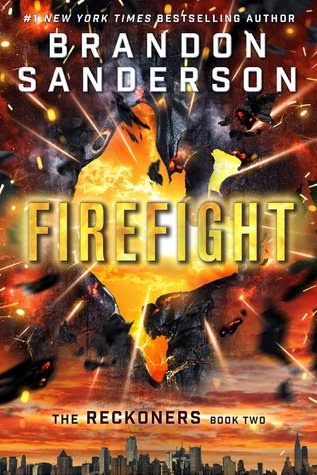 “They told David it was impossible–that even the Reckoners had never killed a High Epic. Yet, Steelheart–invincible, immortal, unconquerable–is dead. And he died by David’s hand.
Eliminating Steelheart was supposed to make life more simple. Instead, it only made David realize he has questions. Big ones. And there’s no one in Newcago who can give him the answers he needs.
Babylon Restored, the old borough of Manhattan, has possibilities, though. Ruled by the mysterious High Epic, Regalia, David is sure Babylon Restored will lead him to what he needs to find. And while entering another city oppressed by a High Epic despot is a gamble, David’s willing to risk it. Because killing Steelheart left a hole in David’s heart. A hole where his thirst for vengeance once lived. Somehow, he filled that hole with another Epic–Firefight. And he’s willing to go on a quest darker, and more dangerous even, than the fight against Steelheart to find her, and to get his answers.”
Book Review: Murder by Sarah Pinborough
Posted on April 22, 2014 1 Comment

Genre: Horror, Fantasy
Series: Book 2 of Mayhem
Publisher: Jo Fletcher (April 24, 2014)
Author Information: Website | Twitter
Mogsy’s Rating: 5 of 5 stars
One of the most common things you’ll hear about books these days is that everything seems to be a series. I know I myself have talked about series burnout on more than a few occasions and expressed a desire to see more stand-alones. However! Every once in a while the news of an unexpected sequel will make me jump up and down for joy! And this is most definitely one of those times.
Murder can be seen as the follow-up to Mayhem, the chilling paranormal horror novel by Sarah Pinborough that was published last year from Jo Fletcher Books. Sort-of-but-not-really about Jack the Ripper, the book and its clever combination of historical fact and fiction intermixed with supernatural elements quickly vaulted it onto my list of all-time favorites.
I should probably mention too that Mayhem works perfectly well as a stand-alone, but that I was also thrilled when I found out about Murder for reasons beyond the fact I am such a fan of its forerunner. Sarah Pinborough clearly had a lot more in store for Dr. Thomas Bond, the protagonist in these books. It should be noted that the real Dr. Thomas Bond was a very important figure in British crime history, best known for his work as the police surgeon on a lot of the Whitechapel murder investigations between 1887-1891. I’ve always believed that the best horror stories are rooted in reality, and being aware of the shocking turns in Bond’s career and later years also made me really excited to see what the author would do next.
Once again, Sarah Pinborough succeeds in bringing life and depth to her characters, several of whom were figures from history. A lot of the gruesome events described in this novel also actually happened, even the line in the description about bodies of children being pulled from the Thames (see the Victorian England baby farm murders). Pinborough flawlessly weaves a thread of supernatural into the story, but even then things can sometimes get too real. I think that’s why historical horrors are often so effective at terrifying me!
So now I’ll try my best to explain why I simply adored this book without giving away any spoilers for Mayhem: First, I love how these books aren’t about any one killer or murder case. Rather, all that serves as a backdrop in order to focus on something a lot more otherworldly and evil. Malevolence has settled upon London, and Dr. Thomas Bond is inextricably linked to it. Try as he might, he can’t escape the pull of the past. Because of this, Bond becomes an increasingly unreliable narrator, and having been familiar with his steadfast pragmatism up until this point, his downward spiral only makes the situation even more disconcerting. Like in Mayhem, Bond’s chapters are the only ones written in the first person, while others are in the third person. This point-of-view switching allows us to see a fuller picture, and it works even better here since our main protagonist’s credibility has been severely compromised.
Ms. Pinborough doesn’t hold anything back. Despite the kind of person Bond becomes, I felt for him; I really did. But clearly the author knows what needs to happen, and she carries out the plot with a cold eye and sees it all through mercilessly. And honestly? It made for an amazing book. There were some truly unexpected turns in the plot. At times, I couldn’t even believe it. You’ll be appalled and filled with hatred. Your heart will break. And you’ll also marvel at the amazing things the author has accomplished here with character development.
This book was just so good. Dark, disturbing, and full of tension — just the way I like my horror. It was not a fast-paced book, and yet…the story had this way of worming into my mind. This is definitely the kind of book you’ll find yourself thinking about even when you’re not reading, and hoping that it won’t be long until you can pick it up again.

Book Review: The Oversight by Charlie Fletcher
Posted on April 21, 2014 Leave a Comment
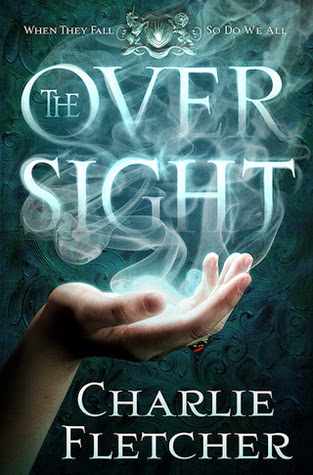 The Oversight by Charlie Fletcher
Genre: Fantasy
Series: Book 1 of The Oversight Trilogy
Publisher: Orbit (May 6, 2014)
Author Information: Website | Twitter
Mogsy’s Rating: 5 of 5 stars
I love books that keep me guessing, books like The Oversight which had me hanging on every word. It had me wondering from the start: Just who or what is The Oversight? Are they the good guys or the bad guys? Who are their enemies, and their enemies’ enemies for that matter, and why is it that every time I think I’ve got a bead on what’s happening the book decides to drop a bombshell on my head and look out, it’s a trap!? It’s all plot twists and hidden agendas galore with this one!
Accomplished children’s/YA author Charlie Fletcher takes readers on a journey steeped in magic and mystery in his first adult novel, offering a wonderful and genuinely captivating tale which historical urban fantasy fans will surely adore. Headquartered in a Neo-Gothic Victorian-like version of London, the Oversight is a secret society that has since dwindled down to a mere five members after a tragedy devastated their numbers thirty years ago. But five, being a sacred number, is enough. Five is all The Oversight needs to keep things running, guarding the borders between the magical and the mundane and protecting the unsuspecting public from the nasty things that go bump in the night.
But creatures from the Otherworld aren’t the only threats. Danger comes in the form of more earthly foes as well, from sinister factions to witch-hunters who won’t rest until they see the last remnants of the Oversight destroyed. When a young girl with special abilities shows up at the Oversight safehouse, Sara Falk wants badly to believe she has found a fellow Glint and potential new recruit in Lucy Harker. However, it soon becomes clear that Lucy’s appearance is part of a more sinister and unsettling plot to strike at the Oversight. The question is…just whose plot is it?
Stick with this book, and sooner or later you will find out. Admittedly slower to start because this is the kind of story requiring plenty of time to build itself up, the setting will nonetheless pull you in straight away with its incredible atmosphere. I reveled in this dark, magical side of London. Anything can happen, so prepare to see some truly bizarre and uncanny sights. Fletcher’s prose will put a spell on you, wickedly leading you down twists and turns with his artful storytelling. He made me think I knew what was going on, only to surprise and humble me by showing me just how little I knew. I was very impressed with the way he revealed his secrets, meticulously setting up the stages of the plot so that one revelation always led to another, and things are never as they appear.
From the city streets to the countryside with a traveling circus, this book will also take you to all sorts of places and introduce you to a host of interesting people (and creatures). Even now, I can’t decide what I liked better, the characters or the setting. The world was what originally made me fall in love with the book, but I was also taken with the group of personalities making up the Oversight. Fletcher didn’t have to resort to any overloading of background information to convey the weight of the history and connections between the five members – Sarah, Cook, Mr. Sharp, Hodge and The Smith. Strange creatures from folklore also lend their nightmarish presence to this world, but even they were hard pressed to be less creepy than some of the truly disturbing human antagonists.
I haven’t enjoyed myself this much in a long time. I was also quite satisfied with the ending, which caught me unawares considering how dire and heartbreaking some of the events were. A major conflict was resolved but the path is paved for so much more, which is the way I like my series starters. Remember: “When they fall, so do we all”, and the future looks quite desperate for our characters. Fortunately, there’s also hope for this steadfast group of friends. With such high stakes, I just can’t wait to find out what happens next.
Book Review: Words of Radiance by Brandon Sanderson
Posted on April 20, 2014 Leave a Comment
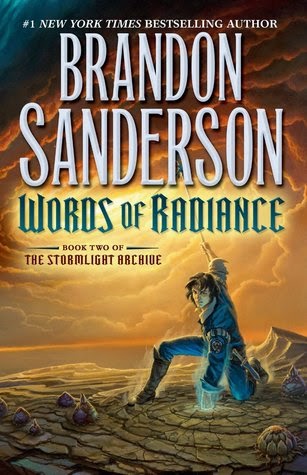
Words of Radiance by Brandon Sanderson
Genre: Epic Fantasy
Series: The Stormlight Archives #2
Publisher: Gollancz
Publication Date: March 2014
Author Info: www.brandonsanderson.com
Wendy’s rating: 4 of 5 stars
“Want what you need. Embrace it. Desire it.
And bring it to you.”
I am giving this epic fantasy a grudging four stars. I gave the previous book the same, teetering towards five stars because of the exciting finale, but this book is a much slower burn and there were many elements that I did not enjoy.
First of all, I will remind you that I am not a fan of epic fantasy for the sake of epic fantasy. This book is HUGE. The previous book was HUGE. And I expect the next books to be—wait for it—HUGE. I have no idea how Sanderson fits all of his worlds, theologies and magics in his head. Each of his realms are richly detailed and complete, to the point of perfectionism, and Sanderson works hard to deliver ALL of that information to the reader. It goes against the “show, don’t tell” writing policy, especially when pages are spent on things like how-to magic, back story, or the tiniest bug is described in detail. Once again, I mostly listened to this as an audiobook, narrated by Michael Kramer and Kate Reading, and I believe that helped me get through what may well have been too much for me to handle, what with my constant distractions of late.
Words of Radiance follows directly on the heels of The Way of Kings, with Kalladin and Bridge Four now firmly in place as the bodyguards of Dalinar Kholin and his family, including the whiny king of Alethcar. Dalinar’s former BFF continues to harry Dalinar’s efforts to unify Alethcar against the Parshendi, bringing an end to the greedy squabbles between the highprinces and ultimately ending the war that was originally intended to avenge the death of their previous king, Dalinar’s brother.
While I enjoyed some aspects of the internal politics, a lot more of it was just annoying because of how childlike it was. I certainly understand that it is intended to be so, as the nobility fight over baubles and pride, but this became most disappointing when it came to Sadeaus using such childish means to undermine Dalinar. I felt that Sadeaus’ character was done a great disservice in this book. He went from a stalwart general, fighting alongside Dalinar, and eloquently expressing his grievances when they did not see eye-to-eye, to a man who didn’t want to share. That can be an understandable transition for many reasons, but I felt that his stubborn refusal to consider Dalinar’s proposal and his juvenile attempts to discredit Dalinar were not well portrayed in a character that initially was better written and seemed above such pettiness. I suppose that is a true enough reflection of reality, but, as with many things in the book, the repetition of Sadeaus’ foils grew tedious and ultimately disappointing.
I will also add Shallan’s tongue to my collection of annoyances. She is a young woman with a sharp mind who, against protocol, tends to speak it, often in witty commentary. Only, her commentary is not particularly amusing, and as she keeps pointedly using it to spar, it just became an irritation, especially when dealing with Kalladin, who seems to have been set up as a potential second love interest for Shallan, as they bicker in true kindergarten playground fashion.
I also got tired of Shallan’s back story. I didn’t enjoy this form of interjecting pieces of the life altering moments of Kalladin’s life in The Way of Kings, and I liked Shallan’s back story even less as it dragged on and on. It is meant to give the characters depth, and help us understand why they come to certain pivotal decisions, or undertake certain actions, but I find this storytelling process tedious. More so because the climax of these past events had become glaringly obvious several hundred pages earlier.
I ought to be subtracting points for what I want to proclaim are extra pages, but damn it, I can’t. Because, while there is more than necessary and it does bog the book down, all the detail comes back around to serve a purpose. Nothing is forgotten. There are no loose threads left dangling in the storm, and no meandering subplots to be excised when the author (looking at you, GRRM) can’t figure out what to do with them. Sanderson seems to know exactly where everything is going, and has everything neatly packaged in his mind. For this reason, I am cautiously willing to forgive all of the things I complained about above, and even the introduction of a few characters over the course of the two books, who appear and seem to be of importance, but are not mentioned again for a long time, if at all. I’m sure they will return, but perhaps their introduction would have been better served later. Ultimately, I’m sure that in the next however many books the Stormlight Archives will take, Sanderson will unravel and connect everything for us.
Plus, any of the blah blah blah is balanced by these rich characters and plots. I particularly loved being able to see this war from the side of the Parshendi in this book and to better understand why they are fighting against the humans. There is still much to be revealed there, but I was pleasantly surprised to be offered the opportunity to meet the “enemy” so soon, and I loved the insight into their sing-song forms of communication (which, incidentally, reminds me of elcor—because Bioware ruins everything…).
Mogsy’s Book Haul
Posted on April 20, 2014 Leave a Comment
This is the problem with waiting every two weeks to do a Book Haul post; sometimes a lot of books come in and the shelves just explode…

Murder – I was so excited when I first found out there was going to be a follow-up to Sarah Pinborough’s Mayhem! I couldn’t wait and already read and devoured this yummy novel, so keep an eye out for the review in the coming days. My thanks to Jo Fletcher Books.
Earth Star – this is the sequel to Earth Girl, which I’ve heard such awesome things about. I’m curious about this series, since I’m always on the lookout for YA that’s a little different. Thanks Pyr Books!
Gemsigns – I’d originally feared it lost, but after spending nearly two months in transit, the physical review copy finally made it across the Atlantic and rose triumphant from the deep dark depths of customs to make it safely into my hands! Good thing too, because I’m really looking forward to it.
Return of the Discontinued Man – I hadn’t heard much about this series, but the cover on this ARC looks amazing. I learned it’s the fifth installment of the Burton & Swinburne books, so maybe I’ll check it out.
Silver Mirrors – coming out at the end of this month is the sequel to Bronze Gods which has been on my TBR forever. It’s also on my book list for this spring! So I’ll definitely be reading both soon.
The Ophelia Prophecy – this book had me at “interspecies love”. Wonderful to see a science fiction romance! My thanks to Tabitha at NotYetRead for passing along her ARC copy so I can experience the brilliance of this book for myself!
The Forbidden Library – I purchased this for myself on the release date earlier this week. One downside of having the ARC copy is that the illustrations aren’t always in them yet! With this finished copy I can finally see all the pictures in them in their full glory, and I will also be setting this one aside for my daughter to give her when she is older. I loved this book! Check out my review if you haven’t yet, as well as an interview with the author.
Lords and Ladies – I was at a book sale and saw this lovely hardcover of Terry Pratchett’s Lords and Ladies for $2! For a used copy that was originally published in the 90s, it was in surprisingly great shape. I just couldn’t resist adding it to my library, because 1) Pratchett and 2) it was such a beautiful book.
A couple weeks I also binged at BookOutlet. I know, I know, I said I was going to stay far far away from that place. But I fell off the wagon, okay? A support group doesn’t seem to help. In fact, it’s become somewhat of a tradition here at The BiblioSanctum for me and my co-blogger Wendy to blame each other whenever we forget our self-imposed bans and splurge at that evil (wonderful!) place. But anyway, here’s the books I ended up with. Hey, I’d say I showed extraordinary self-restraint.
But it’s still your fault, Wendy.

And now the digital pile…



Midnight Thief – from Netgalley, I’ve been waiting for this one a long time. I received the prequel novella Poison Dance from the author last year and it made me very excited for Midnight Thief!
Night Terrors – another Netgalley ARC, I’ve never actually read anything from Tim Waggoner but I’ve heard he’s quite good. And look at that creeptastic cover! Hope no one here is afraid of clowns…
Assault or Attrition – Blake Northcott does it again! The Kickstarter-backed Arena Mode was so successful that she crowdfunded the sequel as well and it also reached its goal lightning quick. The e-versions were ready first and I was sent them recently.
Black Dog – for a while now, I’ve been waffling on whether or not I should get this book. But then I saw it as a US Kindle teen daily deal earlier this week and that made the decision for me! I love seeing Angry Robot/Strange Chemistry titles as daily deals, let’s hope they keep coming.
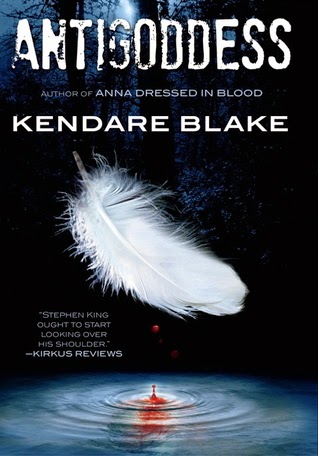
YA Weekend: Antigoddess by Kendare Blake
Posted on April 19, 2014 Leave a Comment


 The BiblioSanctum