Discussion with Sarah Lotz: Why Flying Scares Us (And How Writing About It Doesn’t Help)
Posted on May 5, 2014 1 Comment
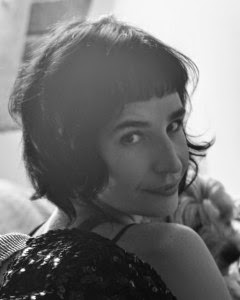
I’ve got something different and amazing here on the blog today! In case you missed it, last week I reviewed the excellent, bone-chillingly terrifying The Three by Sarah Lotz. Seriously, it’s a fantastic book and horror-thriller fans should definitely check it out.
Even more exciting though, is I had the pleasure of getting to chat with the author herself, and she turned out to be the most awesome and fun person to talk to. What initially began as a pitch for a guest post instead turned into an entire discussion when we discovered we were both fellow pteromerhanophobia sufferers. Eh? you must be asking. Well, read on to find out, and to learn more about The Three…
Mogsy: Sarah, in my review of The Three I talk a lot about how what I fear often goes hand in hand with what also fascinates me, and I know that was what first drew me to your book. For years, I have struggled with a fear of flying. I can get on a plane these days, but not without a TON of anxiety! It’s a little paradoxical, but I think what made reading your book such a deliciously frightening experience. Imagine my surprise when I discovered that you too are flight-phobic! I really couldn’t believe it. Seriously, with your fear of flying, what made you write a book involving plane crashes and how on earth did you manage it?!
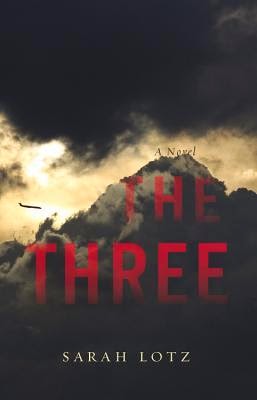 |
| US Cover |
Sarah Lotz: I’m the same as you! I can get on a plane without hyperventilating, so I’m not strictly phobic about flying, but I’ve never yet managed to clip myself into my airline seat without having a panic attack. I’m a bit of a masochist, so I tend to write about what scares me (it’s why I write a lot about malls in my other books – I’m terrified of mannequins, I know, I’m hopeless!).
Also, I thought that writing about and researching air accidents might help me make sense of what is essentially an irrational fear. Turns out this is one instance where too much information about a subject is a bad thing. Sure, talking to pilots was reassuring – without exception they were all the kind of cool-headed men and women I would happily follow in any apocalypse-style situation. But reading the transcripts of the last moments of actual crashes was anything but. They are not just terrifying, they are deeply upsetting (and I urge you never to do this). For example, knowing that the passengers on Japan Airlines Flight 123 – the most devastating single crash in history – knew their fate, that they had enough time to write messages to their loved ones as the plane lost control, was emotionally scarring.
And here’s one back at you: What is it about flying that scares you?
Mogsy: Oh boy. Well, mainly the thought of being trapped in what is essentially a tin can tens of thousands of feet in the air FREAKS ME THE HELL OUT. I know flying is safe, safer than driving, and that you’re more likely to get in a car accident than a plane crash. But as you’ve already alluded to, all the information and the stats in the world don’t help much when it comes to an irrational fear, do they? I just don’t like dwelling on the incredibly slim chances of survival even in the extremely rare case of being in a catastrophic incident, like the ones in your book. And I think that’s what induces most of my panic.
And you? What is it about air travel that makes you scared? And did you have to do anything to mentally prepare yourself when writing some of the scenes in this book, knowing you were about to tackle a subject that terrifies you?
Sarah Lotz: I’ve spent a lot of time trying to get to the root of the fear, and I suspect it’s because I’m not smart enough to figure out how planes manage to stay in the air. I know the physics, I’ve studied the science, yet when I fly, I still have that inner Charles Grodin voice yelling, ‘These things go down – it’s too big!’ I also secretly believe that if there aren’t enough people on board who believe it will stay in the air, it won’t (!) I’ve also watched far too many Air Crash Investigation episodes on Discovery to fully believe that there isn’t a lonely piece of tape stuck on a duct somewhere that’s just waiting to cause a major incident. It’s pathetic really!
The novel opens with a crash scene, focalised closely through the eyes of a woman travelling to visit her daughter in Osaka. I wrote it in one breathless go – and I had such terrible nightmares afterwards that I couldn’t sleep without using sleep-aids for more than two weeks. I’ve always used writing as catharsis – for example, if someone pisses me off I’ll happily write them into a story or a novel where they’ll come to a sticky end – but writing down one of my deepest fears backfired in this case.
You mentioned that there’s something deliciously frightening about reading in fiction what terrifies you in real life – in this case, air travel – is it because it’s a ‘safe’ way of experiencing it? And does this help, or make it worse?
Mogsy: You are a braver person than I am! I can’t watch those documentary shows, no way. Now fiction, though, I can do. Since we’re confessing our fears, I have another one — being lost in space. The thought of it makes me want to curl up into a ball and cry. But at the same time, I love watching movies like Gravity and reading space disaster sci-fi. Yes, I guess its helps because it’s a safe way of experiencing it; I get that adrenaline rush but from the safe comfort of my own living room. It’s that whole fascination and fear thing again, a part of me tends to gravitate towards stories about topics that frighten me and it’s definitely what initially drew me to the description of The Three.
Which makes me wonder, you’ve mentioned writing about your other fears and scary topics in the past and that has been cathartic. Why do you think it backfired so astonishingly in this case specifically? Do you think it’s because flying is such a “reality” and a necessity in today’s world (as opposed to being lost in space — like when am I going to be blasted off in a rocket anytime soon?)
Sarah Lotz: Oh gosh yes – lost in space! I can understand that. Add spiders to the mix and that would also be my worst nightmare.
I can’t quite pin down why researching and writing the book didn’t ease the fear, but I suspect it might have something to do with my personality type (coupled with an over-active imagination!). I know intellectually that the chances of anything happening while flying are infinitesimal, but once I’m sitting in that seat and the plane is barreling down the runway, I’m painfully aware that the whole thing is out of my control. I can’t see what the pilots are doing; I have no way of knowing if the maintenance crew were up to scratch that day. When I’m driving, I have at least some element of control (as long as I drive defensively); if I’m on the bus or in a taxi, I can gauge if the driver knows what she’s doing. I know this sounds more than a little crazy! But I do wonder: Could it be that we’re afraid of flying because we’re control freaks? 😉
Have you ever tried any form of therapy to cure your pteromerhanophobia? (I love this word!)
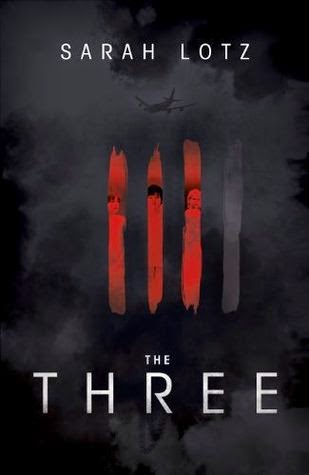 |
| UK Cover |
Mogsy: Oh, so that’s the name for fear of flying! You’d think I would have heard that term before now, but it’s actually the first time. To answer your question, does self-medicating and booze count as a form of therapy? In all seriousness, I haven’t sought much help beyond support from the people around me, because deep down I know it’s an irrational fear and therefore I’m aware I can’t attack it with logic. If you have any tips you’ve found that helps, I’d love to hear some!
And I think you may have hit on something. I definitely fall more into the type-A personality spectrum and I hate the feeling of helplessness and not knowing. It’s always such a relief for me to find someone else who understands my pteromerhanophobia (now that I know the word, I have just GOT to use it at least once) and it’s even better knowing I’m not the only one fascinated by the fear.
So final question for you then, Sarah: do you think you achieved your goal with The Three? I mean, after this discussion and knowing how you’ve just absolutely terrified me (and I daresay some readers who aren’t afraid of flying before will be after reading the book), what are your thoughts? Was this what you’d aimed for and expected? 🙂
Sarah Lotz: It’s been great to connect with a fellow aerophobia sufferer (another term for it – there are loads!). While I’m delighted the novel has elicited a strong reaction in some people, I’m not sure that I set out with the specific goal of terrifying readers – especially people who are flight phobic (that would be a bit cruel, I think!) I always start with the intention of writing the best novel I can, and to make it as entertaining and thought-provoking as possible. The crux of the book, to look at how a devastating event can impact society and change it, was a rocky road to navigate. I wanted to see if I could write in a multitude of voices and write across cultures, while keeping readers interested and wanting to know what happens next. This was a risk – some of the subject-matter veers into the contentious – and the reaction to the book so far has been mixed (which is how it should be!), but I can’t see the point in playing it safe.
But all that said, whatever happens, writing and publishing the novel has brought me into contact with some wonderful readers, reviewers and authors. Thanks a million for inviting me on your blog, Mogsy – I loved chatting to you.
Audiobook Review: The Ghost Bride by Yangtze Choo
Posted on May 4, 2014 Leave a Comment

The Ghost Bride by Yangsze Choo
Genre: Fantasy, Paranormal, Romance
Publisher: William Morrow
Publication Date: August 2013
Author Info: www.yschoo.com
Wendy’s Rating: 4 of 5 stars
Small pox has left Li Lan’s father lost in an almost constant cloud of opium escape after his wife’s death. They are bankrupt and Li Lan has few options for her future, until her father receives a proposal from the wealthy Lim family, asking for Li Lan’s hand in marriage. The catch? Her betrothed is dead.
Thus we are introduced to the old Chinese custom of ghost brides, which promises a woman comfort for the rest of her life, but what kind of life can she have as a widow before she is even married? To complicate matters, her betrothed is an unpleasant man, and his cousin, Tian Bai, is much more to Li Lan’s liking.
This is a love story that initially seems like it will walk a certain, obvious path, but when Li Lan ends up in the after life herself (though not dead), things take some interesting twists and turns as Li Lan tries to escape the Lim family and learns more about her own.
I loved the exploration of Chinese customs regarding death and the afterlife, from burnt offerings, to politics. Choo weaves a beautiful tapestry of myth and custom within Li Lan’s personal adventure.
Li Lan is an interesting character. She is not particularly strong and resourceful and she must often rely on others for help because she considers herself to be “just a girl.” As much as I am all for grrl power, I appreciated Li Lan’s place within her world and liked where she ended up. It was not the perfect happy ending expected, and considering the circumstances, it was a surprisingly realistic one.
I have wanted to read this book since it popped up on the 2013 Goodreads Readers Choice list, but when I saw that the audiobook was narrated by the author herself, I eagerly snapped it up. As much as I adore many narrators, I enjoy listening to authors read their own work because then you know you are getting to hear their story and characters exactly as they sound in their heads. I loved the little sighs and chuckles, the cadences and pauses — all the things that became unique to each character. It made everyone feel that much more real.

YA Weekend: Death Sworn by Leah Cypess
Posted on May 3, 2014 Leave a Comment
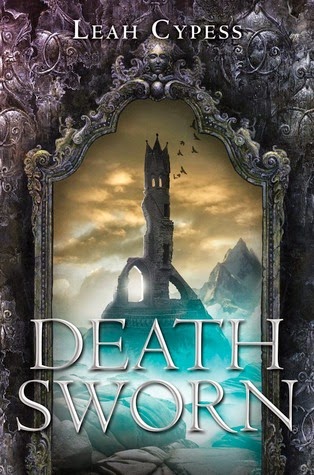
Genre: Young Adult, Fantasy
Series: Book 1 of Death Sworn
Publisher: Greenwillow (March 4, 2014)
Author Information: Website | Twitter
Mogsy’s Rating: 3 of 5 stars
After reading this book, I just had to look inside myself and wonder if I’m suffering from YA burnout. But now I’ve gone and painted a negative mood over this review, and that wasn’t really my intention at all! Death Sworn was in fact a pretty good book. I just don’t doubt for a second that I would have enjoyed it even more if I hadn’t already gone through so many young adult novels that displayed similar themes since the beginning of this year.

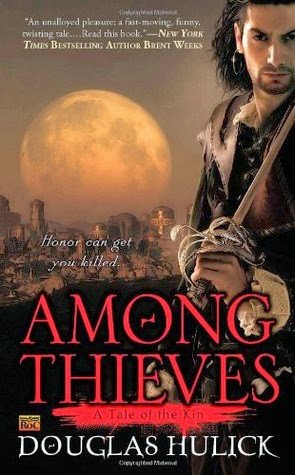
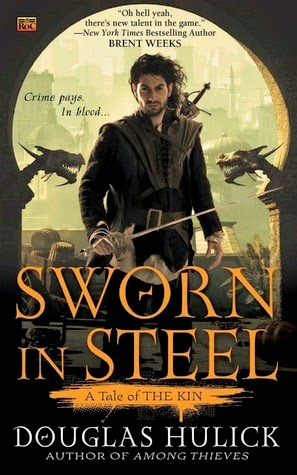
Tour Review: Sworn in Steel by Douglas Hulick
Posted on May 2, 2014 Leave a Comment
 Sworn in Steel by Douglas Hulick
Genre: Fantasy
Series: Book 2 of Tales of the Kin
Publisher: Roc (May 6, 2014)
Author Information: Website | Twitter
Mogsy’s Rating: 4.5 of 5 stars
At last, Sworn in Steel is in my hands and the days of wondering when this book will be released have finally come to an end. And it was absolutely worth the wait! Three years ago, at a time when I was just starting to get back into the Fantasy genre, I decided to pick up a debut novel from a fresh new talent and really enjoyed his fun little yarn about a gang of thieves and scoundrels. With this book Douglas Hulick shows he has come a long way since Among Thieves, with a sequel that is even bigger, better and packed with more fun than the original.
How is that possible, you ask? I mean, in the first novel, the main character Drothe managed to kill a legend, rise to the top of the underworld to become the newest Gray Prince, and burned down a good portion of the imperial capital while he was at it. How on earth do you top that?
Well, if you’ve met Drothe, then you would know he’s always up for a challenge. Even if it’s just to outdo himself. “In way over your head” isn’t even in his vocabulary; I seriously love this guy. Three months into his tenure of criminal overlord with barely a following to his name, Drothe is already the target of the other Gray Princes and has been framed for the murder of one of them. Someone obviously wants his attention. So Drothe finds himself traveling to the faraway land of Djan, where Imperials like him are less than welcome, all to find an old friend and seek redemption for the oaths he has broken. And who says thieves have no honor?
Drothe ends up doing quite a number on the Despotate of Djan. But Djan ends up doing quite a number on Drothe too. I’ve said this before with Among Thieves but I think it deserves saying again with Sworn in Steel: Douglas Hulick takes the idea of “something interesting must happen in every chapter” and takes that to the max. Drothe’s life is a hectic roller coaster ride that simply does not stop, and the safety restraints are for suckers. Perhaps because of this, these novels put me in mind of the urban fantasy tone and writing style, despite their traditional high fantasy setting. If Drothe and Harry Dresden have one thing in common it’s that neither of them gets anywhere near enough sleep.
Again, there will be twists and surprises aplenty, but I find the storytelling is a lot more refined and streamlined in Sworn in Steel. There was one ambitious plot twist in the first book that didn’t particularly work for me (though, it was one of those classic “Oh Drothe you sneaky, glorious bastard you” moments) but there was none of that awkwardness here. All the different pieces of the plot came together beautifully, and I’m treated to a new world with new characters and new agendas, all of which made the mystery and intrigue in this book so delightfully compelling. I loved being introduced to the culture, peoples, and magic of Djan, and seeing Drothe out of his comfort zone and frantically coming up with his crazy schemes to regain the upper hand was just the cherry on top. There’s also an assassin character making their first appearance in this that I would be very excited to see again! All in all, the book has done a stellar job expanding the world and the characters we know in the Tales of the Kin. Like I said: bigger and better.
Ask yourself, do you enjoy your fantasy with some kick? Do you like rich, twisty plots that always keep you guessing? Do you feel you need more scoundrels in your life? If you answer yes to these then you should definitely check out these books.

* * *
Tough Traveling: City of Wizards
Posted on May 1, 2014 Leave a Comment

The Thursday feature “Tough Traveling” is the brainchild of Nathan of Review Barn, who has come up with the excellent idea of making a new list each week based on the most common tropes in fantasy, as seen in The Tough Guide to Fantasyland by Diana Wynn Jones. Nathan has invited anyone who is interested to come play along, so be sure to check out the first link for more information. Compulsive list-maker that I am, I’m very excited to take part!
This week’s tour topic is: City of Wizards
Something tells me this should be one of the easier themes for this feature, but I still had a tough time of it, especially coming up with only books I have read. After combing my shelves, here are my five I came up with:
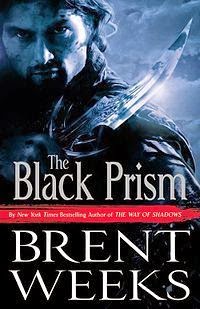 The Black Prism by Brent Weeks – The Chromeria
Based on chromaturgy, the magic system in this series is one of the more interesting and unique ones I’ve come across in fantasy. In this world, the “wizards” or magic users can draft a substance called luxin which takes on different physical properties depending on their color in the light spectrum. The heart of the government is located at the Chromeria, also the seat of education and regulation for all color magic.
When the character Kip first visits the Chromeria in order to be trained as a drafter, he is amazed with the huge, impressive colorful structures made of luxin. I’ll be honest — to me this city was a bit hard to visualize. I kept thinking of those multicolored plastic hamsters cages, you know the ones with all those tubes you can add to it to make it a nice rodent funhouse? Yeah, I pictured a whole city like that.
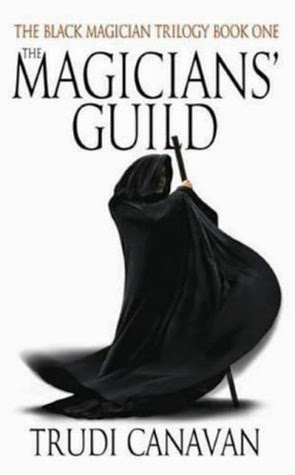 The Magician’s Guild by Trudi Canavan – Imardin
Imardin is the capital of Kyralia, home of the Magician’s Guild, and as such that is where all magicians go to learn magic and also where most Kyralian magicians live. According to the wiki, because Kyralian blood is so high with magical potency compared to other countries, Kyralia also has a tendency to produce more magicians! Oh how I love learning interesting new things about my books. This Tough Traveling feature rocks.
They’re real asshats in Imardin, though. Each winter, the capital gives the boot to all its “undesirables” like the poor and the homeless. In an attempt to protest this Purge, a young vagrant named Sonea somehow manages to pierce the magician’s shield and bean one of them on the head, kicking off the chaotic events of this novel.
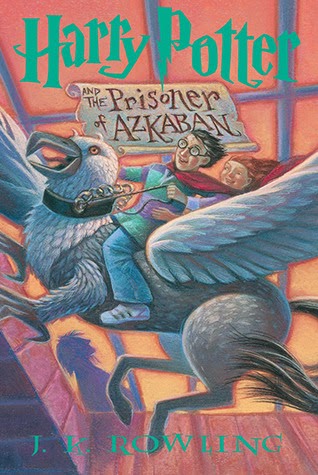
Harry Potter and the Prisoner of Azkaban by J.K. Rowling – Hogsmeade
Okay, I realize calling the quaint little village of Hogsmeade a “city” is a bit of a stretch. I know that. But I just can’t not include this one, if you think about it. I mean, considering how places like Diagon Alley or Godric’s Hollow that are really just pockets of the magical community hidden inside established Muggle settlements, Hogsmeade’s pretty much the only place they have to themselves and all to themselves. The only all-wizarding community in Britain!
While Hogsmeade was actually first mentioned in the first book, it doesn’t have its first appearance until this one.
 Elantris by Brandon Sanderson – Elantris
Elantris, capital of Arelon, was once known as the “City of the Gods”, where anyone who was “chosen” went to live. Ordinary people touched and transformed by the power of the Shaod go through physical and mental changes that give them special abilities. The city was literally radiant, a place of power where the Elantrians used their magical abilities for the benefit of all.
Lovely place, really, until all of a sudden the magic failed and everyone there lost their powers, leaving Elantris a contaminated prison city. The magic users became powerless, wretched creatures, and the city itself crumbled into oblivion.

Jaina Proudmoore: Tides of War by Christie Golden – Dalaran
I’m totally cheesing it a bit here by including this one, but what can I say, I’m a gamer at heart. When I heard that “City of Wizards” was this week’s theme, my mind immediately went to World of Waracraft’s renowned city of mages: Dalaran.
Dalaran is a “magocratic” city-state with a turbulent history. Destroyed in the Third War, the mages of the city refused to abandon their home and instead erected a huge glowing force field-like dome around the ruins in order to rebuild. After that, they moved the whole damn city by floating it to another continent by magical means. Now that’s dedication! Dalaran plays a pretty big role in this novel, which is why I chose it.
Book Review: Heaven’s Queen by Rachel Bach
Posted on April 30, 2014 Leave a Comment

Genre: Science Fiction
Series: Book 3 of Paradox
Publisher: Orbit (April 22, 2014)
Author Information: Website | Twitter
Mogsy’s Rating: 4 of 5 stars
Finding a series where the momentum of the first book carries through to next and beyond is pretty special, and when you find one, you know it’s a keeper. The tone of Heaven’s Queen is in keeping with the fast-paced, and action-filled rollicking good fun of the previous two books in the trilogy, and ends things in an explosively spectacular manner. You really don’t want to mess with protagonist Deviana “Devi” Morris; that’s just like an invitation for bodily harm and extensive property damage.
Hot-headed and not one to hide the fact, Devi is an even bigger force to be reckoned with when she’s angry — especially with a deadly alien virus in her system. Through no fault of her own, she has gotten herself tangled up in multiple government conspiracies, had her private memories screwed with, and on top of that she’s on the run with what feels like practically everyone in the universe on her heels. In other words, just another average day in the life of our main character. Thing is, stubborn and reckless as she may be, Devi just wants to do the right thing. And that’s just a little tough to do when everyone is standing in the way and you have no idea who to trust.
But actually, there is one person Devi can count on, and that is Rupert Charkov, the man she once thought of as only the Glorious Fool’s cook, but now knows is a lot more than he appears. Those who have been interested in following the progression of the Devi-Rupert relationship (and I include myself in this group) will be happy to see their romance resolved in here, after a fashion. In any case, there’s no more ambiguity when it comes to where they stand, not like there was in the last book. In fact, I would say this one lays on the romance more thickly than either of the two novels that came before. That in itself isn’t a surprise; the romantic side-plot has been growing steadily in importance over the course of the series, so it’s only natural to see it come to fruition. What I hadn’t expected to see though was so much romantic drama in the first half of the novel.
That’s not necessarily a bad thing. If there’s one thing to take away from these books it is that Rachel Bach/Rachel Aaron never does things by halves. That’s the beauty of the trilogy. Everything about it is larger than life, from the in-your-face main character and her sexy and suave love interest to the amazing planets and exotic aliens, the twisty plot and the danger and thrills. It’s pure candy for the mind, and perhaps it’s fitting for the romance to be a little over-the-top as well, though definitely not overbearing.
A positive side effect of this is that Devi’s feelings for Rupert has added a layer of complexity to her character (it wouldn’t be love if it didn’t at least alter her perspective of herself of the world a little bit!) and to me that makes her more than just a trigger-happy merc. There are many ways for a woman to be strong and Devi prides herself on her independence, physical strength and military expertise, and while she is aware of her own faults she is also not ashamed of them. It’s true she’s not always agreeable or makes the best choices, but that’s Devi for you. She knows what she wants and won’t let anyone get in the way…not even herself. I love the fact that the foundation of who she doesn’t actually change all that much throughout the course of the story, and instead she adapts to changes in order to make the best out of a situation.
But what I guess readers really want to know is if this was a satisfying conclusion to the trilogy, and I would say absolutely. If you’ve enjoyed the spirit and high-energy pacing of the previous books, you’ll likely enjoy Heaven’s Queen as well. The author pulls out all the stops for this one, with action scenes worthy of a summer Hollywood blockbuster as the line between friend and foe continues to be blurred and the last few chapters of this book are absolutely insane.
Not only are these books entertaining, they’re also super accessible and you definitely do not need to be a card-carrying reader of the sci-fi genre to appreciate the story. If you’re looking for an invigorating and adventurous read with plenty of excitement and some humor thrown in, I highly recommend these Paradox books. Checkmate! Don’t ask me why I said that, it just seemed appropriate.

Waiting on Wednesday 04/30/14
Posted on April 30, 2014 Leave a Comment
“Waiting On Wednesday” is a weekly meme hosted by Breaking the Spine that lets us feature upcoming releases that we can’t wait to get our hands on!

But a new predator is on the prowl, and this one thrives on nightmares. Daisy is on her trail and working intimately with her partner and sometime lover from the Pemkowet PD, sexy yet unavailable werewolf Cody Fairfax. But even as the creature is racking up innocent victims, a greater danger looms on Pewkowet’s horizon.
As a result of a recent ghost uprising, an unknown adversary—represented by a hell-spawn lawyer with fiery powers of persuasion—has instigated a lawsuit against the town. If Pemkowet loses, Hel’s sovereignty will be jeopardized, and the fate of the eldritch community will be at stake. The only one who can prevent it is Daisy—but she’s going to have to confront her own worst nightmare to do it.”
Book Review: The Three by Sarah Lotz
Posted on April 29, 2014 2 Comments

Genre: Horror
Series: Stand Alone
Publisher: Little, Brown and Company (May 20, 2014)
Author Information: Website | Twitter
Mogsy’s Rating: 5 of 5 stars
Why do people read Horror? I’m sure there are many reasons, but I’ll tell you why I do. Few other genres give me that adrenaline rush. I love that growing sensation of dread as the suspense builds, the sound in my ears of my heart pounding faster and faster, that tingling feeling that runs up my arms and spine. I enjoy that in a good horror/thriller novel, and sometimes I go deliberately looking for a good scare.
That’s what initially drew me to The Three. To understand why, you also have to know that for years now, I have been struggling with a fear of flying. I can get on a plane, but not without experiencing a lot of anxiety. Hearing or seeing news about plane crashes fills me with crippling panic and visceral terror.
And well, you know what they say about fear and fascination going hand in hand? Yeah. When I saw the description for this book, I just knew I HAD to read it.
The Three is about four plane crashes that changed the world. They all happened within hours, on the same day, on four different continents. Terrorism and environmental factors are ruled out. In three out of the four catastrophic incidents, a single child survivor is found in amidst the wreckage. Reeling from the news of the disasters, the world struggles to come to terms with this. It shouldn’t be possible. No one could have survived those terrible crashes. People are calling “The Three” a miracle, while others are also coming up with all kinds of conspiracy theories. Some fanatical rapture cults are even calling this the End of Days, claiming that the children represent three out of the four horsemen of the apocalypse. Reports of the children’s behavior becoming increasingly disturbing aren’t helping matters, nor are the rumors of strange things happening around them.
Ah, so it’s not just about plane crashes either. There’s also creepy children! It’s like this book was specially designed to push all my right buttons! And I know what you’re thinking now, because I also thought the same thing: “Three children? Wait, what about the fourth plane crash?” Just one of the many questions running through my head when I read the book’s description, giving me the heebie jeebies as I played at speculation. It is why I like the UK cover a lot too, once I got a closer look at it.
In addition to being an epistolary novel, The Three is also a book within a book, called “From Crash to Conspiracy” authored by the fictional investigative journalist Elspeth Martins. As its title indicates, Elspeth’s book documents the series of tumultuous events over the period of several months following the day of the four air disasters. Told through a collection of interview narratives, book and website excerpts, news articles, voice transcripts, emails, chat history, other forms of correspondence, etc. the book is a disturbing look how quickly fear and panic can make a society spiral out of control. The format proved remarkably ideal for this novel, considering the number of character perspectives involved on an international scale. Stylistically, Sarah Lotz’s decision to tell the story this way also adds an additional layer to the creep factor, due to the implication that some of her narrators are unreliable, including the “author” (Elspeth) herself, whose professionalism is questioned in places where she is accused of cherry picking quotes or misrepresenting a viewpoint in favor of her own biases or for the purpose of creating sensationalism.
That said, I normally chafe at ambiguity in my stories. But somehow, The Three makes it work. The way the book is structured, we catch glimpses of the lives of the three children through the eyes of their respective guardians – all of whom have lost someone in one of the plane crashes. There will be mystery and some uncertainty. Did the strange things they report really happen, or are they nothing more than a symptom of shock, guilt and grief? The multiple and varied narratives will keep you guessing and make you desperate to read on for answers, even if the developments are downright spine-chilling. The character Paul Craddock’s (the uncle of one of The Three) first “dictophone chapter” shook me up so badly I almost couldn’t bring myself to go to the bathroom in the middle of the night because it meant having to walk through the house in the dark. Curse this novel for being so engrossing that it made me stay up until 3am reading!
If it had been my goal to find a novel that truly scares me, clearly it appears I might have been a little too successful. Granted, I was probably more affected because I am a flight-phobic person; if there is a downside to reading this one as someone scared of flying, it’s that this book will feed your fears. But the upside? THIS BOOK WILL FEED YOUR FEARS. Classic horror paradox; sometimes it’s fun to be scared. I can’t think of the last time I came across a horror novel that unnerved me so deeply. Without a doubt, The Three is one of my top reads this year and deserves to be a huge success.

Book Review: Dämoren by Seth Skorkowsky
Posted on April 28, 2014 4 Comments
Genre: Urban Fantasy, Horror
Series: Book 1 of Valducan
Publisher: Ragnarok Publications (April 14, 2014)
Author Information: Website | Twitter
Mogsy’s Rating: 4 of 5 stars
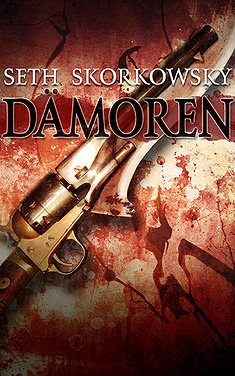
To tell the truth, Dämoren didn’t start off high on my priority list of books to read when I received it for review, though it did hook my attention when I was told there would be wendigos (seriously, more books need wendigos). The cover, while very pretty, also did nothing to draw me in, showing a partial image of a bladed revolver. Hey, gunblades are neat and all — but that also tells me very little.
Then a couple weeks ago, while trying to choose my next read, I was struck by a sudden surge of spontaneity and decided to pick up Dämoren and give the first few pages a shot. An hour later, I realized with a jolt that I was still reading, and that I was already almost a third of the way in. The weird thing about that hour, is that it honestly felt like a mere few minutes. Dämoren simply took me by surprise. I’ve read my fair share of stories about demon slayers and monster hunters, so admittedly I wasn’t expecting this first book of Seth Skorkowsky’s new urban fantasy/horror series to be that much different.
Once again, I am sorry to have underestimated the dark fiction of Ragnarok Pub. Rest assured Dämoren will satisfy all your needs in the action and thrills department, but what I was most impressed with was the world building and unique body of lore Skorkowsky has created, which offered a fresh new take on the angel/demon mythos.
Central to the novel is the concept of holy weapons. In the world of Dämoren, these weapons are sentient entities that if you’re not careful you may actually grow to care for them and even start thinking of them as characters themselves! Somehow the author has managed to imbue unmoving, unspeaking objects with personalities of their own. For when these holy weapons form a bond with a wielder, he or she becomes irrevocably aware that their weapons are alive and that they speak to their souls. No one knows how a holy weapon comes to be, but they are the only way to kill a demon. And the love a wielder feels for their weapon can be even more powerful than any attachment to another human being.
It is so with Matt Hollis, the main protagonist and owner of Dämoren, the name of his holy sword pistol. As a child, Matt was the only survivor of a wendigo attack on his family, making it out alive thanks to a man named Clay Mercer who killed the monsters and rescued the young boy. The former wielder of Dämoren, Clay had resigned from a secret order of demon hunters called the Valducan, and left his holy weapon to Matt after he died. But many years later, the Valducan leadership has taken an interest in Matt’s activities and asked him and Dämoren to rejoin their ranks, due to a sudden influx of coordinated monster attacks and attempts to destroy holy weapons. Unfortunately, this was not a decision welcomed by all, as some of the Valducan see Matt as corrupted. For while Matt had survived his childhood wendigo attack, he was also bitten by one of the creatures.
So, get this: In the world of this novel, all monsters – everything from werewolves to vampires, ghouls to lamia – are all essentially humans, but possessed by the souls of the different kinds of demons inhabiting them, giving rise to their physical and characteristic traits. A bite is how a demon “marks” a person, making them an available vessel to possess if or when their old body perishes. Now you can see why the other Valducans might be giving Matt the shifty eyes.
The book is just filled to the brim with cool ideas like these, not to mention the fact Matt’s special condition gives him some rather handy powers (blood compasses! Can you say awesome?) or the sheer variety of terrifying monsters, both new and familiar, that you’ll come face to face with within these pages. There’s certainly no shortage of action. I also classified this book as an urban fantasy, but in reality the plot will take you to many places across the globe, from the wilds of western Canada to the outskirt villages of Florence. So not only does it take place in variety of environments, Dämoren is a truly international adventure.
Although it will read perfectly fine as a self-contained novel, I was also happy to see that it is a “book one” implying that there will be more in the future. When the Valducan Order expands, one thing I’d love to see is more kickass female knights like Luiza. As one of the only two major female characters, I wasn’t surprised that the role of “love interest” fell to her as well, but more to the point, I think the special relationship between a holy weapon and its owner is one of the most intriguing aspects of Dämoren and I would love to see this uncanny bond further explored with an even greater diversity of characters. Really looking forward to see what else Seth Skorkowsky has in store for us.
YA Weekend: Second Star by Alyssa B. Sheinmel
Posted on April 27, 2014 Leave a Comment

Second Star by Alyssa B. Sheinmel
Genre: Young Adult, Contemporary
Series: Stand Alone
Publisher: Farrar, Straus and Giroux (BYR) (May 13, 2014)
Author Information: Website | Twitter
Mogsy’s Rating: 4 of 5 stars
So I don’t usually read contemporary Young Adult, but when I saw the description for Second Star I was instantly intrigued. My tastes typically run towards speculative fiction, but I figured a reimagining of Peter Pan, one of my favorite fairy tales, is still close enough to be in my comfort zone. Then I heard there was also going to be a Peter, Wendy and Hook love triangle in it and … well, okay, my curiosity just got the better of me.
I’m so glad I read this one, though. Speaking as someone who can count on one hand the number of contemporary YA books I read in the past year, I liked this one a lot more than I thought I would. But keep in mind, if you’re looking for a story that stays true somewhat faithful to the Peter Pan mythos, you might not find it here. Second Star isn’t so much a retelling but a complete reinterpretation, with a lot of elements that are only loosely based on the original classic.
Firstly, the characters are all surfers. Wendy Darling, newly graduated from high school, takes off on a search for her missing brothers John and Michael, twins who disappeared months ago, suspected to have drowned in a surfing accident off the coast of California. But Wendy believes they are still out there, and follows a series of clues to their whereabouts. Her search leads her to meet Pete, a mysterious boy who takes her to a secret cove called Kensington (presumably a reference to Kensington Gardens, where Lost Boys who fall out of prams when their nannies aren’t looking are swept off to Neverland to live with Peter Pan) where he lives in an abandoned house with his gang of surfers, all young runaways and squatters who have no place else to go. One of Pete’s constant companions is a quick, small and blond girl named Belle, who immediately dislikes Wendy out of jealousy, and is always trying to turn the other boys against her. On the other side of the beach lives Jas (a short form of James, as in James Hook) a surfer dude and drug dealer. Jas’ peddling of a new drug called “fairy dust” had led to a falling out between him and Pete, and now the two are bitter enemies. Oh, and there’s also a dive bar in this book called The Jolly Roger, described as “a bad scene”.
There are tons of other little references like this, which are really fun to spot and to see the author spin the various elements of the fairy tale to make them fit in the story. The title Second Star and how that term was used in context is in itself one of the best examples. Of course, the only downside to a book like this is that the characters themselves are limited to an extent by their roles and archetypes in the original story. After all, you can try adding depth but only go so far before they become totally unrecognizable from the characters that inspired them, but I think for what she had to work with Sheinmel did a really good job putting her own flair and originality while staying as close as possible to the spirit of Peter Pan.
I also don’t know much about the author, but I would not be surprised at all if she surfs. I thought the idea of using surfing as a metaphor for flying in this book was simply brilliant. Surf culture fits this story so well, and the way the author describes the feeling of being on the waves is so realistic and passionate, I can practically smell the salt water, suntan lotion and surfboard wax. The exhilaration that comes from riding a huge wave is so palpable I can see why Sheinmel chose to compare it to flight.
As always, there will be no spoilers in my reviews, but I just have to say the ending kept me awake for two hours even after I finished the book. I just couldn’t get it out of my mind. I thought about the many ways one can analyze the story of Peter Pan and how J.M. Barrie himself had explained in the novel the nature of Neverland, a boundary-free and adventurous place in the minds of children that are never the same from one child to the next. In the end, I can’t say the conclusion in Second Star was really what I wanted, but I suppose it was also very fitting.
This book was fun, but also poignant, which I did not expect. I don’t regret picking it up.


 The BiblioSanctum