YA Weekend: Half A King by Joe Abercrombie
Posted on June 29, 2014 19 Comments
 Half a King by Joe Abercrombie
Genre: Young Adult, Fantasy
Series: Book 1 of Shattered Sea
Publisher: Del Rey (July 15, 2014)
Author Information: Website | Twitter
Mogsy’s Rating: 4.5 of 5 stars
Half a King is marketed as a Young Adult novel so I’m also going to label it as such, but doing so also feels wrong somehow. It’s not just because it is so different and unconventional compared to what we may think of as “mainstream” YA out there, but I also think adult fantasy readers or those familiar with Joe Abercrombie’s gritty adult fantasy novels will no doubt feel right at home reading this too. Now, if you’re thinking to yourself, “Joe Abercrombie and YA? Now THIS I have to see,” well, yes, yes you do. As a fan of his work, I was very curious to see how his first venture into YA fiction would work out, and I have to say I’m quite astounded and impressed with the results.
The book follows Yarvi, a young prince born with a crippled hand. In a warrior society that values fighting prowess, this disability has limited him and led him to be treated with disdain his whole life. When his father and older brother are unexpectedly killed in an enemy ambush, Yarvi has no choice but to inherit the throne, but he barely has the chance to warm the seat before he is betrayed and left for dead. His fight for survival sees him sold into slavery, taken on the high seas and far away from home, but Yarvi knows he will not give up until he gets his revenge.
As ever, character development is Abercrombie’s strong suit, and everyone you meet is a constantly evolving tapestry, realistically woven with hardly any black-and-whites. Despite the YA nature of the novel, we don’t see a sacrifice in the quality of the characters or storytelling. Yarvi feels like the genuine product of his history and upbringing as the forgotten royal son, dismissed for a failure and never being able to become anyone important. Those sentiments have rubbed off on Yarvi himself, who has a tendency towards self-doubt and is prone to question his own worth. He’s no prince charming, and what use does he have for pride and honor? The only constants that keep him alive are his anger and sharp wit. It makes for some very interesting decisions on his part.
Also belying the familiar tale of the betrayed prince seeking to retake his stolen throne is a much more complicated story packed with unexpected twists and turns. It may have been fine-tuned for a younger audience, but the plot loses none of its subtlety. The problem with a lot of YA novels today involve the overuse of tired old tropes, and thank goodness Abercrombie decided to forgo pretty much all of them. You can never predict for a certainty where he will go with a story, and since I’ve enjoyed his crafty, clever writing in style in a lot of his adult books, I’m really glad to see it here in Half a King as well. You never know what tiny little detail can come back later on in the book and haunt you, so don’t even blink!
Best yet, while it is the first book of a series, it can most definitely be read as a standalone with no cliffhangers or glaring unresolved conflicts. Clearly, there are many more places we can go with the characters and ideas in this novel, but here we have a complete, self-contained story. Again, THANK YOU.
In sum, this feels like a young adult book. But it also feels like a Joe Abercrombie book. Take the best of both worlds, like the easy, engaging and action-packed fast pace of the former and the elegant writing style of the latter, and you have Half a King, which is Full of Awesome. I would recommend it in general, but also especially for readers who have always struggled with the YA category, or who might be suffering burnout from the same old, same old. I frequently find myself in this camp. While I love YA, sometimes all the love triangles and cliffhangers can take its toll, and a book like Half a King is the perfect cure to invigorate my interest and make the genre exciting again.

A review copy of this book was provided to me by the publisher via NetGalley and LibraryThing in exchange for an honest review. My thanks to Del Rey!
Lootz: Mogsy’s Book Haul
Posted on June 28, 2014 23 Comments
Featuring the new additions to my library for this past fortnight, as usual kicking things off with the physical pile…

The House of the Four Winds by Mercedes Lackey and James Mallory – I’d requested an eARC of this, but then was lucky enough to win a physical copy through a sweepstakes! Really looking forward to some good maritime fantasy.
Mortal Gods by Kendare Blake – Book two of the Goddess War series and sequel to Antigoddess. I really enjoyed the mythological themes in the first book, so I’m pretty excited about reading this.
Lightspeed Women Destroy Science Fiction! Special Issue edited by Christie Yant – I love Kickstarter goodies! Earlier in the year, I had backed the Women Destroy Science Fiction project from Lightspeed magazine, featuring this special issue entirely written and edited by women.
City of Stairs by Robert Jackson Bennett – Though I own several of Robert Jackson Bennett’s books, I’m a little embarrassed to admit I haven’t read anything by him yet. I’m sure that will be rectified soon, as I won this sweet book from LibraryThing’s Early Reviewer program. I’ve already heard some awesome things about it.
Grudgebearer by J.F. Lewis – From Pyr, this book actually didn’t hit my radar until I received it in the mail. It looks interesting, so if I have time I’ll probably check it out.
Sword of the Bright Lady by M.C. Planck – Another ARC from Pyr, but this one I actually requested. The premise — which sounds like an eclectic mix of cross genre elements — looked too cool to pass up.
The Asteroid Threat by William E. Burrows – I don’t read much non-fiction, which is what this book published by Prometheus looks like. But interestingly enough, killer asteroids happen to be the focus of several books and movies I’ve enjoyed recently, leading to a lot of discussion between me and my husband about whether or not humans can really do anything to stop a mass-extinction-causing asteroid on a collision course with earth. I may take a look at this out of curiosity.
And now on to the digital pile…
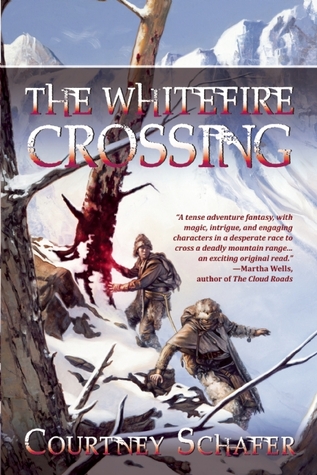


The Whitefire Crossing by Courtney Schafer – Until I make a dent in my reading list, my book buying ban is still in effect for the summer, but I just couldn’t resist this one when I saw it offered as a Kindle deal. It’s been on my wishlist/TBR for a long time!
Koko Takes A Holiday by Kieran Shea – Sigh, what was that on the book-buying ban again? Well, I’ll make an exception for audiobooks. Audible is having a sale right now, and I had a couple coupons kicking around about to expire at the end of the month. Ever since I saw the cover for this, I’d been itching to pick it up and check it out. On sale, it was a no-brainer.
The Martian by Andy Weir – Another purchase from the sale. I’ve wanted to read this one so badly ever since it came out. I finally have it now, and since I have it in audiobook format, it’s jumped to the top of my reading list.
A World Without Princes by Soman Chainani – I kinda got tired of waiting for my library to get this. Since I adored the first book in audio and we have the same narrator for the second, I binged one last time at the sale and picked this up too.
Book Review: The Shadow Throne by Django Wexler
Posted on June 27, 2014 30 Comments
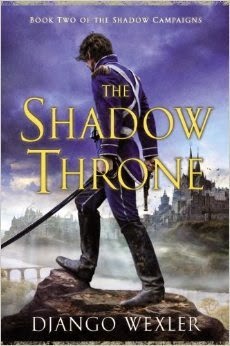 The Shadow Throne by Django Wexler
Genre: Fantasy
Series: Book 2 of The Shadow Campaigns
Publisher: Roc (July 1, 2014)
Author Information: Website | Twitter
Mogsy’s Rating: 4.5 of 5 stars
I used to think military fantasy wasn’t my thing, but ever since I started reading a lot again for book blogging, it’s become even more apparent that what I like or what I don’t like isn’t so much about the genre or sub-category, but is in the way it’s written. I saw that last year when I read Django Wexler’s The Thousand Names, an epic military flintlock fantasy that invariably clicked with me. In fact, I would say it did more than that; it ended up being one of my top reads for 2013.
In the end, a novel’s genre or topic doesn’t matter; it’s characters first and foremost, and that’s the way it has always been. I think this is why I find so many of Wexler’s books enjoyable to read; whether it’s his epic fantasy, urban fantasy, or even middle-grade fantasy, his talents for writing great characters are exceptional. I first fell in love with Captain Marcus d’Ivoire and Winter Ihernglass, his two main protagonists in The Thousand Names, but eventually grew to appreciate many of the supporting characters as well.
I guess that’s why I was initially nervous when I first picked up The Shadow Throne, the sequel that I’d been so impatiently waiting for, and saw that we mostly had a new batch of characters, a new setting, and a whole different kind of war to fight. Sure, I was glad to see that Marcus and Winter were back, but then again, all those wonderful personalities I met in the first book – Fitz, The Preacher, Give-Em-Hell, Graff, Bobby, and pretty much the whole of the Vordanai Old Colonial army – were also largely absent from this one. But thank goodness we still got plenty of Colonel Janus bet Vhalnich, because I honestly don’t know what I would have done without my favorite military genius.
The Shadow Throne picks up directly from where things left off in The Thousand Names – the war in Khandar is won, and Janus, Marcus and Winter return in haste to the capital as heroes – but even so, there were times I felt the sequel read like a whole different story. Nothing terribly wrong with that, though. There’s still plenty of open conflict, but instead of the broad, sweeping battles in the desert, most of it takes place within the city walls of Ohnlei. It’s a very unstable time with the King of Vordan on his deathbed, and men like the dangerous and power-hungry Duke Orlanko are circling like vultures around the young, delicate princess and heir, waiting to manipulate her and seize control.
However, the princess Raesenia is more than she appears. Like, a LOT more. There’s a huge secret about her that gets revealed early on in what might be one of the best and most surprising scenes of the novel. My earlier disappointment about not seeing more of the characters from the first book ended up being rather short-lived, because Raesinia as a new point-of-view character pretty much made up for it single-handedly. Her perspective added a whole new layer to this story, and it’s great to see another strong female character in this series who’s not afraid to buck expectations and take control of her own life. In fact, it’s the women who steal the show in The Shadow Throne. While Marcus continues to hold his own, I have to say Winter and Raesinia’s chapters were the highlight for me in this one. And let’s not forget the deadly assassin Sothe or the girls of the Leatherbacks gang led by their bold leader (whose identity is yet another surprise).
Admittedly, the story was slower to start off and took some time to gain momentum, seeing as it had to introduce new characters and also to set up the political climate in this new environment. I also feel The Thousand Names was a stronger novel, but probably because the themes of it suited me more, whereas The Shadow Throne felt very different in overall tone. It’s more of tale of revolution, with a heavier focus on political intrigue and differences in ideology between Borelgai supporters and those who want to see Vordan free from the clutches of Duke Orlanko’s influence. A lot of the conflict has shifted to another front, with bloody battles in the city streets but also fierce verbal clashes in the shadows of palace chambers, university classrooms, common taprooms and other places where dissidents gather.
The action therefore felt a little more subdued and on a smaller scale in this one, and a couple of action scenes also had to happen “off-screen” due to limitations imposed by only having a handful of POV characters. But this in no way diminished my enjoyment. There’s a grand siege near the middle of the story that had me biting my nails, and I loved me some subterfuge and the bigger role that espionage played in the book. The author made sure that the quieter, more discreet action sequences that took place in the shadows were just as engaging to read as the all-out battles.
So with a novella and two full length novels officially under its belt, can I finally say The Shadow Campaigns is one of my favorite fantasy series out right now? Certainly my favorite military fantasy. I knew from the very start that The Thousand Names would be a tough act to follow and that book two would have big shoes to fill, but The Shadow Throne was no slouch; it delivered exactly what I wanted to see in the sequel – raised stakes, impactful decisions that furthered the plot, and of course, more of Wexler’s outstanding characters.
A review copy of this book was provided to me by the publisher in exchange for an honest review. My thanks to Roc Books!
PANELS: The Boys #38
Posted on June 26, 2014 Leave a Comment
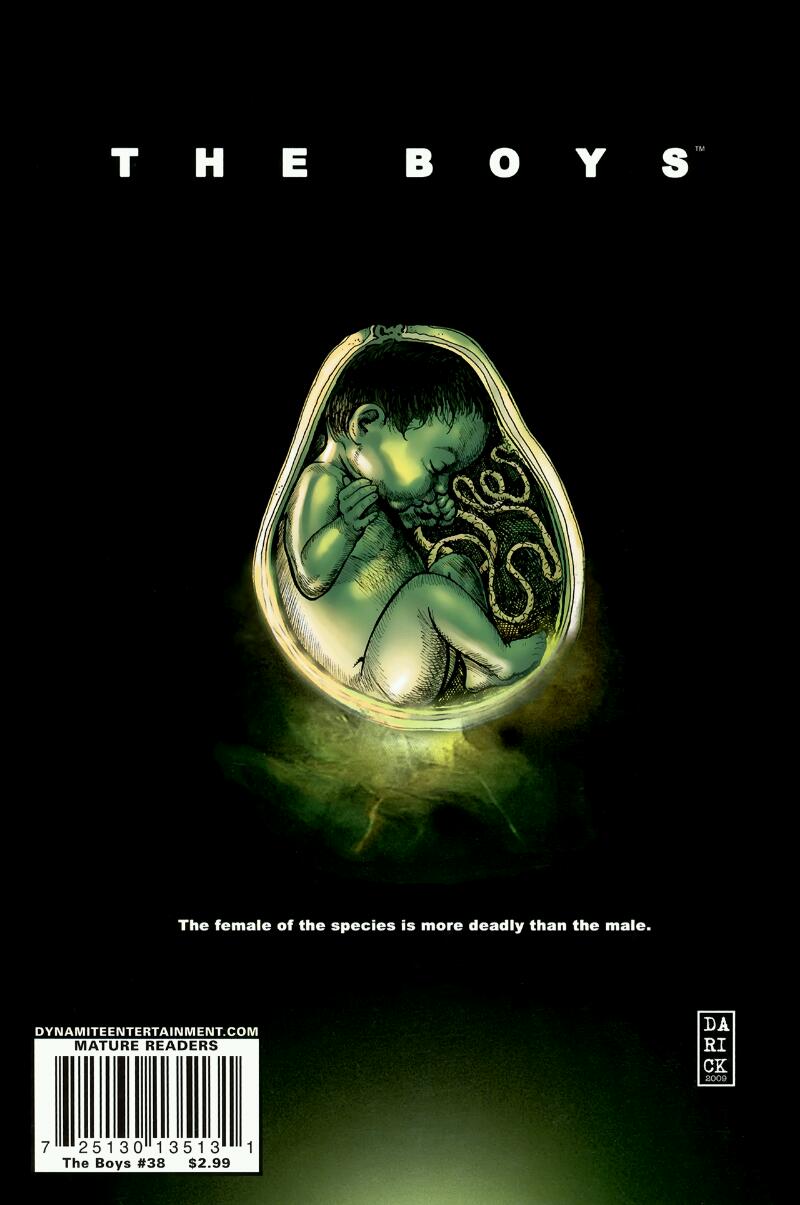 The female of the species is more deadly than the male.
The Boys #38
Tough Traveling: Minions
Posted on June 26, 2014 20 Comments


The Thursday feature “Tough Traveling” is the brainchild of Nathan of Review Barn, who has come up with the excellent idea of making a new list each week based on the most common tropes in fantasy, as seen in The Tough Guide to Fantasyland by Diana Wynn Jones. Nathan has invited anyone who is interested to come play along, so be sure to check out the first link for more information. Compulsive list-maker that I am, I’m very excited to take part!
This week’s tour topic is: Minions of the Dark Lord
MINIONS OF THE DARK LORD are all over the place. The DARK LORD has been busy planting them for years…
And the description in the book goes on and on and on. It basically boils down to anyone working for a Dark Lord. You’ve already seen my extensive list for Dark Lord a few weeks back, and almost all of them have their henchmen or agents. Rather than naming them all and featuring the same books again, I’m going to go for a shorter list this time and use a few new titles I haven’t talked about yet!
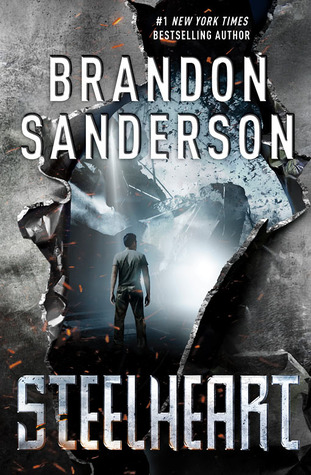 Steelheart by Brandon Sanderson
Newcago is ruled with an iron fist by the extremely powerful Epic named Steelheart, who is apparently invincible and has the ability to fly and hurl blasts of energy in addition to turning matter into steel. To take him down, the protagonist David and his fellow Reckoners have to take in account three other Epics who are supposedly in Steelheart’s inner council and who also serve as his elite bodyguards: Firefight, Conflux, and Nightwielder.
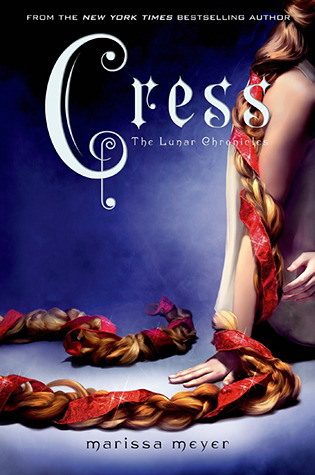 The Lunar Chronicles by Marissa Meyer
Levana is the evil queen of Luna, employing Sybil as her head thaumaturge. Sybil herself ruled over a colony on Luna and accompanied her queen when she went to Earth to discuss an alliance with the Commonwealth. Sybil’s role was described as “between a doting lapdog and gleeful servant who delighted in seeing to Levana’s cruelest request”. She is also the cold, uncaring adoptive mother of Cress Mira, who is the main focus of the series’ third book.
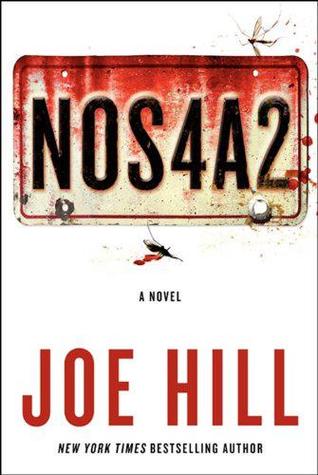 NOS4A2 by Joe Hill
Charles Talent Manx likes to take children for rides in his 1938 Rolls-Royce Wraith, taking them away forever into the otherworldly realm called “Christmasland”. With an ad in the back of a magazine, he enlists a chemical plant worker named Bing Partridge, who ultimately becomes his wicked and obedient “Head Elf”, as it were. Bing does terrible things for Manx, using his knowledge of chemicals to drug and capture children, then killing the victim’s parents.
Book Review: Cibola Burn by James S.A. Corey
Posted on June 25, 2014 26 Comments
 Cibola Burn by James S.A. Corey
Genre: Science Fiction
Series: Book 4 of The Expanse
Publisher: Orbit (June 17, 2014)
Author Information: Website | Twitter
Mogsy’s Rating: 4.5 of 5 stars
The Expanse is probably my science fiction series right now, and I think Cibola Burn is the best installment yet.
Why, you ask? Well, unlike the previous books, which I felt started off slow but gradually built up to bigger and better action, Cibola Burn breaks this pattern and kicks things off right away with an explosive conflict you can’t ignore. The mysterious proto-molecule that somehow created a massive ring structure just outside the orbit of Uranus has turned out to be a gate leading to thousands of habitable planets on the other side. To the annoyance and chagrin of the corporation with the planetary exploration and harvesting rights, a ship of refugees have made it over and settled on the first of such new worlds, claiming it as their own and starting up their own mining operations.
Violence erupts when the company finally arrives to protect what they think of as their property, with the colonists pushing back. This is how the book starts out – literally with a bang. Protagonist James Holden, deemed as the best person to act as mediator in this conflict, is dropped into the middle of things before they can escalate and both sides end up killing each other. The whole situation is a lit powder keg waiting to explode and the atmosphere could not be more intense, and this is all just within the first handful of chapters. There’s none of that “slow climb to the apex”, which is how I described Abbadon’s Gate. Here, you get to the good stuff right off the bat.
But before you think all the action is front-loaded, rest assured that this is not the case. The tension continues to build and it’s safe to say that circumstances get worse for the characters (which translates to “More exciting!” for the reader) before they get better. Cibola Burn is part space colonization story and part space disaster thriller. For those reading this series who might be suffering from proto-molecule fatigue by now, the good news is that while the proto-molecule still plays a big role in the overall story, it takes a backseat to the more dramatic and more human events happening right there on the frontier planet. It’s wild and lawless territory out there, with neither side willing to relinquish control. With no real police force, no courts and no legal system, authority is determined by who has the greatest firepower, and when you’re in a region of space eighteen months from the closest civilization, that there pretty much spells a recipe for disaster.
Like all the previous books in the series, Cibola Burn is told from the perspective of a handful of point-of-view characters. The cast has expanded yet again, changing up all the key players except for Holden, who as the main protagonist has kept up a constant presence in all four books now. For the first time in this series, however, I became partial to his chapters. In books 1-3, I’d always felt that Holden’s character was eclipsed by more powerful and interesting personalities (in Leviathan Wakes, by Miller; in Caliban’s War, by Chrisjen Avasarala, my favorite potty-mouthed UN politician; and in Abbadon’s Gate, by Bull) and he’d never managed to capture my attention. That is, until now. What changed? It’s not like the other POV characters here were any less compelling. But somehow, Holden definitely came into his own in Cibola Burn. As someone who’s always so sure of his moral position, it’s a new experience to see him try to compromise for the sake of keeping the peace, and when the situation devolves, his leadership skills are put to the test.
In fact, all the POV characters – Holden, Basia, Havelock and Elvi — were enjoyable to read about in their own way. Compared to a relatively weaker cast in the last book, Cibola Burn was a much more engaging read for this reason. The only character I didn’t care for was Murtry – and not because he’s the villain. I notice the authors seem to have a tendency to paint the “bad guys” in this series as really BAD guys, all super evil psychopaths with terrible motives and inflexible attitudes. While it leaves little room for doubt who you should be rooting for, that doesn’t add much to the person or situation. Other characters who sometimes lack in depth is an occasional issue I encountered, but the baddies seem to have it the worst.
Still, if that’s my only complaint, and it’s a minor one at that, this book is clear a winner in my eyes. Like I said, I found this to be the most exciting and powerful book so far. When a strange planet that no one understands turns against colony and corporation alike, the notion of people putting aside their differences to help each other survive becomes a central theme, and all the while the clock is ticking. It’s really no surprise that the series is heading to TV, being the perfect mix of science fiction chills-and-thrills with the passion and weight of human drama. Fans of The Expanse will eat this book right up. And if you haven’t started this series yet, what are you waiting for?
A review copy of this book was provided to me by the publisher in exchange for an honest review. My thanks to Orbit Books!
Waiting on Wednesday 06/25/14
Posted on June 25, 2014 13 Comments

“Waiting On Wednesday” is a weekly meme hosted by Breaking the Spine that lets us feature upcoming releases that we can’t wait to get our hands on!
 “The Galactic Civil War rages on after the destruction of the Death Star and Luke Skywalker struggles to learn more about the Force without the aid of Obi-Wan Kenobi – or indeed without any aid at all. But the few memories he has of Obi-Wan’s instruction point the way to a stronger control of the Force, and he is encouraged to pursue it by a new friend in the Alliance. When Luke, R2-D2 and his new ally are tasked with liberating a valuable asset from the Empire and delivering her to a safe planet where she can aid the Alliance, their journey across the galaxy is fraught with peril – and opportunities for Luke to discover the mysteries of the Force.“
Posted on June 24, 2014 Leave a Comment
“Memories are dangerous things. You turn them over and over, until you know every touch and corner, but still you’ll find an edge to cut you.”
~ Mark Lawrence, Prince of Thorns
Book Review: Brown Girl in the Ring by Nalo Hopkinson
Posted on June 24, 2014 5 Comments
 Brown Girl in the Ring by Nalo Hopkinson
Genre: Urban Fantasy, Science-Fantasy
Publisher: Hachette Book Group
Date of Publication: March 15, 2001
Author Information: Website | Twitter
Tiara’s Rating – 3.5 of 5 stars
I know this book is classified as science fiction, but honestly, it felt more like urban fantasy to me. At best, it was science-fantasy because it does have some science fiction elements. However, those things aren’t nearly as pronounced to me as the fantasy portion of the novel.
Downtown Toronto has been abandoned by the Canadian government after a series of financial disasters that lead to an economic depression. They’ve blocked the people from leaving the hellhole it’s become, but those who have money move to the suburbs are allowed to keep their illusion of safety while those who don’t are forced to stay in Toronto and fend for themselves, which is largely made of a society of people of color.
Depending on the ways of their ancestors, despite their ugly surroundings and reality, they’ve built up this society that focuses on bartering and relying on the old ideas of their people ranging from India to the Caribbean. That could come in the form of food or knowledge of the land or that can come in the form of more fantastic elements.
Ti-Jeanne is a new mother who hasn’t named her baby. She’s recently moved back in with her grandmother, Gros-Jeanne, due to the baby’s father being an addict and needing support that she knows her grandmother can provide. Despite that, Ti-Jeanne fears her grandmother’s herbalism and spiritualism powers. She also fears that they may be manifesting in her as her dreams begin to plague her, and she is reluctant to give into that side of her family, especially since her grandmother said the visions made her mother mad before she disappeared. However, there are evils in their city that Ti-Jeanne will eventually have to find the courage to face as she learns not to fear who she is.
This is one of the books that I choose from the 2014 Speculative Fiction by Authors of Color Challenge because I wanted to read more spec fic by authors of color. This was a beautifully written book that incorporated so much cultural character to the story. Quotes like this just made my whole reading experience:
“Tony could give sweet, sweet talk. Words so nice, they would charm the money from your pocket, the caution from your heart, the clothes from your body. Words so sweet and soothing, they sounded like love, like let me hold you the way your mama never held you, like come and be my only special one, my doux-doux darling. Words that promised heaven.”
So lyrical and full of flavor and culture, exactly what I’ve been wanting and looking for in my science fiction and fantasy. Words that speak to me. Words that feel genuine. Words that I can hear people I know in my life saying. Hopkinson created a very scarred, scary, abandoned society, but at the same time, she’s made it this diverse place full of colorful characters who are just trying to survive.
Now, for the main character, Ti-Jeanne. We had a torrid relationship for a moment. While I appreciated and even empathized with Ti-Jeanne’s struggles with being a mother, loving a man that’s “no good” for her, and trying to assert herself as a woman to her grandmother, it took me a while to connect with her character. I understood her selfishness and her anger at not only her personal situation but the situation of her city. However, that may have been part of the point to all this. Ti-Jeanne needed to learn to respect, compassion, and selflessness. She needed to learn that, while selfishness is part of human nature, one has to temper it with respect for others.
It’s one of those books where you want to tell the character you are no more special than anyone else in respect to your needs or wants. Your needs do not outweigh the needs of others. Many of your needs and wants are only different from anyone else’s. Many first mothers have troubles. Many of us don’t have enough to feed ourselves much less others. Of course, your problems, these problems, seem worst than the next person because they’re yours. However, the next person feels the same way about their problems. You are special because you are you, and no one else can say that.
However, as Ti-Jeanne grew as a character, I grew to love her much more. Her transformation from this almost girl-child pretending to be a woman to a woman who is not afraid of what power she holds, not just as her grandmother’s child, but as her tragic mother’s child and as a woman of power herself, is beautifully done. Her grandmother reminded me so much of my own great-grandmother who could be a curmudgeonly soul, but this is how she imparted wisdom and love. Parts of the book like that just made me so nostalgic.
I have to say I didn’t quite know if I’d come out of this one loving it. I appreciated it, but it took me so long to warm to Ti-Jeanne that I was afraid I was going to like it, but it wasn’t going to be that story for me. I’m grateful that I was wrong, and I look forward to more of Hopkinson’s wonderfully magic books.
Here we are!
Posted on June 23, 2014 32 Comments
Over a year ago, Tiara, Mogsy and Wendy discovered NetGalley, but without an acceptable outlet, we couldn’t participate as professional readers. That’s when a thought struck us. The three of us were already avid Goodreads users, making regular use of the site’s review options. We decided to join forces and revive Mogsy’s book blog, The Bibliosanctum, and now that we’ve cut our teeth, we’ve decided to get a little fancier.
Welcome to the new and improved BiblioSanctum!
Our time in the book review blogosphere has taught us so much and introduced us to so many wonderful people and experiences, and of course, to many, many new books! Everything we need to feed our bibliophilia (as if our obsession actually needed more encouragement!)
These are just a few of the wonderful experiences we’ve come to appreciate so much, and we wanted to thank you all, our readers, bloggers, publishers and authors, who’ve been so incredible.
The Review Blogosphere: There are many other reviewers who’ve been doing this book review thing for some time. Initially, their sites provided inspiration for our own, but as time has gone on, we’ve made a few friends and acquaintances and enjoyed many book-related conversations.
Sharing Our Book Love: Creating a book blog meant we could participate in NetGalley, but more importantly, we got to expand the opportunity to flail about books. When we love a book, we want to make sure you know about it. And while we might not be able to share it with you physically, we can at least steer you in the direction of a sale or two.
The To-Read Pile: Goodreads recommendations were already ensuring we’d never get through our to-read piles, but getting into the world ARCs and meeting all these new people means we’re constantly being inundated with more and more to read! And it’s just so darn hard to say no when everything looks so gooood…
Chatting with Authors: Something we didn’t expect was the opportunity to actually chat with authors. Not just in interviews about their books, but chatting about everyday stuff too. Turns out, authors are actually cool human beings who love to read and game and cook and, you know, do stuff too!
Watching Authors Chat: Sometimes, as fun as it is to chat with the authors, it’s just as fun to be a bit of a voyeur and watch their Twitter interactions with each other, especially after a major event in the book community. It’s a small world, it seems, and more importantly, a very close knit one filled with lots of fun and encouragement.
Publishers: We’re still a little amazed by all the wonderful publishers out there who value our opinion on the many wonderful books they produce.
Now that we’ve moved to our cozy new home in this corner of the internet, we’re looking forward to this and a whole lot more! Thanks for reading!
~The BiblioSanctum


 The BiblioSanctum