#RRSciFiMonth: Koko Takes a Holiday by Kieran Shea
Posted on November 3, 2014 16 Comments
 Sci-Fi Month is a month-long blog event hosted by Oh The Books and Rinn Reads this year, created to celebrate everything amazing about science fiction! From TV shows to movies, books to comics, and everything else in between, it is intended to help science fiction lovers share their love and passion for this genre and its many, many fandoms.
 Koko Takes a Holiday by Kieran Shea
Genre: Science Fiction
Series: Stand Alone
Publisher: Titan (June 10, 2014)
Author Information: Website | Twitter
Mogsy’s Rating: 3.5 of 5 stars
Don’t let my middling rating fool you, because I really did enjoy this book. It was like eating a big bowl of popcorn for lunch; sure, you didn’t really get much out of it, but boy, it filled you up nicely and gobbling it down felt so wickedly good and yummy. Like a B-action movie, I don’t think Koko Takes a Holiday will stay with me for any significant length of time, but it was some great pulpy fun while it lasted.
The book takes place five hundred years from now, starring ex-merc Koko Martstellar who has retired from the hired soldier gig to run a brothel at the tropical archipelago resort known as The Sixty Islands. A place for tourists to indulge in their sexual simulated violent fantasies, the SI is rather like a playground for adults and Koko’s taking full advantage of the decadent life, surrounded by her boytoys and booze. She figures, what the hell, she’s having a good time and she’s earned her rest.
But then an old comrade-in-arms had to show up and ruin it all. Portia Delacompte, former-mercenary-turned-corporate-bigwig, blazes into town with a mind to see Koko dead. With her bar and brothel utterly destroyed by Portia’s deadly hired goons, so ends the good times for Koko, who is forced to take a holiday from her holiday to escape being hunted by her ex-buddy. But Koko, the very picture of a kickass heroine, hasn’t forgotten the tricks of her old trade – and she isn’t going to go down without a fight.
A lot of people have said this book reminds them of a graphic novel, for good reason, and not just because of the eye-catching art style on that fantastic cover. More likely it’s due to the story itself being very fast-paced, action-filled, and quite heavy on the dialogue. However, Shea’s descriptions of the various extraordinary and outlandish places also make it easy for the reader to picture his world in their mind’s eye. The very nature of the novel’s futuristic setting lends itself to this; it’s a high-tech dystopia with rampant corruption and depravity, and it’s also disturbingly vivid.
As you would expect, there’s nothing deep here. Koko Takes a Holiday goes for fast, shameless fun and it achieves that marvelously. You won’t be able to stop yourself from turning those pages. Delightfully unrestrained and bombastic, the book is heavy on violence and explosions but light on plot and characters, but hey, sometimes that’s exactly what you need.
I had a good time with this book, but admittedly the experience is already fading fast. Summer is long behind us now, but I would recommend this if you’re in need of a good beach read type of book, or just something like this to pick you up on a crappy day. It’s hard to go wrong with something this high-energy and entertaining.

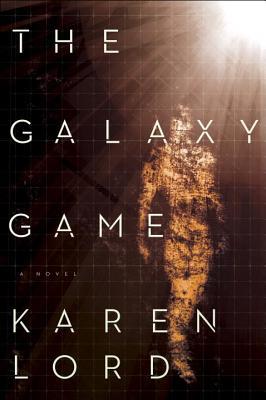
#RRSciFiMonth: The Galaxy Game by Karen Lord
Posted on November 2, 2014 6 Comments
Genre: Science Fiction
Publisher: Random House (January 2015)
Author Info: merumsal.wordpress.com
Wendy’s Rating: 2 of 5 stars
Thank you to NetGalley for the opportunity to read an advanced copy of this book in exchange for an honest review.
My love for the previous book, The Best of All Possible Worlds, prompted me to pick this up the moment I could. I enjoyed the up close and personal feel the book gave me, while it quietly detailed the struggles of a few survivors of a horrific planetary genocide.
Now, the Sadiri people have settled in and a lot of politics come into play. A lot of politics that made this book a significant struggle for me. The machinations seem to be leading somewhere interesting, but never quite solidify into anything that I could aptly describe.
The story is meant to centre on Rafi, the nephew of Grace Delarua whose father used his psychic abilities to abuse his wife. With his father locked away, the government now wants to monitor Rafi closely to ensure he does not use his own abilities for evil as well. Again, a lot of potential with this story, especially as he seemingly becomes wrapped up in the political aspects (sort of), travels to new worlds, and meets new people.
Along the way, Rafi plays a gravity-defying game called Wall Running that is a bit reminiscent of Ender’s Game. With all the politics and uprisings and, well, the title of the book, I thought the game would play a bigger part. I also hoped to see and understand a lot more about the mind ships that were vaguely introduced in the previous book. But all of these ideas, while fascinating–as is the world building–just never quite pay off. Where I was so firmly connected with Delarua and Dllenahkh, I felt nothing for Rafi and his friends. It certainly didn’t help that the story jumped from point of view to point of view. One particular character gets a first person point of view that ought to have been significant, save for the fact that I could not figure out which character it was until well into the book.
I do appreciate Lord’s prose and attention to detail, but I couldn’t handle the meandering nature of this story.

November Happenings: Sci-Fi Month, NaNoWriMo 2014, and Gaming Flail!
Posted on November 1, 2014 20 Comments
November is going to be a very busy month for us at BiblioSanctum, from NaNoWriMo to SciFiMonth, to our many gaming endeavors. Here’s what’s up!
November is SciFiMonth! We’ll be joining other bloggers, authors, and readers in everything science fiction! Look out for reviews and more, as we turn away from the fantastical to partake of the scientific! For more information, visit Oh,The Books SciFiMonth post, and follow the hashtag #RRSciFiMonth. Here at BiblioSanctum, our reviews and posts will branch off from the usual to encompass the various mediums that science fiction touches. From television and film, to video games, and more.
 And of course, November is also National Novel Writing Month, also known as NaNoWriMo. For those not familiar with it, NaNo is a month-long writing event that challenges participants to write 50,000 words of a new novel from November 1 to November 30. Once again the BiblioSanctum bloggers will be taking part, but fear not, we’ll be doing our best to keep this blog updated with plenty of reviews and other goodness in the midst of all the novel writing frenzy! November 2014 may be a busier month than usual, but for many of us, NaNo is an annual tradition — it’s just something we do every year no matter what! And ultimately, it doesn’t matter if you don’t “win” because it never hurts to try. Whether or not you reach 50K words or even just a fraction of that, at the end of the month you’ll end up much farther ahead on your writing project than you would’ve if you’d never even started, and that’s the important thing.
 As you know, Mogsy, Wendy, and Tiara are gamers, so November will also bring us lots of gaming flails with the release of Dragon Age: Inquisition and World of Warcraft: Warlords of Draenor. When we’re not busy playing our shiny new games, we’ll be reading and reviewing some of the many gaming related books and comics out there, including the latest Dragon Age novels. While these games are deeply entrenched in the fantasy genre, you won’t be able to fight the signal when we get our hands on them. Be prepared for much flail and many feels!
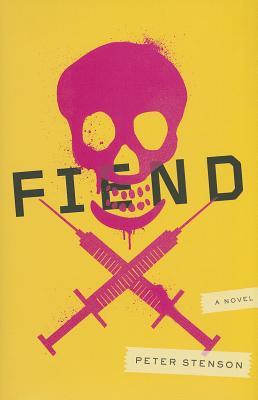
Book Review: Fiend by Peter Stenson
Posted on October 31, 2014 12 Comments
Genre: Horror
Series: Stand Alone
Publisher: Crown (April 8, 2014)
Author Information: Website | Twitter
Mogsy’s Rating: 3.5 of 5 stars
Despite the modest page count and a fascinating premise about what the zombie apocalypse would look like if meth heads were the only survivors – which, I have to say, is a pretty awesome social thought experiment – it still took me a long time to read this book, the reason being I could only take it in small doses on account of how incredibly obnoxious it was.
It wasn’t even so much the nihilistic and transgressive-like style of storytelling, or the fact that the drug-addled characters are so infuriatingly unlikeable down to the very last person. At the end of the day, while being in the mind of a junkie might not be all sunshine and lollipops, I actually thought Peter Stenson did a fantastic job painting a very vivid and realistic perspective.
No, the real reason I had such a hard time is because I’m a big fan of punctuation. Quotation marks are our friends! But anyway, Fiend begs to differ. I can’t say I’m thrilled with the lack of punctuation or the continuous stream-of-consciousness writing style, and yet I’m also not such a stickler for it that I would dismiss the whole book because of it. Did it affect my enjoyment of the novel though? I tried not to let it, but to a degree it did. If anything, it was because trying to read this book for prolonged periods of time would inevitably give me a massive headache.
I’ll give it this, though: at no point did I ever consider throwing in the towel. The story was just too addictive, if you would pardon the borderline tasteless pun. It marries one unpleasant subject (drug abuse) with another (zombies) and the results are pretty interesting in that hideous-but-I-just-can’t-stop-looking way. The end of the world is at hand. Everyone just went to sleep one night and didn’t wake up in the morning, and some of those individuals have reanimated to become the walking dead. For whatever reason, the only survivors are people like Chase Daniels, a long time meth addict. Chase was so high that for days he hadn’t even known the zombocalypse had arrived, and he actually thought his first exposure to it – a little girl in his front yard tearing out the throat of a dog and eating it – was a drug-induced hallucination.
I don’t know what it’s like to be a junkie. I won’t even pretend to know. But just to give you an idea of what we’re dealing with here, Chase and his friends are the kind of people who would sell their own mothers for a hit, so you can only imagine the world we’re left with, with him and his fellow addicts being the only survivors. There’s no trust, no morals, no self-control, and hence no chance in hell of society ever rebuilding. Add to that, the characters discover that continuing to do drugs it the only way to stay alive and keep from turning into the monsters. There you go: survival and self-destruction, two sides of the same coin. Kinda puts an interesting spin on your typical zombie story, doesn’t it?
Unfortunately, I was a bit disappointed with the ending. To be fair, given the nature of the story, I would have been surprised if I would have gotten a satisfying conclusion, but it was still very abrupt and left things hanging – and that’s a big pet peeve.
To sum up: fascinating book, offering a different approach to zombies and the end of the world. I found Chase Daniels and his narration intensely off-putting, but I also see that as a testament to the author’s skill to write a believable, meth-addicted anti-hero type protagonist. The only things that kept me from enjoying this novel more was the writing style (though admittedly it worked very well for the story and character) and the ending. I would still heartily recommend this one to zombie fiction enthusiasts and those who are interested in checking out a unique take on the genre.

A review copy of this book was provided to me by the publisher via Blogging for Books in exchange for an honest review. My thanks to Crown Publishing!
Book Review: Broken Monsters by Lauren Beukes
Posted on October 31, 2014 13 Comments
 Broken Monsters by Lauren Beukes
Genre: Horror, Thriller
Series: Stand Alone
Publisher: Mulholland (September 16, 2014)
Author Information: Website | Twitter
Mogsy’s Rating: 4 of 5 stars
It’s been a while since I read a good horror novel. Broken Monsters proved to be just the thing I needed, turning out to be a cross-genre piece with mystery and thriller elements as well. Also, high time I read something from Lauren Beukes, and looks like I’ve been missing out all this time.
Of course, the best part is the paranormal elements. I’m a big fan of the supernatural or the otherworldly in my horror; to me they make the story more interesting by often ramping up the creep factor. From the outset, however, and actually for much of the novel, Broken Monsters presents itself as a police crime mystery, opening with the bizarre and grisly find of a body. Apparently the disturbed killer had taken the top half of a boy’s corpse and the bottom half of a deer’s corpse and somehow fused the two together. This is definitely not a safe and cheery read, and the squeamish reader should be aware of some scenes in here that are just downright twisted and weird.
An atmosphere of gloom and despair settles like a shroud over the story, taking place in the economically hard hit city of Detroit. We follow the events of the investigation through the eyes of a handful of characters – the hardened and experienced Detective Gabriella Versado who has the role of lead investigator on the murder case morbidly codenamed “Bambi”; her daughter Layla, a precocious teenager who nonetheless finds herself tangled in different kinds of trouble while her mother spends most of her time on police work; Jonno, a journalist desperately trying to make a name for himself and getting lucky by stumbling upon the case while covering the underground art scene in Detroit; Thomas Keen AKA T.K., a vagrant with a good heart who just wants to forget his checkered past and stay clean going forward. And of course, every now and then we also get glimpses into the mind of the killer himself, and those snippets sure aren’t pretty.
What is the connection between a teenager and a homeless man? Or the link between an upstart journalist and a Detroit detective? Thing is, everyone has a role to play in this novel, and half the fun was watching the lives of these disparate people unfold and seeing how it all comes together. Broken Monsters is about the hunt for a deranged serial killer, to apprehend him before more badly mutilated bodies turn up, but it’s also about so much more. Beukes goes in depth for each of her characters, going into their pasts and digging up their deepest secrets and own personal monsters. By painting her characters in this naked and blunt realism, the author in turn adds another layer to her gritty, chilling tale.
I really like these kinds of psychological thrillers, the ones that seek not to bombard you with blood and gore. Even though there are some graphic scenes in Broken Monsters, they are not gratuitous. Instead, the story worms its way down to unsettle the reader at a deeper level, stirring up a sense of dread that doesn’t go away as you’re reading. I always find these horror novels to be more effective, because experience tends to stay with me longer. Once the spell is cast, it wraps around you and doesn’t let go very easily.
Like I said, there is a paranormal element here but it doesn’t come into play until quite late in the novel. Personally speaking, that is perhaps the only less-than-ideal factor, but it’s by no means a disappointment. I enjoyed the police procedural-type style of storytelling when it came into play, and also took everything else – like Jonno’s journalistic ventures or Layla’s teenage shenanigans – in stride. I loved the feeling of being held in suspense, wondering who might be the next victim or when the police might make a breakthrough. The ending was really what made Broken Monsters for me, when everything came to a head in the most uncanny and freaky way imaginable.
If you’re looking for a horror-thriller that’s a bit different, I would highly recommend this book. Characters, setting and themes all came together very nicely to deliver one hell of an experience. I’m definitely going to be reading more of Lauren Beukes after this.

A review copy of this book was provided to me by the publisher via NetGalley in exchange for an honest review. My thanks to Mulholland Books!
Tough Traveling: Monsters
Posted on October 30, 2014 31 Comments


The Thursday feature “Tough Traveling” is the brainchild of Nathan ofReview Barn, who has come up with the excellent idea of making a new list each week based on the most common tropes in fantasy, as seen in The Tough Guide to Fantasyland by Diana Wynn Jones. Nathan has invited anyone who is interested to come play along, so be sure to check out the first link for more information.
This week’s tour topic is: Monsters
MONSTERS are likely to lie in waste areas, caves, and old ruined cities. You can usually detect their presence by smell.
Whoa hey now waitaminute! Monsters? That’s not what Nathan promised me!
@nightxade @MMOGC HA! Next week it will be benevolent carnivorous plants so we don’t get too full of ourselves.— Nathan (@ReviewBarn) October 21, 2014
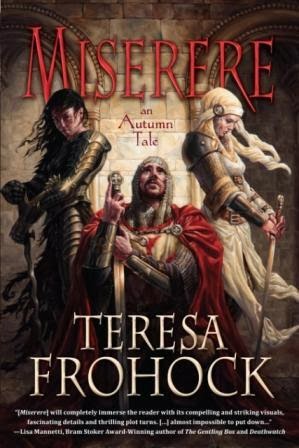 I totally accepted this challenge and was all ready with La Dolorosa, from Miserere: An Autumn Tale. Imagine a beautiful yet deadly rose that feasts on blood and evil, and maybe our hapless protagonists too, if they aren’t careful! Okay maybe Teresa Frohock’s lethal flora isn’t exactly benevolent, so that works for this week’s Monsters theme, too. Now where do I pick up my prize?
~Wendy
Mogsy’s Picks:
Bravo Nathan for coming up with the perfect theme for Halloween! I’m excited this week to feature some excellent novels featuring monsters, from the terrifying to the quirky.
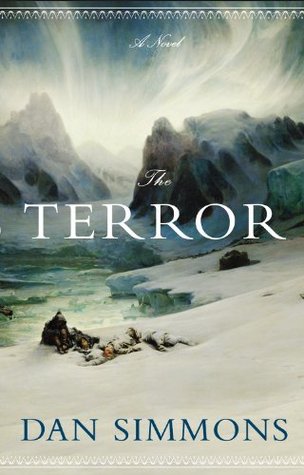 The Terror by Dan Simmons
I loved this book! And interestingly, it’s been getting some extra attention lately, with the discovery of one of the ships from the lost Franklin Expedition just recently in Arctic Canada. This book was inspired by the true events from that doomed expedition, a historical fiction with a horror bent. The premise involves the unfortunately crew of the Erebus and The Terror trapped in the ice, stalked by an unseen monster out in the frigid darkness.
 Who Goes There? by John W. Campbell Jr.
One of my favorite horror movies has got to be John Carpenter’s The Thing (1982). This was the novella that formed the basis for it (as well as other adaptations, including The Thing from Another World in 1951). An antarctic research camp discovers the remains of an ancient alien frozen under the ice (cold and forbidding environments seem to make for the best horror settings) and the monster ends up reviving, being able to shapeshift and assume the forms of humans and animals alike, imitating them perfectly.
 The Monstrumologist by Rick Yancey
This is another favorite of mine. And don’t let the Young Adult tag fool you into letting your guard down! The Monstrumologist is one of the most sickeningly bloody and gory books I’ve ever read, and YA or not, I’d honestly hesitate to hand this one to just any teenager. As you can probably guess, a “monstrumologist” is one who studies monsters. This first book of the series features predators called the Anthropophagi, which means “people eaters”…enough said.
 Club Monstrosity by Jesse Petersen
Now for something a little more lighthearted and fun. The basic premise behind this book is the question, What if all the monsters and paranormal creatures that have ever been featured in our favorite classic books and movies — Frankenstein’s monster, Dracula, etc. — are actually real and living in secret among us? Twice a week, they get together in their Monstofelldosis Anonymous support group in a church basement to talk about all the difficulties faced by your average everyday misunderstood monster, just trying to make it in the big city.
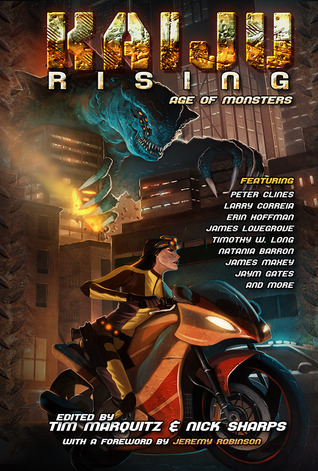 Kaiju Rising: Age of Monsters edited by Tim Marquitz & Nick Sharps
I’m cheating a bit here, as I haven’t read this anthology in its entirety, but I think we can all agree that it fits into the theme this week. Kaiju!!! In case it’s not immediately obvious, this book is a collection of short stories focused on or inspired by the theme of strange and humongous monsters in the same vein as movies like Pacific Rim, Godzilla, and Cloverfield, etc.
Book Review: Poison Fruit by Jacqueline Carey
Posted on October 29, 2014 11 Comments
 Poison Fruit by Jacqueline Carey
Genre: Urban Fantasy
Series: Book 3 of Agent of Hel
Publisher: Roc (October 7, 2014)
Author Information: Website | Twitter
Mogsy’s Rating: 4 of 5 stars
It was shortly after finishing the second book of Agent of Hel that I discovered the series was only going to be three books. While that was a little surprising, since urban fantasy series tend to go on for a lot longer than that, it was also nice being able to anticipate an actual wrap-up of Daisy Johanssen’s story (not to mention there’s always something so satisfying about being able finish reading a series). That being said though, it also meant that I had some pretty high expectations for this. I was really looking forward to seeing how Jacqueline Carey was going to conclude this trilogy, and whether or not it was going to go out with a bang.
These books star Daisy, a young administrator for the Pemkowet police force who also serves as the liaison between the mortal world above and the paranormal world below – the latter being presided over by Hel, Norse Goddess of the dead. Daisy is a “hellspawn”, born after her human mother inadvertently summoned a demon with a Ouija board while on spring break in Pemkowet, unaware of the strong ties the town has to the supernatural. Daisy has been fighting the temptation to invoke her birthright ever since, an agreement with her demonic father which would grant her an untold amount of power, but the cost would be the breaking of the world.
Since the beginning of this series, a lot of emphasis has been placed on Daisy’s own personal struggle with her birthright and the fact that It Would End The World, but truthfully, I’d never felt the real threat of it hanging over my head. Her character has always had too much goodness in her, and it was hard to believe she would ever throw the fate of the world away for any personal gain. In Poison Fruit, however, that particular story thread comes to…well, fruition. What would happen if our protagonist was pushed to her limits? What if she was made to feel helpless and unable to save herself, her friends and family, and the town she loves? This third and final book explores that question, and it places Daisy in an extremely difficult position where finally the threat of her invoking her birthright becomes very real indeed.
That all comes to a head in this story’s climax and conclusion, though getting to that point was quite the journey. The pacing for these Agent of Hel books have always struck me as a bit odd even from the beginning with Dark Currents; it’s nothing deal-breaking, but definitely a factor that at times makes it harder to review these books. In the case of Poison Fruit, the story has the distinct feel of being split into two parts. The first part, detailing a plot thread in which the police and Daisy hunt for a Night Hag that has been terrorizing the dreams of the citizens of Pemkowet, could have been a novella on its own. It segues somewhat awkwardly into the second part, which involves a devastating lawsuit filed against the town which could bankrupt Pemhowet and displace the whole Eldritch community if it loses.
I’m still of two minds on way the lawsuit plotline (and its repercussions) was handled, as the whole affair was chronicled over a period of many months. On the one hand, it lends a large degree of realism to the story, since it would hardly be believable if such a high profile legal case with millions of dollars on the line were to be taken care of in, say, a fortnight. But on the other hand, we lose some of the momentum as the weeks stretched on, making it feel like very little is accomplished by the town’s citizens while everyone seems to be stuck in a state of uncertainty. Still, if the alternative was jumping forward in time, I think I would prefer the way the book is now.
If there’s another a bright side to having a lot of time while waiting for the big court date, it’s the ample opportunity for further development of the characters and world building, and Daisy’s love life also gets plenty of attention. While I would not classify this series as Paranormal Romance, I love how the heightened aura of sexual tension is ever present and almost palpable, and there are a couple of pretty steamy scenes. The side plot involving Daisy’s relationships with her potential suitors has always interested me, so it was great to be able to follow up on the “It’s Complicated” fling with Cody the werewolf as well as explore the possibilities with the sexy Outcast Stefan. It was a toss-up when it comes to who Daisy would eventually end up with, and while I can’t say the outcome was what I truly wanted, I’m glad things in the romance department were ultimately resolved.
But when all is said and done, it was the ending that made me elevate this book from a middling 3-3.5 star rating to a 4. Simply put, it was amazing. Talk about going out with a bang; the ending was exactly the kind I was looking for, and it definitely was worthy of the series. Let’s just leave it at that, as saying more would just spoil the surprise.
If you enjoyed the first two books, you definitely should check out Poison Fruit. The story continues in the same vein, though the ending was a real treat. The second book Autumn Bones is probably still my favorite book in the Agent of Hel sequence, though this last installment in the trilogy was a solid series-ender with an unforgettable conclusion, which went a long way. I’m a huge fan of Jacqueline Carey, and I’m looking forward to what she has in store next, now that Daisy’s story has come to a close.

A review copy of this book was provided to me by the publisher in exchange for an honest review. My thanks to Roc Books!
Waiting on Wednesday 10/29/14
Posted on October 29, 2014 16 Comments

“Waiting On Wednesday” is a weekly meme hosted by Breaking the Spine that lets us feature upcoming releases that we can’t wait to get our hands on!
Mogsy’s Pick:
Master of Plagues by E.L. Tettensor: February 3, 2015 (Roc)
At the beginning of this fall I really enjoyed E.L. Tettensor’s novel The Bloodbound which she wrote under the name Erin Lindsey. But I was actually first introduced to her work last year when I read her debut Darkwalker, the start of a new paranormal mystery series featuring a jaded detective trying to solve a disturbing case in an extraordinarily rich world. Master of Plagues is the sequel and I can’t wait to see what mysteries the protagonist Nicolas Lenoir will be tackling next.
 “Unraveling a deadly mystery takes time—and his is running out…
Having barely escaped the clutches of the Darkwalker, Inspector Nicolas Lenoir throws himself into his work with a determination he hasn’t known in years. But his legendary skills are about to be put to the test. A horrific disease is ravaging the city—and all signs point to it having been deliberately unleashed.
With a mass murderer on the loose, a rising body count, and every hound in the city on quarantine duty, the streets of Kennian are descending into mayhem, while Lenoir and his partner, Sergeant Bran Kody, are running out of time to catch a killer and find a cure.
Only one ray of hope exists: the nomadic Adali, famed for their arcane healing skills, claim to have a cure. But dark magic comes at a price, one even the dying may be unwilling to pay. All that’s left to Lenoir is a desperate gamble. And when the ashes settle, the city of Kennian will be changed forever…”
Book Review: Tainted Blood by M.L. Brennan + SIGNED COPY GIVEAWAY
Posted on October 28, 2014 20 Comments
*** The giveaway is now over, thank you to everyone who entered! ***
Genre: Urban Fantasy
Series: Book 3 of Generation V
Publisher: Roc (November 4, 2014)
Author Information: Website | Twitter
Mogsy’s Rating: 4.5 of 5 stars
Once again, M.L. Brennan reminds me why this is one of my favorite urban fantasy series right now! I simply love how the Generation V books break so many of the genre’s rules.
First off, forget about immortal vampires that ooze sexuality from every single attractive pore on their flawless runway model bodies, because here we have Fortitude Scott, a vampire protagonist who is very much an underdog and is as down-to-earth as they come. And how ‘bout those family dynamics? Where else can you find a book in which the mother and siblings of said vampire protagonist have such a huge impact on his everyday life? I’ve always enjoyed the roles that Madeline, Prudence and Chivalry play in the development of Fort’s character, but this third book is where the author really drives that point home. The story here is, after all, about the blood ties that bind.
Unlike the first two books which both started off with a healthy dose of humor, a dark shroud of sadness hangs over book three’s introduction, because it is revealed that Chivalry’s ailing wife has finally passed away. The loss leaves Chivalry in no shape to attend his duties, meaning it’s up to Fort to step up and fill his older brother’s shoes. It’s a tough job keeping checks on all the supernatural denizens living in his mother’s territory, but Fort manages swimmingly with the help of Suzume, his kitsune sidekick and friend-who-he-wishes-is-more-than-just-a-friend.
Then everything goes to hell when the leader of a faction of bear shapeshifters turns up brutally murdered. It’s Fort’s first time handling an investigation and of course his family is no help (his mother Madeline’s sagely advice pretty much boils down to “Just handle it dammit, find a patsy if necessary”), but still Fort is determined to get to the bottom of this mystery and bring the true killer to justice. He just hopes he’s not in way over his head on this one.
Tainted Blood and the story of Fort’s first solo mission on his family’s business is definitely not to be missed! The twists and turns of the investigation had me on my toes, and as always the brilliant banter between the dynamic duo of Fort and Suze continued to have me chuckling all the way through.
But there are also a few other things I felt this book did extremely well, which I want to highlight. For one thing, you’ll definitely be floored by Brennan’s fascinating and unique take on the paranormal world and its creatures, an approach which has become her signature style. Her first book Generation V introduced us to the nitty-gritty details of the vampire life cycle, while her second book Iron Night portrayed elves in a way that I know will make me never look at Legolas the same way again. I can always depend on Brennan to have a cool supernatural race or two up her sleeve, and quite honestly, I would expect nothing less from an author who features the awesomeness of kitsune in her books! This time around, we get up close and personal with shapeshifters in the form (no pun intended) of werebears. Just, ah, don’t call them that to their faces, unless you want to risk getting your own clawed off.
What I really like are the checks and balances in the world of these books, providing an explanation as to why we puny humans aren’t overrun a million times over yet by all these supernatural beings that are so much more powerful than us. Every creature has a weakness to go with a strength. Brennan’s vampires, for example, are not immortal, and though the process is much slower, they can and will die of old age just like anything else. And while elves do enjoy the luxury of immortality, they are so violent and bloodthirsty that they’ve pretty much fought themselves to the brink of extinction, with problems of infertility and inbreeding to boot. Witches have powers that make them extraordinary talented healers, but they’re also the most isolated and scattered group because any large concentration of witches in one area can stir up bad juju and mass hysteria in nearby human populations. Details such as these lend Fortitude Scott’s world a touch of realism which is not always present in UF, and it’s something I don’t think is appreciated enough.
I also want to take it back to family dynamics, because this is another area where Tainted Blood excelled. Familial love can be a tricky thing to tackle, especially when it comes to so-called “monsters”. Fort may be a relatively harmless vampire trying to hold on to his human side as long as possible, though the same cannot be said of his mother and older siblings. But Madeline, Chivalry and Prudence are such fascinating characters simply because they love Fort and are fiercely protective of him, only they show it in their own very different and sometimes unconventional ways. This is brought to the forefront in Tainted Blood, when Fort’s interactions with each of his family members produce a wide range of emotional results. Perhaps for the first time, he catches a glimpse of weakness in his mother, a darkness in his brother, and – probably the most shocking revelation of all – a nice side to Prudence. Nothing is ever black and white, and I loved that about this book.
So if an urban fantasy with actual deep, meaningful and complex relationships sounds good to you, look no further than this series. And speaking of relationships, if you have been following these books and are rooting for Fortitude and Suzume in the romance department, you might be in for a real treat too!
Bottom line, fans of urban fantasy need to check out this series, and current fans MUST read Tainted Blood. There are significant developments brewing, and with all this foreshadowing of Madeline’s inevitable fate, I have a feeling this books marks the beginning of a turning point. We may be on the cusp of something huge. What can I say, but bring on the next one!

A review copy of this book was provided to me by the author in exchange for an honest review. My thanks to M.L. Brennan!
* * *
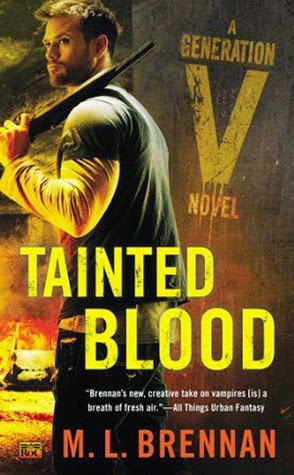 Here’s what you’ve been waiting for! The awesome M.L. Brennan has offered The BiblioSanctum the opportunity to host a giveaway for one SIGNED print copy of Tainted Blood to one lucky winner in the US. To enter, all you have to do is send an email to bibliosanctum@gmail.com with your Name and valid Mailing Address using the subject line “TAINTED BLOOD” by 11:59pm Eastern time on Tuesday, November 4, 2014.
Only one entry per household, please. The winner will be randomly selected when the giveaway ends and then be notified by email. All information will only be used for the purpose of contacting the winner and sending them their book. Once the giveaway ends all entry emails will be deleted.
So what are you waiting for? Enter to win! Good luck!
Panels: All-Star Superman
Posted on October 27, 2014 Leave a Comment

Grant Morrison and Frank Quitely sum up the Superman story in four epic panels. Pithy!


 The BiblioSanctum