Waiting on Wednesday 12/10/14
Posted on December 10, 2014 25 Comments

“Waiting On Wednesday” is a weekly meme hosted by Breaking the Spine that lets us feature upcoming releases that we can’t wait to get our hands on!
Mogsy’s Pick:
Half the World by Joe Abercrombie: February 17, 2015 (Del Rey)
Seriously, it feels like just yesterday I was just finishing up Half A King and already the release of the sequel is on the horizon, just a few months away. I love it when series have shorter interval times between books, not to mention 2014 seems to have just blown right by.
Half the World appears to pick up sometime after the first book, where Yarvi is now minister and the story focuses instead on a young female warrior.
 “New York Times bestselling author Joe Abercrombie’s thrilling new series continues in the follow-up to Half a King, which George R. R. Martin hailed as “a fast-paced tale of betrayal and revenge that grabbed me from page 1 and refused to let go.”
Sometimes a girl is touched by Mother War.
Thorn is such a girl. Desperate to avenge her dead father, she lives to fight. But she has been named a murderer by the very man who trained her to kill.
Sometimes a woman becomes a warrior.
She finds herself caught up in the schemes of Father Yarvi, Gettland’s deeply cunning minister. Crossing half the world to find allies against the ruthless High King, she learns harsh lessons of blood and deceit.
Sometimes a warrior becomes a weapon.
Beside her on the journey is Brand, a young warrior who hates to kill, a failure in his eyes and hers, but with one chance at redemption.
And weapons are made for one purpose.
Will Thorn forever be a pawn in the hands of the powerful, or can she carve her own path?”
Book Review: City of Eternal Night by Kristen Painter
Posted on December 9, 2014 17 Comments
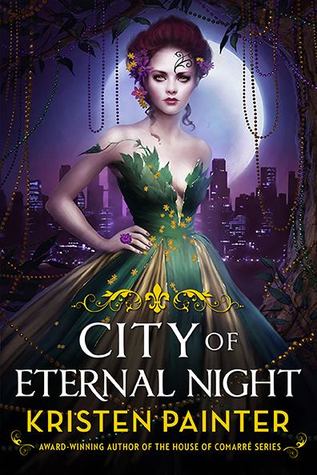 City of Eternal Night by Kristen Painter
Genre: Urban Fantasy
Series: Book 2 of Crescent City
Publisher: Orbit (December 2, 2014)
Author Information: Website | Twitter
Mogsy’s Rating: 4 of 5 stars
My excitement to read this book is evidence enough for me that the first installment of this series ended a lot stronger than it began. I went through the first two-thirds of House of the Rising Sun feeling rather ambivalent towards the protagonists, but by the conclusion Augustine and Harlow managed to win me over. A couple of significant events in the previous novel taught both of them lessons in humility and responsibility, and Harlow especially did a lot of growing up. As such, I looked forward to City of Eternal Night with a newfound respect for the characters.
On top of that, this sequel raises the stakes in every way by setting up a new arc that is bigger, stronger, and more encompassing. The story now goes beyond Augustine and Harlow’s personal problems to involve the whole supernatural community. Of course, the diabolical Branzino also makes a return in an attempt to further disrupt Harlow’s life as well as kill Augustine, and as usual the witches’ coven are up to no good again, but the huge whammy that rocks the fae world this time around is the kidnapping of a young girl from the Mardi Gras Exemplar Ball, which is the by far most important and lavish fae event of the year. There’s no ransom price, just a demand for Augustine to relinquish his role as the city’s fae Guardian – and everyone knows the only way to resign from that position is death.
First, what I loved: speaking of Exemplar Ball, I continue to really enjoy Kristen Painter’s portrayal of the city of New Orleans and the fae community’s place in it. I was even more enchanted by the atmosphere of the ball in this book than I was with the scenes from Nokturnos in House of the Rising Sun. Of course, the Exemplar Ball had to be a masquerade and the theme is predictably “Enchanted Forest”. A little overindulgent, perhaps, but boy, what I wouldn’t give to have been invited to that particular shindig. The descriptions of the decorations, costumes and even the food were wild and extraordinary and magnificent.
I also appreciated Painter’s expansion of the fae world in this installment. It’s easy to forget that this series actually takes place in the future, so sometimes the advanced technology can be a bit jarring. But mixed in with this “new and high-tech” is also mythology and the ancient lore of faeries. The history and background of Lally, a secondary character, is further explored with several big revelations about the old mansion that belonged to Harlow’s mother, also explaining why Branzino also wants it so much. A lot of things start to come together in this sequel, and the author continues to tease the details little by little.
Now for a couple of criticisms, which are minor: firstly, there is absolutely no mystery at all when it comes to the kidnapping case. There are a very limited number of suspects, and despite Augustine and the fae council going nuts over trying to narrow down the culprit, the one responsible is practically named in the book’s own description.
However, that doesn’t mean there aren’t any other surprises.
Take the ending, for example. On the one hand, it was abrupt and left us with one hell of a cliffhanger, but on the other, we are set up for a pretty big conundrum which makes me mighty curious as to how things will be resolved.
Finally, despite maturing a bit since the first book, every once in a while Harlow still gets on my nerves. She may be less of a selfish brat, but she’s still terribly naïve (or dumb with a capital D, if you’re feeling less generous). Sad to say, but she brings a lot of her problems on herself. It’s one thing to be socially awkward and a little sheltered, it’s another to have someone tell you straight out NOT to do a certain thing because there will be dire consequences – and even give you examples! – and you go do it anyway. That’s Harlow for you.
Still, my feelings about her notwithstanding, I continue to believe Harlow will become a more sympathetic character, and I’m following the budding romance between her and Augustine with interest. I’m also enjoying the world of this series a lot, and the story is getting better. This sequel is without question an improvement over the first book, and I’m definitely on board for book three.

A review copy of this book was provided to me by the publisher in exchange for an honest review. My thanks to Orbit Books!
Guest Post: “Friendships Between Strong Female Characters” by Karina Sumner-Smith
Posted on December 8, 2014 22 Comments
As you may recall, last month for Sci-Fi November I reviewed Radiant, a brilliant and unique speculative fiction novel debut from Karina Sumner-Smith. What also made this book stand out for me was its focus around a remarkable friendship between Xhea and Shai, two young women from very different walks of life. Hence it is with great honor that we welcome Karina here at the BiblioSanctum today to talk about this very topic!
FRIENDSHIPS BETWEEN STRONG FEMALE CHARACTERS
by Karina Sumner-Smith
 I say “strong female character”—and you cringe.
It’s okay, I understand the reaction. I think many of us are tired of the cardboard characters presented as “strong”. We all know the type: the attractive, kick-ass girl with a sarcastic comeback for every statement; the one who inevitably catches the eye of nearly every man in the story … and the one who usually ends up needing to be saved, no matter how many guns she’s toting. (Adjust details as required for your genre or medium of choice.)
For me, the idea of a strong female character really means an interesting female character—ideally, a woman who is the protagonist of her own tale, not just a sidekick or a victim or a helpless damsel waiting to be saved. A female character who has her flaws and quirks and bad days, yes, just as she has her intelligence and humor and moments of brilliance.
In other words, a character who reads like a real person.
Yet somewhere along the way, I think the wires got crossed. The typical understanding of a “strong female character” conflates the idea of emotional resilience with physical strength, and autonomy with extreme independence. As frustrating as it is to see the capability for violence stand in as a catch-all symbol for strength, it’s the latter that bothers me most of all.
Why, to be strong, must a female character stand alone? What happened to family and friends? Where are her colleagues and classmates? I wince at the possible subtext: that a smart, capable woman is destined to be alone.
As a reaction to the stereotype of the helpless damsel, or the female character who can’t seem to get anything done without male support, I can understand the appeal of a character who can handle everything just fine on her own, thank you very much. Yet true isolation makes one hurt and brittle, not strong; and collaborating with others, or accepting help when it’s needed (or appreciated), shouldn’t be made into weaknesses.
But if it’s irksome both to have female characters exist and act in isolation, and others who ultimately rely on male help to get the job done, where’s the middle ground? The more I thought about it, the answer seemed simple: not one, but two strong female characters. Women who work together. Women who—dare I say it?—are friends.
When I struggled to find more than a handful of SFF novels with a friendship between women as the story’s core emotional driver, I wrote one. Radiant is about two young women from opposite ends of their society who are thrown together by circumstance and must learn to understand and trust each other if they want to survive.
In many ways, my protagonist, Xhea, is a reaction to that too-independent stereotype. Homeless, desperately poor, and abandoned, Xhea has learned that she can only trust herself. Lacking size and physical strength, her only weapons are her wits, the edge of her too-sharp tongue, and the speed at which she can run away.
Sheltered and gentle and massively powerful, Shai presents a different kind of strength. She is careful and intelligent, and is caught between fear, responsibility, and the creeping realization that she’s been raised to believe a lie. (She also happens to be a ghost—and not even death has saved her from the pursuers on her trail.)
In writing a novel in which the central relationship is not a romance but the development of a friendship between two very different young women, I knew that I was taking a risk. There’s a market for romance, and for kick-ass female loners—but friendship? Never mind a publisher’s marketing team; I wasn’t sure how to connect with the audience for this novel. Who raves and cheers about two women working to trust and understand each other?
Me, I realized. I was that person. I hope that you are too.
* * *
 ABOUT THE AUTHOR
Karina Sumner-Smith is a fantasy author and freelance writer. Her debut novel, Radiant, was published by Talos/Skyhorse in September 2014, and in audiobook by Audible Studios. The second and third books in the trilogy are scheduled to follow in 2015. Prior to focusing on novel-length work, Karina published a range of fantasy, science fiction and horror short stories, including Nebula Award nominated story “An End to All Things,” and ultra-short story “When the Zombies Win,” which appeared in two Best of the Year anthologies. Visit her at karinasumnersmith.com.
YA Weekend: Talon by Julie Kagawa
Posted on December 6, 2014 16 Comments


Genre: Young Adult, Fantasy
Series: Book 1 of Talon
Publisher: Harlequin Teen (October 28, 2014)
Author Information: Website | Twitter
Mogsy’s Rating: 3.5 of 5 stars
I was a bit taken aback by the tepid to cool reviews I’ve been seeing for this one. Not that my own review is all that glowing, I realize, but while Talon probably won’t rank among my favorite Young Adult novels read this year, I had a lot of fun with it. By all means not a bad book. Surprisingly, most of the disappointment appears to be from fans of Julie Kagawa’s other series. I’ve never read anything else by her though, so there’s really nothing for me to compare this to.
But let’s move on to what the book is about. Talon is about dragons…but also not really. If you’re looking for a novel featuring these magnificent creatures in all their winged and scaly fire-breathing glory, you’re not going to find much of that here. What you have instead is a small group of dragonkind who spend most of their time in human form, hoping to infiltrate our society and one day take over the world again. A secret faction of dragon slayers called the Order of St. George is determined not to let that happen, and their members continue to hunt dragons like they have for time immemorial.
The book begins as two young dragon siblings, Ember and Dante Hill travel to California in their human forms to begin training for their future positions to serve their home base of Talon. Ember is fascinated with humankind, and wants nothing more than to enjoy the summer living out the full teenager experience – beaches, arcades, ice cream parlors, the whole shebang. Her brother Dante on the other hand is a lot more disciplined, and does not like it one bit when a rogue dragon shows up in their territory, distracting Ember from her training. Meanwhile, St. George has received the rumors of new dragon recruits in the area, and the young soldier Garret Xavier Sebastian and his partner are tasked to hunt these Talon agents down and kill them.
Encouraged to mingle and blend in with other teenagers, Ember and Dante spend most of this book as humans. But unlike other books with shape-shifting dragons (like Rachel Hartman’s Seraphina for example, which I thought did a really good job developing the culture and world of the draconic characters), it’s difficult to think of the dragons here as anything but human. This is what I meant when I cautioned not to think of Talon too much as a “dragon” book. Despite a few scenes of Ember thinking as a dragon and being a dragon – and they are quite few and far between – the author often seems to put her human persona before her draconic one. Plus, the setting is modern and urban. Ember’s life revolves around surfing, parties, friends and boys. Very little is known about the dragon home of Talon and Kagawa doesn’t really get into it. For those craving a bit more fantasy and world building, I can see how that could cause some frustration.
As such, this ends up being your rather typical contemporary young adult novel with a light fantasy twist, complete with love triangle and just a dash of forbidden love. Despite being exactly what I expected, it was undeniably entertaining.
After reading this, however, I admit to being skeptical of Kagawa’s writing. It’s obvious that she can spin a good yarn, but there were some plot elements that were so illogical and downright silly, it can be difficult to take these characters seriously. First of all, if you can take any form and you’re trying to covertly infiltrate and gain influence in human society, I would not do it as a teenager. Good luck gathering any useful information to bring back to your overlords, unless they’re interested in how your airheaded friend thinks so-and-so is so totally gorgeous and has nice abs. Talon is also so bad at this undercover secret agent stuff, I’m not surprised St. George managed to narrow their search down to Ember and Dante and their group of beach bum friends in like all of two seconds. You’re a dragon spy, and you’re seriously going to stick with Ember for your name? You might as well paint a target on your back and wear a big sign that says “I’M THE DRAGON!” and hang it around your neck. The Order of St. George doesn’t seem that much more competent either. At one point, Garret admits to his partner that he is getting too close to Ember and recommends stepping back from the mission. Instead of allowing Garret to do so, what does his partner do but tell him to take advantage of this new development to go even deeper into the case. Um, no! As soon as one of your soldiers gets emotionally involved and becomes compromised like that, you pull them the hell out. A lot of the problems that St. George experience near the end, they brought most of them on themselves.
These little moments aside, not much else detracted from the experience. Yes, the story is pretty standard but ended up being more interesting than the description made it sound, and it held my attention to the end, which isn’t something I can say for a lot of YA. The next book, predictably called Rogue, looks like it will delve deeper into the both the secret Order of St. George and the dragon organization Talon, so hopefully readers get the world building we want there.

Book Review: All Those Vanished Engines by Paul Park
Posted on December 5, 2014 22 Comments
 All Those Vanished Engines by Paul Park
Genre: Science Fiction
Series: Stand Alone
Publisher: Tor (July 1, 2014)
Author Information: Website
Mogsy’s Rating: 2.5 of 5 stars
All Those Vanished Engines was a real doozy to read and rate, as you would expect of meta-fiction. I admit I’m quite inexperienced when it comes books that use it as a literary device, and my feelings for this book remain rather mixed. On the one hand, the ideas and themes in here intrigued me and I found the execution of those themes to be quite clever. That interest alone fueled me throughout the novel, but on the flip side, I don’t know if I could have soldiered on if the book had been any longer. At a quick 269 pages, I have to confess that was also just about as much as I could take.
Told in three sections, the story first begins in the post-Civil War era. The north is ruled by a Queen, who has negotiated a two-nation settlement after the conflict. The narrator here attempts to reconstruct her past through a series of journal, about a fanciful and bizarre future. The second part is told in an auto-biographical style, taking place somewhere in northern Massachusetts where Park recounts a story about a secret investigation during World War II. Within this section are also elements from a writing project by one of his writing protégés, as well as Park’s own Wizards of the Coast novel that he is working on at the time. The third part finishes things off supposedly in the future, with aliens from history. Again, it’s told in an auto-biographical style, but at this point my perception of these realities have become so frazzled, I’d long given up on teasing out any semblance of a plot or purpose.
In case you couldn’t tell, all of that was my clumsy and very inadequate attempt to recap the book. I found it very difficult to extract a summary from the prose alone, and I had to have help from the book’s own description to fill in some of the blanks for me. This is because all three sections and their characters and stories are jumbled or nestled within one another, making it never really all that clear what “reality” I’m in at any given time. I think the best way I can think of to describe this mind-bending approach is by using the example of the artist M.C. Escher’s Drawing Hands, which as it happens also gets a mention somewhere in the novel. The art piece depicts two hands rising from wrists that remain flat on a sheet of paper, drawing one another into existence. Like the hands, the three sections of All Those Vanished Engines feel as though they are both feeding and taking from one another, all at once and all together. It’s as confusing as it sounds, but I also thought it was original and quite ingenious.
Obviously, this novel is intended for a very niche audience. A lot of readers will no doubt struggle with it, and personally, I’m surprised I was able to read it almost to completion without getting the urge to abandon it. My taste in speculative fiction doesn’t typically run towards the abstract and “weird”, and this book most definitely fits both those labels.
But thanks to some of the reviews I’ve seen for this book, I was prepared to read this with a whole different perspective, and going in fully expecting that I was going to be stepping out of my comfort zone helped me immensely. Knowing what I do about this book now, I probably wouldn’t have picked it up if I had to do it all over again, but I also can’t deny a certain appreciation for particular aspects of it so hence I can’t say the experience was all that unenjoyable. I’d say give this one a shot if you’re into meta-fiction or if you’re feeling brave and hankering to take on something unconventional and way, way, way outside the box.

A review copy of this book was provided to me by the publisher in exchange for an honest review. My thanks to Tor Books!
Tough Traveling: High Priests
Posted on December 4, 2014 18 Comments


The Thursday feature “Tough Traveling” is the brainchild of Nathan ofReview Barn, who has come up with the excellent idea of making a new list each week based on the most common tropes in fantasy, as seen in The Tough Guide to Fantasyland by Diana Wynn Jones. Nathan has invited anyone who is interested to come play along, so be sure to check out the first link for more information.
This week’s tour topic is: High Priests
HIGH PRIEST is nearly always evil, either on his own account or on behalf of the dark lord.
 Sword of the Bright Lady by M.C. Planck
Christopher wakes up in a strange world and pledges his service to the Bright Lady, becoming a priest in training. The high priests who have the responsibility of overseeing his progress aren’t the kind who are evil or working under any dark lord, though they do become quite exasperated and vexed by Christopher’s shenanigans.
 Age of Iron by Angus Watson
Druids are a priestly caste in the world of Age of Iron. There are all kinds of druids — healers, soothsayers, magicians and more. Some are good, some are bad, but the most bloodthirsty and depraved of them all is Felix, the druid who serves King Zadar, a cruel Dark Lord if there ever was one.
 The Mists of Avalon by Marion Zimmer Bradley
There are high priests and there are high priestesses. The Mists of Avalon has both, if you count Taliesin, the Merlin of Britain and old Archdruid of Avalon as a high priest. Then of course you have High Priestess Viviane, the revered Lady of Avalon who is the maternal aunt of Morgaine and Arthur.
 A Song of Ice and Fire by George R.R. Martin
The high priest of the Faith of the Seven is known as the High Septon. The qualifications for this job include being a greedy, pompous and corrupt fat fraud, since after the last one died in the riot of King’s Landing, the Queen has been displeased with all his replacements thus far for being much too ethical and good for her liking.
 Mistborn by Brandon Sanderson
It is quite surprising how many High Priests tend to serve a Dark Lord. The corrupt church had Lord Prelan Tevidian at its head, but as one of the chief lieutenants of the Lord Ruler, he was a target of the Steel Inquisitors who wanted to get rid of him and seat Head Inquisitor Kar in the High Priest position instead.
Waiting on Wednesday 12/03/14
Posted on December 3, 2014 16 Comments
“Waiting On Wednesday” is a weekly meme hosted by Breaking the Spine that lets us feature upcoming releases that we can’t wait to get our hands on!
Mogsy’s Pick:
Owl and the Japanese Circus by Kristi Charish: January 13, 2015 (Pocket Star)
I’ve been seeing this one featured in “Waiting on Wednesday” posts all around the blogosphere, and now it’s my turn! Anything even remotely related to archaeology or fabulous Las Vegas will have my attention. Then I had the pleasure of speaking with Kristi Charish and found out video games and RPG narratives have heavily influenced her writing. An author after my own heart! Gimme this book. Now.
 “Fans of Kim Harrison, Jim Butcher, and Linda Hamilton will flock to the kick-ass world of Owl, a modern-day “Indiana Jane” who reluctantly navigates the hidden supernatural world.
Ex-archaeology grad student turned international antiquities thief, Alix—better known now as Owl—has one rule. No supernatural jobs. Ever. Until she crosses paths with Mr. Kurosawa, a red dragon who owns and runs the Japanese Circus Casino in Las Vegas. He insists Owl retrieve an artifact stolen three thousand years ago, and makes her an offer she can’t refuse: he’ll get rid of a pack of vampires that want her dead. A dragon is about the only entity on the planet that can deliver on Owl’s vampire problem – and let’s face it, dragons are known to eat the odd thief.
Owl retraces the steps of Mr. Kurosawa’s ancient thief from Japan to Bali with the help of her best friend, Nadya, and an attractive mercenary. As it turns out though, finding the scroll is the least of her worries. When she figures out one of Mr. Kurosawa’s trusted advisors is orchestrating a plan to use a weapon powerful enough to wipe out a city, things go to hell in a hand basket fast…and Owl has to pick sides.”
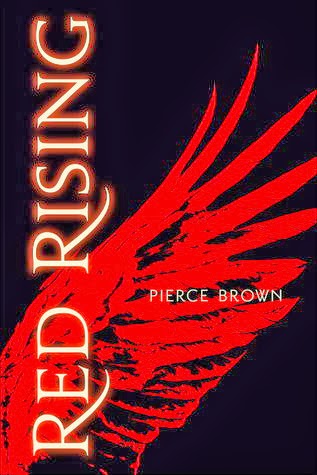
Book Review: Red Rising by Pierce Brown
Posted on December 2, 2014 25 Comments
Genre: Young Adult, Science Fiction, Dystopia
Series: Red Rising Trilogy #1
Publisher: Random House (January 2014)
Author Info: www.pierce-brown.com
Wendy’s Rating: 3 of 5 stars
Darrow is a helldiver, one of the most skilled and daring miners among the Reds who work themselves to death to prepare Mars for the “softer colours” of a dying Earth. The thing is, Mars has been terraformed for centuries, but the Golds who rule above all colours are already there, lolling about on the unknowing backs of the lesser colours.
Darrow learns this the hard way when he becomes involved with the Sons of Aries, a rebel group determined to bring down the ruling Golds — by turning Darrow into one of them.
I avoided the hype on this book, though I did know about The Hunger Games comparison. Initially, I didn’t quite grasp the comparison, but it becomes clear soon enough. Darrow, in his new Gold body, becomes a part of a deadly game of survival against the other Gold hopefuls. But unlike the Hunger Games, these young adults are fighting for a place high in society. The goal isn’t simply to kill the competition, but to conquer, just as the Golds have done for centuries.
One of the things I really liked about this book was the idea that the people at the top of the pyramid live in luxury, but they are far from soft. The society is modeled after Greco-Roman domination, and their tctics are no less ruthless. There most certainly is death within the arena, but there is also political intrigue and a lot of scheming. The Sons of Aries have taught Darrow much, but it his own skills and smarts as a Red and as a Helldiver that really come in handy. Of course.
Of course Darrow ends up more or less on top throughout, though there is ample struggle and betrayal along the way. In fact, there are a lot of things that go on that, after a while, become quite tedious. They all make sense, well enough, but I had so little connection to the characters, including Darrow, that I simply didn’t care. Brown tried to make them real enough, but in actuality, Mustang, Pax, Cassius — they are all fairly two-dimensional, as is Darrow himself, despite the level of depth Brown tries to give through Darrow’s initial tragedies. I got tired of Darrow telling me about his rage.
Also, Darrow is only 16 years old, but I found the characters didn’t often act their age. I initially chalked up Darrow’s more adult actions as due to a life of hardship that forced him to become an adult early in life, but this too was part of the disconnect I felt with the characters. I am not a fan of YA books that feature petulant, idiot teenagers, but this book simply didn’t give me characters with enough depth to classify them as anything more than archetypes.
With YA battle dystopias being all the rage these days, I expect to see REd Rising in the theatres soon enough. While I didn’t enjoy the read, I suspect a movie could potentially give me more of the depth I was looking for.

Book Review: Horrorstör by Grady Hendrix
Posted on December 1, 2014 24 Comments

Genre: Horror
Series: Stand Alone
Publisher: Quirk (September 23, 2014)
Author Information: Website | Twitter
Mogsy’s Rating: 4 of 5 stars
Horrorstör scratched a really great itch. When it comes to the Horror genre, I’m an unabashed fan of ghost stories and books about hauntings. Thing is, because so many of them follow the same formula and use the same familiar tropes, it’s really hard find something that truly stands out. I was therefore quite excited about this novel, which is a memorable and real quirky take on your classic haunted house story.
Protagonist Amy is a disgruntled employee of furniture superstore Orsk, which is essentially a clever parody of our real world IKEA (the author has nailed it all down, everything from the proprietary magic tool to the delicious meatballs in the cafeteria). There’s something strange about this particular Orsk store though. Every morning store partners arrive at work to find damaged and vandalized goods, not to mention the creepy “HELP” messages that randomly shows up on everyone’s cellphones.
To get to the bottom of this mystery once and for all, store manager Basil recruits Amy and fellow employee Ruth Anne for an overnight shift. Expecting to find some innocuous and mundane reason for all the strange things going on, they are totally unprepared for the horrors awaiting them on showroom floor in the dead of night.
I really enjoyed this book, and its story is one that will stay with me for a very long time. After all, how often does one come across a haunted house story that takes place in a big box chain store? Old mansions are typically your go-to settings for these kinds of stories, but before I read this book it has never really occurred to me how creepy a place like your local Best Buy or Home Depot can be after store hours when all the customers have gone home and the lights go off. I certainly wouldn’t want to be locked inside all alone.
And while I’ve had experience in retail, they were all gigs in small businesses or independently owned establishments. I have never worked in a big box chain store so I can’t say I’ve had the pleasure (or misfortune, depending on your outlook) of experiencing that kind of unique environment or culture. Still, I don’t think you have to have worked in that capacity to recognize some of the “retail-speak” that gets poked fun at a lot in this novel (“It’s not just a job, it’s the rest of your life”, “communicate knowledge to visitors with maximum sales competence”, “contribute to an environment where Orsk culture is a strong and living reality” and other such gems), some of which are just downright hilarious especially through Amy’s jaded eye.
I would also be remiss if I didn’t mention one of the core selling points of the physical copy of Horrorstör – the fact that it comes published in the shape and size of a glossy mail order catalog, along with product illustrations and descriptions, “coupons”, order forms and other such documents. Sound like a gimmick? Yeah, probably. But hey, it works. I give this packaging decision 10/10 for presentation and creativity.
Because of how the book looks, along with its spoofy nature, I admit I went into this thinking it would be more humor than horror. My mistake. This is a horror novel through and through. Yes, the story has its lighthearted bits and funny laugh-out-loud moments, but things quickly turn grim and spooky once the plot gets moving. There were parts that seriously gave me the heebie-jeebies and freaked me the hell out. And I confess, I loved being caught off guard like this.
What more can I say, but Horrorstör is a great addition which would add a little fun and eccentricity to any Horror lover’s library. I also think it would make a rather unique gift, especially if the recipient knows nothing about the book beforehand. The whole IKEA catalog look of it will no doubt lead many to believe it’s a joke/humor book, but what a surprise they’ll get when they crack open the cover and give it a read. Definitely a novel that will give you more than you bargained for.
A review copy of this book was provided to me by the publisher via NetGalley in exchange for an honest review. My thanks to Quirk Books!
Sunday Musings: 9:41 Dragon
Posted on November 30, 2014 6 Comments
Home in bed with a cold — but that’s nothing a good book can’t cure!
CURRENTLY READING
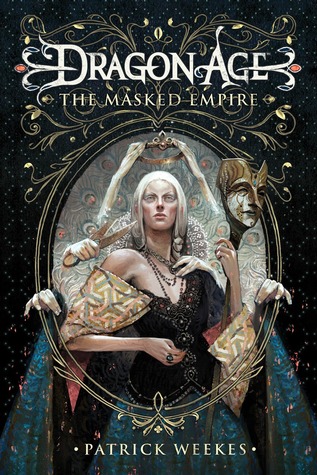 I’ve been playing a lot of Dragon Age Inquisition lately. A lot of Dragon Age Inquisition. And recently completed a mission involving the Empress of Orlais. The mission in the game follows up on one of the latest tie-in books, The Masked Empire.
I am a big fan of tie-in material when it comes to my favourite video fandoms, with my particular focus of late being on tie-ins related to video games. Some people shun the concept, but I love the depth they add to the characters and lore. In the case of the BioWare games like Dragon Age and Mass Effect, the events and characters in the books and comics end up being very important to the game itself — though not so important that someone who opts to play the game without partaking of the extras completely misses out.
WRITERY THOUGHTS
So how’s that NaNo-ing going?
BOOKISH THINGS
Reading with our children is so important for so many things, not the least of which is fostering a love of reading.


 The BiblioSanctum