Audiobook Review: The Palace Job by Patrick Weekes
Posted on March 26, 2015 24 Comments
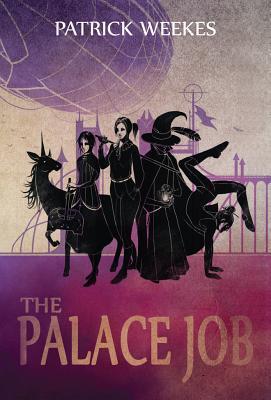 The Palace Job by Patrick Weekes
Genre: Fantasy, Caper
Series: Book 1 of Rogues of the Republic
Publisher: 47North (October 8, 2013)
Author Information: Twitter
Tiara’s Rating: 3.5 of 5 stars
Narrator: Justine Eyre | Length: 11 hrs and 17 mins | Audiobook Publisher: Brilliance Audio | Whispersync Ready: Yes
Something has been taken from Loch and secured in one of the most heavily guarded fortresses she’s ever known. She wants it back, and she intends to get it back. First, however, she needs to escape from prison and assemble a team of “experts” to help her achieve her goal. Escaping from prison is the easy part, the harder part is going to be getting to her objective.
Loch picks up an colorful group of partners to help her with her mission. Desidora, a death priestess who carries a talking warhammer. Tern, a tinkerer who cracks safes. Icy, Tern’s acrobatic, pacifist partner who aids her. Kail, Loch’s second who escaped prison with her and often uses “yo momma” jokes to force the hands of others. Ululenia, a shapeshifting unicorn who has a penchant for talking in purple prose and male virgins regardless of race. Hessler, an illusionist they picked up when their first choice wizard didn’t work out. With Hessler, we have Dairy, a teenage boy who doesn’t seem to have any skills of particular use.
A few months back, I read Dragon Age: The Masked Empire which was written by Patrick Weekes, as well. That book marked the first time I’d read anything by Weekes. While I thought the writing was good in that book, the novel annoyed me for various reasons that don’t necessarily reflect on his writing more than how it worked with the game Dragon Age: Inquisition. The Masked Empire is certainly the better written book, but The Palace Job is much more fun. Also, I hesitate to compare the two books too much since The Masked Empire is a serious endeavor where The Palace Job is a madcap caper meant to tickle the reader.
This book was so much fun to read! There’s a side of me that loves stories like these with action, adventure, and a dash of romance with characters that seem too lucky for their own good. It was almost like reading a book about a Syfy fantasy movie in the vein of Sharknado–garish fun that never takes itself too seriously and really pokes fun as some frequently used fantasy tropes.
I appreciated that Weekes took a typical heist story and combined it with a typical fantasy story, mixed in a good dose of humor, and created this book. The fantasy element of the story placed some limitations on the heist part of the story, and it was interesting to see what Weekes did to compensate for that while weaving the fantasy into it. Parts of the story are predictable, but it’s not so much about not knowing what’s going to happen than enjoying the ride to get there. You can see much of this plot coming a mile away, but getting there is the fun part.
The characters weren’t fleshed out much, but they were such a colorful cast, a real misfit bunch that made me chuckle through most of the book, especially Kail and his one-trick pony–the “yo momma” jokes, which I wouldn’t normally care for in a book. Also, I’m one of those people who loves characters. Give me complex characters that I can spend hours analyzing with friends (just ask Wendy), but while Weekes doesn’t delve much into their pasts and spends more time giving certain characters depth over the others, these were characters I still loved. I enjoyed what they brought to the story in the present situation and how they interacted with one another. I loved their talents, their flaws, and even the parts of the story that made them seem overpowered.
One criticism I have for the book is that Weekes seems to forget that the readers are not inside his head. This may be the result of him working in the gaming industry which is very visual. We get some scenes where we know something is going on, but the writing isn’t descriptive enough to actually tell us what is going on. I’m sure these were grand scenes in his head, but as a reader, they left me scratching my head. Another criticism is that the story felt like it didn’t segue well into the story’s major plot points, and this may relate to my prior observation about the reader not being in Weekes’ head. Things just seem to happen without much transition and build up, but I’m sure they made perfect sense to him.
As far as the narration goes, Justine Eyre reads this book in a voice that I’d called sultry and somewhat breathy, except when she’s doing the characters’ voices. I enjoyed her narration, but I did find myself wondering if she narrated all books in that particular tone. It doesn’t seem like the type of reading voice that would translate well to some other books, but I guess I’ll find out since I have a few more books read by her that I’ll be listening to soon. Despite that, I think she has great range, and she did a wonderful job with accents and the languages in the book.
I know I can be curmudgeonly when it comes to books and my reviews, and this book hits on many aspects that I might complain about in other books. Here’s what it boils down to, though. I don’t mind any book using things that I may not care for.Two things come into play with things like this. First, execution. I can forgive just about anything if it’s executed well. Second, the book itself. An element may work for one because it’s obviously what the author is going for while it may seem out of place in another where the author seems to be going one way, but the writing is going another. Weekes managed to capture things in a way that kept me engaged and listening/reading.
This was a fun, lighthearted read, and I was surprised how much I enjoyed reading/listening to the story. Do not go into this book thinking you’re going to find anything more profound than, “That’s not what your mother said last night, sir. At least, that’s what it sounded like. Her knees were pressed against my ears the whole time.” However, that is part of what makes this book a fun romp. It felt good to read a book that truly pleased the part of me that just loves a good time.

Tough Traveling: Beloved Mounts
Posted on March 26, 2015 33 Comments


The Thursday feature “Tough Traveling” is the brainchild of Nathan of Review Barn, who has come up with the excellent idea of making a new list each week based on the most common tropes in fantasy, as seen in The Tough Guide to Fantasyland by Diana Wynn Jones. Nathan has invited anyone who is interested to come play along, so be sure to check out the first link for more information.
This week’s tour topic is: Beloved Mounts
A combination of suggestions from several people, as it seems many want to talk about the various animals that people in fantasyland ride. So be they horse, bear, or other let’s talk about favorite rides.
Mogsy’s Picks:
This week’s topic is a fun theme. The only rule I imposed on myself is no horses, because I’m feeling a bit whimsical…
 Temeraire series by Naomi Novik
It’s the Napoleonic wars…with dragons. These books focus on the relationship between Aerial Corps Captain Will Laurence and his dragon Temeraire, and the two fight in numerous battles and go on many adventures throughout the series. The first book His Majesty’s Dragon features the story of how they first met and how they bonded; their relationship dynamics have always been my favorite aspect of the series.
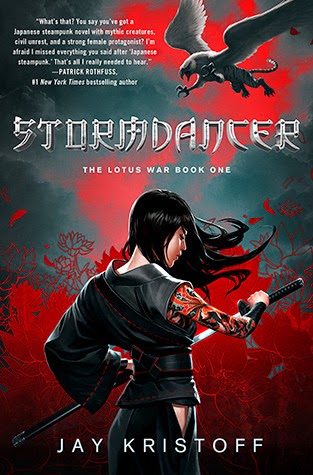 The Lotus War series by Jay Kristoff
This series is about the friendship that develops between protagonist Yukiko and the arashitora (storm tiger, or griffin) named Buruu, an unlikely pair who learns to trust and love each other after facing many challenges together. Due to a unique ability that Yukiko possesses, the two of them have a mental link and can communicate with each other telepathically.
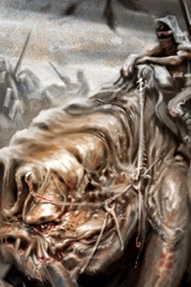 Star Wars by various authors
Towards the end of the Galactic Republic, the force sensitive Witches of Dathomir were able to domesticate rancors and develop a form of symbiosis with the creatures. By the time of the New Republic, most of Dathomir’s rancors were being used as mounts and played a major role in shaping Dathomiri society and culture.

This book is my favorite of the series so far, and the highlight for me is the subplot focusing on Manon and her wyvern Abraxos. One of the best scenes in the book showed how the two of them ended up together. Manon has her sights on becoming Wing Leader and trains and bonds with Abraxos in order to fight for the role. Like I said in my review, it’s kind of like How to Train Your Dragon, except less heartwarming and with 500% more brutality.

In the bleak, violent world of Gleam, snails of the Discard can grow to ridiculously enormous sizes. To the vagrants of the wasteland, these giant gastropods are considered an enjoyable delicacy and can feed a group for days. However, they are also used as mounts for traders and travelers; slap a saddle on one of these suckers and you can ride vertically up the side of a cliff if you wished.
Wendy’s Pick
The Neverending Story by Michael Ende
I’m just going to put this right here and then go cry myself to sleep.
Mogsy’s Edit:
Oh oh oh, if we’re going to have a cryfest, can I add one more?
Arthas: Rise of the Lich King by Christie Golden
As one of the greatest story arcs in Warcraft history, nay, of video game history, came to a close, Blizzard Entertainment released a special song called Invincible.
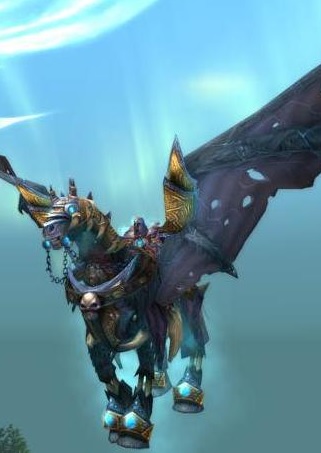 Invincible, of course, is the name of Arthas beloved steed — both in life and in death. Arthas was present when the horse was born, and then was forced to kill the mount ten years later after a riding accident, in order to relieve the animal’s pain. When Arthas became the Lich King, he resurrected Invincible’s bones to become his undead steed.
And to answer your question, yes, yes they actually wrote an entire song about a damn horse. It’s a sad, sad song though.
Waiting on Wednesday 03/25/15
Posted on March 25, 2015 15 Comments

“Waiting On Wednesday” is a weekly meme hosted by Breaking the Spine that lets us feature upcoming releases that we can’t wait to get our hands on!
Mogsy’s Pick:
An Ember in the Ashes by Sabaa Tahir: April 28, 2015 (Razorbill)
I enjoy reading YA, but admittedly the genre does not make up a large part of my reading diet. This book caught my eye, however, and I guess as time went on the more I learned about it the more intrigued I became. It seems to be getting quite a lot of attention lately, but what truly and finally cinched it for me is the author’s letter to readers on the first page right when you open up the cover (I was fortunate enough to get an ARC). Tahir writes that Ember was inspired by news stories about Kashmiri women whose brothers, husbands and sons were kidnapped by local military forces and were never seen again, but that she also put a lot of her own life into the story, from her experiences of being an immigrant coming to America, feeling like an outcast in a small town, and finding solace in reading. The message about love, courage and hope just really touched me, and I’m looking forward to starting this book now more than ever.
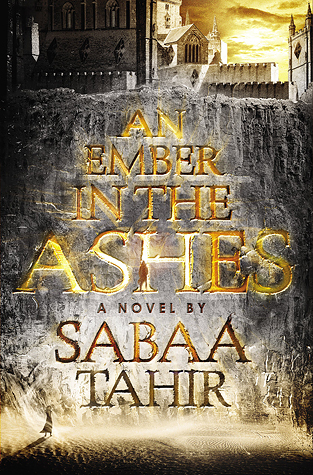 “Set in a terrifyingly brutal Rome-like world, An Ember in the Ashes is an epic fantasy debut about an orphan fighting for her family and a soldier fighting for his freedom. It’s a story that’s literally burning to be told.
LAIA is a Scholar living under the iron-fisted rule of the Martial Empire. When her brother is arrested for treason, Laia goes undercover as a slave at the empire’s greatest military academy in exchange for assistance from rebel Scholars who claim that they will help to save her brother from execution.
ELIAS is the academy’s finest soldier—and secretly, its most unwilling. Elias is considering deserting the military, but before he can, he’s ordered to participate in a ruthless contest to choose the next Martial emperor.
When Laia and Elias’s paths cross at the academy, they find that their destinies are more intertwined than either could have imagined and that their choices will change the future of the empire itself.”
Audiobook Review: The Castle of Otranto by Horace Walpole
Posted on March 24, 2015 7 Comments
 The Castle of Otranto by Horace Walpole
Genre: Gothic Horror
Publisher: Oxford University Press (July 16, 1998; First published in 1764)
Author Information: Wikipedia
Tiara’s Rating: 1.5 of 5 stars
Narrator: Tony Jay | Length: 3 hrs and 58 mins | Audiobook Publisher: Blackstone Audio | Whispersync Ready (as of this posting): Yes
Don’t ever let anyone tell you that classic books can’t be trash because they are wrong, and this book is proof of that. Being billed as the first gothic horror doesn’t change that in any way. That just means it also has the distinction of being the first terrible gothic horror, as well.
Manfred, the prince of Otranto, decides to marry off his sickly 15-year-old son in order to beat a vague prophecy that states:
That the castle and lordship of Otranto should pass from the present family, whenever the real owner should be grown too large to inhabit it.
I’m not entirely sure how marrying off his son is supposed to help, or even what it means, or even where this prophecy came from. Other than to serve as some foreboding portent that you quickly forget about, I’m not sure if those lines were even necessary. Even the author knows this is stupid because directly after the curse, it reads:
It was difficult to make any sense of this prophecy; and still less easy to conceive what it had to do with the marriage in question. Yet these mysteries, or contradictions, did not make the populace adhere the less to their opinion.
I just know on the day of the wedding a large helmet falls from the sky and crushes the son. I’m sure that was the first sign that I should’ve turned back. No one really asked questions why or how a large black helmet fell from the sky (and no, you never find out why either). Manfred felt he needed to explain it somehow, even though the people were too stupid to care about that, so he blames magic, specifically necromancy. I can’t refute his claims of necromancy in this case because maybe so.
Instead of mourning his much loved son, Manfred starts his descent into foolishness and decides that he must marry his son’s wife because she can give him more children, preferably boys. He has no use for girls. Suddenly, his son goes from loved to a feeble child that deserved to die (and let’s just put his body somewhere in the castle and not bury him). He wasn’t worthy of carrying on the family line in such a weak state. Providence intervened and granted Manfred chance by taking his son. Now, if he could just get that rascally girl to stop running from him because they have sons to make. Yeah, he’s already married to a good woman who can no longer give him children, but that’s nothing a divorce can’t take care of if he plays his cards right.
All the elements for a story that could’ve been potentially good are there. It did set the stage for books that would follow in the genre. However, it was just so amazingly absurd that I could only keep reading and see just how much of a mess this turned into. Watching Manfred’s cartoonish descent into madness, his wife’s willingness to set aside all her moral dignity with no compunction for Manfred to obtain his own goals, Matilda (Manfred’s daughter who he was no affection for) and Isabella’s (his son’s bride) childlike friendly rivalry over a guy that’s known them three seconds among other things was just like watching a ruin so completely laughable that you can’t believe someone actually wrote this down. None of these things are executed with the same gloomy, psychologically gripping panache of others who came after Walpole.
Stylistically, if I hadn’t been listening to this novel at the same time I was reading it, it might’ve been a little confusing. Dialogue from various characters are often in one paragraph together without distinction to who was saying what, especially since there were no quotation marks to at least show that different people were speaking in the edition that I had. However, I don’t blame that on Walpole more than I do the publisher who should be aware that something like that can be confusing for readers.
While listening to this book, I kept thinking, “This narrator sounds like the Elder God from the Legacy of Kain series.” Legacy of Kain is one of my all-time favorite gaming series, and sure enough, it’s the same voice. Tony Jay has done many other games, cartoons, and television shows that I recognize his voice from. He does phenomenal work, and while doing some research on him for this review, I found out he passed in 2006. His voice definitely help the story, and while I liked his voice for Manfred, who he voice to sound similar to his Shere Khan, it didn’t help me to stop associating him with a cartoon villain.
The only redeeming thing about this book other than the narrator, and I mean the only thing, was the fact that I’d swear this was like a 1700s version of a trashy talk show episode (think Jerry Springer or Maury Povich) with daughter swapping pacts and “In the case of 19-year-old Theo, YOU ARE THE BABY’S FATHER!” moments. Other than that, this was a shallow book with characters you don’t give one shit about. There was nothing disturbing or particularly compelling about it, and it certainly fit the criticisms of gothic horror in that era being tawdry and ridiculous. In fact, let’s just rename it The Trash of Otranto.

Book Review: Voyage of the Basilisk by Marie Brennan
Posted on March 24, 2015 21 Comments
A review copy of this book was provided to me by the publisher in exchange for an honest review.
 Voyage of the Basilisk by Marie Brennan
Genre: Fantasy
Series: Book 3 of Memoir by Lady Trent
Publisher: Tor (March 31, 2015)
Author Information: Website | Twitter
Mogsy’s Rating: 4 of 5 stars
In the interest of full disclosure, I majored in Anthropology and Evolutionary Biology so these books are like super-strength catnip to me. Written in the form of a memoir by the venerable Lady Trent, these novels are adventurous tales about our protagonist when she was a younger woman, but just as importantly they also explore her lifetime of scientific study and research. As such, I find this series extremely hard to resist. Ethnographic narratives? My heart goes all a-flutter. Taxonomy and biodiversity? Help, I swoon! Throw in dragons to complete the trifecta, and stick a fork in me, I’m done.
Voyage of the Basilisk picks up a few years after the events of the last book, and once again Isabella is making preparations to leave Scirland in order to continue her scientific study of dragons. There will be several major differences about this particular expedition, however. Isabella will be leading it, for one; no longer accompanied by her old associate and benefactor Lord Hilford, the majority of all decisions will be falling on her shoulders. Isabella has also decided to bring along her son Jake, who is now old enough to travel. And finally, this upcoming expedition will be her longest and most ambitious one yet: two years aboard the Basilisk, a royal survey ship hired to sail her and her party around the world in order to study all manner of dragonkin.
Dragons are of course what Isabella desires to see the most. But as we’ve already seen in the previous two installments, everywhere Isabella travels, her adventures also put her in contact with the local population. In many cases, she ends up living with them and immersed in their culture. These books are as much about dragons as they are about the world Isabella lives in, which I find is one of the most unique aspects about this series. Unlike a lot of other books featuring dragons, the ones in here are not intrinsically magical or preternatural. They, along with the native flora, fauna, and even native peoples in their habitat are all part of the natural living system. For that reason, I’ve told people before not to read this series solely for the dragons, and instead read it for the whole package.
As much as I enjoyed this book, it was not what I’d expected at all. From the description and cover, I immediately thought “Maritime/Nautical Fantasy”. In truth, though Isabella does spend the majority of this book traveling on the high seas, the main story doesn’t really start until halfway when the Basilisk gets shipwrecked in the tropics and the characters find themselves as guests of the local islanders. In contrast, the first half is decidedly lighter on plot as Isabella flits from one place to next, searching for dragons to observe. The overall pacing follows a similar pattern of the first two books, where the beginning was mostly made up of a series of short anecdotes, with the meat of story coming much later. Fans of the previous novels therefore should find Voyage of the Basilisk familiar and to their liking.
Just as Isabella’s dragons evolve, so does her character development. As her confidence in her knowledge and skills increases, she starts taking on greater challenges. Leading the expedition is the first step. This book also sees her having the courage to formulate her own scientific hypotheses, as well as the courage to admit when they’re wrong.
For the first time in this series, Isabella’s son Jake is also a major character. Isabella knows her maternal instincts have never been strong, not something easy for her to admit. But as Jake grows, her feelings toward motherhood begin changing and she starts to see her son as a young man with his own hopes and dreams, and not just a reminder of her late husband. This side plot really touched me, recalling Isabella’s guilt over putting her research ahead of her family in previous book, and comparing that to her relationship with Jake now. I like how amidst the adventure and the science in these books, there’s always an emotional side to the story.
This novel builds significantly on the previous books. First of all, Isabella’s voyage on the Basilisk expanded the scope of the world tremendously, from the luscious jungles of Coyahuac to the volcanic islands of Keonga. We encounter many new species of dragons, including sea serpents, fire lizards, feathered drakes, and more. Aside from Jake, new characters include Aekinitos, the eccentric captain of the Basilisk, and Suhail, an archaeologist specializing in ancient draconic ruins. Isabella befriends the latter and then becomes quite taken with him, and their dynamic is so wonderful that I really hope we’ll see him again someday.
I really love this series, and my fondness only grows with every new adventure. I rarely make such a deep connection to a main character, but three books later, “Lady Trent” feels incredibly real for me. There’s so much about her past that has yet to be revealed, and I can’t wait for the next installment of this series. More expeditions, more science, and of course more dragons!

Other reviews in this series:
A Natural History of Dragons (Book 1) (Mogsy), A Natural History of Dragons (Book 1) (Wendy), The Tropic of Serpents (Book 2)
Book Review: The Dragon Conspiracy by Lisa Shearin
Posted on March 23, 2015 12 Comments
A review copy of this book was provided to me by the publisher in exchange for an honest review.
 The Dragon Conspiracy by Lisa Shearin
Genre: Urban Fantasy
Series: Book 2 of SPI Files
Publisher: Ace (January 27, 2015)
Author Information: Website | Twitter
Mogsy’s Rating: 3.5 of 5 stars
The Supernatural Protection & Investigations bureau, known as SPI, is back again to battle the next great threat that’s putting Manhattan in peril. This time it’s All Hallows’ Eve and someone has just pulled off the biggest jewel heist in history, using a trio of harpies to steal a cluster of seven cursed diamonds from a museum exhibit. Problem is, the diamonds belong to a powerful dragon, and now he’s pissed. Even worse, the seven gems are said to have magical properties, and in the right mage’s hands, their effects can have deadly repercussions for the thousands of supernaturals living in the tristate area.
Anyway, dragons are awesome and all, but I feel like there’s a huge missed opportunity here not titling this book The GORGON Conspiracy. This series is really unique in that it has featured an unconventional paranormal baddie in both books so far, each time drawing inspiration from literature and mythology. In the first book, it was Grendel creatures. In this one, it’s Gorgons. So, yeah, when’s the last time you read an urban fantasy featuring Gorgons? No, I can’t recall either. As protagonist Makenna Fraser and her partner Ian desperately chase down leads, more suspects are being found paralyzed and turned into stone. SPI has until midnight to get to the bottom of the mystery, or a whole bunch of their vampire and werewolf friends are going to die.
I was really looking forward to this book, because I really enjoyed The Grendel Affair. The X-Files meets Men in Black angle is probably my favorite aspect of the series, featuring an organization tasked to keep track of the paranormal creatures of the world, making sure that the unsuspecting public is safe from them and vice versa. The Dragon Conspiracy continues in this vein, which was great; however, I also didn’t think it was as good as the first book, for one major reason: the main character.
Thing is, I like how Makenna Fraser isn’t your usual snarky kickass urban fantasy female lead. I like that she’s your average everyday normal southern gal in the big city, maybe a little awkward and charmingly clumsy. But there has to be a balance too. Her role in this book was smaller, and I would even go as far as to call her passive. Not exactly a quality you look for in a protagonist. She was definitely much more involved in the previous novel. This time around, though? There wasn’t much to distinguish her, apart from her inaction. She seemed more like an observer than an actual player in this story, and I also didn’t feel like I learned anything new about her character.
Furthermore, the budding romance between Ian and Makenna appears to have come to a screeching halt, with no explanation as to why beyond the usual pretext of “We work together so we shouldn’t date each other”. Not that this is a bad thing; sometimes not having a romance to bog down the story can actually be seen as a positive. Besides, Makenna has prospects elsewhere. I just wish there was a better reason given for the sudden change in their relationship, and I confess part of me is a little miffed because I predicted in my review of the first book that the two of them will be very good together, and it turns out I was completely off base.
Still, I am enjoying this series. I just love the new takes on unconventional paranormal/mythological creatures, and that’s what sets the SPI Files apart. So far, the stories in both books have been snappy and entertaining, and with a bit more energy and spirit, I think this series has the potential to become something even more. Hopefully we’ll see the author flesh out the characters and give more depth to Makenna in the next installment. Count me in for book three.

Other reviews in this series:
The Grendel Affair (Book 1)
Book Review: NPCs by Drew Hayes
Posted on March 22, 2015 7 Comments
 NPCs by Drew Hayes
Genre: Roleplaying, Gaming, Adventure, Fantasy
Publisher: Self-Published (April 2014)
Wendy’s Rating: 3.5 of 5 stars
I’ve never played a tabletop roleplaying game, though I’ve been thinking about it lately. One more thing to check off to achieve my official geekdom badge. I do know enough about this gaming concept to easily wander into this book, though it might be just a little too niche for someone completely ignorant of the medium. Still, Hayes does a reasonable job of explaining some of the logistics without bogging down the story with over exposition.
One thing you would need to know is that NPC is the “acronym” for “non-player characters.” These are all the characters within a game that interact with, but are not controlled by players. Often these characters have very specific roles, such as bartender, mayor, etc.
When a group of four players critically fail a trip to the bar, four NPCs discover that they can’t just rid the bodies of gold and dump the bodies in the woods. These adventures have some connection to a brutal king who, upon discovery of their death, might just burn the NPCs’ village down. Despite never having left their village before, the four NPCs take up the adventurers’ quest, and learn a little something about themselves and each other along the way.
From here, the story is quaint, though not particularly enlightening. There are a few amusing or poignant moments where the NPCs discover that there’s more to adventuring that just following what seems to be the “rules” of the game. For example, the NPC whose life has been little more than waiting to be kidnapped so that adventures can rescue her over and over again, finds that she’s got some rage issues that need to be worked out, while the seemingly two dimensional gnome minion who actually has brains, as well as a heart of gold.
There’s a lot of action, which Hayes does a good job of portraying in a way that doesn’t simply sound like he’s rattling off spells and abilities from a list. And the characters certainly did grow on me. I had assumed this to be a kind of “toys come alive while you’re not looking, hilarity ensues” sort of scenario, but for one thing, the NPCs, while they know they are not adventurers, don’t quite realize that there’s a whole other world out there. And their goal, as the story progresses, isn’t simply to become real adventurers. Hayes gives them very real and relatable purpose and backstory, and changes point of view between them to tell their stories.
Much of the comic relief comes in the form of the players themselves, whose actions are occasionally interjected into the story. This could easily have gotten tedious, as they weren’t particularly interesting — in fact, they were realistically annoying at times — but thankfully, they didn’t factor in much beyond serving as plot devices to help advance the NPCs.
This was a quick, fun read that any gamer and maybe even someone with a passing fancy in gaming can enjoy. I’ve certainly thought about what the NPCs I’ve played with in video games have gotten up to when I’m not looking. This book gives me an interesting new perspective.

Book Review: The Autumn Republic by Brian McClellan
Posted on March 21, 2015 10 Comments
A review copy of this book was provided to me by the publisher via NetGalley in exchange for an honest review.
 The Autumn Republic by Brian McClellan
Genre: Epic Fantasy
Series: Book 3 of The Powder Mage
Publisher: Orbit (February 10, 2015)
Author Information: Website | Twitter
Mogsy’s Rating: 3.5 of 5 stars
The end of the Powder Mage trilogy has finally arrived with The Autumn Republic. I really enjoyed the first two novels, and was very much looking forward to this concluding volume. So did it meet my expectations? All told I’m happy to say that it did, in all the ways that count. Still, I confess I can be quite particular about my series-enders. As much as enjoyed this book, if I’m to be completely honest, I did feel there were a couple areas that fell short.
I can’t deny that Brian McClellan did a wonderful job wrapping things up, though. The Autumn Republic starts the way the previous book The Crimson Campaign ended – with the world in chaos. The capital city of Adro has fallen, and Tamas returns from the field only to find his beloved country occupied by a foreign force. His son Taniel is missing and presumed dead. Without strong leadership, his own army is tearing itself apart from the inside out. And on top of all that, the Kez have not ceased their attacks on Adran territory.
For various reasons, I had hard time getting into this book. Catching up at the beginning of each sequel is never easy for me, and it wasn’t helped by the book’s slower pacing, at least for the first half. I recall I had a similar issue with book two as well. It appears I’m in the minority, but I felt that unlike The Crimson Campaign, things here didn’t hit its stride until well into the second half. That’s not to say I didn’t find the novel interesting; on the contrary, McClellan juggles multiple points-of-view and furthers his characters’ story lines. Tamas has his hands full dealing with angry gods and invading armies. Meanwhile, Inspector Adamat is on a mission to rescue his kidnapped son, and finds himself investigating more cases besides. Bo finds a worthy apprentice in the former servant-turned-Privileged-sorcerer Nila. And Taniel Two-Shot, who is in fact very much alive, is hiding in the hills with his companion Ka-Poel, the two of them on the run from enemies he once thought were his friends.
The scope of the story has expanded, and likewise the number of players. In spite of the many subplots, however, the feeling that we were just biding our time never truly left me. There’s so much going on, but that the ending is the main showpiece here was never in doubt, and many developments felt secondary when I could see that everything was building towards the grand finale. No other chapters made me feel this way more than Adamat’s. His eldest child had been taken from him, and yet his grief is hardly conveyed; after that issue plays itself out, he takes on another investigation and life goes on, almost like the author needed to give him something to do. I liked following his storyline, but its progression and resolution was just unexpected to say the least, especially in light of everything he and his family experienced. It was a bit disappointing, considering how Adamat was my favorite character in Promise of Blood.
That said, other characters were much more convincing. In the last book, Taniel was the one who emerged as the clear favorite as I found him and his story to be the most compelling, but he spends most of the time in this book on the lam. I therefore wondered if it would finally be Tamas’s turn to shine in The Autumn Republic. What actually happened surprised me. The one who really stood out for me this time was not any of the main characters but Nila, the young woman who started off as a secondary character in Promise of Blood, but whose role eventually grew when huge revelations about her were dropped on readers at the end of The Crimson Campaign. She gets a lot more page time in this book, along with her own side plot which I really enjoyed. Her relationship with Bo was one of the major highlights, and I wish it had been given more attention because something special was definitely happening there.
The writing has become more natural and polished over the course of the series, which makes this concluding volume all the more rewarding. I did assert that the ending here was the crown jewel of the book, and McClellan gives it his all, delivering a stunning send-off to the trilogy. He ties up the major loose ends, though I felt there were a few important matters still left unresolved. Ka-Poel’s character immediately comes to mind. Where did she come from? What’s the origin behind her amazing abilities? How did she get mixed up with Taniel in the first place? I’ve been asking these questions since the first book hoping to find answers in this final installment, but I still feel none the wiser. Nila’s transition from humble servant to powerful sorceress also happened way too quickly, and I wish there had been more time spent on her growth, not to mention a better explanation for her immense power that had remained latent for so long.
One thing to keep in mind is that I do tend to be more critical of endings – especially bittersweet ones. I have nothing against bittersweet endings (I love them, in fact) but predictability takes away a lot of the enjoyment. I had guessed correctly how things were going to end for at least a couple of the characters, so that dulled the emotional impact considerably. All told, however, I don’t want to come across too negative, or discourage anyone from picking up these Powder Mage books. They’re totally worth it. Even though McClellan may have missed a few opportunities here and played things a bit too safe, I liked this book and thought it was a worthy conclusion to a fantastic trilogy. My issues with it are minor and hardly deal breakers, especially for a relatively new author who now has a completed epic fantasy trilogy under his belt. I am looking forward to his future writing endeavors with much enthusiasm and interest.
Other reviews in this series:
The Crimson Campaign (Book 2)
Book Review: Knight’s Shadow by Sebastien de Castell
Posted on March 20, 2015 18 Comments
A review copy of this book was provided to me by the publisher in exchange for an honest review.
 Knight’s Shadow by Sebastien de Castell
Genre: Fantasy
Series: Book 2 of Greatcoats
Publisher: Jo Fletcher (UK: March 5, 2015)
Author Information: Website | Twitter
Mogsy’s Rating: 4 of 5 stars
Traitor’s Blade was one of my favorite reads last year so I couldn’t wait to get my hands on this one. When my copy of Knight’s Shadow came I literally threw up my hands and yelled STOP EVERYTHING! My whole carefully planned reading schedule went flying out the window as I dove into this one straight away.
How wonderful it is to be back into this world once more, though Falcio and the gang aren’t exactly in good shape when we catch up with them again at the beginning of this novel. Events in the final showdown of Traitor’s Blade left Falcio weakened by a deadly poison which should have killed him, and it still might be killing him even now. The Tailor and her new Greatcoats have taken Aline, the king’s rightful heir, into the mountains to protect her from Trin’s armies and assassins.
It’s clear that the Greatcoats are going to need all the help they can get to put a thirteen-year-old girl on the throne, so Falcio and his companions are soon sent off to negotiate an alliance with Duke Isault. However, right before a treaty can be finalized, the Duke and his entire family are brutally murdered, setting our heroes on a path to find the killer and uncover a dangerous conspiracy threatening to tear apart the country.
Once again I’m amazed at the seamless way Sebastien de Castell manages to combine action and humor. This sequel is as much fun as the first book, continuing in a similar vein with its snappy narrative style and pacing. I also can’t help but feel the book is aptly titled though, because the entire story also feels shrouded in a slightly darker tone. Time and time again, Falcio, Kest and Brasti are pushed to their limits, forced to go through many situations that will test their loyalties and resolve. I found Knight’s Shadow wildly entertaining, but it’s important to note that the bleaker, grimmer parts also have their role in shaping the characters through difficulty and hardship.
This book will really stress the bonds between our mighty trio. You’ll see Falcio react with more vehemence against those who threaten his friends. You’ll see the efficient and methodical Kest lose control. You’ll see Brasti question his own place in the order and challenge Falcio’s authority. We spent the first book getting to know these characters and De Castell continues to build upon them by putting the group through new situations, developing those fascinating relationship dynamics. He also makes things more interesting by giving Valiana a much bigger role, as well as introducing the vicious and cynical Darriana.
Kest, Brasti, Valiana and Darri all react to Falcio in their various ways, but they share a common goal in bringing our protagonist back down to earth when he gets too lost in himself, or too lost in the idolatry of his dead king. I’ve got to admit, sometimes Falcio does need that reality check.
Despite being a much longer book than its predecessor, the story in Knight’s Shadow feels more driven, streamlined and less meandering, featuring less flashbacks and asides. On the other hand, Falcio and his friends had to fall into several success-and-setback cycles before the story hits its stride and takes off running. The beginning felt slower to me for this reason, and I also found the book a lot more emotionally draining than Traitor’s Blade. Our poor Greatcoats never seem to catch a break!
I think I still liked the first book more, just slightly. Traitor’s Blade had a few more original moments, dazzling me with concepts like conversations held by swordfight. It also had more fantasy/magical elements, like fey horses. Knight’s Shadow had a great story but it was also very ambitious with its twists and turns, leading to some inconsistencies, and for all that I still predicted the ending. But these minor points notwithstanding, I had an amazing time with this book. Greatcoats is now up there on my list of favorite fantasy series, and I never miss a chance to recommend it to my fellow readers and friends. I’m sure they’re so sick of hearing me gush about these books by now but I don’t care! I can’t wait to see what De Castell has in store for us next in book three, Tyrant’s Throne.
Other reviews in this series:
Traitor’s Blade (Book 1)
Audiobook Review Bites
Posted on March 19, 2015 11 Comments
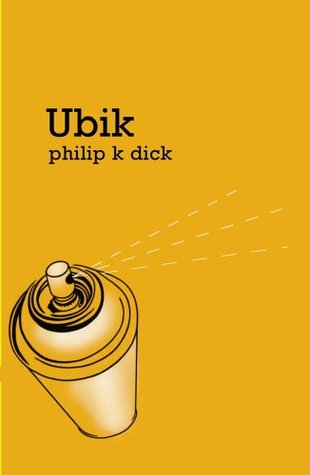 Ubik by Philip K. Dick
Genre: Science Fiction
Narrator: Anthony Heald
Length: 7 hrs and 7 mins
Whispersync Ready: Yes
In the future world of 1992 (give him a break; this book was written in 1969), Joe Chip is working for an anti-telepath organization. What are anti-telepaths? Simple. They’re people who can neutralize a telepath’s abilities. Many people employ these anti-telepaths to help protect their businesses. Glen Runciter and half-lifer (a half-lifer is someone who is deceased, but kept in a cryo state that allows their consciousness to continue to be accessible for communication for a certain period of time depending on how strong they are) wife, Ella, run the organization.
When a businessman by the name of Stanton Mick hires Glen’s team, including a woman who has the unique ability to change the past, to secure a base he’s built on the moon, they find themselves caught in a trap where Glen appears to be the only who’s died. The team rushes him to a half-life facility. However, reality starts to shift and warp for the team, leading them to the question of who’s really alive and who’s really dead. Maybe none of them are. Maybe all of them are, and how does this mysterious chemical Ubik factor into all this?
I really wasn’t feeling this book at first, and that’s abnormal for me because I love PKD. It was interesting reading about the half-lifers and the anti-telepaths, but I was just a little bored by the story at first. However, once it got to the heart of things I couldn’t stop listening. The narrator was okay, but I really, really hated the voice he did for Glen. It grated on my nerves for some reason. The ending of this book is probably why I rated it so high, though. I want to say it “disturbed” me, but that doesn’t feel like the right word for how I feel about it. Unsettling feels like the better word, even if it’s not that much different from “disturbed.”
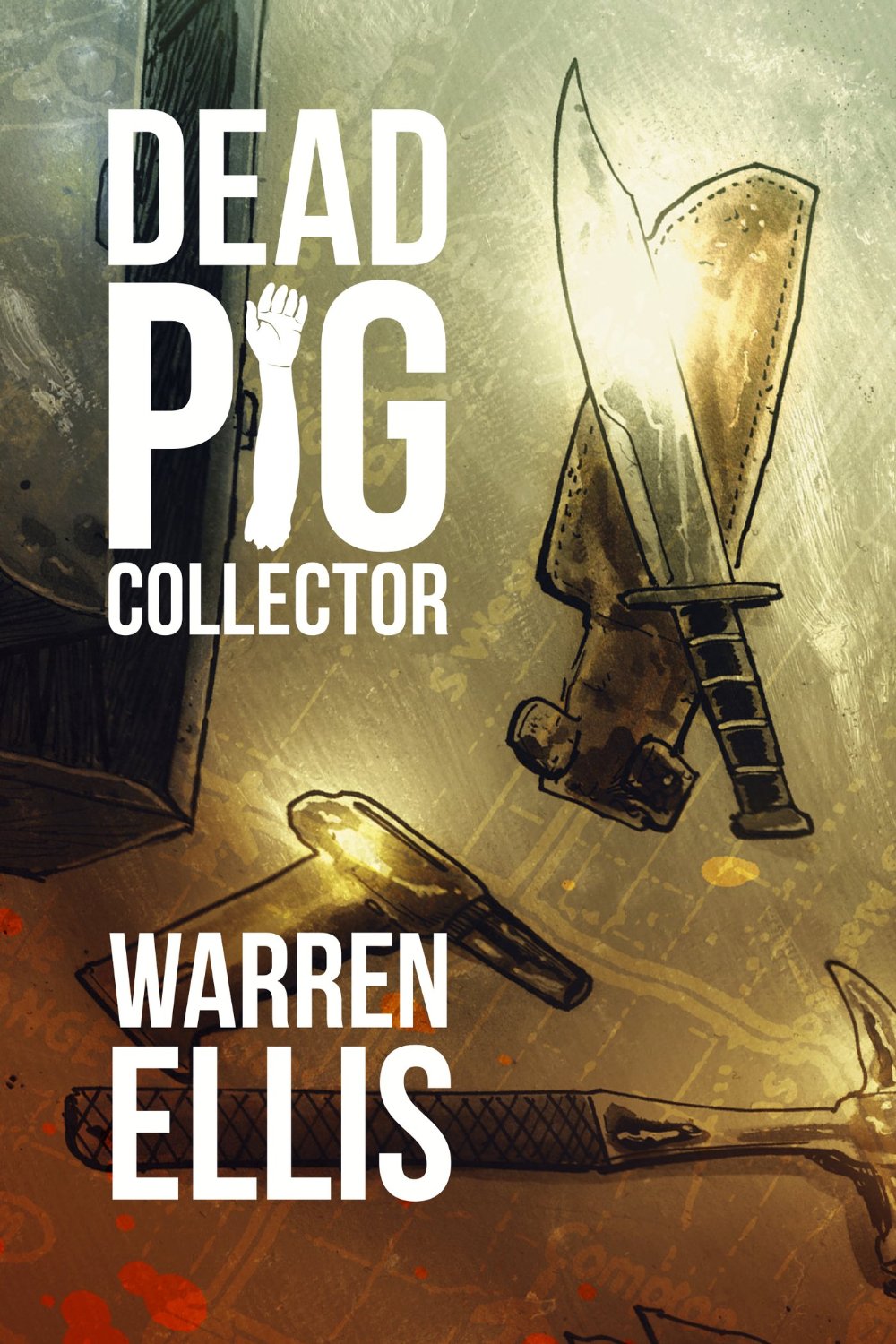 Dead Pig Collector by Warren Ellis
Genre: Horror, Crime
Narrator: Wil Wheaton
Length: 59 mins
Whispersync Ready: Yes
Mr. Sun is an international body disposal professional/hitman who uses a form of Snapchat to communicate with his clients and set up jobs. While in Los Angeles, he gets a fairly routine job to complete, but things go to the wayside when Mr. Sun arrives at his destination and finds that things have already gone awry thanks to an overenthusiastic client. However, Mr. Sun is a professional. His job isn’t always necessarily about the hit, but the disposal of the body. And he has a dead pig to collect.
Some readers may find the story a little too dry, but I found the tone to be calm and composed in contrast to the grisly scene going on during the characters’ interactions, which is part of what makes the story so interesting. I think some people think the ending is a “twist,” there’s really no other way it could’ve plausibly ended, even with the little bit of humanity Mr. Sun gives the readers.
This is my first time listening to Wil Wheaton narrate anything, and while I enjoyed his narration for the most part, I didn’t like the accent he used for Mr. Sun. I have never read anything Warren Ellis has done outside of the comic world, and even there, I’ve only really read his mainstream comics he’s worked on. This may prompt me to seek out his novel and look into some of his other less mainstream comics.
 The Walk of Nameless Ridge by Hugh Howey
Genre: Science Fiction
Narrator: Jonathan Davis
Length: 39 mins
Whispersync Ready: Yes
A group of climbers travel to a distant planet to conquer a mountain twice the size of Everest. Mountains of Everest’s size and taller have long been conquered, and conquering taller, more dangerous mountains have become an obsession for some. One climber in particular aspires to glory, aspires to being the first man to summit the largest known mountain and having this summit named after him.This story is told from his point-of-view.
This was such a lonely, cautionary, chilling (no pun intended) tale of men’s arrogance and the price some people pay for such a feat while trying to convince themselves it was all worthwhile. For a moment, I was a little perplexed that the story was continuing beyond the moment that I would’ve considered a fitting end, but as I continued, I realized that this was intentional. It was meant to take away from the character’s moment of glory. Even the character himself lamented his story should’ve ended at the point I felt it should’ve ended. He couldn’t bear what this journey made him as a person. What glory was in this moment? None. No matter how history remembered him. There was no personal glory beyond that point for him.
Jonathan Davis narrated this short story and he does such an excellent job as usual, even with all his sibilant “s” sounds. I actually find that endearing. He’s one of my favorite narrators, and I’m glad that I decided to listen to this instead of just read it. This marks the third Hugh Howey story that I’ve read (the first being Glitch and the second being Second Suicide fittingly), and I continue to be amazed at how much emotional impact he can fit into a short story.



 The BiblioSanctum