Book Review: The Dragons of Dorcastle by Jack Campbell
Posted on May 17, 2015 8 Comments
A review copy of this book was provided to me by the publisher in exchange for an honest review. All opinions are my own.
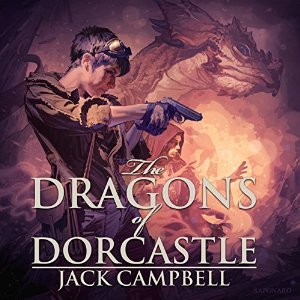 The Dragons of Dorcastle by Jack Campbell
Genre: Fantasy, Steampunk
Series: Book 1 of The Pillars of Reality
Publisher: Jabberwocky Literary Agency (Ebook: April 3, 2015)
Author Information: Website | Twitter
Mogsy’s Rating: 3.5 of 5 stars
Boy is a Mage, brought up on lessons about the power of illusions, taught that reality is a sham and that people are shadows – and oh, no matter what you do, do NOT trust those lying, stinking Mechanics.
Girl is a Mechanic, a master of logic and equations who prides herself on the fact that no machine is beyond her abilities to fix, and of course, Mechanics are just so much better than those useless Mages.
Then boy meets girl. Everything changes. Alain and Mari come together after their caravan is destroyed by bandits, only managing to survive the treacherous journey back to civilization with each other’s help. They begin to discover just how much their Guild elders have kept from them, secrets and misconceptions that have been keeping the Mage-Mechanical rivalry alive for all these hundreds of years.
Then the power of Foresight unexpectedly comes to Alain. He learns something that Mari doesn’t know – that she is in fact the prophesied chosen one who will unite the two great guilds and save the world. As the two are sent to Dorcastle amidst rumors of uncontrolled dragons and sabotage, Alain can hardly begin to describe the way he feels for Mari, but he does know staying away from her as his masters had ordered is not an option.
The Dragons of Dorcastle is a sweet little story about the serendipitous partnership between two people from different divides, who end up realizing they were wrong about everything they thought they knew about the other. I’d never read anything by John G. Hemry AKA Jack Campbell before, though I do know a bit about his military sci-fi Lost Fleet series, which I can’t imagine can be any more different than this book, a Young Adult-ish fantasy and steampunk romance.
Surprisingly though, this was very good. A little standard, perhaps, and playing a bit too safe when it comes to ideas. However, seeing as this book was originally written to be an audiobook exclusive for Audible Studios, it wouldn’t surprise me if a fun and practical story like this – intended to appeal to a wider and more general audience – was a conscious decision. And it was probably the right decision; I can see it being the perfect choice for anyone in the mood for an entertaining and light read looking to pass the time, though it’s possible that diehard genre readers may be left unsatisfied.
But hey, here be dragons. Well, okay, maybe not exactly. I don’t actually hold this against the book, but I think it’s worth mentioning anyhow that I find the title a bit misleading. There’s some dragon activity for sure, though it doesn’t come until very late in the book, and relatively briefly. Relating this to my thoughts above, I can’t help but to think the name was another clever move to boost appeal. Granted, the story does present a rather intriguing mystery about the dragons at the end, so even though they aren’t the center of attention, we are left with some major dragon-related questions to ponder and there’s no doubt they will play a bigger role in the next book.
Perhaps the novel’s greatest strength is its focus the characters. Most of the book is spent developing the relationship between Alain and Mari, even when the two aren’t even in the same scene. We’re in their heads all the time, experiencing their thoughts and emotions as contemplate the other. The narrative does an especially good job with Alain, whose capacity for emotions has been all but stripped by the Mage guild. The way I looked at the situation, it’s actually a lot like reading about Spock falling in love. That is to say, it’s no easy feat. The author deserves my admiration for pulling it off.
Let’s face it, too: I’m a sucker for Forbidden Love. Despite being YA and the style of prose leaning towards younger audiences, I really enjoyed the delightful romance blooming between Alain and Mari. It’s a relationship I find more “cute” than “passionate”, but nonetheless it worked surprisingly well for me.
In the end, The Dragons of Dorcastle is not a terribly original or noteworthy book, but I really liked it. Its down-to-earth style, entertainment value, and wonderful characters made it very hard for me to resist its charms. All told, a very good book to just curl up and relax with.

YA Weekend: The Wrath and the Dawn by Renée Ahdieh
Posted on May 16, 2015 17 Comments

A review copy of this book was provided to me by the publisher in exchange for an honest review. All opinions are my own.
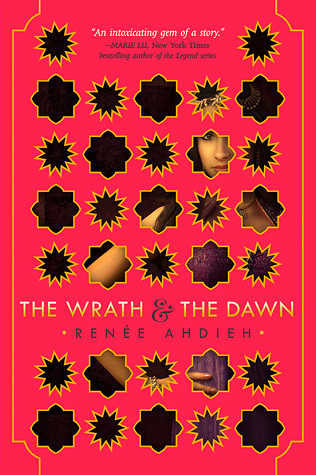 The Wrath and the Dawn by Renée Ahdieh
Genre: Young Adult, Fantasy
Series: Book 1 of The Wrath and the Dawn
Publisher: Putnam Juvenile (May 12, 2015)
Author Information: Website | Twitter
Mogsy’s Rating: 4 of 5 stars
I admit The Wrath and the Dawn wasn’t initially a book I was drawn to, but as time went by, the concept started to grow on me. I still would have preferred a stronger fantasy component, but its hook – the fact that its story is inspired by A Thousand and One Nights – became more intriguing the longer I thought about it.
The book introduces us to sixteen-year-old Shahrzad, getting ready for her marriage to Khalid, the Caliph of Khorasan. It’s a sad affair for her family, who all believe it will be the last time any of them will see Shazi alive. Everyone says that young Khalid is a monster, for what kind of man would take a new bride each night only to have her executed at sunrise the next day? Shazi, however, had volunteered herself for this, and she has a plan (arguable, but more about that later). Not long ago, her own best friend was taken and killed by the Caliph. Now Shazi is determined to find out why Shiva and all those other young girls had to die, and she won’t stop until she gets her revenge.
Things are not as they seem, though. Shazi may have escaped death for a day by captivating Khalid with a story, cleverly withholding the ending by the time dawn arrives, forcing the Caliph to put off her execution in order to find out what happens. The more time she spends with the boy king, however, the more she realizes he is not the monster everyone made him out to be. Still, he did kill all those women, and the reason for that is a closely guarded secret that no seems to know or want to talk about. While seeking answers, Shazi finds herself slowly drawn to Khalid and even begins to fall for him. But when her first love Tariq learns of her marriage to the Caliph and comes riding to her rescue, Shazi will have to make a choice.
I found this book to be one part romance, and one part A Big Question. The former is relatively straight forward; Shazi marries Khalid, realizes that he’s actually not that bad, the two fall in love. It happens very quickly, almost too quickly for my tastes. Here’s another Young Adult novel, where in its eagerness to get its two lovers together, we lose out on a lot of the emotional layers that make the relationship convincing. And how was Shazi supposed to take revenge on the Caliph after marrying him anyway? She didn’t even really try. Her half-baked plan didn’t seem to go much farther beyond enticing him with stories (and I do wish she had been able to tell more of them), so all I can see is the instalove being a decision of convenience. Thing is though, I could easily look past this in favor of what I really felt was the most interesting aspect of the whole book.
Enter the big question: Why did Khalid kill Shazi’s best friend Shiva and all those other wives of his? That’s the mystery that really caught my interest and kept me reading, and it was treated in the exact opposite way as the romance, an intricate puzzle that slowly unravels. For that I was very happy, and I liked how the author took the time to make the answers worth it.
I was also most impressed with Shazi’s character above any of the others. I liked that she had such class and dignity, but also a strong personality that wouldn’t stop her from teaching a lesson to someone who shows her disrespect. She’s also truly fearless, as evidenced by the calm and quiet way she decided to volunteer to marry the Caliph knowing very well it could mean her death, and also by a scene where she strikes out at an attacker even when she very literally had a blade to her throat.
There was really one factor about the writing that made me stumble. Five words: Attack of the purple prose.
“But the thought that she might lie to him – that those eyes, with their unpredictable onslaught of colors, flashing blue one instant and green the next, only to paint his world gold with the bright sound of her laughter…”
Occasionally there will be a glaring overkill of these flowery phrases or paragraphs. I think it’s pretty common with relatively new authors who are also extremely talented writers though, who maybe just need to know when to dial it back a little.
Still, on the whole I do think Renée Ahdieh writes beautifully and has a bright writing career ahead of her. While it may not be perfect, The Wrath and the Dawn impressed me and so I’m on board to see what happens next.

Book Review: The Hanged Man by P.N. Elrod
Posted on May 15, 2015 17 Comments
A review copy of this book was provided to me by the publisher in exchange for an honest review. All opinions are my own.
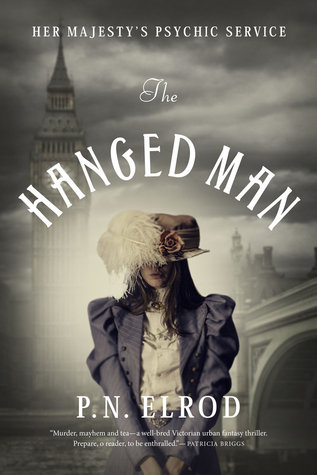
Genre: Fantasy
Series: Book 1 of Her Majesty’s Psychic Service
Publisher: Tor (May 19, 2015)
Author Information: Website | Twitter
Mogsy’s Rating: 4.5 of 5 stars
I have a weakness for gaslight paranormal fantasy and lady detectives, so when presented with P.N. Elrod’s The Hanged Man I found I could hardly resist this delectable mystery set in alternate historical England with shades of the Victorian era.
The book begins on a cold and dreary Christmas Eve in 1897, and Alexandrina Victoria Pendlebury of Her Majesty’s Psychic Service is called out to a house on Baker Street to do a forensic reading of a scene of questionable death. A man has hung himself, but by using her abilities to pick up on emotional traces left behind, Alex is able to rule out a suicide. And indeed, later they find the evidence that someone broke into the house, drugged the hapless victim and strung him up to make it look like he killed himself. What’s even more disturbing to Alex is the emotional signature left behind by the perpetrator…or rather, the lack of one. Whoever (or whatever) committed this murder, they did it without feeling anything at all.
Then the identity of the hanged man is revealed and Alex’s world comes crashing down around her. This opens up a whole new set of questions, deeply personal ones that fill her with doubt as she struggles to keep her mind on the investigation. Her superiors remove her from the case, but Alex is determined to follow up on leads even if it means setting out on her own. Luckily, she’s not completely alone; newly recruited Lieutenant Brooks may be green but he’s behind Alex all the way, and Alex also has family to rely on, even if it’s her slightly insane cousin James. There are assassins and dark magic afoot, and both Scotland Yard and the Psychic Service are going to need all the help they can get.
I’ve read a lot of books that take place in this historical time period, but more uncommon are the authors who can write convincingly enough to make me believe we’re really there. It says a lot that The Hanged Man grabbed me right away with its impressively rich prose, plunging me into its setting. I’ve actually never read anything by P.N. Elrod before this, but looks like I’ve been missing out, give me more! Her writing really shines here; not only is the language deeply immersive, it also exudes an atmosphere of magic and mystery – perfect for an evocative tale such as this. The dialogue is well-written too, and I was amazed at the variety of voices. The author uses period jargon and unique speech patterns to make all her characters stand out, whether it’s the main protagonist Alex or a side character like Police Inspector Lennon. There will be no skimming this book because you’ll want to slow down and soak up every word and expression.
Then there’s the story. I knew this book was going to be a mystery when I first picked it up, but I think I expected a slower take-off followed by a gradual unraveling of the case’s clues and intricacies. What I got instead was a bombshell dropped on my head at the end of the very first chapter, and before I could even recover from the shock, we’re whisked away on a horse carriage race through the streets in a shower of gunfire. It is almost impossible to review this book without revealing any spoilers, because there’s just no end to the twists and turns. For a book that’s written so evenly and this tightly plotted, I was surprised at how often it had me on the edge of my seat. We got to slow down a bit in the middle, enough to let me catch my breath, but then the ending had me reeling again. There’s no cliffhanger, but one last revelation before the book closes struck me like a punch in the gut and had me feeling no small amount of sympathy for Alex. This entire story was deftly told, leaving me a very happy reader by the time it was all done.
I know I’m often bemoaning that all books these days seem to be part of a series, but in this case I’m actually hoping there will be more installments. The Hanged Man reads perfectly well as a standalone, but there’s still a lot left to ponder. Just what kind of secrets are the top men at Her Majesty’s Psychic Service hiding? I’d also love to get more background on the organization and its people. It appears that Alex and her Reader skills are just the beginning, seeing as the Service also employs Seers and Precogs and what sounds to me like a considerable R&D department. With all this supernatural talent flying around, I imagine there’s quite a bit of potential for future novels. And last but not least, I think Alex and Lieutenant Brooks have a good thing going here, and it would be interesting to watch their romance (which is just in the first stages of blooming here) develop into something more.
I anticipated that I would really like The Hanged Man, I just didn’t know it would be this much. A blend of Urban Fantasy, Historical Fiction, Mystery and Romance all rolled into one, it’s sure to appeal to readers with a palate for bold twists and magical intrigue. The writing is simply wonderful, with P.N. Elrod’s prose bringing the period to life in a very expressive and authentic way. The story and characters are very well developed, and if I ever get the chance to catch up with Alex, Brooks, James and the other people in this world again, I know I won’t hesitate.

Book Review: Earthrise by M.C.A. Hogarth
Posted on May 14, 2015 12 Comments
Click to be taken to the Goodreads page
Book Source: Free review copy provided by Studio MCAH via NetGalley
Genre: Science Fiction, Space Opera
Series: Book 1 of Her Instruments
Publisher: Studio MCAH (April 30, 2013)
Author Information: Website | Twitter
Tiara’s Rating: 3.5 of 5 stars
Goodreads | Amazon | Barnes & Noble
Full Disclosure: A review copy of this book was provided to me by Studio MCAH via Netgalley. I would like to thank the author, the publisher, and Netgalley for providing me this opportunity. All opinions expressed from here forward are my own.
I almost put this book a little lower on my NetGalley pile because the NetGalley description had a side note that this was a space opera with a romance subplot. That made me grimace a little. However, the Goodreads description did not tout the romance, and I was extra good and didn’t read any of the reviews on Goodreads for this book. I was pleased to see that it seem to be fairly well-received by its readers just from gazing at the rating. I have no problem with romance. In fact, I love a good romance, but I find when it becomes the selling point for a book that doesn’t seem to be exactly romance-oriented, it can come off awkward and unnecessary. However, since I’ve been looking into more speculative fiction that feature protagonists of color, I decided to go ahead and give this a chance. If I hated it, the worst that could happen was I wouldn’t finish it.
Side note before I start this review. I wanted to take a little time out to mention that Julie Dillion did the artwork for the cover, and if you’re not familiar with her work, she is an amazing SFF artist whose Kickstarter I recently supported because of her beautiful artwork that I’ve seen featured many places including magazines. I highly recommend checking out her beautiful illustrations. On with the review!
Earthrise follows the adventures of Captain Theresa “Reese” Eddings, a mostly honest cargo captain, and her crew of misfit aliens, which includes a pair of Harat-Shar (humanoid felines) twins who hail from a libertine culture where sex and cuddling is a big thing, even among family members, a female winged centaur-like being called a Glaseahn who has an interest in bio-organics, and a male Phoenix with an impressive plumage and the distinction of being one of the best engineers around. Finally, there’s Theresa’s Flitzbe, called Allacazam, who sort of sounds like a tribble from Star Trek based on description, but can communicate telepathically with Reese and changes colors to express his moods.

Trouble with Tribbles. One of those has to be Allacazam, I just know it.
Years prior to the book, Reese borrowed a large sum of money from a mysterious race known as the Eldritch (a very pale, almost elven-ish race of people), hoping to patch up her ship, TMS Earthrise, and make a fortune for herself and her crew before having to pay them back. As the old poem goes: “The best laid plans of mice and men often go awry.” Reese hasn’t made her fortune after six years and now the Eldritch are calling in a favor.
Read More
Tough Traveling: The Weasel
Posted on May 14, 2015 22 Comments


The Thursday feature “Tough Traveling” is the brainchild of Nathan of Review Barn, who has come up with the excellent idea of making a new list each week based on the most common tropes in fantasy, as seen in (and inspired by) The Tough Guide to Fantasyland by Diana Wynn Jones. Nathan has invited anyone who is interested to come play along, so be sure to check out the first link for more information.
This week’s tour topic is: The Weasel
Weasels are usually very useful, obtaining information from unlikely sources and the like. For that matter they may be fun to be around. But can they ever really be trusted? Usually about as far as they can be thrown, but one never knows.
Wendy’s Pick:
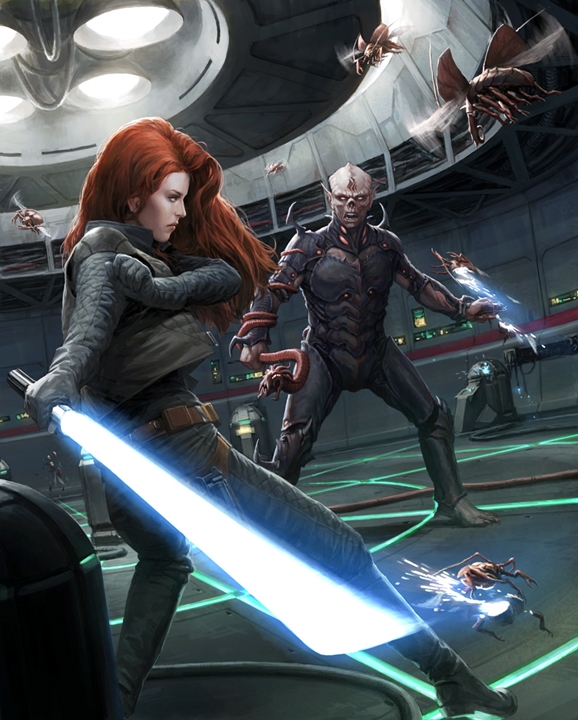
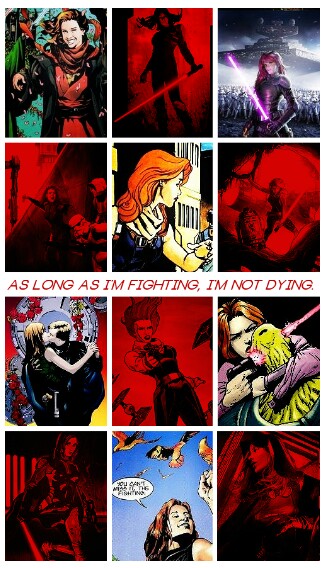
Real life is keeping Wendy away from Traveling with the Tough Guide today, but she’s asked us to help put up a picture of her pick this week, so we’ll leave you with the one and only indomitable MARA JADE! As someone who has switched sides multiple times in her life, she has also played a great many roles: Emperor’s Hand, smuggler, Jedi Master, and yep, WEASEL.
A picture or three…
Tiara’s Picks
 “Maker, take me to your side.”
Wendy only beat you to Mara Jade, Mogsy, because it was my pick and then I scrapped it. Don’t be fooled! IT’S YOUR REPUBLIC! Warning: Slight spoilers ahead for some of these books!
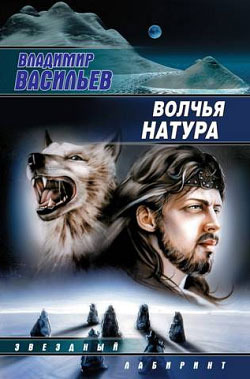 Every Damn Body (Wolf Nature by Vladimir Vasilyev) – In this book, people have evolved from canines rather than apes. For this reason, science had effectively “disabled” the kill gene attributed to the canine factor in humans, and to train a human to kill causes great psychological distress, which is why espionage is their weapon of choice. There are no wars, but countries keep tabs on one another using agents. Once an agent is discovered, they’re relegated to a desk job to appear inactive when in fact they are continuing to work as sleeper cells spies. Very intriguing idea with many twists. I should also note that you’re probably never going to find this book in English. I had a Russian college friend who translated books from Russian to English because he was a turbonerd like that and there was a group of us sci-fi nerds in college that really wanted to read it after he raved about it.
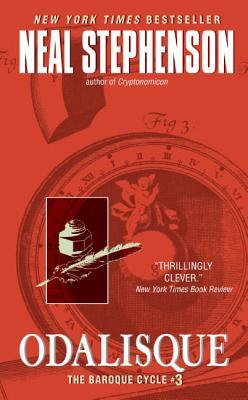 Eliza (Odalisque by Neal Stephenson) – Rescued from a Turkish harem where she was an odalisque. Eliza is now part of the royal court in Versailles in the official capacity of a noblewoman’s governess. Her unofficial capacity gives her access to the information of many nobles who use her for financial matters to keep up appearances and not go bankrupt. For their trouble, she sends information concerning their affairs to her employers. Eliza is smart, calculated, and acts once she has a plan in place.
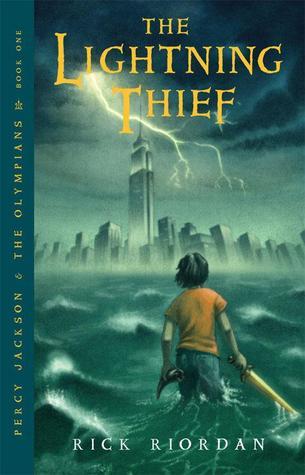 Luke Castellan (Percy Jackson and the Olympians by Rick Riordan) – While maybe not a traditional weasel as defined here (or is he?), even though he does spy and gather some information. Luke, son of Hermes, possesses many of the skills and more that weasels are infamous for, which naturally come from his father and partly from his own ingenuity. He’s an expert thief, stealing important relics even from right under the gods noses. He’s an expert lockpicker. He can even detect lock wards and disable them. He’s good with money, easily turning profits, and technology, even unfamiliar technology, bends to his will. His loyalties are questionable sometimes. Don’t make me stab you over, Luke. *sniffles* I’ll always love you, Luke. I’m not crying. That’s just rain in my eyes.
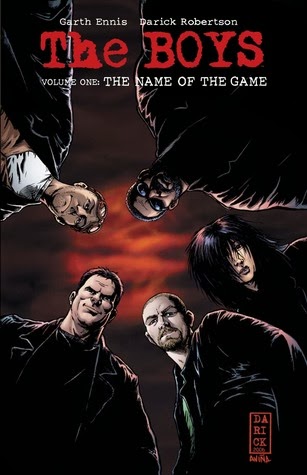 The Legend (The Boys by Garth Ennis) – The Legend hates comics, but he’s been in the comic book business for years and provides The Boys with useful information in helping them to bring down the corporation that created these superheroes whose stories he publishes in his comics (that don’t always portray them in the best light because the heroes really are the worst in this book). He’s curmudgeonly, and they don’t know if they’ll ever one day be the ones he starts selling information about, but he’s the best they got.
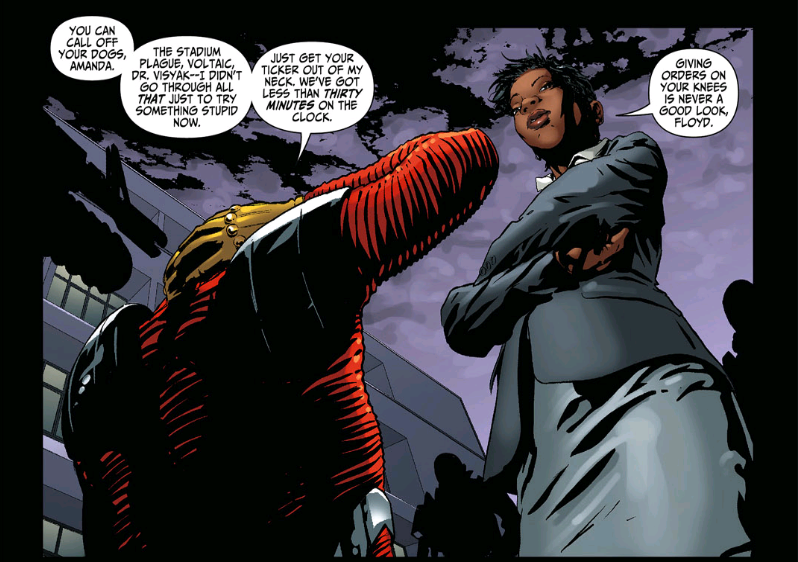
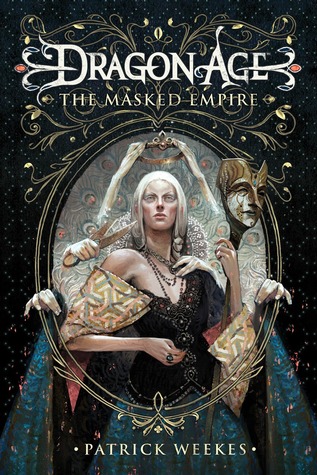 Sister Nightingale (The Masked Empire by Patrick Weekes) – If you play the games the Dragon Age, you first meet Sister Nightingale as Lay Sister Leliana, a woman running from some past. During the course of the games, she takes on an important role for the Chantry and makes an appearance in The Masked Empire, which leads into the latest Dragon Age game. Leliana is a bard who’s been trained in espionage, combat, and assassination years before the first Dragon Age game. Her role more recently is to serve as the “left hand” of the Divine. She does what the Divine cannot, serving as her spymaster and “neutralizing” her threats. She will do whatever is necessary to achieve the Divine’s goals.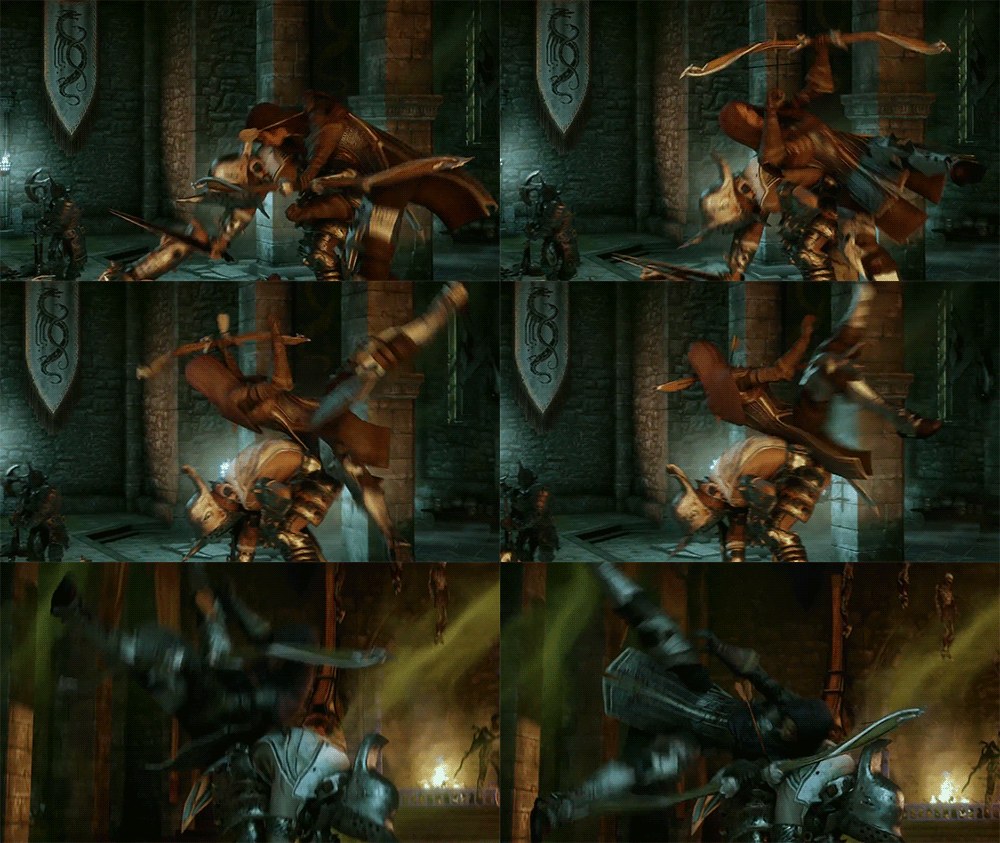


 Dandelion (The Witcher Series by Andrzej Sapkowski) Geralt’s bestest friend (yes, I said bestest) who is supposedly so pretty that people often mistake him for an elf or a half-elf. He’s generally thought to be lazy, directionless, and a womanizer, but he sings pretty–if not sometimes off color–songs. While Geralt says that Dandy doesn’t usually get involved in political matters. He’s learned that his bestie spies for kings. Who better than a bard, especially once that everyone thinks is useless for anything other than his poetry and music? Dandy is not a fighter. He’s too pretty for that. He is strictly an information gatherer, but he can provide assistance with getting people to protection when need be. He knows how to sneak around. While sometimes his allegiances may be questioned by some, he’s nothing but good to Geralt, helping him to gather information and even allowing himself to be used as bait sometimes for Geralt’s monster hunting, especially if there’s the possibility of a lady being involved, monster or not.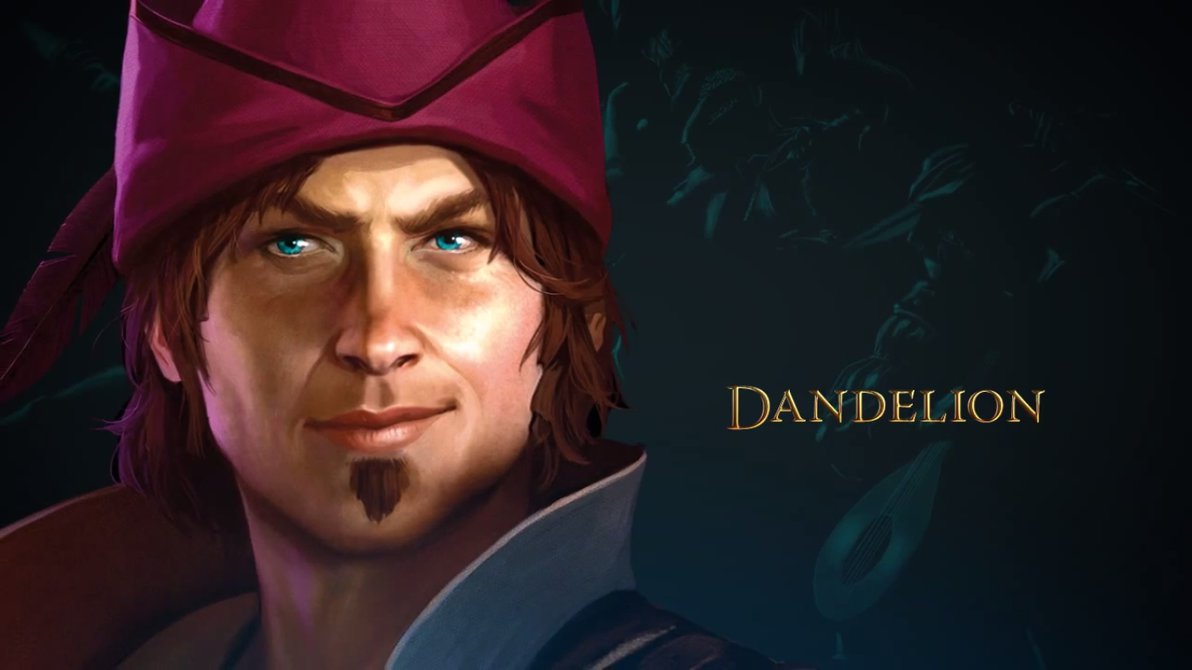
 The Harlot (Hexed by Michael Alan Nelson) – She’s the woman who knows all the secrets. Think of her as The Shadow Broker if you’re familiar with Mass Effect, a procurer of information, and just like the Shadow Broker, she’s willing to sell any information she has for a price without regard of for their allegiance. She knows everything from the mundane to the world shattering, but everything has its price–no matter its danger to the world.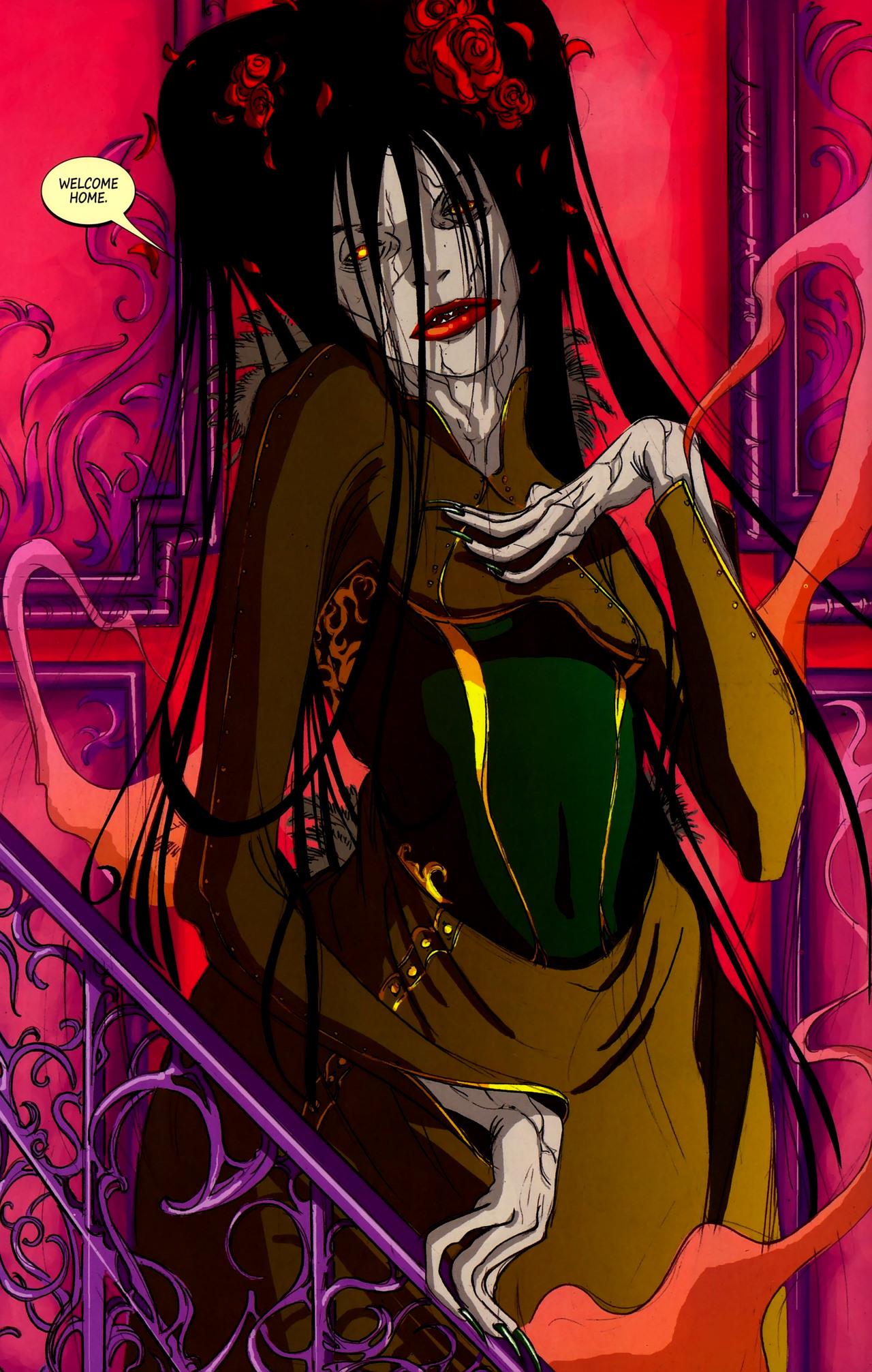
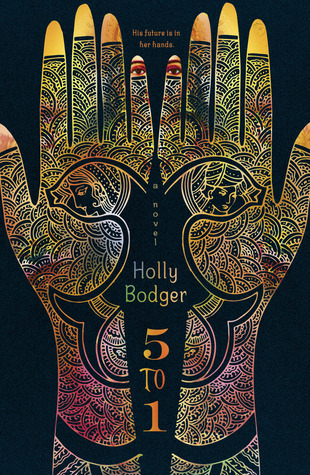 Nani (5 to 1 by Holly Bodger) – Nani is the grandmother of the protagonist Sudasa who lives in a future version of India where boys out number girls 5 to 1, making girls a precious commodity where they were once reviled. Games are held for boys (5 boys to 1 girl) to compete for the girl’s hand in marriage. While Nani isn’t an official part of the government, things start to come to light about Nani’s roles in this new society and the information she’s gained over the years that help keep her and her family in a comfortable place.
Mogsy’s Picks:
Good picks, you guys! And shame on me, Mara Jade didn’t even occur to me. No, I actually had another Star Wars character in mind. Actually, I had a lot of trouble thinking up picks for this week, so I would have been surprised if any of my BiblioSanctum buddies and I had doubled up.
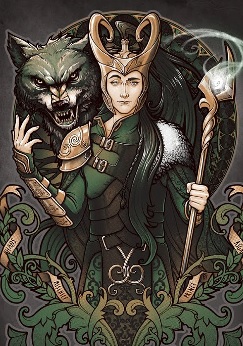 The Gospel of Loki by Joanne Harris
Can’t have a list of untrustworthy types without the God of Mischief. Even when Odin took him in as a brother, none of the other gods really welcomed Loki with open arms…and for good reason. Loki goes around whispering, trying to find ways to take Odin and “his popular crowd” down a notch by trading their secrets to those who would love to see Asgard fall. And yes, Loki is TONS of fun to be around, but then that goes without saying…

The husband and I watched The Hobbit: The Battle of the Five Armies recently, and even though Alfrid Lickspittle was a character who was referred to in the novel but not by name, Peter Jackson gave him one and expanded his role for the movies. I thought I would include him here because my exact thought every time I saw him was in fact, “Wow, what a WEASEL.” He’d happily abuse his position to keep his boss in power, and yet sell out his own side at the drop of a hat if he knew it would save his own skin.
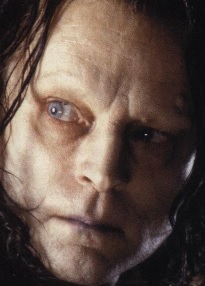
The Lord of the Rings by J.R.R. Tolkien
Furthermore, what’s interesting (and very telling) is the fact Alfrid’s appearance and personality is frequently compared to that of Grima Wormtongue, an agent and spy of Saruman. Neither of them can be trusted as far as you can throw them, and they’re also both corrupt, cowardly, and champion ass kissers.
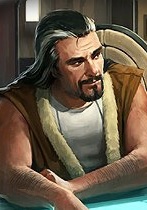 Heir to the Empire by Timothy Zahn
I see Wendy and Tiara’s Mara Jade and raise them Talon Karrde – Weasel with a capital W! A smuggler and information broker, Karrde took advantage of the void left in the underworld market after the death of Jabba the Hutt and took the business of buying and selling of information to a whole new level. He’s got a great sense of humor, but his tendency to be friendly with both friend and foe has earned him the reputation for being a shrewd mercenary.
 Indiana Jones and the Kingdom of the Crystal Skull by James Rollins (Novelization)
Soon as I saw the topic this week, I just couldn’t get this scene outta my head.
Mac: Sorry Jonesy.
Indy: So what are you, a triple agent?
Mac: Nah, I just lied about being a double.
Book Review: The Fifth Heart by Dan Simmons
Posted on May 13, 2015 5 Comments
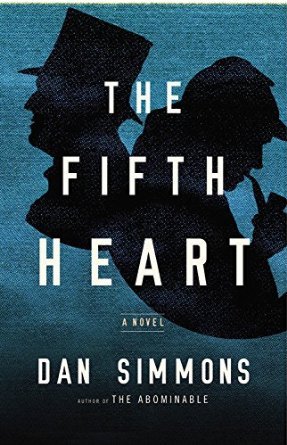 The Fifth Heart by Dan Simmons
Genre: Historical Fiction, Mystery
Series: Stand Alone
Publisher: Little, Brown and Company (March 24, 2015)
Author Information: Website
Mogsy’s Rating: 3 of 5 stars
A Dan Simmons book is like a box of chocolates; you never know what you’re gonna get. And like a box of chocolates, you know they’re all good but some are going to be better than others. Simmons is a versatile author who seems to write a bit of everything, and I’ve come to the conclusion that for me personally, his Historical Fiction is kind of like those sticky little peanut nougats – that is, they’re not my favorite. I’d much rather prefer those with the milk chocolate filled with caramel or raspberry cream, which in the context of this yummy little example would be probably Simmons’ Horror or Science Fiction.
Don’t get me wrong, I’m a huge fan of Dan Simmons. His book The Terror is one of my favorite novels of all time, and I’ll never look at time travel the same way again thanks to his Hyperion, which completely blew my mind. But then there are his books like Drood or 2013’s The Abominable that just didn’t resonate with me at all. Now that I’m finished reading it, I think my reaction to The Fifth Heart falls somewhere in between.
Waiting on Wednesday 05/13/15
Posted on May 13, 2015 17 Comments

“Waiting On Wednesday” is a weekly meme hosted by Breaking the Spine that lets us feature upcoming releases that we can’t wait to get our hands on!
Mogsy’s Pick:
The Bloodforged by Erin Lindsey: September 29, 2015 (Ace)
The Bloodforged is the sequel to The Bloodbound, and I’m super eager to get my next Erin Lindsey (also known as E.L. Tettensor) fix. I love books that feature a mix of fantasy and romance, especially those that balance the two elements. I really enjoyed the first book, and I’m looking forward to jumping back into this world to catch up with Lady Alix.
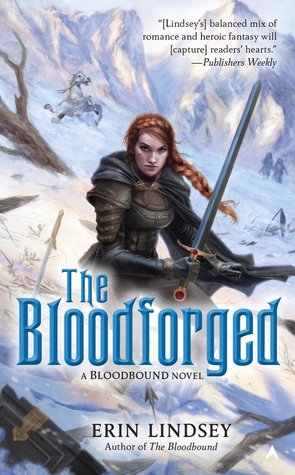 “The epic saga that started in The Bloodbound continues…
As war between Alden and Oridia intensifies, King Erik must defend his kingdom from treachery and enemies on all sides—but the greatest danger lurks closer to home…
When the war began, Lady Alix Black played a minor role, scouting at the edge of the king’s retinue in relative anonymity. Though she’s once again facing an attacking Oridian force determined to destroy all she holds dear, she is now bodyguard to the king and wife to the prince.
Still, she is unprepared for what the revival of the war will mean. Erik is willing to take drastic measures to defend his domain, even if it means sending Prince Liam into a deadly web of intrigue and traveling into the perilous wild lands of Harram himself.
Only the biggest threat to the kingdom might be one that neither Alix nor Erik could have imagined, or prepared for…”
Tiara’s Pick
Seveneves: A Novel by Neal Stephenson: May 19, 2015 (William Morrow)
I am relatively new to the Neal Stephenson party. I’m currently working my way through his Baroque Cycle series, which can be read in three bound books or eight separate novels, and I’m an almost in awe of how he’s blended science-fiction, fantasy, and history together to make such a compelling read. I wasn’t expecting it to be as cheeky as it is either, but he has quite the wry sense of humor. Now, I think I would like to try some of his futuristic science-fiction and see if its just as compelling as his historical endeavors.
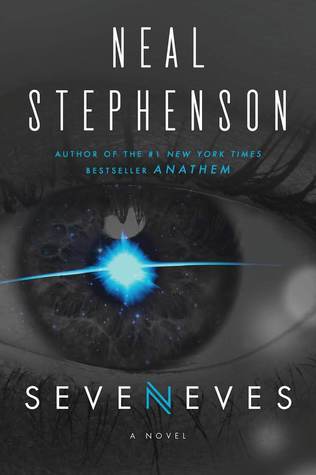 What would happen if the world were ending?
A catastrophic event renders the earth a ticking time bomb. In a feverish race against the inevitable, nations around the globe band together to devise an ambitious plan to ensure the survival of humanity far beyond our atmosphere, in outer space.
But the complexities and unpredictability of human nature coupled with unforeseen challenges and dangers threaten the intrepid pioneers, until only a handful of survivors remain….
Five thousand years later, their progeny – seven distinct races now three billion strong – embark on yet another audacious journey into the unknown…to an alien world utterly transformed by cataclysm and time: Earth.
A writer of dazzling genius and imaginative vision, Neal Stephenson combines science, philosophy, technology, psychology, and literature in a magnificent work of speculative fiction that offers a portrait of a future that is both extraordinary and eerily recognizable. As he did in Anathem, Cryptonomicon, the Baroque Cycle, and Reamde, Stephenson explores some of our biggest ideas and perplexing challenges in a breathtaking saga that is daring, engrossing, and altogether brilliant.
Book Review: The Fangirl’s Guide to the Galaxy by Sam Maggs
Posted on May 12, 2015 21 Comments
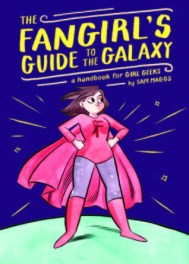
Click to be taken to the Goodreads page.
Book Source: Free review copy provided by Quirk Books via NetGalley
Genre: Nonfiction, Humor
Publisher: Quirk Books (May 12, 2015)
Tiara’s Rating: 3.5 of 5 stars
Sam Maggs is known around the internet for writing articles about how geek culture and women intersect. She’s contributed to the book Chicks Dig Gaming and sites such as The Mary Sue, and I would be lying if I said I didn’t have a bias toward her for being a fellow BioWare lover.
@digitaltempest tattoo twins!?!?!?!?? 💖💖💖💖💖💖💖💖💖💖
— Maggsneto (@SamMaggs) May 3, 2015
@digitaltempest OMG I love it!!!! Yay!!!! #spectrestatus pic.twitter.com/pH0amHQVBa
— Maggsneto (@SamMaggs) May 3, 2015
This is the her first published book dedicated to geek girls. I’ve been in fandom since the late 90s, and I’ve watched it evolved over years. I’m old, and I’ve seen many things throughout the years in the various fandoms I love(d). I dabble in everything from games to television. Much of this information wasn’t new to me for that reason, but I still found Maggs’ tone engaging and fun. This is a gentle guide for girls and women who may want to to be more active in fandom communities and meet more people who share those loves online and offline. It explains things such as how to deal with the various trolls they’ll encounter, how to protect themselves on sites even from other fans, and explain basic fandom terms to them. What’s a SuperWhoLock? Why does fandom hate Aquaman? What’s a glomp? What’s a squee? How do you deal with different types of trolls? These are questions she poses in her book along with ideas.
This book also serves as a jumping point for girls and women who may not be in fandom at all right now, but are curious and want to know different places they can start/what might interest them. This book is in no way divisive or says that one fandom is better than others. This book just grouped things together in the simplest terms that would make it easy for some who would be overwhelmed by everything fandom and wouldn’t know where to start. It gives a very general idea of fandom.
Briefly going back to the conversation I referenced earlier in this post, she also includes different levels of fandom geekiness without coming across as condescending (to me). In case you’re wondering my level is hardcore because I have at least one fandom tattoo. My first geeky tattoo (I have two, and coincidentally, the author of this book has the same tattoo) was the Spectre tattoo from the Mass Effect series, and if you’re wondering why this is so important to me, feel free to read my Tumblr post on the subject if you want to know more.
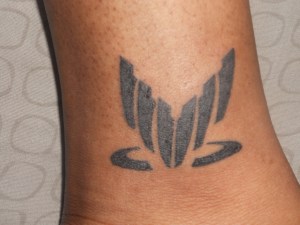
I also have a Deadpool Corp tattoo, too, but I will not continue to overwhelm you with just how much of a geek I am… today... I did appreciate little sections like that. To me, it didn’t come off as if she was saying that if you don’t have a tattoo of your fandom, then you’re no good. It was just a tongue-in-cheek assessment of how far some of us go for our fandoms.
On top of this, there are brief interviews with various notable women in the geek community such as Jamie Broadnax who runs BlackGirlNerds (who I absolutely squee’d about being featured) and Victoria Schwab, author of A Darker Shade of Magic. I wish these interviews were longer, but I was glad to see even short interviews with such a diverse group of women in geek culture. And there are fun, cute illustrations throughout to punctuate her writings.

This book is Cuddly!Anders, not Angry!Anders.
I saw this book get some really bad reviews from other reviewers, so I was a little worried at first because it’s easy for me to fly into a geek girl rage about fandom. (Well, I’m an Aries; it’s easy for me to fly into a rage anyway.) It’s so easy for writers to write books like this and come across as being insulting. However, I found this book to be pure fluff and tongue-in-cheek that’s meant to be informative for new people and to poke fun at the same time at some of serious vets.
I guess some people were expecting some enraged geek girl manifesto as inspired by Anders (from BioWare’s Dragon Age) and nailed to the door. If you’re expecting that, this is not for you. You’re getting a kinder, gentler Anders hugging kitties direction here, and I was okay with that even as a fandom war veteran. If you want something more than that, I can’t really recommend this book for you. And I can understand wanting more from this book because there are bits that are lacking, but I’m not really the target audience other than to be support as a veteran for women and girls who may be slowly embracing this side of themselves. And I’ll totally hold your hand as you navigate fandom because, despite what anyone claims, that’s what this book encourages–camaraderie and safety because this can be a very toxic community.
This is a complete homage and love letter to the fangirl that encourages girls and women to embrace this part of themselves, even when some people would try to silence us or say that isn’t “ladylike.” Maggs shows that we are a growing force that refuses to be complacent, and no matter if you consider yourself new to fandom or an old hand, we’re in this together and we’re going to continue to change this landscape together.

Author Information: Twitter | Website
Book Information: Goodreads | Amazon | Barnes & Noble
A review copy of this book was provided to me by the publisher Quirk Books via Netgalley in exchange for an honest review. All opinions expressed are my own. Thanks to the author, Quirk Books, and NetGalley for providing me with this review opportunity.


Book Review: Defiant by Karina Sumner-Smith
Posted on May 11, 2015 17 Comments
A review copy of this book was provided to me by the publisher in exchange for an honest review. All opinions are my own.
 Defiant by Karina Sumner-Smith
Genre: Fantasy, Science Fiction
Series: Book 2 of The Towers Trilogy
Publisher: Talos (May 12, 2015)
Author Information: Website | Twitter
Mogsy’s Rating: 4 of 5 stars
This series definitely deserves to be getting more attention. Karina Sumner-Smith’s debut novel Radiant was one of the most unique speculative fiction titles I read in 2014, and it’s so good to see that its follow-up Defiant is still pushing genre boundaries and keeping things exciting.
Two months have passed since the events at the end of the last book, and we catch up with Xhea as she attempts to heal from the chaotic aftermath, though nothing seems to be helping her badly injured leg. She and the ghost Shai, her ever faithful friend, are holed up within one of the towers called Edren. Shai’s radiant powers essentially makes her an enormous battery, so her very presence is making Edren magic rich and that is definitely not sitting right with the rest of the towers who are stirring up political trouble in order to balance the scales again.
As things heat up, Xhea and Shai find themselves embroiled in a brutal power struggle. Everyone is looking to get their hands on Shai, but in a shocking turn of events, it is revealed that Xhea may be just as important to the survival of the towers. For someone who has always been dismissed, disdained or pitied for her lack of magic, this is a great change for Xhea. At last, she learns the dark nature of her own power, and it’s something that both thrills and frightens her. Then tower Farrow proposes a deal, offering her something she’s ever only dared dream of, but is it going to be worth what they are asking her to do?
Defiant expands greatly upon the world that we were first introduced to in Radiant, now that Xhea’s no longer on the streets scrounging work from people with ghost problems. Her life may have been hard, but at least it was remarkably simple: find food and a place to sleep every night. Ever since she met Shai though, things have become infinitely more complicated – and dangerous. Now we’ve shifted from the hardships of the Lower City to the cutthroat political arena of the towers. It’s a whole different ballgame, and yet this sequel retains so much of what I enjoyed most about the first installment.
As ever, the dynamics between Xhea and Shai make me cheer in support for meaningful friendships between strong female characters. Their loyalty to each other warms my heart, it really does. In fact, one plot development that got me down early on in the novel is the fact that Xhea and Shai become separated after a disastrous incident, and neither has any idea about the fate of the other. It’s only been one book, but already in my mind it feels wrong to see Xhea without Shai, Shai without Xhea. This could probably account for the part right after in which I felt the plot faltered, when Shai’s chapters felt weaker and lacked a bit of direction compared to Xhea’s after her tether to her friend is severed. Thankfully, the story picked up again very quickly, and even when the two of them were apart, their concern and thoughts for each other served to deepen their friendship in my eyes, adding another layer of complexity to it. Without each other, they were still able to accomplish some great feats on their own, proving just how powerful each young woman is in her own right.
There’s also a greater focus on the magical systems and concepts. In this world of radiants and floating towers, everything runs on magic. It can be found within its denizens and in its very infrastructure. Magic is treated on such a vast scale here that it boggles the mind; it’s infused everywhere to such a degree that an entire city literally comes to life. I’ve only read a handful of books where a physical location or the actual setting itself is rendered akin to a living breathing entity, and it’s always an amazing thing to experience.
As far as I can tell, there’s no sophomore slump here; this sequel is as rich and engaging as the first book and gives us even more in terms of surprising twists and revelations. Like its predecessor, Defiant is a brilliant cross-genre piece that blends elements from many sources so that the result is something new and never-before-seen. Looks like Karina Sumner-Smith has scored another hit with her second novel, offering a spellbinding story and characters who are sure to captivate a wide audience.
Also on The BiblioSanctum:
Review of Radiant (Book 1) | Guest Post by Karina Sumner-Smith


 The BiblioSanctum