Guest Post: “Your Heroes are False Idols” by Will Panzo
Posted on November 3, 2016 5 Comments
 Today it is with great pleasure that we welcome author Will Panzo to The BiblioSanctum to talk about his debut The Burning Isle, a novel of direful magics, cruel harsh places, and vicious gritty heroes who aren’t really heroes…ah, Grimdark, how I love thee! As a reader who frequently loves to venture into this darker side of the genre, I couldn’t be more thrilled when Will agreed to write a guest post for us detailing some of the inspiration that went into the creation of his world and protagonist. His book is now available in stores everywhere, so be sure to check it out. My review of it will be up soon; in the meantime, please sit back and enjoy this fascinating post!

YOUR HEROES ARE FALSE IDOLS
by Will Panzo
I don’t believe in heroes. That may sound strange from someone who writes fantasy novels, but it’s true. All heroes are false idols, the product of skilled artists who, like all good charlatans, are experts at audience manipulation. I can appreciate the idea of a hero, of course, someone who does what they think is right despite adversity. And I enjoy stories about heroes, root for them in movies and novels and comics. But ultimately my enjoyment of heroes comes with a heavy qualifier. I know I’m being manipulated by them.
To truly appreciate the falsehood of heroes, you have to know a little about professional wrestling. In professional wrestling, the job of a wrestler is not to win or lose any particular match. Those are scripted. The job of a wrestler is to get the crowd emotionally invested in the show. To accomplish this, wrestlers use psychology that, while simple, is quite effective.
Typically each wrestling match features a good and noble wrestler, referred to in wrestling parlance as the “face” (short for baby-face), and his opponent, the dastardly “heel”. Their feud is not real, but is instead a “work”. When a crowd takes an interest in the match, even though it’s fake, they are “getting worked”.
To gain sympathy for the face, it’s important to place him in danger, setting him against the seemingly insurmountable heel, an opponent who will use weapons, illegal maneuvers, outside interference and generally cheat to win. By fighting against difficult odds, and sticking to his moral code even under threat of defeat, the face can “go over” or win the support of the crowd. It’s a formula that has worked since the beginning of professional wrestling, and still works today.
The rules in fantasy literature are similar. Consider Bilbo and his dwarven friends confronting the fire-breathing Smaug. Or Harry Potter and his schoolmates facing down the dark wizard Lord Voldemort. Again and again, our simple and virtuous heroes battle impossible odds, eventually triumphing, all while maintaining their moral superiority. There’s nothing wrong with this kind of storytelling. It’s fun and makes for an entertaining tale. But when you read a story like this, no matter how much you enjoy it, you’re getting worked.
There is another heroic tradition in fantasy literature though, a darker tradition. In the past, this type of fantasy was called Sword and Sorcery or sometimes Low Fantasy (in contrast to Tolkien’s brand of High Fantasy). It’s exemplified by heroes like Robert Howard’s Conan, Fritz Leiber’s Fafhrd and the Gray Mouser, Michael Moorock’s Elric of Melnibone and Karl Edward Wagner’s Kane. Dark heroes, violent, conflicted, often tragic.
Recent incarnations of this type of story, made popular by the works of authors like George RR Martin, Joe Abercrombie and Steven Erikson, go by the name grimdark. What sets this type of fiction apart from its genre mates is a departure from the face/heel dynamic, as well as a deep distrust of heroes.
Grimdark stories are suspicious of people who act nobly without reason or consequence. A grimdark hero may still face insurmountable odds, but his reasons for fighting are never platonic ideas of good. Sometimes a grimdark hero fights for profit, or to save his own hide. Often he fights because the world is a cruel and uncaring place, and sometimes the only thing you can do is fight.
Grimdark heroes are never working you though. No one expects you to root for a grimdark hero because he’s a baby-face. In fact, no one expects you to root for them at all. A grimdark story compels you to read because the protagonist is interesting, not because it’s the right thing to do.
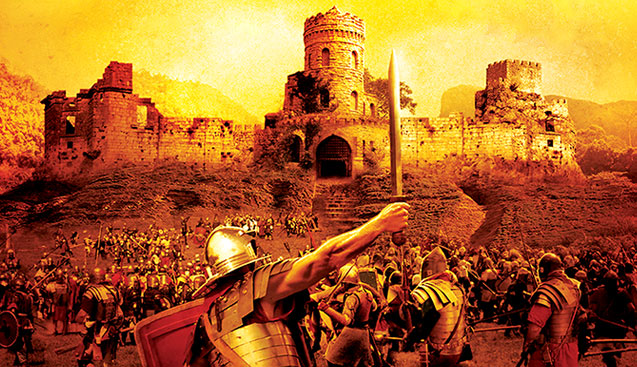
My novel, The Burning Isle, is unabashedly grimdark. Set in a fantasy version of ancient Rome it concerns a young spellcaster named Cassius who comes to the lawless island of Scipio to seek work as a mercenary. It’s a dark tale, full of magic and violence and revenge. But its hero believes he’s in a different type of story.
Cassius is very powerful but also very naïve. Obsessed with myths and legends, he fancies himself a hero come to a corrupt town to right a grievous wrong. Cassius believes himself morally superior to his foes, but his code of honor is tested at every turn. Death and violence are the only tools that seem to make a difference in this harsh place. And while our protagonist pictures himself a noble do-gooder at the center of an epic tale, the world around him proves more grimdark than High Fantasy. Can Cassius walk the righteous path till the end? Or will he learn the harsh truth the rest of us have known all along: there are no heroes in this world.

 ABOUT THE AUTHOR
After working in publishing and as an editor for Marvel Comics, Will Panzo found his true calling as a physician assistant for an emergency department. THE BURNING ISLE is his first novel. He lives and works in New York City.
You can find him at http://www.willpanzo.com and on Twitter @WillPanzo.
Excerpt of Snowed by Maria Alexander + Giveaway!
Posted on November 2, 2016 3 Comments
***The giveaway is now over, thanks to everyone who entered!***
Today I’m excited to share with you an excerpt and giveaway from a book I recently learned about, a YA dark fantasy novel called Snowed by Maria Alexander (whose adult horror novel Mr. Wicker won the Bram Stoker Award in 2014!) and I certainly look forward to reading it once I get my hands on it! A diverse cast of characters and a hint of winter evil? Sounds like just the kind of thing that the increasing chill in the air requires. The book is out today; let’s take a look at the stunning cover art (by the very talented and renowned illustrator Daniele Serra) as well as the novel’s synopsis:
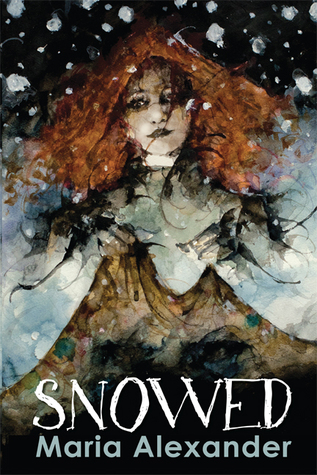 Charity Jones is a 16-year-old engineering genius who’s much-bullied for being biracial and a skeptic at her conservative school in Oak County, California. Everything changes when Charity’s social worker mother brings home a sweet teen runaway named Aidan to foster for the holidays. Matched in every way, Charity and Aidan quickly fall in love. But it seems he’s not the only new arrival: Charity soon finds the brutally slain corpse of her worst bully and she gets hard, haunting evidence that the killer is stalking Oak County. As she and her Skeptics Club investigate this death and others, they find at every turn the mystery only grows darker and more deadly. One thing’s for certain: there’s a bloody battle coming this holiday season that will change their lives – and human history – forever.
Will they be ready?
It’s so cool to see something about the holiday season that offers something darker, creepier…and I have it on good authority that it even dabbles in Krampus lore! Who doesn’t love a half-goat, half-demon monster around Christmas time, right? Read on for the excerpt and the giveaway!
Excerpt from Snowed by Maria Alexander, on-sale November 2, 2016. Published by Raw Dog Screaming Press. Copyright © 2016 Maria Alexander.
I can hear Mom and Dad chatting in the living room, asking questions. Another softer voice with a strange accent gives staccato answers. “Charity?” Mom calls out. She sounds annoyed.
I shuffle through the foyer, inhaling the smell of baking lasagna. When I enter the family room, Mom and Dad are sitting on the couch with mugs, tea bag tags draped over the edges. Some guy I don’t know sits with them in the easy chair. I can’t help checking him out. He’s my age, average height, with skin pale as cream and wavy ebony hair. His light blue eyes shimmer under long, inky lashes. His wrinkled, striped dress shirt is much too big for his narrow shoulders, and his scuffed black boots with pointed toes peek out from the cuffs of his baggy jeans. He gives off a weird vibe, like he’s been in prison or working for suicide bombers.
He must be a stray.
My mom’s a social worker. She’s always bringing home people for meals. Damaged people.
Mom wraps an arm around my shoulders, kissing my ear. “Where have you been? Did you get my message?”
I shake my head.
“Hey. How’d it go?” Dad hugs me as well. I kiss his big scruffy face.
They are being very nice. Something’s up.
“Not great. I’ll tell you later.” I stare at our visitor.
“Charity, this is Aidan MacNichol. Aidan, this is my daughter, Charity.”
“How do you do?” He holds out his hand. His eyes barely meet mine. His voice is a notch higher than I expect and kind of sing-song. What century is this guy from? Who says stuff like that?
“Hi,” I say and give him The Boneless Hand. I’m touching you but I’m not happy about it.
Except I am. His skin is incredibly soft, like my mom’s charmeuse dress. He lets go. At the last second, I almost don’t.
And he almost doesn’t, either.
“Where’s your brother?” Dad asks.
“I don’t know. In jail?”
“Charity, stop it,” Mom sighs.
“What? I never know where he is.”
A car roars into the gravel driveway. It must be Charles’ ride. The music escaping the car windows sounds like someone is grinding the air into steel shavings. As the car retreats, Charles bursts through the front door and makes for the staircase.
“Hey! Charles, come here.” Dad motions to him.
Charles looks as if he’d rather snack on rat poison than join us, but he does.
“Hey.” Charles lifts his chin at Aidan. Aidan nods back.
“We want to talk to you guys.” Mom puts her hand on Aidan’s shoulder. “Aidan is going to be staying with us for a little while.”
“This is bullshit,” Charles announces and heads for the staircase. He looks at Aidan. “No offense.”
“Hey, get back here!” Dad yells.
“No family meeting? You just drop this on us?” I ask.
Mom looks mortally offended. “Charity!”
“It’s not fair. We never get a say in anything that happens around here. Not about Aunt Bulimia—”
“Aunt Bellina.”
“Or the dog I wanted?”
“Honey, you know Charles is allergic.”
“The only thing he’s allergic to is school!”
“Shut up, Cherry.” Charles glares at me, his hamster face squinching up.
“We have guests from my work all the time,” Mom says, “and you’ve never cared before.”
“Yeah, for dinner.”
Aidan slinks back, hands in his pants pockets. He watches the sky through the sliding glass door on the far wall of the living room. He’s humming a familiar tune under his breath. I can’t quite place it.
“I should go.”
Aidan’s announcement cuts through the room. Everyone falls silent.
“I can’t stay here,” he says. “I’m sorry, Mr. Jones. You’ve been very kind.”
“You’re not going anywhere, Aidan.” Mom invokes The Voice. It’s from her days as a trial lawyer. “If you leave, I have to call the authorities. You’re underage, your legal residency is in question, and the county has put you in our care. You can stay with us or you can go to juvy.” Mom darkened. “I don’t recommend juvy.”
“Neither does Charles,” I say.
“Shut up, Cherry!”
Aidan sighs. “I don’t know what this ‘juvy’ is but I suppose I don’t want to go.”
“Are you from like England or something?” Charles asks.
Aidan looks confused. “I beg your pardon?”
“Where is he sleeping?” I ask.
“Your room,” Dad says.
My face heats with horror. I bury it in my hands.
“Kidding!” Dad says, throwing an arm around me for a bear squeeze. “Sewing room. Now let’s have some chow.”
Mom shuttles us to the dining table. She interrogates Charles as to why he stinks like cigarette smoke, but he claims it’s from riding with his friend Noah. I say nothing. As we set the table, she brings out the salad and lasagna, which smells heavenly.
Humiliation and disappointment haven’t affected my appetite at all, apparently. I wish something would.
I notice that Aidan holds the fork like he’s strangling it. He scrapes the plate. Everyone winces. Where is this guy from? And why is he so strange? Who doesn’t know how to use a fork?
I want to flee to my room to cry but I can’t. I want to make up with Keiko. I feel terrible about that fight. But Mom has laid down the law: No running off before the meal is over. Supposedly this encourages Charles to stay put and bond with us. If I ran upstairs and flung myself onto the bed now, I’d be doubly busted because we have a guest. I just want to be alone and this weird stranger is keeping me from my snug room where I can just melt down.
“Are you all right?” Aidan looks at me, concerned. “Don’t worry. It wasn’t you who misbehaved at school today.”
Wait—what? How could he know? Or does he?
Mom shoots Aidan an anxious look, then me. “Honey, is there something going on?”
“Cherry started a riot at school today,” Charles offers.
“A riot?” Dad eyes me with disbelief.
“Shut up! That’s not what happened!”
“And then she made the Christian girls cry.”
“Charity!” Mom says. “Was this your club?”
“Mom, I didn’t do anything to anyone.”
“Then they sent Cherry like a million text messages so she can’t use her phone anymore.” Charles beams with triumph.
I want to slam his face into the Pyrex dish. “You! Did you give them my cell number?” My face heats with the rage. My hand balls into a fist on the table.
“That’s enough.” Dad points at Charles. “Did you give out your sister’s cell number?”
“Of course not,” Charles says, indignant. Dad eyes him suspiciously, but lets it drop. There is no justice.
Mom wearily passes Dad the wine bottle. “Charity, what happened?”
“Nothing. I put up a flyer about the Skeptic’s Club and the BFJs picketed my meeting, calling me a lot of unspeakable names. They harassed everyone who was there. They were harassing me with texts calling me a Satanist even before the club meeting. I had to turn off my phone. That’s why I didn’t get your call.”
Tears scald the corners of my eyes.
“Where were the school officials?” Mom asks. “I can’t believe they let this happen!”
“Don’t worry. Mr. Vittorio told me he’s reporting it. He’s the librarian.”
Aidan sits with his hands folded in his lap, eyes trailing to the window.
Mom narrows her eyes at Dad and polishes off her glass of wine.
And then there’s Keiko… I can’t take it anymore. I manage to stand up and choke out, “Excuse me,” before dashing for my room.
I hear Charles complaining behind me. “So Cherry gets to have a tampon tizzy and get out of dishes?”
I slam the door and the tears spill out. As I fall on the bed, I look to Mr. Spotty and Miss Yoyodyne, who squat beside my desk. These aren’t stuffed animals. They’re robots I built. I feel like kicking one of my plastic component bins but I hurt so much, I just double over on the bed.
Footsteps pound up the stairs and Mom taps on my door. I know her knock.
“Come in.”
Mom sits on the bed and hugs me. Between sobs, I tell her what happened with Keiko.
“Honey, these people are serious bullies. Do you want me and Dad to talk to the principal?”
“No. That’ll only make it worse. Besides, the school says they’ll deal with it. Can we wait and see what happens?”
She looks unconvinced, wiping hair out of my eyes. “If they lay a hand on you…”
“…I have a good lawyer.”
After Mom leaves, I text Keiko.
I’m so sorry, K. Please don’t be mad. I won’t put up any more flyers. I promise! Xoxo
As I read One Hundred Years of Solitude for AP English, I can hear the bumps and scrapes of Dad and Charles setting up the cot in the sewing room. Despite his protests, Charles enjoys showing off that he can lift more than Dad, who had back surgery several months ago. Mom digs through the sewing room closet. “We’ll get you more clothes this weekend,” I hear her tell Aidan. They wish each other a good night.
After two long hours of AP Calculus followed by Honors Chemistry and French, I eventually crawl into bed, exhausted and wishing that I believed in something—anything—that I could pray to and make things okay with Keiko.
Everything falls quiet except for Aidan. I hear him humming. The wall is thin between us.
I remember hearing Mom crying in the sewing room after we first moved here. She and Dad weren’t getting along. I hate thinking of my mom being weak. She has to be strong, the badass lawyer who torches anything in her way with her words. I love her for that. To hear her sobbing was haunting.
Aidan keeps humming. It’s that same tune as before but this time I know what it is.
Carol of the Bells.
A Christmas song.
Snowed Giveaway
Interested in checking out Snowed? Here’s your chance to win this gorgeous novel by Maria Alexander. With thanks to the wonderful folks at Raw Dog Screaming Press and Beverly Bambury Publicity, the BiblioSanctum has one print copy of Snowed up for grabs! This giveaway is open to residents of the US and Canada. To enter, all you have to do is send an email to bibliosanctum@gmail.com with your Name and valid Mailing Address using the subject line “SNOWED” by 11:59pm Eastern time on Saturday, November 12, 2016 and we’ll take care of the rest.
Only one entry per household, please. The winner will be randomly selected when the giveaway ends and then be notified by email. All information will only be used for the purposes of contacting the winner and sending them their prize. Once the giveaway ends all entry emails will be deleted.
So what are you waiting for? Enter to win! Good luck!
#RRSciFiMonth Audiobook Review: The Tourist by Robert Dickinson
Posted on November 2, 2016 16 Comments
Sci-Fi November is a month-long blog event hosted by Rinn Reads and Over The Effing Rainbow this year, created to celebrate everything amazing about science fiction! From TV shows to movies, books to comics, and everything else in between, it is intended to help science fiction lovers share their love and passion for this genre and its many, many fandoms.
A review copy was received from the publisher. This does not affect the contents of my review and all opinions are my own.
 The Tourist by Robert Dickinson
Mogsy’s Rating (Overall): 3 of 5 stars
Genre: Science Fiction
Series: Stand Alone
Publisher: Hachette Audio (October 18, 2016)
Length: 9 hrs and 53 mins
Author Information: Website
Narrator:
When I first found out about this book, I thought it had one of the most unique premises I’ve ever seen. But then the early reviews started trickling in, and it seems the one common opinion among a lot of them were “I had no idea what was going on,” or “I was so confused.” In part, that led me to my decision to listen to The Tourist audiobook in the hopes that the format will alleviate some of the issues, but also, I learned that it would be read by Peter Kenny, one of my favorite narrators.
In the end, the audiobook production itself was as fantastic as I expected; it was the story that left me with mixed feelings. The Tourist, as it turns out, is a time travel book, and “tourism” refers to the excursions back to the past by persons in the future. The 24th century is apparently a rather dreary and dull place, and the possibility of time travel has opened up a myriad options for your everyday jaded vacationer. The most popular destination by far is the 21st century, where the travelers can’t seem to get enough of our quaint shopping malls and fast food joints.
Our protagonist is a tour guide, ferrying his charges back and forth through time, making sure they follow all the complicated rules of time traveling and that they all get back home safely. Then one day, after tallying up his roster following a routine day on the job, he notices that a female passenger in his party has gone missing. She has, ostensibly, been left behind, but as our tour guide digs deeper to recover his lost client, it quickly becomes clear that there is more to the situation.
Ultimately, I think my decision to listen to the audiobook paid off in some ways, while putting me at a disadvantage in others. The story goes on multiple tangents throughout, and had I been reading The Tourist in prose form, these sections might have put me off the book immediately. Needless to say, I am much less likely to lose focus when I am listening to someone reading, especially when the narration is done well.
On the other hand, the audio format did nothing to help the story’s overall feeling of disjointedness; if anything, it might have made it feel worse. For one thing, this book lacks any kind of coherent plotting, and the narrative jumps from person to person, place to place, time to time. In audio, these frequent switches were made even more obvious and jarring. Peter Kenny did his best, but even with his excellent voice work to help differentiate who the story was following, it was hard to keep up. Furthermore, one of the main perspectives was presented in the second-person, a confusing narrative mode even under the best circumstances, and here it only muddied the waters even more.
I have a feeling this book will pose a head-scratcher even for fans of time travel stories, which is a shame because there are some truly original and fascinating concepts in here. Still, it doesn’t matter how amazing a novel’s ideas are, they mean very little if readers cannot make heads or tails out of its story or what the author is trying to accomplish. The Tourist is pitched as a suspenseful mystery thriller, but I am sad to say I didn’t feel any of the “thrills” at all. To be fair though, there actually is a mystery involved, except it just wasn’t the kind that pulled you in, or made you want to know more. Instead, it left me feeling more frustrated than anything else.
Still, while I may be disappointed with the story of The Tourist, I’m not sorry I listened to the audiobook. Even though I can’t wholly bring myself to recommend the novel, the ideas are cool enough that it might be worth picking up this book to experience them, especially if you’re into time traveling stories that are different, and if you’re feeling in the mood for a challenge. Also, given the convoluted nature of this novel, I am even more impressed with Peter Kenny’s narration. The book itself might not have worked for me, but I found little to complain about Kenny’s reading; he delivered an excellent performance as always, on top of which he narrated with an aplomb that gave me confidence that he knew what was going on even if I didn’t—sometimes that alone is enough to keep momentum going, when otherwise I would have set a print book aside.
Story:  | Performance:
  | Overall:

Waiting on Wednesday 11/02/16
Posted on November 2, 2016 10 Comments

“Waiting On Wednesday” is a weekly meme hosted by Breaking the Spine that lets us feature upcoming releases that we can’t wait to get our hands on!
Mogsy’s Pick
Star’s End by Cassandra Rose Clarke (March 21, 2017 by Saga Press)
The BiblioSanctum is participating in Sci-fi Month so I’m going to try to feature science fiction picks for my WoWs for the month of November. Kicking things off is an upcoming book from the brilliant and talented Cassandra Rose Clarke, whose novels I’ve enjoyed in the past and I am excited to see she will have a new space opera coming out in the spring of next year!
 “A new space opera about a young woman who must face the truth about her father’s past from critically acclaimed author Cassandra Rose Clarke.
The Corominas family owns a small planet system, which consists of one gaseous planet and four terraformed moons, nicknamed the Four Sisters. Phillip Coromina, the patriarch of the family, earned his wealth through a manufacturing company he started as a young man and is preparing his eldest daughter, Esme, to take over the company when he dies.
When Esme comes of age and begins to take over the business, she gradually discovers the reach of her father’s company, the sinister aspects of its work with alien DNA, and the shocking betrayal that estranged her three half-sisters from their father. After a lifetime of following her father’s orders, Esme must decide if she should agree to his dying wish of assembling her sisters for a last goodbye or face her role in her family’s tragic undoing.”
Book Review: Den of Wolves by Juliet Marillier
Posted on November 1, 2016 23 Comments
I received a review copy from the publisher. This does not affect the contents of my review and all opinions are my own.
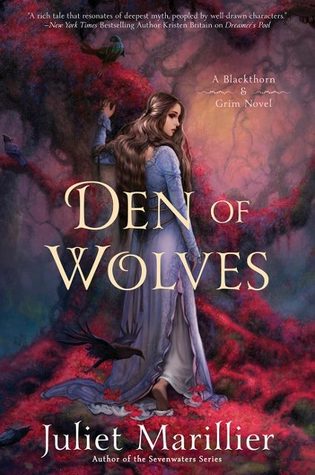 Den of Wolves by Juliet Marillier
Mogsy’s Rating: 5 of 5 stars
Genre: Fantasy
Series: Book 3 of Blackthorn & Grim
Publisher: Roc (November 1, 2016)
Length: 448 pages
Author Information: Website
Books that get the five star treatment from me often have an emotional component to them, which would probably explain why I have consistently given the novels in the Blackthorn & Grim series full marks. That’s because every single one of them has been a boatload of feels, and this third installment is no exception. In fact, Den of Wolves might be the most poignant and moving of them all. I’ve laughed and cried with these characters through their triumphs and tribulations, and now I finally understand that everything we’d been through had been gradually building up to this crucial novel.
If you have not had the pleasure of meeting Blackthorn and Grim yet, the two of them make up one of the most extraordinary partnerships I’ve ever read, and their shared experiences in the previous books have only deepened that bond of trust and friendship. Blackthorn is a wise woman, her job to mend and heal and cure, but deep down inside she is still broken and raging with her desire for revenge on Mathuin of Laois, the man who destroyed everything she ever loved. The only thing keeping her from acting upon that anger is an oath she made to the fey who saved her life in exchange for a promise that she will not seek out her enemy for seven years and only do good deeds for the duration of that time. That and Grim, Blackthorn’s steadfast companion who has given her strength through the most difficult of times and kept her dark thoughts at bay when they threatened to take over.
The two of them have settled comfortably in Winterfalls, home of the Prince of Dalriada. This spring brings several changes, however. A troubled young woman named Cara has been sent to the court from Wolf Glen at the request of her wealthy father, and the princess of Dalriada has asked Blackthorn to spend some time with the awkward and tongue-tied girl. Meanwhile, Grim has been hired by the master of Wolf Glen for an elaborate new project—to build something called a Heartwood House, said to bring good luck to the owner because it would confer the blessings of every tree in the forest. The timing though, as Blackthorn and Grim suspect, cannot be a coincidence. Something feels wrong with the whole building project, and there must be a reason why Cara’s father does not want the girl around while construction is taking place. Wolf Glen is a web of secrets, and to unravel it, our protagonists will have to uncover the real legend behind the Heartwood House.
Once again, Den of Wolves follows the structure established by the first two books, following several POV characters. Blackthorn and Grim’s chapters are the most prominent of course, but Cara also adds her gentle, sensitive voice to this book along with the mysterious Bardán, the “wild man” whose real purpose will become known as the story unfolds. And like the previous books, this one also features a mystery, though the details surrounding our characters trying to solve it are perhaps less important than the final resolution itself, or even the fallout from the entire conflict. In fact, I think most readers will puzzle out the answers well before the end of the book, but ultimately it’s the all-pervasive tension that will whet your appetite for more.
To give you an idea of effectively this book managed to build and maintain momentum, it probably took me two or three sittings to read the first hundred pages or so, but only a single day to devour the remainder. While Den of Wolves is not what I would call a heart-pounding page-turner in the traditional sense, there’s just something so riveting about Marillier’s writing; her stories have a way of drawing you in, making you forget yourself and lose all sense of time and reality…like stepping into a fairy tale.
I’m also not ashamed to admit that I shed a few tears. This series overall has done a number on my emotions, and this novel once again destroyed me. While these books do contain their fair share of heartbreaking moments, I don’t think they are meant to be tearjerkers or sad stories per se, but if you have been following these characters since the beginning, it’s hard not to be affected. Blackthorn and Grim are such fantastic protagonists because Marillier is a true master at developing genuine, sympathetic, and well-rounded heroes and heroines you care about. They are both broken and flawed people but they still somehow manage to complete and bring out the best in each other, which makes the fact that they spent so much time apart in this novel very difficult to bear. After watching them go through so much, you want these characters to be happy.
Still, the idea that deliverance from the past can come in many forms and from the most unexpected of places is a theme that receives a lot of attention in this series. And it really came through here in Den of Wolves. If I talk any more about the relationship between Blackthorn and Grim I will be treading dangerously into spoiler territory, not to mention I will probably start tearing up again, but suffice to say I think fans of this series will be very satisfied with how things play out.
And speaking of which, whether I like it or not, this book does have the feel of an ending of sorts. Blackthorn’s “seven years” agreement with the fey regarding Mathuin had led me to anticipate there will be more than three books to this series, but Den of Wolves does leave things off with a definite sense of closure, and a satisfying one at that. However, the author has said in an interview that she has more ideas for future Blackthorn & Grim books, but in the end it will depend on what her publishers decide, so I am crossing my fingers.
No matter what happens though, these three books represent a complete arc, and Blackthorn & Grim is now one of my favorite series of all time. It is a truly stunning achievement, and mere words cannot express how much I love these books, or how much I will cherish these stories and characters. Juliet Marillier has drawn together the threads of passion, imagination and beauty to bring to life an enchanting vision of magic and awe. Absolutely not to be missed.

More on The BiblioSanctum:
Review of Dreamer’s Pool (Book 1)
Review of Tower of Thorns (Book 2)
#RRSciFiMonth: Sci-Fi Month 2016 Introduction
Posted on November 1, 2016 15 Comments
It’s going to be a very busy month for us at the BiblioSanctum. In case you haven’t heard, November is SciFiMonth! We’ve had such a great time being a part of this event in previous years that we’re participating again in 2016! This year, it is being brought to us again by our wonderful hosts Rinn Reads and Over the Effing Rainbow.
Starting today, we’ll be joining other bloggers, authors, and readers in a month-long celebration of everything science fiction. That doesn’t mean we’ll stop covering all our other favorite speculative fiction genres though! You will most definitely continue to see our usual fantasy reviews, weekly features, author spotlights, and all that other fun stuff. The only difference is, some of our reviews and posts will branch off from the usual to encompass the various mediums that science fiction reaches. Some of that might include our weekly features like Waiting on Wednesdays spiced up with a sci-fi touch, or discussions that go beyond books to talk about sci-fi movies, television, games and other media. We’ve also lined up some exciting sci-fi giveaways this month, so be sure to keep an eye out!

Simply look for posts tagged with “SciFi November” or those that contain the SciFi Month banner or button.
For more information about this event visit the SciFiMonth Announcement post at Rinn Reads, where you can also sign up to participate if you’re interested. Everyone is welcome, and you can join up anytime! Be sure to also follow the hashtag #RRSciFiMonth on Twitter so you won’t miss a thing.

Come explore the wonders of science fiction with us, and feel free to let us know:
How long have you been a fan of science fiction?
Why do you like sci-fi and what is your favorite thing about it?
What are your favorite books/games/films/TV shows in the genre?
What are your plans for Sci-Fi Month?
Book Review: Dracula vs. Hitler by Patrick Sheane Duncan
Posted on October 31, 2016 22 Comments
A review copy was received from the publisher. This does not affect the contents of my review and all opinions are my own.
 Dracula vs. Hitler by Patrick Sheane Duncan
Mogsy’s Rating: 3.5 of 5 stars
Genre: Horror, Historical Fiction
Series: Stand Alone
Publisher: Inkshares (October 25, 2016)
Length: 441 pages
Author Information: Website
Paranormal horror and historical fiction collide in the rather unfortunately titled Dracula vs. Hitler, since anyone picking up this book would be rightly forgiven for mistaking this book for a campy, humorous mashup. After all, that was my initial thought after seeing the name and cover as well, but as it turns out, my first impression couldn’t be further from the truth.
Dracula vs. Hitler is actually a quite serious endeavor, reinforced with what appears to be plenty of research and painstaking attention to detail. For one thing, it is written in an epistolary style like the original Dracula by Bram Stoker, a nod to the classic work.
The story officially begins with the Editor’s Note, as the author Patrick Sheane Duncan (who is also known for his work as a film producer and director, on movies like Courage Under Fire and Mr. Holland’s Opus) recounts a recent trip deep down into the bowels of a cavernous Washington DC document warehouse (think the final scene of Raiders of the Lost Ark), where he was supposed to be conducting research for a new television series. Instead, he ends up finding more than he bargained for, when he chances across a thick packet of papers labeled “TOP SECRET”. Inside this classified folder are the documents making up most of this book, mainly a series of entries from the journal of one Jonathan Murray Harker dated between the months of April to June 1941, as well as a number of excerpts from a novel believed to be authored by Lucille Van Helsing writing under a pen name.
These two characters are of course the descendants of the original characters from the novel Dracula, the ending of which apparently didn’t play out the way Stoker had written them. In a letter written in 1890, Lucille’s father Abraham Van Helsing confesses to not having killed the creature as he had intended, instead stashing the body away in a state of suspended animation. Fifty odd years later, as the Nazis are wreaking death and fear across Europe, Van Helsing is now a resistance leader in Romania. Nazi atrocities are detailed in secret communiqués to Berlin written by Major Waltraud Reikel, a vile and sadistic officer of the SS. As the resistance forces flounder under Reikel’s tight hold in the area, Van Helsing is forced to consider drastic measures—like turning to the creature he put down half a century ago. As reluctant as he is to go through with the plan, deep down he knows that to fight a monster…you need a monster. Together with the English spy Jonathan Harker, grandson of original Jonathan and Mina Harker, Van Helsing prepares to go back and unearth the legendary Dracula.
So no, this book is not intended to be a cheesy crossover or a comedic piece so don’t let the title put you off (though on the other hand, if you were attracted to this book because you were expecting a humorous read, then you’ll be disappointed…seriously, they really could have gone with a more suitable title). Instead, what you’ll find is a cleverly thought out novel featuring deep characters which actually deals with some solemn themes. Despite having a strong element of escapism appeal, I also wouldn’t exactly call this a “light, fluffy” read either. The story definitely has its share of slow, dragging parts, especially towards the beginning and in the middle, and for a book called Dracula vs. Hitler, there’s actually disappointingly little showdown between the two title characters. Dracula doesn’t even enter the picture until about a hundred pages in, and the Fuhrer’s presence mainly comes into play near the very end.
Still, after a lengthy buildup, the reader’s patience is rewarded as the momentum picks up. The story takes off bigtime as the resistance unleashes their secret weapon in the form of a bloodsucking vampire, and I can’t even begin to describe the immense pleasure and satisfaction derived from watching the Nazis lose their shit. The fight scenes are suspenseful and literally explosive, and of course, once Hitler finally figure out what’s going on, he becomes obsessed with capturing Dracula for a chance at unlocking the secret of immortality. The author pulls off the rest of the novel marvelously, and there’s no doubt that the climax and conclusion are this book’s best parts.
There are other notable aspects that must be addressed though, and first and foremost is of course the character of Dracula himself. Here he is portrayed as a savior and protector of Romania, though not without some pushback from those familiar with his bloody role in “The Book” as well as his brutal history as Prince Vlad the Impaler. Dracula doesn’t actually get his own “voice” in this novel, and instead we have to rely mostly on Jonathan Harker and Lucy Van Helsing’s sections in order to get to know him. Nevertheless, I am impressed with Duncan’s handling of the classic character. In the story, the resistance often refers to Dracula as “the creature” or “the secret weapon”, but as the plot continues it becomes more and more clear that he is not a thing or a monster, but a man who is more human than anyone gives him credit for. The author has also managed to create a lot of interesting tension between Dracula, Jonathan and Lucy, even going as far as to throw a bizarre love triangle into this mix (and trust me, it is not dubious as it sounds).
All told, its questionable title notwithstanding, I’m actually not too worried because I’m sure Dracula vs. Hitler will find an audience—and I really hope it will find success too because this book really is quite a gem. Do not, and I repeat, do not be fooled into expecting “Freddy vs. Jason” or “King Kong vs. Godzilla” levels of camp with this one; it’s not that kind of book. Historical fantasy and paranormal fans should have a good time though, especially if you’re looking for an imaginative book with a dash of pulp and quirkiness.

YA Weekend Audio: Gemina by Amie Kaufman and Jay Kristoff
Posted on October 30, 2016 20 Comments

I received a review copy from the publisher. This does not affect the contents of my review and all opinions are my own.
 Gemina by Amie Kaufman and Jay Kristoff
Mogsy’s Rating (Overall): 5 of 5 stars
Genre: Young Adult, Science Fiction
Series: Book 2 of The Illuminae Files
Publisher: Listening Library (October 18, 2016)
Length: 12 hrs and 34 mins
Author Information: Amie Kaufman | Jay Kristoff
Narrators: Carla Corvo , Steve West , P.J. Ochlan, Full Cast
Anyone who has seen the hardcover of Illuminae will probably agree the art direction for the novel was phenomenal, with its pages beautifully laid out and adorned with illustrations, diagrams, and creative typeface. It was such an incredible visual experience that in my review I even wrote that I would recommend forsaking digital or audio versions of this book and go all-out for the hardcopy, the way the book was meant to be enjoyed. However, to this last point, I got a couple of comments from readers who jumped in to say, “No, no, the audiobook is actually excellent!” and that I shouldn’t write off the audio edition just yet, because even without the visuals it has a lot to offer. Thoroughly intrigued, I decided I would listen to the audiobook of the sequel, Gemina, to see what the fuss was all about.
AND OH MY GOD. Forget what I wrote about nixing the audiobook. I take back all my skepticism. I have seen the light.
Gemina was absolutely positively outstanding. And the audio experience was more than just amazing; it just about blew my mind.
But first, my summary and review of the story. Chronologically, Gemina takes place right after the events of Illuminae, but the focus switches to a couple of new characters. The book also takes place on Jump Station Heimdall, which as you’ll recall is the destination of the refugees aboard the Alexander fleet after their planet Kerenza was invaded by the megacorp BeiTech. While all that’s still going on in the background, our new protagonist Hanna Donnelly has been settling in at the station, where her father is the commander.
Being the daughter of the most important man on Heimdall has its perks; Hanna is affluent and has never wanted for anything, and her pampered ways has even led her drug dealer Nik to cheekily call her “Princess” or “Your Highness.” Getting high off dust is one of the ways Hanna has found to pass her time at Heimdall, which in her opinion is one of the most boring places in the galaxy, though of course there’s also her new boyfriend Jackson Merrick, a handsome and well put together officer of her father’s.
Soon, it is Terra Day, an event Hanna has been looking forward to for a long time. She’s even bought a new dress to show Jackson and everything! There’s only one thing left she needs to make it a perfect day, and that’s a bit of dust. Right before the party, she heads off to see Nik, a decision that most likely saves her life. Without warning, Heimdall comes under attack by mercenaries hired by BeiTech (those pesky troublemakers again) who are there to take over the station and ensure that the incoming survivors of Kerenza will not receive the help they need. The mercenary leader Cerberus is prepared to kill everybody on board to bury the truth of what happened in Illuminae, and with everyone else trapped or held hostage, it is up to Hanna and Nik to recapture control of the Heimdall. Fortunately for everyone, Nik has his criminal underworld connections, and there’s a lot more to Hanna than the pampered helpless princess everyone thinks she is.
Following in the tradition of the first book, Gemina is also presented in an epistolary format as a collection of transcripts, journal entries, communication reports and the like. The variety of documents used to tell the story is again what makes this sequel so fantastic. Kaufman and Kristoff use them to great effect, ensuring there’s never a dull moment. Two books later, I still can’t get over how clever and unique this series is.
I might have even enjoyed Gemina more than Illuminae. The two plots mirror each other in a way, with both featuring their protagonists hiding out in the labyrinthine belly of a ship/space station, covertly sabotaging their foe in order to regain the upper hand. Both stories also involve a race against time and provide readers with a periodic countdown to remind us of that fact. And finally, both books have a surprise up their sleeve, a wild card that the authors decide to spring on us only once the story has gotten moving, just to add a little more spice to the conflict. Thing is though, despite their similarities, I found the plot of Gemina much more interesting and unpredictable than Illuminae, with a final ending that was just so twisty and brilliant it had me sitting on pins and needles until the book was finished. And so, I have to give the edge to the sequel.
I also didn’t think I would take to our new protagonists and enjoy them as much as I did Kady and Ezra, but Hanna and Nik surprised me. They have a great dynamic between them, and I felt their special connection right away. Of course it doesn’t hurt that Hanna, ostensibly a spoiled little rich girl, is actually a walking wealth of military strategy and black ops-type knowledge that she learned at her father’s knee. With her resourcefulness and hardcore skills, Hanna and Nik are out to make BeiTech and Cerberus regret that they ever chose to mess with Heimdall station.
As for the audiobook edition, Gemina is probably one of the best productions I’ve ever had the pleasure of listening to. Multiple narrators give listeners the full cast treatment and I am beyond impressed at how they’ve successfully translated such an unconventionally structured book to audio. The only thing I didn’t really care for was the awkward censoring/muffling of naughty words, but to be fair, you have to put up with the same inane “blanking out” effect in the print. Anyway, because so much of the book is presented to us via private messaging transcripts and person-to-person communiqués, this actually makes the audiobook format uniquely suited to immerse listeners in the story. The voice actors are also fantastic; I actually enjoyed the video transcripts a lot more this time around when they were read by the narrator for the hilarious “Security Camera Footage guy”, and they couldn’t have chosen a more perfect reader for Jackson, whom the other characters in the book describe as having a “sexy accent”. Other extras that made this one a great listen include sound effects, and even a rendition of the infamous “Lollipop Licking Song” (you’ll know what I mean when you read the book) which would be played every time it got queued—all that was the icing on an already delicious cake.
All told Gemina was an amazing book and worth sequel to the brilliant Illuminae, and I highly recommend this series. I’ll probably still end up picking up the hardcover at some point just to have a “keeper copy”, because I am curious to see the visuals as well as the illustrations by author Marie Lu, but I have to say I’m extremely pleased with my time with the audio. I retract my previous comments about other formats and amend them to say you can’t go possibly go wrong with any one you choose. Just check out these books!
More on The BiblioSanctum:
Review of Illuminae (Book 1)
Book Review: The Queen of Blood by Sarah Beth Durst
Posted on October 29, 2016 27 Comments
A review copy was received from the publisher. This does not affect the contents of my review and all opinions are my own..
 The Queen of Blood by Sarah Beth Durst
Mogsy’s Rating: 4 of 5 stars
Genre: Fantasy
Series: Book 1 of The Queens of Renthia
Publisher: Harper Voyager (September 20, 2016)
Length: 353 pages
Author Information: Website | Twitter
Color me pleasantly surprised – a book that ostensibly bore many hallmarks of your average possibly-YA-but-maybe-not fantasy novel in fact turned out to be a very refreshing and unique read. I honestly didn’t expect to like this book so much, especially since my feelings for the story fluctuated so wildly for most of the first half. However, all traces of uncertainty were washed away by the time the plot ramped up to its brutal climax and staggering conclusion.
The Queen of Blood introduces us to the world of Aratay, a place where humans and nature spirits coexist in a state of precarious equilibrium. Spirits see humans as invaders in their domain, and given the opportunity they would gladly see us all dead. But while the spirits are destructive forces, they are also one with the natural world, and without them there would be no rain, no fire, no life.
So humans have learned to adapt. In Aratay, a Queen holds control over all the spirits in the area and protects her people from harm. To choose a Queen, girls with an affinity to sense and manipulate the spirits are identified and invited to an academy to learn how to use their powers. The most promising students are chosen by champions to be further trained to become potential heirs, so that in the event that the Queen dies there will always be a successor to take her place and keep the spirits in line.
Sometimes though, there are accidents. The book begins with a spirit attack on a village, which leaves many dead. Our protagonist, a young girl named Daleina, was only able to save herself and her family when her powers manifested during the massacre, and since that day has vowed to do all she can to prevent something like this from ever happening again. That determination ultimately leads her to the academy, where unfortunately, she discovers that her abilities are actually very weak compared to the many more talented girls in her class. But as more and more villages fall prey to spirits each year, it is becoming clear that the current Queen is starting to lose control—or worse, perhaps these attacks like the one on Daleina’s village were not in fact accidents at all. Something very bad is coming to Aratay, but will Daleina and her fellow aspirants be powerful or prepared enough to confront it?
As I said before, my feelings were all over the place for the first half of this novel. When I first started, my attention was immediately captured by the different feel the gorgeously detailed setting and atmosphere. The people and cultures of Aratay are closely tied to the land, with towns and even whole cities literally built into the canopies of the trees. I also liked the ideas and lore surrounding the large variety of spirits. To be clear, these aren’t your typical chaotic neutral entities that just want to live wild and free to do what nature spirits are wont to do. Instead, they are malevolent and destructive to their core. There’s a song that every child knows growing up:
Don’t trust the fire, for it will burn you.
Don’t trust the ice, for it will freeze you.
Don’t trust the water, for it will drown you.
Don’t trust the air, for it will choke you.
Don’t trust the earth, for it will bury you.
Don’t trust the trees, for they will rip you,
rend you, tear you, kill you dead.
It’s a silly little ditty, but it does serve to illustrate a very important point: that nature in this world isn’t something vast and beautiful and unfathomable to be respected or held in awe. No, the spirits are downright terrible—not merely cold and heartless but actually vicious and bloodthirsty. They are to be feared, and rightly so.
Things were building up to be very interesting—that is, until my enthusiasm was slightly dampened by the sudden arrival of the magic school trope. Don’t get me wrong though, for I enjoy the magic school trope and everything that comes along with it very much, but this book had the potential to step off such well-trodden paths. What follows is the usual pattern of watching a young protagonist develop her personality as she gradually comes of age, making friends and learning new skills along the way. To be fair, the author did manage to surprise me with some unconventional twists, such as Daleina’s unexpected friendship with Merecot (the arrogant, overachieving “queen bee” who in almost any other YA-type story would have been immediately typecasted as the main character’s bitchy rival) or the fact that Daleina really isn’t all that talented—and she knows it but also accepts it. Our heroine is a genuinely good person who isn’t there for her own glory, having a clear understanding the true meaning of service and self-sacrifice for the greater good. She has gotten as far as she has not because she is exceptional, but simply because she works her butt off. You gotta admire that kind of dedication and work ethic.
The really amazing parts though, were all in the second half of this book. That’s when I saw a good story make the shift to being a great one. I don’t want to give too much more away, but suffice to say the plot escalated into a high-stake crisis and very dangerous, dramatic circumstances. I really liked how everything came together, and the ending was simply stunning—in a “I can’t believe all that really just happened” kind of way.
All in all, things tie up quite nicely but there are also plenty of seeds planted here that will no doubt be explored in the sequel. I for one cannot wait to see what else Sarah Beth Durst has in store for us. For an introduction to a series, The Queen of Blood amazes me with its potential, and I look forward to the next book with great enthusiasm.

Backlist Burndown: The Cloud Roads by Martha Wells
Posted on October 28, 2016 16 Comments
As book bloggers, sometimes we get so caught up reading review titles and new releases that we end up missing out on a lot previously published books. As a result, one of my goals this year is to take more time to catch up with my backlist, especially in my personal reading pile. And it seems I’m not the only one. Backlist Burndown is a new meme started by Lisa of Tenacious Reader. Every last Friday of the month, she’ll be posting a review of a backlist book and is inviting anyone interested to do the same. Of course, you can also review backlist books any day you want, as often you want, but be sure to watch for her post at the end of the month to link up!
This month, I’m reviewing…
 The Cloud Roads by Martha Wells
Mogsy’s Rating: 4 of 5 stars
Genre: Fantasy
Series: Book 1 of The Books of the Raksura
Publisher: Night Shade Books (March 1, 2011)
Length: 300 pages
Author Information: Website | Twitter
Finally making good on my promise to go back and read The Books for the Raksura from the beginning, I decided to pick up The Cloud Roads with the SF/F Read-Along group. Up until this point, I had only read one volume of the Raksura short stories as well as The Edge of Worlds which is formally the fourth book of the sequence but can also be read as a jumping-off point for a new era of the series. As such, I started The Cloud Roads with the advantage of being already familiar with the characters and the world, but being able to go back and read the first book to see how everything started was a great experience nonetheless.
Here we are first introduced to Moon, an orphaned shapeshifter with no idea who he is or what he is. Long ago he had tried looking for others like him, but gave up after years of no luck. Since then he has been living among the terrestrial races in their villages, disguised in his groundling form to look like them. However, one day he slips up and inadvertently exposes his flying form to a village girl, who mistakes him for a member of one of the malicious enemy races called Fell. The groundlings incapacitate Moon and eject him from their community, but that very night he is rescued by another winged creature that looks like him, a creature who is also a shapeshifter with both flight and groundling forms. And thus, Moon soon learns he is a Raksura and begins his journey of discovery to find out where he really comes from.
Any hopes Moon has of finding a new home are soon dashed though, when he is met with hostility among the other Raksura. His rescuer is part of a court named Indigo Cloud, a colony which has been suffering a lot of hardships as of late, including having no breeding pairs and having their existing clutches and young dying. This has made them especially suspicious of strangers, especially a lone Raksura like Moon. Raksura are gregarious creatures by nature and thrive in large social groups, so a finding an individual living in solitary in the wild usually means bad news. However, Moon happens to be a Consort, a special type of fertile male Raksura able to provide a Queen with new clutches, and that means things are more complicated than they appear.
The first thing that struck me was how different Moon was from the later version of Moon I had gotten to know from The Edge of Worlds. This Moon here was younger and less experienced of course, but his attitude was also so much more cynical and aloof. For someone who knows he doesn’t belong anywhere and yet still yearns for being a part of a community, this makes sense. His nomadic lifestyle of moving from one groundling village to another is a temporary solution, one that I think he is aware of, but since there are no better options for the time being Moon has no choice but just to accept this reality. It’s a very lonely existence, one that would make even a young Raskura feel world-weary and pessimistic.
Moon’s introduction to Indigo Cloud court was also an interesting process. I had known that he was an outsider and that he didn’t grow up with the colony, but the extent of Indigo Cloud’s initial hostility towards him in this book was a surprise to me. Also, Raksuran culture and politics are complicated, but because Moon was completely new to all of it, his gradual exposure to the court also allowed the reader to learn everything along with him. Not going to lie; navigating the strange and wonderful world of the Raksura can be a little daunting, given the massive amount of information to take in, but Wells does a phenomenal job presenting her unique setting and characters without completely overwhelming her readers. Furthermore, it’s always a challenge when a book’s main characters are predominantly or a hundred percent non-human, but in spite of the Raksuran’s “otherness” I still found them easy to relate to because of their very human emotions.
As an introduction to the world of the Raksura, I have to say The Cloud Roads was as tantalizing and eye-opening as I had thought it would be, though given this is Martha Wells I would have expected nothing less. I’ve always been curious about the circumstances behind Moon’s arrival at Indigo Cloud court, and I’m glad I finally got the chance to read the full story. This book sets the stage nicely for a lot more to come, and I’m looking forward to continuing with the next book.
More on The BiblioSanctum:
Wendy’s review of The Cloud Roads (Book 1)
Tiara’s review of The Cloud Roads (Book 1)
Wendy’s review of The Serpent Sea (Book 2)
Wendy’s review of The Edge of Worlds (Book 4)
Mogsy’s review of The Edge of Worlds (Book 4)
Mogsy’s review of Stories of the Raksura: Volume One


 The BiblioSanctum