Book Review: Within the Sanctuary of Wings by Marie Brennan
Posted on April 25, 2017 14 Comments
I received a review copy from the publisher. This does not affect the contents of my review and all opinions are my own.
 Within the Sanctuary of Wings by Marie Brennan
Mogsy’s Rating: 4 of 5 stars
Genre: Fantasy
Series: Book 5 of Memoir by Lady Trent
Publisher: Tor (April 25, 2017)
Length: 352 pages
Author Information: Website | Twitter
It is with a heavy heart that I bid adieu to another one of my favorite series, but I am also glad that at long last I got to see all the ideas come to fruition in this fifth and final novel of Marie Brennan’s wholly unique Memoirs of Lady Trent. After all, Within the Sanctuary of Wings is everything a fan could want in a finale—a book that ends on a high note of hope and happiness while also deftly tying all the overall series themes and plot threads together.
Furthermore, I’m sure those who have been along for the ride since A Natural History of Dragons will be glad to know that the details behind Isabella’s most infamous scientific discovery—an event that has been teased for the first four books—will finally be revealed. Without a doubt, the answers were worth waiting for. I guarantee that the revelations in this book will change everything you think you know about this series.
The adventure, however, begins rather quietly. While attending a lecture on Draconean linguistics delivered by her husband, Isabella’s attention is unexpectedly pulled away by a Yelangnese stranger with an urgent matter to discuss with her. The man, whose name is Thu, reports that he has discovered the corpse of a new type of dragon while scouting with his fellow rebels in the mountains of the Mrtyahaima. As expected though, the remoteness of the location and its unforgiving conditions do little to faze the headstrong Isabella, who immediately works on putting together an expedition to Yelang so that her team can investigate Thu’s claims.
Unfortunately, their road is plagued with obstacles. There is only a tiny window time in which they must reach the Mrtyahaima mountains before the monsoon season brings heaps of snow upon the peaks. Then there are the political complications. The region is unstable with different tribes chafing under the Yelangnese rule, and it’s not like Isabella is exactly welcome in Yelang either, after the way she offended their government on one of her past adventures. Worst of all, there’s no guarantee that she will find evidence of a new dragon species. Weeks of planning and risk-taking could end up being all for naught.
But of course, our characters find something. And obviously I won’t spoil what it is here, but it’s something HUGE.
Without revealing anything though, I will admit that the twist caught me off guard—likely what it was meant to do, but it also left me with some mixed feelings. I’ve made no secret that one of my favorite aspects of this series are the dragons and the way they are handled—not as mythological beings or exceptional creatures with special abilities or powers as most fantasy novels depict them. In contrast, Brennan’s dragons are part of the natural world, a key theme which has provided the driving force behind all these books. I found this approach refreshingly original. I also loved the science and the learning, and most of all I loved Isabella’s quest to find out as much as she can about how dragons fit into the natural order of the world. Within the Sanctuary of Wings does not really change any of this, and for that I am glad. But at the same time (and apologies for being deliberately vague on this), this installment did also manage to drop a bombshell which introduced a completely new element into my understanding of this series.
As well, there were a few minor issues with pacing. First, compared to the previous books, this one started more slowly, and even the harrowing journey through the snow and ice did little to give the intro an energy boost. Second, this was also a very Isabella-centric story, resulting in less appearances by some of my other favorite characters like Tom and Suhail. Third, while lots of fascinating things happened throughout, a large chunk of the middle was characterized by inaction which, to be fair, couldn’t be helped given the way certain events played out. Finally, the ending wrapped things up way too conveniently for my tastes, but at that point I understood the need for a quick and satisfying resolution.
Still, despite my quibbles, this was once again another riveting book in the Memoirs of Lady Trent sequence. It has been an absolute joy to be with Isabella as she evolved throughout the series, as well as watching her relationships grow. Sometimes, if I allow myself to get really immersed, I even start thinking of this alternate world as my own, and I have to credit the author’s incredible writing skills. These books have a way of drawing me in, making it easy for me to believe I am actually reading an account of an old woman’s youth and rise to fame as a world renowned dragon researcher. I cheered Isabella on as she fought to pursue her dream of becoming a scientist, bucking social conventions at a time when men still dominated academia. It was hard not to shed a tear by the time I got to the very last page, so moved was I to see how far our protagonist has come.
Within the Sanctuary of Wings is truly Lady Trent’s greatest adventure, closing this outstanding pentalogy with style. It is a wonderful, gratifying conclusion to an overall excellent series that I just can’t recommend enough.


More on The BiblioSanctum:
Review of A Natural History of Dragons (Book 1)
Review of The Tropic of Serpents (Book 2)
Review of The Voyage of the Basilisk (Book 3)
Review of In the Labyrinth of Drakes (Book 4)
Book Review: The End of the Day by Claire North
Posted on April 24, 2017 25 Comments
I received a review copy from the publisher. This does not affect the contents of my review and all opinions are my own.
 The End of the Day by Claire North
Mogsy’s Rating: 2 of 5 stars
Genre: Paranormal
Series: Stand Alone
Publisher: Redhook (April 4, 2017)
Length: 432 pages
Author Information: Website | Twitter
I suppose it was bound to happen sooner or later. Let me just start by saying I adored the last two novels I read by Claire North, which is how I know firsthand her reputation for writing unique and fascinating stories. I never know what to expect when I pick up a book by her—only that it will be innovative with a good chance of being a bit weird. Well, it seems my luck with those experimental qualities finally ran out. The End of the Day didn’t work nearly as well for me as The Sudden Appearance of Hope or Touch did, and I believe there were several reasons for that.
But first, I’m going to attempt to brief summary of the novel, which is harder than it sounds. The End of the Day did not have a story per se, and if it had a plot, it was disjointed and muddled. There was a another review I stumbled across recently that likened the book to sitting on a park bench people-watching or something to that effect, which is actually a pretty accurate description. Literally, there are pages just filled with nothing but snippets of quotes from conversations featuring random people talking about current issues. In between, what we get is more of a character study rather than a true story.
Our main character is Charlie, and he has a very interesting job from a very interesting employer. His official title is the Harbinger of Death. He’s the guy everyone meets once, before his boss comes a-knocking. Charlie’s visits are sometimes a warning but more often a courtesy, and he usually comes bearing gifts to the people he’s scheduled to visit. From a small village in South America to Greenland to New York City, he also never knows where he’ll be or who he’ll see next. Wherever Death arranges to send him, he just goes, whether or not his employer ultimately decides to “follow up”. Not surprisingly, Charlie has seen and learned a great many things from his experiences traveling around the world and meeting people from all walks of life. Eventually, he starts to question his own existence and the role he performs, gaining a new perspective on death and the meaning of life.
The premise of the book is interesting, I’ll give it that. The execution, however, left much to be desired. I think one of the reasons I loved Touch and The Sudden Appearance of Hope was because, in a way, those could be considered thrillers, with both books featuring the same inventiveness and ingenuity that is pure Claire North, yet they were still fast-paced and exciting reads. In contrast, The End of the Day is more of a slow-burner, and did not contain any overarching conflicts or high stakes.
Instead, what we get a lot of is food for thought. One thing I can say about North’s books is that they’re always discussion-worthy, and indeed, there’s a wealth of clever themes and ideas in this one, not to mention plenty of social issues to explore. And yet, none of this really makes a good story, especially since we spend so much time with Charlie and in the end I still feel like I know so little about him. While I sympathized with many of his points, his character often came across as somewhat shallow and uninformed about a lot of the topics that come up in the novel, given the number of generalizations and strawmen arguments littered across the narrative.
Still, in spite of my disappointment, this is not the end for me and Claire North. The End of the Day might have fizzled for me, but I’ll keep reading her books because when all is said and done, North is an incredible writer and I can always count on her imagination to come up with plenty more fresh and creative ideas for stories. One of my favorite books is Touch, which I highly recommend to anyone who wants a taste of what the author is capable of. On the other hand, The End of the Day might not work so well for pleasure reading; it is heavier on commentary and lighter on story and character development, and coming from a couple of the author’s more plot-driven stories, I simply cannot say I liked the style and tone of this one as much.

YA Weekend: The Bone Witch by Rin Chupeco
Posted on April 23, 2017 25 Comments
I received a review copy from the publisher. This does not affect the contents of my review and all opinions are my own.
Mogsy’s Rating: 3 of 5 stars
Genre: Young Adult, Fantasy
Series: Book 1 of The Bone Witch
Publisher: Sourcebooks Fire (March 7, 2017)
Length: 400 pages
Author Information: Website | Twitter
I’ve been going back and forth in my mind on how to review this book. Having anticipated it for so long, I honestly thought it would be more—and yet, I can’t say I’m all that disappointed either. Sparse at is might have been on story and plot development, The Bone Witch has a lot else going for it, including topnotch writing and impressive atmosphere.
The book introduces us to twelve-year-old Tea, a bone witch. Unfortunately for our protagonist, she came to discover her powers for necromancy in the worst way possible—by accidentally raising her older brother Fox from the dead, while everyone looked on at his funeral. From that moment on, the siblings’ fates were forever linked. But now that she has been identified as a dark asha, a magic user that deals with death, Tea must be taken away to receive the proper training. In this world, bone witches do not have the best reputations to begin with; within many communities they are feared and reviled, despite the crucial role that bone witches play—for you see, only they can defeat the demonic beings called Daeva, creations of the False Prince that resurrect every so often to plague the populace. During her training, Tea will not only learn how to control her powers, she will also be learning how to fight the Daeva.
Not long after Fox’s resurrection, an experienced bone witch called Mykaela comes to take Tea and her brother away to a school for dark asha. Far from home and still reeling over the fact that her life has been changed forever, Tea nonetheless puts all her efforts into learning all she can for the next few years, gaining control over her powers while also further bonding with Fox, the one tie she has to her family. Throughout this time, her resolve is tested again and again—and the challenges include more than just an appraisal of her magical abilities. Tea uncovers a whole other world of secrets among the leaders and other ashas at the school, some that may hold dire consequences for her homeland and those she cares about.
The story here is very simple. While I wouldn’t exactly say I was bored for most of the first half of the book, plot development in this section was admittedly on the sluggish side, especially once we got past the ruckus over Fox’s surprise resurrection. Instead the narrative spent a lot of time building up the relationship between Tea and her brother, which thankfully was something I enjoyed. Despite Fox’s awkward status as an undead, they say that no one can come back from the afterlife unless they truly wanted to, and it was clear that love and protectiveness for his little sister were the main driving forces behind his character. It was heartwarming to see his support for Tea, especially during her early years at the school at a time when she needed his guidance the most. In fact, this attention to siblings’ character development and the strengthening of their bond was likely what saved the book for me and kept me from losing interest completely.
The first section also spent a considerable chunk of time on world-building. To the author’s credit, she has created a fascinating universe in The Bone Witch, filling it with a complex system of magic which became almost too convoluted at times. There are many types of ashas, or witches, in this world—most have powers that are based around the elements like earth, air, fire, etc. The book doesn’t really go into the details of each kind of magic, only telling us that the kind Tea has, i.e. death magic, is different. Apparently there is an entire set of other rules for bone witches, even though there’s no rhyme or reason as to why, and while they are considered to be a type of asha, it is also generally accepted that they are just “special”. Then there are the Daeva, plus the convenient fact that bone witches just so happen to be uniquely equipped to deal with them. Don’t get me wrong, the concept itself is interesting, but at the same time a lot of it feels way too “constructed” for me to find it convincing.
In the face of all this, the idea of heartglasses almost feels extraneous. To give you a crash course on what these things are, in this world everyone wears a mood ring like bauble around their necks called a heartglass, and they can change color depending on what the person is feeling. It is a more than a piece of jewelry though, because it many ways it is also part of the wearer’s identity and soul. They also hold cultural significance, as lovers can opt to exchange heartglasses (though given the dire consequences in the event one person becomes less committed, I don’t know why anyone would risk doing this) and as well the power of potential witches can sometimes be gleaned from the color of their heartglasses. However, heartglasses can also be forged. Not surprisingly, despite all the focus on world-building, I still have a lot of questions. If I do end up continuing this series, it is my hope that the next book will provide more information on ashes, the magic system, heartglasses, etc. and explore how it all fits together.
For now, I plan to take a wait-and-see approach. I didn’t love The Bone Witch, but I also saw a lot to like about the book, including great characterization and fantastic atmosphere. In addition, the magic system holds plenty of potential—though world-building probably needs to be streamlined and polished up a bit. I guess I’ll wait for reviews before deciding whether or not to dive into the sequel; if book two beefs up the storytelling and improves the plot, I just might give this series another try.

Mogsy’s Bookshelf Roundup: Stacking the Shelves & Recent Reads
Posted on April 22, 2017 33 Comments
Bookshelf Roundup is a feature I do every other weekend which fills the role of several blog memes, like Stacking the Shelves where I talk about the new books I’ve added to my library or received for review, as well as It’s Monday! What Are You Reading? where I round up what I’ve read since the last update and what I’m planning to read soon. Mostly it also serves as a recap post, so sometimes I’ll throw in stuff like reading challenge progress reports, book lists, and other random bookish thoughts or announcements.

I’m back from vacation! We spent the week at Disney World and the kids loved it. It was truly a magical trip for all of us.

Of course, it was also EXHAUSTING! Fun as they are, visits to Disney are not exactly “rest and relaxation”-type vacations and each day pretty much ended with me passing out face-down on the bed as soon as I walked through that hotel room door. While I had a wonderful time, it’s also feels great to be home. Hopefully it won’t take too long to ease myself back into real life again! One of my first chores was to pick up all the mail that had been held while we were away, and sure enough there a few new books among the packages…
Received for Review
Thank you to the publishers and authors for the following review copies received. For more details and full descriptions of the books, be sure to click the links to their Goodreads pages!

We kick things off with a couple of my most anticipated books this year, including Swarm and Steel by Michael R. Fletcher. Mere words cannot describe how excited I am for this one! Thank you to Talos/Skyhorse Publishing for sending me an ARC.
Next up is Tyrant’s Throne by Sebastien de Castell courtesy of the amazing Jo Fletcher Books! I have to say I wasn’t expecting to see a package from the UK among my mail, but my heart was practically in my throat as I opened it wondering to myself…could it be? And it was! I seriously cannot wait to dive into this fourth book of the Greatcoats series.
Described as “the sequel to the War of the Worlds“, The Massacre of Mankind by Stephen Baxter was another surprise arrival, but I’d actually heard about this one when it came out earlier this year in the UK. This summer it will be released in the US by Crown Publishing, and it simply sounds too cool to pass up. With thanks to the publisher for the ARC.
I’ve been noticing A Face Like Glass by Frances Hardinge around the blogosphere a lot lately, so it was a pleasant surprise when I arrived home to find that a copy had been sent to me too. Apparently this is the book’s first time being pubbed in the US, even though it’s been receiving great acclaim overseas for years. I might just take a look at this one later this spring! My thanks to Amulet Books.
Also my deepest gratitude to Pyr Books for these two ARCs! I’m still one book behind on the Ben Gold series, but you can bet as soon as I’m caught up I’ll be checking out Raining Fire by Rajan Khanna. I am however all caught up with the Dru Jasper series which is a TON of fun. Later this summer, I will definitely be making some time to read A Kiss Before Doomsday by Laurence MacNaughton!

And a treasure trove of goodies from the wonderful folks at Tor Books! I was thrilled to receive this finished copy of Within the Sanctuary of Wings by Marie Brennan which, like the other books of the series, contains the beautiful dragon artwork by the very talented Todd Lockwood. I was also happy to receive a finished copy of Skullsworn by Brian Staveley which was an incredible read! In case you missed my review, you’ll find the link in the Review Roundup section below.
Next up is Roar by Cora Carmack – it’s true that I have not been having the best luck when it comes to YA lately, but I am feeling very optimistic about this one, especially given all the positive early reviews. As a bonus, the publicist also included a poster of that jaw-dropping cover, along with a map of the world.
And you know how some books just call to you? Pawn by Timothy Zahn was like that, but when I first saw it on NetGalley I had no choice to pass on it because at the time my stats were getting out of hand! An unsolicited finished copy came to me anyhow, but now that I have it on hand I’m going to try extra hard to see if I can fit it into my reading schedule for next month. Finally, Gears of Faith by Gabrielle Harbowy is the newest addition to the Pathfinder Tales sequence. These books are just plain fun, and I just love to indulge in them whenever I can. Thanks again to Tor!
And last but not least, my thanks to Crown for sending me this paperback edition of Dark Matter by Blake Crouch. It releases May 2nd, so that’s a great opportunity to check it out if you didn’t get the chance when the book was first released. It was a five star read for me last year!


Figures as soon as I go out of town, tons of amazing stuff show up on NetGalley! My thank to Bloomsbury Children’s Books for approving me for Song of the Current by Sarah Tolcser. I learned about this one after seeing it featured on several bloggers’ highly anticipated lists and it does look very interesting.
I also grabbed Age of Swords by Michael J. Sullivan with thanks to Del Rey. Sullivan’s one of my must-read authors and I’ve been looking forward to this sequel to Age of Myth for a long time.
And of course, when Orbit’s sister imprint Redhook put up Blood Oath by Melissa Lenhardt I jumped on it right away! The first book Sawbones was one of my favorite books of last year, and also one of the biggest surprises. While it is neither sci-fi or fantasy but historical fiction, you know how much I just looooooove westerns.
I also couldn’t resist requesting Godblind by Anna Stephens when I saw it pop up on Edelweiss. “Grimdark” was the magic word, and it’s a debut too! With thanks to Talos.
It’s also audiobooks galore as I got to nab review copies of Thrawn by Timothy Zahn and Change Agent by Daniel Suarez – my thanks to Penguin Random House Audio for these exciting new titles! From the awesome team at Hachette Audio I also received Defy the Stars by Claudia Gray, a YA sci-fi adventure which I’ve almost completed as of this writing and so far I’m finding it very enjoyable. Also huge thanks to Macmillan Audio who sent me A Crown of Wishes by Roshani Chokshi which I’m really looking forward to, having adored the author’s debut The Star-Touched Queen last year. Finally, my thanks to Audible for providing me with an audio review copy of Cold Welcome by Elizabeth Moon! I’ve never read anything by Moon before, and I’m quite eager to give this one a try.
Reviews
Time for a review roundup! Lots of ups and downs this week, but Skullsworn was clearly the standout and it gets the highlighted spot!
Skullsworn by Brian Staveley (4.5 of 5 stars)
Sins of Empire by Brian McClellan (4 of 5 stars)
The Wanderers by Meg Howrey (3.5 of 5 stars)
Waking Gods by Sylvain Neuvel (3.5 of 5 stars)
Lady of the Lake by Andrzej Sapkowski (3.5 of 5 stars)
Gauntlet by Holly Jennings (3.5 of 5 stars)
Avengers of the Moon by Allen Steele (3 of 5 stars)
Crossroads of Canopy by Thoraiya Dyer (2.5 of 5 stars)
Wintersong by S. Jae-Jones (2.5 of 5 stars)
Roundup Highlight:

What I’ve Read Since the Last Update
While hardly any actual “reading” was done during the last two weeks, I did get a lot of audiobooks finished on the train ride to/car ride back from Florida (~17 hours each way). You should be seeing reviews of these very soon.


Have you heard of or read any of the books featured this week? What caught your eye? Any new discoveries? I hope you found something interesting for a future read! Let me know what you plan on checking out. Until next time, see you next Roundup!
Friday Face-Off: Bridge
Posted on April 21, 2017 23 Comments

Welcome to The Friday Face-Off, a weekly meme created by Books by Proxy! Each Friday, we will pit cover against cover while also taking the opportunity to showcase gorgeous artwork and feature some of our favorite book covers. If you want to join the fun, simply choose a book each Friday that fits that week’s predetermined theme, post and compare two or more different covers available for that book, then name your favorite. A list of future weeks’ themes are available at Lynn’s Book Blog.
This week’s theme is:
“I demolish my bridges behind me…then there is no choice but to push forward”
~ a cover featuring a BRIDGE
Mogsy’s Pick:
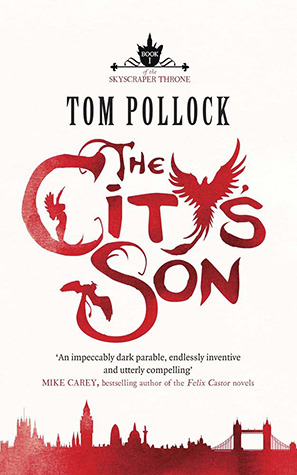
The City’s Son by Tom Pollock
Bridges are a feature of many cities…some of them are more famous than others. But what happens when the city comes alive – quite literally! – and landmarks become more than just another outline on the urbanscape? In some books, the setting itself is part and parcel of the entire whole, so that the city might as well be another character in the story. And in The City’s Son, Tom Pollock presents London to the reader in a way that will completely blow your mind. There’s bringing your city to life, and then there’s bringing your city to life. This book takes personification of urban features to a whole new level, plunging into the realm of the bizarre and uncanny, creating wonders you could never imagine in your wildest dreams.
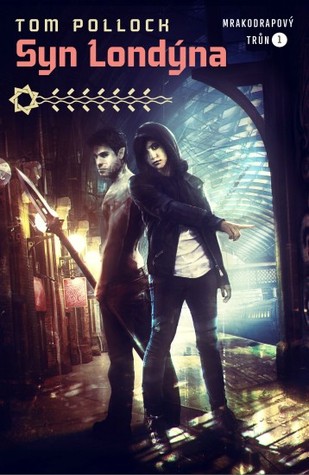
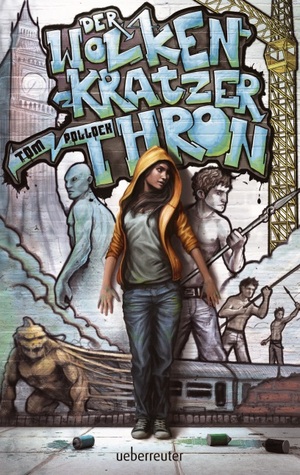
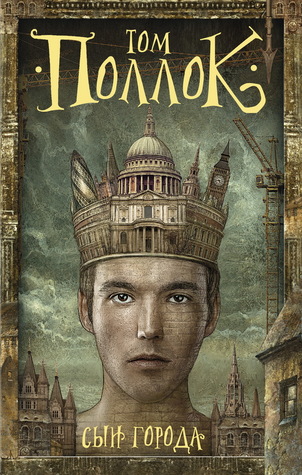
Not surprisingly, we see a great variation in the covers:
From left to right, top to bottom: Jo Fletcher Books (2012) – Flux (2012)

Czech (2014) – German (2013) – Russian (2016)
Winner:
This week, the challengers are all very strong, even with the shirtless boy wonder in the top right. I knew right away I would be choosing my winner from the foreign editions though, because some of the art styles are so striking, especially for the German and Russian covers. My winner in the end is the one that I think fits the story’s tone best.
What do you think? Which one is your favorite?
Book Review: Sins of Empire by Brian McClellan
Posted on April 20, 2017 27 Comments
I received a review copy from the publisher. This does not affect the contents of my review and all opinions are my own.
 Sins of Empire by Brian McClellan
Mogsy’s Rating: 4 of 5 stars
Genre: Epic Fantasy
Series: Book 1 of Gods of Blood and Powder
Publisher: Orbit (March 7, 2017)
Length: 624 pages
Author Information: Website | Twitter
As you know, I’m quite a fan of Brian McClellan’s Powder Mage trilogy, and so I was thrilled when I discovered he was planning to write a new series called Gods of Blood and Powder set in the same universe. Sins of Empire is a return to this world of magic and war, taking place approximately ten years after the end of The Autumn Republic. While the main cast may contain a few familiar faces, this novel is in fact a new story taking place in a new setting, so whether you are an old fan looking to dive back into the world or a newcomer contemplating this as a possible place to jump on board, this book is accessible to all. (However, a small caveat: if you haven’t completed the Powder Mage trilogy yet and do intend to at some point, keep in mind Sins of Empire may contain some spoilers especially for how that series ends.)
The story begins by depositing us in Fatrasta, a relatively young nation that recently gained independence through a violent, bloody war. Still, despite its turbulent political landscape, the country is booming—travelers from all walks of life are flocking to its borders looking for new opportunities, from criminals feeling prosecution from their nations of origin to intrepid settlers that see this new land as fresh start for their families. Then there are the mercenaries, come to Fatrasta to enjoy the patronage of Chancellor Lindet who governs her land with an iron fist. Among them are the Riflejack army, led by Lady Vlora Flint and her partner Colonel Olem, veterans of the Adro Revolution which took place a decade ago. When an insurrection threatens to destabilize Fatrasta even further, Vlora and Olem are called back to the capital city of Landfall to help put down the rebellion and root out its leader, a mysterious rebel known as Mama Palo.
Meanwhile in a high security labor camp, a convicted war hero who helped win Fatrasta her independence fails to make parole. Angry and demoralized, Ben Styke is just about to accept that he will never taste freedom again when a strange visitor claiming to be a lawyer shows up and makes him an offer he can’t refuse. Somewhere else, an ambitious spy named Michel Bravis receives a dangerous assignment to track down the individual or groups responsible for printing and distributing an anti-government publication called “Sins of Empire”. Even though he feels woefully unqualified for such detective work, Michel has no choice but to accept the mission. After all, this may be the path to earn him the promotion he’s always wanted…though on the other hand, failure could mean much more than his downfall.
Together, these separate threads make up the story of Sins of Empire. In classic epic fantasy fashion, we follow and bounce around between the perspectives as the narrative builds, until all the plot lines converge. Those who have read the Powder Mage books will already be familiar with Vlora who was a supporting character in the original trilogy, but now it’s her chance to be a main protagonist in her own right. I must confess, it was a real treat for me to catch up with her again. Thinking back to when Promise of Blood first came out, one criticism I had of the book involved the underutilization of the female character POVs, and even when compared to Nila and Ka-poel, Vlora received relatively little attention. Oh, how the tables have turned now. Despite the popularity of Ka-poel, it is Vlora who I’ve always had a soft spot for, and it was a joy to watch her take charge and shine bright in this series opener.
Credit must also go to newcomers Ben Styke and Michel Bravis, since they too helped make Sins of Empire a strong introduction. While neither of their stories are as interesting to me as Vlora’s at this point, the good news is I can easily see their roles expanding beyond what they are now with future books, and hopefully in time they will become more than just “violent brute with a heart of gold” and “neurotic spy” respectively. However, it’s important to note as well that both their sections provided a bit of mystery to this novel, adding to the suspense as little by little the characters uncover more secrets behind the rebellion in Falastra, not to mention a few shocking revelations. I loved the unexpected twists and game-changing surprises, and I have no doubt these will also be greatly appreciated by other Powder Mage fans!
In addition, the author has clearly learned a lot from completing his debut trilogy. Sins of Empire is solidly written, and as the first book of a series, I feel the plot is also more compelling and better constructed compared to Promise of Blood. All in all it is a great introductory volume, accomplishing its goal of setting up a strong foundation, at once familiar but also different enough from the original trilogy that I find myself excited to see where McClellan will take us next. The ending teases much more to come, and I can’t wait for more answers in the sequel.
Waiting on Wednesday 04/19/17
Posted on April 19, 2017 15 Comments

“Waiting On Wednesday” is a weekly meme hosted by Breaking the Spine that lets us feature upcoming releases that we can’t wait to get our hands on!
Mogsy’s Pick
The Fall of the Readers by Django Wexler (December 5, 2017 by Kathy Dawson Books)
While I don’t read a lot of Middle Grade books, this is one of the few series I faithfully follow. After all it’s by Django Wexler, one of my favorite authors, whose adult fantasy series The Shadow Campaigns I simply adore. Sadly, The Fall of the Readers will mark the final volume of the Forbidden Library series, but I’m definitely still looking forward to the story conclusion!
 “The final book in the exciting fantasy adventure series featuring a strong heroine who grows from reader to leader in a world where magic is contained and controlled through books.
When Alice defeated her uncle Geryon and declared war on the totalitarian ways of the Old Readers, she knew she would have a hard fight ahead. What she didn’t anticipate was how ruthless the Old Readers would be. All the creatures she promised to help are being threatened, and slowly all of Alice’s defenses, emotional and physical, are being worn away. So when Ending (the giant cat-like creature who helps rule the magical labyrinth in Geryon’s library) hints at a dangerous final solution, Alice jumps at the chance, no matter the cost to her life. She and her friends—a fire sprite, Ashes the cat, and the other young Readers she met during her previous adventures—go on a quest to free the one creature possibly strong enough to overturn the Old Readers once and for all.
But Alice has forgotten one crucial thing: Ending is a cat, and cats are not known to be trustworthy. And Ending has plans of her own…”
Top Ten Things That Will Make Me Instantly Want To Read A Book
Posted on April 18, 2017 25 Comments

Top Ten Tuesday is an original feature/weekly meme created by The Broke and the Bookish. They created the meme because they love lists. Who doesn’t love lists? They wanted to share these list with fellow book lovers and ask that we share in return to connect with our fellow book lovers. To learn more about participating in the challenge, stop by their page dedicated to it and dive in!
This week’s topic: Top Ten Things That Will Make Me Instantly Want To Read A Book
I had to put some thought into this list because I don’t really think of myself as someone who wants to “instantly read” many books, but thinking back on some of the books I have instantly added to my TBR and/or instantly read, I tried to capture what it was about the books that caused me to feel that way.
- A Diverse Cast of Characters/Situations – Books that feature characters that go beyond your cookie cutter standard heroes and heroines will always have a huge place in my heart. We need more diversity in books. We need to see diverse stories. This is probably one of the few things on this list that can really get me to instantly read a book because when I find diverse books, I want to read them and share my thoughts on them with the book community.
- Atypical Settings in Genre – This applies more to fantasy–especially high fantasy books–than any other genre for me. Even in worlds that aren’t necessarily the world we know, so much of it takes place in your generic European setting. When writers take something like high fantasy and have the world set in a non-European setting or create a world so compelling that I feel like it really could be a whole new world, I’m going to read it ASAP!
- A Really Great Cover – I try not to be that person that judges a book by its cover, but I’m actually a recovering cover snob. If I see a book that has a cover that catches my eye, I’m likely going to pick it up and read it soon.
- Ratings/Recommendations from Trusted Readers – No one can get me to read books more than the readers I trust. If they say I should check something out, I’m going to immediately check it out (or put it on my TBR in any event).
- Imaginative Retellings/Interesting Usage of Genre Tropes – This is a HUGE weakness of mine. I never get tired of retellings or tropes being explored in different ways. If I happen to get my hands on a book that is a retelling of another story, I don’t even try to fight it. It’s going home with me, and I’m going to neglect other books to read it. Aside from diversity, this is probably the only other thing that can get me to forsake all books and read it instantly.
- Fun/Interesting Twists In Genres I Don’t Read Often – I’ll read books in any genre, but there are a few genres that I don’t read as often such as Westerns. However, if I find a book that is set in a genre I might not read often and it offers something unusual/interesting/fun to the story, I’m usually all in.
- Books that Generate Interesting Discussions/Debates – I love discussing books almost as much as I love reading them. When I see readers/friends/the community having critical discussions about a book, especially if it hits on many of the social issues I care about, I’m drawn in. I have to read the book and join the conversation.
- Authors Who Put A Lot of Love into Their Story – There’s just something about a book written by an author who has put a ton of work and love into story that really touches. All (most) authors work hard on their stories, but there are some authors who really just go above and beyond with writing, researching, characters, plot, engaging readers, etc. that really speaks to me. I love writers who are overly enthusiastic about their work, and I’m often swayed to read their books because of their gushing.
- Narrated by a Narrator I Love – There have been many books I’ve added to my TBR pile or listened to because it was read by a narrator I love. If I’m on the fence about a book but find an audio version read by someone I really love, that’s usually enough to turn it into a book I want to consume even if it’s just to enjoy the reader.
- My Kids Liked It/Recommended It – As a mom to a son and a daughter who also love to read, nothing moves me to want to read a book more than getting a recommendation from my children. I try to keep up with what they’re reading. I like discussing books with them, and I think they appreciate that I actually show interest in the stories they like. It says so much when they make a recommendation for me based on something they’ve read. In fact, my 11-year-old son has introduced me to many sci-fi and fantasy stories that I enjoyed. He’s even helped me populate lists of genre books I want to read.
There you have it. These are some of the things that make me want to instantly read a book. What are some of yours?

Book Review: Skullsworn by Brian Staveley
Posted on April 18, 2017 30 Comments
I received a review copy from the publisher. This does not affect the contents of my review and all opinions are my own.
Mogsy’s Rating: 4.5 of 5 stars
Genre: Fantasy
Series: Stand Alone
Publisher: Tor (April 25, 2017)
Length: 304 pages
Author Information: Website | Twitter
Brian Staveley returns to the world of The Chronicle of the Unhewn Throne with this new standalone novel starring one of the most intriguing characters from his debut trilogy. When we first met Pyrre Lakatur, she was shrouded in mystery. Whether she was ally or enemy, it was hard to tell, but clearly, the imperturbable priestess of Ananshael was one capable, dangerous woman.
Skullsworn is her story. Just who is Pyrre? Where did she come from? What is it about her god that inspires so much of her love and loyalty? If you’ve ever asked yourself any of these questions, then this book is for you. But even if you haven’t read The Chronicle of the Unhewn Throne, this book would make a splendid introduction to Staveley’s work—especially if you want to get your feet wet with something that has a less intimidating page count before taking the plunge into the full trilogy. This book stands alone from the others, and is a prequel of a sort, taking place in a distant corner of the Annurian Empire.
When the story begins, Pyrre is still an acolyte, twenty-five years old and pledged to Ananshael—the God of Death. For years she has trained in the sacred arts of death, learning countless ways to deliver victims into her god’s embrace. But unless she can pass her final trial, she will never become a priestess…and the problem is, Pyrre isn’t sure she can.
It’s not the actual killing that has her worried, but rather who she has to kill—and not for the reasons you’d expect. The rules of the trial are very specific. In a span of fourteen days, Pyrre must make seven offerings to her god—no more, no less: one who is right, and one who is wrong; a singer snared in a web of song; a dealer of death; a mother ripe with new life; a giver of names; and finally, we come to the last one that gives Pyrre pause—“Give to the god the one who made your mind and body sing with love / Who will not come again.”
The trouble is, Pyrre doesn’t believe she has ever been in love. And if she hasn’t been in love, she can’t kill the one she loves, and if she can’t kill the one she loves, she fails her trial, and all those acolytes of Ananshael who fail the final trial offer themselves to their god. Now you see her problem.
Still, Pyrre is determined to pass the test, which means hitting the road with her two trial Witnesses in tow. Their destination is the swamp city of Dombâng, where Pyrre was born and where she first felt the spark of something special for a man she used to know. It is her hope that with proximity and maybe a little…encouragement, perhaps that spark could be rekindled again and grow into something more. However, it has been years since she last saw Ruc Lan Lac, the object of her probable affection. He is now the captain of the Greenshirts, the constabulary force charged with keeping order in Dombâng, and at the moment his hands are full trying to keep dissenters from tear the city apart. Pyrre intends to get close to Ruc by offering help—but in order to do that, she’ll first need to further incite rebellion.
And now I’ve probably gone and mucked up my summary by making this one sound like a romance. Well, it is. Kind of. In a…weird, twisted sort of way. Leave it to Brian Staveley to inflict the cruelest kind of cognitive dissonance, making you root for the main couple even knowing that no matter how the situation turns out, the end will be filled with blood, violence and death.
The fact that Pyrre appears more agitated by her seeming incapacity to love rather than the idea of actually killing a loved one should tell you something about her character. This is a woman who has given herself entirely to her god, and she also hates the idea of failure. In this sense, she is the Pyrre we knew and loved from The Chronicle of the Unhewn Throne. However, in Skullsworn we also get to see a more youthful and less confident side of her, which was fascinating; in time, we know she will grow into an even more deadly weapon, but right now her personality and skills are still in the process of being tempered.
Unlike the books in the trilogy, Skullsworn is also told from the first person perspective—a nice touch as that puts us right inside of Pyrre’s head, giving us a front row seat to all her experiences and tumultuous emotions. While this does take away some of her mystery, the wealth of knowledge we gain about her character and background is a much bigger reward. Don’t get me wrong; Pyrre is still bloodthirsty, insane and zealously devoted to Ananshael, but this book went a long way in making her feel more like a genuine person rather than just a cold, calm unstoppable killing machine. It shows she was once young, naïve and inexperienced, filled with self-doubt and questions about her god and her faith. It shows that she has a softer side to her that isn’t all about death and killing, a part of her that she wants to stay connected to because love has more to do with death than she expected.
I also want to talk a bit about the writing. It always amazes me to follow an author’s releases year after year and see their style evolve and grow, and clearly Staveley has come a long way since The Emperor’s Blades. His prose is fantastic and well-suited for the narrative mode, making a complex and nuanced character like Pyrre feel fully-realized and believable. The story also takes us into a very different part of the world, introducing readers to the hot, humid croc-infested marshes of Dombâng. It’s a city that holds many secrets, filled with shadowy factions and self-seeking individuals all operating to the raucous sounds along the bridges and canals. Despite being a dangerous place, Staveley’s incredible world-building and detailed treatment of Dombâng made me wish that I never had to leave.
So, do yourself a favor and pick up Skullsworn. Brian Staveley deftly weaves a fast-paced and compelling tale filled with excellent characterization, vivid world-building, and high personal stakes, making this one an outstanding novel on every level.

Audiobook Review: The Wanderers by Meg Howrey
Posted on April 17, 2017 15 Comments
I received a review copy from the publisher. This does not affect the contents of my review and all opinions are my own.

Mogsy’s Rating (Overall): 3.5 of 5 stars
Genre: Science Fiction
Series: Stand Alone
Publisher: Penguin Audio (March 14, 2017)
Length: 10 hrs and 43 mins
Author Information: Website | Twitter
Narrator: Mozhan Marno
In the near future, a private aerospace company called Prime Space begins preparations for their mission to put the first human beings on Mars. Within their timeline of four years, they have put in place a number of planned test runs and experiments, a key one of them being the 17-month long simulation to prove that a small crew of three can indeed survive the long and rigorous journey to the red planet—while remaining physically and psychologically healthy enough to work independently and with each other.
The company’s international team—made up of astronauts Helen Kane, Yoshi Tanaka, and Sergei Kuznetzov—were not only chosen for their achievements and excellence in their field, but also for their personality profiles, backgrounds, and considerations into how well they would complement each other. Together, they will be held in isolation in a facility somewhere in a remote part of Utah, where the extremely realistic and immersive simulation will take place. During this test phase, Prime Space will be presenting the crew with all sorts of possible scenarios from technical malfunctions to personal emergencies to see how the astronauts will handle themselves in this environment. Their behaviors, actions, and conversations will all be monitored and recorded the entire time, with the data to be analyzed and evaluated by a team of psych experts.
But there’s a lot more to The Wanderers than just the story of Helen, Yoshi, and Sergei. Even people who live simple lives can have ripples of influence that spread far and wide, and for our astronauts, their ripples are especially large. Retired after decades of work at NASA, Helen Kane is almost a household name in America, but for all her fame, she cannot seem to bridge the emotional distance which exists between her and her daughter Mireille. Meanwhile, Yoshi and his wife Madoka are both very successful professionals in Japan, but because of the nature of their work, they can never be a traditional family, though neither is sure that is even what they want. And finally, there’s Sergei and his complicated relationship with his eldest son Dmitri. Following Sergei and his wife’s divorce and then his family’s subsequent move to New Jersey from Russia, Dmitri is coming of age at a very tumultuous time in his life, and he is searching for ways to tell his father who he really is.
As you can probably tell, at its heart The Wanderers is less a story about space travel and more a story about family—the complex relationships as well as the fundamental need to connect to your loved ones. The challenges that astronauts face are not limited to the endless training or the mental stresses of knowing how many things can go wrong in space, but also extends to the strain of being away so long from those nearest and dearest to them. By shifting back and forth between the perspectives of the astronaut characters and their family members, the author shows how deep some of those emotions can run. Torn between their love for spouses and children and their love for space travel and the work they do, Helen, Yoshi, and Sergei are shown to have a culture to themselves that Mireille, Madoka, and Dmitri cannot seem to understand. At times the bonds portrayed between the astronauts and their respective family members are tender, loving, and intimate; at others, the rage, guilt, regret and fear are so strong in the narrative that the negative energies are downright oppressive.
The other interesting element is Helen, Yoshi, and Sergei’s time inside of Prime Space’s simulation. Imagine being holed up in a small space with two other people for seventeen months, becoming familiar with their personalities and all their habits. Imagine knowing that 24/7 there are people watching you, recording you, making judgments on everything you say and do. Imagine being put through a simulation so realistic that after a time, the lines between what is real and what is virtually constructed become blurred to the point you can’t tell them apart anymore. As a reader, I found the implications of this very compelling, and the story does a great job making the effects on the characters disturbingly convincing.
In sum, The Wanderers is a different kind of space travel book, which made it both unique for me and also a little tough to get pulled into. While it’s true that I enjoyed quite a few things about this novel, there’s also a limit on the amount of drama and interpersonal conflict I can take. Admittedly, several times I felt this story push against those limits with its overbearing sentimentality or the characters’ angst, but on the whole, I would say I had a good time. Those would enjoyed Lily Brooks-Dalton’s Good Morning, Midnight might want to give this one a shot because I think both books explore some similar themes, though the edge probably goes to The Wanderers since it didn’t leave me feeling as gloomy or dispirited.
Audiobook Comments: I thought Mozhan Marno’s narration was very good, especially in her portrayal of the international cast of characters speaking in their respective languages with their varying accents. I would even go as far as to say her reading probably made the story better, making what might have been a 3-star read feel like a 3.5, so The Wanderers might be a good book to experience in audio if you’re interested in checking it out.



 The BiblioSanctum