Book Review: A Study in Brimstone by G.S. Denning
Posted on June 26, 2017 44 Comments
I received a review copy from the publisher. This does not affect the contents of my review and all opinions are my own.
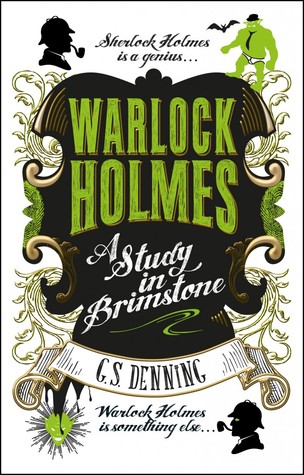 Warlock Holmes: A Study in Brimstone by G.S. Denning
Mogsy’s Rating: 4.5 of 5 stars
Genre: Fantasy
Series: Book 1 of Warlock Holmes
Publisher: Titan Books (May 17, 2016)
Length: 336 pages
Author Information: Website | Twitter
Any book that could make me laugh like a maniac deserves high marks from me. It’s been a while since I’ve read something so funny—and I do mean funny, as in exploding-in-uncontrollable-giggles-so-that-nearby-bystanders-are-staring-at-you-sidesways-and-backing-up-slowly funny. This was something I did not expect. When the Warlock Holmes series was pitched to me, I figured it would be your run-of-the-mill classic literature mashup with paranormal elements. Oh, little did I know.
The key to this book’s success, I think, was balance. Denning stuck close to the source material while still keeping the tone light and readable, and he dressed the story up with just enough of the fantastical to make it feel unique and different. After all, everyone knows of the great fictional detective Sherlock Holmes whose logical reasoning and powers of observation are unparalleled. But what if, instead of a brilliant genius, he was a bit of a dippy eccentric, albeit endowed with arcane powers and the scary ability to tap into the world of demons? This, in essence, is Warlock Holmes. He’s well-intentioned, but rather dim. To make up for it though, at least he’s something of an expert in the supernatural and occult.
Fortunately, Warlock also has the help of his more sensible roommate Dr. John Watson to keep him in line. In time, we also discover that Watson’s actually the true detective with the astute deductions, desperately coming up with perfectly reasonable explanations to try and cover up all the weird stuff his partner gets into. In this first book, we join him and Warlock in a retelling of many of the original Sir Arthur Conan Doyle stories, so that “A Study in Scarlet” becomes “A Study in Brimstone” and “The Adventure of the Resident Patient” becomes “The Adventure of the Resident Sacrifice”, and so on and so forth in this same hilarious vein. Along the way, we even get to meet Inspector Lestrade, who is now Vladislav Lestrade, a vampire, and Inspector Tobias Gregson is now Torg Grogsson, a ballet-loving ogre.
Honestly, I was surprised at how much I loved this. For one thing, I wouldn’t say I’m too familiar with the classic Sherlock Holmes tales. For another, I’m often wary of books described as humor. What can I say though, but Warlock Holmes ended up being right up my alley. It was funny in a way that worked for me, silly in places but not over-the-top, thanks to the moderating effects of the writing style which stayed relatively close to Doyle’s. And yet, it was also a bold and relentless riff on the source material. It’s important not to get the wrong idea though, for all of this is clearly done out of love and in good fun. Denning takes the original stories and just runs with the idea of “supernaturalizing” them, while having a blast in the process.
In turn, I had a hell of a good time with this book too. I enjoyed the premise of Holmes as a warlock, as well as the idea that Watson is the real brains behind the duo. They make a comedic pair, though much of my delight was in the fact that most of the humor in the book is plot-driven, going beyond simple one-liners or relying on slapstick. In other words, the author did not go out of his way to create funny situations, but rather, the characters reacted in entertaining ways (that also fit their personalities in this context) to the events unfolding in each story. Nothing irks me more than forced humor, so I was glad to see this was not the case.
In terms of criticisms, I don’t actually have anything too negative to say. After all, we’re talking about a book called Warlock Holmes: A Study in Brimstone here, so it’s really not too hard to guess its shtick, and as long as you know what you’re in for, it’s hard to be disappointed. As creative retellings so, I thought it was a good one, with plenty of charisma. The storytelling is also straightforward, with a clear eye as to what it wants to achieve, and the characters are compelling in their re-imagined forms, with fascinating new personalities and backgrounds to match.
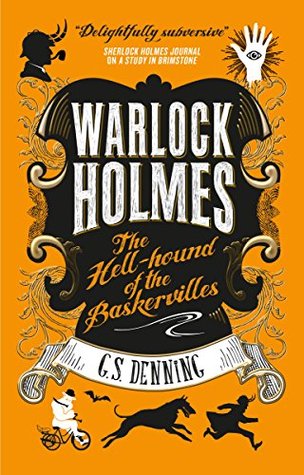
All in all, I had a wonderful time with this book, and boy am I glad to have the sequel Warlock Holmes: The Hell-Hound of the Baskervilles already on hand because I’m really looking forward to continuing this series. I’m sure I’ll be diving into it soon.


Novella Review: River of Teeth by Sarah Gailey
Posted on June 25, 2017 22 Comments
I received a review copy from the publisher. This does not affect the contents of my review and all opinions are my own.
 River of Teeth by Sarah Gailey
Mogsy’s Rating: 3 of 5 stars
Genre: Alternate History
Series: Book 1 of River of Teeth
Publisher: Tor.com (May 23, 2017)
Length: 152 pages
Author Information: Website | Twitter
Fun fact: The hippopotamus is widely considered to be the most dangerous mammal in Africa, responsible for more human fatalities there than any other large animal. Although they don’t look very threatening, they are extremely moody and territorial, often known to attack boats in the water or people on land with little to no provocation. Another fun fact: Back at the turn of the 20th century, U.S. Congress actually considered a bold initiative to import these animals to the bayous of Louisiana, in the hopes of creating these “hippo ranches” to solve the nationwide meat shortage as well as the growing ecological crisis caused by the invasive water hyacinth.
Obviously, this wild scheme never came to pass. But you just have to wonder, what if it had?
Happily, author Sarah Gailey was awesome enough to oblige us in River of Teeth, her alternate history novella envisioning an America that might have been if the “American Hippo Bill” had been passed…along with an added few hitches, of course—like, say, if about a hundred hippos had broken loose somewhere along the way, resulting in an out-of-control feral population making safe travel along the southern waterways nigh impossible. Taking place in the marshlands of Louisiana, the story follows a diverse group of hippo riders who come together to pull off a caper—or rather, I should say, an operation—to help the U.S. government rid the Mississippi River’s Harriet section of its feral hippo problem once and for all.
However, as the leader of the group, former hippo rancher Winslow Houndstooth has other plans. Gathering a team that consists of Regina “Archie” Archambault, a corpulent master thief; Hero Schackleby, a gender-neutral demolitions expert; Adelia Reyes, a very effective (and very pregnant) killer-for-hire; and Cal Hotchkiss, a hard-drinking, cards-cheating gambler who just so happens to be the fastest gun in the west, Houndstooth is prepared to pull a few strings in his contract in order to accomplish his true goal of revenge. Floating somewhere on the Harriet is the riverboat casino where he will find Travers, the ruthless businessman who took everything from him. Houndstooth means to see his enemy pay—that is, if only he and his allies can somehow survive the never-ending barrage of obstacles, including double-crossing backstabbers, huge explosions, and a river full of killer hippos.
Hands down, the best part of this book is its concept, which is worth the price of admission alone. It’s just so damn cool! To me, this is what speculative fiction and especially alternate history is all about: taking an idea inspired by a real event—in this case, Congressman Robert Broussard’s proposal of the hippo ranching bill in 1910 (that fell just short of being passed, alas)—and running with it, creating a wonderful new world full of potential. I simply love picking up books like these, knowing that anything is possible. Not to mention, hippos are a great subject; for one thing, they’re fascinating creatures, and two, many people underestimate just how dangerous they are, but Gailey does both these points justice by highlighting the environmental, cultural and societal impact of these animals every chance she gets in her story.
My major complaint, however, is one that I often have with novellas—River of Teeth was just too short, preventing anything from being fully developed. World building, plot elements, and characters all felt a little sparse, leaving me worked up by the end, yet still feeling strangely unfulfilled. Part of me wishes that the story had provided more background information behind the process of hippo farming, or hey, maybe even a mention from someone on what eating hippo might be like (I’ve heard that hippo steak is delicious, but don’t take my word for it). I was also disappointed in the characters. Save for maybe Archie, whose charm I found irresistible, I felt no real connection to or interest in the rest of the cast. Thing is, while I love diversity in my books, I am less enamored with “diversity for diversity’s sake”, which often leads to characters becoming defined by labels and not who they really are, leaving their personalities themselves paper thin and forgettable—especially in the case of this book, where a good number of them are killed off or taken out of the picture rather quickly in a short period of time. It’s worth keeping in mind too that we have a relatively large cast for a novella, so opportunities to get to know each of them well were already limited.
However, as you can probably tell from the positives I highlighted, River of Teeth was still a book I enjoyed. While it didn’t draw me in as much as I thought it would, at no point did I find the story slow-moving or boring, and I can also see the world and characters becoming more fleshed out as more books are added to the series. Sarah Gailey has written a fun little adventure with lots of potential, and already I am eyeing the sequel Taste of Marrow with great interest.

Book Review: Vanguard by Jack Campbell
Posted on June 24, 2017 24 Comments

Mogsy’s Rating: 2 of 5 stars
Genre: Science Fiction
Series: Book 1 of The Genesis Fleet
Publisher: Ace Books (May 16, 2017)
Length: 336 pages
Author Information: Website | Twitter
I really wanted to like my first venture into the military sci-fi of Jack Campbell, but sadly it was just not meant to be. To be fair though, Vanguard is the first book of The Genesis Fleet, a new prequel series to Campbell’s The Lost Fleet which I have not read, so it’s possible that I may be missing some of the context required to fully appreciate this book. Still, to the novel’s credit, I also think it was set up to be a perfectly fine jumping on point, so that, at least, was not a source of my issues. It actually took me a while to gather my thoughts and put my finger on what didn’t work, because after all, the book had an interesting premise, the characters were awesome, and the writing style was as good as I remember from the author’s fantasy novels, but ultimately I think it was the execution of it all that failed to hook me.
As I said, Vanguard is the start of a new prequel series, meant to explore the founding of the Alliance, one of the two major human powers involved in the interstellar war featured in The Lost Fleet books. While the technology for faster-than-light travel is still relatively new at this point, Earth is already no longer the only major hub for humanity in the universe, with new colonies springing up on more and more worlds. That also means, however, that the old order of law and protection has ceased to exist. Earth forces no longer have the will or resources to police the systems, and as a result, space piracy and corruption are on the rise.
In other words, it’s everyone for themselves as the rules start to break down and a lawless frontier mentality quickly takes hold. As aggressive worlds begin to prey on the weak, a new pacifist colony called Glenlyon is one of the first to fall victim to this rash of unruliness. Threatened by an enemy warship in their system, the desperate colony has little in the way of defense and thus are forced to turn to a group of former Earth soldiers for help.
At first, things were great with this book. I really enjoyed how it began. Something about the idea of wild space really appeals to me, and humanity’s uncontrolled spread through the universe was a good backdrop to the chaotic events taking place in this story. Life in the new colonies is full of danger and uncertainties, and the writing really gets that point across. In addition to the attack on Glenlyon, we also get to see how settlers traveling to new worlds face the risk of being captured and enslaved by pirates, or how new colonies can be the targets of sabotage or persecution. Only a few are willing to stand up for justice and do what’s right.
Which brings us to the characters, who are all compelling at least on paper. Heading up the main cast is former junior Earth fleet officer Robert Geary, whose name should be significant to fans of The Lost Fleet, since the character is supposed to be an ancestor of the main protagonist from the original series. Up next is a onetime enlisted Marine named Mele Darcy, a strong and capable woman trying to follow her own moral compass. Then there’s Lochan Nakamura, a disgraced politician who has left his old life behind for a chance at a brand new start, and he was probably one of the more interesting of the main characters. And finally, Carmen Ochoa was my favorite—an Earth official from Mars who was in charge of “conflict resolutions”, she has her own reasons for getting into this mix.
Everything was going well for the first few chapters, but then everything fell apart. One of the problems, I think, was pacing. I couldn’t help but feel much of the first half of the book could have been compressed because so much was the story here was filled with aimless back-and-forth between the characters, resulting in a narrative that kept spinning its wheels in place. The characters themselves I found intriguing, but my disinterest in their individual plot threads made it a struggle to connect with them on any deeper level. If I were in the habit of abandoning books, I might have thrown in the towel right then and there, but I pressed on in the hopes things would get better. The good news is, the story did pick up again after a while, but by then it was too late to turn my disappointment around, and I’m afraid even the superb action scenes at the end could not save the book’s lackluster and forgettable middle sections.
In the end, I suppose the potential of the story was there, but it was presented in a way that tried my patience and wore me down. This is not my first experience with the author, but this is my first time trying his military science fiction and admittedly I was tempted by the promise of a new series, new characters, and new stories when in retrospect I probably should have started with The Lost Fleet. You can be sure that’s in my plans now, and who knows, perhaps I will even revisit this series once I’m done to see if it gives me a new perspective. For now though, I’ll probably set The Genesis Fleet aside.

Book Review: The Only Child by Andrew Pyper
Posted on June 23, 2017 17 Comments
I received a review copy from the publisher. This does not affect the contents of my review and all opinions are my own.
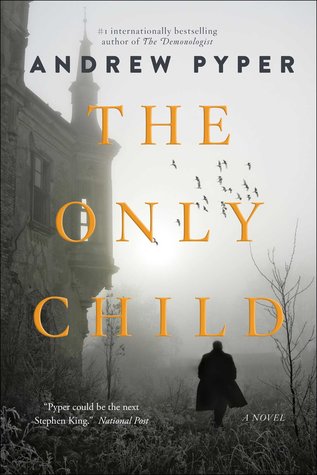 The Only Child by Andrew Pyper
Mogsy’s Rating: 3.5 of 5 stars
Genre: Horror, Thriller
Series: Stand Alone
Publisher: Simon & Schuster (May 23, 2017)
Length: 304 pages
Author Information: Website | Twitter
Last year I had the distinct pleasure of reading The Damned, a chilling psychological horror that immediately landed Andrew Pyper on my must-read authors list. It was thus with great excitement that I approached his newest novel The Only Child, which sounded like it would be a very different experience—which just made me even more curious.
When the story opens, we get to meet protagonist Dr. Lily Dominick, a doctor at the Kirby Forensic Psychiatric Center whose job involves working with some of the country’s most dangerous and disturbed criminals. Lily, however, is battling a darkness of her own. Growing up, she has always been aloof, keeping others at a distance so that few people know about the traumatic experiences in her childhood and the details surrounding her mother’s violent death. But the past has come back to haunt her now, in the form of a new client at the clinic—a man whose only identity is a patient intake number and a police report detailing his horrific crimes. In spite of herself, Lily is drawn to the stranger, even before he tells her that they have actually met before, a long time ago before she was old enough to remember. He also claims he knew her mother…and the truth behind how she died.
At first, Lily is dismissive of the client’s statements. After all, he did not look old enough for any of his wild claims to be true. But then Michael, the name the man has chosen to call himself, has an explanation for this too, declaring that he is more than two hundred years old and was in fact the inspiration for many of the monsters in classic literature. At this point, Lily is almost sure the clinic’s newest patient is just another deranged psychopath suffering from delusions of grandeur, only there are few things about her he couldn’t have known—unless he is telling the truth, of course, which should be an impossibility. Unfortunately for Lily though, she doesn’t realize Michael is the real deal until it is too late. To free herself from this real-life monster, she will need to embark on a dangerous journey over oceans and across continents to unlock the secrets of her past.
Lately, I have been reading a lot of books that make references to or are inspired by the classics. I have to say, little did I expect to find this as well in The Only Child though. In a way, it was a pleasant surprise, as who doesn’t love a little Frankenstein’s monster, Dracula, Dr. Jekyll and Mr. Hyde? Pyper managed to incorporate three of the greatest gothic horror novels of the 1800s into this strange tale, and he did it in an interesting and clever way.
On the flip side of this, however, there are the lengthy sections in the middle of the book detailing how Michael inspired these classic works, told mainly via flashback chapters in the form of letters to Lily. While the ideas were generally good, I was not as pleased with their execution. At best, they were a distraction from the main mystery plot, and at worst, it sometimes felt like I was reading an entirely different book. Rather than blending seamlessly with the rest of the story, the “classic monsters” angle felt like it was tacked on like an afterthought—almost gimmicky, in a way. That said, I enjoyed the added literary atmosphere immensely, which elevated this novel beyond your usual suspense-thriller. Other than that, though? The references to Shelley, Stoker, Stevenson and their works admittedly made very little impact on the story, which was kind of a shame.
Still, I don’t want to give anyone the impression that I didn’t enjoy this book, because I did. While it was not quite as mind-blowing as The Damned, the plot was addictive all the same, and I blew through the entire novel in about two sittings, a reliable sign that this was a enthralling read. At times the story seems confused as to what it wants to be (a portentously gloomy horror? Or a modern supernatural thriller?) but to its credit at no time does the pacing let up. The clues and developments come at you fast, punctuated by brief glimpses into Michael’s riveting history. While some of the plot points feel patently over the top, the possibility has crossed my mind that this is merely another one of Pyper’s nod to the classics, which would be a very clever touch if that’s the case. The characters were also genuinely compelling, if somewhat flawed, especially Michael whose presence is at once eerie and fascinating.
Overall, I thought The Only Child was a good read, if a little overambitious, resulting in a story that is not as focused as I would have liked. Still, for fans of the gothic horror tradition, it may be well worth it to take a look. I also felt this novel was an interesting direction for Pyper, one that I felt was bold and different, making me excited to read more of his future work.

Book Review: A Gathering of Ravens by Scott Oden
Posted on June 22, 2017 29 Comments
I received a review copy from the publisher. This does not affect the contents of my review and all opinions are my own.
 A Gathering of Ravens by Scott Oden
Mogsy’s Rating: 4 of 5 stars
Genre: Fantasy
Series: Stand Alone
Publisher: Thomas Dunne Books (June 20, 2017)
Length: 320 pages
Author Information: Website | Twitter
Ambitious in scope and audacious in its execution, A Gathering of Ravens spectacularly weaves together the threads of history and mythological tradition, spiriting readers away on a journey through legend and time. A master storyteller, author Scott Oden has combined elements from Norse and Celtic lore with the richness of the early medieval landscape to create a novel that is epic in every sense; we have bloodshed and triumph, love and loss, tragedy and hope…and yes, we also have an Orc.
Grimnir is the last of his kind. The Anglo-Saxons call him orcnéas, while the Danes name him skrælingr, but most would agree that he is a monster, an evil creature birthed from the earth’s dark depths. But in truth, he is a lot more than that, as the plot expands to reveal his quest for vengeance against Bjarki Half-Dane, the oathbreaker who killed his brother. When two weary followers of Christ unknowingly take shelter in his cave one stormy night, Grimnir kidnaps the younger of them as his hostage, forcing her to be his guide to the land across the sea. Frightened and grieving for her friend now lost to her, Étaín has no choice but to do what her beastly captor says, accompanying him through the Danish wilderness to the Ash Road, a secret passageway which would lead them to England.
However, their journey does not go exactly as planned. Grimnir and Étaín arrive at their destination to find that changes have swept across the country, and the two of them are now outsiders in every possible way. Yet Grimnir remains undeterred in his desire for revenge, and in spite of herself, Étaín also begins to see more than the monster in the Orc. The two of them are now each other’s only ally, with faith and honor ultimately leading them to a shared purpose.
The strength of this book lies in the author’s skill in evoking the spirit and atmosphere of a time gone by. He perfectly captures the life and culture of the people in this era. Throughout the early sections of A Gathering of Ravens, I could practically feel the bitter chill of the Danish hinterlands, sense its sharpness deep within my bones. As the story unfolds, we also got to see the cruelty and injustices of war, the power struggles that result between different groups when their religious beliefs collide. Scott Oden’s forte is clearly his interest and enthusiasm for history; that much can be gleaned from every page of this meticulously crafted novel. However, I also simply adore the fantasy he has injected into the mix, incorporating mythological elements and ancient folklore like the Celtic fairies and even a few allusions to the legend of Beowulf. It is precisely because of this melding of magical factors that makes historical fantasy one of my favorite subgenres.
And of course, there are the Orcs. In his afterword, Oden describes his impetus behind the story’s premise, offering some excellent insight into his process of creating Grimnir. To tell the truth, it gave me an even greater appreciation for this book, knowing how the concept behind this fascinating character was conceived and executed. One thing you can be sure of is that Grimnir is most definitely not your traditional kind of hero. From the start, he was an enigma, brutal yet complex. I loathed his treatment of Étaín at first, and saw him as a villain, but gradually as their journey went on, I began to sympathize with his bloodthirsty quest. Their relationship—especially their transition to becoming eventual allies—was written very well and handled realistically. Along with Étaín, my eyes became open to the Orc’s deeper sense of honor and duty. It may not be as we understand it, but it does go a long way in making Grimnir seem more heroic and worthy of the reader’s support. Non-human protagonists are often tricky to pull off, but the author has shown that they can indeed work, somehow also making it look easy at the same time. While Oden may have set out to redeem the Orc, whether or not he achieved that is going to be up to the individual reader, though personally speaking I can honestly say that by the end of the book I was solidly won over by Grimnir and was rooting for him all the way.
So, should you read A Gathering of Ravens? Well, if you enjoy historical fantasy novels of vast and epic proportions, then yes, yes you absolutely should. Scott Oden’s delectable prose and attention to detail brought this story to life before my eyes, immersing me in a riveting world steeped in history and myth. I was also amazed at how easy it was to instantly engage with the plot and feel invested in the characters. Clearly there’s a whole lot here to fall in love with, and I would not hesitate to recommend this novel to all fans of dark historical or mythical fantasy. I can’t wait to read more by the author.

Waiting on Wednesday 06/21/17
Posted on June 21, 2017 17 Comments

“Waiting On Wednesday” is a weekly meme hosted by Breaking the Spine that lets us feature upcoming releases that we can’t wait to get our hands on!
Mogsy’s Pick
Lake Silence by Anne Bishop (March 6, 2018 by Ace Books)
The story of Meg Corbyn and Simon Wolfgard in Lakeside Courtyard may have come to an end, but The Others series will live on next spring, following new characters set in the same world, in a place called Lake Silence.
 “In this thrilling and suspenseful fantasy, set in the world of the New York Times bestselling Others series, Vicki DeVine and her lodger, the shapeshifter Aggie Crowe, stumble onto a dead body . . . and find themselves enmeshed in danger and dark secrets.
Human laws do not apply in the territory controlled by the Others—vampires, shapeshifters, and paranormal beings even more deadly. And this is a fact that humans should never, ever forget . . .
After her divorce, Vicki DeVine took over a rustic resort near Lake Silence, in a human town that is not human controlled. Towns like Vicki’s have no distance from the Others, the dominant predators that rule most of the land and all of the water throughout the world. And when a place has no boundaries, you never really know what’s out there watching you.
Vicki was hoping to find a new career and a new life. But when her lodger, Aggie Crowe—one of the shapeshifting Others—discovers a dead body, Vicki finds trouble instead. The detectives want to pin the man’s death on her, despite the evidence that nothing human could have killed the victim. As Vicki and her friends search for answers, things get dangerous—and it’ll take everything they have to stay alive.”
Book Review: The Strange Case of the Alchemist’s Daughter by Theodora Goss
Posted on June 20, 2017 24 Comments
I received a review copy from the publisher. This does not affect the contents of my review and all opinions are my own.
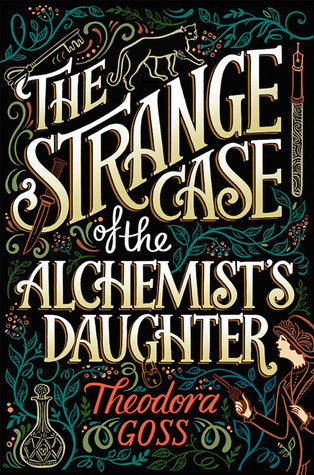 The Strange Case of the Alchemist’s Daughter by Theodora Goss
Mogsy’s Rating: 4 of 5 stars
Genre: Fantasy
Series: Book 1
Publisher: Saga Press (June 20, 2017)
Length: 416 pages
Author Information: Website | Twitter
“That was the first meeting of the Athena Club. … Readers who remember their classical mythology will immediately realize its significance: Athena, born from the head of her father, Zeus. We do not claim the wisdom of Athena, but we identify with her dubious parentage.”
The Strange Case of the Alchemist’s Daughter may be the latest in a long line of mashups based off of some of literature’s most famous horror and sci-fi classics, but it possesses a charm you don’t find in a lot of retellings today. The awesome quote above is one of my favorites from the book—which I just had to use to begin my review, because it manages to capture the essence of this book so perfectly, as well as the strength and spirit of the women in it.
As the story begins, we are introduced to Mary Jekyll who is in mourning for her mother, dead after years of suffering from a debilitating madness. Left with nothing to her name, Mary has no choice but to sort through some of her family’s old accounts, only to find that for years her mother had been sending money to a halfway house for “fallen women”. Following this trail, our protagonist is led to Diana Hyde, daughter of Edward Hyde, the man Mary only knows as her father’s former employee—and murderer. Mr. Hyde has been wanted for his crimes for years, and with this new development, Mary has hopes that helping the authorities capture him would mean the end of her financial troubles once she collects the reward.
It is while following up on the case that Mary ends up meeting with the famous detective Sherlock Holmes and his assistant Dr. Watson. As it so happens, the two men are also currently helping Scotland Yard investigate a string of gruesome murders in Whitechapel. Some of the victims, all street women, were brutally dismembered and one even had her brain removed. Could these murders be related to the Edward Hyde? Further digging leads Mary and Diana to find and befriend more women, all of whom have been created through experimentation by a shadowy group known as the Société des Alchimistes: Beatrice Rappaccini, raised by her father to tend to a garden of poisonous plants until she herself became poisonous to others; Catherine Moreau, a beast woman brought to life by her creator’s human-animal hybridization experiments; and last but not least, Justine Frankenstein, reanimated from the corpse of a dead girl by Dr. Frankenstein to be a female companion to his monster.
One part creative re-imagining and one part loving homage, my favorite aspect of this book is most definitely its premise, or the idea of getting the “daughters” of some of gothic literature’s most famous characters together to solve a mystery. Goss gives all the women personalities that let them stand out as unique individuals, like sensible Mary Jekyll who is the de facto leader of the group, Justine whose great physical strength and stature belies her gentle soul, or Catherine whose irreverence and independence reflects the fact she used to be a puma. My absolute favorite, however, was probably Diana—the lovable hellion who just does and says whatever she pleases, much to the chagrin of Mrs. Poole the housekeeper. Then there are of course the nods to Sir Arthur Conan Doyle’s Sherlock Holmes and even some to Dracula by Bram Stoker. Indeed, if you are a fan of any of the referenced classics, you should have a lot of fun with this novel. It was also very clever how the story even incorporated Jack the Ripper; even though it was done in a very oblique and subtle way, the location and details behind the murders are clearly meant to make you think in that direction.
The structure and format of this tale is also interesting. The book, as we find out early on, is an account of events as told by Catherine Moreau, who among other things is an aspiring writer. For better or worse, she has also allowed her companions to chime in in reaction to everything going on in her manuscript, meaning we frequently get interruptions in the narrative ranging from humorous remarks made by the characters objecting to the way they are being portrayed, to snarky comments about the quality of Catherine’s writing. While this is all done in good fun, I admit that sometimes these asides can get a little excessive and distracting, and it took me a while to get used to them. Granted though, I can still say these are vastly preferable to pesky footnotes.
In terms of pacing, my only complaint was the drawn out conclusion. Goss had it so that each of the women were able to tell their individual stories, and for the most part, these were spread out nicely throughout the book and came in at appropriate times. The only exception was Justine. Her backstory was left until the end after the plot’s climax, piggybacked onto the denouement which I thought was a little awkward. The wrap-up section explaining the formation of the Athena Club could have been shortened too, along with the setup for their next adventure—but I’m not going to grumble too hard on this point. After all, it is foreshadowing that bodes well for the possibility of a sequel, and it’s safe to say I wouldn’t mind seeing more from this world and its characters.
A delightfully vibrant fusion of mystery and adventure, The Strange Case of the Alchemist’s Daughter will make you think about your favorite literary classics in a whole new light. I thoroughly enjoyed this novel and will be looking forward to more by Theodora Goss.
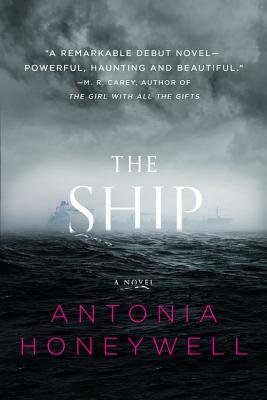
Book Review: The Ship by Antonia Honeywell
Posted on June 19, 2017 23 Comments
I received a review copy from the publisher. This does not affect the contents of my review and all opinions are my own.
Mogsy’s Rating: 3 of 5 stars
Genre: Dystopian, Young Adult
Series: Stand Alone/Book 1
Publisher: Orbit (April 25, 2017)
Length: 336 pages
Author Information: Website
Just when I thought I’d seen it all in post-apocalyptic YA dystopian fiction, along comes The Ship to offer up a little something different. In the near future, Earth has run out of resources, the environment is on the edge of ecological collapse, and civilization itself is in shambles. A man with a vision decides to do something about it, searching high and low for five hundred of Britain’s best and brightest, gathering them all together with the necessary provisions to embark on a long voyage. Nothing too new here, or so I thought. After all, this is pretty much the beginning to every single generation ship story.
Ah, but here’s the rub—there is actually no escape from the mess the world has become. Extreme measures have been taken by the government to ensure the survival of the human race, even if it means disavowing much of its own population. People are made to carry an official ID card on their person at all times. More than just proof of citizenship, these cards are also their lifeline, guaranteeing access to food and shelter. Get on the wrong side of the law, and your card and rights can be summarily stripped from you, leaving you to fend for yourself along with all the other disenfranchised. Most of the time, this is an immediate death sentence, as those who cannot produce their ID card to authorities are often shot on sight. Those who escape notice don’t fare much better either, forced to live in makeshift camps set up in public places like parks and museums, but even that is no longer an option once the government decides their meager existence is a burden to their resources. Thousands die as camps across the country are gassed and razed.
For sixteen-year-old Lalla Paul and her parents, this was the very last straw. Lalla’s father Michael Paul is a former bureaucrat who had used his wealth and influence to purchase a large yacht, outfitting it to carry a few hundred on a sea voyage of indeterminable length. For months, he has been secretly interviewing potential passengers, recruiting those he believes would be an asset for the utopian society he has in mind. Now the ship is ready to sail—and not a moment too soon, with the government cracking down on all kinds of regulations. However, Lalla’s mother is not so ready. A staunch humanitarian, Anna Paul has been taking her daughter almost daily to the British Museum camp to help those who live there, and she is reluctant to go when there is so much more work to be done, not to mention so many they would be leaving behind without hope or salvation.
This was a rather unusual novel, with a fascinating premise. Obviously, time eventually runs out for our characters, and their ship ends up sailing along with its own little utopia on board. Still, things don’t exactly go as planned, and even with everything they could ever want, life aboard the ship is nothing like what you would imagine. Reading about these people who are suddenly cut off from the rest of the world is a bit like stepping into a bubble frozen in time. As one day blends into the next, reality itself begins to lose all meaning for Lalla, and one can’t help but wonder if her father’s dream of a safe future will ever come to pass, or if there is something more sinister afoot.
While the story’s end-of-the-world scenario may be somewhat standard, it does contain a few unique elements to help it stand out. Not surprisingly, it is once we get on the ship that things start to get really interesting. Despite his claims that everything he has ever done is for Lalla, Michael becomes an absent father once they set sail, even as the other passengers start worshipping him with something close to cult-like obsession. Also troubling to Lalla is how everyone around her seems to be perfectly content living in this strange limbo, with no final destination in mind. The result is this palpable, oppressive atmosphere that shrouds the entire novel in a surreal and haunted aura, and if this was what the author had intended, then she most definitely succeeded.
However, The Ship was not without its flaws, and a big one is the protagonist. Privileged but sheltered, Lalla has no inkling of how anything works in the real world and is largely unable to sympathize with the other passengers who have gone through much more persecution and pain. Unfortunately, while on some level I understood this to be an intrinsic part of Lalla’s identity, it didn’t make her naiveté any less maddening. Her failure to mature mentally over the course of the novel was a problem for me, not to mention her complete inability to empathize with others. Even when driven by good intentions, she winds up doing some downright stupid things, which made her character difficult to embrace. Considering how this entire novel is told through her perspective, you can see why I might have struggled with certain parts of the story.
At the end of the day, I found The Ship to be an interesting read, with moments of clever creativity amidst the usual dystopian and post-apocalyptic fiction tropes. The story was also well-written and conceptually rich, which makes me all the more regretful that I was unable to fully sympathize with or relate to the main protagonist. My issues with her character aside though, I thought this was a good read overall, with potential appeal to YA speculative fiction readers.
Audiobook Review: Blood Oath by Melissa Lenhardt
Posted on June 18, 2017 8 Comments
I received a review copy from the publisher. This does not affect the contents of my review and all opinions are my own.
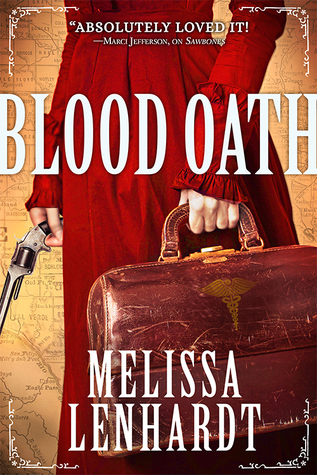 Blood Oath by Melissa Lenhardt
Mogsy’s Rating (Overall): 4 of 5 stars
Genre: Historical Fiction
Series: Book 2 of Sawbones/The Laura Elliston Trilogy
Publisher: Hachette Audio (May 23, 2017)
Length: 10 hrs and 26 mins
Author Information: Website | Twitter
Narrator: Suehyla El-Attar
Last year I fell head over heels in love with Melissa Lenhardt’s Sawbones, a post-Civil War western filled with equal parts gritty adventure and passionate romance. Needless to say, I was barely able to contain my excitement when I found out there would be not one but two follow-ups to the novel, rounding out a trilogy chronicling the extraordinary journey of a woman doctor on the run from the law.
While Blood Oath picks up not long after Sawbones, it is also a new beginning of a sort for our protagonist. The woman from New York known as Dr. Catherine Bennett is dead. Now she is Laura Elliston, a fugitive wanted for a crime she did not commit. Still, despite a new name and a new life on the frontier, she could not escape her past. And following the brutal events of the previous book, Laura now finds herself with even more personal demons to confront.
Fortunately, this time she has the help and companionship of her lover William Kindle, a former captain of the US Army. Traveling in disguise, the two of them persist in trying to find safe refuge, dodging every soldier, vigilante and two-bit bandit eager to collect the bounty on their heads. Already on edge from the dangers and stresses of the journey, the couple’s relationship is further strained from the uncertainties left after Laura’s horrific kidnapping and their showdown with Kindle’s vicious brother, Cotter Black. As a doctor, Laura understands better than most how even the worst physical pain can eventually fade and be forgotten over time, but when it comes to the emotional scars, she is not so sure, fearing that the damage on both their spirits may have broken them in ways they can never be healed.
Poor Laura and Kindle. The two of them can never catch a break, even after being put through the wringer in Sawbones. I wish I could tell you everything comes together for them, but apparently, they still have a little longer to wait for their happily-ever-after. Following her characters’ nightmare ordeal with Cotter Black, Melissa Lenhardt isn’t about to let up on her protagonists, throwing them into new situations full of hardships and horrors. Blood Oath might just be slightly less intense than its predecessor, but rest assured it still has its fair share of harsh injustices and gut-churning violence. Dark as it is though, this series reminds me of why I love Westerns, perfectly capturing a sense of danger and the atmosphere of constant threat in an untamed country. This tone of raw candidness keeps me coming back, not to mention the author’s storytelling skills and no-holds-barred style.
And yet, despite the brutal realities of the era, we also have the passion as a counterpoint. Laura and Kindle had excellent chemistry in Sawbones, and it pained me to read about what happened to them at the end of that book and to see the emotional aftermath of those events here. Neither of them are the same people anymore, which made me sad—but I’m also encouraged by their efforts to talk it out and make things work. First, the story had to address Laura’s trauma from her experiences in the first book, and the effects on her relationship with Kindle have not been easy, as one would expect. Second, misunderstandings and secrets are also awakened as the two learn more about each other and their pasts. Reading about Laura and Kindle’s struggles broke my heart, but at the same time, I had been prepared for a lot of these obstacles in a second novel. Historical romances are often fraught with drama and uncertainties, and this is especially true when you’re dealing with post-war turmoil and the ruthless conditions of the Wild West. Luckily though, there are moments of hope and lightness as Laura is determined to never abandon her humanity, and she will also never stop fighting for her and Kindle’s future.
Bottom line, I love a good Western. Sawbones was amazing and its sequel Blood Oath was no slouch either, so I would highly recommend picking up this series if you are a fan of historical fiction or historical romance with a bit of grit. Like I wrote in my review for the first book, it was this juxtaposition of loveliness and gruesomeness that made the story so compelling, and considering how shockingly things ended in this one, it’s looking like the trend will be continuing into book three, Badlands. I just can’t wait.
Audiobook Comments: I might have read the first book in print, but as soon as I found out this series was getting audiobooks, I just knew I had to give them a try. Having heard narrator Suehyla El-Attar perform on other books before, the moment I saw her name attached to this project, I had a good feeling she would make a perfect Laura Elliston and indeed I was not disappointed. Her accents, tones and inflections are all spot on, and she managed to bring both Laura and Kindle to life in a way I never imagined in this absolutely brilliant and immersive experience.
More on The BiblioSanctum:
Review of Sawbones (Book 1)
Mogsy’s Bookshelf Roundup: Stacking the Shelves & Recent Reads
Posted on June 17, 2017 43 Comments
Bookshelf Roundup is a feature I do every other weekend which fills the role of several blog memes, like Stacking the Shelves where I talk about the new books I’ve added to my library or received for review, as well as It’s Monday! What Are You Reading? where I round up what I’ve read since the last update and what I’m planning to read soon. Mostly it also serves as a recap post, so sometimes I’ll throw in stuff like reading challenge progress reports, book lists, and other random bookish thoughts or announcements.

Received for Review
Thank you to the publishers and authors for the following review copies received. For more details and full descriptions of the books, be sure to click the links to their Goodreads pages!

Kicking things off with a mystery care package from Orbit this week, which contained these three nerdgasm inducing ARCs. It was like Christmas in June! As you know I’ve featured Age of Assassins by R.J. Baker and The Court of Broken Knives by Anna Smith Spark in my Waiting on Wednesdays before, so obviously I’m looking forward to reading those. First Watch by Dale Lucas was a relatively new discovery though, but I’ve been increasingly told by fellow bloggers it’s one I should be keeping my eye on, so we shall see if I can fit it in sometime this summer. Earlier this week, I also received You Die When You Die by Angus Watson which is a book I actually requested since I’m a big fan of the author’s Iron Age trilogy. I can’t wait to see what he has in store for us next. With thanks to Orbit for these review copies.
Paradox Bound by Peter Clines was another surprise ARC received earlier this month. I wasn’t even aware that Clines has a new book coming out this fall, so seeing it made me even more giddy. He writes the coolest stories, so needless to say I’m curious to see what he can do with time travel. My thanks to Crown Publishing.
And rounding out the new ARC arrivals this week is At the Table of Wolves by Kay Kenyon, with thanks to the kind folks at Saga Press. This book has been on my radar for a while, so I was pretty thrilled when it showed up. Pitched as a paranormal espionage thriller, the story has been described as Tinker Tailor Soldier Spy meets the X-Men.

Last week I was also pitched The Hush by Skye Melki-Wegner, and since I adore music-as-magic stories, I just knew I had to check it out! With thanks to Sky Pony Press.
In the mail, I also received Transformation by James Gunn from Tor. It appears to be the last installment of a trilogy so I probably won’t be able to get to it, or at least not until I can catch up with the previous books. From Amulet I also received More of Me by Kathryn Evans, a Young Adult sci-fi novel following a teen who unwillingly clones herself every year. This one was new to me too, but it definitely sounds interesting! Thank you to the publishers for these finished copies.
And huge thanks to the awesome team at Penguin for sending me The Witchwood Crown by Tad Williams and The Legion of Flame by Anthony Ryan! I’m so excited about both these books, The Witchwood Crown because it’ll be my first Tad Williams and The Legion of Flame because I had such a great time with the first book The Waking Fire. I have a feeling these two gigantic tomes will be keeping me busy for a while.
Finally, with thanks to Inkshares I received a finished copy of A God in the Shed by J-F Dubeau. The release date of this one sure snuck up on me quick! I still want to read this one badly; it’s not often that I come across a horror novel so dark and compelling.



Speaking of horror, I had just recently found out about The Twilight Pariah by Jeffrey Ford and oh my goodness it sounded so good! Then to my delight, an e-galley actually popped up in my inbox two days later. Huge thanks to Tor.com!
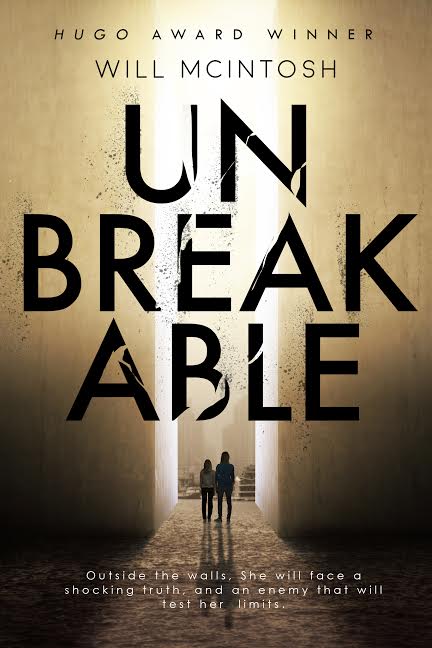
I also love it when I hear from my favorite authors. That’s how I received Unbreakable by Will McIntosh, when he emailed me to let me know he’s turning to self-publishing this summer. He was also kind enough to offer me an early review copy, and of course I said yes! Thank you so much, Will!
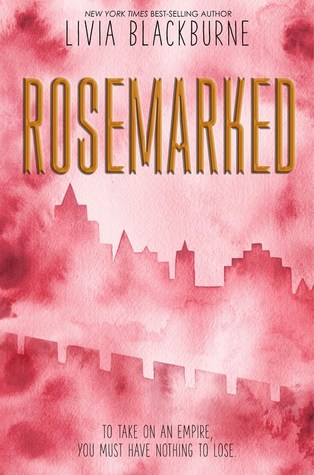
From Disney-Hyperion I was also invited to review Rosemarked by Livia Blackburne. A couple years ago I was a beta reader for Livia, and it appears she had included my name on a list of bloggers to receive NetGalley widgets of her upcoming book, so that was pretty awesome. With thanks to the author and publisher.
Now I Rise by Kiersten White – Last year I read and enjoyed And I Darken, a YA alternate history novel which re-imagines the notorious Vlad the Impaler as a woman. I’d known that I wanted to continue with the sequel, but now I’m even more pumped up after seeing all the fantastic reviews. I did decide to go with the audio edition this time though, mainly because I found out the amazing Fiona Hardingham is the narrator. My thanks to Listening Library for the audio review copy.
A Man of Shadows by Jeff Noon – Admittedly, it’s been a while since I’ve requested anything from Angry Robot because none of their books have caught my eye lately. However, this one was different. One, I’ve always wanted to read Jeff Noon, and two, how could I say no to a sci-fi detective mystery noir? Thanks to the publisher for granting my request.
Reviews
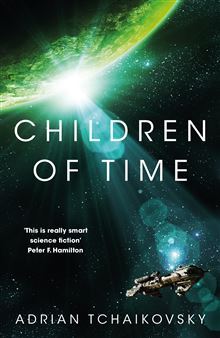
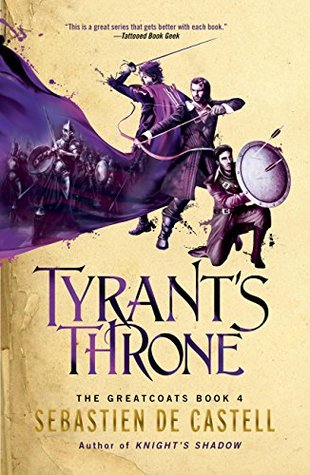
Here’s a roundup of my reviews posted since my last update. I didn’t even realize I gave out so many 3.5s! On the other hand, I also put up two five star reviews, which I guess is kinda rare but I’m not complaining. Both Children of Time and Tyrant’s Throne are great reads that I want to highlight this week.
Children of Time by Adrian Tchaikovsky (5 of 5 stars)
Tyrant’s Throne by Sebastien de Castell (5 of 5 stars)
The Furthest Station by Ben Aaronovitch (4 of 5 stars)
Royal Bastards by Andrew Shvarts (4 of 5 stars)
Dragon Teeth by Michael Crichton (3.5 of 5 stars)
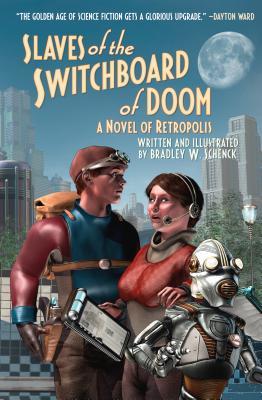
Slaves of the Switchboard of Doom by Bradley W. Schenck (3.5 of 5 stars)
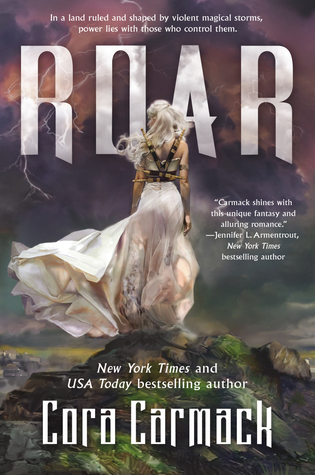
Roar by Cora Carmack (3.5 of 5 stars)
Way Down Dark by J.P. Smythe (3.5 of 5 stars)
The Refrigerator Monologues by Catherynne M. Valente (3.5 of 5 stars)
Roundup Highlights:
What I’ve Read Since the Last Update
It’s been a busy two weeks, so I’m surprised that I got so many books finished, to be honest. Reviews of many of these will be rolling out soon, so stay tuned.

Have you heard of or read any of the books featured this week? What caught your eye? Any new discoveries? I hope you found something interesting for a future read! Let me know what you plan on checking out. Until next time, see you next Roundup!


 The BiblioSanctum