Book Review: The Librarians and the Mother Goose Chase by Greg Cox
Posted on July 10, 2017 2 Comments

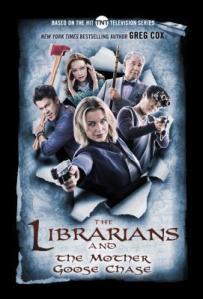 The Librarians and the Mother Goose Chase by Greg Cox
Genre: Action/Adventure, Fantasy
Series: The Librarians #2
Publisher: Tor Books (April 2017)
Author Info: http://www.gregcox-author.com
Wendy’s Rating: 4 of 5 stars
With thanks to the publisher for the opportunity to read an advanced copy of this book in exchange for an honest review.

I was unfamiliar with The Librarians TV series when I was given the opportunity to read Greg Cox’s first tie-in novel. I immediately fell in love with the quirky characters and the fantastical adventures of librarians who guard the magic and secrets hidden in books. I also really loved that the book offered little tidbits of fact with its fantasy. An opportunity to learn a thing or two while being thoroughly entertained? I’m in!
This story takes us back to the literary creation of on Elizabeth Goose who, in 1719, published a children’s book filled with rhymes that we all know well. But as any good librarian knows, words have power. As part of the Mother Goose Treaty, the Librarian of that time was able to destroy all of the copies of Mother Goose’s spellbook–except the one that is now causing all sorts of trouble for our heroes and the distant offspring of the great storyteller.
Since reading The Librarians and the Lost Lamp, I’ve excitedly gotten into watching the show and have come to know the characters, each of whom Cox captures easily in his writing. Here, Cox has to work a little harder because the story separates the group as they chase down the three pieces of the spellbook and try to keep Mother Goose at bay. As in the show, Flynn is unsurprisingly absent from the adventure, preferring to work alone, while the other share the snappy banter. While the latter is somewhat of a loss when Ezekiel, Cassandra, and Jake are forced to work with the Goose heirs, I appreciated the opportunity to get the know the characters better on their own. Their respective chapters let them focus on the individual strengths that have made them the first group of Librarians where the order originally only had one at a time. And while they all work well together because of those strengths and balancing each other’s weaknesses, it’s nice to know that they are still fully fleshed out individual characters who can run solo when they need to.
As I’ve said, there are several moments of educational value–as there should be in a story about librarians–even magical ones. I’ve learned that vinegar is a spider deterrent and I can now recite additional verses to several classic Mother Goose rhymes.
The story itself holds up as well as any campy fantasy adventure mystery should. The Librarians never take themselves too seriously, and Cox does the same, leading to a light-hearted romp that was a delight to read and is a great way to kill time while I wait impatiently for the next season to start.


Book Review: Shark Island by Chris Jameson
Posted on July 10, 2017 29 Comments
I received a review copy from the publisher. This does not affect the contents of my review and all opinions are my own.

Mogsy’s Rating: 4 of 5 stars
Genre: Horror, Thriller
Series: Stand Alone
Publisher: St. Martin’s Paperbacks (June 27, 2017)
Length: 320 pages
Author Information: Website
Let’s face it, guys—sharks are so hot right now. Actually, they’ve always kinda been. Ever since Spielberg made Jaws and traumatized a whole generation of moviegoers from swimming in the ocean, the ongoing popularity of books, films, TV shows about these fin-tastic fishes are proof of our obsession. I for one was thrilled when I found out about Shark Island, and literally swept aside about a hundred other books on my TBR just so I could leapfrog this one all the way to the top. My fascination for shark fic is something I can’t really explain, but if you grew up watching cheesy horror flicks and creature features like I did, I’m willing to bet this book will also tickle all the right synapses in your brain.
Our story opens on a beautiful summer day on Cape Cod. College student and aspiring photographer Naomi Cardiff and her girlfriend are sunning themselves on a boat when she notices a large herd of seals on a nearby stretch of beach. Deciding to swim towards them for some close-up shots, Naomi subsequently gets attacked by a shark, which takes off her left leg from the knee down. The incident sparks off a media frenzy and reignites the debate surrounding the seal overpopulation problem, which has been blamed for the increase of Great Whites in the area drawn to their natural prey. The solution ends up falling to a group of Woods Hole scientists who have developed an acoustic signal system that could be used to lure the seals away from the cape, and eleven months later the team is ready for its first trial run.
The result? The signal to attract the seals ends up working marvelously, as thousands of the pinnipeds flock in the wake of the scientists’ boat leading them all up to a secluded channel in Maine. What they didn’t expect, however, was how quickly the sharks would follow. Within hours, they’ve attracted more than few dozen Great Whites, and all around the boat, it’s like:

Now a journalism student, Naomi is also along for the ride, determined not to let what happened to her the previous summer keep her away from the ocean she loves. However, a powerful Nor’easter has blown in, causing torrential rain and massive storm swells. After the frenzying sharks ram and breach the hull of their boat, Naomi and the six other passengers’ only hope of survival is a rusty old watchtower situated atop a tiny piece of rock named Bald Cap. But with the water rising faster than you can say “you’re gonna need a bigger island”, how long can the survivors hold out before the seas swallow up their refuge and let the sharks in to play?
Okay, let’s see what we’ve got. Outlandish premise? Check. Rampaging sharks? Check. Lots and lots of blood and gory death? Check and double check. We’re neck-deep in pulpy, guilty-pleasure reading territory here…and quite honestly, I wouldn’t have wanted it any other way. In fact, I’d even hazard to say there was probably less cheese than I expected in the story—sure, Shark Island is a book that’s meant to be far-fetched fluffy fun, but I was a little surprised to find it also had plenty of substance, especially in the wonderful and diverse cast. Damn you, Chris Jameson! Damn you for writing sympathetic characters, making me actually care about them before you consign them to their watery, shark-infested graves! When I picked up this book, I expected the usual B-movie style disposable and interchangeable archetypes, but instead you gave me all of these multifaceted and well-realized characters that I genuinely felt bad for as I watched them being chomped up into bloody bits.
And yes, there was a lot of screaming, dying, and limbs getting ripped off. No one is truly safe, so you’re always going to be on the edge of your seat wondering who will be the next victim. So if you’re the kind of reader who just wants to get their gruesome shark porn fix and doesn’t give a fig about anything else, chances are you’ll also be perfectly happy with what Shark Island has to offer. The story is fast-paced and jam-packed with shark action, saving up the grisliest and most intensive heart-pounding moments for the gripping climax near the end.
In any case, if Shark Island sounds like your kind of thing, then it might just well be your perfect summer read. Speaking as someone who enjoys kicking back with the occasional pulpy horror novel about killer creatures running amok, this one seriously hit the spot. When I head up to the beaches of Cape Cod for my vacation later this summer, I’m sure I’ll be thinking of this book fondly from the safety of dry land.


Book Review: Godblind by Anna Stephens
Posted on July 9, 2017 20 Comments
I received a review copy from the publisher. This does not affect the contents of my review and all opinions are my own.
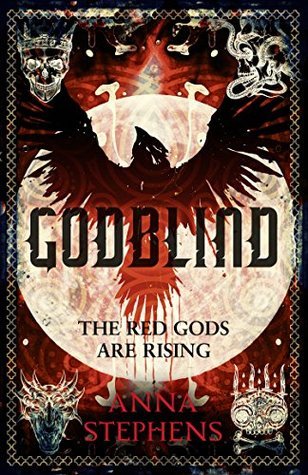
Mogsy’s Rating: 3 of 5 stars
Genre: Fantasy
Series: Book 1
Publisher: Talos (June 20, 2017)
Length: 384 pages
Author Information: Website | Twitter
Godblind is a book that would seem tailor made for my tastes in grimdark. It’s epic in scope, characters, and setting. There are multiple points of view. Plenty of action. Lots of gut-churning violence. I enjoyed this novel, I won’t lie. But it is also a debut, and it kind of shows. The writing is solid, but the plotting is predictable and scripted, as if the author placed certain elements into her story that she felt should be in there, and not necessarily because they really had to be.
First on the checklist is the multiple perspectives—we have an enormous cast here, lots and lots of POV characters. One of the first ones we’re introduced to is Rillirin, an escaped slave who has spent years suffering at the hands of the Mireces after she refused to worship their cruel Red Gods. She eventually finds her way to the Rilporian people, enemies of the Mireces, bearing them a warning: the old Mireces king is dead, and with him dies the truce between their two peoples. Ambitious new leaders have seized power, one of them being Rillirin’s own brother Corvus, a fanatical convert to the Red Gods. Accompanied by his dark priestess, Corvus plans to march on Rilpor and subjugate everyone to the religion of blood and sacrifice.
While all of this is happening, Rillirin also meets and develops a close relationship with Dom, a seer who receives visions of the future. Dom’s p0wer allows him to commune with the benevolent gods of Rilpor, but when the Dark Lady takes notice of him, his dreams become filled with pain and death. Meanwhile, not all is well with the Rilporian throne. The king is slowly losing his mind, still grieving for his late wife, who was murdered. With the killer still at large, Durdil the guard commander is at his wit’s end trying to solve the murder but keeps running into dead ends, and amidst the heightened tensions, a captain named Crys has been assigned to accompany Rilpor’s two royal princes on a diplomatic mission and protect them from threats.
And that’s as far as I’ll go describing the summary because I don’t want to risk revealing too much. Though if I’m to be completely honest, I think anyone following the story closely would be able to guess many of the story’s plot twists. In case you’re curious why I gave Godblind only three stars despite enjoying the book, well, that’s the main reason why the rating took a hit. Rather than grow out organically, the story felt forced and contrived, unfolding in a very ordered and controlled way. The novel’s format made me feel like the author was following an epic/grimdark fantasy “how-to” template, and even the manner in which important events unfolded made me think they were included simply because they were expected. As a result, many of the shocking revelations lacked their intended impact. Fight scenes had plenty of blood and action but no spirit. Character relationships were complex and yet failed to feel genuine. And the most unfortunate part? Some of the brutal scenes of torture, killing, rape…they felt gratuitous. Don’t get me wrong, as an avid reader of grimdark I am used to books filled with cold-blooded violence and every act of unspeakable sadism, but most of the time these elements are consequential and don’t have the feeling of being blatantly tacked on. There were several scenes like this in Godblind that just leaped out at me, not so much because of the disturbing situations and actions they portrayed, but more because of the way they were written. It’s difficult to explain, but they just felt randomly excessive and out of place.
The characters were interesting, but because the narrative was spread over so many POVs, only a couple of them really stood out. The beginning of the book really set a precedent for this; one after another, characters were fired off at us in rapid succession, without developing those who have already been introduced and letting them sink in. I had trouble remembering who everyone was every time I returned to the book from a break. The author also has this habit of splitting up a single event or scene, e.g. a big battle, into multiple short POV chapters—even when all the characters are together for the duration—whereas everything told via a single POV in a longer chapter might have be more effective and less distracting. When chaos erupts and a fight is in full swing, all I want is to be lost in a scene, and not have to reorient myself every time we switch to a another character’s perspective.
As this is a debut though, I was not surprised to run into some of these issues. Godblind has its flaws but I definitely want to highlight some of the things Stephens did really well, including keeping the story interesting and fast-paced. I also mentioned a couple characters that stood out for me, and they were Durdil and Gilda. Damn, but latter is an old lady with grit! And Durdil’s chapters were often full of suspense and cutthroat palace intrigue.
Overall, despite its predictability Godblind is actually pretty decent for a debut, with a few stumbling blocks that I can see being overcome once Stephens writes more books and gains more confidence in the art with time. As it stands right now, I think this book is an above average entry into the genre, with potential to develop and grow into something greater over the next couple books. I hear the series will be a trilogy, and I shall wait for news of the sequel with interest.

YA Weekend Audio: Now I Rise by Kiersten White
Posted on July 8, 2017 10 Comments
I received a review copy from the publisher. This does not affect the contents of my review and all opinions are my own.

Mogsy’s Rating (Overall): 4 of 5 stars
Genre: Historical Fantasy, Young Adult
Series: Book 2 of The Conqueror’s Saga
Publisher: Listening Library (June 27, 2017)
Length: 13 hrs and 25 mins
Author Information: Website | Twitter
Narrator: Fiona Hardingham
While The Conqueror’s Saga may be more of an alternate history rather than a true fantasy series, it is nevertheless based on a genuinely fascinating premise. Imagine if Vlad the Impaler, one of the most brutal figures in history, known for his cunning and penchant for cruelty and who served as the main source of inspiration for Dracula, was instead…a princess? As I wrote in my review for the first book, it’s this subversion of the archetypical YA heroine trope that initially drew me in, and I was looking forward to see how the author would continue this story.
Now I Rise is a sequel that picks up shortly after the end of the first book, following Lada’s split with Radu and Mehmed in order to return to Wallachia. Our protagonist is determined to regain control of her country, which she knows she is destined to rule. Though she is without power or allies at this point, Lada is not about to let anything stop her, gathering whatever forces she can to harry the countryside and put the pressure on her enemies.
Meanwhile, her brother Radu has been sent undercover to Constantinople by Mehmed, who has become Sultan of the Ottoman Empire. Once the object of Lada’s affections, Mehmed is now consumed by a new vision to retake the city from the Byzantines, driven by a prophecy that has foretold his rise. Radu, who harbors his own secret feelings for Mehmed, is unable to deny the Sultan anything and thus agrees to be his spy behind the walls of Constantinople.
But as Radu carries out his mission for Mehmed, he cannot help but think of his sister Lada, who is far away fighting her own war for a throne. Ever since they were children, the siblings have always depended on each other, with Radu providing Lada with his wisdom and strategic advice while she shielded them both with her strength and confidence. But Radu also can’t help his heart, which cleaves him to the Ottomans’ mission. Torn in his love between the two most important people in his life, ultimately Radu will have to decide where his true loyalties lie.
Reading this book, I was pleasantly surprised to see how unconventional the story felt compared to most other YA novels. It is in essence a retelling of the fall of Constantinople and the retaking of Wallachia—based very loosely on the true events. Thus in many ways, this novel read like a military fantasy, featuring a plot that concerned itself more with war campaigns and waging a siege. I think it would be fascinating too if you are familiar with some of the true history, watching Kiersten White combine fact with fiction to create something new and exciting.
At first, I was also apprehensive about the fact that our three main characters—Lada, Radu, and Mehmed—are mostly split up in this book, and that the main story threads rarely crossed. Thankfully though, for all that the story featured little to no real interaction between them, it didn’t turn out to be much of problem at all. The distance between the characters actually gave each of them a chance to reflect on the ties that were already in place, and I also liked how this gave them the opportunity to form new relationships and motivations.
In particular, I loved Lada’s perspective in this novel, and her struggle with her identity. While the world sees her as merely a woman, she knows in her heart she is a soldier, and woe to those who underestimate her. The ending was testament to this, and it was at once both difficult and satisfying to read. Then there was Radu, who just damn near broke my heart. I can see how many would find him exasperating and unlikeable, but somehow I can’t bring myself to hate this poor lost boy. It’s possible I may also be influenced by residual sympathies I had for him in the last book, in which he was my favorite character. The story was sensitive to the subject of his sexuality and I thought White’s writing captured his internal struggle very well.
Now I Rise is, in a nutshell, a wonderful sequel that delivered on everything it promised, including lots of character growth and even more dark thrills in the plot. The execution of this series has been very impressive so far, as are the new directions the story has taken, and I find myself looking forward to the next book in the saga.
Audiobook Comments: Fiona Hardingham is fast becoming one of my favorite audiobook narrators, and she was the main reason why I decided to switch formats and review the audio for the second book in The Conqueror’s Saga. As always, Ms. Hardingham delivers a fine performance, and I can find no major faults with her narration. If you’re considering the audiobook versions for this series, I would highly recommend it.

Friday Face-Off: Gold
Posted on July 7, 2017 26 Comments
Welcome to The Friday Face-Off, a weekly meme created by Books by Proxy! Each Friday, we will pit cover against cover while also taking the opportunity to showcase gorgeous artwork and feature some of our favorite book covers. If you want to join the fun, simply choose a book each Friday that fits that week’s predetermined theme, post and compare two or more different covers available for that book, then name your favorite. A list of future weeks’ themes are available at Lynn’s Book Blog.
This week’s theme is:
“All that is gold does not glitter”
~ a cover featuring GOLD
Mogsy’s Pick:
Gilded Cage by Vic James
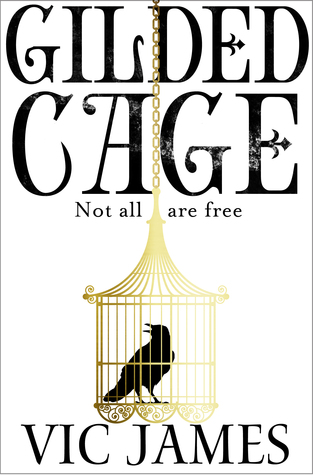
So this book didn’t really work for me, but I did appreciate a lot of the different covers and some of the fascinating imagery featured on them. And of course, whenever you see anything gilded, you get the color gold. Now let’s take a look at these covers…
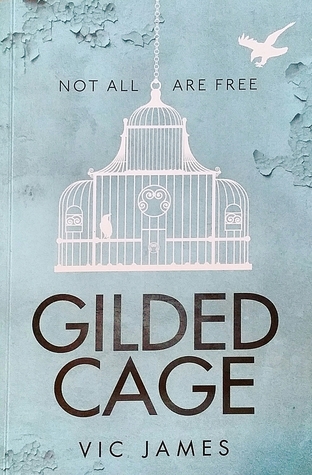
From left to right, top to bottom: Del Rey (Cover A) – Del Rey (Cover B) – Pan Macmillan (Cover B) – Pan Macmillan (Cover B) – La Galera (Spanish) – Nathan (French)




Winner:
Just like last week, the winner I’ve chosen in this face-off looks a lot better in real life than in a 2D image! To see what I mean, here’s a photo I found of the French edition. I make it no secret that I love gold foil on book covers, and it doesn’t hurt that it goes so beautifully well with the intricate wrought iron gate design. It’s simple, stylish, and classy.
What do you think? Which one is your favorite?
Book Review: A Kiss Before Doomsday by Laurence MacNaughton
Posted on July 6, 2017 18 Comments
I received a review copy from the publisher. This does not affect the contents of my review and all opinions are my own.
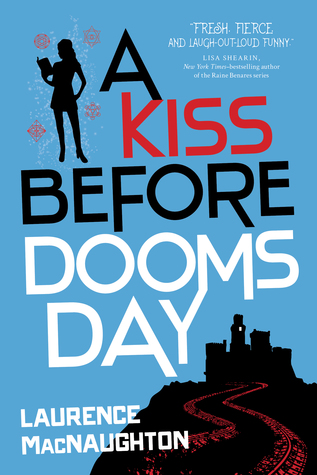 A Kiss Before Doomsday by Laurence MacNaughton
Mogsy’s Rating: 4 of 5 stars
Genre: Urban Fantasy
Series: Book 2 of Dru Jasper
Publisher: Pyr (July 11, 2017)
Length: 290 pages
Author Information: Website | Twitter
A Kiss Before Doomsday is the second novel in an urban fantasy series starring Dru Jasper, a bookish sorceress whose power allows her to unleash the magical properties of precious stones and crystals. Pretty cool, right? Now Dru and the whole gang are back in another madcap adventure to prevent the end of the world, and once again the results are as entertaining and fun as you would expect.
Since the story begins in the immediate aftermath of the first book, I would highly recommend reading It Happened One Doomsday before tackling this one if you haven’t yet. I won’t spoil any of the details, but suffice it to say that our protagonist did not exactly come out of the previous ordeal unscathed. Dru’s store The Crystal Connection has been left completely destroyed, and her new boyfriend Greyson is missing after he and his demonic muscle car Hellbringer were blown up in the Netherworld. Dru doesn’t know what’s worse: the idea that Greyson is dead, or that he is still alive but still afflicted by the curse that transformed him into one of the Four Horsemen of the Apocalypse.
In the meantime though, the city of Denver is facing other problems. Despite our characters’ efforts in the previous book, the world is still heading towards Doomsday, with signs that someone is still trying to fulfill the prophecy of the apocalypse scroll. The latest disaster is a plague of undead, and for some reason, they seem to be targeting all of the area’s magic users, including Dru and her friends.
If you’ve read my review of It Happened One Doomsday, then you’re probably aware already that I’m all over this fantastic series. With a flood of new urban fantasy titles coming out every year, it’s always refreshing to come across something that immediately leaps out at me, even if it’s because of seemingly minor things like a twist in the usual story formula or a really cool magic system. Little details like that are just as likely to catch my attention, and that’s exactly what happened when I read the first book last year and fell in love with the idea of crystal magic. Laurence MacNaughton did a great job taking off with the concept, allowing Dru to harness a crystal’s power depending on its properties (and there’s just something so charming about the idea of our main character running around with an arsenal of different crystals stuffed in her purse, so that she’ll be ready for any situation). The best part is, now that Dru’s magic is even stronger in this sequel, we get to see even more of her in action.
Then there are the characters. I love them all so much! Rane, my favorite Amazonian metal woman from the first book is back, and this time around she even has a mini-side plot involving her and a former flame, a jerkwad sorcerer named Salem. Opal also returns with a bigger role in this novel, and I thoroughly enjoyed watching the three friends working together to figure out why the dead are rising from the grave to attack sorcerers.
On the other hand, there was not as much of Greyson. This also meant less of Hellbringer, which was a shame since I am a big fan of that demon car. Still, Greyson and his hot rod taking a step back also meant the story got to really focus on our three ladies and their mission to kick some ass and rescue the guy for a change, so this was definitely a silver lining. That said, a part of me still wishes we could have seen more development into Dru’s relationship with Greyson, because while theirs was a whirlwind romance from the start, I wasn’t quite convinced that our protagonist would be the kind of girl to turn into a weeping mess over someone she’s only known for a couple weeks.
Apart from those minor quibbles though, I really have no complaints. With this solidly written sequel, Laurence MacNaughton really seems to be hitting his stride, giving readers more of his quirky characters and their action-packed adventures. Indeed, if the series continues in this exciting and lighthearted vein, it is sure to become smashing hit and be warmly welcomed by myself and other urban fantasy fans. A Kiss Before Doomsday was another excellent, fun-filled read, and I can’t wait for more.
More on The BiblioSanctum:
Review of It Happened One Doomsday (Book 1)
Guest Post: “Creating Crystal Magic” by Laurence MacNaughton
Waiting on Wednesday 07/05/17
Posted on July 5, 2017 14 Comments

“Waiting On Wednesday” is a weekly meme hosted by Breaking the Spine that lets us feature upcoming releases that we can’t wait to get our hands on!
Mogsy’s Pick
Blood and Sand by C.V. Wyk (January 16, 2018 by Tor Teen)
What can I say? Ancient Rome historical fantasy is like my drug, and after the fantastic time I had with The Valiant by Lesley Livingston earlier this year, I’m feeling in the mood for more stories about female gladiators.
 The action-packed tale of a 17-year-old warrior princess and a handsome gladiator who dared take on the Roman Republic–and gave rise to the legend of Spartacus….
Roma Victor. The Republic of Rome is on a relentless march to build an empire–an empire built on the backs of the conquered, brought back to Rome as slaves.
Attia was once destined to rule as the queen and swordmaiden of Thrace, the greatest warrior kingdom the world had seen since Sparta. Now she is a slave, given to Xanthus, the Champion of Rome, as a sign of his master’s favor. Enslaved as a child, Xanthus is the preeminent gladiator of his generation.
Against all odds, Attia and Xanthus form a tentative bond. A bond that will spark a rebellion. A rebellion that threatens to bring the Roman Republic to its end–and gives rise to the legend of Spartacus….
Book Review: The Hell-Hound of the Baskervilles by G.S. Denning
Posted on July 4, 2017 33 Comments
I received a review copy from the publisher. This does not affect the contents of my review and all opinions are my own.
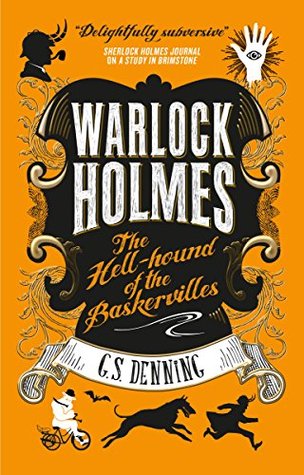 Warlock Holmes: The Hell-Hound of the Baskervilles by G.S. Denning
Mogsy’s Rating: 4 of 5 stars
Genre: Fantasy
Series: Book 2 of Warlock Holmes
Publisher: Titan Books (May 16, 2017)
Length: 320 pages
Author Information: Website | Twitter
The thing about Warlock Holmes is, you can’t stop at just one. A Study in Brimstone was so much fun, I simply couldn’t bear the thought of letting book two go unread for one second longer. Almost as soon as I finished the first book, I fell upon the sequel The Hell-Hound of the Baskervilles like a ravenous zombie on a fresh brain.
Last we left our characters, Warlock’s arch nemesis Moriarty had just revealed himself, setting off a chain of events that left the brilliantly dim detective in a strange state of dead-but-not-dead. Not knowing what to do with the inert and decomposing body, Dr. Watson has decided to conceal the truth behind his friend’s apparent passing—at least for the time being. After making up a cover story to explain Holmes’ whereabouts and filling their flat at 221b Baker Street with flowers to hide the smell, Watson sets his sights on finding a way to bring Warlock back to life.
This second novel closely mirrors the format of the first, containing a series of stories following Warlock Holmes’ eventual resurrection and recovery from a being a rotting corpse. From a not-so-relaxing jaunt to the peaceful countryside of Surrey to an outlandish tricycle race in Farnham, our characters are once again embarking upon a number of adventures inspired by the original tales by Sir Arthur Conan Doyle. However, the book’s tour de force is without a doubt its title story “The Hell-Hound of the Baskervilles” which makes up more than half its pages, and features the culmination of everything that has happened in the series so far.
I picked up this sequel expecting more hilarity and fun times, and I was definitely not disappointed. In fact, the author appears to have raised the humor to a whole other level—the situations Holmes and Watson find themselves in are even more extreme and absurd, and on the whole I found the jokes a lot less subtle. It’s a bit of a double-edged sword since I’ve always preferred my humor on the understated side, i.e. less overt and in-your-face, but I also can’t deny that when G.S. Denning does silliness, the results work a lot better for me.
More importantly, the increase in madcap humor is also balanced out by the darker, more macabre moments. There are more of those in this sequel as well, as the series is in the process of maturing in story scope and content. This is most obvious in “The Hell-Hound of the Baskervilles”, based off of perhaps one of the most well-known Sherlock Holmes stories, and I am happy to report Denning does it justice. Giving depth to Warlock by filling in some of the details behinds his tragic backstory, we are gradually built up to a suspenseful climax filled with some pretty shocking twists.
The characters are generally more developed in this second installment, and I continue to enjoy their hilarious interplay. The premise of the series is that Holmes is actually a witless buffoon who couldn’t solve his way out of a paper bag if it weren’t for Watson’s levelheaded assistance, and it’s a joke that hasn’t worn out its welcome yet. In fact, the Warlock/Watson dynamic is better than ever, with their personalities playing off each other in more complex, meaningful ways. I really enjoyed the revelations into their friendship at the end of book, and I hope that Denning will continue exploring this aspect in the next installment.
Honestly, there’s not much left for me to say except I’m completely addicted to this series, and here’s hoping I won’t have too long to wait until my next Warlock Holmes fix! I’ll be waiting on pins and needles to see what Denning has in store for us in book three.
More on The BiblioSanctum:
Review of A Study in Brimstone (Book 1)
Review: Spoonbenders by Daryl Gregory
Posted on July 3, 2017 28 Comments
I received a review copy from the publisher. This does not affect the contents of my review and all opinions are my own.

Mogsy’s Rating: 4.5 of 5 stars
Genre: Paranormal, Fantasy
Series: Stand Alone
Publisher: Knopf Publishing Group (Hardcover); Random House Audio (Audiobook) (June 27, 2017)
Length: 416 pages (Hardcover); 14 hrs and 2 mins (Audiobook)
Author Information: Website | Twitter
Narrator: Ari Fliakos
What do you get when you mix clairvoyance and psychokinesis with Cold War secret agents, the Chicago mob, shady con artists, and a dysfunctional family undergoing a crisis of zany proportions? You get Spoonbenders, a wildly original, humorous, and unexpectedly heartwarming tale of paranormal drama. This book had everything in it—and I do mean EVERYTHING—but I’ve seen Daryl Gregory pull off some pretty amazing things with an even stranger mishmash of ideas, so I never doubted for a second that he would be able to pull this off.
Spoonbenders introduces us to the Telemachus family, whose members made brief waves in the 70s by dazzling late-night talk show audiences with their amazing psychic abilities. At the head of this act is Teddy Telemachus, who ironically is the only one with no real power of his own, though he does make up for it by being a smooth and charismatic master swindler. The true talent was his wife Maureen, who is said to be the most powerful psychic in the world. And in their individual ways, each of their children inherited a bit of their mother’s gifts: Irene is a human lie detector, able to fox out the smallest insincerities or fabrication in others’ words; Frankie is a telekinetic, enabling him to dominate the pinball machines of his youth and later the roulette tables of his adult years; and finally there’s Buddy, whose second sight allows him to perceive events far into the future.
But that was then and this is now—the mid-90s to be exact. The Telemachus family has fallen far after their act was debunked by the Astounding Archibald, a renowned stage magician and skeptic. Not long after that in 1974, Maureen also passed away, leaving young Irene to take care of Teddy and her brothers. Now Irene is in her 30s, flat broke and raising her teenage son by herself. She is left with no choice but to move back into the house of her father, a septuagenarian still up to his grifting ways. Frankie has also gotten entangled with the local mafia, owing them a fortune after every one of his get-rich-quick schemes have failed to pan out. And Buddy…poor Buddy appears to have lost his mind, refusing to utter a word to anyone. Instead, he spends his days in Teddy’s house, starting one DIY project after another with seemingly no plans to complete any of them. However, Buddy knows something big is coming, and he does have a plan—one that may involve Irene’s son Matty, who has just discovered that he may have inherited his grandmother’s powers of astral projection.
With such a huge cast of characters spread across three generations, I was extremely impressed with how Gregory was able to keep this book organized and tightly paced. Each Telemachus had their own story arc, including past history and current conflicts, but most amazing to me was how the author managed to tie these separate plot threads back to each other, allowing all of it to culminate into an elegant and well-reasoned finale. As a voracious reader, I have to say I encounter books with ambitious ideas and big, bold premises all the time, but rarely have I seen such deft and clever handling of so many moving parts in a story. This could have easily devolved into an ugly mess, but in fact the results were the complete opposite, so my hat is definitely off to Mr. Gregory.
I also found the story unique and unpredictable—which is always a plus. Readers are bounced between the decades, from the height of the Cold War amidst fears of Russian psychic espionage, to the nostalgic 90s with the advent of AOL and a new wave of organized crime in Chicago. Not quite a suspenseful thriller novel, but at the same time not quite a feel-good family piece either, Spoonbenders is perhaps best described as a light dramedy, combining the ups-and-downs of life with a dark sense of humor that is as absurd as it is funny.
What’s more, the book also delivers a surprising amount of heart. As events in the novel prove, having supernatural powers does not necessarily bring happiness, and in fact, often they actually have detrimental effects on their personal wellbeing and relationships. While they may not be a typical family, I found it easy to connect with many of the characters due to the fact they deal with real and relatable problems, from Frankie’s lack of self-confidence to Irene’s struggles with her love life. Still, even when life gets too tough, it’s clear that they have each other to lean upon. They might not always get along, but the Telemachus family stays together through thick and thin, and an attack on one of them is an attack on all.
In the end, I really enjoyed Spoonbenders, which easily ranks among the most imaginative and well-written books I’ve read so far this year. This novel is definitely not your typical story about family, but it’s fun and engaging all the same. Daryl Gregory is fast becoming one of my favorite authors, and I’m looking forward to whatever and interesting and offbeat ideas he can come up with next.
Audiobook Comments: I alternated between reading the ARC and listening to the audiobook for this book, so I thought I would mention some of my thoughts on the narration here. All told, I loved the performance by Ari Fliakos, who gave such life and personality to all the characters in this story. His accents and inflections were just perfect, varying them enough so that each person had their own unique voice, thus making it easy for the listener to distinguish between the many different speakers—an important factor for any book with a large cast of characters. I hope to listen to another book narrated by him in the future.

Tough Traveling: Adepts
Posted on July 2, 2017 8 Comments
Back in 2014, the idea for Tough Traveling started with Nathan of Fantasy Review Barn who came up with the excellent idea of making a new list each week based on the most common tropes in fantasy, as seen in (and inspired by) The Tough Guide to Fantasyland, a tongue-in-cheek parody of the fantasy genre by Diana Wynn Jones. It was widely successful, with over fifty bloggers participating at one point before it went on hiatus. But now Tough Traveling is back, with huge thanks to Laura from Fantasy Faction for reviving the feature! Every first of the month we’ll be posting a list of books that fit a particular theme, with the next month’s theme also to be announced. Interested in participating? Well, grab your traveling packs and come along! You are welcome to post your Tough Traveling lists anytime during the month.
July’s topic is:
Adepts
The Tough Guide defines an Adept as ‘one who has taken what amounts to a Post-graduate course in Magic. If a Magic User is given this title, you can be sure he/she is fairly hot stuff. However, the title is neutral and does not imply that the Adept is either Good or Evil.’

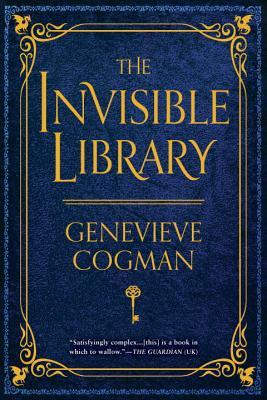 The Invisible Library by Genevieve Cogman
Our protagonist Irene may only be a junior librarian, but don’t estimate her skills with magic. At the beginning of this series, she is even assigned a new assistant to train, a young man with a mysterious past named Kai. As part of a secret society of librarian spies, their mission is to travel to different worlds, procuring and archiving important works of fiction from all across the multiverse. Not only is Irene educated by the best at the great Invisible Library, the central hub of this vast interdimensional network, she has also spent her entire life there raised by librarians.
 The Burning Isle by Will Panzo
The protagonist of this story is a young spellcaster named Cassius, newly arrived on a lawless island ruled by two warring crime lords, though in truth, the real power resides with an enigmatic general who oversees everything from his stronghold deep in the wilderness. It is Cassius’ intention to shake up this system, though first he has to make a name for himself. He quickly manages this in spectacular fashion, defeating a rival spellcaster in a very public prize fight on the very first day. No one knows who this young man is or where he came from, but what’s clear is that he has been very well trained.
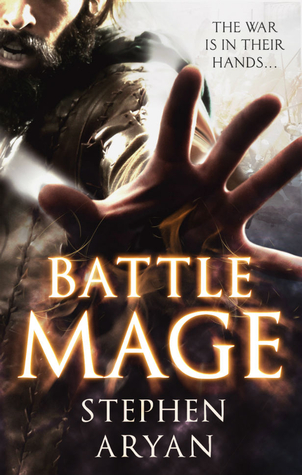
Balfruss is our main battlemage character, one of only six who has answered the King of Seveldrom’s call to arms against the mad Emperor Taikon’s invading army from Zecorria. It is said that their enemy is led by a powerful figure known only as the Warlock, prompting the need for powerful adepts like Balfruss and his peers to defend the realm, fighting in abstract and magical ways that deal more with the mind.
 Sorcerer to the Crown by Zen Cho
As the crown’s sorcerer, Zacharias Wythe is the first black man to hold the highest office in his profession in Britain, a fact that makes him the target of much opposition and bigotry from many of his so-called “socially-refined” peers who feel that a freed slave should not have risen so far above his station. And just when he thinks life couldn’t get complicated enough, along also comes Prunella Gentleman, a mixed-race young woman of considerable thaumaturgical power, and Zacharias takes it upon himself to mentor her in a society where women using magic is considered anathema.
 The Warded Man by Peter V. Brett
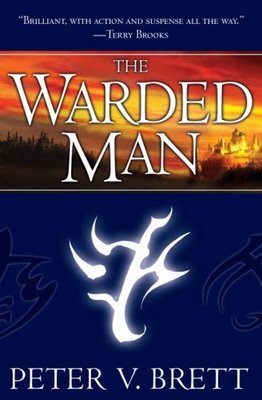
While many magicians may reach the status of adept by earning an education at recognized magical institutes under professional guidance, there are just as many who manage to reach those levels of proficiency through their own self-directed study. Arlen Bales is such a character, becoming the world’s greatest warder by traveling across the land and learning from the ancient texts he has uncovered.

Join us next month for another edition of Tough Traveling! The theme will be:
STRONGHOLDS
The Tough Guide offers information on various kinds of fantasy strongholds. For example, you might be looking for CASTLES, complete with ‘frowning battlements, slit windows and multiple defensible spiral stairways inside’ and which ‘occasionally adorn the heights for pictorial effect’. Or perhaps TOWERS, which ‘stand alone in WASTE AREAS and almost always belong to wizards.’ Towers are often ‘several storeys high, round, doorless, virtually windowless, and composed of smooth blocks of masonry that make them very hard to climb. The Rule is that there is also a strong no-entry SPELL, often backed up by a guardian DEMON.’


 The BiblioSanctum
