Audiobook Review: Redemptor by Seth Skorkowsky
Posted on February 17, 2018 18 Comments
I received a review copy from the author. This does not affect the contents of my review and all opinions are my own.
Mogsy’s Rating: 4 of 5 stars
Genre: Urban Fantasy, Horror
Series: Book 4 of Valducan
Publisher: Audible Studios (January 30, 2018)
Length: 9 hrs and 9 mins
Author Information: Website | Twitter
Narrator: R.C. Bray
Redemptor is another fantastic addition to the Valducan series, becoming the fourth book to be published in the sequence, though I think any of the novels can be enjoyed as a standalone. That said, while each of the first three books have featured a different protagonist, this one breaks the pattern by swinging the focus back to Matt Hollis, the demon hunter whom we first met in Dämoren. Prospective readers who wish to get the full picture may want to tackle that one first, since Redemptor contains quite a few characters and references from book one.
Our story begins approximately three years after the events of Dämoren, which saw the defeat of Tiamat’s Cult at Matt Hollis’s hands. Matt is now married to Luiza, a fellow Valducan Knight, and they even have a daughter. But still, the war on demonkind continues, as does the hunt for more sacred weapons to add to the Valducan arsenal. These sentient weapons are the only things capable of destroying a demon, and the knights who wield them are also bonded to them for life, their minds, bodies, and souls becoming one with the angelic spirit within.
Understandably, everyone is concerned when grave news emerges from South America that someone has been trying to steal holy weapons from museums across the continent. An evil buried long ago has suddenly awakened, leaving a trial of death and destruction in its wake. Now even the paladins of the Catholic Church have stepped in to join the fight, offering to put aside their differences with the Valducans in order to help stop their common foe.
So far, each book in the series has expanded upon the world-building and mythology of holy weapons, and Redemptor was no exception. We also get to find out more about the inner workings of the Valducan. In the years since Dämoren, Matt has become an important member of the order, hunting demons with a team instead of being the lone wolf he once was. A bigger cast of characters opens up the book to multiple perspectives, giving the reader a fuller and more detailed picture of the relationships between the various knights, as well as the roles they play. I especially enjoyed the sections featuring Mei and her training sessions with her master, highlighting the importance of trust and friendship among the ranks. No matter who they are or where they come from, the members of the Valducan are like one big family.
But unlike the earlier books like Dämoren or Hounacier, which mainly followed a single hunter, we don’t get to know any one character as intimately in Redemptor. It’s also a very fast-paced and action-oriented novel, so there’s not as many opportunities for in depth characterization—another reason why it might be best to start this series from the beginning if you are a newcomer, so that you can get the foundation for Matt’s character from the first book. Existing fans, however, will most likely find this one to be the most exciting and action-packed installment yet. Matt and his friends are up against the most powerful and dangerous enemy they’ve ever faced, and once this plot gets going, it doesn’t stop.
This book also introduced Felisa, a formidable female paladin of the Vatican, and she was probably my favorite character. Religion tends to be a contentious subject in sci-fi and fantasy, and often, I find that the Church or religious figures in many of these stories are set up to be scapegoats or strawmen, which to me is just lazy writing, and then there are the blatant stereotypes of the zealot. In contrast, it was a breath of fresh air to meet someone like Felisa, who is a strong, positive force—merciless when dealing with demons, but who also has boundless compassion and support to give to people like Luiza’s mother, whose faith is a beautiful and integral part of her life. I hope this won’t be the last we see of Felisa, especially since I’m very interested to see how the partnership between her people and the Valducan will play out, now that the Catholic Church is an ally.
I’m sure I sound like a broken record by now, but simply put, this is a fantastic series and perfect for readers who enjoy their urban fantasy with some darkness and grit. Redemptor was another action-packed sequel featuring compelling characters and topnotch world-building. I can’t wait to read more Valducan.
Audiobook Comments: Certain narrators who make books a better listen than a read, and R.C. Bray is definitely one of them. I’ve been an admirer of his work ever since I listened to him read The Martian, and I love that he is also the voice of the Valducan series. He’s the kind of narrator who can adapt to anything he’s reading, and once again he was excellent with Redemptor, capturing the atmosphere and mood of the story, delivering a pitch-perfect performance.


More on The BiblioSanctum:
Review of Dämoren (Book 1)
Review of Hounacier (Book 2)
Review of Ibenus (Book 3)
Interview with Seth Skorkowsky
Guest Post: “You Can’t Hide Everything…So Don’t” by Seth Skorkowsky
Friday Face-Off: Retro
Posted on February 16, 2018 30 Comments
Welcome to The Friday Face-Off, a weekly meme created by Books by Proxy! Each Friday, we will pit cover against cover while also taking the opportunity to showcase gorgeous artwork and feature some of our favorite book covers. If you want to join the fun, simply choose a book each Friday that fits that week’s predetermined theme, post and compare two or more different covers available for that book, then name your favorite. A list of future weeks’ themes are available at Lynn’s Book Blog.
This week’s theme is:
“Groovy baby”
~ a cover that is RETRO
Mogsy’s Pick:
The Massacre of Mankind by Stephen Baxter
The “retro” style of the covers to The Massacre of Mankind makes sense, since it was written as a sequel to H.G. Wells’ The War of the Worlds. Taking place in 1920, approximately 14 years after the events in the original classic, the story continues through the eyes of Julie Elphinstone who now begins her own account of a second invasion. Yep, the Martians are back, and they’ve learned some lessons from their first go-around. This time, it’ll take more than microbial infections to take them down, and worse, Earth isn’t exactly in its best fighting shape. Still rebuilding from the first Martian assault, places like Britain are still in complete disarray politically, socially, and economically, especially in the wake of this alternate world’s version of World War I.
Only two covers are going head-to-head this week, so let’s take a look at them now:
Gollancz (2017) vs. Crown Publishing (2017)


Winner:
I love the retro “art deco” style of the Crown Publishing edition; it’s just so bold and eye-catching, hence I’m going with it as my winner. But what do you think? Which one is your favorite?
Review: Semiosis by Sue Burke
Posted on February 15, 2018 28 Comments
I received a review copy from the publisher. This does not affect the contents of my review and all opinions are my own.
Mogsy’s Rating (Overall): 4 of 5 stars
Genre: Science Fiction
Series: Stand Alone
Publisher: Hardcover: Tor Books; Audiobook: Macmillan Audio (February 6, 2018)
Length: Hardcover: 336 pages; Audiobook: 14 hrs and 46 mins
Author Information: Website | Twitter
Narrators: Daniel Thomas May, Caitlin Davies
Semiosis is a multi-generational story that takes place over the course of many years, following a group of human colonists who have traveled light years from Earth to settle on a planet they dubbed Pax. The first pioneers, made up of mostly young scientists and activists who were saddened by the plight of their polluted and war-torn world, hoped to start over and establish a peaceful society on this newly discovered planet. However, they were wholly unprepared for the alien environment that awaited them, nor did they anticipate Pax’s bizarre flora and fauna and the surprising ways they interacted with their surroundings. Many of the original settlers died within a matter of weeks, but through the hard work and perseverance of the survivors, the colony managed to hang on and grow, giving rise to the next generation.
Still, their difficulties were far from over. Despite the settlers’ lofty goals to live in harmony with the land, Pax’s plants and animals behaved in strange and unpredictable ways, causing the humans to adjust and alter their game plans on the fly. With every new generation also came new challenges, both biological and social, such as the problem of sterility in the population or the disagreements between the older members and the younger ones on how the colony should be run. Society adapted to the planet, and Pax adapted in turn.
As someone fascinated with biology, my favorite aspect of Semiosis was the author’s portrayal of the plant and animal life on Pax. The world-building was phenomenal and extremely convincing, as though I was truly transported to an alien planet, encountering organisms that felt vaguely familiar and yet unlike anything I’d ever seen before. This sensation was at once unsettling and exciting. As fascinating as it was to watch how the zoological and botanical sciences were being applied, it would also be a mistake to assume that the natural rules on Earth would work on Pax—a lesson that the first-generation settlers learned the hard way. For example, many plants on Earth have evolved to form symbiotic relationships with other plants or animals. In the case of a bee flying from blossom to blossom, inadvertently fertilizing flowers by gathering pollen, one could argue that the plant had evolved in a way to “train” the insect into helping it. Semiosis explores this concept, except the story takes it even further. Because Pax is different from Earth, the plants on Pax have developed in some extraordinary ways.
Semiosis also makes a lot of insightful observations about the nature of human behavior and the relationship it has with social systems. Earth colonists came to Pax hoping to create a utopia and avoid the mistakes of humanity’s past. In this perfect world, everyone would be treated and valued as equals, and they would also protect and respect the natural order of life on the planet. They quickly realized their hubris. Pax was simply too different, and despite all the humans’ hard work in their research and preparations, the native life on the planet did not behave in a way they expected. To ensure their own survival, the colonists were forced to rearrange some of their priorities. Nothing is black and white, and that’s what I loved about this book. Even the best laid plans—and the best intentions—could fall apart with the introduction of something completely new and weird and unanticipated. And on Pax, that’s pretty much everything.
Of course, there’s also the matter of the book’s unique structure. Because it is made of a number of narratives told over several generations, Semiosis almost has the feel of a collection of short stories, though they do fit together to form a complete picture of the settlement process on Pax. As with most multi-generational stories, you’re not going to get the chance to know any one character intimately; instead, it’s the colony that takes center stage, and the reader is able to experience its development through the years by following one or two of its members in each generation. Each character has a unique perspective on the challenges the society is facing though, so while the names, faces, and situations will change, the book remains interesting. Still, if you know you are not a fan of multi-generational novels, then I doubt this one will work for you.
Personally, I really enjoyed Semiosis. Admittedly, I hadn’t expected the multi-generation format, but I was pleasantly surprised at the intricate way this story was told, and how deftly Sue Burke managed to pull it all together. It was a joy watching the society on Pax evolve over the years, even when the settlers themselves struggled and dealt with some difficult obstacles and brutal conditions. Overall, I found it to be a very realistic depiction of human colonization on an alien planet, and I also admired many of the characters for trying to uphold their values even in the face of danger and despair. I would highly recommend this book for readers who are interested in a fresh and fun perspective on planetary exploration stories and space colonization sci-fi.
Audiobook Comments: The audiobook edition of Semiosis was performed by Daniel Thomas May and Caitlyn Davies, and between the two of them they covered the half dozen or so perspectives featured in this novel. Considering these constraints, the narrators did very well, utilizing varied accents and inflections to portray the different characters of each generation so that each person felt like they had a distinct and unique voice.
Waiting on Wednesday 02/14/18
Posted on February 14, 2018 20 Comments

“Waiting On Wednesday” is a weekly meme that first originated at Breaking the Spine but has since linked up with “Can’t Wait Wednesday” at Wishful Endings now that the original creator is unable to host it anymore. Either way, this fun feature is a chance to showcase the upcoming releases that we can’t wait to get our hands on!
Mogsy’s Pick
The Surface Breaks by Louise O’Neill (May 3rd 2018 by Scholastic)
I recently came across this book, and the blurb immediately caught my attention (plus the cover is breathtakingly gorgeous). Yes, this one is Young Adult and I’m aware the genre does not have the best track record when it comes to mermaid stories. But ah hell, give it to me anyway! I can never resist a story to do with mermaids, even if it’s yet another retelling of The Little Mermaid. I’ve heard that it returns to the original tale’s darker and more violent roots though, which does sound promising, but I shall continue to remain cautiously optimistic for now.
 “Deep beneath the sea, off the cold Irish coast, Gaia is a young mermaid who dreams of freedom from her controlling father. On her first swim to the surface, she is drawn towards a human boy. She longs to join his carefree world, but how much will she have to sacrifice? What will it take for the little mermaid to find her voice? Hans Christian Andersen’s original fairy tale is reimagined through a searing feminist lens, with the stunning, scalpel-sharp writing and world building that has won Louise her legions of devoted fans. A book with the darkest of undercurrents, full of rage and rallying cries: storytelling at its most spellbinding.”
Top Ten Tuesday: Top Ten Favorite Sci-Fi & Fantasy Couples
Posted on February 13, 2018 37 Comments

Top Ten Tuesday was created by The Broke and the Bookish, a weekly meme that now resides at That Artsy Reader Girl. The meme first came about because of a love of lists. Who doesn’t love lists? The original creators also wanted their lists to be shared with fellow book lovers and to ask that we in turn share ours with them and connect with other book bloggers. To learn more about participating, stop by their page dedicated to it and dive in!
This week’s topic: Top Ten Favorite Sci-Fi & Fantasy Couples
Mogsy’s Picks
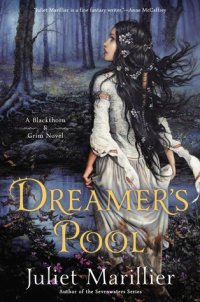 Blackthorn and Grim (Blackthorn & Grim series by Juliette Marillier)
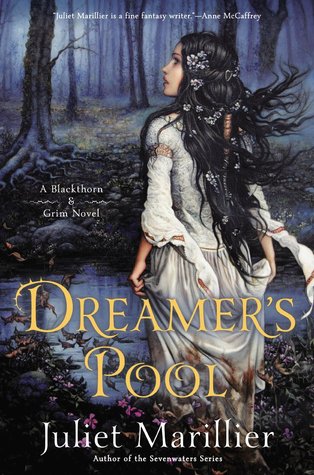
If you have not had the pleasure of meeting Blackthorn and Grim, the two of them make up one of the most extraordinary partnerships I’ve ever read, and their shared experiences have resulted in a deep bond of trust and friendship. Blackthorn is a wise woman, her job to mend and heal and cure, but deep down inside she is still broken and raging with her desire for revenge on the man who destroyed everything she ever loved. The only thing keeping her from acting upon that anger is an oath she made to the fey who saved her life in exchange for a promise that she will not seek out her enemy for seven years and only do good deeds for the duration of that time. That and Grim, Blackthorn’s steadfast companion who has given her strength through the most difficult of times and kept her dark thoughts at bay when they threatened to take over. The two of them are such fantastic protagonists because they are both broken and flawed, but somehow they still manage to complete and bring out the best in each other.
 Agniezka and Sarkan (Uprooted by Naomi Novik)
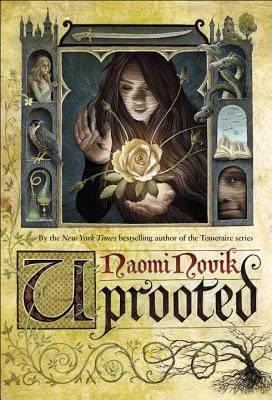
Agnieszka is just another simple girl from yet another simple village, but surrounding her valley home is the ever encroaching Wood, a forest filled with dark energies and spirits, whose corrupting force has trapped and stolen the lives and minds of many. Every so often, Sarkan, the wizard in the tower will descend to the valley and work up powerful spells to drive away the malicious effects of the Wood. Cold and aloof, he is also known as the Dragon, and he also exacts a steep price for helping the villagers keep the evil at bay. Every ten years, he chooses one young woman and takes her away to live in his tower until she is released and the next choosing begins again, and this year, he has chosen Agnieszka. Let me just say right off that I don’t think Uprooted is a Romance; all the romantic elements could have been scrubbed from the story and it would still have read just as smoothly and worked just as well. But that just makes it even more amazing to me. Those who know me know that I’m not one to fawn over love stories, nor have I come across many authors who can write a romance arc which could warrant that kind of reaction. But Naomi Novik has done it! The sexual tension in the deliciously slow-burning relationship between Sarkan and Agnieszka had me fanning myself. Whew!
 Dag and Fawn (The Sharing Knife series by Lois McMaster Bujold)
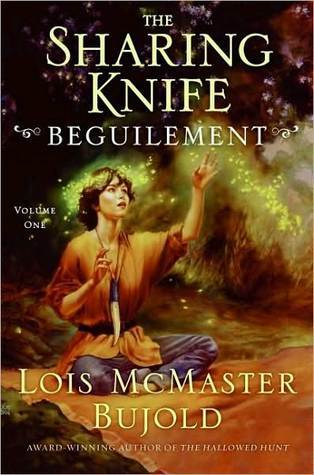
Fawn Bluefield ran away from home, only to be kidnapped by a “malice”, an inhuman magical creature that eats people and causes a blight on anything that lives. Dag is a Lakewalker, a soldier-sorcerer who makes it his life’s work to hunt these malices and keep the land safe. Our two protagonists end up coming together, and their fates become entwined. But those looking for a traditional romance story will not find it here because it just doesn’t read like one. Not that the romance here isn’t fiery and passionate, because it is. But at the same time, it’s also comfortable and domestic. Dag’s light humor, easygoing nature, and the gentle way he treats Fawn really endeared him to me. While it probably has a lot to do with him being much older than Fawn, his respectful demeanor and kind personality still sets him apart from a lot of the heroes you find in romance novels these days. Both Fawn and Dag are straightforward with their feelings, and there’s none of that cliched drama. These two characters know what they want, and that is each other. I can’t tell you how refreshing that is.
 Phedre and Joscelin (Kushiel’s Universe series by Jacqueline Carey)

These two. Oh, these two. From the moment Phedre no Delaunay met Joscelin Verreuil, it was magic. Well, maybe not so much for them, but it was for me. She was an adept of the Night Court, well-versed in the art of passion and love. He was a Cassiline Brother, whose order’s members are loyal bodyguards sworn to protect their charge, and they are also required to swear a vow of chastity. It was epic clash, to say the least, when Joscelin was hired by Delaunay, Phedre’s guardian, to guard his household. Joscelin went along with Phedre whenever she went on assignment, but did little to hide his disdain for her work. And she also found him sanctimonious and insufferable. Still, after the two were forced to face a number of difficult challenges together, their relationship ultimately morphs into something fascinating, developing in beautiful and subtle ways. I love how the two of them are so different, but their personalities also complement each other in ways you wouldn’t expect. As the series evolves, so does their romance, but what has always remained the same is their loyalty and commitment to each other.
 Ciena and Thane (Star Wars: Lost Stars by Claudia Gray)
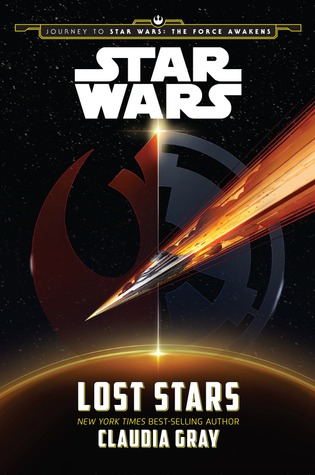
Lost Stars is a young adult novel that tells the tale of two childhood friends who became lovers before ending up on opposite sides of the galactic war. Ciena and Thane grew up on the same planet just after annexation by the Imperials, but one was born in the more rural valley while the other came from an affluent second-waver family. However, the two met and bonded over a shared love for piloting and a dream to one day fly for the Empire. They entered the Imperial academy together, excited to be with each other as they made that dream come true. But as the war waged on, their fates diverged as one grew disillusioned with the Empire and joined the Rebel Alliance, while the other remained in Imperial service and rose through its ranks to become a high-ranking officer. Ciena and Thane are the loves of each other’s lives, but they were raised in very different homes, with very different values. Because of that, there will always be a part in each of them that can and never will be reconciled. My heart ached for the two of them and I wanted so badly for things to work out for them in the end. Move over Anakin and Padme, because this here is actually a Star Wars romance done right.
 Jake and Sadie (11/22/63 by Stephen King)
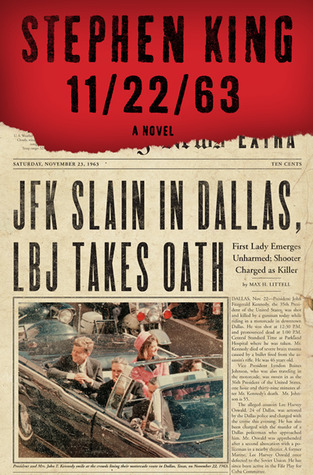
Perhaps the biggest surprise — and the biggest treat — for me was the love story in 11/22/63. You wouldn’t think romance was Stephen King’s forte, but wow, the depth of emotion and feeling he achieved here was very impressive. Not only was I head over heels for Jake and Sadie, their damn love story ended up making me cry, with the final pages of his book causing me to bawl so hard, I could barely finish it due to the blur of tears blinding me. It was truly one of the most beautiful endings I’ve ever read. Some people didn’t like the love story angle, feeling that it distracted from the main plot, but I would have to respectfully disagree. I don’t think this book would have been anywhere near as good without the romance or its underlying themes. Sometimes, you just can’t help who you fall in love with. Jake’s only human, even if he did find his soulmate out of time…
 Laura Elliston and William Kindle (Sawbones/Laura Elliston series by Melissa Lenhardt)
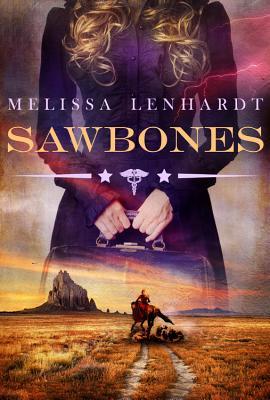
Okay, so this is not actually a science fiction or fantasy novel, but a historical fiction — a post-Civil War western to be exact, filled with equal parts gritty adventure and fiery romance. Still, I had to include Laura and Kindle on my list, because these two make me melt. Their love story is a fantastic one, featuring a forbidden romance that is at once passionate and convincing. From the moment Laura saves the life of Captain William Kindle, they set off an undeniable chemistry. She is a fugitive from New York, wanted for a crime she did not commit, but despite a new name and a new life on the frontier, she could not escape her past. Fortunately, she has Kindle, who ends up doing all he can to help her evade capture, even at the cost of his own future. I enjoyed their sweet interactions and the well-written dialogue between them, making it easy to get on board with their relationship. I’m glad that as the romantic interest in this novel, Kindle ended up being someone worthy of our protagonist’s devotion and respect.
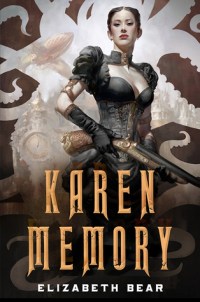 Karen and Priya (Karen Memory by Elizabeth Bear)

Karen Memory is one of my favorite novels. It takes place in the late 19th century in the fictional Pacific Northwest settlement of Rapid City. It is the height of another gold rush and our protagonist, the titular Karen, is a prostitute working for Madame Damnable at one of the city’s more upscale establishments. Working girls like her know that the best way to survive is to stick together and look after one another, but not everyone is so fortunate to have an employer or friends to watch their back. The calm is shattered one night, when two young women arrive at Madame Damnable’s, seeking help and protection. This is how Karen first meets and falls in love with Priya, who had managed to escape the horrific conditions of a rival brothel, but not without angering its mean and nasty proprietor, who vows to make Madame Damnable and her girls’ lives a living hell. This is a book about a lot of things – solving a mystery, hunting a merciless killer, saving the city from evil, and all the spectacular drama that comes along with such activities. But at its heart, the book is also about growing up, forging friendships, and chasing one’s dreams. When Karen meets Priya, she learns what it is she really wants out of her life, revealing a softer, more introspective side to the story behind all the rollicking adventure.
 Jenks and Lovey (The Long Way to a Small Angry Planet by Becky Chambers)

This is actually very difficult relationship to write about. Why? Well…it’s because it’s complicated. First, there’s Jenks, who is the engineer aboard the star ship Wayfarer. And Lovey, on the other hand, is actually an AI. Although she is completely sentient, she has no real body of her own, being a program on the ship’s computer. Originally installed as an off-the-shelf program called Lovelace, she eventually developed her own personality based on her experiences and interactions with her crew, which included a blossoming romance with Jenks. It might seem weird, but over time their deep feelings for each other developed to a point where Lovey began to seriously contemplate getting her program transferred into a body kit so that she could be with Jenks physically, even though the process of doing so would be highly illegal. As you can imagine, it’s a messy situation, and that’s all I’m going to say because no spoilers from me.
 Shallan and Adolin (Stormlight Archives series by Brandon Sanderson)
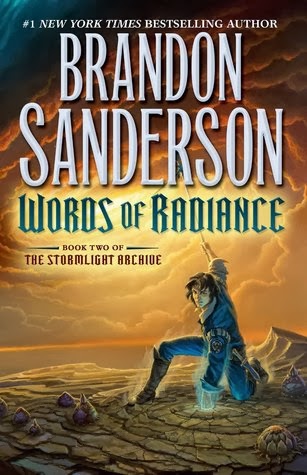
Look, Kaladin fans, I love that storming bridgeboy too, but let’s face it. There is just no room for a love triangle here. Shallan and Adolin are just too damn cute. Their romance subplot continues to fill my girlish heart with glee, because I just can’t get over how wonderful and dynamic their interactions are whenever they’re together on the page. She’s quirky and unpredictable, while he’s good-humored and grounded. The two of them are perfect for each other, providing each other with a balancing force. Adolin often gives the strength Shallan needs to stabilize herself, whenever she feels herself unraveling, while she opens him up and fills his life with adventure and new experiences, making him see things in a whole different light. It’s been a rather tame and low-key courtship so far, but there’s absolutely no denying the storm of chemistry between this couple.
Book Review: Pride and Prometheus by John Kessel
Posted on February 12, 2018 15 Comments
I received a review copy from the publisher. This does not affect the contents of my review and all opinions are my own.
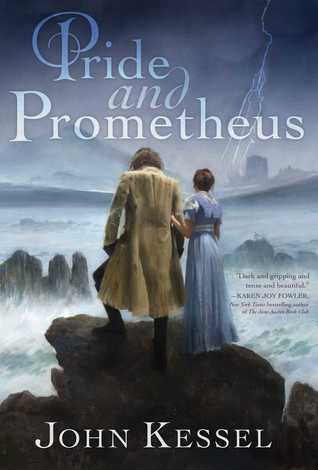 Pride and Prometheus by John Kessel
Mogsy’s Rating: 4.5 of 5 stars
Genre: Fantasy
Series: Stand Alone
Publisher: Saga Press (February 13, 2018)
Length: 384 pages
Author Information: Website
Admittedly, I’m not so big a fan of Jane Austen or Austen-inspired fiction that I would normally pick up any book with a title that begins with “Pride and…”, but there was just something irresistible about John Kessel’s novel that called to me. Of course, the added element of Mary Shelley’s Frankenstein didn’t hurt. Still, although it may draw inspiration from one of two of the most beloved novels of classic literature, it would be a disservice to simply label Pride and Prometheus as just your average literary mashup. Not only has the author succeeded in capturing the tone, spirit, and style of these two works, he’s managed to create a perfect fusion of its deeper themes as well.
Expanding upon Kessel’s 2008 Nebula Award winning novelette of the same name, the story begins with the chance meeting between an English high society woman and a young scientist from Switzerland. Mary Bennet, one of the sisters of Elizabeth Bennet of Pride and Prejudice, is persuaded to attend a ball by her mother, who is desperate to find marriage prospects for her two remaining unwed daughters. It is there that Mary first encounters the quiet and pensive Victor Frankenstein, who is in town with his friend Henry Clerval. Drawn to his intelligence and his shared love of the sciences and natural philosophy, Mary immediately strikes up a rapport with Frankenstein, but is disappointed when the scientist ends up standing her up for a dance, having slipped out of the party earlier without letting anyone know.
The reason for Victor Frankenstein’s reticence and hasty departure is soon made apparent with the introduction of the Creature, a monster whom the scientist had brought to life and then cast out, appalled by what he had done. But now the Creature stalks him, driven by Victor’s promise that he would fashion a bride for him. He has followed his maker to England, growing impatient. Victor knows that until he has delivered on his promise, any new relationship would be impossible because no one around him would be safe.
The first thing that jumped out at me was the writing. Kessel’s writing is absolutely gorgeous, emulating the style and manner of the original novels that inspired this tale, both of which were written in the early 19th century. As such, the language might take some getting used to, but gradually the story will ease you into the rhythm of the alternating viewpoints between Mary Bennet, Victor Frankenstein, and the Creature (who has dubbed himself Adam). I was also surprised to find that not only were the elements from both Regency Romance and Gothic Horror represented equally, they were blended perfectly. Granted, I was initially skeptical of the novel’s premise and the ambitious idea of throwing these two disparate genres together, but John Kessel managed to knock it out of the park.
As for the story and characters, my feelings are a lot more complicated—but in the good way. For the most part, Kessel stays true to the personalities of Mary, Victor, and Adam, expanding upon them in a way that feels different without abandoning the essence of what makes them who they are. His version of Mary is especially sympathetic. As the middle Bennet sister, she is plain and bookish, much like Austen’s version. However, in Pride and Prometheus, she is a much deeper and contemplative character, and her love of the natural sciences (manifested as an interest in fossils) is genuine. Beneath her social awkwardness is also a caring and spiritual heart, even if she is sometimes driven by self-interest. Just as complex are the characters of Victor Frankenstein and his Creature, but because their tale closely mirrors that of Shelley’s original, I didn’t find them nearly as fascinating. Still, close to the end was a scene that filled me with so much anger and then with so much sorrow that I was almost driven to tears. All I’ll say about it is that, beyond the three main characters, there are a few others who I’ll never look at quite the same way again after reading this novel.
All in all, I adored everything about Pride and Prometheus, from the utterly engrossing struggles of its characters to the emotional themes about obsession and attachment. The book is also artfully written, and I think Pride and Prejudice and Frankenstein fans will be impressed with how well Kessel has captured the original novels’ forms and styles, even if it might make it more challenging for some readers to get into the writing. If you’re familiar with both classics, there will still be plenty of surprises, many of which I loved but couldn’t elaborate on in this review because I badly want prospective readers to discover these plot developments for themselves. This book endeared itself to me and then broke my heart, but all I could think about after finishing this was how I wanted more. Truly a treasure of a novel.

YA Weekend: The Hazel Wood by Melissa Albert
Posted on February 11, 2018 30 Comments
I received a review copy from the publisher. This does not affect the contents of my review and all opinions are my own.
 The Hazel Wood by Melissa Albert
Mogsy’s Rating: 4 of 5 stars
Genre: Fantasy, Young Adult
Series: Book 1 of The Hazel Wood
Publisher: Flatiron Books (January 30, 2018)
Length: 368 pages
Author Information: Website | Twitter
Seventeen-year-old protagonist Alice Proserpine has never stayed in one place for long. Most of her childhood memories involve being on the road, staying with one family friend or another until her mother Ella decided that they had to move on. Ella never spoke of why they had to live this way, but Alice always felt the sense that her mother was trying to run away from something. But run away from what? Alice has no idea, though she can guess from Ella’s tight-lippedness about her past that it might have something to do with the Hazel Wood, a magnificent home nestled somewhere in the woods of upstate New York. The estate belonged to Alice’s grandmother Althea Proserpine, an author who achieved cult celebrity with her book of fairy tales titled “Tales from the Hinterland”. It was probably no coincidence that no sooner had they received news of Althea’s death, Ella finally decided that they could settle down in the city and start a normal life. She even marries Harold, a wealthy businessman, so that Alice has to start going to school at an exclusive academy for rich kids, where she feels like a fish out of water.
The only person closest to a friend is Ellery Finch, a somewhat geeky and awkward boy whose father is one of the richest people in New York City. Finch also happens to be an Althea Proserpine superfan, and has been fascinated with Alice ever since he found out that the author was her grandmother. Alice, however, is nettled to have to admit that she knows next to nothing about Althea, nor has she even ever read “Tales from the Hinterland”, for Ella had always forbidden her to seek out her grandmother or her work. Still, Alice had tried, and none of her efforts had ever borne fruit. Althea’s book has become very rare and hard to find, and it appears only a small circle of mega-enthusiasts know all the stories. Then one day, Alice comes home from school to find that her mother has been stolen away, and the only clue she left behind was a message: “Stay away from the Hazel Wood.” Getting a sick feeling that this has everything to do with her grandmother and her fairy tales, Alice turns to Finch, the only person she can think of who might be able to help her rescue Ella.
If my usual blurb seems a bit more detailed than normal, it’s because The Hazel Wood is a novel filled with so much breathtaking allusion and tantalizing prose that it’s almost overwhelming to consider the amount of setup packed into the first few chapters. Although the fantasy aspect doesn’t come into play for quite a while, even from the start I could feel the aura of mystery and magic wrapped around everything despite the ordinary urban setting.
I was also pulled into the story right away, captivated by the power of Alice’s personality and voice. Granted, she’s not always the most pleasant person to be around, being prone to some truly disconcerting moments of anger as well as snide remarks. But given her itinerant upbringing and the darkness that is later revealed in her life, it makes perfect sense. She also has a dry sense of humor that I found strangely endearing, as well as those rare moments where we got to catch a glimpse of her true self through the cracks in her armor. Belying Alice’s fierce independence is in fact a frightened young girl whose nightmare scenario has just come to pass. Her mother has always been a constant presence in her life, and now she is gone. It is little wonder then that Alice ends up latching onto Finch, who became my favorite character the moment he came into the picture. I’ve always had this soft spot for the geeky type of guys in YA who might not be conventionally attractive but are nonetheless charming and cute in their own way.
As time goes on, the book starts going through a transformation, becoming darker and stranger until at the end, readers are faced full on with the magical fairy tale-like elements of the story. Ironically, I actually found myself less enamored of The Hazel Wood at this point, because the plot loses a lot of its uniqueness and instead plunges into territory that has been covered before in a plethora of other YA novels and re-imaginings with fairy tale themes or settings. Without doing into spoilers, I also did not like how the book ended. One could say this was a fitting way to wrap things up given the overall tone of the story, and, if I’m being completely honest, on some level I can even understand why the author decided to do it this way. Still, I was left pretty feeling pretty cheated and unsatisfied. It seemed a shame that we started things roaring but ended them on a whimper.
However, I am encouraged by the fact that a follow-up is already in the works. Rarely have I been this happy to find out that a book I’ve just finished is going to be part of a series. While I think The Hazel Wood will work perfectly fine as a standalone, if ever a book needed a sequel, it’s this one. Hopefully, the next chapter of Alice’s journey will reveal more answers and dispel the unsettled feelings I got from the ending. Above all, I’m also looking forward to reading more of Melissa Albert’s gorgeous writing. The Hazel Wood may have a few flaws, but overall it is an impressive debut.
Mogsy’s Bookshelf Roundup: Stacking the Shelves & Recent Reads
Posted on February 10, 2018 36 Comments
Bookshelf Roundup is a feature I do every other weekend which fills the role of several blog memes, like Stacking the Shelves where I talk about the new books I’ve added to my library or received for review, as well as It’s Monday! What Are You Reading? where I round up what I’ve read since the last update and what I’m planning to read soon. Mostly it also serves as a recap post, so sometimes I’ll throw in stuff like reading challenge progress reports, book lists, and other random bookish thoughts or announcements.

Received for Review
Thank you to the publishers and authors for the following review copies received. For more details and full descriptions of the books, be sure to click the links to their Goodreads pages!

A big thanks to Orbit for this finished copy of A Time of Dread by John Gwynne! I missed out on his first series, so I’m excited to be able to start this one. Also thanks to Harper Voyager for sending me an ARC of King of Ashes by Raymond E. Feist. I can’t believe I still haven’t read anything by Feist, and with this I hope to change that. With thanks to Tor I also received a finished copy of Echoes of Understorey by Thoraiya Dyer. Admittedly, I wasn’t a fan of the first book so I don’t know if I’ll be reading this, but if I have time I might try to fit it in to see if the series will grow on me.

Next up are a couple of new arrivals courtesy of DAW Books, including this ARC of A Veil of Spears by Bradley P. Beaulieu. It is the third book of the Song of the Shattered Sands series which I’m actually currently behind on, but I adored the first book and do plan on catching up ASAP so I can read this. The publisher also sent Outpost by W. Michael Gear which is a science fiction adventure novel that has been on my radar for a while now, and I’m looking forward to checking it out. From the kind folks at Viking I also received a copy of Winter Sisters by Robin Oliveira which is a historical suspense drama about two little girls who go missing in New York during a blizzard in 1879. I’m definitely intrigued!

Late last month I also received this unexpected copy of The Philosopher’s Flight by Tom Miller with thanks to the publicity team at Simon & Schuster. The book blurb describes it as an “epic historical fantasy set in a World-War-I-era America where magic and science have blended into a single extraordinary art” and the story description that follows sounds utterly fascinating! I’m sure no summary I could write would do it justice, so I urge you to go look for yourself! The publisher next sent an ARC of a book I’ve never heard of before, called The Completionist by Siobhan Adcock. Turns out, it’s a science fiction dystopian, with the book blurb describing it as in the spirit of Station Eleven and The Handmaid’s Tale. Sounds like it’s worth taking a look! And rounding up this batch of physical books is a surprise copy of Sister of Darkness by R.H. Stavis, written by a secular exorcist who shares her experience in this memoir. These days my reading schedule leaves little room for nonfiction, but given the subject matter of this one, I’m quite intrigued. With thanks to Dey Street Books.

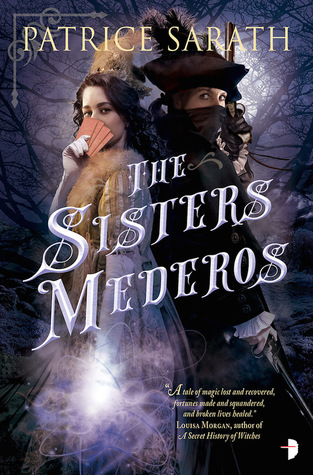
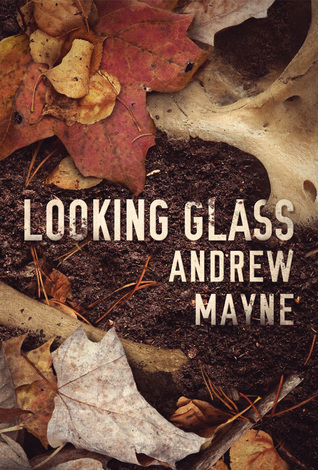


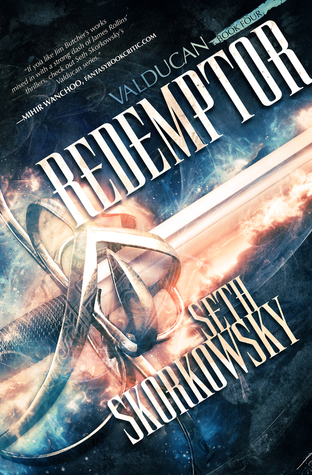
Well, this is embarrassing. A confluence of factors and coincidences such as multiple widget invites, author solicitations, and pending requests being accepted all at once has led to a huge digital haul this week. Kicking us off are a couple of exciting eARCs from Harper YA, Contagion by Erin Bowman and These Rebel Waves by Sarah Raasch. Last week, I also received an Edelweiss invitation for The World Awakening by Dan Koboldt and I’d like to thank the author for hooking me up with an eARC! Soon after that, Harper Voyager sent another another invitation, this time for The Poppy War by R.F. Kuang. I’m so excited for this one! I’m a big fan of military fantasy inspired by history, and this one has already been compared to The Grace of Kings by Ken Liu, which is one of my favorite books ever.
I also celebrated reaching 90% of books reviewed on NetGalley by – what else? – requesting more books! The Sisters Mederos by Patrice Sarath is a historical fantasy of manners about two sisters who are determined to get revenge on the Merchants Guild for ruining their family. I haven’t been this excited for an Angry Robot book in a while! And of course, I just had to jump on Looking Glass by Andrew Mayne the moment I saw it on offer; after all, how could I pass it up after the amazing time I had with the first book The Naturalist? I also couldn’t help myself and grabbed Furyborn by Claire Legrand from one of those limited “Read Now” emails that I got earlier in the week, with thanks to Sourcebooks Fire. And speaking of not being able to resist, I also downloaded a couple of exciting sequels from Del Rey, proving once again how dangerous it is to be auto approved by one of my favorite publishers. The Memory of Fire by Callie Bates is the sequel to The Waking Land and Only Human by Sylvain Neuvel is the highly anticipated third installment of the Themis Files series.
The awesome folks at Tor.com were also kind enough to fill my inbox with a couple more e-galleys this week, first with Taste of Wrath by Matt Wallace which is the seventh book of the Sin du Jour series, and then with The Atrocities by Jeremy C. Shipp, a haunting ghost story that sounds right up my alley. And finally, last but not least we have Redemptor by Seth Skorkowsky, the fourth book of the excellent Valducan series. Huge thanks to Seth for hooking me up with an audio copy!
Reviews
A quick listing of my review posts since the last update:
This Fallen Prey by Kelley Armstrong (4 of 5 stars)
Tempests and Slaughter by Tamora Pierce (4 of 5 stars)
Sightwitch of Susan Dennard (4 of 5 stars)
Apart in the Dark by Ania Ahlborn (4 of 5 stars)
The Language of Thorns by Leigh Bardugo (4 of 5 stars)
The Gone World by Thomas Sweterlitsch (3.5 of 5 stars)
Iron Gold by Pierce Brown (3.5 of 5 stars)
The Midnight Front by David Mack (3 of 5 stars)
What I’ve Read Since the Last Update
Here’s what I’ve “unstacked” from the TBR since my last roundup post. Most have been reviewed already, and the rest will be coming soon.


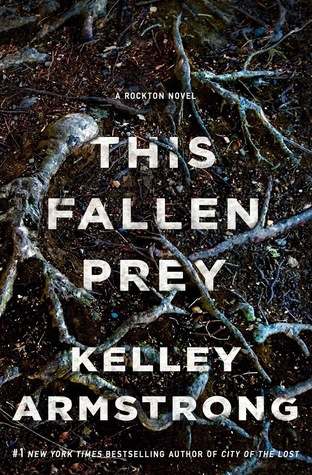


Have you heard of or read any of the books featured this week? What caught your eye? Any new discoveries? I hope you found something interesting for a future read! Let me know what you plan on checking out. Until next time, see you next Roundup!
Friday Face-Off: Cloaked Figure
Posted on February 9, 2018 27 Comments
Welcome to The Friday Face-Off, a weekly meme created by Books by Proxy! Each Friday, we will pit cover against cover while also taking the opportunity to showcase gorgeous artwork and feature some of our favorite book covers. If you want to join the fun, simply choose a book each Friday that fits that week’s predetermined theme, post and compare two or more different covers available for that book, then name your favorite. A list of future weeks’ themes are available at Lynn’s Book Blog.
This week’s theme is:
“My what big teeth you have”
~ a cover featuring a CLOAKED FIGURE
Mogsy’s Pick:
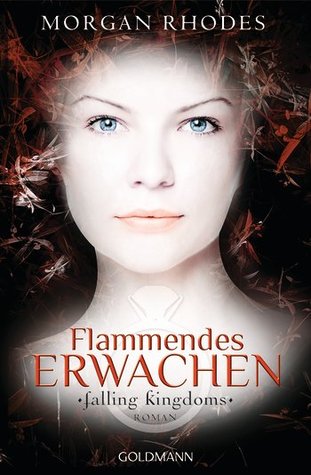
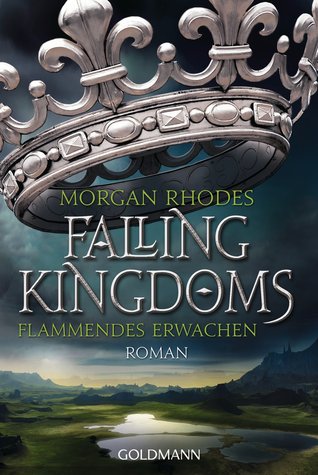
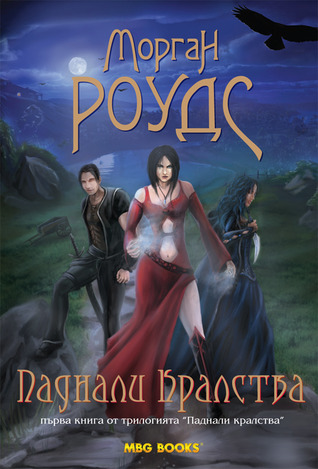
Falling Kingdoms by Morgan Rhodes
There’s certainly no shortage of covers featuring cloaked or hooded figures in the fantasy genre. This week, I decided to go with the first book of Falling Kingdoms, a Young Adult series that has been compared to Game of Thrones. Admittedly, I was a bit skeptical at first; after all, when I think epic fantasy I picture vast sweeping sagas in big fat tomes, so you can imagine my surprise when it turned out I actually quite enjoyed this. Despite being such a slim volume, it contained an extensive and far-reaching scope. The story is set on a continent where the rulers of three separate kingdoms are locked in a bitter struggle for power, thus creating a hotbed for conspiracy, scandal, and intrigue.
Let’s take a look at the covers:
From left to right, top to bottom: Razorbill (2012) – German Edition A (2013) – German Edition B (2015) – Bulgarian Edition (2012)

Winner:
I confess, I already had a winner in mind when I selected this novel to feature this week. Hands down, the Razorbill cover is my favorite. It was the image that first compelled me to find out more about the series and which ultimately led me to pick it up.
What do you think? Which cover is your favorite?
Book Review: The Midnight Front by David Mack
Posted on February 8, 2018 19 Comments
I received a review copy from the publisher. This does not affect the contents of my review and all opinions are my own.
The Midnight Front by David Mack
Mogsy’s Rating: 3 of 5 stars
Genre: Fantasy, Historical Fiction
Series: Book 1 of Dark Arts
Publisher: Tor (January 30, 2018)
Length: 464 pages
Author Information: Website | Twitter
The year is 1939, and aboard a ship bound for North America on the eve of World War Two, a young Oxford student named Cade Martin watches in horror as a sea monster drags his parents to their watery grave right before his eyes. Alone and stranded at sea, Cade is eventually rescued by a mysterious cabal of sorcerers led by a charming old Scotsman named Adair MacRae. With the Soviets on the Eastern Front and England on the Western Front, Adair claims that he and his associates represent a lesser known third theater of war clandestinely referred to as the Midnight Front. He further explains that the Nazis have their own dark magicians working on behalf of Hitler, and that they were the ones behind the monster attack that killed Cade’s family. As the Allies’ secret weapon, the Midnight Front is dedicated to waging the magical war from behind the scenes, and now they are looking to recruit Cade to their ranks.
Swearing vengeance upon those responsible for his parents’ deaths, Cade readily accepts the offer and immediately begins his training with Adair and his three adepts Stefan, Anja, and Niko. Thanks to his magical heritage, Cade masters years of skill and knowledge in just a few months, and before long, he and the other members of the Midnight Front are getting ready to depart on their individual assignments for the war effort. While the focus of the book remains on Cade as the central character, the story also allows us a good look through the eyes of the other members of the group as they travel through different parts of Europe bringing back their personal experiences and perspectives.
Without a doubt, the novel’s greatest strength is the world-building. David Mack has created a very robust system of magic that involves the summoning and harnessing of demons. Called karcists, sorcerers who deal in this type of magic can hold up to eleven demon servants at a time, giving them the power to fuel their abilities. However, this can be very taxing on the karcist, and even those who are well-versed in the art can succumb to the chaos of their demons, developing self-destructive habits like unconsciously scratching their skin to shreds or tearing out their own hair. At the age of 357, Adair MacRae is one of the oldest and most experienced karcists, but his arch nemesis Kein Engel who is working for the Germans has proven to be just as dangerous and cunning. Occasionally, the story’s perspective even shifts to the villains’ side so that we can get a glimpse of what’s going on behind enemy lines.
Speaking of which, Mack pulls no punches when it comes to depicting the horrors of war, the fantasy elements of his novel notwithstanding. Readers familiar with the history of WW2 may recognize a lot of the places and events mentioned in this book, as well as the tragedies and atrocities associated with them. The story takes you into the thick of things, and doesn’t hold back when it comes to the darkness and violence.
And yet, even with the phenomenal world-building and historical aspect, something held me back from enjoying this book fully. If I had to hazard a guess, it would be the plot, which I thought was weakened by a few overused tropes. The “Chosen One” cliché was especially heavy-handed and impossible to ignore given the way our protagonist breezed through that obligatory training montage (because don’t you know he’s “special”?) as well as the constant reminders that “Without Cade, the war is lost!” In truth, I found Cade to be a lot less interesting than some of his fellow sorcerers, and frequently caught myself wishing the narrative had instead focused more on Anja, whose background, story line, and personality were all more compelling. For pulp-ish entertainment, I suppose this novel would do just fine, but I can’t say the story really resonated with me, and I have my doubts that I’ll remember any of the plot details six months from now.
That said, don’t let anything keep you from reading The Midnight Front if the premise strikes your fancy; there’s a lot here to like for fans of alternate history, especially if the idea of a secret magical war being fought alongside the real Second World War interests you. Sure, it’s nothing too deep, but at the end of the day this was a novel I had fun reading.



 The BiblioSanctum