Top Ten Tuesday: Horror, Fantasy, and Science Fiction Books Featuring Killer Plants & Fungi
Posted on April 17, 2018 41 Comments

Top Ten Tuesday was created by The Broke and the Bookish, a weekly meme that now resides at That Artsy Reader Girl. The meme first came about because of a love of lists. Who doesn’t love lists? The original creators also wanted their lists to be shared with fellow book lovers and to ask that we in turn share ours with them and connect with other book bloggers. To learn more about participating, stop by their page dedicated to it and dive in!
This week’s topic: Freebie!
Mogsy’s Picks
Spring finally feels like it’s here, so in honor of the beautiful plants and flowers that are blooming all around us, I’ve decided to celebrate by using this freebie week to showcase a list of books featuring my favorite and most interesting (or scariest) deadly botanicals. Hopefully everyone’s enjoying the warmer weather and having fun spending more time outdoors. Try not to worry about that innocent little shrub growing in the corner, it’s not going to sneak up on you or anything.
 Day of the Triffids by John Wyndham

Probably the most well known sci-fi novel about killer plants, this classic features the Triffids, a tall and mobile poisonous plant species whose origins are never fully revealed, but speculation has ranged from bioengineering to extraterrestrials. Whatever the case, I think everyone can agree they’re nasty creatures. Towering at over seven feet tall, they move by propelling themselves on three blunt leg-like appendages, using their venom-filled stinger to attack and subdue its prey. Their poison kills on contact, after which the Triffid can root itself on the corpse to feed at its leisure, drawing nutrients as from the body as it decomposes. Yuck.
 Harry Potter series by J.K. Rowling
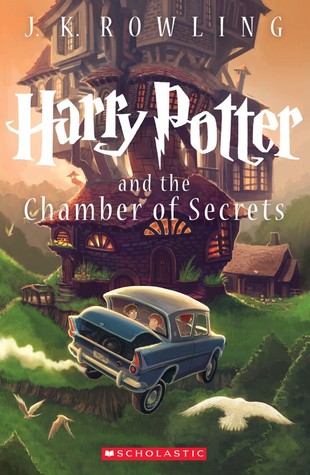
Fans of fantastical plants and fungi will find a treasure trove of them in the Harry Potter series, from the Mandrake, a plant with a root that looks disturbingly like a human and whose cry can be fatal to anyone who hears it, to the Whomping Willing, a violent tree that will attempt to pummel anyone or anything that comes near its branches. Other plants with dangerous or unpleasant effects include the Mimbulus mimbletonia, a cactus-like plant with boils instead of spines that when burst will spray stinking goo all over anyone unfortunate enough to be nearby; the Snargaluff, a carnivous plant which will disguise itself as a dead tree stump in order to lure out its unsuspecting prey; as well as the Devil’s Snare, a constricting vine that will strangle anyone caught among its tendrils and will only squeeze tighter the more its victim tries to struggle.
 The Girl with All the Gifts by M.R. Carey
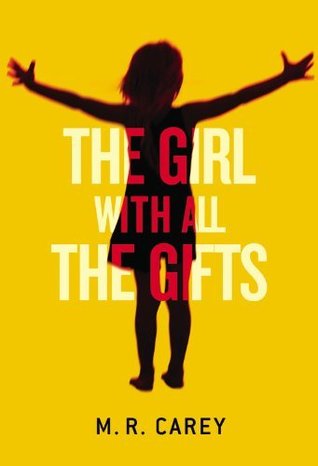
The Girl with All the Gifts is a zombie book, featuring a world that has been infected by a variant of the Ophiocordyceps unilateralis fungus. Originally known to parasitize only insects, somehow a strain of this fungus has evolved to attack humans, making those it infects lose their mental powers and develop a taste for human flesh. The disease spreads through bodily fluids including saliva and blood, hence a person can be infected by a single bite. Over time, the fungus will also take over the host from within and sprout a fruiting body which will release its spores into the atmosphere, spreading the infection to more healthy humans thus creating more “hungries”.
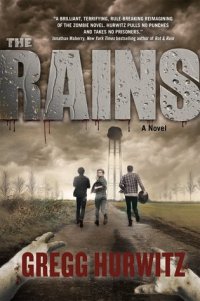 The Rains by Gregg Hurwitz

Another book that plays on the Ophiocordyceps unilateralis idea, The Rains begins with an introduction to the quiet and rural community of Creek’s Cause, where the peace is shattered one evening by a meteor strike. Not long afterwards, our fifteen-year-old protagonist Chance and his older brother are awakened in the middle of the night by a commotion at their neighbors’ house, leading the two of them to sneak out and investigate. They arrive just in time to stop an attack on some kids by their stepmother, who appears to have been transformed into mindless raving husk by a mysterious and unknown parasite. After saving the children, Chance finds his neighbor on top of a water tower where millions of alien spores look to have exploded from out of his bloated corpse. Funny thing about the Cordyceps fungus in this book though, is that they only infect adults, sparing the young. But as soon as you turn 18, watch out! Yeah, that doesn’t make a lot of sense to me either, but since when do killer fungi follow the rules of logic?
 Semiosis by Sue Burke

Semiosis is a multi-generational story that takes place over the course of many years, following a group of human colonists who have traveled light years from Earth to settle on a planet they dubbed Pax. However, they were wholly unprepared for the alien environment that awaited them, nor did they anticipate Pax’s bizarre plant life and the surprising ways it interacted with the surroundings. Many of the original settlers died within a matter of weeks, some because they ate fruits that they previously thought were safe. But through hard work and perseverance, the colony managed to survive, giving rise to the next generation. Still, certain sentient plants on Pax continued to behave in dangerous and unpredictable ways, manipulating the animal life around them to challenge the humans.
 Uprooted by Naomi Novik
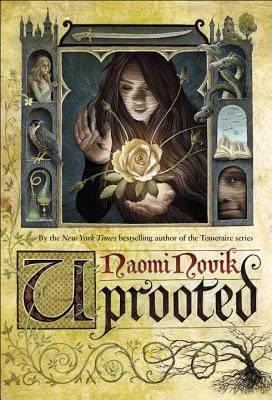
The protagonist of Uprooted is Agnieszka, just another simple girl from yet another simple village, but the bucolic setting belies something more sinister lurking beneath the surface. Surrounding Agnieszka’s valley home is the ever encroaching Wood, a forest filled with dark energies and spirits, whose corrupting force has trapped and stolen the lives and minds of many. Author Naomi Novik uses vivid imagery and “traditional” magic (the kind you would find in classic fairy tales) to create the idea of the spiteful and malignant living forest, so that the entire Wood itself becomes a formidable and terrifying villain.
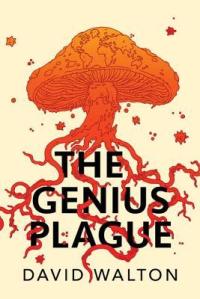 The Genius Plague by David Walton

This is another book about a fungal plague, but unlike the examples above, it has a twist. Let’s face it; in most stories, being infected by a fungus is usually bad—like you can be turned into a mindless zombie, for example. Yet in this case, the fungus actually makes you smarter, though things don’t turn out so well for the humans in the end either. While conducting research deep in the Amazon rainforest, our protagonist Paul Johns picks up a lung infection from breathing in the spores of an unknown species of fungus. Back in the United States, he is treated for his pneumonia and recovers, though afterwards, it appears that the fungus had altered his brain functioning as well, improving memory centers and enhancing pattern recognition and communication skills. Excited about what this could mean for the human race, Paul believes that a symbiotic relationship with the fungus is the next step in human evolution, but his brother Neil, a little more circumspect, is not entirely convinced that joining with an unknown organism would be in humanity’s best interest.
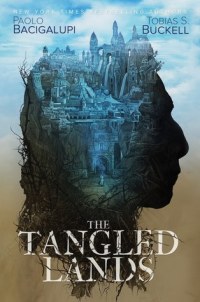 The Tangled Lands by Paolo Bacigalupi and Tobias S. Buckell
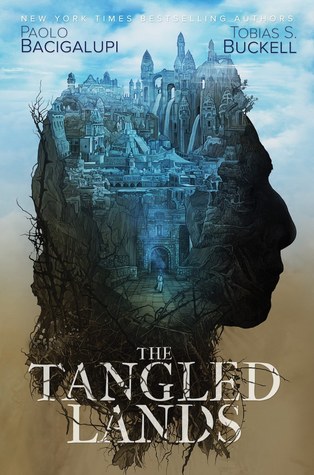
This collection of four novellas take place in a shared world taken over by a fast-growing kind of bramble that feeds on magic. It also poisons the soil so that nothing can grow without making people very sick. As a result, the once great city of Khaim has turned into a crumbling ruin, and any kind of magic has been outlawed to prevent the bramble from encroaching any further. The stories here all feature characters who have been affected by the bramble in some way, like the alchemist whose daughter has a fatal lung disease from being infected with the bramble’s seeds, or the young man whose sister has succumbed to “bramble sleep”, a type of coma caused by the deadly plant.
 The Mirror Empire by Kameron Hurley
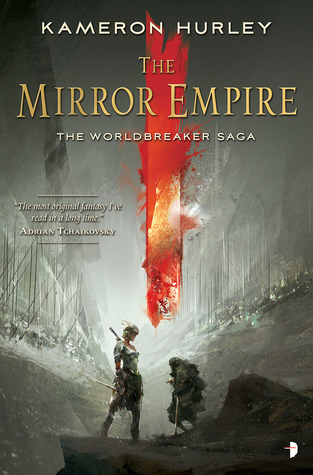
I wasn’t a big fan of this book and can’t say I remember much from it, though I have to admit the world-building was pretty cool. We have everything from magic linked to satellites to female warriors who ride bears and dogs, but the thing that has stuck with me the most are the murderous trees. If you ever find yourself in the world of The Mirror Empire, best watch your step because you never know when you might run afoul of the semi-sentient trees and another carnivorous plants that won’t hesitate to gobble you right up.
 The Ruins by Scott B. Smith
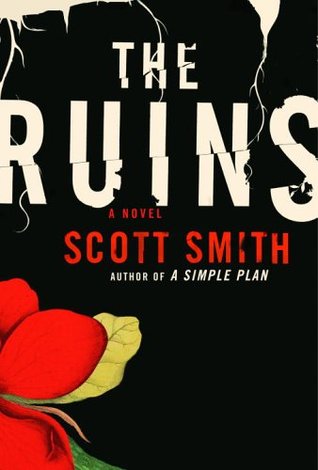
I might be fudging it a bit here, since I can’t recall if I really read this book or what I’m remembering is from the film adaptation (both came out a while ago). The story follows a group friends vacationing in Mexico, and they become trapped in the jungle after one of their group goes missing and the others decide to go look for him. Our hapless characters then come upon some ancient ruins, covered in what appears to be a bunch of your run-of-the-mill jungle vines – except they’re very wrong about that. In fact, these vines are deadly and feed on human flesh. Worse, if one of their tendrils come in contact with an open wound, they can infect their victim and germinate their spores from within the host’s body. I’m shuddering just thinking about it.
Book Review: Grey Sister by Mark Lawrence
Posted on April 16, 2018 27 Comments
I received a review copy from the publisher. This does not affect the contents of my review and all opinions are my own.
Mogsy’s Rating: 4 of 5 stars
Genre: Fantasy
Series: Book 2 of Book of the Ancestor
Publisher: Ace (April 3, 2018)
Length: 432 pages
Author Information: Website | Twitter
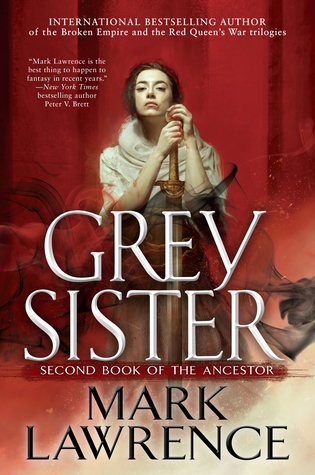
The saga of Nona Grey continues in the second novel of the Book of the Ancestor series, Grey Sister. A couple of years have passed since the end of the first novel, and our protagonist finds herself advancing through the ranks at the Convent of Sweet Mercy, which has been her home since she was eight years old after being rescued from the hangman’s noose by Abbess Glass. It’s now time for Nona to choose a path—but so much has changed since her arrival at the convent, it is quite unclear where the future will take her anymore. Her talents make her perfect for the next stage of her studies, Mystic Class, in which she and her fellow classmates will learn to unlock the secrets of the universe. Nona, however, has made as many enemies as friends over the years at Sweet Mercy—powerful ones who will not be content until she is completely destroyed. She has already been targeted for death several times, and worse, she has also earned the ire of Joeli Namsis, whose family has close ties with the nobleman who seeks revenge on Nona for what she did to his son.
And as if that weren’t enough, the Convent of Sweet Mercy also finds itself targeted by the Inquisition, who arrives on Abbess Glass’s doorstep claiming to be on the hunt for heretics. Their presence is an invasion, their watchful gazes permeating every nook and cranny of the convent. The situation quickly devolves, until it is no longer safe for Nona to remain at Sweet Mercy. Meanwhile, Abbess Glass is also facing her own problems as the Inquisition’s attention turns her way, hauling her off for imprisonment and further interrogation.
In many ways, Grey Sister feels like a “bridge” book, and I mean that in the best sense of the term. Many changes and story developments are brought about in this installment, while the story also expands upon our knowledge of Abeth. Not only have our characters matured, the world-building has also become to feel a lot more robust and fleshed out—which is really saying something, since this aspect was already top-notch in book one. I continue to be fascinated by the supernatural aspects of this world of shiphearts, demons, and magic. Mark Lawrence’s books always feature incredible settings, characterized by a wondrous mishmash of elements from many different genres.
Then, there are the characters. In Abeth, there exists four main “tribes” of people, each distinguished by special powers that their bloodlines possess. As someone who has proven to be a “triple-blood”—having Hunska, Marja, and Quantal skills—our protagonist Nona Grey is an extremely rare case, and I really appreciated how Grey Sister gave readers a chance to explore her past and background during her forced exile from Sweet Mercy. We are shown just how much her character has evolved, with each victory and tragedy having etched their mark upon her soul. Some of her teachers think she needs to learn humility, but in truth, Nona is her own worst critic. There are a number of emotional and heartbreaking moments in this book, as we gain more insight into Nona’s thoughts. She’ll go to the ends of the earth to seek vengeance against those who have harmed her or her friends, but she’ll also never forgive herself for her own failures.
I also liked how Grey Sister included several new POVs. Here, I just want to say how much I loved, loved, loved Abbess Glass. I already had a soft spot for her character in Red Sister, but this sequel quickly rocketed her up to my all-time favorites. Glass is hard, principled, and wise, but neither does she fall into the archetype of the strict and stuffy old matron. In my head, I picture this badass old lady, and everything I read here only confirmed my image of her. Her chapters were wonderful to read, and every time they gave about, I gave a little inward cheer. As well, I welcomed the return of amazing characters like Zole and Ara, and of course Sister Kettle, who also gets her chance to really shine in this sequel. Things are made more interesting too with the addition of Keot, who is a bit of a strange entity, but since his role in this tale is probably best experienced firsthand rather than explained, I’ll just leave it at that.
And finally, like any good sequel, Grey Sister carries the story forward. While there were a few lows to go with the highs, the plot was fast-paced for the most part, grabbing my attention from the get-go and not releasing it until it was over. Also, Nona and her friends may be older in this volume, yet the story still retains some of those “Young Adult vibes” I first felt in Red Sister, which probably helped make this one feel like a lighter, faster read than a lot of Lawrence’s other books. This means that if you’ve never read the author but would like to give his work a try, Book of the Ancestor might make for the perfect jumping on point. It’s very different from his Broken Empire and Red Queen’s War trilogies, but as some of those books can be quite heavy and dark, some readers might see that as a good thing.
Bottom line, I think it’s safe to say if you enjoyed Red Sister then you will enjoy Grey Sister as well. Mark Lawrence has written another brilliant novel, as rich and complex as ever.


More on The BiblioSanctum:
Review of Red Sister (Book 1)
Book Review: Impostor Syndrome by Mishell Baker
Posted on April 15, 2018 11 Comments
I received a review copy from the publisher. This does not affect the contents of my review and all opinions are my own.
 Impostor Syndrome by Mishell Baker
Mogsy’s Rating: 3.5 of 5 stars
Genre: Urban Fantasy
Series: Book 3 of The Arcadia Project
Publisher: Saga Press (March 13, 2018)
Length: 480 pages
Author Information: Website | Twitter
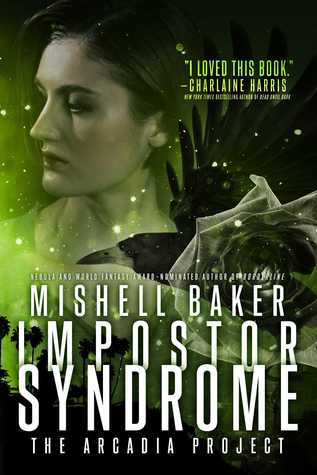
While I will always continue to recommend and cheer on The Arcadia Project series, this third and I think final installment was probably my least favorite. Having said that, it was well written, as the two previous books had been. Plus, we get to see the return of many of our favorite characters, both good and bad. Whether you love them or hate them, the unique and fascinating personalities that you find in these books are the key to making this series so vibrant and enjoyable to read.
Impostor Syndrome once again stars Millie Roper, a young woman with borderline personality disorder who is still trying to get a handle on all her mental health issues. She’s also a suicide survivor, who had to have her lower legs amputated following her disastrous attempt to take her own life. After joining the secret organization known as the Arcadia Project, keeping tabs on the Seelie and Unseelie denizens of fey realm was able to keep Millie on a new track, but recent events have not helped her already fragile state of mind. A rift has formed in the Arcadia Project, and as a result the fey are at war, with half the Court backing the Los Angeles branch while the other half has thrown in their lot with London. This leaves Millie and her boss Caryl scrambling to find allies for LA, hoping to head off the conflict before things can get too far out of hand.
But then, London decides to play dirty. In an underhanded attempt to sabotage LA, they arrange to have Millie’s partner Tjuan framed for a crime he didn’t commit. As a result, one of LA’s most senior agents is forced into hiding, and it’s up to Millie to find the real culprit and clear Tjuan’s name. Following the clues across the Atlantic and beyond, our protagonist finds herself entangled in web of secrets and lies that go much deeper than anything she could have imagined. With the fates of the mundane realm and Arcadia hanging in the balance, Millie must pull off the greatest heist that both worlds have ever seen by cracking the fae Queen’s impenetrable vault to get at the answers that lie within.
Impostor Syndrome may be the series’ most ambitious book yet. Unfortunately, it also felt like it contained the least amount of development. In preparation for this review, I went back to see what I had written for the first two books, Borderline and Phantom Pains, to see if I could spot what might have been lacking from this third installment. In the end, I determined that the missing ingredient is none other than that sense of wonder and awe which comes with being surprised by something unexpected. With Borderline, I was impressed because what started as a rather conventional urban fantasy quickly morphed into a kind of story I’d never seen before. Mishell Baker portrayed the fey and their realm in refreshingly new and interesting ways, introducing concepts like the Arcadia Project, Echoes, and a whole bevy of other neat ideas. Against all odds, Millie also won me over despite being the kind of protagonist many would find difficult to like. The sequel Phantom Pains developed these elements, patiently planting the seeds in a carefully constructed plot which ultimately led to shocking revelations.
In contrast, Impostor Syndrome felt less well put together, at least when compared to its predecessors. The first quarter of the book was also sluggish and boring (two words I never thought I’d have to use to describe this series) as we followed Millie and the gang around for several chapters while they played at faerie politics, which is quite possibly the most overused trope in stories about the Fey. This unfortunately set the tone for most of what came after, as the characters were shuttled from one disjointed scene to the next, and it took way too long for the main conflict to reveal itself and for the real story to start.
Then, there was Millie. I loved her character unequivocally in the first two books, but something about her just rubbed me the wrong way in this one. I’ve never minded her personality, even though it can be extremely unpleasant and exasperating at times, because up to this point, Millie has been portrayed as a dynamic individual who is constantly growing and adapting. However, in Impostor Syndrome, her character felt stagnant. For the most the book, the narrative merely rehashed the same old patterns of Millie’s self-conflict as well as her conflict with others that we’ve seen before. By the time her epiphany came around at the end, it was a little too late and she was already on my last nerve.
Needless to say, this wasn’t the feeling I’d hoped for when it comes to the conclusion of one of the best urban fantasy series I’ve come across in years. And yet, I’ll always love these books, because nothing can change the fact that Mishell Baker has created something very special in The Arcadia Project. While Impostor Syndrome may have been a bit lackluster when compared to the previous novel, I would still highly recommend this trilogy to anyone looking for a refreshingly imaginative and unique urban fantasy series.

More on The BiblioSanctum:
Review of Borderline (Book 1)
Review of Phantom Pains (Book 2)
YA Weekend Audio: Dread Nation by Justina Ireland
Posted on April 14, 2018 22 Comments

I received a review copy from the publisher. This does not affect the contents of my review and all opinions are my own.
 Dread Nation by Justina Ireland
Mogsy’s Rating (Overall): 5 of 5 stars
Genre: Young Adult, Fantasy, Historical Fiction
Series: Book 1 of Dread Nation
Publisher: HarperAudio (April 3, 2018)
Length: 11 hrs and 56 mins
Author Information: Website | Twitter
Narrator: Bahni Turpin
Dread Nation was my kind of YA. It explores history, politics, social issues, and racial relations. It features strong diverse characters, and a protagonist with one of the most powerful voices and charismatic personalities I’ve ever met. Oh, and it’s also got zombies. But leaving all that aside, I just loved this book, because at the end of the day it was a damn good story.
Set during American Reconstruction Era, Dread Nation stars Jane McKeene, a bi-racial young woman who was born just in time to witness the dead rise up and walk the earth, putting an unexpected halt to the conflict between the North and South. But even though the Civil War has ended, that doesn’t mean Jane is free. Along with the nation’s black and Native children, Jane was sent off to a combat training school as soon as she became of age in order to learn how to fight off the walking dead, known as shamblers. In Miss Preston’s School of Combat in Baltimore, Jane trained to become an Attendant, someone who fulfills a bodyguard-type role to protect wealthy white citizens.
Jane is told she should be grateful, that this life is better and safer than being on the frontlines fighting toe-to-toe with the shamblers where one bite can mean the end. But merely guarding the well-to-do isn’t good enough for Jane. Secretly, she patrols the countryside at night, protecting the poor and the non-white population as well. This leads her friend Red Jack to approach her one day with a request to help him find his sister, who has gone missing along with several others. Together with Katherine—Jane’s sometimes-friend, sometimes-rival—our intrepid protagonist embarks on a mission to uncover the truth about the disappearances, a dangerous path that would ultimately lead the young women and Jack into the heart of Kansas. There, they become ensnared in a nefarious conspiracy, coming face to face with horrors both undead and human.
Don’t let the inclusion of zombies fool you into thinking that this is a kitschy, tawdry kind of read, because nothing can be further from the truth. In fact, Dread Nation is a very important book which contains some very serious and heavy themes. That’s because the zombies here are not a gimmick; it’s instead an approach used by the author to explore racism and bigotry during this era in American history allegorically. Carefully constructed and deftly written, Dread Nation deals a number of issues that remain relevant today, examining the way society and individuals are affected by social norms and expectations. While her novel may be an alternate history set to a backdrop of an undead apocalypse, Justina Ireland succeeds in showing that, even in a world overrun with hordes of mindless flesh-eating zombies, society is still divided, and her characters continue to live under the effects of prejudice and oppression.
But of course, a good book for me also has to be more than just a message. Here, I’m pleased to say Dread Nation excels as well, delivering a fast-paced narrative that never experiences a lull. While the plot itself is rather simplistic, it’s no less amazing and fun to read because of it, and I truly enjoyed how delightfully fresh and un-formulaic the story felt. The book is divided into two parts, with former focusing on Jane’s life as an Attendant. This is also where a lot of the world-building happens, and here Ireland can be forgiven for a bit of info-dumping, since all of it is so fascinating. The second part of the book deals with Jane, Kate, and Red Jack in Summerland, a small Kansas town run by a bigoted sheriff and a fanatical preacher. The story keeps readers in suspense as our characters must use all their wits and guile to survive this terrible and hateful place, not to mention the frequent scenes of heart-stopping action featuring attacks by the shamblers.
And finally, this book would not have been as brilliant with anyone but Jane McKeene as the protagonist. Her mother is a wealthy white woman who has a complicated relationship with her bi-racial daughter, as revealed by Jane in her narrative as well as snippets from her letters featured at the beginning of each chapter. Jane’s upbringing at her childhood home and later at Miss Preston’s would shape the person she would eventually become—a smart, resolute, and resourceful young woman. I know YA fiction reviewers throw the term “strong female protagonist” around like candy, but Jane is the real deal. Her dialogue and relationship with her “frenemy” Katherine was also a huge part of what made this such a great read. It’s no exaggeration to say the characters made this book for me.
To be honest, I’ve been a bit disheartened by the state of YA fiction lately, so I haven’t been paying as much attention to hyped books (especially to hyped books). For that reason, I hadn’t even heard of Dread Nation until about a couple weeks before its release, so this was a novel that really came out of nowhere and swept me off my feet. Needless to say, I’m certainly glad I decided to check it out; I absolutely adored this book, and I can’t wait for the sequel.
Audiobook Comments: I only just finished listening to Bahni Turpin’s fantastic reading of the audiobook for Children of Blood and Bone, which was my experience with her as a narrator, so I could hardly contain my excitement when I found out she was the narrator for Dread Nation as well. In short, Turpin was perfect for this book and for the main character. I could hear her energy and enthusiasm in every single line she delivered, and more than once, I thought to myself, yep, that is absolutely 100% Jane McKeene. What an amazing listen, one that I really can’t recommend highly enough.

Friday Face-Off: Panorama
Posted on April 13, 2018 30 Comments
Welcome to The Friday Face-Off, a weekly meme created by Books by Proxy! Each Friday, we will pit cover against cover while also taking the opportunity to showcase gorgeous artwork and feature some of our favorite book covers. If you want to join the fun, simply choose a book each Friday that fits that week’s predetermined theme, post and compare two or more different covers available for that book, then name your favorite. A list of future weeks’ themes are available at Lynn’s Book Blog.
This week’s theme is:
“Lawns and rocks and heather and different sorts of trees, lay spread out below them, the river winding through it.”
~ a cover featuring a PANORAMA
Mogsy’s Pick:
The Way of Kings by Brandon Sanderson
Today, I’m featuring one of my favorite fantasy novels of all time! It would take another novel just to outline the plot of this 1000+ page tome and describe all my thoughts and feelings and how much I love it, so I say let’s just skip straight to covers:
From left to right, top to bottom:
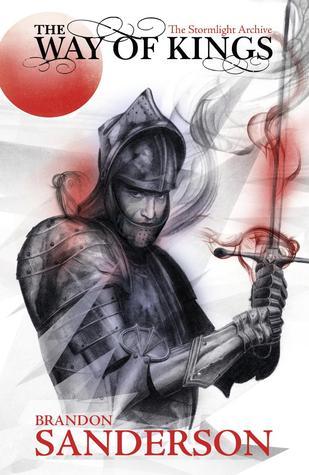
Tor Books (2010) – Gollancz A(2010) – Gollancz B (2015)
Bulgarian Edition (2012) – Turkish Edition (2014) – Spanish Edition (2012)
Polish Edition (2014) – Russian Edition A (2013) – Russian Edition B (2016)

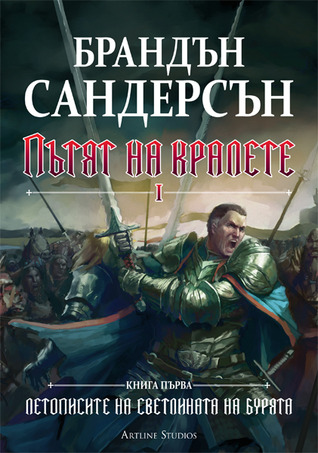
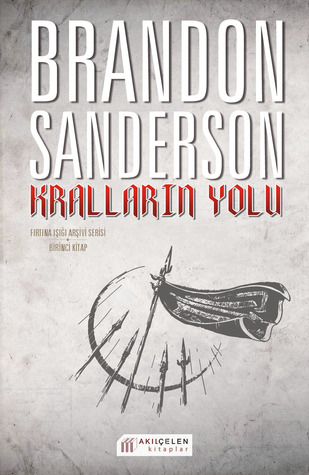


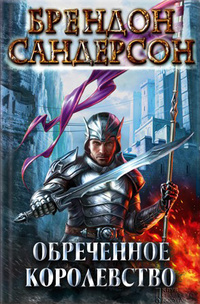
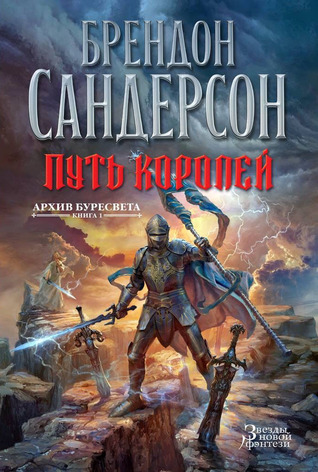
Winner:
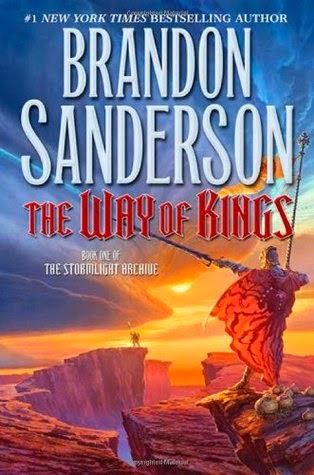
I’ll be honest here, all the other covers are just a formality. There’s ever only been one for me, and that’s the Tor cover by artist Michael Whelan. I have been in love with this gorgeous piece ever since I first laid eyes on it, and years later, my feelings have not changed one bit. Not only is it a breathtaking work of art, it’s the only cover here that manages to capture all the sweeping majesty and immense scope of The Way of Kings and all that the novel represents. None of the other covers can even convey a fraction of its epicness, not even close. The full image of the Tor edition is a panorama in every sense, showcasing the otherworldly beauty of Roshar’s Shattered Plains in all its storm-swept glory.
But what do you think? Which one is your favorite?

Book Review: The Oracle Year by Charles Soule
Posted on April 12, 2018 21 Comments
I received a review copy from the publisher. This does not affect the contents of my review and all opinions are my own.
 The Oracle Year by Charles Soule
Mogsy’s Rating: 4 of 5 stars
Genre: Science Fiction
Series: Stand Alone
Publisher: Harper Perennial (April 3, 2018)
Length: 416 pages
Author Information: Website | Twitter
What a fascinating novel. And to think I almost passed this one up, but every now and then I like to step out of my comfort zone to read something “outside my box”, and books like The Oracle Year make me glad that I do.
The story follows a struggling bassist named Will Dando who wakes up one morning from a dream, his head filled with 108 predictions about the future. Enlisting the help of his friend Hamza, Will proceeds to set up a heavily secured and untraceable website where he begins to release his predictions to the world anonymously, calling himself the Oracle. Pretty soon, he becomes a world-wide sensation when every single one of his prophecies come true. Now everyone wants their future told by the Oracle, from those who think he is some kind of savior to global corporations willing to pay big bucks for any information he can give them.
But not everyone is so enamored with the Oracle. There are those who believe he has too much influence, and that makes him dangerous. From inside the US government, powerful entities are working hard to uncover the real identity of the Oracle, not only to stop him from putting out his predictions, but also to dispatch an unconventional assassin on his tail to silence him forever. Will knows that history has not been kind to its prophets, and that so long his website remains up, his life and those of his friends will always be in danger. It’s only a matter of time before his enemies catch up to him, so in the meantime, the Oracle might as well try to do some good.
Comics fans will be no stranger to Charles Soule, whose name has appeared in the writing credits on some of Marvel and DC’s most popular titles. The Oracle Year is his debut novel, however—one that’s unexpectedly clever and sophisticated. The premise is also refreshingly original, even if it does require a lot to make it convincing. Still, those who can overlook some of the book’s plot holes will undoubtedly appreciate its entertainment value as a kind of “what-if scenario” novel. I always find those to be a lot of fun, and to my delight, this one did not disappoint.
Soule might even have dodged a bullet by staying away from lengthy explanations and giving readers too much detail, as I suspect that would have only hurt the pacing and bog down the narrative. Instead, he makes it clear from the start that it’s better to just go with the flow. Besides, in the whole scheme of things, it hardly matters to the reader how those 108 predictions came to Will in his dreams, or why he was given this gift. What does matter is what our protagonist decides to do with those predictions, and how he chooses to exercise the power that has unexpectedly fallen in his lap. As a person, Will is nobody special—just your average city-dwelling twenty-something millennial trying to make ends meet. His initial response (i.e. setting up a website, cashing in on his predictions) is arguably predictable, but it’s when Will’s life as the Oracle starts spiraling out of control, that’s when the plot matures into something more complex and interesting.
I also think most readers will be able to relate to Will. As the saying goes, “With great power comes great responsibility,” and in many ways, Soule’s protagonist isn’t too far off from the comic book heroes he’s had plenty of experience writing. Will is very much like a Peter Parker-type character, especially since his true identity must be kept a secret in order to protect those he cares about. Like Spider-Man, he also goes through a brief phase where the fame and money go to his head, until he realizes he can use his website and predictions to bring about positive change instead. At the end of the day, Will is a good guy with a good heart, and the story unfolds in such a way that ensures readers will be firmly in his corner when our protagonist’s life inevitably devolves into utter chaos. The author throws in some cool twists at the end too, saving the most suspenseful surprises for the final act.
All told, The Oracle Year is a captivating novel featuring a quirky premise and a likeable “everyman” protagonist, but be careful not to let those elements fool you into thinking this is a straightforward tale. Sure, the story may utilize some familiar tropes, but author Charles Soule also plays with different ideas to keep readers on their toes and guessing, especially in the second half of the book where the ending could lie in any number of directions. Ultimately, I’m glad I took a chance on this thrilling and fast-paced adventurous debut.
Waiting on Wednesday 04/11/18
Posted on April 11, 2018 17 Comments

“Waiting On Wednesday” is a weekly meme that first originated at Breaking the Spine but has since linked up with “Can’t Wait Wednesday” at Wishful Endings now that the original creator is unable to host it anymore. Either way, this fun feature is a chance to showcase the upcoming releases that we can’t wait to get our hands on!
Mogsy’s Pick
The Corset by Laura Purcell (October 4, 2018 by Raven Books)
After my time with her excellent Gothic horror novel The Silent Companions, I can hardly wait for Laura Purcell’s next book, another Victorian chiller about ghosts. As of now only information from a UK publisher is available, but I’m crossing my fingers that we’ll soon get news about a US release.
 “Is prisoner Ruth Butterham mad or a murderer? Victim or villain?
Dorothea and Ruth.
Prison visitor and prisoner. Powerful and powerless.
Dorothea Truelove is young, wealthy and beautiful. Ruth Butterham is young, poor and awaiting trial for murder.
When Dorothea’s charitable work leads her to Oakgate Prison, she is delighted with the chance to explore her fascination with phrenology and test her hypothesis that the shape of a person’s skull can cast a light on their darkest crimes. But when she meets teenage seamstress Ruth, she is faced with another theory: that it is possible to kill with a needle and thread. For Ruth attributes her crimes to a supernatural power inherent in her stitches.
The story Ruth has to tell of her deadly creations – of bitterness and betrayal, of death and dresses – will shake Dorothea’s belief in rationality, and the power of redemption.
Can Ruth be trusted? Is she mad, or a murderer?”
Review: One Way by S.J. Morden
Posted on April 10, 2018 19 Comments
I received a review copy from the publisher. This does not affect the contents of my review and all opinions are my own.
Mogsy’s Rating (Overall): 3.5 of 5 stars
Genre: Science Fiction
Series: Book 1
Publisher: Paperback: Orbit | Audiobook: Hachette Audio (April 10, 2018)
Length: Paperback: 368 pages | Audiobook: 12 hours 3 minutes
Author Information: Website | Twitter
Narrator: William Hope
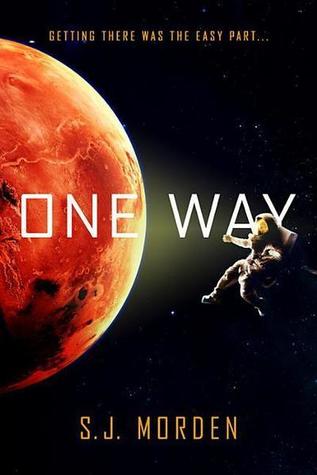
Given the choice between a one-way trip to Mars and life imprisonment, what would you choose? For Frank, who committed murder in order to save his son, he knows that whatever happens he will be getting a raw deal. But rather than rot in jail for the rest of his life, he figures that maybe, just maybe, he can accomplish something before he dies that will help him be remembered, something that will make his kid be proud of his old man. So, when the representatives of a company contracted to build a new Martian base approaches Frank with the offer to send him to space, he said yes.
But just because he’s an astronaut, doesn’t mean he’s not still a prisoner. Frank had known that he and his fellow inmates recruited for the mission would be watched and guarded at all times, but the situation turns out to be much worse than he thought. The construction company in charge of the project has been cutting corners, and using convicts to build their Martian base is just one of a number of shady practices they don’t want anyone to find out about. Mars is already dangerous enough without having to worry about faulty equipment and strained resources or supplies, and it’s just a matter of time before the accidents begin to mount up, resulting in the crew’s first death. But as more of the inmates start dying, Frank begins to suspect foul play. Signs point to a killer among them, and finding out who it is becomes Frank’s only chance for a ticket home.
I enjoyed One Way for the most part. The first half including the introduction was perhaps my favorite section, in which we got to meet Frank, a former architect serving a life sentence for shooting a man in the face in broad daylight. Far from being a cold-blooded killer, however, we discover that our protagonist did what felt he had to do for the sake of his son. While nothing changes the fact that Frank committed a terrible act, the narrative eventually reveals why he felt he had no other choice. Whether or not I felt Frank’s crime was justified, the author did an admirable job helping readers connect with his character and provided a convincing reason why he would agree to sign up for a mission that’s insanely dangerous and possibly fatal.
The novel then segues into the next phase of the story, in which Frank finds himself in a training program to prepare for life on Mars. This section also serves as a reminder of all the things on the Red Planet that can kill you, ensuring readers understand how high the stakes are. Inevitably, there’s going to be a lot of techno-speak as well, going through the science and process of building a state-of-the-art facility on harsh and uninhabitable planet, giving me some serious flashbacks to my time with The Martian. In fact, if you enjoyed the hard sci-fi aspect in Andy Weir’s novel, there’s a good chance you’ll like it here as well in One Way, especially since as an actual rocket scientist, author S.J. Morden knows what he’s talking about.
Where the novel started to falter was when we were introduced to the supporting cast, made up of the other convicts who were offered the same deal to go to Mars, as well as their handler. While Frank was well developed and written, the other team members felt more lightly sketched and stereotypical. I also felt there was a missed opportunity to explore their backstories, as the story seldom went beyond a glossed over description of what each person was in for. As a result, none of the other characters felt all that fleshed out, so when the prisoners started dying, the impact was muted.
Ironically, for a mystery-thriller, the “mystery” and “thrills” part of the equation also felt a bit lacking. The book struggled to build atmosphere and suspense, and while this may have been a side effect of my inability to connect with any of characters other than Frank, I think Morden also made a few missteps in timing. There were several examples of scenes where the plot would be moving along nicely, only to be sidetracked moments later by a bout of techno-jargon. I can appreciate the author wanting to keep his readers abreast of the logistics and complex operations behind the building a Martian base, but at times it would wreak havoc with the pacing.
That said, I ultimately found One Way to be an entertaining read. Could it have been better? Yes, though the book’s issues didn’t take much away from my enjoyment. I understand a sequel will be forthcoming, and I look forward to what’s next in store for Frank.
Audiobook Comments: William Hope’s narration was satisfactory, though there were times when his reading would be fairly bland and I would find myself wishing for more emotion in his performance. It could have helped add more tension to the story, though his dialogue delivery was decent and he was also able to make the more technical sections sound fascinating and thus easy to listen to.
*** Originally reviewed at The Speculative Herald ***
Book Review: Unbury Carol by Josh Malerman
Posted on April 9, 2018 23 Comments
I received a review copy from the publisher. This does not affect the contents of my review and all opinions are my own.

Mogsy’s Rating: 3.5 of 5 stars
Genre: Paranormal, Fantasy
Series: Stand Alone
Publisher: Del Rey (April 10, 2018)
Length: 384 pages
Author Information: Website | Twitter
A solid 3.5 star read. Had I been in the right mood, my feelings towards Unbury Carol might have been even more positive, but I had a hard time finding my footing when it came to this book, and I think its peculiar mix of genre elements might have been a contributing factor.
At the center of this story is a woman named Carol Evers, a woman with a very strange condition. Ever since she was a little girl, she has suffered from spells that send her collapsing into a coma-like state, except these comas are virtually indistinguishable from death and they can last for days. During her visits to Howltown—the name young Carol gave to these eerie episodes—she would be awake and aware inside her mind, despite her physical body lying inert. It is her deepest, darkest secret that only a few people other than Carol herself know the truth about, and after the deaths of her mother Hattie and her good friend John Bowie, only two remained. One was her husband, Dwight, an ambitious and conniving man who married Carol for her family’s fortune, and the second person was James Moxie, an old flame of Carol’s who went on to become one of the land’s most notorious outlaws.
However, since the last time Carol saw Moxie was more than twenty years ago, she begins to grow worried that should she lapse into another one of her death-like comas, only Dwight would know the truth of what was really happening to her. Her concerns came a bit too late though, as in fact her husband had been waiting patiently all these years for this exact moment. The next time Carol falls into Howltown, that’s when Dwight decides to strike, carrying out his plot to declare her dead and bury her as quickly as possible, even knowing full well she would be alive. Only through sheer luck does James Moxie manage to catch word of the impending funeral, and knowing what he does about Carol’s condition, it’s a race against time to save his lost love from a terrible fate.
I should have been all over this one: a paranormal Western featuring an outlaw Prince Charming who rides gallantly forth to rescue his Sleeping Beauty? But it actually took several false starts before I was drawn into the story, which opens with a focus on Carol but then over time gradually shifts to focus more on Moxie. The first quarter of the book was also bogged down by abstract descriptions of Howltown, convenient and not-too-convincing plot points, and hasty introductions to the characters that left me feeling neither here nor there about them. On top of this, there were the many flashbacks to contend with, and these would appear erratically throughout the narrative. With Josh Malerman at the helm, I also expected this to be a horror novel, but it’s really not. Instead, it feels more like a mix of dark fantasy combined with the supernatural set in a vaguely historical context with a bit of a Western flavor, but because all of this is so haphazardly thrown together in the intro, I had a tough time pinning down the book’s tone and picturing the setting—at least in the beginning.
Fortunately, things improve once we get into the meat of the story, especially with James Moxie’s chapters coming to the forefront. A lot of important information is also revealed in the later flashback sections, filling in gaps in the characters’ personalities and motivations. There’s also the added factor of Smoke, a shadowy assassin dispatched to stop Moxie before he can reach Carol, as well as the demon-like antagonist known as Rot, who haunts our protagonists and pulls the strings from behind the scenes. Just as Moxie’s chapters held more action and agency than Carol’s, making him a lot more interesting to read about, Smoke and Rot were also more effective villains than Dwight, increasing the plot’s intensity once they entered the picture and the race against the clock got under way.
In the end, it’s Moxie’s adventures on “The Trail” that saved this book for me. Between the cat-and-mouse chase between him and Smoke and the fascinating personalities he meets while on his journey, Unbury Carol finally became something more than just a story about saving a damsel in distress. A part of me still wishes that Malerman had given the book’s titular character a little more power to influence the plot, but nonetheless I became invested in the story once I accepted the new direction.
In truth, Unbury Carol is a lot more than a Weird Western meets a twisted fairytale retelling, but I guess I’ll just go with that for lack of a better description. The story took its time getting off the ground, but personally speaking, sticking with it was an investment that paid off in the end. It certainly hasn’t put me off from reading more of Josh Malerman’s work, and I look forward to checking out more of his books in the future.
Book Review: Blood of the Four by Christopher Golden and Tim Lebbon
Posted on April 8, 2018 16 Comments
I received a review copy from the publisher. This does not affect the contents of my review and all opinions are my own.
 Blood of the Four by Christopher Golden and Tim Lebbon
Mogsy’s Rating: 3 of 5 stars
Genre: Fantasy
Series: Stand Alone
Publisher: Harper Voyager (March 6, 2018)
Length: 480 pages
Author Information: Christopher Golden | Tim Lebbon
As much as I enjoy standalone fantasy epics, a part of me feels Blood of the Four would have been better served had the authors not tried to cram everything in this ambitious endeavor into one single volume. I had very mixed feelings about this one, due in part to the wild swings between the highs and the lows. At times, the story would have me gripped in moments of frenzied action and intensity, while at others I would find myself almost lulled to sleep by some of the slower and more tedious sections.
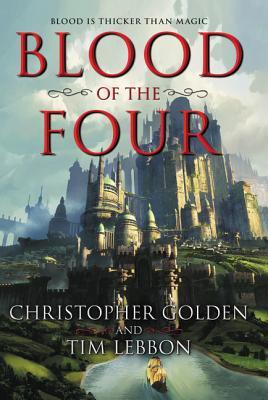
At the heart of this novel is a kingdom torn apart by power struggles and slavery. Once peaceful and prosperous, Quandis has become a nation divided, ruled by a queen whose drug addiction has left her mind addled and unable to control the dangerous magic she dabbles in. One night, while in a state of drug-induced stupor, she accidentally lets it slip to her paramour that she has been attempting to seize the magical power of the Four for herself, drawing upon the forces said to belong to the four ancient sorcerers who founded the kingdom. The queen’s lover, however, was not the only one to hear this confession; Princess Phela, who likes to wander the castle’s hidden passages listening to whispered secrets, was able to overhear her mother’s heresy and decides to use this nugget of information to her own advantage.
After seizing the throne for herself though, Phela is lured by the same power that doomed her mother. Unfortunately for Quandis, the new queen also has a cruel streak, and her lofty ambitions are proving far more disastrous. With a plan to install herself as the kingdom’s divine ruler, Phela sets about murdering, banishing, or enslaving anyone who gets in her way. Demos Kallistrate, son of a disgraced nobleman whose entire family was sold into slavery, now seeks to put a stop to her tyranny, seeking out other allies to his cause. Among them is Princess Myrinne, the younger sister of Phela herself, who despairs at what is happening to Quandis. Then there’s Blane, a member of the Bajuman slave caste who joined the priesthood to gain access to the magic with which he hopes to one day free his people. His sister Daria, whom Blane long thought was dead, also ends up being part of this effort, having escaped slavery and is currently living in disguise as an admiral in the navy.
As I said, there were moments where this book worked spectacularly well for me, but also others that just fell disappointingly flat. The structure of having multiple points-of-view is in keeping with the tradition of an epic fantasy, but in spite of that, the experience felt rather shallow. It’s not easy to balance so many perspectives in the first place, and having only one book to tell an elaborate story meant trying to fit in all your plot development while simultaneously needing to explore character motivations and relationships. Things wound up a little messy, and ultimately I didn’t even get to form much of a connection with any of the protagonists. In the end my favorite POV was probably Daria because she had the most fascinating backstory, not to mention my soft spot for female ship captains (though Daria’s an admiral to boot) and her chapters also featured some top-notch maritime action.
As Christopher Golden and Tim Lebbon are both known for their work in dark fantasy, horror, and thriller genres, you can expect Blood of the Four to harbor some pretty grim tones as well. Certainly, there’s plenty here that will make the grimdark fan feel right at home. Occasionally, however, the darkness and brutality have a gratuitous feel to them, possibly because of the shaky emotional connection I have towards the story and characters, making some of the scenes of sex and violence feel forced or like they were employed for the sole purpose of shock value.
Despite some of its more dubious moments though, there’s a lot to like. Golden and Lebbon have created a rich world and a complex society, serving as the perfect backdrop to the epic narrative they set out to tell. While none of the world-building ideas are all admittedly that original, the authors have nonetheless transformed some of the elements with their own take on things, lending the setting more depth than I’d anticipated. And then there’s the action I’d mentioned, which, when it really gets going, can blow your mind and I daresay these scenes almost make up for some of the novel’s slower parts. A good example is the ending, with the final few chapters bringing on a powerful and exhilarating finale.
Bottom line for me, Blood of the Four had the feel of a book trying to capture the sweeping sense of scope and narrative richness of a multi-volume series in a single 500-page novel. It would be a good choice for fans of the authors’ books from other genres who might be curious to try some epic fantasy, or even for seasoned epic fantasy readers who are looking to kick back with something a little lighter. At the end of the day though, I felt that the goal of a standalone was perhaps too restrictive for this story to reach its full potential.



 The BiblioSanctum