Book Review: Charmcaster by Sebastien de Castell
Posted on September 27, 2018 26 Comments
I received a review copy from the publisher. This does not affect the contents of my review and all opinions are my own.
 Charmcaster by Sebastien de Castell
Mogsy’s Rating: 4 of 5 stars
Genre: Fantasy, Young Adult
Series: Book 3 of Spellslinger
Publisher: Orbit (September 18, 2018)
Length: 448 pages
Author Information: Website | Twitter
Once more, we join our protagonists the exiled mage Kellen, his Argosi mentor Ferius, and the unhinged squirrel cat Reichis on a road trip to their next destination in this third installment of the Spellslinger series. Building upon the events of the first two books, Charmcaster takes us out of the desert and into the land of Gitabria, where our characters are hoping to track down and help the first of many victims targeted by a Jan’Tep conspiracy. However, being a wanted man himself, Kellen finds his every step dogged by mercenaries. But then in a twist of fate, his latest confrontation with a group of bounty hunters leads him to rescue another mage on the run, who turns out to be none other Nephenia, an old friend (and secret crush) from his life before exile.
After a brief recuperation, our characters continue to make their way to the capital, where they get the chance to witness the unveiling of a miraculous new invention. While most of the crowd is blown away by the spectacle, only a few, including Ferius, are aware of the threat this could spell for the entire world if this technology were to fall into the wrong hands. Unfortunately, it appears that dangerous factions have already caught wind of the groundbreaking innovations happening in Gitabria, for the inventor’s daughter turns out to be one of their targets. After experiencing first-hand the devastating results of his enemies’ methods in the last book, Kellen is determined to do whatever it takes to free the girl from their evil influence.
Following the trend established by Shadowblack, we are introduced to a new setting, new cultures, and new side characters in this next chapter of Kellen’s journey. That said, the format feels very episodic in that each volume features a self-contained adventure, but together they make up an overarching series plot. As such, it is still imperative to start from the beginning and read the books in order.
That said, I am starting to notice a few repetitive patterns in the storytelling. The introduction paralleled the opening chapters in the previous book, which begins with an attack that our heroes barely manage to thwart and ends with them getting a new addition to their party, but for some reason I felt it took things in Charmcaster a lot longer to take off. On the bright side though, I did delight in seeing Nephenia again, despite her character being much changed from the girl Kellen used to know. A significant part of this book deals with the fallout of what has happened back home while our protagonist has been on the run, and some of this involves why Nephenia has become so different. In fact, I would say the strength of this novel is in the character and relationship building, because although we see the overall plot moving forward, it’s admittedly not by much.
Still, I am enjoying myself. Like its two predecessors, Charmcaster is fun, lively, and…well, charming. Sebastien de Castell continues to expand his world-building, adding even more detail and intrigue to this already rich setting. In Gitabria, our characters encounter a new land with different culture, politics, and traditions. They meet new people who teach them—and us—new things. Case in point, one of my favorite encounters in this book allowed both Kellen and the reader a glimpse into Ferius’ mysterious past, revealing that she too was a very different person in her youth. And of course, Reichis was his usual crass self, delivering most of the comic relief. As for Kellen, there were several interesting developments for his character too, mainly focusing on the deteriorating effects of the shadowblack and what this means for his mental capacities and how others treat him. In addition, Kellen is forced to face the harsh truth about his family and come to terms with the fact they are not the people he once thought they were. Needless to say, this book sees our protagonist growing up fast, whether he likes it or not.
But therein lies the beauty of this series. Kellen began this whole thing as a naïve and sheltered boy of fifteen, but gradually he is becoming a man. Every adventure is a learning experience for him, and with each book, the lessons are getting harder. Compared to the first two books, I felt that Charmcaster was slightly darker in tone, presenting Kellen with problems that are more complicated and disturbing. Still, our protagonist has retained the essence of who he is, the goodness that allows him to make the right decisions, and for that I am grateful to the author.
All told, every step of this journey has been great so far, and even though Charmcaster didn’t quite command my attention the way Spellslinger and Shadowblack did, I felt the book’s strengths came through in different ways. I can’t wait to see what’s next.


More on The BiblioSanctum:
Review of Spellslinger (Book 1)
Review of Shadowblack (Book 2)
Waiting on Wednesday 09/26/18
Posted on September 26, 2018 22 Comments

Waiting On Wednesday” is a weekly meme that first originated at Breaking the Spine but has since linked up with “Can’t Wait Wednesday” at Wishful Endings now that the original creator is unable to host it anymore. Either way, this fun feature is a chance to showcase the upcoming releases that we can’t wait to get our hands on!
Mogsy’s Pick
The Toll by Cherie Priest (July 9, 2019 by Tor Books)
To be honest I have not loved everything I’ve read by Cherie Priest, but when it comes to horror, she sure knows how to write a creepy and atmospheric novel. In fact, her book The Family Plot is one of my favorite haunted house stories, so while I know that not all her books will strike my fancy, I’m still excited to keep reading her work. The Toll sounds like one I’ll really like. Can you say creepy?
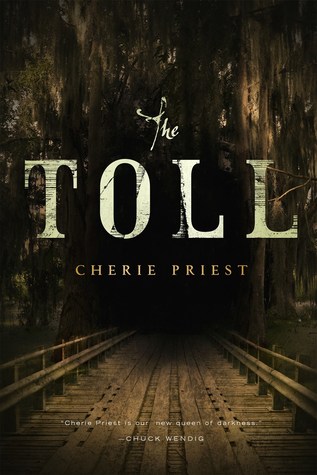 “From Cherie Priest, the author of The Family Plot and Maplecroft, comes The Toll, a tense, dark, and scary treat for modern fans of the traditionally strange and macabre.
State Road 177 runs along the Suwannee River, between Fargo, Georgia, and the Okefenokee Swamp. Drive that route from east to west, and you’ll cross six bridges. Take it from west to east, and you might find seven.
But you’d better hope not.
Titus and Davina Bell leave their hotel in Fargo for a second honeymoon canoeing the Okefenokee Swamp. But shortly before they reach their destination, they draw up to a halt at the edge of a rickety bridge with old stone pilings, with room for only one car . . .
When, much later, a tow-truck arrives, the driver finds Titus lying in the middle of the road, but Davina is nowhere to be found.”
Book Review: The Sisters of the Winter Wood by Rena Rossner
Posted on September 25, 2018 30 Comments
I received a review copy from the publisher. This does not affect the contents of my review and all opinions are my own.
 The Sisters of the Winter Wood by Rena Rossner
Mogsy’s Rating: 3.5 of 5 stars
Genre: Fantasy
Series: Stand Alone
Publisher: Redhook (September 25, 2018)
Length: 464 pages
Author Information: Website | Twitter
A literary fantasy written in the tradition of books like Uprooted and The Bear and the Nightingale, The Sisters of the Winter Wood is Rena Rossner’s debut which blends magic and history with folklore and stories from her own Jewish ancestry. A nineteenth century narrative poem called Goblin Market by Christina Rossetti also provides much of the inspiration for the novel’s premise which centers on a pair of sisters who are tempted by the fruit of goblin merchants, but it is also about so much more.
Once upon a time, a swan and a bear fell in love. They married and had two daughters, sisters who are as different from each other as the sun is different from the moon. Liba is dark-haired, serious, and aloof, nothing like the younger Laya, who is blonde, beautiful, and prone to flights of fancy. Born into a Jewish family, the two of them live isolated from the town in the woods with their mother and father, who have kept the secret of their magical heritage from the girls. But as Liba and Laya begin to grow into womanhood, their parents are finally forced to reveal the truth: their Tati can transform into a bear, a gift which he has passed on to Liba, while Laya has inherited the power to turn into a swan, taking after their Mami.
However, soon after imparting these earth-shattering revelations, their parents are called away to attend an ailing family member on their deathbed, leaving their daughters with instructions to be careful and to look after themselves and each other while they’re gone. Much to Liba’s dismay though, Laya reacts to this newfound freedom from parental guidance with her usual reckless abandon. The younger girl immediately becomes besotted with one of the shady Hovlin brothers who have recently arrived in town to sell fruit at the market. Meanwhile, other strange things are putting the townsfolk on edge, like rumors of a rogue bear in the woods, people are going missing, and then two horribly mutilated bodies are found near an orchard. Amidst rising anti-Semitic attitudes and fears that her sister is being tempted down a dangerous path, Liba grapples with her own feelings for a young man who claims to be in love with her, as well as the changes to her body brought on by her ursine heritage.
The Sisters of the Winter Wood is gorgeously written, if a little over-embellished at times. For example, Laya’s chapters, which alternate between Liba’s, are completely written in verse-form. It’s a stylistic decision that didn’t do much for me personally, though it did help differentiate the contrasts in the sisters’ narrative voices. The prose also has a tendency towards melodrama, using awkward expressions in an attempt to sound more lyrical but more often than not they would merely stick out like a sore thumb. Because of the magical and evocative tone of the novel, however, I would say the writing style effectively adds to the haunting, beguiling atmosphere and the fairy tale undertones the author was obviously trying for.
And of course, as with most fairy tales, there are a lot of familiar motifs and tropes at play here, but I was also impressed how Rossner managed to inject a bit of novelty into the story. Plus, by using the familiarity to her advantage, she allows readers to tease out deeper meanings in the areas she has designed to stand out. At the end of the day, stories like these are about the enduring themes anyway—timeless concepts and values like family, devotion, and unconditional love. Needless to say, the bonds of sisterhood play a significant role, and so too does the characters’ Jewish heritage and how that has affected the way their family is treated. This latter subject has a distinct feel of being more personal and emotional to the author, and she gives some insight as to why in her afterword which includes a brief history of her forebears’ escape from the anti-Semitic pogroms of Europe and later the Nazis. There are elements of her family’s story in the setting of this book, creating a mood of high tension and foreboding. Its especially noticeable in Liba’s chapters, hers being the more anxious voice as she worries for her sister and frets over the darkness spreading through her town.
That said, this book is probably not for everyone. It’s a rather quiet, slow-moving tale, less plot-driven and more concerned with developing the characters and their relationships. However, fans of stories inspired by fairy tales or grounded in folklore will probably like it, especially if you have also enjoyed the genre’s recent offerings from authors like Naomi Novik and Katherine Arden. At the same time, The Sisters of the Winter Wood isn’t bringing us anything too new when it comes to books in this vein. Like most trends, I think fatigue is starting to set in, which probably explains why I’m not feeling as excited and enchanted by this novel as I wanted to be. Still, I enjoyed it a lot, and it’s absolutely worth taking a look if the description of the book’s story and style appeals to you.

Book Review: Phoenix Unbound by Grace Draven + Giveaway
Posted on September 24, 2018 27 Comments
***The giveaway is now over, thanks to everyone who entered!***
I received a review copy from the publisher. This does not affect the contents of my review and all opinions are my own.
 Phoenix Unbound by Grace Draven
Mogsy’s Rating: 4 of 5 stars
Genre: Fantasy, Romance
Series: Book 1 of Fallen Empire
Publisher: Ace Books (September 25, 2018)
Length: 384 pages
Author Information: Website | Twitter
The first and only other book I’ve ever read by Grace Draven is Master of Crows, and clearly she has come a long way in the almost ten years since then. What hasn’t changed at all though, is her knack for writing a swoon-worthy fantasy romance. Speaking of someone who typically stays away from this subgenre, I was surprised at how much I enjoyed Phoenix Unbound.
Set in a world inspired by the bloodier and more decadent elements of the Roman Empire, this story follows the journey of two people thrust together under unfortunate circumstances. Every year during the Rites of Spring, the capital holds a lavish festival in which a great bonfire ceremony takes place requiring each village to offer up a young woman as sacrifice to be burned alive. However, the village of Beroe has a secret: for the last five years, they have sent the same woman. Gilene is her name, and as a fire witch, she cannot be burned. Using her magic, she changes her appearance, takes her place on the pyre, and then conjures up an illusion of a grand inferno to mask her escape so that she can survive to do it all over again in a year’s time. While this process is painful, demoralizing, and traumatic, Gilene sees it as her sacred duty to perform, as it means sparing the other young women in her village a horrifying fate.
But this year, she did not anticipate Azarion. For close to a decade, he has been forced to fight in the brutal arenas to satiate his empress’s bloodlust, becoming a gladiator of much renown. And for some reason, he can see through Gilene’s illusions. Using her as a key to his escape, Azarion kidnaps Gilene after the ceremony, threatening to expose her secret if she doesn’t accompany him back to his village and help him reclaim his birthright. Trusting in his people’s reverence for fire witches, he hopes that Gilene’s support would allow him to challenge for the role of clan head, a position that was his before a traitorous cousin sold him into slavery. Thinking of Beroe and her own family, Gilene has no choice but to do what he says, realizing that the sooner Azarion can get his revenge, the sooner she can return home and prevent more death. What she didn’t foresee, however, was how the idea of home would also change for her.
I’ll admit it. There’s a lot of fantasy romance fiction out there that makes me want to cringe, tear my hair out with frustration, or roll my eyes at the cheesiness of it all. Apparently though, I’ve just been reading all the wrong books. Phoenix Unbound is proof that good writing can make all the difference. Building a believable, complex romance is an art, and too many authors try to rush the process without first establishing a connection between the characters. It is a step that becomes even more critical when considering relationships like the one between Gilene and Azarion. Hate-to-love romances are immensely popular, but I find they also get bungled a lot in many books, mainly because timing and rhythm have to be just right. Happily, Draven doesn’t miss a beat. Readers already know Gilene and Azarion will fall in love, but the narrative makes them (and us) work for it, drawing out their courtship and delaying the gratification until the two characters are emotionally invested in each other, and we’re emotionally invested in them.
This does mean the romance takes longer to develop, but it’s worth it, and I think the results speak for themselves. Far from making me want to cringe (or tear my hair out, or roll my eyes) the final scene in the book almost moved me to tears because it was so perfect and beautiful. Plus, I can’t say the measured pacing of the romance really bothered me at all, since there was so much else going on in the story to occupy my attention. Despite some of the more well-trodden tropes, there are many other aspects of the book that feel genuine and unique, like the personalities of the characters, both major and minor. Each person comes across as real and lived-in, with distinct attitudes, motivations, strengths and flaws. Draven also brings her Fallen Empire world to life with lushly described details and stunning imagery, instilling feeling into her environments which provides an extra emotional layer to the events and character interactions playing out on the page.
My point is, Phoenix Unbound isn’t simply about a love story. It is the full package. Grace Draven has been working hard at her craft, and it shows. This book is full of beautiful and tragic moments, scenes of both ferocious violence and intense passion. The exquisite slow-burning romance between Gilene and Azarion is balanced with outstanding characterization and world-building, fueling my enthusiasm and interest in the story as its developments unfolded. Fantasy romance authors and readers take note, because this is the way it should be done. This novel drew me in completely, and I hope we’ll be seeing more from this universe.

Phoenix Unbound Giveaway
And now time for some fun! Since I enjoyed Phoenix Unbound so much, I want to share the love with a copy I’m putting up for giveaway. With apologies to our international readers, due to the costs of shipping, this giveaway is open to residents of the US only. One winner will receive a paperback copy of the book. To enter, all you have to do is send an email to bibliosanctum@gmail.com with your Name and valid Mailing Address using the subject line “PHOENIX UNBOUND” by 11:59pm Eastern time on Sunday, September 30, 2018.
Only one entry per household, please. The winner will be randomly selected when the giveaway ends and then be notified by email. All information will only be used for the purposes of contacting the winner and sending them their prize. Once the giveaway ends all entry emails will be deleted.
So what are you waiting for? Enter to win! Good luck!
YA Weekend: Keeper of the Bees by Meg Kassel
Posted on September 23, 2018 20 Comments

I received a review copy from the publisher. This does not affect the contents of my review and all opinions are my own.
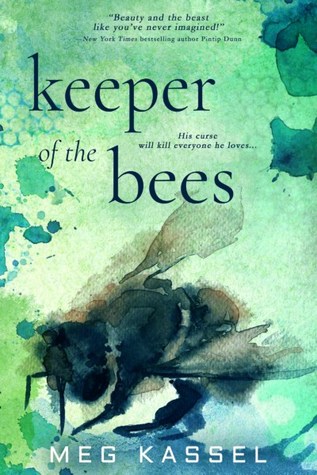 Keeper of the Bees by Meg Kassel
Mogsy’s Rating: 3.5 of 5 stars
Genre: Young Adult, Fantasy
Series: Book 2 of Black Birds of the Gallows
Publisher: Entangled: Teen (September 4, 2018)
Length: 304 pages
Author Information: Website | Twitter
Keeper of the Bees has all the makings of a popular YA modern fairy tale—cursed protagonists, magical villains, and a romance for the ages. It has even been described as a retelling of Beauty and the Beast, though personally I find that comparison to be a bit of a stretch, and, to be honest, a disservice to the world of this book, considering how unique it is.
The story is told from the perspective of two teens: one who has been wandering the earth since time immemorial, cursed with a hive full of bees in his chest, and the other is from a small town where everyone knows her name, but only because it is said her entire family line is cursed with madness. Dresden, who was born in a faraway place long ago, was eighteen when he was captured by a wicked queen and turned into a monster whose insides crawl with bees that can cause psychosis and violent tendencies when they sting you. With his real visage having been lost to the centuries, his face now is an ever-shifting composite of all the people whom his bees have stung—all dead now because of him. His only consolation is knowing that he goes only where the Harbingers go, since where the crow shifters gather, death and destruction will soon follow. At the very least, his stings will only affect those whose days are numbered anyway.
But then came Essie. Dresden ends up following the Harbingers’ trail to a town in Missouri where something bad is about to happen, for the crows are never wrong. There, he meets a girl who can not only see through his shifting features when his magic usually keeps others’ attention off him, she also doesn’t seem to be afraid. In fact, she doesn’t seem at all bothered by what he is, or that a swarm of angry buzzing bees that live inside his chest. But then she confesses that she sees strange things every day, because she is Essie Wickerton, and like many members of her family, she is afflicted with a mysterious condition that makes her suffer hallucinations. She ends up being quite surprised that Dresden is real. A special bond forms between them, which eventually deepens into something more. But Dresden, who doesn’t always feel in control of his bees, fears he will bring harm to the first person he has ever loved since becoming a beekeeper, and Essie, whose condition is worsening by the day, knows that she is one wrong move away from being committed involuntarily into a psychiatric hospital. Meanwhile, there is a ruthless killer in town, creating panic in this once peaceful community, and as the Harbingers warn, a big disaster is still looming on the horizon.
Keeper of the Bees is the second novel of the Black Birds of the Gallows sequence, though I was happy to learn it stands alone because I have not yet read the first one. This book takes place in a new setting and follows new characters, with Meg Kassel providing newcomers with a great rundown of her lush and imaginative world so you can slip right in without feeling like you missed a beat. As a matter of fact, the incredible world-building was the first thing that caught my attention. After all, how can you read the author’s concept of “beekeepers” and not be intrigued? The idea of a supernatural being with a hive of bees in the hollowed-out cavity where his insides use to be is pretty grotesque…but also fascinating. And we haven’t even gotten to the best part. The sting of a beekeeper’s bees contain venom that can trigger the dark instincts of already broken individuals, causing them to kill themselves or others. This effect often goes hand in hand with the Harbingers, who are also former subjects of the twisted reign that created all these magical beings. They can never truly die, and instead they are resurrected into crows, a form that they will live in for a time before assuming their human shape again, but as children. Then they grow, and the cycle starts over, forever trapping the poor soul in this cruel limbo. The Harbingers harvest the energies of the dying, so wherever you find Dresden, there is usually also one or two of these crow-shifters around, feeding off the mayhem left by his bee sting victims.
All this is just scratching the surface. There are also the Strawmen, watchers of immense power that strike fear into the hearts of both Harbingers and beekeepers. They are just one example of the many things in this book that I wish we had more time to explore, but as you can see, there is a lot of potential here and simply too much of the “weird and wonderful” to cover. That is why on some level, I think the blurb likening this book to Beauty and the Beast was unnecessary, and even hurts it to some extent, because being so strongly associated with a known fairy tale like that inevitably creates expectations, when the reality is that Keeper of the Bees can stand on its own without the help of any preconceptions. Its world is just SO unique, truly unlike anything I’ve ever seen before.
That said, the world-building was perhaps this novel’s greatest strength, and thank goodness for that, because it was probably the one thing that helped bolster my interest in the admittedly humdrum YA romance plot. The only reason I’m not blasting it right now for insta-love is because there was so much else going on in the world-building which effectively masked the fact that Dresden and Essie barely knew each other before advancing to the “I’ll move worlds for you” stage in their relationship. Still, the insta-love was there, just not as obvious in this case. Other aspects of the plot were also pretty predictable, and cliched. Essie herself felt like a throwback to the classic fantasy damsels-in-distress who needed to be saved, and that bothered me a lot more than I thought it would. On the one hand, I applaud Kassel for attempting to create such an interesting female protagonist, but on the other, in making Essie’s condition so debilitating, the author might have gone a little overboard with it and made her character too helpless.
All told, Keeper of the Bees is a novel with incredible strengths in some areas, and disappointments in others. The pros include an amazingly complex world full of strange and darkly whimsical creatures and magic, brought to life by Meg Kassel’s rich prose. The superb world-building and the unique ideas found here are probably worth the price of admission alone. However, there are also the cons, with the hokey YA love story and archetypal characters making up the worst of it, though thankfully many of their negative effects are offset by the book’s strengths. I would still happily read more by the author, especially more of this series, if it means seeing more of her stunning world-building at work.
Book Review: The Chrysalis by Brendan Deneen
Posted on September 22, 2018 18 Comments
I received a review copy from the publisher. This does not affect the contents of my review and all opinions are my own.
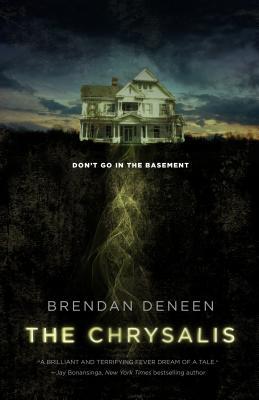 The Chrysalis by Brendan Deneen
Mogsy’s Rating: 4 of 5 stars
Genre: Horror
Series: Stand Alone
Publisher: Tor Books (September 4, 2018)
Length: 304 pages
Author Information: Website | Twitter
Every so often, I find myself pleasantly surprised by books like The Chrysalis, which, for the record, I believe was indeed written as a horror novel, though marketing for the book may have oversold the whole “monster in the basement” and “haunted house” angle a little too zealously. I get it, though. With a story like this, the creep factor is easier to sell, despite there being so much more it has to offer.
The book follows married couple Tom and Jenny Decker, who are urban millennials and proud of it. Both their identities are wrapped up in their modest but up-to-the-minute Manhattan lifestyle, with Tom working as a bartender and Jenny as a personal trainer to rich bankers. But then the day comes when their building management company suddenly raises the rent on their Alphabet City apartment, leaving the young couple no choice but to leave behind the life they’ve grown to love. Feeling dejected about having to move to the suburbs, their spirits are nevertheless lifted somewhat by the fact they’ve managed to find a beautiful, spacious, and surprisingly affordable three-bedroom Victorian in New Jersey.
The reason for the low cost of the house soon becomes apparent, however, as the grim history of its previous residents is eventually revealed. By then, the Deckers have already moved in, and Tom has stumbled upon the mysterious slime-covered chrysalis hidden behind an old refrigerator in the basement, which he keeps a secret from his wife. Jenny, on her part, is also trying to adjust to some major life changes beyond settling into a new house, for not long after the move, she discovers she is pregnant. The subsequent loss of her job becomes devastating, with a mortgage to pay and a baby on the way, forcing Tom to quit bartending for a corporate position which would help bring in a stable income for his growing family. With work being barely tolerable most days, Tom finds it easier to start each morning with a clandestine trip down to the basement to see the chrysalis, seeking the euphoric, almost intoxicating effects being in its presence grants him, which gives him the confidence to succeed at his job. Jenny also starts her own business, and for a while, life seems to be looking up for the Deckers.
Unfortunately, like any drug high, their success doesn’t last. As Tom becomes more and more obsessed with the secret he keeps hidden in the basement, the chrysalis’ nefarious influence grows, filling his mind with violent visions, unraveling his grip on reality, and destroying his life with Jenny.
What I find interesting about The Chrysalis—despite the novel’s “Welcome to the dark side of suburbia” tagline—isn’t so much the idea that evil and wrongness can lurk so close beneath the surface of normalcy, but that it’s really a story about a young couple experiencing “quarter-life crisis” (along with the themes and associated fears related to “adulting”) told through a horror lens. While it had its creepy moments, what impressed me most was the author’s attempt to deliver a deeper symbolic message. Whether it was communicated successfully is debatable, but regardless, I thought this book was wonderfully atmospheric and a fine example of building suspense effectively. I also give it credit for what it tried to do with the idea that some people just don’t want to grow up, desperately clinging on to their superficial perspective of reality to avoid facing real-life problems.
Depending on the type of reader you are, you might find Tom and Jenny relatable…or you might not. Personally, I found them both rather infuriating and off-putting, especially Tom, whose whining about having to become a corporate sellout was the epitome of entitlement, considering how the job was practically handed to him while many in the country are dying to find work and would have jumped at a much lesser opportunity if it means putting food on their family’s table. But poor Tom had to cut his hair, boohoo. Here, let me play you the world’s smallest violin. Still, even if you can’t relate to the Deckers, the story delves into concepts like family responsibility and addiction, offering a more personal perspective on Tom and Jenny’s plight. For one thing, they learn that nothing wakes you up to the reality of the world quite like the news of a baby. The narrative dutifully portrays all the highs and lows during this stressful time, puncturing surface-level moments of traditional horror with deeper and more significant themes that explore the characters’ confusion, anxiety, and feelings of helplessness related to their impending parenthood.
In the end, I think these are the ideas The Chrysalis tries hard to but struggles to convey, as a lot of the story’s potential winds up slipping through the cracks. Still, it gets kudos from me in spite of its outward appearance as another typical entry into the horror-suspense genre, mainly because of its efforts to go beyond the usual scare tactics by playing off the fears and existential woes of a new generation of emerging adults who dread having to grow up. Tom and Jenny thought their worst nightmare was becoming boring suburbanites and corporate drones, but this is a story about how the thing in their basement proved them wrong, with the author keeping the horror elements ever-present but understated. As a result, this book is really more unsettling than scary, but I really enjoyed it.
Friday Face-Off: Clouds
Posted on September 21, 2018 23 Comments
Welcome to The Friday Face-Off, a weekly meme created by Books by Proxy! Each Friday, we will pit cover against cover while also taking the opportunity to showcase gorgeous artwork and feature some of our favorite book covers. If you want to join the fun, simply choose a book each Friday that fits that week’s predetermined theme, post and compare two or more different covers available for that book, then name your favorite. A list of future weeks’ themes are available at Lynn’s Book Blog.
This week’s theme is:
“I wandered lonely as a cloud”
~ a cover featuring CLOUDS
Mogsy’s Pick:
Updraft by Fran Wilde
Updraft is a YA crossover novel that sends readers on a journey beyond the clouds and into a richly imagined world of open skies, towers and wings. The story follows a young woman named Kirit Densira who lives with her family in one of the many skyward bone towers that make up the city. She dreams of one day becoming a sky trader, but to do so, first she must pass a trial to earn her wings.
However, the status of every citizen is determined by which structural tier you occupy, and no matter where you’re from, chances are you’re at the mercy of the Spire, the tallest and most powerful tower located in the heart of the city. The Spire has the final say in all matters and uses its secrets to change history and keep the other towers under their thumb. An individual tower’s prestige and benefits are determined by a special class of law makers and enforcers called Singers, whom citizens both revere and mistrust. Citizens are allowed to challenge Singers, but the results are often rigged against them. The Spire will also make the other towers pay by making examples of their lawbreakers, sacrificing them in very public displays. Citizens are not only expected to accept this, they are also expected to be thankful. Not surprisingly, the main antagonist is also the most influential Singer, a dictator-like figure who has everyone in his pocket, and of course he’s out to use Kirit for his own means.
If this weren’t such an unpleasant dystopian, I think I would love to live in a world of this book, to soar above the clouds into the wild blue yonder on silken wings. And well, I guess I would also have to be not so afraid of heights. Anyway, let’s take a look at the covers now:
From left to right:
Tor Hardcover (2015) – Tor Paperback (2016) – German Edition (2017)



Winner:
Just three challengers this week, so picking my favorite was pretty easy. It’s definitely not the Tor Hardcover. I have to say, I’ve always hated that cover. It’s awful. The character has the most ridiculous expression on her face, and at first I thought all that cloud was snow.
The other two choices are much better. In fact, I was really happy when Tor gave the book a new look when it came out in paperback. Aesthetically, this cover is much more pleasing to the eye, with its soft colors and a superb perspective showing Kirit perched atop a spire and gazing into the depths below. It’s so well done, just looking at this image gives me vertigo! That’s my pick for sure.
But what do you think? Which one is your favorite?
Book Review: City of Lies by Sam Hawke
Posted on September 20, 2018 33 Comments
I received a review copy from the publisher. This does not affect the contents of my review and all opinions are my own.
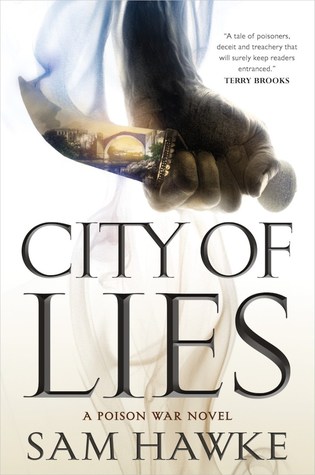
Mogsy’s Rating: 3.5 of 5 stars
Genre: Fantasy
Series: Book 1 of Poison Wars
Publisher: Tor Books (July 3, 2018)
Length: 560 pages
Author Information: Website | Twitter
City of Lies might not have completely won over my heart, but I will however give it the award for the most intriguing opening line I’ve read all year. “I was seven years old the first time my uncle poisoned me,” begins our protagonist Jovan, who is one half of a pair of highborn siblings whose family the Oromanis have long been entrusted to serve a sacred duty. Their job can be likened to that of Secret Service, keeping Chancellor Caslav of Silasta and his nephew Tain safe from unseen threats, though recognizing signs of poison is their specialty. From a young age, both Jovan and his sister Kalina have been trained by their uncle, the spymaster Etan, to identify all kinds of harmful substances, which sometimes involved being poisoned themselves in order to learn and become inured to their effects. But due to Kalina’s poor health, it was Jovan who was ultimately given the role of official proofer, whose task involves taste-testing Caslav’s food and drink for any signs of poison before it is consumed by the chancellor or his family.
Then one day, the unthinkable happens. Both Chancellor Caslav and Etan fall to a powerful poison, one that is unknown even to Jovan and his extensive records of poisonous substances. Tain is called upon to take up his uncle’s mantle, despite the heir being young and untried. The Oromani siblings subsequently pledge to become his protectors, all three of them stepping dutifully into their new roles even as they grieved for their murdered kin. They are tested nearly immediately, however, as a sudden uprising sweeps across the city, resulting in a rebel army amassing at their gates. Very soon, Silasta finds itself under siege. Still reeling from the sudden loss of Chancellor Caslav, the population is thrown into further chaos. Few have faith that the inexperienced Tain will be able to save the city, but Jovan and Kalina are determined to help their friend weather through the attack. First the deaths of their uncles, and now this surprise rebellion—it all just seems too coordinated to be coincidental. Perhaps if they can find out who poisoned the former chancellor and his spymaster, uncovering the conspiracy might give them a chance at survival.
Although it is rather clumsily executed, this novel’s aspiration to be a fantasy-mystery mashup is something I can appreciate. I also like the series’ focus on poison, a concept that is used both literally and figuratively in the narrative. Even as the story’s characters are dying from direct contact with poisonous substances, the city of Silasta itself is dealing with its own toxic situation. Something is rotten at its core, poisoning it from within and without. Told for the most part in alternating chapters in first-person between Jovan and Kalina’s perspectives, City of Lies is the story of the siblings’ efforts to sleuth out the ones responsible for the corruption in their midst. The book has elements of intrigue and spycraft, covert motives and betrayal, and eventually, a thread of magic even comes into play, though this aspect remains light and subtle throughout.
In the end, my main issue with City of Lies was its pacing. At times, it would read like a tensely wrought thriller, while at others, the plot slowed to a crawl. The book also struggled to maintain its air of mystery—though, to be fair, when this atmosphere was present, the story practically oozed a rich and almost cinematic quality. But perhaps what bothered me the most about reading this was this frustrating sense of stop-and-go, since I found it difficult to work up my enthusiasm for the story and characters every time the plot lost its momentum. I also wouldn’t exactly call this one an action-oriented novel, with its heavy focus on cloak-and-dagger elements which proved to be a double-edged sword. Keep in mind Jovan and Kalina weren’t really trained to be fighters; instead, they were taught to be observant, to memorize crucial information, and to charm and manipulate opponents rather than to attack them with physical force. While it was refreshing to read about protagonists who rely predominantly on more clandestine tactics, occasionally it could get a bit tedious watching them spin their wheels.
Speaking of which, I liked both Jovan and Kalina, but I found their POVs to be somewhat unbalanced. The focus favors Jovan, who appears to carry out most of the investigation, while his sister is relegated to tasks behind-the-scenes. Not that Kalina’s role in the resolution of the novel’s conflict was any less important, but it did feel as if she sacrificed a lot more, but her actions weren’t at the forefront due to the way this story was told. Already feeling overlooked, inadequate, and guilty because her health problems prevented her from taking on her rightful duties, her character probably deserved more attention from the author than she received, especially since Jovan’s chapters tended to be longer and more memorable the further we got into the book.
For a debut though, City of Lies is undoubtedly impressive. Whatever flaws it may have, I also feel there’s a good chance many of them will be ironed out as we progress through the series, due to the way this one ended. A follow-up called Hollow Empire is apparently already in the works, and since I’m curious as to what the future will hold for Silasta and its characters, I’ll be looking forward to reading the sequel.
Waiting on Wednesday 09/19/18
Posted on September 19, 2018 27 Comments
Waiting On Wednesday” is a weekly meme that first originated at Breaking the Spine but has since linked up with “Can’t Wait Wednesday” at Wishful Endings now that the original creator is unable to host it anymore. Either way, this fun feature is a chance to showcase the upcoming releases that we can’t wait to get our hands on!
Mogsy’s Pick
Twilight of the Gods by Scott Oden (April 30, 2019 by St. Martin’s Press)
I can’t believe I only just found out about this book! And I still would have been none the wiser had the author not stopped by my hidden gems post last week, and mentioned that one of my favorites, A Gathering of Ravens, will be followed up with a standalone sequel next spring. Guys, I’m fantastically excited about this one. If you enjoy historical fantasy, Norse mythology, and Orcs, you should check out the series.
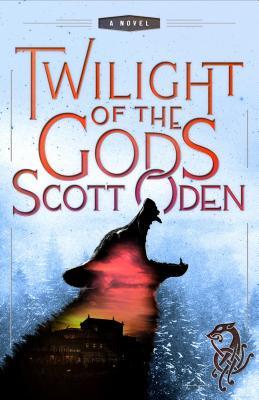 “It is the year of Our Lord 1218 and in the land of the Raven-Geats, the Old Ways reach deep. And while the Geats pay a tax to the King in the name of the White Christ, their hearts and souls belong to the gods of Ásgarðr. But no man can serve two masters.
Pledging to burn this Norse heresy from the land, famed crusader Konráðr the White leads a host against the Raven-Geats, using torch and sword to bring forth the light of the new religion. But the land of the Raven-Geats has an ancient protector: Grimnir, the last in a long line of monsters left to plague Miðgarðr. And he will stand between the Raven-Geats and their destruction.
Aided by an army of berserkers led by their pale queen, Grimnir sparks off an epic struggle –not only against the crusaders, but against the very Gods. For there is something buried beneath the land of the Raven-Geats that Odin wants, something best left undisturbed. Something the blood of the slain, Christian and pagan, will surely awaken.”
Top Ten Tuesday: Top Ten 2018 Books I Want to Read Before the End of the Year
Posted on September 18, 2018 42 Comments

Top Ten Tuesday was created by The Broke and the Bookish, a weekly meme that now resides at That Artsy Reader Girl. The meme first came about because of a love of lists. Who doesn’t love lists? The original creators also wanted their lists to be shared with fellow book lovers and to ask that we in turn share ours with them and connect with other book bloggers. To learn more about participating, stop by their page dedicated to it and dive in!
This week’s topic:Top Ten 2018 Books I Want to Read Before the End of the Year
Mogsy’s Picks
My list today has been adapted from the topic Top Ten Books On My Fall 2018 TBR, seeing as I’ve already covered all the titles I’m most excited for in this “Can’t Wait” Books of Late 2018 post. But as book bloggers, we all know that throughout the year our TBRs can get out of hand, and as hard as we try, it’s simply impossible to read everything on our most anticipated lists. Whether it’s due to prior commitments, lack of time, or just plain forgetfulness, many new releases I had been looking forward to have slipped through the cracks since the beginning of this year. Most of these are spring and summer 2018 books that I still very much want to read, and I’m promising myself right that now I will try my absolute best to strike these off my to-read list before the year is out:
 Master Assassins by Robert V.S. Redick
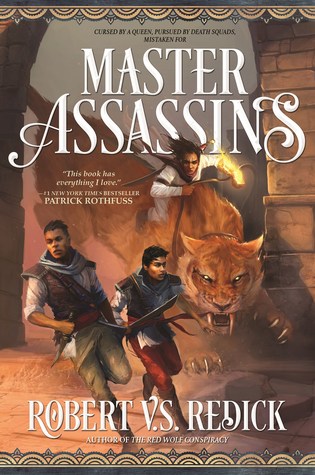
Kandri Hinjuman was never meant to be a soldier. His brother Mektu was never meant for this world. Rivals since childhood, they are drafted into a horrific war led by a madwoman-Prophet, and survive each day only by hiding their disbelief. Kandri is good at blending in, but Mektu is hopeless: impulsive, erratic—and certain that a demon is stalking him. Is this madness or a second sense? Either way, Kandri knows that Mektu’s antics will land them both in early graves.
But all bets are off when the brothers’ simmering feud explodes into violence, and holy blood is spilled. Kandri and Mektu are taken for contract killers and must flee for their lives—to the one place where they can hope to disappear: the sprawling desert known as the Land that Eats Men. In this eerie wilderness, the terrain is as deadly as the monsters, ghouls, and traffickers in human flesh. Here the brothers find strange allies: an aging warlord, a desert nomad searching for her family, a lethal child-soldier still in her teens. They also find themselves in possession of a secret that could bring peace to the continent of Urrath. Or unthinkable carnage.
On their heels are the Prophet’s death squads. Ahead lie warring armies, sandstorms, evil spirits and the deeper evil of human greed. But hope beckons as well—if the “Master Assassins” can expose the lie that has made them the world’s most wanted men.
 Outpost by W. Michael Gear

Donovan is a world of remarkable wealth, a habitable paradise of a planet. It sounds like a dream come true. But Donovan’s wealth comes at a price.
When the ship Turalon arrives in orbit, Supervisor Kalico Aguila discovers a failing colony, its government overthrown and the few remaining colonists now gone wild. Donovan offers the chance of a lifetime, one that could leave her the most powerful woman in the solar system. Or dead.
Planetside, Talina Perez is one of three rulers of the Port Authority colony—the only law left in the one remaining town on Donovan. With the Corporate ship demanding answers about the things she’s done in the name of survival, Perez could lose everything, including her life.
For Dan Wirth, Donovan is a last chance. A psychopath with a death sentence looming over his head, he can’t wait to set foot on Port Authority. He will make one desperate play to grab a piece of the action—no matter who he has to corrupt, murder, or destroy.
Captain Max Taggart has been The Corporation’s “go-to” guy when it comes to brutal enforcement. As the situation in Port Authority deteriorates, he’ll be faced with tough choices to control the wild Donovanians. Only Talina Perez stands in his way.
Just as matters spiral out of control, a ghost ship, the Freelander, appears in orbit. Missing for two years, she arrives with a crew dead of old age, and reeks of a bizarre death-cult ritual that deters any ship from attempting a return journey. And in the meantime, a brutal killer is stalking all of them, for Donovan plays its own complex and deadly game. The secrets of which are hidden in Talina Perez’s very blood.
 The Queens of Innis Lear by Tessa Gratton
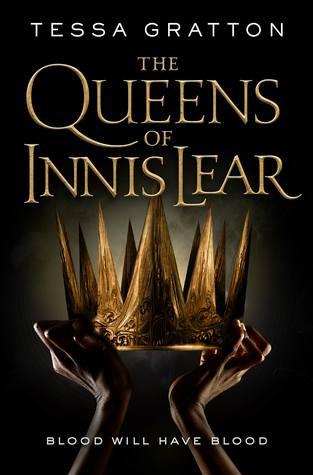
The erratic decisions of a prophecy-obsessed king have drained Innis Lear of its wild magic, leaving behind a trail of barren crops and despondent subjects. Enemy nations circle the once-bountiful isle, sensing its growing vulnerability, hungry to control the ideal port for all trade routes.
The king’s three daughters—battle-hungry Gaela, master manipulator Reagan, and restrained, starblessed Elia—know the realm’s only chance of resurrection is to crown a new sovereign, proving a strong hand can resurrect magic and defend itself. But their father will not choose an heir until the longest night of the year, when prophecies align and a poison ritual can be enacted.
Refusing to leave their future in the hands of blind faith, the daughters of Innis Lear prepare for war—but regardless of who wins the crown, the shores of Innis will weep the blood of a house divided.
 The Testament of Loki by Joanne M. Harris
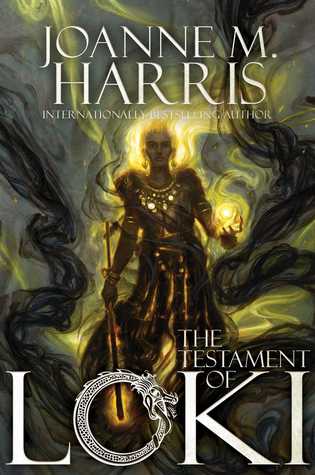
In the sequel to The Gospel of Loki, Loki’s adventures continue when he finds a way out of the end of the world and plans to restart the power of the Norse gods.
The end of the world—also known as Ragnarok to the Norse gods—has occurred, and Loki has been trapped in a seemingly endless purgatory, in torture, until he finds a way to escape. It seems that he still exists in the minds of humanity and uses that as a way to our time.
Back in the ninth world (Earth), Loki finds himself sharing the mind of a teenage girl named Jumps, who is a bit of a mess. She’s also not happy about Loki sneaking his way into her mind, since she was originally calling on Thor. Worse, her friends have also been co-opted by the gods: Odin, Jump’s one-eyed best friend in a wheelchair, and Freya, the pretty one. Thor escapes the netherworld as well and shares the mind of a dog, and he finds that it suits him.
Odin has a plan to bring back the Norse gods ascendancy, but Loki has his own ideas on how things can go—and nothing goes according to plan.
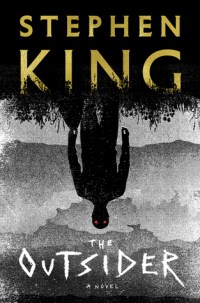 The Outsider by Stephen King

An unspeakable crime. A confounding investigation. At a time when the King brand has never been stronger, he has delivered one of his most unsettling and compulsively readable stories.
An eleven-year-old boy’s violated corpse is found in a town park. Eyewitnesses and fingerprints point unmistakably to one of Flint City’s most popular citizens. He is Terry Maitland, Little League coach, English teacher, husband, and father of two girls. Detective Ralph Anderson, whose son Maitland once coached, orders a quick and very public arrest. Maitland has an alibi, but Anderson and the district attorney soon add DNA evidence to go with the fingerprints and witnesses. Their case seems ironclad.
As the investigation expands and horrifying answers begin to emerge, King’s propulsive story kicks into high gear, generating strong tension and almost unbearable suspense. Terry Maitland seems like a nice guy, but is he wearing another face? When the answer comes, it will shock you as only Stephen King can.
 Drop by Drop by Morgan Llywelyn
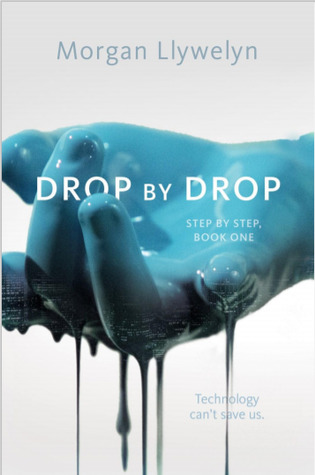
From Morgan Llywelyn, the bestselling author of Lion of Irelandand the Irish Century series, comes Drop By Drop her first near-future science fiction thriller where technology fails and a small town struggles to survive global catastrophe.
In this first book in the Step By Step trilogy, global catastrophe occurs as all plastic mysteriously liquefies. All the small components making many technologies possible—navigation systems, communications, medical equipment—fail.
In Sycamore River, citizens find their lives disrupted as everything they’ve depended on melts around them, with sometimes fatal results. All they can rely upon is themselves.
And this is only the beginning . . .
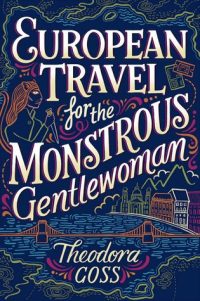 European Travel for the Monstrous Gentlewoman by Theodora Goss

Mary Jekyll’s life has been peaceful since she helped Sherlock Holmes and Dr. Watson solve the Whitechapel Murders. Beatrice Rappaccini, Catherine Moreau, Justine Frankenstein, and Mary’s sister Diana Hyde have settled into the Jekyll household in London, and although they sometimes quarrel, the members of the Athena Club get along as well as any five young women with very different personalities. At least they can always rely on Mrs. Poole.
But when Mary receives a telegram that Lucinda Van Helsing has been kidnapped, the Athena Club must travel to the Austro-Hungarian Empire to rescue yet another young woman who has been subjected to horrific experimentation. Where is Lucinda, and what has Professor Van Helsing been doing to his daughter? Can Mary, Diana, Beatrice, and Justine reach her in time?
Racing against the clock to save Lucinda from certain doom, the Athena Club embarks on a madcap journey across Europe. From Paris to Vienna to Budapest, Mary and her friends must make new allies, face old enemies, and finally confront the fearsome, secretive Alchemical Society. It’s time for these monstrous gentlewomen to overcome the past and create their own destinies.
 Ravencry by Ed McDonald

Four years have passed since Nall’s Engine drove the Deep Kings back across the Misery, but as they hurl fire from the sky, darker forces plots against the republic.
A new power is rising: a ghost in the light known only as the Bright Lady manifests in visions across the city, and the cult that worship her grasp for power even as the city burns around them.
When Crowfoot’s arcane vault is breached, an object of terrible power is stolen, and Galharrow and his Blackwings must once find out which of Valengrad’s enemies is responsible before they have a chance to use it.
To save Valengrad, Galharrow, Nenn and Tnota must venture to a darker, more twisted and more dangerous place than any they’ve walked before: the very heart of the Misery.
 The Tower of Living and Dying by Anna Smith Spark
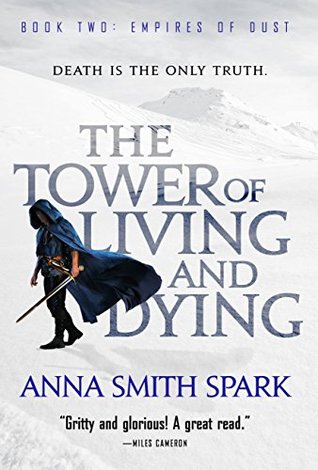
Marith has been a sellsword, a prince, a murderer, a demon, and dead. But something keeps bringing him back to life, and now there is nothing stopping him from taking back the throne that is rightfully his.
Thalia, the former high priestess, remains Marith’s only tenuous grasp to whatever goodness he has left. His left hand and his last source of light, Thalia still believes that the power that lies within him can be used for better ends. But as more forces gather beneath Marith’s banner, she can feel her influence slipping.
Read the second book in this “gritty and glorious!” (Miles Cameron) epic fantasy series reminiscent of Joe Abercrombie and Mark Lawrence where the exiled son of a king fights to reclaim his throne no matter the cost.
 Blood Cruise by Mats Strandberg

On the Baltic Sea, no one can hear you scream.
Tonight, twelve hundred expectant passengers have joined the booze-cruise between Sweden and Finland. The creaking old ship travels this same route, back and forth, every day of the year.
But this trip is going to be different.
In the middle of the night the ferry is suddenly cut off from the outside world. There is nowhere to escape. There is no way to contact the mainland. And no one knows who they can trust.
Welcome aboard the Baltic Charisma.


 The BiblioSanctum