Audiobook Review: Lipstick Voodoo by Kristi Charish
Posted on January 20, 2019 22 Comments
I received a review copy from the publisher. This does not affect the contents of my review and all opinions are my own.
 Lipstick Voodoo by Kristi Charish
Mogsy’s Rating: 4 of 5 stars
Genre: Urban Fantasy
Series: Book 2 of Kincaid Strange
Publisher: Audible Studios (January 8, 2019)
Length:12 hrs and 10 mins
Author Information: Website | Twitter
Narrator: Susannah Jones
It was nice getting back into the world of Kincaid Strange with Lipstick Voodoo, and reading it has made me realize how much I’d missed this kind of urban fantasy. Thing is, I’m just not reading as much of the genre as I used to. I’ve gotten pickier these days, and my UF reads are mostly limited to series I’ve already started and to only books that I feel are breaking the mold. While I would hesitate to label the Kincaid Strange novels as “typical”, admittedly they do follow a certain type of formula, containing a lot of the tropes often associated with the genre. At the same time though, I’m guessing that’s where all the warm and fuzzy down-earth-vibes I’m getting are coming from.
Lipstick Voodoo is the sequel to The Voodoo Killings, and picks up soon after the events of the first book. As one of the only few licensed (and legit) paranormal practitioners on the entire west coast, Kincaid Strange has got her hands full with new jobs, and yet she’s still always nearly broke. At the moment, simply trying to keep her zombie roommate “alive” and in one piece is draining her bank account. Nathan Cade used to be a pretty big deal on the 90’s Seattle grunge scene before he died in a boating accident at the height of his fame, and until recently, he’s spent the last two decades or so continuing his musical career as a ghost. But now, due to a magical ritual gone wrong, he is trapped in an animated corpse that is slowly decomposing, and if Kincaid doesn’t find a solution to the problem soon, his spirit will die along with its vessel.
Meanwhile, Kincaid is also in trouble with Gideon, the ghost of a sorcerer who is currently furious with her for destroying a body he had intended to inhabit. Now Gideon figures she owes him a huge debt, and he’s not going to rest until it is exacted. As if her life wasn’t complicated enough, Kincaid is also trying to sort out her feelings for Aaron, her ex-boyfriend who is a detective on the police force. The reopening of a twenty-year-old paranormal case has led to Aaron calling her up for her expertise, and the fact that it involves a murdered rocker who was a contemporary of Nathan Cade’s has both the detective and our protagonist wondering if her undead roommate may have had something to do with the death.
Lipstick Voodoo was everything I wanted—fast and fun, with just the right amount of offbeat humor and charm. We mostly have our main character to thank for that. In some ways, Kincaid Strange reminds me a bit of a modernized Anita Blake (but savvier and less raunchy), most likely due to her supernatural ability to draw energy from the otherworld to fuel her necromantic magic. But while she may conform to the familiar archetype of the urban fantasy female protagonist (e.g., strong and independent, to the point of preferring to work alone; having few female friends and strained relationships with remaining family members; always getting in trouble with the powerful head honchos of the paranormal community because of her snarky, sometimes impetuous attitude; dealing with a tricky situation with an on-again-off-again beau, etc., etc., etc.), Kincaid also possesses a number of qualities that endeared me to her personality. For one thing, unlike a lot of bull-headed heroines who can’t see past their own self-importance, she knows what her weaknesses are and isn’t afraid to take an L if it means fighting another day. She’s also very loyal to the people she cares about. And slowly but surely, she’s coming around to the idea that it’s okay not to have to fight one’s battles alone.
On the world-building side of things, I’m once more impressed. As any fan of this genre knows, establishing the setting and a “sense of place” is always a huge component of an urban fantasy series, and I like how Kristi Charish is continuing to build upon her paranormal version of Seattle with an eye towards detail and atmosphere. Not only has she populated her world with all manner of creatures from ghouls to ghosts, she’s taken care to include examples of how the presence of the supernatural has also impacted everyday life. Incorporating the musical culture of the city into her story was also a stroke of genius; I’d liked this aspect when I read the first book and was thrilled to see it carried through to this sequel.
Lipstick Voodoo also ties up several plot threads from the previous novel while introducing new ones to look forward to. For a series that only has two books out right now, Kincaid Strange is already flowing like an extremely well-oiled machine with the promise of even more quirky and entertaining stories to come. I am looking forward to the next adventure starring our plucky heroine.
Audiobook Comments: I made the switch from print to audiobook with this installment, a decision I do not regret at all. I generally find that most urban fantasy works great in audio, especially with a book as light and fun as Lipstick Voodoo. As a bonus, Susannah Jones was fantastic as narrator, possessing the perfect voice and cadence to portray Kincaid Strange, but she also delivered incredible performances for all the other characters. If you’re an audiobook listener thinking about checking out this series, I highly recommend this format.


More on The BiblioSanctum:
Review of The Voodoo Killings (Book 1)
Mogsy’s Bookshelf Roundup: Stacking the Shelves & Recent Reads
Posted on January 19, 2019 31 Comments
Bookshelf Roundup is a feature I do every other weekend which fills the role of several blog memes, like Stacking the Shelves where I talk about the new books I’ve added to my library or received for review, as well as It’s Monday! What Are You Reading? where I round up what I’ve read since the last update and what I’m planning to read soon. Mostly it also serves as a recap post, so sometimes I’ll throw in stuff like reading challenge progress reports, book lists, and other random bookish thoughts or announcements.

Received for Review
My thanks to the publishers and authors for the following review copies received, and be sure to click the links to their Goodreads pages for more details and full descriptions!

Thank you to 47North and the amazing folks at Wunderkind PR for Smoke & Summons by Charlie N. Holmberg, a novel of magical steampunk, romance, and adventure. Right now I’m tentatively scheduling this one for a February read, and I hope it works out because the book sounds neat.
My thanks also to Crown Publishishing for this surprise ARC of Recursion by Blake Crouch. I loved Crouch’s Dark Matter so much, that any new book of his goes immediately on my to-read list! I hope this one will be just as fun and addictive.
A big thanks also goes to DAW Books as they have been spoiling me silly by surprising me with a bunch of awesome looking ARCs over the last few weeks. I didn’t know too much about Finder by Suzanne Palmer, but some research told me it is a sci-fi caper starring a protagonist who is a thief, con artist and repo man. Well, you have my attention.

Next up, Fire Season by Stephen Blackmoore is the fourth volume of the urban fantasy series starring the necromancer Eric Carter. I haven’t gotten around to trying this series yet, but it’s on the TBR. Looks like I’ll have some catching up to do. The Master of Dreams by Mike Resnick is the start of a new fantasy trilogy offering an adventure through space and time. Despite Resnick being quite a big name in SFF, I think I’ve only read like one book by him. This looks a little different from his usual stuff though, and I’m curious to check it out. And finally, A Parliament of Bodies by Marshall Ryan Maresca is the third book of the Maradaine Constabulary series. To be honest, the author has so many series set in this world that I can’t really be sure if this is one I’m caught up with. I think I am, so I’ll probably read this at some point closer to its late March release. My thanks again to DAW Books.

Courtesy of the awesome team at William Morrow, I received a finished copy of The Night Agent by Matthew Quirk. This one’s a new discovery for me, though I’m aware it’s a thriller and its description looks promising in that it sounds like something that I would have trouble putting down and keep me reading into the night. I’ll probably find myself in the mood to read this at some point.
And thank you to Tor Books for this arrival that I should have featured a while ago, because it actually came before the holidays but it somehow fell through the cracks (quite literally). Willful Child: The Search for Spark by Steven Erikson is the third novel in his highly humorous and tremendously silly Star Trek spoof series. It is completely off the wall, but I’ve been enjoying it. I’ll be sure to be reading this when I need some laughs.
Last but not least, I’d like to give a special shout out to author Edward Lazellari for sending me a copy of his book The Lost Prince, volume two of The Guardians of Aandor trilogy. Tor had sent me a review copy of the third book, but I wasn’t caught up with the series yet, and when Ed found out, he offered to remedy that immediately. I’m currently reading this one now, so a review shouldn’t be long in coming!


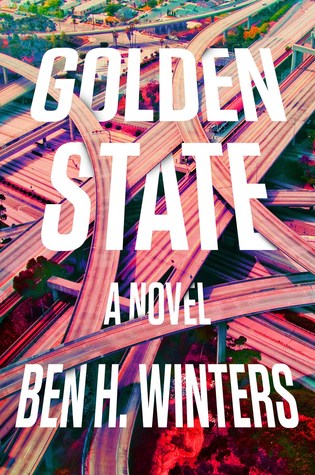
And a, uh, bit of an explosion happened in my digital haul this week, on account of a bunch of audio review copies becoming available all at once. Courtesy of Macmillan Audio, I received The Gilded Wolves by Roshani Chokshi, which I just finished listening to, and, well, I guess there’s some truth to the early reports calling it a watered-down Six of Crows. But if you like heist stories, it’s all good. From Penguin Audio, I grabbed Black Leopard, Red Wolf by Marlon James, the first book of a new trilogy steeped in fantasy, mythology and history about a mercenary hired to find a missing child. From their YA imprint, Listening Library, I was thrilled when I saw they’d put up an advance listening copy of The Triumphant by Lesley Livingston, the final book in her Valiant series about female gladiators – which was downloaded straight away, of course. From Hachette Audio, I also picked up Golden State by Ben H. Winters. Anything he writes goes straight onto my to-read list, and this police drama set in a dystopian state has a unique and special twist that I think I’ll enjoy. And from Audible Studios, I couldn’t resist requesting Lipstick Voodoo by Kristi Charish when I found out there was an audio version. I’ve finished this one already, so a review should be up in a day or two.
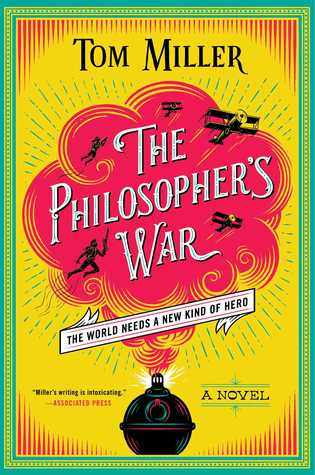
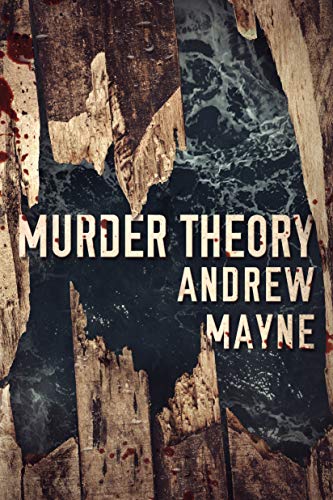
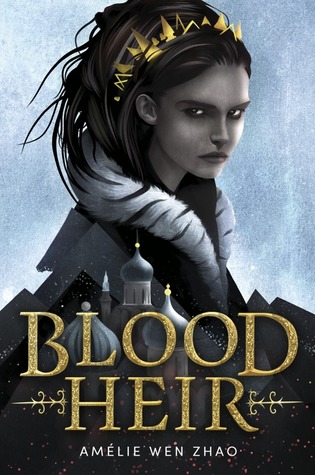
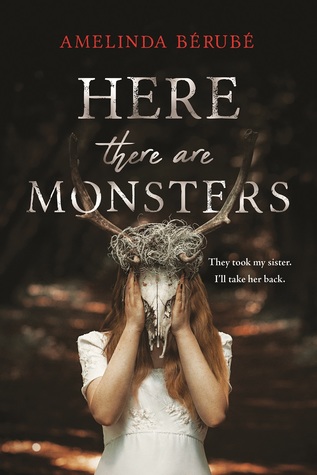
On to the NetGalley pile, The Philosopher’s War by Tom Miller was a “Read Now” that I grabbed as soon as I saw it was available from Simon & Schuster. I’ve made it no secret how much I loved the first book, and I was ecstatic at the prospect of continuing the series. Murder Theory by Andrew Mayne is another highly anticipated sequel and was also an instant download with thanks to Thomas & Mercer. I don’t think I’ve ever smashed that request button as fast or as hard as I did when I learned that the eARC had gone out into the world. And already, that auto-approval from Random House Children’s is proving to be a double-edged sword, but I somehow managed to limit myself to one book that was actually on my anticipated YA list. Blood Heir by Amélie Wen Zhao is described as a dark Anastasia retelling, about a fugitive princess with the power to control blood. And finally, with thanks to Sourcebooks Fire, my request for Here There Are Monsters by Amelinda Bérubé was approved earlier this week. I know expectations are never too high for YA Horror, but I really think there’s a lot of potential with this one.
Reviews
A quick summary of my reviews posted since the last update:
The Winter Road by Adrian Selby (4.5 of 5 stars)
The Gutter Prayer by Gareth Hanrahan (4 of 5 stars)
The Wicked King by Holly Black (4 of 5 stars)
Darksoul by Anna Stephens (4 of 5 stars)
The Lost Puzzler by Eyal Kless (3.5 of 5 stars)
Cold Iron by Miles Cameron (3.5 of 5 stars)
The Cold is in Her Bones by Peternelle van Arsdale (3 of 5 stars)
Roundup Highlights:

What I’ve Read Since the Last Update
Here’s what I’ve managed to “unstack” from the TBR since the last update. I think I’ve only reviewed one of these so far, so more on the way soon…
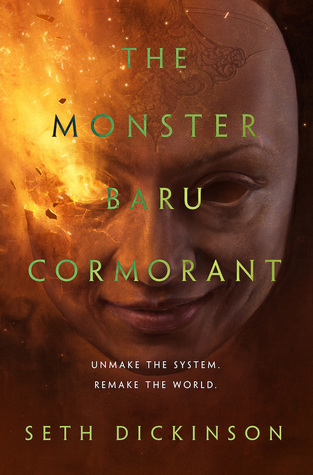


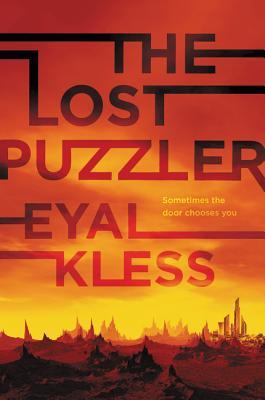

Have you heard of or read any of the books featured this week? What caught your eye? Any new discoveries? I hope you found something interesting for a future read! Let me know what you plan on checking out. Until next time, see you next Roundup!
Friday Face-Off: Amulet
Posted on January 18, 2019 21 Comments
Welcome to The Friday Face-Off, a weekly meme created by Books by Proxy! Each Friday, we will pit cover against cover while also taking the opportunity to showcase gorgeous artwork and feature some of our favorite book covers. If you want to join the fun, simply choose a book each Friday that fits that week’s predetermined theme, post and compare two or more different covers available for that book, then name your favorite. A list of future weeks’ themes are available at Lynn’s Book Blog.
This week’s theme is:
~ a cover featuring an AMULET
Mogsy’s Pick:
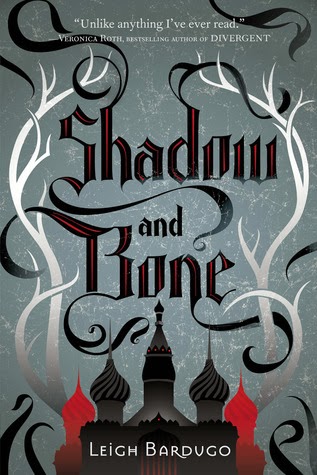
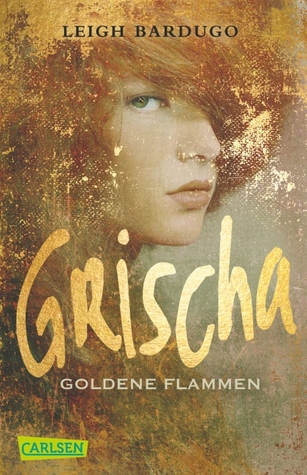
Shadow and Bone by Leigh Bardugo
Wow, I had a lot more trouble with this week’s topic than I expected. Luckily, while browsing through a list of books I’ve read, I came upon one edition of Shadow and Bone on Goodreads that fits the theme, so that settled it.
Since this is another book that has had many versions published, once again I’m only featuring the covers I think are the most interesting or that are standouts, which should make it easier to narrow down my favorites.
From left to right:
Henry Holt and Company (2012) – Indigo (2012) – Square Fish (2017)


Polish Edition (2017) – French Edition A (2013) – French Edition B (2017)


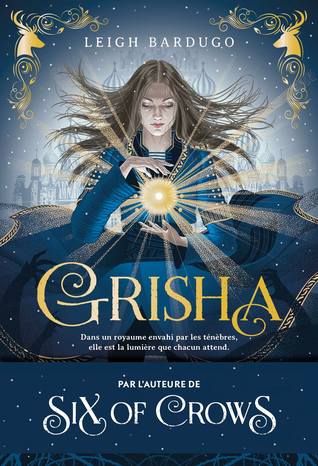
Italian Edition (2013) – Indonesian Edition (2013) – Czech Edition (2017)


Cerman Edition A (2012) – German Edition B (2014) – Vietnamese Edition (2014)


Winner:
Oh, why are all the covers for this book so pretty? This week there are several strong contenders for my favorite, including the Indigo edition (not sure why they went with a different title), the Square Fish edition, the 2017 French edition, and the Italian edition (which has a very striking art style). I love cool blue shades, which is why narrowing it down to just one pick is very tough. There can only be one winner though, so I bit the bullet and made my choice.
But what do you think? Which one is your favorite?
Book Review: The Lost Puzzler by Eyal Kless
Posted on January 17, 2019 27 Comments
I received a review copy from the publisher. This does not affect the contents of my review and all opinions are my own.
The Lost Puzzler by Eyal Kless
Mogsy’s Rating: 3.5 of 5 stars
Genre: Science Fiction, Dystopian
Series: Book 1
Publisher: Harper Voyager (January 8, 2019)
Length: 528 pages
Author Information: Website | Twitter
The Lost Puzzler was a puzzle, in more ways than one. Not only was the story shrouded in mystery, the plot was also slow to unravel, inviting the readers to seek the solution to the big question while doling out clues gradually in a teasing fashion. In addition, the structure of the book felt like a series of many separate and dissimilar segments making up a whole, thus making it feel very fractured.
For obvious reasons, novels like this often present me with a conundrum: how to rate it when I enjoy some of its pieces but not the others? In the case of The Lost Puzzler, I loved everything about the first half. We begin the tale through the eyes of a lowly scribe of the Guild of Historians who has been tasked with a dangerous mission to discover the fate of a boy who disappeared more than a decade before. This boy—named Rafik—is said to be a Puzzler, an individual with a special talent to unlock mysterious puzzle box-like nodes that are scattered across the world, hidden away in labyrinths and other dungeon-like places, where they guard the valuable treasures of the lost Tarkanian civilization. Following an apocalyptic event known as the Catastrophe, those who survived have split into different groups, and one of these groups called the Salvationists believe that the answers lie in the ancient technology of their forebears. They send teams on dangerous expeditions to plunder Tarkanian strongholds, where the Puzzler will attempt to crack their defenses while the rest of the squad protects itself from threats like traps and attacking lizard-like creatures.
Soon after the intro though, the narrative shifts to tell the story of Rafik. He was born in a community that has reverted to the old ways after the Catastrophe, becoming deeply faithful to the new gods they worship while shunning everything to do with technology. When the strange tattoos marking him as special began appearing on Rafik’s fingertips, his parents feared their son cursed, sending him away to a “friend” of the family who promised to get a good price for him at auction. Recognizing his value, a powerful guild ends up purchasing Rafik at a high price, nearly bankrupting themselves in the process. To ensure a return on their investment, Rafik’s new handlers begin grooming him for the demanding role of Puzzler, putting him through rigorous training exercises to prepare him for his first expedition.
The book flips the reader back and forth between these two timelines—the one in the present, where our historian attempts to extract Rafik’s story from a woman who used to know him, and the one in the past, which flashes back to her knowledge of the boy’s history and her recollections of her time with him. The awkward transitions notwithstanding, I generally liked how the two narratives were presented, especially the way they framed Rafik’s backstory while doing an excellent job filling in the lore and background of the setting. Like I said, I loved the first half of the book, particularly the parts detailing the initial stages of Rafik’s exile, from the time he discovered the telltale markings on his hand to the harrowing journey on the road where he is traded from master to master.
Not surprisingly, some of my favorite moments from the book came from these early segments, with Rafik’s time with the charismatic Captain Sam and his supertruck Sweetheart immediately coming to mind. The problem, however, is that many of these fascinating encounters are much too short. While I really enjoyed Rafik’s backstory, I wasn’t so much a fan of the episodic nature of his narrative. It felt really fragmented, with his character being passed like a hockey puck from one situation to the next, not to mention how a lot of the entertaining side characters end up sticking around just long enough to endear themselves to the reader before they are swiftly left behind and never to be seen again. It seemed a little wasteful, in a way, how many of the incredible characters and concepts presented here were never explored to their full potential. It made me think that much of Rafik’s backstory of his time before being sold to the Salvationist guild could have been cut down or reworked because of the way it plodded and meandered.
The novel also started losing me in its second half. After Rafik is bought by the guild, the story descends into a confusion of ideas that remind me of a bit of a fantasy RPG campaign mixed with the premise of a YA dystopian like The Maze Runner. These elements didn’t mesh as well with the rest of the world-building. I also didn’t feel as invested in the story once the present timeline took over for good. And while the conclusion provided some answers, the explanations given were convoluted and I didn’t find them particularly helpful, especially since they led to even more questions.
All of this led to my mixed opinions on the The Lost Puzzler. At times, it was a compelling page-turner where all I wanted was to know more about the life of Rafik and his abilities; other times, I was uncertain how I felt about the story’s direction and disjointed sections. That said, on the whole I found this to be an entertaining read and a fairly solid debut, and at this point I’m up for giving this world another go if there is a sequel.

Waiting on Wednesday 01/16/19
Posted on January 16, 2019 14 Comments

Waiting On Wednesday” is a weekly meme that first originated at Breaking the Spine but has since linked up with “Can’t Wait Wednesday” at Wishful Endings now that the original creator is unable to host it anymore. Either way, this fun feature is a chance to showcase the upcoming releases that we can’t wait to get our hands on!
Mogsy’s Pick
Wherever She Goes by Kelley Armstrong (June 25, 2019 by Minotaur)
I’m sure I’ll get around to reading Kelley Armstrong’s paranormal/fantasy one of these days, but man, she just keeps coming out with these amazing suspense and psychological thrillers.
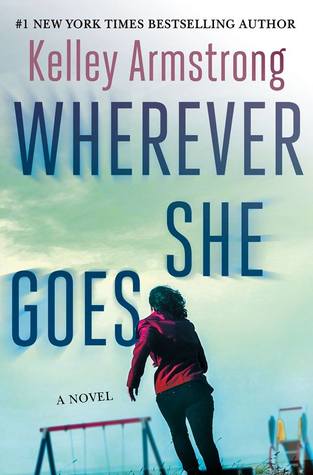 “From New York Times bestselling author Kelley Armstrong comes a brand new psychological thriller about the lengths one woman will go to in order to save a child.
“Few crimes are reported as quickly as a snatched kid.”
That’s what the officer tells single mother Aubrey Finch after she reports a kidnapping. So why hasn’t anyone reported the little boy missing? Aubrey knows what she saw: a boy being taken against his will from the park. It doesn’t matter that the mother can’t be found. It doesn’t matter if no one reported it. Aubrey knows he’s missing.
Instead, people question her sanity. Aubrey hears the whispers. She’s a former stay-at-home mom who doesn’t have primary custody of her daughter, so there must be something wrong with her, right? Others may not understand her decision to walk away from her safe life at home, but years of hiding her past – even from the people she loves – were taking their toll, and Aubrey knows she can’t be the mother or wife she envisions until she learns to leave her secrets behind.
When the police refuse to believe her, she realizes that rescuing the boy is up to her alone. But after all the secrets, how far is she willing to go? Even to protect a child.”
Top Ten Tuesday: Top Ten New-To-Me Authors I Read For The First Time In 2018
Posted on January 15, 2019 34 Comments

Top Ten Tuesday was created by The Broke and the Bookish, a weekly meme that now resides at That Artsy Reader Girl. The meme first came about because of a love of lists. Who doesn’t love lists? The original creators also wanted their lists to be shared with fellow book lovers and to ask that we in turn share ours with them and connect with other book bloggers. To learn more about participating, stop by their page dedicated to it and dive in!
This week’s topic: Top Ten New-To-Me Authors I Read For The First Time In 2018
Mogsy’s Picks
How often have you said to yourself, “OMG! Why did it take me so long to read <insert author’s name>’s books?!” For me that feels like a very frequent occurrence which is why I love today’s topic – and why I’m also happy to be making another one of these lists, this time for 2018.
Also note that I’ve mostly featured authors who have been writing for many years, or already have several novels/short stories out, otherwise this would be a very long post! I also won’t be naming any debut authors today, because I already made that list.
 Jennifer Estep

I’d never read Jennifer Estep before Kill the Queen, though I’ve often seen her name spoken of highly among readers in urban fantasy and paranormal romance circles. As a result, I’d long been curious about her work, so when I first learned that she was venturing into epic fantasy with a new book described as a royal revenge story about a female gladiator, I was instantly intrigued. While trope-laden and not terribly original, I think it says a lot about Estep that she was able to carry the story using the strength of her writing skills alone. If her goal was to write a highly accessible and entertaining high fantasy, I would say she succeeded. At the end of the day, Kill the Queen was a surprisingly good read, despite the story’s overall predictability and heavy reliance on well-worn tropes. For those of us who do not mind something a little lighter and fluffier—or just want to kick back with something fun—this will do the trick nicely, and the series has plenty of potential to grow over time. I look forward to reading the next book.
 W. Michael Gear

Talk about being late to the party. W. Michael Gear has been a name in science fiction for a while, though I only read him for the first time in late 2018 with Outpost, the first book in his Donovan trilogy that took me completely by surprise. By the time I finished, I already had the sequel in hand and ready to go, so for once, I wasted no time in diving into Abandoned. Very few authors can motivate me to do that, but Gear’s storytelling is superb and his handling of the characters and the fact they are always shifting and evolving is why I enjoyed these books so much. The series is very much a human story involving the triumph of the will to survive, despite the trying circumstances. You also gotta love the politics, mystery, and even a bit of romance. There are so many places to go, people to meet, and stories to discover; there’s action and adventure, high drama mixed with intrigue and suspense, a dash of passion and heartbreak. I can’t wait to see what else the trilogy has in store for us, and I’ve since added W. Michael Gear to my list of must-read authors.
 Madeline Miller

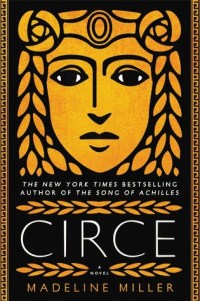
I’d heard of Madeline Miller before, mostly because of her highly acclaimed The Song of Achilles, but I only read her for the first time with Circe. In this novel, Miller presents an almost memoir-like narrative about the titular character, a relatively minor goddess compared to some of the bigger, more famous names in the pantheon. I was aware that this sort of Greek myth retelling is what Madeline Miller is known for, but wow, I had no idea until I actually saw it for myself. Not only does the author bring our favorite mythological figures to life, she also takes them to newer and higher limits by exploring their hearts, minds, and voices. In the end, I believe this is why I enjoyed Circe so much. Miller transformed the character’s tale into a gorgeous work of art, giving the the goddess heart and soul. As a longtime fan of Greek mythology, I’ve been dreaming about a book like this ever since I was a kid, and while I’ve not had the pleasure of reading The Song of Achilles yet, it and everything else Miller writes in the future is now on my to-read list.
 Jennifer Lynn Barnes

I knew when I picked up Little White Lies that it might be a little outside my wheelhouse, but what I didn’t anticipate was how much fun it was going to be. Set in the world of debutante balls and grand estates, this novel might as well be set on another planet for all I know about Southern high society, but Jennifer Lynn Barnes ushered me through this beguiling YA mystery with a certain kind of mastery and finesse I’ve found only in the most skilled of writers. This was my first novel by the author, but I knew I had found something special when within the first ten chapters, I was already thoroughly sold on her writing. She has a talent with words, which paired with a great sense of timing made it easy to become utterly absorbed in the story. Barnes was also able to create such a clear picture of the setting from the get-go, that everything else about characters and their lives just came easy. And there were a lot of names to keep track of in the book, but thankfully, characterization was fantastic, giving every individual memorable dialogue and personalities. While Jennifer Lynn Barnes might not always write in my preferred genres, I liked my first experience with her work so much, that I’m going to be following her future work regardless.
 Caroline Kepnes

Not gonna lie, Providence was weird. But it was weird in a good way, intriguing enough that I have no doubt I will be picking up more of Caroline Kepnes’ books in the future. From my first taste of her storytelling, I can already tell she’ll be full of surprises. Providence was like that, and not least because of its strong connection to H.P. Lovecraft and his works. Not being familiar with Lovecraft’s The Dunwich Horror at all, I can’t say for sure how much it inspired this story or whether Kepnes intended Providence to be a retelling of sorts, but it is referenced time and time again and becomes important to the main characters. It is also a very tough book to categorize, and as such, it probably won’t be for everyone, but for those who enjoy singular and unusual stories, this is one definitely fits the bill. I might not always be in the mood for something so offbeat and different, but hey, if I’m ever up for something completely unique and outside the box, I know Caroline Kepnes is an author whose work I can turn to.
 Christopher Moore

Speaking of offbeat and different, Noir was my first experience with the writing of humorist Christopher Moore, and I was not disappointed. In fact, even days after I finished reading the book, I still caught myself chuckling at the memory of some of the wild and whacky things that happened in it. Although I’m unable to comment on the way this novel compares with the author’s other work (I’ve come across some reviews from longtime fans that mention that it feels different), l can nonetheless understand why many readers find his stories entertaining. Part satire and part homage, Noir feels like a zany, breathless love letter to the genre for which it is named. This kind of tongue-in-cheek style is apparently is something of a specialty for Moore. Certain elements are done in an over-the-top way to emphasize or poke fun at some of the genre’s more distinctive features, so that rather than dark and tense, the atmosphere has been replaced by an eccentric, madcap energy that pervades the whole book. At the end of the day, I suppose what really matters is that I enjoyed it. Humor being such a subjective beast, I wasn’t sure if my tastes would mesh well with Christopher Moore’s style, but it appears I no longer have to be concerned on that front. If it means getting more of the same laughs and cleverness I found in Noir, I’m definitely on board to read more of his stuff.
 John Gwynn

A Time of Dread was my first time reading John Gwynne, and yup, he is the real deal, folks. Now I wish I had jumped on board his Faithful and the Fallen series when I had the chance. However, I am glad I was able to read the start his new trilogy called Of Blood and Bone. Set in the same world as Gwynne’s previous series, this novel takes place approximately 120 years after Wrath, its concluding volume. It may seem like a lot to take in, but the novel starts off at measured pace and introduces each element of the world gradually, filling in its rich history and the characters’ backgrounds. This narrative steadily broadens as we move from within the confines of fortresses into the wider spheres beyond, focusing on the big picture and the roles our main characters play within this framework. Some of them are linked almost right away, while others lie in wait until the time comes for their involvement in the story’s overall conflict. Each had something useful to bring to the table, not to mention different reasons to cheer for them, and together they gave the narrative an eclectic assortment of personalities and viewpoints, keeping things interesting and leaving me eager to continue the saga.
 Josh Malerman

In truth, had I been in a better mood for Unbury Carol, I might have liked it even more, but I had a hard time finding my footing when it came to the intro of the book, and I think its peculiar mix of genre elements might have been a contributing factor. With Josh Malerman at the helm, I think I might have also expected a bit more horror from my first venture into his work. Instead, what we get is more of a mix of dark fantasy combined with the supernatural, set in a vaguely historical context reminiscent of the Old West. “Weird Western meets a twisted fairytale retelling” is perhaps the best description I can think of, though that is also grossly simplifying the novel. Still, while the story might have taken its time getting off the ground, sticking with it was an investment that paid off in the end. I also saw nothing that would put me off from reading more of Josh Malerman’s work, and in fact, I already have his next novel Inspection on my to-read list, as well as several from his backlist, like Black Mad Wheel and Bird Box.
 Tamora Pierce

I still can’t believe it’s taken me this long to read Tamora Pierce. Tempest and Slaughter was my first book by her, and I loved it. The story follows protagonist Arram Draper, a gifted 10-year-old mage whose power rivals even that of students almost twice his age at the prestigious Imperial University of Carthak. What’s interesting is that this little boy eventually grows up to become the powerful mage known as Numair Salmalín, a character who features prominently in a lot of Tamora Pierce’s books set in the Tortall universe. But in Tempest and Slaughter, he is still just a child, and the series is supposed to chronicle his early life. I’ll be honest here; not much really happens by the end of this book, but I think the author’s powerful character study of Arram and the intimacy of his tale will go a long way in making up for that lack of story progression. Throughout it all, I never lost interest. If anything, my curiosity about the book’s world has only grown, and I find myself wanting to read more of Pierce’s work, even contemplating taking a look at her other series set in the Tortall universe while waiting for the sequel.
 Raymond E. Feist

As I had never read Raymond E. Feist before picking up King of Ashes, I went in with a completely blank slate and no pre-conceived notions of the author or the novel. What followed was a satisfying read, though at times, it felt to me that over the years, the fantasy genre has moved on from a lot of the ideas featured in this story. In fact, I found that Feist could be downright frank in his writing style, cutting straight to the matter while leaving no room for subtlety. Everything is spelled out for the reader when it comes to his characters’ thoughts and motivations, and there is little finesse or attempt to show instead rather than tell. To be fair, this isn’t always bad; the writing is reminiscent of what I would call a classic or old-school style, in that it is very straightforward and easy to read, and there’s a strong sense that what you see is what you get. Nevertheless, I think it’s perfect for anyone seeking a fun traditional epic fantasy, or that nostalgic feel. Despite all the well-worn tropes, I enjoyed myself. King of Ashes managed to set the stage marvelously for more to come, and I’m curious to see where Raymond E. Feist will take things in the sequel.
Book Review: The Gutter Prayer by Gareth Hanrahan
Posted on January 14, 2019 33 Comments
I received a review copy from the publisher. This does not affect the contents of my review and all opinions are my own.
 The Gutter Prayer by Gareth Hanrahan
Mogsy’s Rating: 4 of 5 stars
Genre: Fantasy
Series: Book 1 of The Black Iron Legacy
Publisher: Orbit (January 22, 2019)
Length: 544 pages
Author Information: Website | Twitter
The Gutter Prayer is a novel that got a lot of pre-publication attention; even half a year before it was due to come out, I was already hearing readers sing its praises. This was the fantasy novel all fans should be checking out in 2019, apparently—especially if your predilections run towards grimdark.
So I read it. And now I understand where all the love is coming from.
Our story, for the most part, is centered on the lives of three thieves. Cari, Spar and Rat have not known each other for long, but by the time they were called upon to work together in a secret plot hatched up by Heinreil, the city of Guerdon’s most notorious crime boss, the three of them were already…well, as thick as thieves. Spar is the son of a late gang leader, but he is also a Stone Man—the term given to someone afflicted with a degenerative disease which slowly petrifies the body and its organs, turning them hard as rock. Rat is a Ghoul, a member of a race of underground people who live in the old tunnels and crypts of the city, subsisting on the flesh of the dead. And Cari is an orphan and a drifter who feels like she owes a lot to her other two companions, who took her into their gang even though she arrived with nothing to her name.
Their job together was supposed to be quick and simple: a smash-and-grab at the city’s House of Law, where the three of them were tasked to steal an important document. But little did they know, Heinreil had other plans, and their little group was only meant to be a distraction. The night ends in disaster, with a great fire that levels a good chunk of Guerdon and claims lives. And Cari, who was injured and knocked out in the commotion, wakes up in a thieftaker’s prison with a new power in her head.
The Gutter Prayer, in many ways, is the perfect marriage of grimdark and epic fantasy. Here you will find the grittiness and cynicism one might expect from a Joe Abercrombie or Scott Lynch novel, but also the kind of unique and imaginative world-building that wouldn’t feel out of place in a Brandon Sanderson story. Clearly Gareth Hanrahan’s experience as a game designer and RPG writer has also served him well in writing his debut, for many of the ideas in here—particularly those related to creatures and theistic myths—reminded me a lot of elements from fantasy tabletop campaigns.
The world of this novel is, in a word, incredible. While most of the story is confined to Guerdon, the narrative never lets you forget that this little corner of the universe is just one piece of a greater puzzle, so not once does the setting ever feel small. The place is rich with history, its culture influenced by the diversity of its peoples and religions. The city becomes a character in its own right; from the dank gutters to the well-kept university district, every little slice of Guerdon we get to see is another side of its personality. The best sights, however, lie in its underbelly. There you find the Ghouls, hiding in the shadows. The Stone Men, who are feared and shunned. The Tallowmen, menacing wax golems that are magically bound to serve as the city’s enforcers. The Crawling Ones, digusting monstrosities made up of a wriggling mass of sentient worms. And if you’re really unlucky, you might even run afoul of a Raveller, a shapeshifting predator aligned with the Black Iron Gods.
In the face of all this originality, the characters are almost overshadowed. The perspectives of Cari, Spar, and Rat are compelling enough, but in a way, I also felt that their development took a backseat to the world-building. As protagonists, they didn’t inspire much attachment, and individually, their voices did not really stand out. In fact, I thought Hanrahan did better with his supporting characters in this regard, exploring strong personalities like Jere, Eladora, or Professor Ongent. More than once I wished a couple of these characters had gotten more attention or a bigger role. The Gutter Prayer being a debut, it also exhibits a few signs of what I feel are common new author mistakes. One is the compulsion to throw in unnecessary flourishes like random narrative shifts when it might have been better just to keep things simple.
However, the criticisms I have are minor. Ideally, I would have preferred a bit more balance between story, characters, and world-building, where one aspect isn’t disproportionately overrepresented to eclipse the others, which was partly the issue here. But overall, The Gutter Prayer was an impressive debut, one that is certain to make a lot of dark fantasy fans ecstatic. Boldly ambitious and innovative in equal measure, Hanrahan’s daring entry into the genre is guaranteed to captivate and enthrall.
Book Review: Cold Iron by Miles Cameron
Posted on January 13, 2019 13 Comments
I received a review copy from the publisher. This does not affect the contents of my review and all opinions are my own.

Mogsy’s Rating: 3.5 of 5 stars
Genre: Fantasy
Series: Book 1 of Masters & Mages
Publisher: Orbit (October 23, 2018)
Length: 640 pages
Author Information: Website | Twitter
I’ve always felt like I missed out on something big when it comes to Miles Cameron, not having read his Traitor Son Cycle. And while that series is still on the to-read list, when I found out about Cold Iron, the first book his new series called Master and Mages, I saw it as the perfect opportunity to finally experience this author’s work for myself and see what the fuss is all about.
As such, I had no idea what to expect when I started this book. I was a little surprised to find strong throwback vibes to the classic fantasy stories in which the humble farmboy leaves the sheltered confines of his remote village to go to school and explore the world, only to stumble upon a greater destiny than he ever imagined for himself. At least, this was the novel’s early direction. Readers follow Aranthur, a young mage from the rural outskirts who has been living in the big city to study the magical arts at the prestigious academy. We first meet him on the road as he travels home to spend the holidays with his family, but then our protagonist gets himself mixed up in a violent conflict at a local inn, which ends up with him killing someone in self-defense.
This watershed moment leads Aranthur down a new path to a world full of unexpected and exciting opportunities—the chance to master his skills with the blade and to rub elbows with the city’s most elite. But as the political landscape becomes ever more unstable, Aranthur begins to question his role in all of it, wondering why this life of blood, death, and cold iron is the one fate has chosen for him, and thinking maybe there is still a way to change and protect the people he cares about.
As I said, Cold Iron contains strong allusions to classic and popular fantasy tropes, a no doubt intentional decision by the author, who has made some clear attempts to revitalize how we view the genre. Remarkably, there is a decent amount of freshness in a novel like this, even with all the well-worn ideas, in part because Cameron never takes them to the point where they feel superficial or misused. He also includes themes that contemporary readers can relate to, while being careful not to cross the line into overtly discussing current issues.
Aranthur was also a likeable guy. Like most coming-of-age tales about idealistic and easily impassioned young men, his story was full of surprises. In many ways, his character calls to mind Kvothe from Patrick Rothfuss’ The Name of the Wind, another novel that has often been described as rooted in the classical fantasy tradition but with updated twists for a modern readership. Both protagonists start from humble beginnings to wind up the central figure in a conflict much bigger than they are, in a position to affect great change with their decisions. Both spend a good chunk of time in a university setting, learning new things and making new friends. Both seem to constantly moan about being broke. Bottom line, there are enough parallels between the two that make me think if you enjoyed one, there’s a good chance you’ll enjoy the other.
On the flip side, these kinds of stories also tend to have slow buildups and Cold Iron is no exception, especially since it contains so much complex political intrigue. I won’t deny there were parts that had me wishing I could skim, even knowing full well that the narrative is setting up the world and slowly introducing all the key players. As a result, there is a lot of initial wandering and the accompanying stop-and-go pacing. There were several scenes which made me and stop and ask myself, what’s the point? And yet, while not every moment is filled with riveting action or excitement, every new experience Aranthur has, every new encounter with a character or every new relationship he cultivates is another step towards revealing Cameron’s grand plot.
To put it simply, Cold Iron is a good start. The biggest challenge in writing the first book of an epic fantasy series is always the balancing act between the elements of world-building and the overall plot. You want to give enough attention to the former because it is the basis upon which your entire series will be built, but at the same time you don’t want to smother the latter because the main character and his story still needs to be compelling enough to hold the reader’s interest. On the whole, I believe Miles Cameron accomplished this goal. The pacing is shaky in places, it’s true—but I also think he’s also established a solid foundation for the next novel, which should flow more smoothly as a result. But perhaps the biggest proof of this opening novel’s success lies in the fact I’m intrigued by Aranthur and I feel invested in the outcome of his story. Needless to say, I’ll be continuing with the sequel.
YA Weekend: The Cold is in Her Bones by Peternelle van Arsdale
Posted on January 12, 2019 15 Comments

I received a review copy from the publisher. This does not affect the contents of my review and all opinions are my own.
 The Cold is in Her Bones by Peternelle van Arsdale
Mogsy’s Rating: 3 of 5 stars
Genre: Fantasy, Young Adult
Series: Stand Alone
Publisher: Margaret K. McElderry Books (January 22, 2019)
Length: 288 pages
Author Information: Website | Twitter
You’d think the snakes on the cover would have clued me in, but the truth is, I didn’t find out that The Cold is in Her Bones was supposed to be inspired by the myth of Medusa until the day I started it. And in some ways, I wish I had remained blissfully unaware. For you see, knowing leads to expectations—expectations that weren’t quite met. It wasn’t the story or the characters that put me off, exactly; it was the fact that this book was trying to be more than it was.
Our protagonist is Milla, who has spent her entire life on her family’s farm, never once setting foot off the property. Her whole world consists of only the five people she has ever known: her mother Gitta, her father Jakob, her older brother Niklas, and an elderly couple her parents had hired to help on the farm, Stig and Trude. To say she was an overprotected and sheltered child is an understatement, but there is a reason why Milla has been forbidden to ever travel to the village or come in contact with other people—especially with other young women. It is a dark secret her parents have kept from her since the day she was born, though Milla has always suspected something was amiss by the disappointed looks Jakob gives her, or the fear in Gitta’s eyes whenever they settle upon her only daughter.
Then one day, everything changes when it is announced that the farm will be getting a new visitor. Niklas will soon come of marrying age, and it is everyone’s hope that he and Stig and Trude’s granddaughter will hit it off. And so arrives Iris, a beautiful and vivacious girl from the village. But instead of feeling resentful towards the newcomer—who is sophisticated and worldly—our protagonist finds herself completely awed by Iris, happy that she finally has a friend.
But then Iris begins to change. She confesses something that Milla has long feared to be the case: that their village is cursed, and that the demons her parents have always warned her about are real. And now, whatever that has been possessing the village’s young women at random has gotten its hooks in Iris too. Devastated as she is, however, Milla becomes too distracted to confront an even greater and more alarming problem—that she herself is beginning to change. First, there came the voices, and then, the tiny emerald-green snake that had mysteriously sprouted from her head…
If you think this synopsis sounds awesome, that’s because it is. But man, the execution was kind of a mess. For one thing, it is hard not to feel like I’ve been oversold a bill of goods, because aside from the allusions cast by the snakes in Milla’s hair, there really isn’t much else to do with Medusa, which was disappointing considering how the story of Perseus slaying the Gorgon is one of my favorite tales from classical Greek mythology. In truth, there really isn’t much to set this novel apart from a host of other YA fiction claiming to be about female friendships and selling a message of young women standing up against society’s expectations. While it’s great that we have stories like this, I can’t pretend this one is in any way a standout among a sea of similarly themed books.
One reason for this is Milla, who, as a protagonist, was kind of bland. It’s also one thing to have a completely naïve main character (because given Milla’s upbringing in this case, the characterization fits), but simply quite another to portray her as being so stupid as to ignore all evidence in front of her that taking certain actions would be a bad idea. As a reader, few things are more frustrating than watching a character run headlong into a disaster of her own making, not to mention how Milla appeared to lack conviction in anything, constantly doubting herself and changing her opinions on a dime.
It also didn’t help that I found the writing to be overly simplistic, a style which sometimes works well for fairy tale retellings but doesn’t always lend itself to in-depth character development or world-building. All the relationships depicted were flat, from Milla’s supposed close bond with her brother to the much-vaunted friendship between her and Iris, which really didn’t feel all that special, no matter how many times the writing tried awkwardly to shove it in my face. Perhaps if the book had been longer, these relationships could have been better explored, but I just didn’t feel there was enough time for the author to accomplish everything she wanted.
So all in all, I thought this was okay—nothing to write home about, but certainly enjoyable enough and satisfying in that it provided a decent few hours of entertainment. I might even have appreciated it more had my expectations for the book not been so high right before I started, so provided that you approach this with a realistic mindset, this could turn out to be a good read.

Friday Face-Off: Tudor Period
Posted on January 11, 2019 26 Comments
Welcome to The Friday Face-Off, a weekly meme created by Books by Proxy! Each Friday, we will pit cover against cover while also taking the opportunity to showcase gorgeous artwork and feature some of our favorite book covers. If you want to join the fun, simply choose a book each Friday that fits that week’s predetermined theme, post and compare two or more different covers available for that book, then name your favorite. A list of future weeks’ themes are available at Lynn’s Book Blog.
This week’s theme is:
“I know I have the body of a weak and feeble woman, but I have the heart and stomach of a king”
~ a cover of a novel set in the TUDOR PERIOD
Mogsy’s Pick:
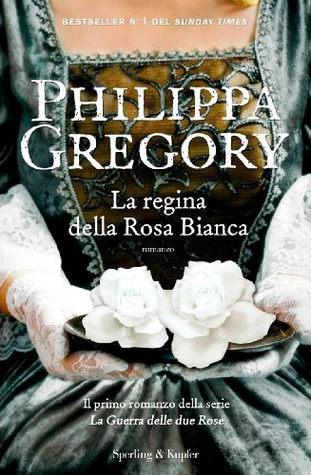
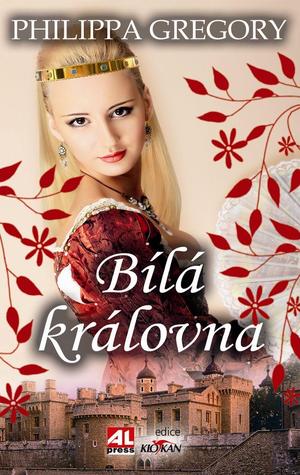
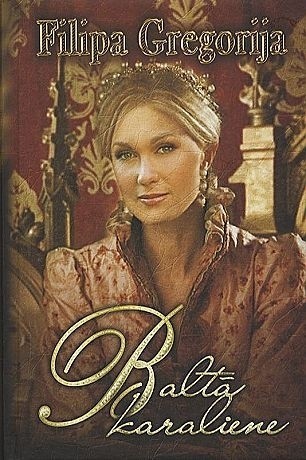
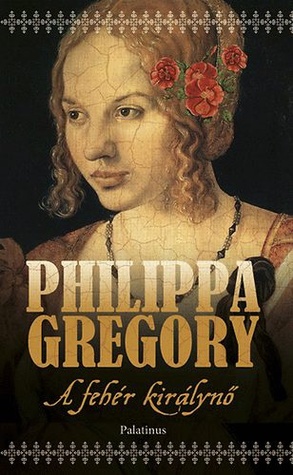
The White Queen by Philippa Gregory
For this week’s topic, I turned straight to Philippa Gregory, a historical fiction writer probably best known for her Tudor-related novels. The White Queen was quite an interesting book, but that’s probably not too surprising, given its subject matter, the War of the Roses. The story follows Elizabeth Woodville, who was married to King Edward IV from 1464 until his death in 1483. She was also the mother of the two “Princes in the Tower”, Edward V and Richard, who were 12 and 9 years old respectively when they disappeared after being locked up in the Tower of London by their uncle.
Now it’s time to look at the covers. Many of the ones I dug up were boring and repeated a lot of the same themes and imagery, so I decided to only feature the more interesting and noteworthy editions.
From left to right:
Touchstone (2009) – Simon & Schuster (2009) – Simon & Schuster Limited Edition (2009)
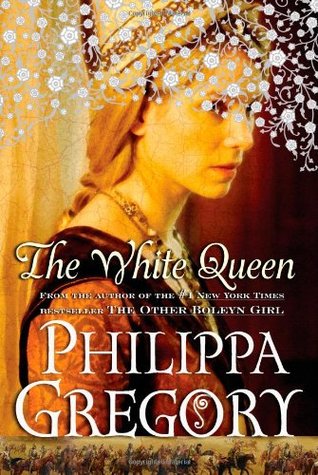

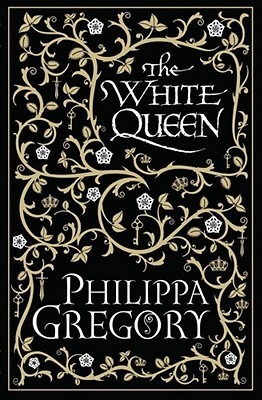
Simon & Schuster UK (2009) – Pocket Star (2010) – Touchstone Paperback (2013)
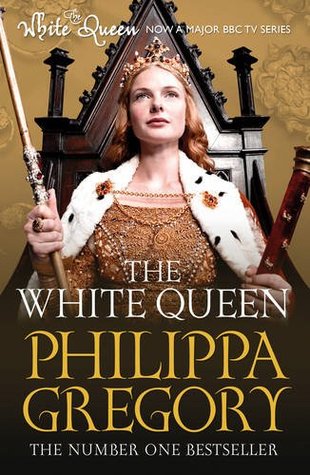
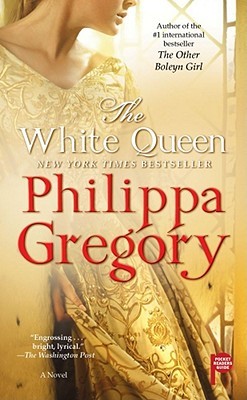
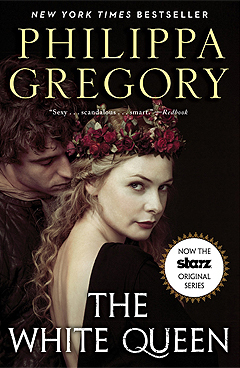
Serbian Edition (2010) – Danish Edition (2009) – German Edition (2011)



Italian Edition (2011) – Indonesian Edition (2011) – Swedish Edition (2011)

Czech Edition (2010) – Spanish Edition (2011) – Turkish Edition (2010)

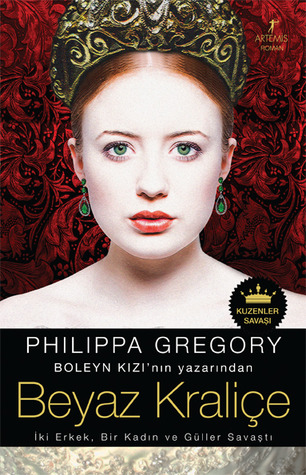
Lithuanian Edition (2009) – Latvian Edition (2011) – Hungarian Edition (2010)

Winner:
Today’s post is cover heaven if you like pretty dresses, and admittedly I’m quite attracted to the Danish and Indonesian editions because of that. However, this week I’m going to break with my usual preference for “people covers” and choose the Simon & Schuster limited edition as my favorite. With the many different versions here featuring the character’s awkward expressions and poses, I just feel like the simpler the better in this particular case
But what do you think? Which one is your favorite?


 The BiblioSanctum