Audiobook Review: Queen’s Shadow by E.K. Johnston
Posted on March 21, 2019 21 Comments
I received a review copy from the publisher. This does not affect the contents of my review and all opinions are my own.
 Star Wars: Queen’s Shadow by E.K. Johnston
Mogsy’s Rating (Overall): 3 of 5 stars
Genre: Science Fiction, Media Tie-In, Young Adult
Series: Star Wars Canon
Publisher: Listening Library (March 5, 2019)
Length: 8 hrs and 21 mins
Author Information: Website | Twitter
Narrator: Catherine Taber
I had high hopes for this first Star Wars new canon novel focusing entirely on Padmé/Queen Amidala, but unfortunately I was left a bit disappointed. On some level though, I think I had anticipated the issues, because from the moment I learned that Queen’s Shadow was to take place in the transitional time between the end of her reign as Naboo’s queen and the start of her career as a senator, I’d wondered whether there would be sufficient material for a well-rounded, interesting story.
The book begins on the cusp of a new election for Naboo’s next queen, and Padmé and her loyal handmaidens are all nervous and excited about what they will do once she steps down as the current ruler. For four years their lives have been tied to the politics of the planet, but soon they will be free to pursue any dream or career they choose. As Padmé watches her handmaidens discuss their future plans, however, she herself is still unsure of what her next move will be. Service to her people is all she’s ever known, and now that her reign is almost over, there is a both a bittersweet sense of accomplishment and loss about a chapter of her life coming to a close.
But with the election of Réillata, the new queen, an unexpected opportunity suddenly falls into Padmé’s lap when her successor asks if she would represent Naboo in the Galactic Senate, replacing another retiring senator. It is an offer Padmé can’t refuse, and though a part of her is sad to be leaving her home planet for the bustling ecumenopolis of Coruscant, another part of her is thrilled to be able to serve Naboo once more, as well as to improve the conditions of the Galactic Republic. For one thing, she would like to put an end to slavery in the Outer Rim. Padmé has never forgotten the boy Anakin Skywalker she met on Tatooine, as well as the fate of his mother Shmi who was left behind on the desert planet.
In the years since that day, Padmé’s youngest handmaiden Sabé, who was also the one most often chosen to be her decoy, has also become one of her closest friends and most trusted confidantes. As Padmé takes her place in the Galactic Senate, it is Sabé that she sends to Tatooine in her stead to search for Shmi and hopefully buy her freedom.
First things first: there’s nothing really wrong with this book—nothing wrong, unless you count the fact that barely anything happens other than a whole bunch of political drama and description into the wardrobe of Naboo royalty. Don’t get me wrong, stories about the politics of the Galactic Republic, and later the Galactic Empire, have always been a prominent part of Star Wars fiction. But to have it as the main focus of a Young Adult book about Queen Amidala? The only result this guarantees is a limited audience, beyond diehard Star Wars fans such as myself. For one thing, this is not exactly the most interesting story you can tell about the character, nor does it have the usual adventure and action of a more typical Star Wars novel, so I doubt it would hook even the mildly interested. Older, hardcore fans of Star Wars will likely also find the conflicts in this story too simplistic and/or juvenile.
That said, the writing’s great. E.K. Johnston also wrote Star Wars: Ahsoka, which I really enjoyed, and she’s brought that same smooth and accessible quality in her prose to Queen’s Shadow. The problem with this book, as I said before, has more to do with the lack of material to work with rather than any weakness in its technical aspects. We’re looking at a very brief and narrow timeframe in Padmé Naberrie’s life, after all, so in a way it’s understandable for some parts of the story to feel slow, drawn out, inflated. To her credit, Johnston did try to work in a separate storyline for Sabé in order to give the plot and setting a little more variety, but as a supporting character, her impact can also only go so far.
Still, some positive things to note include all the wonderful references to other people, places, stories and events in the Star Wars universe, including an appearance by Senator Clovis, who was first introduced in the Star Wars: The Clone Wars television series in one of the few Padmé-centric episodes. I also liked how this book expanded and developed Padmé’s personality, so that we got to know more about her as a person with her own private hopes, fears, dreams and ambitions. So where Queen’s Shadow failed to deliver on good pacing and compelling entertainment, at least it worked extremely well as a character study.
Regrettably, the same could not be said of Sabé, who fulfilled her supporting role duties valiantly but was otherwise wasted in her potential. While her loyalty was admirable, it just sucked that her entire world and life’s purpose—by even her own admission—revolved around Padmé and serving her wishes and desires. If the ending to this book is indeed a setup for a Sabé story, my hope is that she will gain some of her own agency.
In short, Queen’s Shadow is probably a book I can only recommend to readers who really want to know more about Padmé, or if you’re generally into everything about Star Wars. While I count myself among the latter group, even I must confess it is one of the less engaging of the new canon novels I’ve read and not very memorable.
Audiobook Comments: Admittedly, I’m way more used to having January LaVoy read as the female narrator for Star Wars books, but for Queen’s Shadow, how could I say no to Catherine Taber, who also provided the voice for Padmé on The Clone Wars cartoon series? Just like the audiobook of Star Wars: Ahsoka, getting the voice actress for the title character to narrate the book was a stroke of genius and brought an extra layer of immersion to the listening experience.


Waiting on Wednesday 03/20/19
Posted on March 20, 2019 18 Comments

Waiting On Wednesday” is a weekly meme that first originated at Breaking the Spine but has since linked up with “Can’t Wait Wednesday” at Wishful Endings now that the original creator is unable to host it anymore. Either way, this fun feature is a chance to showcase the upcoming releases that we can’t wait to get our hands on!
Mogsy’s Pick
Imaginary Friend by Stephen Chbosky (October 1, 2019 by Grand Central Publishing)
Do you guys remember The Perks of Being a Wallflower? I’ve never read it, but as a teen growing up in the late 90s and 2000s, I can clearly recall how the book resonated with a lot of my high school peers. Well, twenty years later, the author’s second novel is apparently a literary horror about a boy and his creepy imaginary friend. I have no idea how this one’s going to turn out, but the story description sounds crazy intense and I am curious.
 “Christopher is seven years old. Christopher is the new kid in town. Christopher has an imaginary friend. The epic work of literary horror from the #1 bestselling author of THE PERKS OF BEING A WALLFLOWER.
We can swallow our fear or let our fear swallow us.
Single mother Kate Reese is on the run. Determined to improve life for her and her son, she flees an abusive relationship in the middle of the night with Christopher at her side. Together, they find themselves drawn to the tight-knit community of Mill Grove, Pennsylvania. It’s as far off the beaten track as they can get. Just one highway in, one highway out.
At first, it seems like the perfect place to finally settle down. Then Christopher vanishes. For six awful days, no one can find him. Until Christopher emerges from the woods at the edge of town, unharmed but not unchanged. He returns with a voice in his head only he can hear, with a mission only he can complete: Build a tree house in the woods by Christmas, or his mother and everyone in the town will never be the same again.
Soon Kate and Christopher find themselves in the fight of their lives, caught in the middle of a war playing out between good and evil, with their small town as the battleground.”
Most Anticipated Releases of 2019: April to June
Posted on March 19, 2019 44 Comments
The snow is melting, the grass is growing, and the days are finally getting warmer. It’s time to look ahead to the Science Fiction and Fantasy reads I’m most excited about in the months of April to June. Not only is it fun to organize my reading and to make lists, they also have the added benefit of focusing my attention to the highly anticipated releases that I’d like to check out. This year, I decided to try something a little different by posting a list every quarter to make the TBR seem more manageable. There’s already an impressive tower of books on my to-read pile, and while I’m under no illusions that I’ll be able to read them all, hopefully I can get to most of them (and also put some new books on people’s radars)!
What are your most anticipated releases for the second quarter of 2019?
April

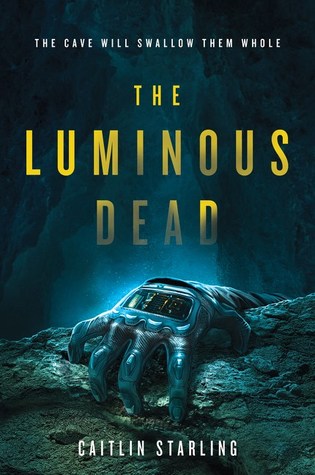
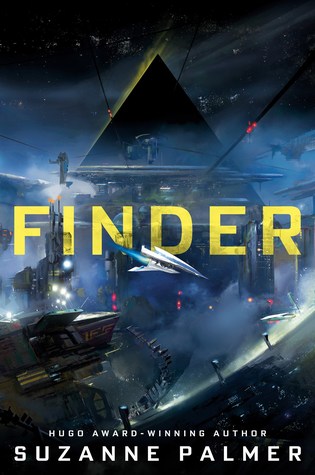


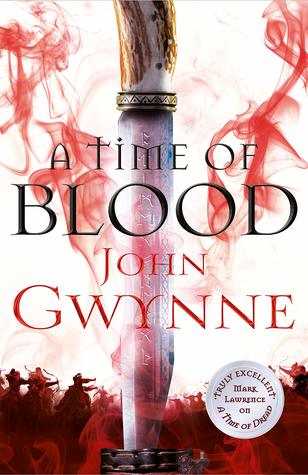




April 2 – Descendant of the Crane by Joan He, The Luminous Dead by Caitlin Starling, The Finder by Suzanne Palmer, Wicked Saints by Emily A. Duncan
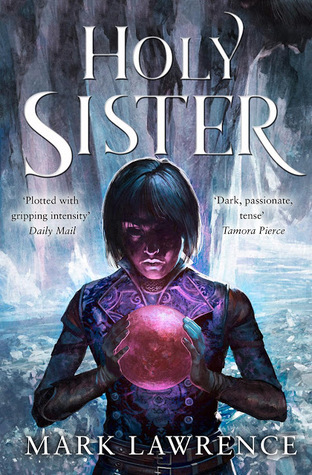
April 9 – Holy Sister by Mark Lawrence
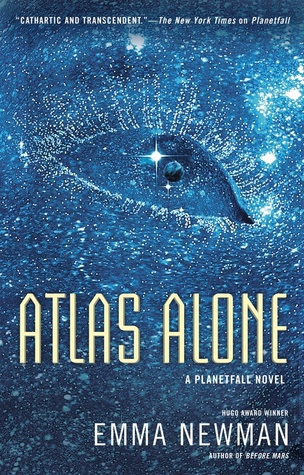
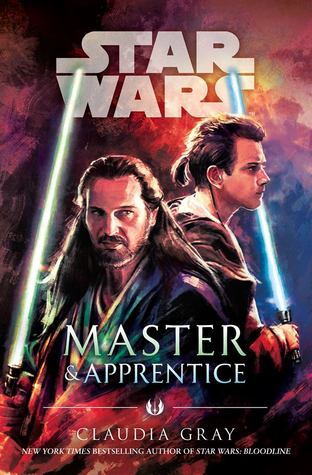
April 16 – Atlas Alone by Emma Newman, The Binding by Bridget Collins, A Time of Blood by John Gwynne, Star Wars: Master & Apprentice by Claudia Gray
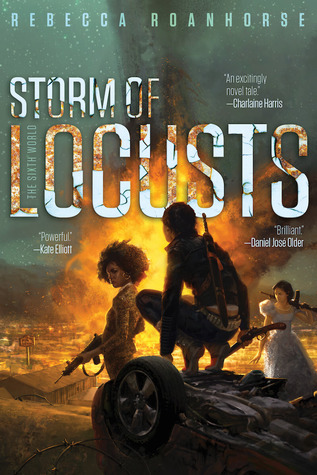
April 23 – Wolfhunter River by Rachel Caine, Inspection by Josh Malerman, Storm of Locusts by Rebecca Roanhorse, A Boy and His Dog at the End of the World by C.A. Fletcher
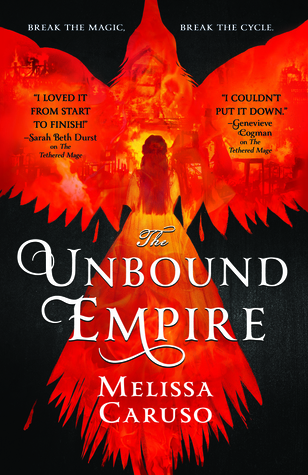
April 30 – The Unbound Empire by Melissa Caruso, Little Darlings by Melanie Golding
May


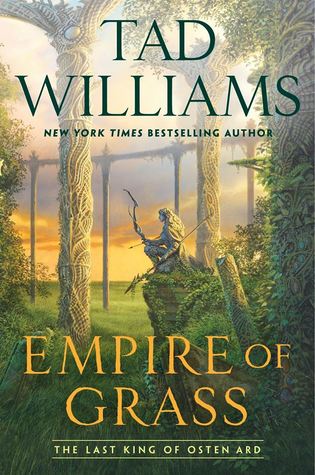



May 7 – Aurora Rising by Amie Kaufman and Jay Kristoff, Storm Cursed by Patricia Briggs, Empire of Grass by Tad Williams
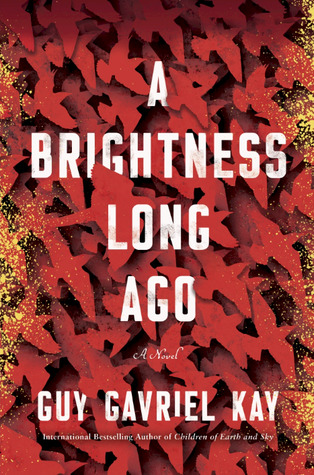
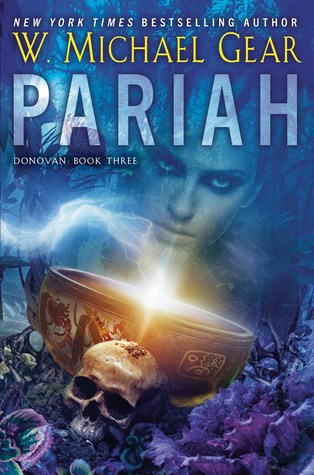
May 14 – A Brightness Long Ago by Guy Gavriel Kay, Children of Ruin by Adrian Tchaikovsky, Pariah by W. Michael Gear
May 21 – Queenslayer by Sebastien de Castell, The Favorite Daughter by Kaira Rouda, Starship Repo by Patrick S. Tomlinson
June
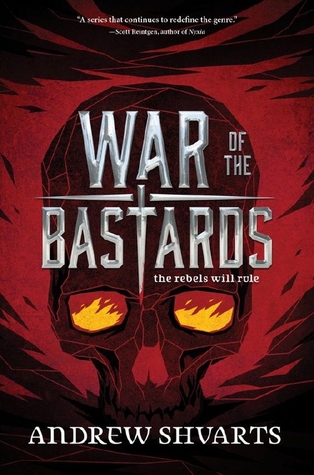
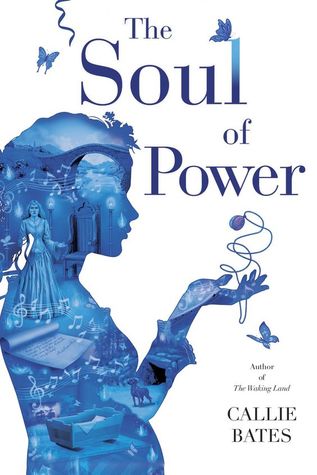
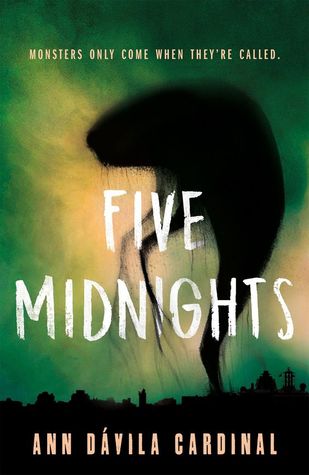


June 4 – War of the Bastards by Andrew Shvarts, The Soul of Power by Callie Bates, Five Midnights by Ann Dávila Cardinal
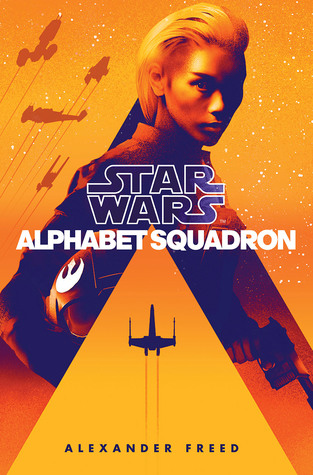
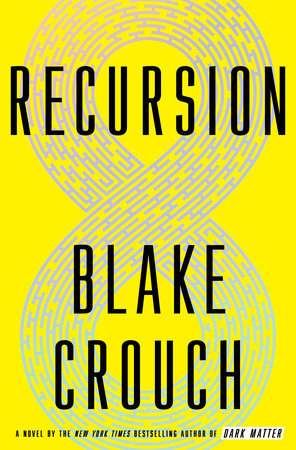
June 11 – Star Wars: Alphabet Squadron by Alexander Freed, Teeth in the Mist by Dawn Kurtagich, Recursion by Blake Crouch, The Fall by Tracy Townsend
June 18 – The Girl in Red by Christina Henry
June 25 – Wherever She Goes by Kelley Armstrong
Book Review: Markswoman by Rati Mehrotra
Posted on March 18, 2019 26 Comments
I received a review copy from the publisher. This does not affect the contents of my review and all opinions are my own.
Mogsy’s Rating: 3.5 of 5 stars
Genre: Fantasy
Series: Book 1 of Asiana
Publisher: Harper Voyager (January 23, 2018)
Length: 371 pages
Author Information: Website | Twitter
There’s really not much more to say about Markswoman beyond the fact it was a thoroughly engaging and straight-up good read. I blew through this book in a little over a day, and I loved how what started off as a typical YA-ish premise eventually developed and grew into a more enigmatic, mature and interesting story.
Our protagonist is Kyra, a Markswoman in the Order of Kali, a sisterhood of elite warriors trained to protector and enforce the laws of this unforgiving, post-apocalyptic-like world. Because of the nature of their work, Markswomen also occasionally take on the role of assassin, and although Kyra recently passed all her tests to become a full-fledged sister, the order’s leader Shirin Mam still has concerns about her readiness to take on these types of missions on her own. Due to her tragic past, Kyra was one of the youngest girls to ever join the sisterhood, and much unresolved anger still simmers within her for the bandits that killed her entire family. Secretly, she dreams of one day hunting them all down and exacting her revenge.
But then Shirin Mam dies mysteriously, and for Kyra it is like losing her mother for the second time. Worse, the order’s Mistress of Mental Arts named Tamsyn, whom Kyra has never gotten along with, becomes the new leader of the Order of Kali. Tamsyn’s veiled threats as well as her hunger for power makes Kyra believe she has something to do with Shirin Mam’s death. And so, before the order’s new mistress can claim her predecessor’s magical sword, our protagonist makes off with it and escapes through a Transport Hub, one of the strange portals left over from the world’s ancient past. Emerging in a desert, Kyra finds herself in the home of the Order of Khur, shunned from all the others because they are the only one composed of men. One of their Marksmen, Rustan, helps bring Kyra’s news of Shirin Mam’s death to his elders and heeds her when she expresses her suspicions about Tamsyn’s treachery.
The world of Markswoman, Asiana, is a very cool place. Its past is slowly revealed as we discover that many centuries ago, a Great War devastated the land and changed it forever. But because there is also magic and hints at the remnants of advanced technology, the result is a fascinating kind of fantasy and sci-fi dystopian mix. Harsh conditions have forged a very different kind of civilization, as merciless as the landscape. Thus, the Orders of Peace was born, giving rise to a new system to reign in the chaos and maintain harmony. The worst crimes were punishable by execution, carried out by Markswomen.
Kyra herself was an archetypal kind of protagonist, but that didn’t make her any less interesting to follow. She has the quintessential backstory of tragedy involving a murdered family, fueling her bloodthirsty desire for vengeance even though Markswomen are supposed to leave their pasts behind when they commit to their order. That said, her first mission ended in near disaster when she almost failed to kill her mark—a man who was part of the clan who massacred her loved ones—because of a momentary lapse of resolve. The experience forces her to recognize that there is still much for her to learn, as well as make her rethink her path in life.
For all that Markswoman was an enjoyable read though, plot and character development was still lighter than I would have preferred. Magical sentient weapons and the suggestion of alien tech aside, the world building was also sparse and lacked a quality to bring it all together despite all the wonderful ideas and imagination poured into its creation. As a reading experience, this was not a very deep one, nor do I think the story will end up being too memorable, as most of the plot (especially early on) relies heavily on prophecy tropes and other familiar elements. Still, to the novel’s credit, the second half contained a lot more surprises, and overall this was a quick and easy read, undeniably fun while it lasted.
A warning though, before I wrap this up: this book ends with an abrupt cliffhanger. Since I received Markswoman and its sequel Mahimata at the same time for review, I was already prepared to read both books as a whole, but readers who prefer their book endings with actual resolutions may want a heads up. Personally, I’m looking forward to diving into the next one, not only to see what happens next but because I’m also confident that Mahimata will bring much more on the characters, story, and world. I’ll be picking it up soon.

Audiobook Review: The Devil Aspect by Craig Russell
Posted on March 17, 2019 19 Comments
I received a review copy from the publisher. This does not affect the contents of my review and all opinions are my own.
 The Devil Aspect by Craig Russell
Mogsy’s Rating (Overall): 4 of 5 stars
Genre: Horror, Historical Fiction
Series: Stand Alone
Publisher: Random House Audio (March 5, 2019)
Length: 15 hrs and 23 mins
Author Information: Website
Narrator: Julian Rhind-Tutt
It’s been a while since I read something like The Devil Aspect, a historical suspense-thriller displaying many characteristics of Gothic horror. In some ways it felt like indulging in a treat that I haven’t had in a long time, because I ate this one right up.
It is 1935, and the story opens with our protagonist Viktor Kosárek arriving at the infamous Hrad Orlu Asylum in Prague, where he is about to begin his new post as its newest psychiatrist. The secluded facility, converted from a medieval castle on top of a mountain, only houses six inmates, but they are considered some the most dangerous and incurably insane killers the world has ever known. The asylum staff call them The Vegetarian, The Clown, The Woodcutter, The Sciomancer, The Glass Collector and The Demon, but together they are known as the Devil’s Six, named so because of the unthinkably vicious and abominable ways they’ve murdered their victims. Intrigued by this common attribute that the six inmates have, Viktor hopes to experiment with a new technique he has developed which would prove the presence of a “Devil Aspect” in their psyches, a phenomenon which drives people to commit evil.
Meanwhile, the rest of the country is gripped in fear and uncertainty as dark news looms just across the border with the rise of Hitler and the Nazis. Within the capital, the city’s populace has also been rocked by a series of disturbing murders similar to those committed half a century ago in Britain by a serial killer named Jack the Ripper. Now it appears Prague has its own Ripper, whom the police and the papers have dubbed Leather Apron, and lead detective Lukas Smolak has vowed to identify and apprehend him as quickly as possible. Working under such pressures, it would be tempting to build a case around their only suspect, a gypsy they captured at the scene of the last murder, except the raving young man seems terrified, insisting upon his innocence while convinced that the devil will come for him next.
The Devil Aspect was exactly what I wanted—not exactly fast-paced but oh so deliciously atmospheric, as well as creepy and gory but in a subtle way that avoids throwing the horror directly in your face. I loved how the two POVs—Viktor’s and Smolak’s—wove in and out of each other, creating a complex narrative rich with clues, false trails and surprises. And yes, rest assured that readers will get to meet each of the Devil’s Six and discover why they have been locked up in the Hrad Orlu Asylum; I would have been disappointed if the publisher had dangled such an irresistible tidbit in the blurb without following through.
But while the two main characters were a fascinating study, the real winner was the setting, both in the location and the historical period. Horror is perhaps one of the few genres in which I am okay with a little less characterization in favor of more world-building and tone-setting, because so much of my enjoyment rests on the author creating the perfect mood. Craig Russell did an amazing job, for the atmosphere was practically palpable as a pall of gloom hangs over Smolak’s investigation into Leather Apron in Prague, and Viktor is wrapped up in his own darkness atop his isolated mountaintop milieu as he carries out his experiments on the Devil’s Six. This has always been the type of psychological horror I prefer, the creeping dread versus the more unsubtle forms of the genre, e.g. gushing blood and gore with heavy emphasis on graphic and gruesome violence. In this sense, The Devil Aspect was right up my alley. Although the book contains its fair share of grisly scenes and descriptions, I didn’t think any of these were overdone.
In terms of criticisms, I did feel the story had a tendency to stray off-course every now and then, but because we were pursuing so many threads, it was difficult to tell whether some of these instances were attempts at red herrings. It did throw off the pacing some, in that I felt my attention drifting during many of these sections, but thankfully the author was always careful to steer things back on track. I thought the ending was a bit predictable too, but mostly because I always come into these kinds of books expecting a twist, and I happened to peg the outcome accurately. That said, my enjoyment was in no way diminished.
Overall, this novel was a delightful joy to read, which might seem strange to say of a dark and somber tale of psychological horror. But truly, it had everything that I wanted. Ambitious and provocative, The Devil Aspect was impressive in its execution and the way it integrated all its parts. Highly recommended.
Audiobook Comments: Narrator Julian Rhind-Tutt had a great voice for this story, making a good book even better. The only thing I can think of that would have improved the experience was a second narrator to bring more distinction between the two main POVs, but even with a single reader this was an excellent listen.

Mogsy’s Bookshelf Roundup: Stacking the Shelves & Recent Reads
Posted on March 16, 2019 37 Comments
Bookshelf Roundup is a feature I do every other weekend which fills the role of several blog memes, like Stacking the Shelves where I talk about the new books I’ve added to my library or received for review, as well as It’s Monday! What Are You Reading? where I round up what I’ve read since the last update and what I’m planning to read soon. Mostly it also serves as a recap post, so sometimes I’ll throw in stuff like reading challenge progress reports, book lists, and other random bookish thoughts or announcements.

Received for Review
My thanks to the publishers and authors for the following review copies received, and be sure to click the links to their Goodreads pages for more details and full descriptions!

Kicking off today’s rather large book haul, with thanks to Orbit for an ARC of Rage of Dragons by Evan Winter, a gorgeous debut that I hope will live up to everything it promises! This looks so good, and the cover is drool-worthy. Also from the publisher, finished copies of Sixteen Ways to Defend a Walled City by K.J. Parker and Seven Blades in Black by Sam Sykes. Both of these authors have an excellent sense of humor, so I’m really looking forward to checking out their books.
A big thanks also to Tor.com for sending this lovely novella, Miranda in Milan by Katharine Duckett, described as a queer dark fantasy sequel to Shakespeare’s The Tempest. It’s short and sweet, and I’m definitely planning on giving this a read later in the month.
I’d also like to give a shout out to Harper Voyager for sending me Markswoman and Mahimata by Rati Mehrotra from the Asiana series. Book two just came out, but I was offered review copies of both books when I told the publisher that I hadn’t read the first one. Having been curious about this series for a long time, I’ve already finished Markswoman, which was a super quick and fun read.

And how quickly time flies. The paperback release of The Grey Bastards by Jonathan French is already coming out, and the folks at Crown Publishing were so kind to send along a copy. If you haven’t read this yet, you’re really missing out! But don’t fret, still plenty of time to catch up before the sequel drops in October!
Also thank you to Ace/Roc/DAW and Berkley for the following ARCs: The Affair of the Mysterious Letter by Alexis Hall was a surprise arrival, described as a homage to Sherlock Holmes with a new twist that is “charming, witty, and weird”; and The Beyond by Chloe Neill is the fourth book of the Devil’s Isle series which I’m painfully behind on, but I loved the first book and I do have plans to continue. A finished copy of A Parliament of Bodies by Marshall Ryan Maresca arrived earlier this month as well, which is the third book in the Maradaine Constabulatory series.
Plus much love to Night Shade Books for these lovelies: Kingdoms of the Cursed by Greg Keyes is the second book of the High and Faraway series, the first book of which I still haven’t had the chance to read yet, but it’s on the list; and The Skinner by Neal Asher is the mass market paperback reissue of the author’s first Spatterjay novel and the start of his classic Polity series.

Up next, I’m beyond ecstatic about these two awesome new arrivals from Titan Books: The Near Witch by V.E. Schwab is a reissue of the author’s now hard-to-find and out-of-print debut, the book that began it all; and Captain Marvel: Liberation Run by Tess Sharpe is an all-new original standalone novel featuring the most powerful hero in the Marvel Universe as she frees Inhuman slaves imprisoned on a distant planet – perfect if you didn’t get enough of the character from the movie.
And finally, my thanks to the amazing team at Subterranean Press for this treasure trove of ARCs: coming to hardcover is The Flowers of Vashnoi by Lois McMaster Bujold, a Vorkosigan Saga novella following Ekaterin in her early days as Lady Vorkosigan; Atmosphæra Incognita by Neal Stephenson is a story of human persistence and innovation, following the construction of a 20-kilometer high tower to bring humanity to the threshold of outer space; In the Shadow of Spindrift House by Mira Grant is a dark horror tale surrounding the titular decrepit property whose legal ownership, for some reason, is something people are willing to pay a great deal of money to determine; and The Girl on the Porch by Richard Chizmar is described as a spooky thriller of twists and turns that will forever change the way you look at your friends and neighbors.

I also want to take this chance to showcase this gorgeous box I received from Night Shade Books and Wunderkind PR earlier this week, celebrating the release of the second book to Tina LeCount Myer’s Legacy of the Heavens series. The box contains both novels in the epic fantasy series, The Song of All and Dreams of the Dark Sky, as well as a delightful assortment of goodies and book swag including a custom crafted scented candle (White Birch, calling to mind the freshness and tranquility of pristine Finnish forests), some yummy mint candies, a couple bookmarks, as well as a note from the author accompanied by this snazzy Tarot card! Stay tuned for more coverage of this series later in the month, as we’ll be sharing some cool content as well as a possible giveaway so you can win your own Legacy of the Heavens box.



On to the digital pile, I added a ton of listening copies to my audiobook queue this week. With thanks to Harper Audio, I received Sherwood by Meagan Spooner, a female Robin Hood retelling, as well as a psychological thriller called The Night Visitors by Carol Goodman. From Random House Audio, I received The Devil Aspect by Craig Russell, which I’ve already listened to and enjoyed a lot, as well as The Women’s War by Jenna Glass, a feminist high fantasy epic. From their Young Adult imprint Listening Library, I received Star Wars: Queen’s Shadow by E.K. Johnston, the story about the end of Padme Amidala’s reign as Naboo’s queen and the start of her career as a senator. And rounding out the audio review copies, I also got Dawn of the Exile by Mitchell Hogan, with special thanks to the author for contacting me to let me know that this follow up to Shadow of the Exile was out, along with a code to review the audiobook!
From NetGalley, I saw Aurora Rising by Amie Kaufman and Jay Kristoff on offer and immediately jumped on it. With thanks to Random House Children’s for the approval privileges. My request for Wherever She Goes by Kelley Armstrong was also approved by Minotaur Books, and I just can’t wait to dive into her new thriller. And last but not least, I simply could not resist grabbing Five Midnights by Ann Dávila Cardinal because I can never say no to a YA horror.
Reviews
A quick summary of my reviews posted since the last update:
The Witch’s Kind by Louisa Morgan (4.5 of 5 stars)
Wild Country by Anne Bishop (4.5 of 5 stars)
Your Favorite Band Cannot Save You by Scotto Moore (4 of 5 stars)
The Rosewater Insurrection by Tade Thompson (4 of 5 stars)
The October Man by Ben Aaronovitch (4 of 5 stars)
Batman: The Court of Owls by Greg Cox (4 of 5 stars)
Embers of War by Gareth L. Powell (4 of 5 stars)
Stranger Things: Suspicious Minds by Gwenda Bond (3.5 of 5 stars)
White Stag by Kara Barbieri (3 of 5 stars)
Roundup Highlights:

What I’ve Read Since the Last Update
Here’s what I’ve managed to “unstack” from the TBR since the last update. More reviews coming soon!

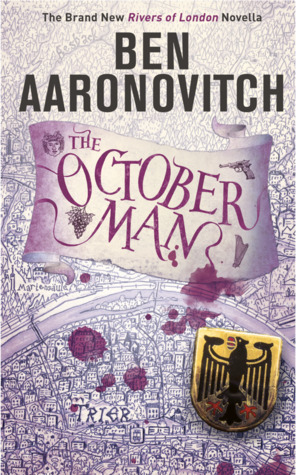

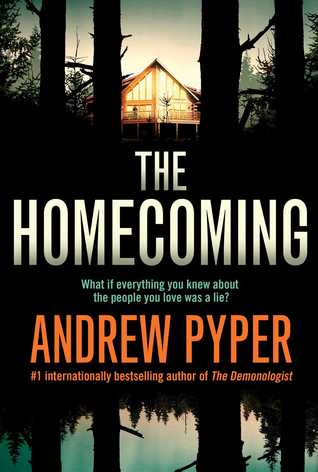

Have you heard of or read any of the books featured this week? What caught your eye? Any new discoveries? I hope you found something interesting for a future read! Let me know what you plan on checking out. Until next time, see you next Roundup!
Friday Face-Off: Shapeshifter
Posted on March 15, 2019 25 Comments
Welcome to The Friday Face-Off, a weekly meme created by Books by Proxy! Each Friday, we will pit cover against cover while also taking the opportunity to showcase gorgeous artwork and feature some of our favorite book covers. If you want to join the fun, simply choose a book each Friday that fits that week’s predetermined theme, post and compare two or more different covers available for that book, then name your favorite. A list of future weeks’ themes are available at Lynn’s Book Blog.
This week’s theme is:
“Beware the moon, lads.”
~ a cover featuring a SHAPESHIFTER
Mogsy’s Pick:
Moon Called by Patricia Briggs
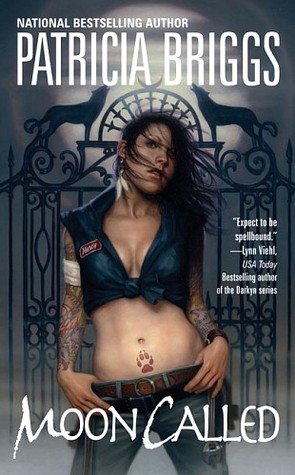
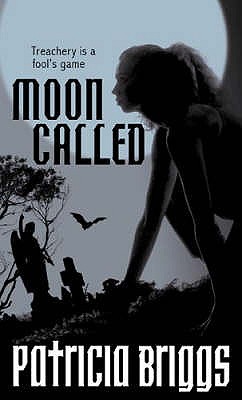
Yay, a chance to feature my favorite coyote shapeshifter this week! Mercedes Thompson, aka Mercy, is a Volkswagen mechanic and a magical being known a walker, able to shift into a coyote at will. She also hangs around with werewolves, vampires, and faeries. I love this world, and I was pleased to find a number of different covers for the first book of the series.
From left to right, top to bottom:
Ace Books (2006) – Orbit (2008) – Orbit (2011)

German Edition (2007) – Italian Edition (2010) – Spanish Edition (2008)
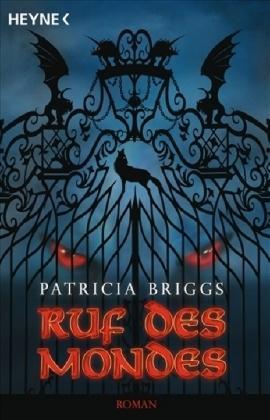


Polish Edition (2008) – Chinese Edition (2009) – Danish Edition (2012)



Indonesian Edition (2010) – Dutch Edition (2015) – Japanese Edition (2008)



Winner:
Even if I wasn’t such a huge fan of the artwork of Dan Dos Santos, I would have chosen the Ace Books edition as my favorite this week. There’s just no contest, not to mention how his stunning Mercy Thompson covers have become quintessential to the series. Over the years, they’ve only gotten better as later books have featured a more fearsome, determined looking Mercy in more practical outfits and less suggestive poses, but I still like the covers for the early books very much.
But what do you think? Which one is your favorite?
Book Review: The Witch’s Kind by Louisa Morgan
Posted on March 14, 2019 23 Comments
I received a review copy from the publisher. This does not affect the contents of my review and all opinions are my own.
The Witch’s Kind by Louisa Morgan
Mogsy’s Rating: 4.5 of 5 stars
Genre: Historical Fiction, Fantasy
Series: Stand Alone
Publisher: Redhook (March 19, 2019)
Length: 448 pages
Author Information: Website | Twitter
I confess, I wasn’t sure at first that I was going to read this. My experience with Louisa Morgan’s previous novel A Secret History of Witches was really mixed, and I had concerns that I was going to run into similar issues with The Witch’s Kind, its sort-of spiritual successor. Thankfully though, none of those concerns came to pass. Although this one does contain many of the same ideas, themes, and stylistic elements of Morgan’s first book, it also features a much different kind of story, which—I have no doubt—is why I enjoyed it so much more.
Set in the early-to-mid 20th century, the book follows Barrie Anne Blythe, a young woman raised by her aunt Charlotte following the deaths of her parents. In the aftermath of World War II, the two women have settled on the Pacific Northwest coast, where Barrie owns a small farmstead by the sea. One evening, she notices some peculiar lights over the ocean, but decides to push it from her mind. That is, until the next day, her dog carries home a bundle that it found on the beach. In the bundle, Barrie finds a tiny infant—a very special little girl she names Emma, after deciding to keep and raise the baby as her own. With Charlotte’s help, Barrie devises a plan to explain for Emma’s presence, protecting her foundling child from curious neighbors as well as men from the government who have been poking around town in the wake of the strange lights in the sky.
Interspersed between these chapters taking place in the post-war timeline is also a second narrative, unraveling the events of Barrie’s past beginning from the time of her childhood being raised by Charlotte. In these sections, we watch as Barrie grows into a teen and then a young adult attending college where she meets her future husband Will, followed by her time living as a disaffected wife of a deployed naval corpsman. Eventually, the timelines link up as the story unfolds to reveal how the marriage falls apart, as well as the painful and heartbreaking series of events leading up to Barrie’s move to the farm and her subsequent discovery of Emma.
I have to say The Witch’s Kind was unexpected in a lot of ways. For one, there was a twist in the story and an allusion to elements closer to science fiction than fantasy, which I hadn’t seen coming at all. That said, I didn’t enjoy myself any less because of it. The magical and paranormal aspects were still present and strong, even if the concepts themselves were a bit scattered. And besides, it was mostly the overall riveting quality of the story and the irresistible charms that won me over.
In fact, I’m still feeling a little bowled over by how much I liked this book, considering it contains several of my personal pet peeves. I’ll be going into them later, but first, I want to go into all the things I loved. Foremost of them are the characters, Barrie and Charlotte, who are both strong women who have experienced hardship in their lives. Despite the protagonist being Barrie, my favorite character was actually Charlotte, who is in every way the kind of person you wish you knew in real life. Levelheaded, dependable and caring, even when Barrie was making the stupidest life choices, I loved how Charlotte respected her niece enough to let her make her own decisions and learn from her mistakes but was also always there to support her when she needed help. Their relationship was unquestionable the backbone of this novel, the glue that held all its various parts together.
I also loved the writing. Louisa Morgan is the pseudonym of Louise Marley, who is already an accomplished author of many science fiction and fantasy novels, so I was unsurprised at the level of skill displayed in her prose. I was, however, astonished at how well the framework of story’s dual timelines worked for me. Transitions were handled smoothly in a way that did not detract from the flow, even towards the end of the book when the past started to catch up to the present. I don’t always do well with multiple timelines, but it is how the threads are woven that matters.
As for criticisms, the ones I have are relatively minor, but they still warrant discussion. As I have already mentioned, there’s the disorganized way the supernatural elements were handled. The title of the book notwithstanding, there’s only a light sprinkling of magic and “witchiness” to this story, to the point where it probably wasn’t even necessary. However, the suggestion of aliens and mermaids as well as their possible connections to Roswell were another matter, for these were more relevant to the plot, though ultimately I felt the narrative didn’t quite manage to pull all these ideas together. I was also disappointed in the portrayal of Will, whose character I found completely absurd and over-the-top. I had a similar issue with A Secret History of Witches where the oppressive bigotry and abusive personalities of some of the male characters were overdone to the extreme, making them feel more like caricatures than real people. It also irks me that Morgan’s so-called strong and independent female characters always seem to get bamboozled by the slick talk and good-looking charms of manipulative men. Over and over, Barrie claims to have gotten the true measure of Will after the nth time he treats her like trash, and yet she still can’t seem to stop falling for his obvious tricks, annoying me with her utter cluelessness.
But as I said before, despite its flaws, I still really enjoyed The Witch’s Kind—certainly a lot more than I did A Secret History of Witches. It was a story I found completely engrossing and hard to put down. At the end of the day, I’m very glad I decided it to read it, and I would recommend this book to readers who enjoy historical dramas about found families or women’s fiction with a touch of the supernatural.

Waiting on Wednesday 03/13/19
Posted on March 13, 2019 15 Comments
Waiting On Wednesday” is a weekly meme that first originated at Breaking the Spine but has since linked up with “Can’t Wait Wednesday” at Wishful Endings now that the original creator is unable to host it anymore. Either way, this fun feature is a chance to showcase the upcoming releases that we can’t wait to get our hands on!
Mogsy’s Pick
The Magnolia Sword by Sherry Thomas (September 10, 2019 by Tu Books)
Yes, award winning YA fantasy and romance author Sherry Thomas, who is also a native of China, is coming out with a Mulan retelling this fall. I don’t know if I’m looking forward to this or the live-action Disney film more, but it’s a close call.
 CHINA, 484 A.D.
A Warrior in Disguise
All her life, Mulan has trained for one purpose: to win the duel that every generation in her family must fight. If she prevails, she can reunite a pair of priceless heirloom swords separated decades earlier, and avenge her father, who was paralyzed in his own duel.
Then a messenger from the Emperor arrives, demanding that all families send one soldier to fight the Rouran invaders in the north. Mulan’s father cannot go. Her brother is just a child. So she ties up her hair, takes up her sword, and joins the army as a man.
A War for a Dynasty
Thanks to her martial arts skills, Mulan is chosen for an elite team under the command of the princeling–the royal duke’s son, who is also the handsomest man she’s ever seen. But the princeling has secrets of his own, which explode into Mulan’s life and shake up everything she knows. As they cross the Great Wall to face the enemy beyond, Mulan and the princeling must find a way to unwind their past, unmask a traitor, and uncover the plans for the Rouran invasion . . . before it’s too late.
Inspired by wuxia martial-arts dramas as well as the centuries-old ballad of Mulan, The Magnolia Sword is perfect for fans of Renee Ahdieh, Marie Lu, or Kristin Cashore–a thrilling, romantic, and sharp-edged novel that lives up to its beloved heroine.
Book Review: The Rosewater Insurrection by Tade Thompson
Posted on March 12, 2019 22 Comments
I received a review copy from the publisher. This does not affect the contents of my review and all opinions are my own.
The Rosewater Insurrection by Tade Thompson
Mogsy’s Rating: 4 of 5 stars
Genre: Science Fiction
Series: Book 2 of The Wormwood Trilogy
Publisher: Orbit (March 12, 2019)
Length: 416 pages
Author Information: Website | Twitter
I was happy to find that The Rosewater Insurrection was as weird and wonderful as its predecessor. In many ways, I even got along better with it because the story was slightly simpler and easier to follow, and it also features one of my favorite characters from the first book as the protagonist.
This time, we get to ride along with Aminat while her lover Kaaro, the main character from the first book, takes on a more supporting role. This sequel brings us back to Rosewater, the Nigerian city which has sprung up around the dome-like alien lifeform known as Wormwood. The country’s political climate is thrown into chaos as Jack Jacques, Rosewater’s mayor, makes a brash attempt at declaring independence, antagonizing the president of Nigeria who is not about to stand for such noncompliance.
Meanwhile, in a quiet neighborhood one morning, a woman named Alyssa Sutcliffe wakes up in her home with no memory of who or where she is. The man sleeping beside her, presumably her husband if the photos around the house are any indication, is a stranger and she has no recollection of them ever getting married. There is also a daughter, whom Alyssa does not recognize at all, and she can’t even remember ever giving birth. A trip to the doctor finds nothing wrong with her physically, but alerts others who might have an idea of why she is experiencing such strange memory loss. Working as a government agent, Aminat is charged with finding Alyssa for her possible part in a greater fight to save the human race even as shadowy factions conspire to keep a rising alien threat secret.
In The Rosewater Insurrection, Tade Thompson continues to expand the world of his series, peeling back even more layers to explore the inner workings of this strange and fascinating setting. Even after two books, the novelty has not faded for me; I still feel as amazed as ever by the incredible world-building as well as the author’s unique take on the concept of alien first contact and invasion. As you’d recall, it’s a particularly insidious kind of takeover, involving the slow and gradual replacement of human cells with xenoform biology, which infuses this series with a subtle eeriness that is very effective. Due to some of the events in this book, the sense of danger feels much less abstract this time around, becoming more imminent—and more personal, in a way—ramping up the intensity of the suspense and action.
Following in the tradition of Rosewater, this sequel is also told via multiple POVs with a narrative that jumps around in time. While I’m still not the biggest fan of the non-linear storytelling, my experience with the first book had primed me for what to expect in this follow-up, and admittedly, the plot is intriguing enough that I would be willing to give these novels a pass on anything. Plus, I loved our new characters. As much as I enjoyed following Kaaro’s point-of-view in the previous installment, I was excited when I discovered that Aminat was going to be the protagonist in this one. We got to see a deeper side of her here, and together with Alyssa the two of them made an efficient team even when their interests didn’t always align. The mercurial Jack Jacques was also a perspective character, his inconstant motivations presenting yet another puzzle piece in this ever-widening mosaic of events.
It’s difficult to say much more about this book, not only because of obvious reasons involving spoilers but because there’s also the complexity of the plot to consider. There’s a strange kind of beauty about these novels that’s hard to put into words, an uncanny perfection in how all these different parts come together. Needless to say, Tade Thompson somehow connects all these various elements and and makes them work in balance and synergy. All in all, The Rosewater Insurrection is a masterfully well-crafted sequel that ties together plot threads while further expanding the world to prepare for even greater revelations in the coming finale.
More on The BiblioSanctum:
Review of Rosewater (Book 1)


 The BiblioSanctum