Book Review: The Ravening by Daniel Church
Posted on November 20, 2024 5 Comments
I received a review copy from the publisher. This does not affect the contents of my review and all opinions are my own.
Mogsy’s Rating: 3 of 5 stars
Genre: Horror
Series: Stand Alone
Publisher: Angry Robot (September 24, 2024)
Length: 400 pages
Author Information: Website | Twitter
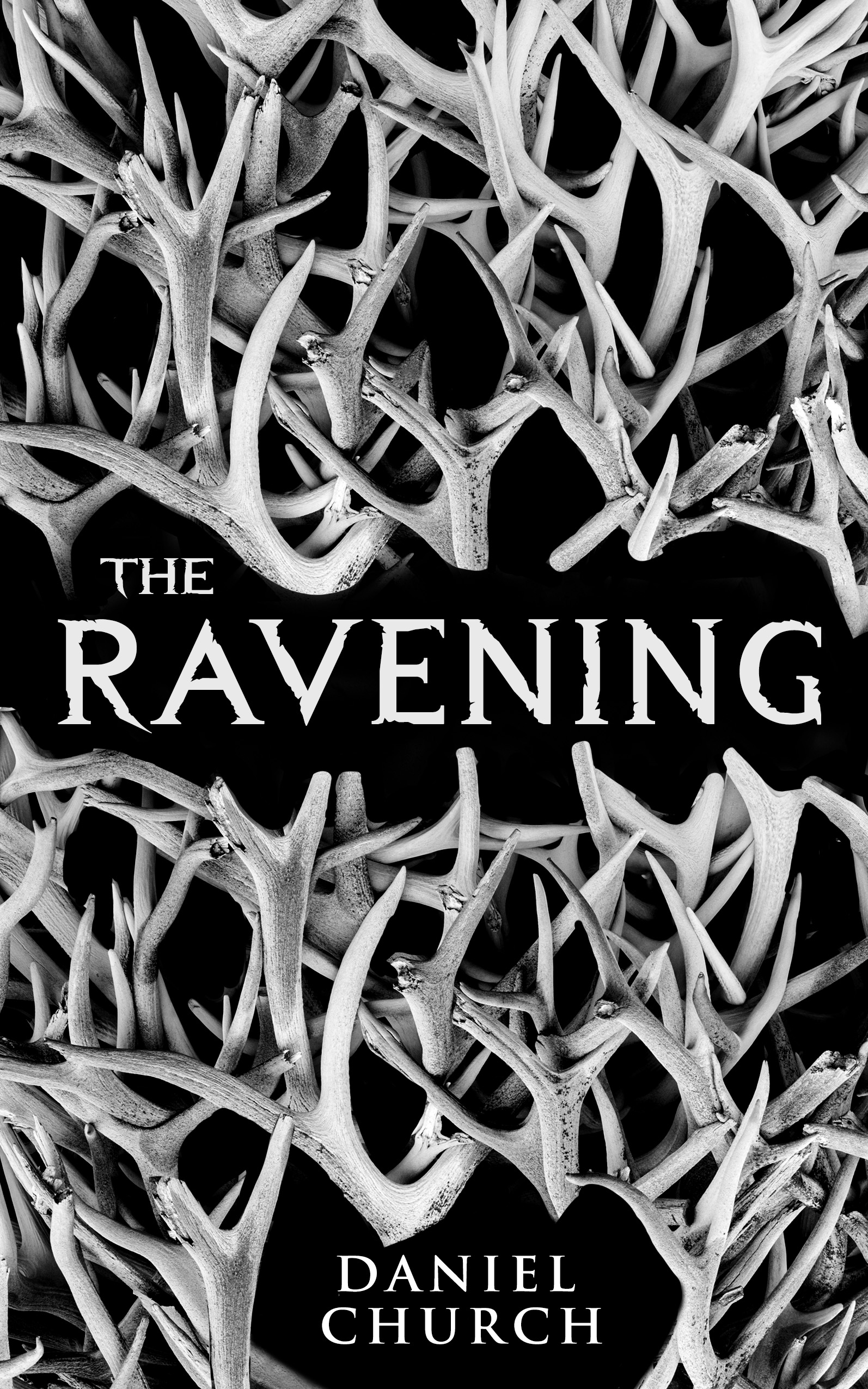
I first heard of Daniel Church when I picked up The Hollows a couple years ago, a book which turned out to be a delightfully claustrophobic chiller that’s equal parts terrifying and entertaining. As such, I was very excited to check out The Ravening, his latest psychological horror. However, despite my high hopes, something about it just didn’t fully click. While the story had its moments, as well as some genuinely cool ideas, it still never quite reached its full potential.
That said, one thing The Ravening does right is its killer prologue. The novel opens at night on a desolate stretch of forest road where fifteen-year-old Jenna and her mother are stranded after their car breaks down. While checking the engine for the problem, Jenna’s mother is suddenly and violently snatched away by some monstrous thing in the darkness, leaving behind nothing but the echoes of the woman’s screams. Her daughter, helpless to intervene, witnesses the entire incident and is left traumatized and filled with guilt.
This event would go on to shape the rest of Jenna’s life, casting a long shadow over her adulthood. No one believes what she saw that night, leading to years of ridicule from her peers as well as nasty rumors surrounding her mother’s disappearance. Struggling to cope with the psychological trauma, Jenna found herself unable to move forward or to find her sense of self. Things went from bad to worse following her father’s death, as connecting to other people became more difficult. And finally, of course, there was her fear of the forest, where her mother was swallowed up by the darkness all those years ago.
Yet, just as things in her life were starting to settle with a new girlfriend and a tiny sense of stability, Jenna’s world is rocked again when she finds out she is pregnant by the controlling ex-boyfriend she recently broke up with. Besides being unexpected, this pregnancy is also far from ordinary. Certain parties tied to ancient legends and sinister forces have taken an interest in Jenna and they’re willing to use her for their own purposes, going as far as to hold her captive and cut her off from the outside world.
An intriguing mystery? Check. Supernatural forces at play? Check. Moody, claustrophobic atmosphere? Check. The Ravening delivers on many of the characteristics of a great horror novel, and certainly the first few chapters do a good job setting the stage for a story filled with tension and dread. There was the gripping prologue, and the historical background provided which ties in a legend related to the Knights Templar to boot. The first half of the book had me completely hooked.
So, where did things start to go off track? Personally, I feel it was shortly after Jenna finds herself trapped in the bizarre prison created by her captors. For me, this was when the plot hit its peak before unraveling, becoming more scattered, moving away from its focus on survival, and turning into a repetitive, confusing tangle. The more answers we got, the less impressed I became with the mystery, with the antagonists revealed to be rather shallow, uncomplicated villains with their stereotypical dime-store motives. The Templar legend angle could also have been better leveraged, as I thought the concept behind the otherworldly monster warranted far greater depth than simply serving as another standard creature feature.
In terms of characters, Jenna’s long history of emotional scarring and the impact it had on her relationships felt undeveloped and overly simplified. Church seems to fare better when it comes to writing ensemble casts as he did in The Hollows, but when it comes down to a single protagonist—particular a female lead, in this case—he gives the impression of being out of his depth. There’s a sense of this uncertainty in Jenna’s relationship with her girlfriend Holly, where the supposed strength of their bond doesn’t really come through. You can also catch it sometimes in the stilted logic of Jenna’s inner dialogue and the things she says.
Pros: Daniel Church excels at creating an eerie and oppressive atmosphere, particularly through his use of supernatural elements. The Templar myth angle was also an interesting addition, as was the concept of the monster. Cons: The story lost a lot of its momentum as the mystery dissipated and the plot grew more convoluted. There was also the occasional lack of character depth. Overall, The Ravening is an ambitious entry to the horror genre, though I feel it is weaker than his previous novel, The Hollows. Pacing and character development issues aside though, readers who enjoy paranormal horror exploring psychological trauma and survival may find it worthwhile.


Book Review: You Better Watch Out by James S. Murray and Darren Wearmouth
Posted on November 15, 2024 7 Comments
I received a review copy from the publisher. This does not affect the contents of my review and all opinions are my own.
 You Better Watch Out by James S. Murray and Darren Wearmouth
Mogsy’s Rating: 3 of 5 stars
Genre: Horror, Thriller
Series: Stand Alone
Publisher: St. Martin’s Press (October 15, 2024)
Length: 240 pages
Author Information: James S. Murray | Darren Wearmouth
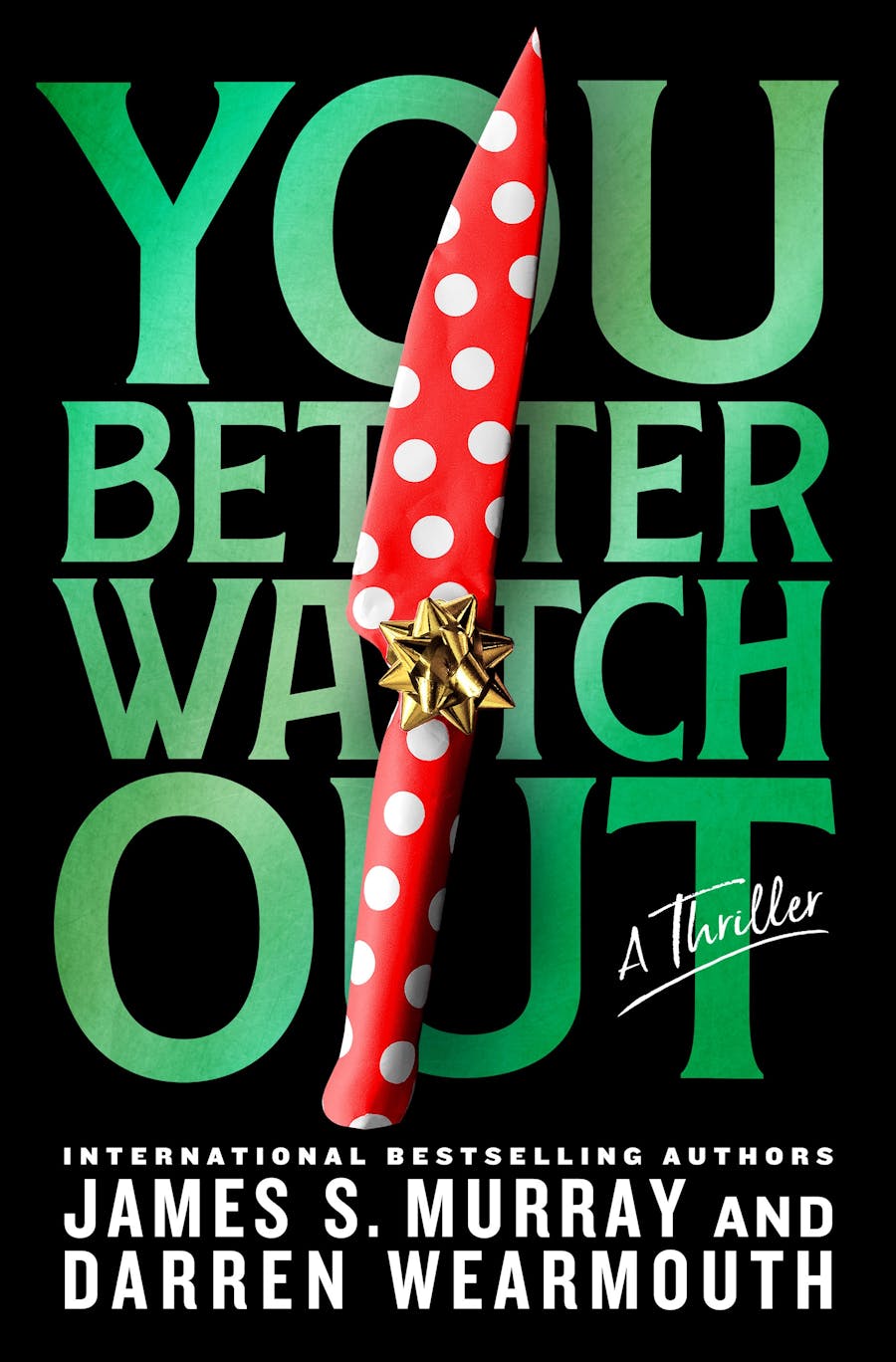
If you’re looking for a Christmas-themed read with a horror twist, the wickedly fun duo of James S. Murray and Darren Wearmouth will have you covered this holiday season. Part locked-room mystery, part over-the-top gory slasher, You Better Watch Out is designed to leave you in a festive mood while also feeling nostalgic for the campy horror classics. That said, it’s not the most sophisticated, but at least it’s a super quick read.
The story follows a group of characters who all wake up feeling drugged up and confused in an otherwise deserted and unfamiliar town. Christmas is in a few days, and Eddie is a petty thief who recalls being in a parking lot trying to scam an old couple before he was injected with something that knocked him out. Jessica was out on the trail when she was similarly attacked. So too was Trinity, who was in bed when she figured she was chloroformed, and Greg, when someone knocked him unconscious as he was heading out to work. And on it goes. The people involved come from all walks of life, but their stories of how they ended up here are all eerily similar
But why are they here? And who is responsible for bringing them all together like this? Finding the answers becomes increasingly urgent as the group of strangers realize they are being hunted. Someone had gone to great lengths to orchestrate a twisted series of events designed to take out their victims one by one, capturing them before transporting them into a fake town designed to be one giant trap. As paranoia and desperation set in, the survivors must band together to work out why they’ve been targeted in the hopes of coming up with a plan to make it out alive.
Like I said, it’s not a deep read, but pretty sure no one is picking this up expecting it to win any literary rewards. The story feels like a straight-to-TV movie complete with a cast of B-list actors whose roles take a backseat to the anticipation of when or how their characters die. Who’ll suffer the most gruesome death? Which one will be the last one standing? Those are the questions keeping the audience interested, not where these people are from or what major influences in their childhoods shaped their life choices. You Better Watch Out practically revels in these vibes, glossing over character development in favor of action, thrills, and tension. As a result, character personalities and motivation don’t get as much room to breathe, but again, who really cares?
That plot also has a patchwork quality, borrowing themes and ideas I recognize from familiar films like Saw, Predators, and others. And yes, there are plenty of moments that strain credulity, but this is just another thing that gives this novel an over-the-top and campy charm. Let’s face it, you’re not meant to be carrying this book around in your head for days after you read it, or analyze it to death at a book club. The story wants to be ridiculous and unrealistic, its main goal being to provide entertainment and suspense–a goal that was met. Short chapters also kept the pace moving, and I finished this book in no time at all.
In short, You Better Watch Out is not going to be for everyone. However, if you’re willing to overlook a few weaknesses like superficial characters and storytelling in exchange for some top rate slasher-style suspense, you’ll enjoy this popcorny Christmas-themed horror novel. I was solidly entertained, and as always intrigued to check out more from Murr and Darren.
Book Review: Heir by Sabaa Tahir
Posted on November 13, 2024 8 Comments
I received a review copy from the publisher. This does not affect the contents of my review and all opinions are my own.
 Heir by Sabaa Tahir
Mogsy’s Rating: 4 of 5 stars
Genre: Fantasy, Young Adult
Series: Book 1 of Heir
Publisher: G.P. Putnam’s Sons Books for Young Readers (October 1, 2024)
Length: 484 pages
Author Information: Website
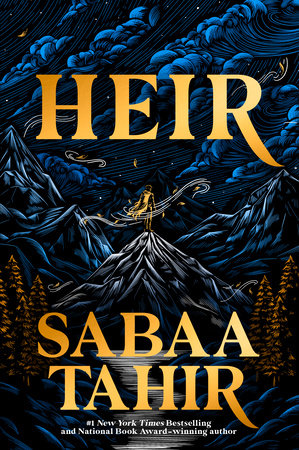
Sabaa Tahir’s Heir is a return to the vivid but unforgiving world that she first introduced in An Ember in the Ashes, but I wouldn’t worry too much if you’re not caught up. It’s been years since I’ve read the first book myself, and I never even got a chance to complete the series, yet I had no problems jumping right back in. Taking place roughly two decades after the events of the original quartet, this opening to a new duology features a few familiar characters and settings but also introduces plenty of fresh faces and expanded lore.
This story unfolds predominantly through three main perspectives: Aiz, Sirsha, and Quil.
Aiz is a hardened young woman born in the slums of Kegari, determined to avenge her people who have long suffered under the cruel treatment of Tiral, a bloodthirsty fleet commander from the ruling class. Using her magical abilities as a windsmith, Aiz has survived countless threats to her life but is nonetheless left heartbroken and bitter when her childhood friend Cero, who has more control over his wind powers, leaves her to become a pilot. After being imprisoned by the authorities, Aiz discovers a new cause in helping other innocents who have been captured and tortured, believing that the divine Mother Div will guide her in her mission.
Sirsha is another character with magical powers and secrets aplenty. Cast out by her own people, she is a tracker who can find people and things by sensing magic—though this isn’t a skill she likes to advertise. When she is tasked to hunt down a murderer targeting children, Sirsha takes the contract thinking it would be a straightforward job. However, as she learns more about her employer, the victims, and the killer, she begins to realize that the real cost of taking on this mission may be far higher than she expected.
Finally, there’s Quil, whose background could not be more different than the others. Chosen to be the heir of the Martial Empire by his aunt, the Empress Helena, Quil reluctantly takes on the duties required of him, even if it means being roped into an arranged marriage. But before those plans could come to fruition, the heart of the throne comes under attack by a new threat, forcing Quil and his friends to flee in order to ensure the survival of the empire.
For a character-driven novel like Heir, it comes as no surprise that one of its greatest strengths is its protagonists. As I recall, Sabaa Tahir’s characterization in An Ember in the Ashes was superb as well, and it appears her skills have only improved. Of course, like any multi-POV story I had my favorites that I liked to follow, but I think it’s fair to say each one was well written and compelling. The voices o Aiz, Sirscha, and Quil were also sufficiently different enough that they each stood out for their own reasons, making transitions between their chapters easy, painless, and so much less confusing than it could have been.
And although it’s been quite a while, I enjoyed returning to this setting which features light influences from Middle Eastern as well as Asian cultures. Heir does a good job expanding it beyond what readers have already seen, immersing us deeper into the richness of the world’s magic systems, traditions, and religions. By telling this story through the eyes of individuals from across distinct social divides, we’re also able to experience so much more, from the physical descriptions of their unique surroundings to the fascinating interactions they have with the local people and their customs.
That said, this was a relatively long book, and in terms of storytelling, pacing suffered a little from a few sluggish parts in the middle and second half—as one would probably expect from an almost 500-page novel that’s trying to constantly throw out information at you while juggling three viewpoints. It took a while for everything to come together, and you also had a few interruptions to overall flow as POVs would change in the middle of the action. Still, once the story got going, its momentum was stronger than not. Knowing that Heir is the first half of a duology also prepared me well enough for the inevitable cliffhanger, which was softened despite its suddenness, and I’m left mostly with curiosity at what will come next.
For me, Heir was ultimately an intriguing return to a familiar world, but I think readers jumping into it for the first time will also find it completely accessible. The scope of the story is big but not too daunting, characters are unique but relatable, and world-building is straightforward but also layered and substantial. It’s a must-read for fans of An Ember in the Ashes, obviously, but also a highly readable novel that I would recommend to anyone who enjoys fantasy with strong YA and adult fiction crossover appeal.

Book Review: The Teller of Small Fortunes by Julie Leong
Posted on November 10, 2024 9 Comments
I received a review copy from the publisher. This does not affect the contents of my review and all opinions are my own.
 The Teller of Small Fortunes by Julie Leong
Mogsy’s Rating: 4.5 of 5 stars
Genre: Fantasy
Series: Stand Alone
Publisher: Ace (November 5, 2024)
Length: 336 pages
Author Information: Website
These last few months of 2024 have brought a bunch of crazy good reads, and I would like to add yet another to the list of highly recommended books for EOY reading. Essentially Wayfarers for cozy fantasy fans, The Teller of Small Fortunes by Julie Leong is a great addition to the genre, offering that same sense of warmth and whimsy. As a bonus, it’s also totally binge-worthy.
The story follows Tao, an immigrant in the land of Eshtera, where this novel takes place. Originally from Shinara, Tao relocated as a young child after her father was killed and her mother remarried a Eshteran noble. Following a family conflict, Tao left home a few years ago and has been on her own ever since. Now she makes a modest living as a wandering fortune teller who travels with only her beloved mule for company. Specializing in “small” fortunes—tiny, personal events that may seem relatively trivial to others looking in but may mean the world to those who seek to know them—she earns a modest living by setting up a stall in the villages she encounters across the countryside, offer her unique gift to the locals.
Then one day, while on the road, her own fortunes take an interesting turn when she stumbles across a pair of mercenaries who are also on a mission of their own. Mash is a ex-soldier on a quest to track down a gang of bandits who he suspects have kidnapped his daughter, and his loyal friend Silt is a reformed thief who has pledged to accompany him on the journey. Since they are headed in the same direction, the three join forces for safety in numbers, with Tao recognizing the good in the two men. Their chance encounter soon expands into a ragtag team when they are joined in the next village by Kina, a bubbly baker with big dreams. Together, they embark on a quest not only to reunite Mash with his little girl but to also help Tao rediscover the meaning of home and family.
And for found family story fans, this is one of the book’s greatest strengths. Tao, Mash, Silt, and Kina are instantly and distinctly memorable, and their bonds form and evolve naturally, filling the entire atmosphere around them with heartwarming optimism and the feeling that even in the darkest moments, everything will be okay. Because of this, I can forgive characterization for leaning a little too heavily on tropes (the burly warrior with a heart of gold, the charismatic rogue, etc.) or the plot for being predictable. This story is as much about Tao’s internal journey towards self-acceptance as it is about the shared adventure with her new companions—the shift from believing that she is meant to be alone to the decision to open herself to the help and friendship of others.
I also loved the world-building, which is on the lighter side compared to epic fantasy but still rich and detailed enough to feel immersive. Leong balances just the right amount of description to let readers envision the small but lively villages on the rural countryside, and also the greater conflicts between nations that affect the politics of the wider world beyond. Throughout this process, the focus is consistently with the characters, relating it back to Tao’s own connection with her heritage as well as her experiencing living as an outsider without ever slowing the story’s pacing or moving away from its central ideas.
At the end of the day, this results in a charming, cozy, and magical tale that feels both familiar and refreshing. Through its focus on character growth and gentle plot development, The Teller of Small Fortunes captures and embraces the essence of found family themes and reminds us that home isn’t necessarily defined by place but by the bonds we forge along the way. I came away from this novel’s celebration of joy and friendships with a warm and fuzzy feeling in my stomach, and I would highly recommend picking it up if you enjoy stories with meaningful lessons, loveable characters, and lots of heart.

Book Review: Carl’s Doomsday Scenario by Matt Dinniman
Posted on November 7, 2024 13 Comments

I received a review copy from the publisher. This does not affect the contents of my review and all opinions are my own.
 Carl’s Doomsday Scenario by Matt Dinniman
Mogsy’s Rating: 4.5 of 5 stars
Genre: Fantasy, Science Fiction
Series: Book 2 of Dungeon Crawler Carl
Publisher: Ace (September 24, 2024)
Length: 384 pages
Author Information: Website
I’m enjoying the Dungeon Crawler Carl series so much that I’m really trying to savor each book rather than give in to the temptation of power through the series all at once! Carl’s Doomsday Scenario is a sequel that pulled me even deeper into this bizarro addictive world, keeping up with the first volume’s dark humor and crazy twists. It’s definitely an experience worth basking in, and this second book continues to raise the stakes in wild, entertaining ways.
To recap our adventure, protagonist Carl and his cat Princess Donut have found themselves trapped in a nightmarish game-like reality with the remnants of humanity after an apocalyptic event destroys the Earth. The competition turns out to be all part of an intergalactic entertainment network designed for the amusement of alien spectators, where contestants are forced to KILL! KILL! KILL! their way through increasingly difficult levels of a massive, RPG-inspired subterranean dungeon. Additionally, because of the televised—or “tunneled”—format of the dungeon-crawl, there’s the social media factor to consider. Crawlers who are savvy enough to amass high view counts, favorites, and followers will therefore have a significant advantage.
After surviving the first two levels, Carl and Donut (and her pet velociraptor Mongo) advance to level three, where the world of the game gets a major shakeup. Every three levels in this dungeon, the setting shifts into more of an open-world format—picture an MMORPG environment with sprawling cities, NPCs living out storylines, quest givers, other players running around, and more. At this point, crawlers must also specialize by selecting a race and class, choices that will shape their abilities, strengths, and strategies going forward. Our protagonists waste no time in exploring this new level, initially with the goal of gaining as much experience as possible. However, their plans are just as quickly shot to hell as they stumble into one deadly quest after the next, leading to plenty of unexpected shenanigans.
For fans of the first book, Carl’s Doomsday Scenario was one hell of a follow-up! Just as fun and crazy, in some ways even more so, than its predecessor. As for world-building—or more accurately, I should say, dungeon-building—this sequel builds a lot more upon the foundation of RPG mechanics while staying true to the offbeat charm and spirit of the series. The story shifts into one more resembling a quest narrative, featuring Carl and Donut working through a string of mini side adventures.
Of course, one downside of this is that we get less crawler-to-crawler interaction in this book. For me, many of the highlights from Dungeon Crawler Carl involved the characters’ friendships with potential allies like Brandon, Chris, Imani, or even their animosity towards “crawler killers” like Maggie and Frank. In this book, our protagonists are pretty much on their own, and the entire novel takes place on the third level. In fact, for much of the first of the book, Carl is even forced to go solo without Donut. Instead, their more memorable interaction were with nonplayer characters like Signet, or those involved in the production of the dungeon crawl, like Mordecai.
Still, by the end of this book, I was convinced that everything that happened is only going to make the series stronger. Clearly, Dinniman has a grand plan all worked out in his head, and things are just going to get better and better with each installment. I suspect the conflicts taking place in the universe at large involving Borant, Skull Empire, etc. will gain more significance, but so too will the main storyline following Carl, Donut, and Mongo that takes inside the dungeon, if that totally INSANE ending is any indication.
Certainly, taking my time with this series has been extremely difficult, but I still maintain that it is simply too good to rush through. That said, I probably won’t wait too long to get to the third book, The Dungeon Anarchist’s Cookbook, which I already have ready to go! The litRPG genre is absolutely my scene, and I’m loving Matt Dinniman’s blend of irreverent humor, thrilling adventure, and unique characters. I can’t wait to see what’s in store for Carl and Donut.
#SciFiMonth 2024
Posted on November 2, 2024 12 Comments
When I look outside, I still can’t believe it’s November. The weather’s been unseasonably warm, but the calendar doesn’t lie–and Sci Fi Month is here! It’s once again that time of the year where the blogosphere celebrates all things aliens, spaceships, time travel, and everything in between. In 2024, the event is being hosted by a rockstar team of imyril of There’s Always Room for One More, Annemieke of A Dance With Books, Mayri the BookForager, and Lisa of Dear Geek Place!
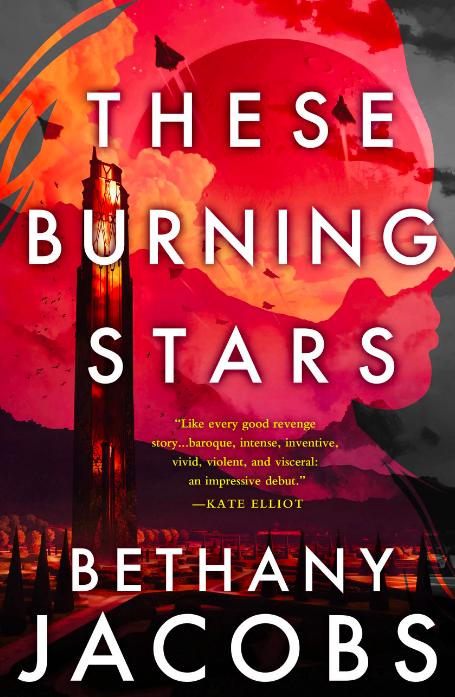
I have not always been great at following reading plans in previous years, or like…ever. But is that going to stop me from making a reading list? Heck no! Granted, science fiction isn’t making up most of my diet these days, but I do have some books I’ve been saving up for the occasion. I’ve put together a mix of new releases, books that came out earlier in the year, and even backlist titles, and I’m hoping I’ll be able to get to most of them:
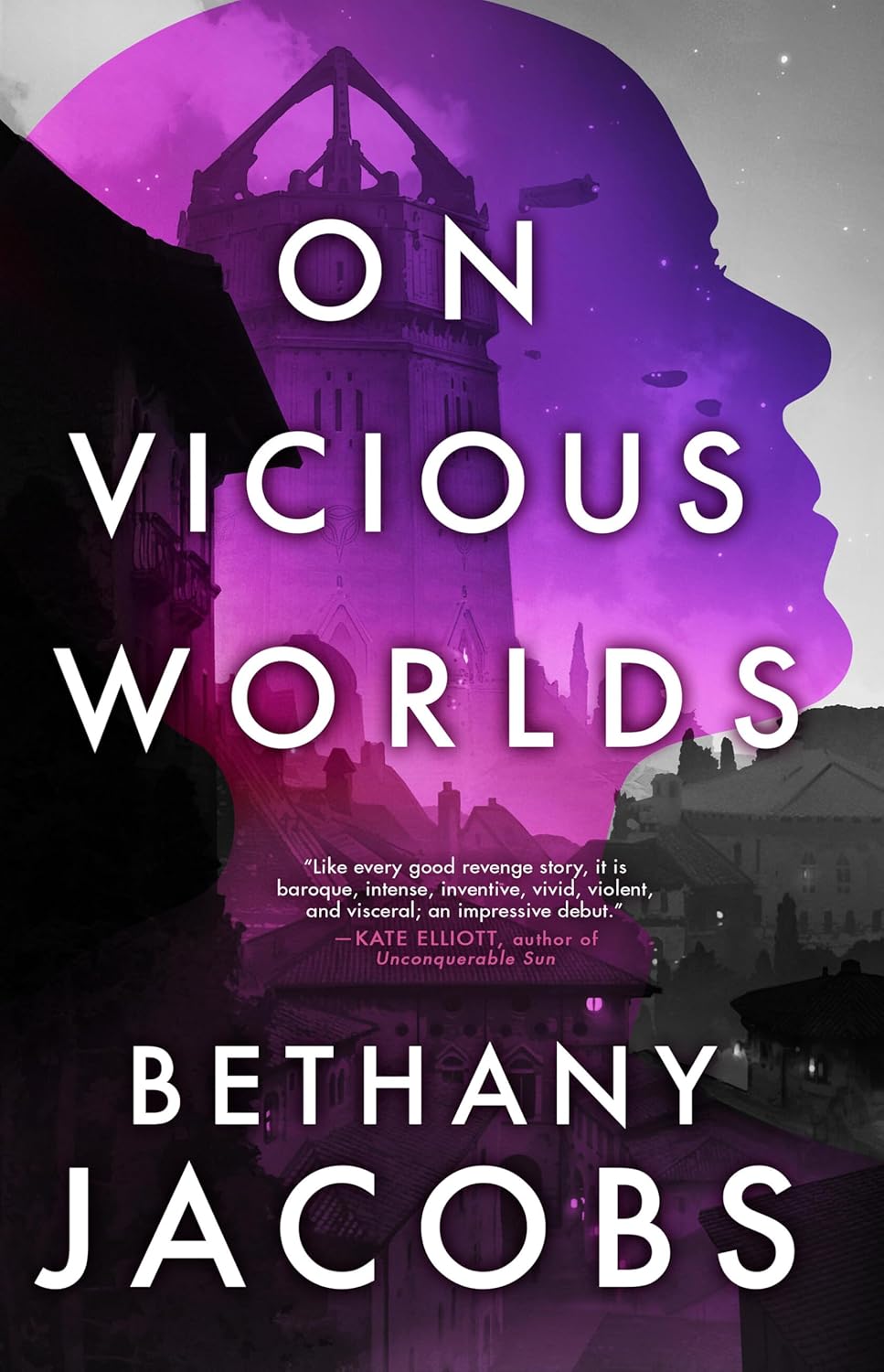

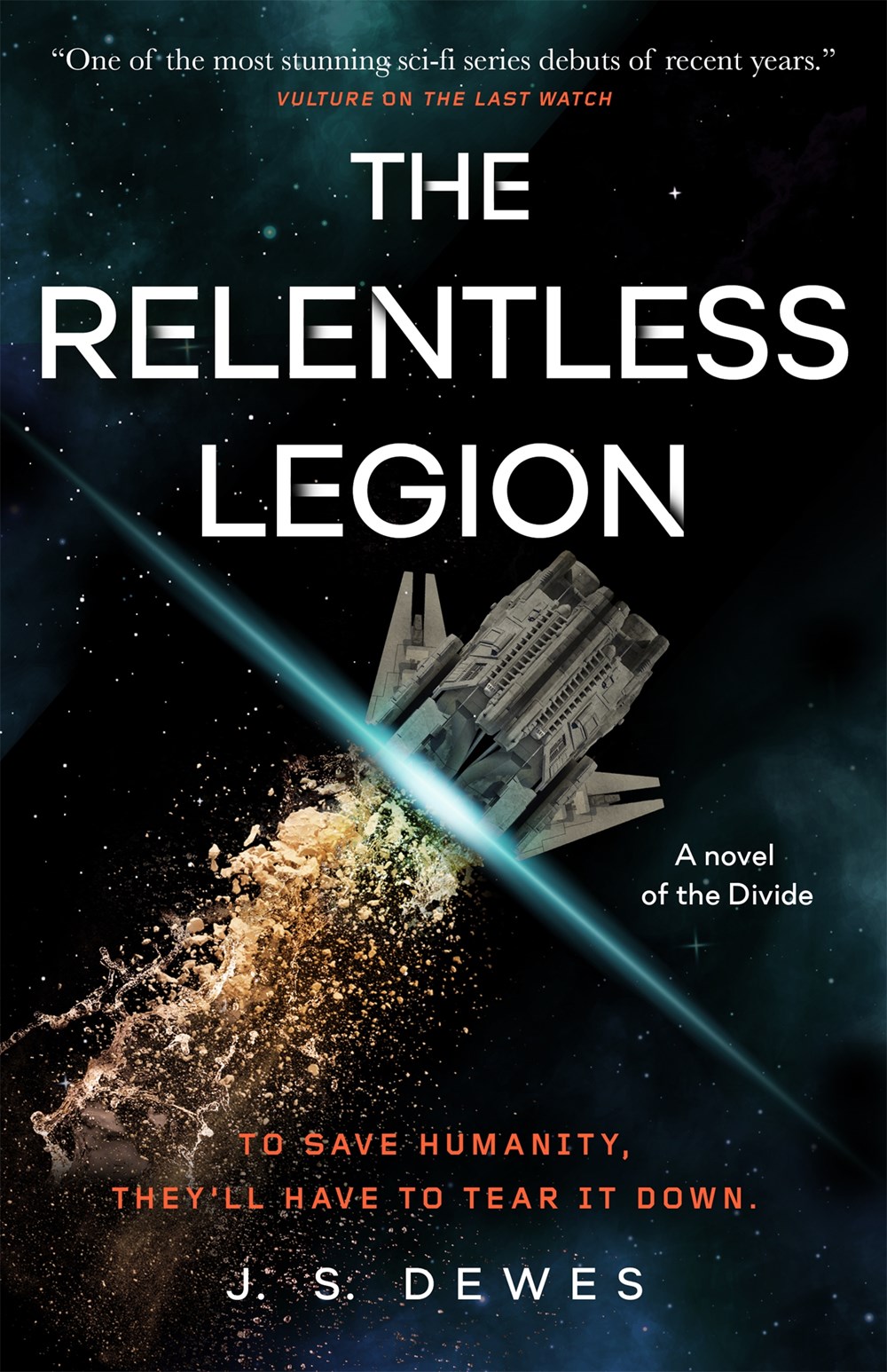
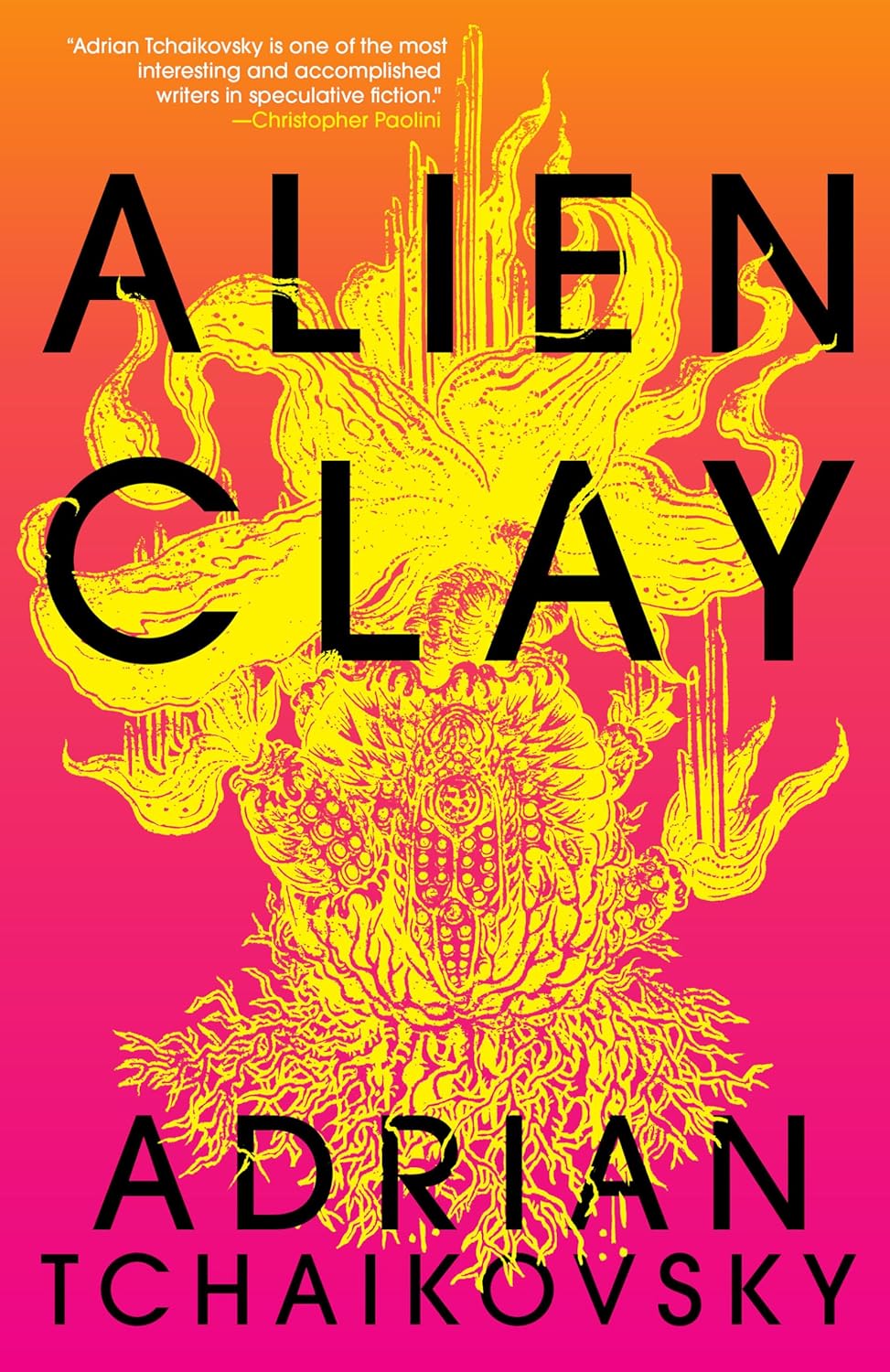
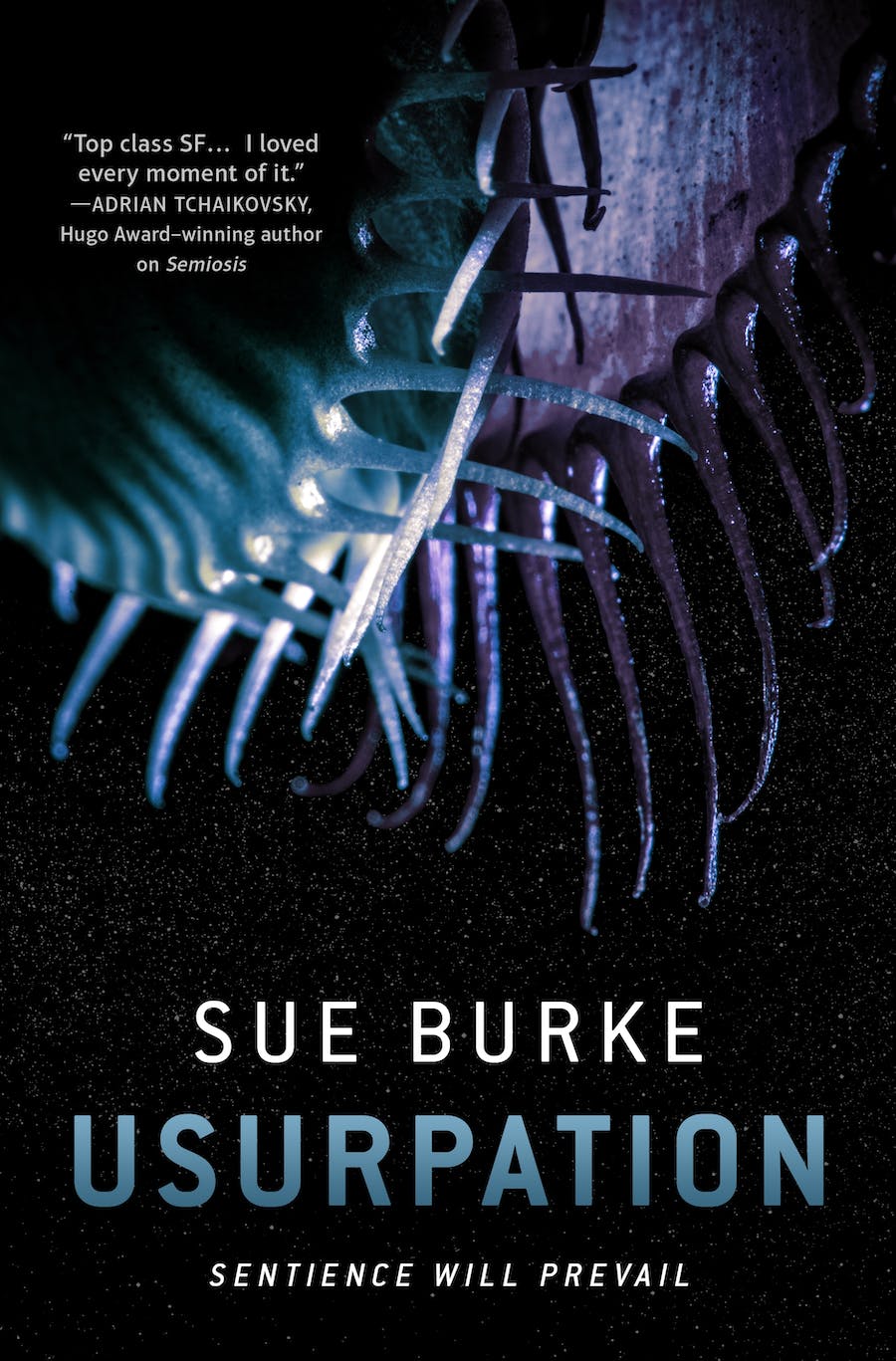
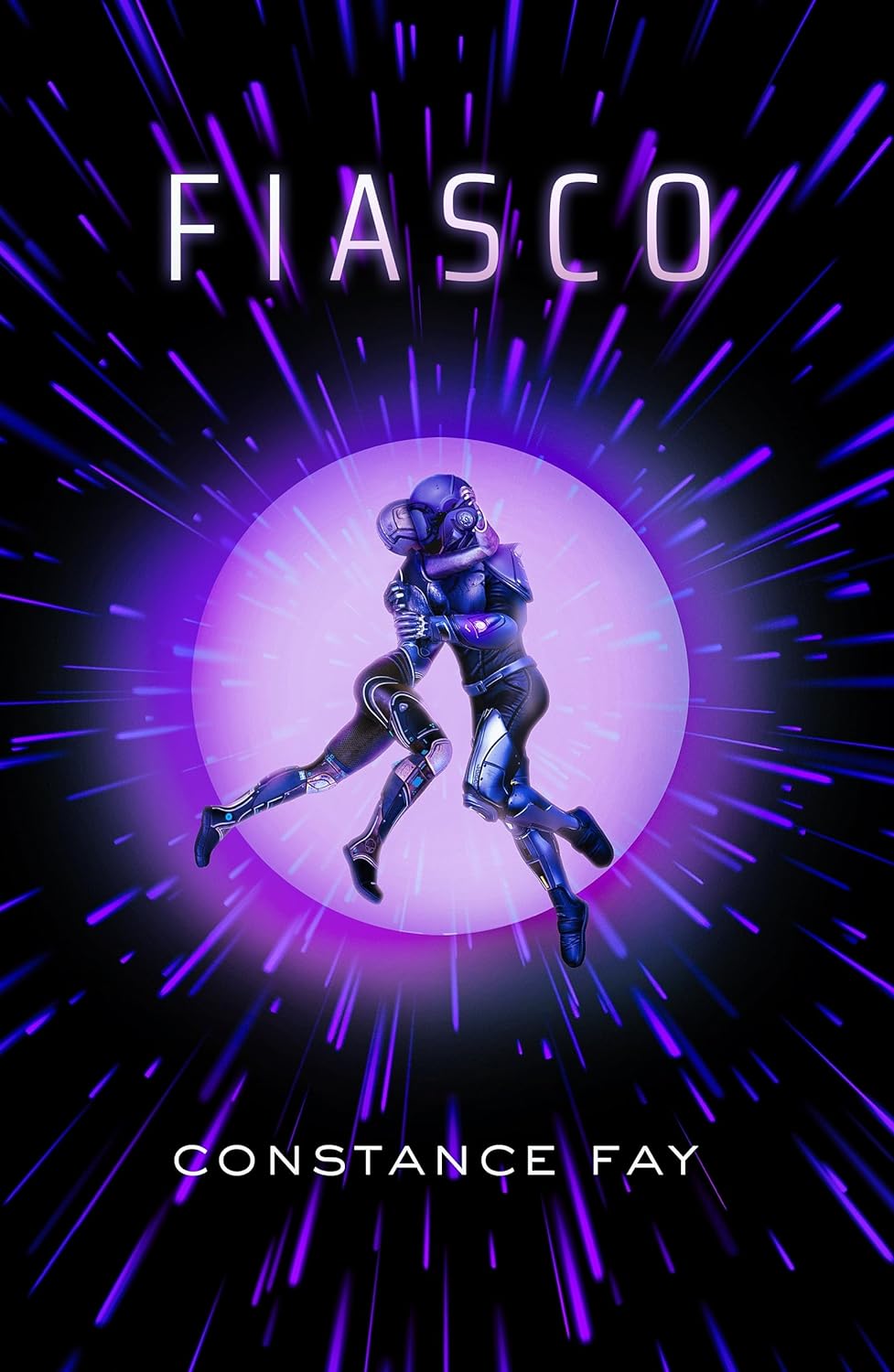

If you’re interested in participating as well, simply hop on over to the sign-up form and be sure to also check out all the exciting features the organizers have put together like giveaways, readalongs, and reading challenges. Everything about this event is super casual, low-pressure, and just plain fun, so grab your jetpacks and join dozens of other bloggers, authors, and readers as we blast off into another year of Sci-Fi Month. Let me know what your plans are and what you’re reading!
Book Review: Devils Kill Devils by Johnny Compton
Posted on October 31, 2024 6 Comments
I received a review copy from the publisher. This does not affect the contents of my review and all opinions are my own.
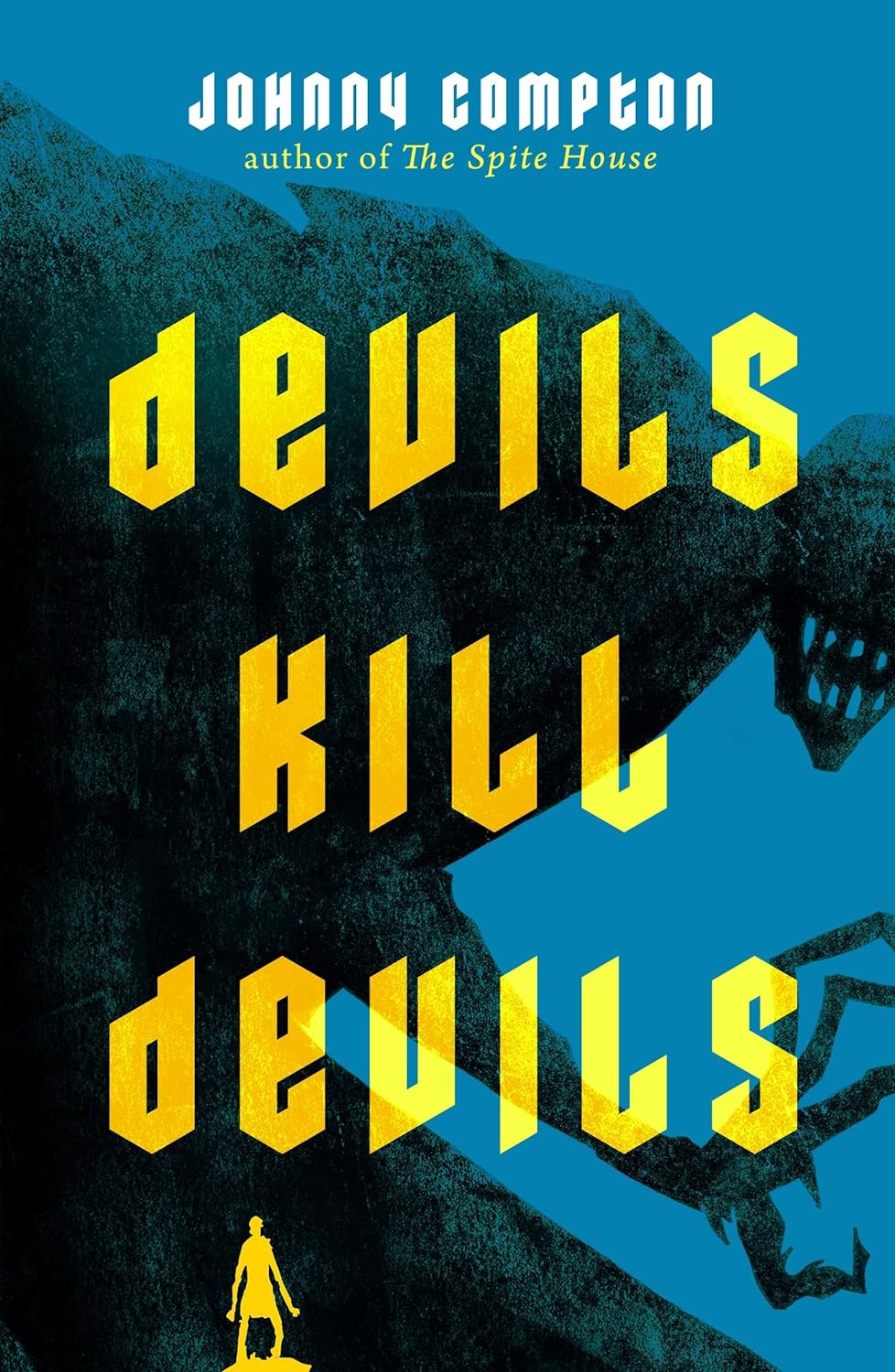 Devils Kill Devils by Johnny Compton
Mogsy’s Review: 3 of 5 stars
Genre: Horror
Series: Stand Alone
Publisher: Tor Nightfire (September 24, 2024)
Length: 288 pages
Johnny Compton’s Devils Kill Devils is his second novel following his debut, The Spite House, which I enjoyed for its haunting atmosphere and premise. Devils Kill Devils, on the other hand, feels a bit more scattered. While it packs in a ton of supernatural elements, they don’t always come together cohesively. Overall, the author’s ambitious endeavor was somewhat marred by the fact that all these different ideas frequently clashed, making it an uneven read.
The story follows Sarita, a woman who has been protected from harm all her life by what she and her family believes is a guardian angel. They named him Angelo because of the way this imposing, enigmatic figure always seems to appear at critical moments to save Sarita from certain death. The first time, she had been just a child, swept away by a riptide during a family vacation at the beach. Then, Angelo seemingly came out of nowhere to carry the drowning girl out of the waves. These rescues continued through her teens, college years, and into adulthood—always unexpectedly, but with an eerie consistency that gave Sarita a strange comfort knowing that no matter what happened, Angelo would be watching over her, keeping her safe.
However, this faith is shattered on her wedding night, when Angelo reappears and brutally kills her new husband in cold blood. Stunned and traumatized, Sarita wonders just how she could have misjudged her so-called guardian angel so badly. As she turns to friends and family to delve deeper into her past encounters with Angelo, they uncover some disturbing new information that suggests his origins are anything but angelic. With these revelations, Sarita suddenly finds herself pulled into the dark world of ancient prophecies, secret cults, and supernatural forces.
The novel’s intro is strong, positing the idea that guardian angels may in fact be working towards a more sinister agenda when they are ostensibly protecting their charges. These early chapters were filled with suspense and a sense of dread, and I loved them! Given the fact Angelo seems to have no qualms about using violence to safeguard Sarita’s life, this should have been a huge red flag from the start, but when the moment comes when he suddenly turns on her in the most shocking way, the horror still hits like a punch in the gut.
Unfortunately, the plot began to lose its intrigue as things progressed. This happened as the focus on Angelo started giving way to a more sprawling narrative with multiple sub threads involving a crap ton of additional supernatural entities that distract from the central story. What initially was a tightly wound mystery unraveled as we branched into a broader but less coherent exploration into secret cults, other realms, and even vampires! In short, I feel the author was trying to do way too much in too few pages.
The characters themselves were hit-or-miss. I liked Sarita, who starts out as sympathetic and relatable, especially in her grief and confusion following Angelo’s brutal attack. But along with the main storyline, character development grew rougher and more convoluted as the chaos of the plot took over. No spoilers here, but by the time another character named Cela enters the picture, I felt I barely had any more attention to give.
In the end, Devils Kill Devils featured good ideas, even taking on some classic horror themes with new twists, though the story ultimately lacks the focus to maintain them. Still, although this is a flawed novel, Johnny Compton’s writing is strong, and his creativity makes me curious to see where he’ll go next as he continues to hone his storytelling.
Book Review: The Queen by Nick Cutter
Posted on October 26, 2024 7 Comments
I received a review copy from the publisher. This does not affect the contents of my review and all opinions are my own.
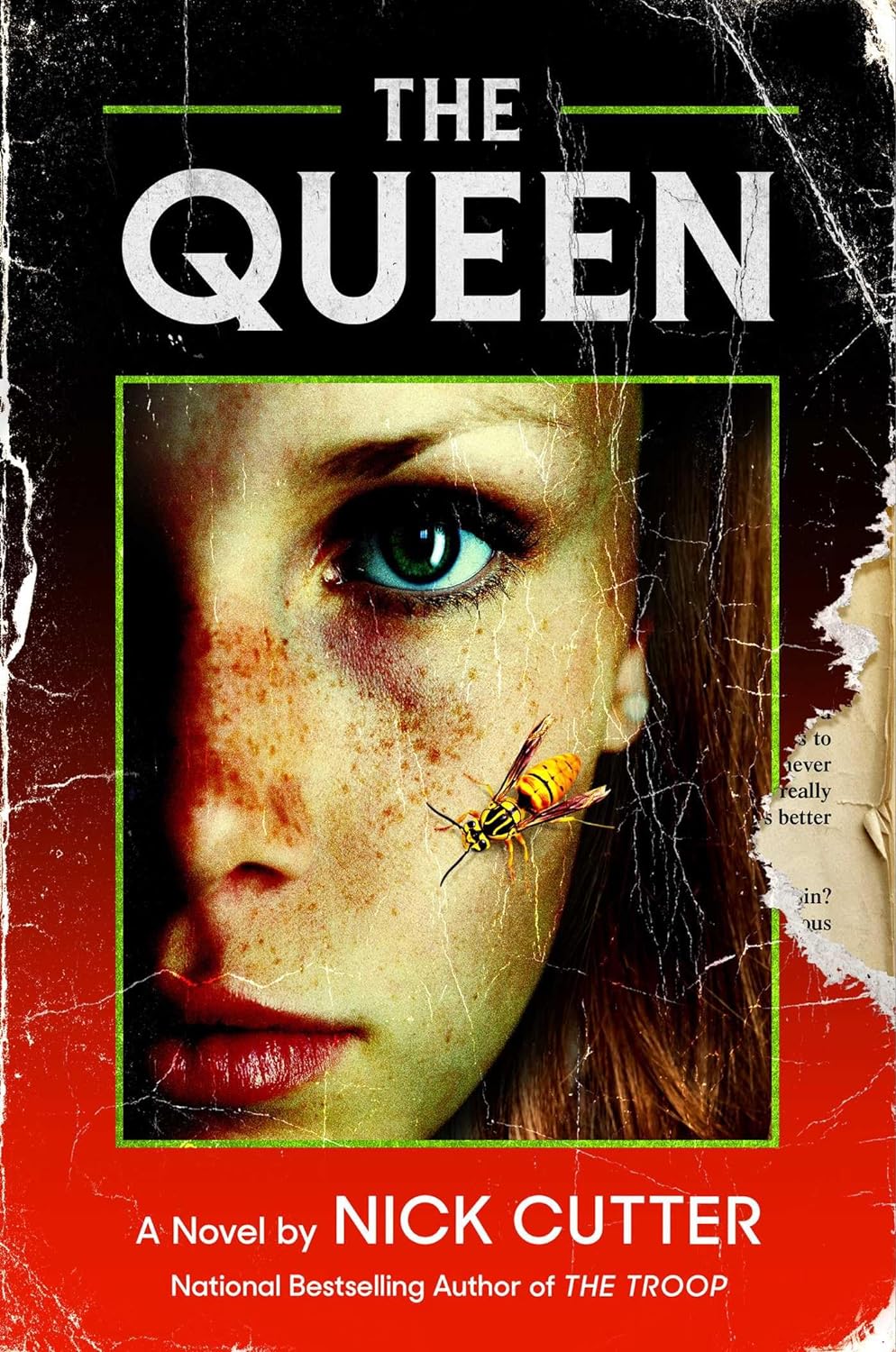
Mogsy’s Rating: 3 of 5 stars
Genre: Horror
Series: Stand Alone
Publisher: Gallery Books (October 29, 2024)
Length: 384 pages
Author Information: Website
It’s been ten years since I read my first Nick Cutter book, The Troop—which I still think is one of his best. With that, I was introduced to his visceral brand of horror, and I knew when I picked up his latest novel The Queen that it would not shy from the psychological twists and grotesque imagery that has made him popular with body horror fans. The good news is, the book did not disappoint in these areas. However, it also didn’t quite hit the mark in the ways I’ve come to expect from the author.
In The Queen, we follow Margaret, a teen who one day finds an iPhone left for her on the porch. On it, she finds a text message from Charity, her friend who has been missing for more than a month. But even though the two girls were close, what Margaret soon learns about Charity is beyond anything she could imagine. Sent down a path of no return, Margaret discovers her friend has been the subject of a secret, long-standing experiment under Project Athena, a controversial gene manipulation initiative headed by tech mogul Rudyard Crate. Charity, designated Subject Six, has been closely monitored by the organization, just waiting for the inevitable day her genetically modifications would be activated.
And activate they did, following a traumatic event, as Margaret learns. Charity wants someone to know the real story, leaving Margaret a trail of clues to follow that would reveal everything that has happened to her. Along for the ride is Margaret’s friend Harry, as the two of them are drawn deeper into the mystery surrounding Project Athen, which will eventually lead to the dark truth behind Charity’s disappearance.
First, the good: The Queen delivers a solid mix of unsettling sci-fi elements and the author’s signature brand of visceral horror. Reminiscent of The Fly, the novel explores the idea of pushing human limits with insectile themes. It’s a combination I’ve always found disturbing and, of course, leave it to Cutter to tap into our primal fears by doing it with lots of gross imagery related to bugs and parasites. Like The Troop, there’s also something extra shocking and creepy about it when children are involved, the way this story subjects its teenage characters to the most horrific scenarios on top of experiencing traumatic coming-of-age drama.
Now, the not so good: My main issue with The Queen was how confusing and disjointed the story felt. I think the plot tried to do too much, trying to tell a sci-fi, horror, and psychological suspense story all at once, but doesn’t quite manage to balance all the parts. This left little time to dive deeply into the characters, and as a result, I was constantly questioning the plausibility of Margaret and Charity’s so-called friendship since both girls were underdeveloped. While attempting to keep the mystery under wraps for as long as possible, the narrative also felt frustratingly vague and slow at offering up satisfactory answers.
These issues almost made me give up on the book early on, especially because Margaret’s voice grated on me. After all, without a strong connection to the protagonist or her motivations, all the horror and gore is just superficial shock value. And yet, despite the obstacles, I pressed on because I was still curious enough to see where the story was headed. So even though it took me a long time to feel invested, to the novel’s credit, my interest was piqued.
All told, while this was not one of Nick Cutter’s strongest works, it does feature some fascinating ideas and insect-based horror that’s undeniably brutal and disturbing. Character development could have been better, but if you’re a fan of the author and have an interest in his style of writing of the type of themes he uses in this book, The Queen is a suitably hair-raising read this spooky season.
Book Review: An Academy for Liars by Alexis Henderson
Posted on October 23, 2024 14 Comments
I received a review copy from the publisher. This does not affect the contents of my review and all opinions are my own.
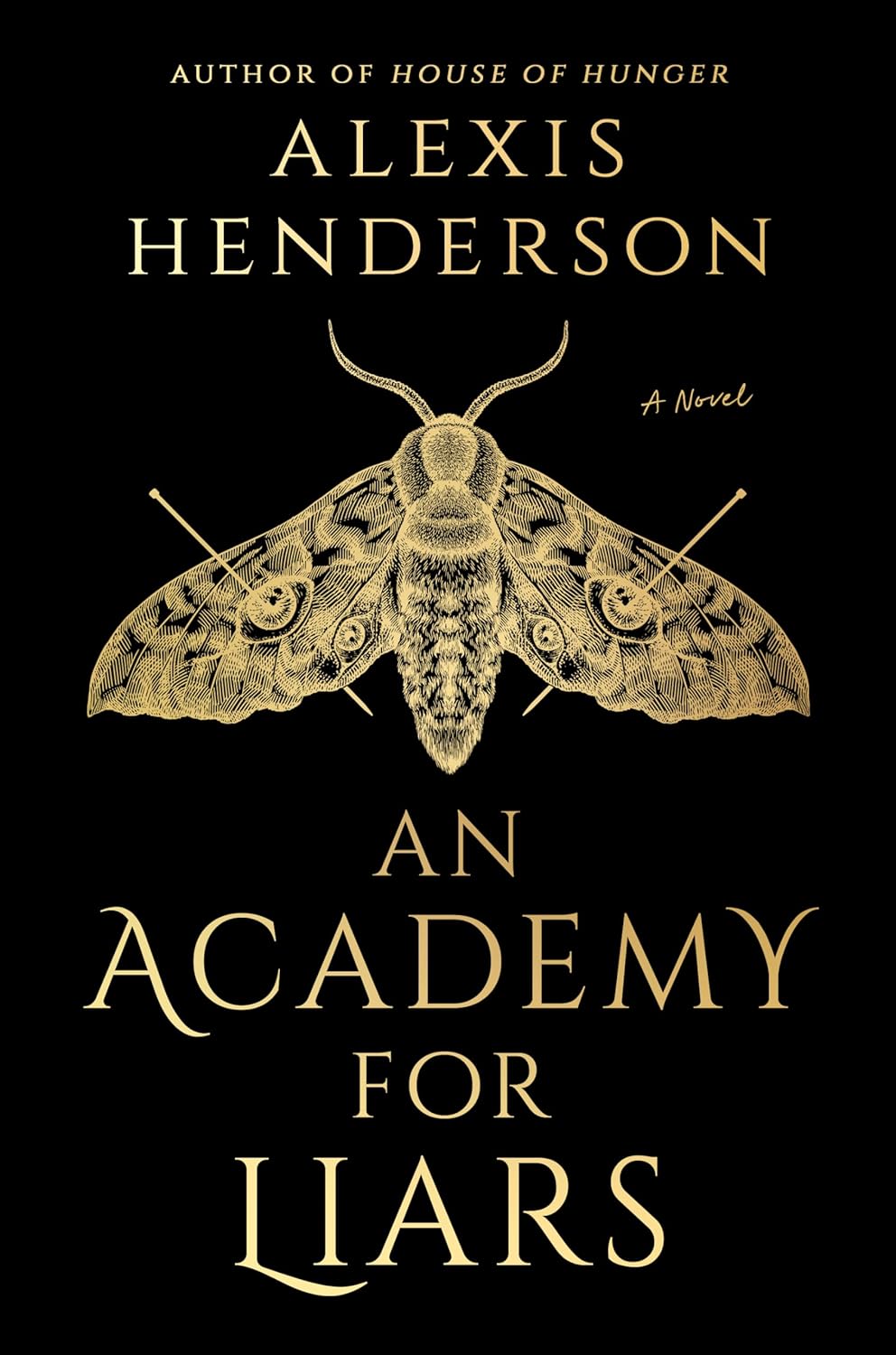 An Academy for Liars by Alexis Henderson
Mogsy’s Rating: 3 of 5 stars
Genre: Fantasy
Series: Stand Alone
Publisher: Ace Books (September 17, 2024)
Length: 464 pages
Author Information: Website
Before I begin, I’m prefacing this review with the caveat that I can be extremely tough on my critique of dark academia and magic school fantasy. While I love the genre, I’ve also become very picky and demanding on account of having read so much of it. Keeping this in mind, it’s possible I would have enjoyed An Academy for Liars a bit more if I hadn’t expected so much, but what didn’t land for me might actually work for you.
The novel follows Lennon Carter, a young woman struggling to keep her life from unraveling. She keeps falling for the wrong people and for the wrong reasons, and is about to commit her life to living a mistake when a mysterious phone call interrupts her pity party for herself in the middle of an empty parking lot. The voice on the other end of the line sounds like her own, inviting her to Drayton College, a hidden school of magic accessible only to those identified to possess special abilities. Drayton boasts a curriculum that enables its students to tap into and hone their talents in the dangerous art of persuasion—a technique that involves using one’s mind to exert their will over others.
With nothing to lose, Lennon accepts Drayton’s offer and comes under the guidance of Dante, a young but highly skilled professor. She is quickly thrown into the cutthroat environment of the academy, where students viciously compete for limited opportunities to advance. Tensions rise further when it is discovered that Lennon possesses the rare ability to open portals, a skill crucial for transportation. This new revelation makes her both valuable and a target, as some members of Drayton’s council believe she’s either too reckless or unprepared for such a huge responsibility. In order to gain control over her powers and avoid being kicked out of school altogether, Lennon must endure grueling tests of skills and determine who she can truly trust.
I’ll be honest—An Academy for Liars was ambitious entry into the dark academia genre, but it didn’t exactly blow me away. While I was drawn to the dark atmosphere, the premise itself felt somewhat lacking in originality, to the point that it gave me feelings of déjà vu. I was hit with the nagging sense that I’ve read this story before, or one of its many variations, the most recent one coming to mind being Olivie Blake’s The Atlas Six (which was already quite derivative). Even Drayton’s specialty, the art of persuasion, is a concept I’ve seen crop up a lot in fantasy, and the novel didn’t offer much new depth or insight into it as a magic system.
That said, the world-building had its moments. The bulk of the story takes place within the confines of the college, which admittedly restricts its broader connection to the outside world, but the internal drama and intrigue help make up for some of these limitations. High levels of conflict and the ever-shifting alliances between students keep things on edge, introducing chaos, fierce rivalry, and cruelty. As you would expect, things go horribly wrong. And violently bloody.
In terms of characters, my feelings were mixed. For one, Lennon was not a very likeable protagonist. She’s impulsive and stubborn, and not in a charming way, making ill-considered decisions and questioning authority like an obnoxious child. It’s hard to feel any sympathy for her when she has been repeatedly warned about her behavior and doesn’t seem to learn from her mistakes. I was also skeptical of Dante, who is a more interesting character but still gave me ick vibes. I really wish the romance between him and Lennon had not been so prominent, as it was a distraction from the main storyline and dragged down the pacing.
All in all, An Academy for Liars was a “solidly okay” book. Though it wasn’t bad, nothing about it wowed me either. Still, I think it would be a great pick for casual readers who enjoy the dark academia genre, especially those looking for a more mature spin on the school of magic trope. The characters and world-building didn’t exactly click for me, but your mileage may vary, and ultimately, the book ended up being an interesting if somewhat uneven read.
Book Review: The Games Gods Play by Abigail Owen
Posted on October 21, 2024 17 Comments
I received a review copy from the publisher. This does not affect the contents of my review and all opinions are my own.
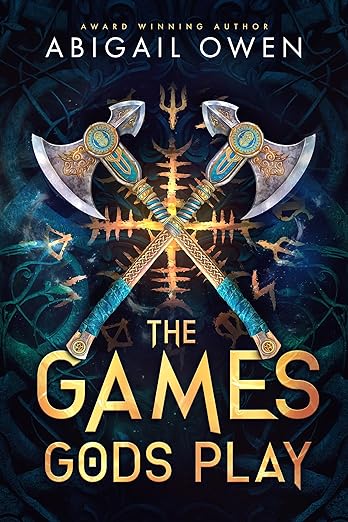 The Games Gods Play by Abigail Owen
Mogsy’s Rating: 3.5 of 5 stars
Genre: Romance, Fantasy
Series: Book 1 of The Crucible
Publisher: Red Tower Books (September 3, 2024)
Length: 509 pages
Author Information: Website
I’ve always said that I can only do romantasy in small doses. While it’s a genre I enjoy, it’s also not one I can dive into all the time, but when the mood strikes, it can be just what I need! The Games Gods Play by Abigail Owen was a novel that hit that sweet spot. Providing a nice break from my recent binge into dark fantasy and horror, this book was a refreshing change of pace. Apparently, action-packed mythological escapism was a perfect fit for the mood I was in at the time.
Set in modern-day San Francisco, the story is inspired by Greek mythology especially the Twelve Labors of Heracles. Every hundred years, the pantheon consisting of all the main gods hold a contest call the Crucible to determine a new ruler to ascend the throne of Olympus. Each god selects their own champion to represent them in a number of trials, which results in an entertaining spectacle for the whole world to watch.
Something is different this year, however. Hades, the King of the Underworld—who has always stayed out of the Crucible—suddenly announces that he, too, will select a champion. That champion is none other than Lyra, a young woman with a rebellious streak who works for the Order of Thieves. Cursed by Zeus at birth to be unlovable, Lyra has spent her life feeling isolated and disconnected from others. Now, she must not only prepare herself for the deadly trials ahead, but also face the great gods on a very public stage where both her physical and emotional limits will be pushed to the breaking point. Then there are her complicated feelings for Hades, her patron who has placed this huge responsibility on her. A mutual attraction growing between them adds an extra layer of tension, confusion, and longing to an already dangerous situation.
While I ultimately had a lot of fun with The Games Gods Play, the book and I didn’t exact get off to the best start. The opening felt chaotic, with lots of characters and world-building thrown at me all at once, making it difficult to envision this peculiar setting that blends the ancient and the new. You could also say Lyra’s smartass attitude didn’t immediately endear her to me. More often than not, her impulsiveness and wise cracks came across as more annoying than charming.
Then there was the instalove. Lyra’s first meeting with Hades did nothing but turn me off, with her acting like a belligerent child and him being a patronizing sleazebag by giving her a cheesy pet name within the first five minutes. Ugh. Overall, the romance arc felt rushed and did not provide the emotional build-up I was hoping for, and Lyra’s sarcastic and smart-mouthed personality didn’t make her very convincing as the kind of love interest that the King of the Underworld would fall for.
But once the story settled into its rhythm and the stakes of the Crucible became clear, I found myself more engaged with both the action and the characters. Despite the rocky start, the novel won me over in the end with its fast-paced elements. It started with the trials. As they progressed, each one tougher and more intricate than the last, I found myself looking forward to the subsequent challenges, learning more about their dangers and rewards. I became hooked on the tensions surrounding the alliances between the champions and the conflicts amongst the gods, even becoming invested in Hades’s backstory and the mysterious motivations behind his participation in the Crucible this year.
So okay, maybe the actual romance in this romantasy novel wasn’t my favorite thing about this book. Lyra and Hades never even interested me as a romantic couple. Still, this was an enjoyable read. The Games Gods Play was exactly what I needed at the time—a fast, adventurous read that took me away from the heavier stories filling my TBR lately. I had fun, and that’s what counts.


 The BiblioSanctum