YA Weekend Audio: Infinity Son by Adam Silvera
Posted on January 26, 2020 20 Comments
I received a review copy from the publisher. This does not affect the contents of my review and all opinions are my own.
Mogsy’s Rating (Overall): 2.5 of 5 stars
Genre: Fantasy, Young Adult
Series: Book 1 of Infinity Cycle
Publisher: HarperAudio (January 14, 2020)
Length: 8 hrs and 39 mins
Author Information: Website | Twitter
Narrators: Robbie Daymond, Kirby Heyborne, Maria Liatis, Elliot Knight
Infinity Son by Adam Silvera is a YA urban fantasy about twins Emil and Brighton Rey who live in a world where magic is real and those with the abilities to wield it—called “celestials”—are practically worshipped like celebrities. Unfortunately for the brothers though, who have always dreamed of becoming celestials, they have never shown any signs of manifesting any powers whatsoever. But as their eighteenth birthday approaches, all that is about to change.
While attending a public event one day, the two of them inadvertently get into a scuffle with a gang of potion dealers who were peddling their illicit concoctions meant to grant non-magical people the temporary illusion of being a celestial. Without knowing why or how, all of a sudden, a burst of phoenix fire power is unleashed by Emil, right there for all to see. The open display, caught on camera by Brighton, quickly catapults Emil into fame and stardom, earning him the moniker “Fire Wing” from the celestial groupies who follow the exploits of their heroes online.
As thrilled as he is to finally have powers, however, Emil remains troubled. Where did his new-found magic come from? And why now? Before long though, he and his brother are faced with even more pressing concerns. It appears his high profile has attracted some unwanted attention, drawing the twins into a brutal war between two celestial factions who have very different visions for the future. One side wants equality and acceptance for their kind in a world that is still mistrustful of anything to do with magic, while the other values strength and power above all else and will let nothing stand in the way of their goals for domination.
While this is my first novel by Silvera, who made his name with his contemporary YA, finding out that this is his fantasy debut is actually not very surprising. Considering that it was a decent attempt overall, I hate to be critical, but there were some glaring holes in the world-building and other missteps that made the author’s inexperience with the genre quite telling. For one thing, there was little coherence in the lore of the magic in this world, no encompassing “big picture” that I felt connected celestials, phoenix powers or whatever, and other magical elements in this world. While each system made sense on their own, it was hard to see how it all fit together. In some ways, it felt like a jumble of random ideas were thrown haphazardly into the story, not really because they were necessary but simply because they seemed cool.
Then there was this awkwardness of always falling back on pop culture references and tropes to describe character emotions and actions. All throughout the novel, Emil and Brighton do a whole lot of this “in the movies, this is what would happen” or “I wish I was like the hero of so-and-so story so I would know what to do, but I’m not…” It’s like, dude, I don’t care what you think some other character in some other fictional world would do, I want to know how YOU feel. This kind of gimmick has always struck me as lazy writing, and while it’s fine once in a blue moon to add some humor to contemporary or urban fantasy, it’s annoying when it’s constantly happening.
And sadly, I couldn’t get into the characters either. The two Rey brothers are two of the most self-absorbed and narcissistic protagonists I’ve ever met, especially Brighton, a celestials vlogger who embodies the worst behaviors and habits of every obnoxious social media personality you know. Half the time I wanted to scream at him, NOT EVERYTHING IS ABOUT YOU AND YOUR DAMN FOLLOWER COUNT, YOU COMPLETE ASS. Emil was also bland and uninspiring, much like the premise of this book which obviously takes its influences from Harry Potter and comic books especially X-Men. Nothing wrong with that, except it doesn’t really do much to help this book stand out.
All in all, I just couldn’t see much reason for the hype. A pretty standard fantasy YA with good diversity, but not much else special to write home about, which is becoming a disappointing trend with a lot of new YA releases these days. I didn’t love or hate Infinity Son, and though it was enjoyable while it lasted, I am not holding out hope this will stay with me long.
Audiobook Comments: While the novel itself was pretty meh, I enjoyed the narration by the full cast of Robbie Daymond, Kirby Heyborne, Maria Liatis, and Elliot Knight. In fact, I think the multiple narrators helped negate a lot of the potential issues which could have resulted from the frequent POV switches and unstable pacing. Solid narration overall.


Bookshelf Roundup 01/25/20: Stacking the Shelves & Recent Reads
Posted on January 25, 2020 27 Comments
Bookshelf Roundup is a feature I do every weekend which fills the role of several blog memes, like Stacking the Shelves where I talk about the new books I’ve added to my library or received for review, as well as It’s Monday! What Are You Reading? where I summarize what I’ve finished reading in the last week and what I’m planning to read soon. Mostly it also serves as a recap post, so sometimes I’ll throw in stuff like reading challenge progress reports, book lists, and other random bookish thoughts or announcements.

Received for Review
My thanks to the publishers and authors for the following review copies received, and be sure to click the links to their Goodreads pages for more details and full descriptions!

Kicking off this roundup, a big thanks to Titan Books for Light of Impossible Stars by Gareth Powell, book three in the Embers of War series. I’m very excited to finish up this trilogy, right after I catch up with Fleet of Knives, very soon! Also thank you to Saga Press for sending along a finished copy of A Longer Fall by Charlaine Harris, an unexpected but very welcome surprise. I loved the first book An Easy Death, and I look forward to reading this sequel. With thanks also to Orbit books for The Shadow Saint by Gareth Hanrahan, which was a solid follow-up to The Gutter Prayer. In case you missed it, I reviewed the first book in audio earlier this month.
Courtesy of the kind folks at William Morrow, I also received a copy of No Bad Deed by Heather Chavez. They’ve been spoiling me with some nice looking thrillers lately, and this is one I’m curious to check out. And the awesome team at Del Rey also sent the following: a finished copy of A Blight of Blackwings by Kevin Hearne, which is the sequel to Plague of Giants. I’ll be honest, I did not like the first book at all, but I haven’t discounted continuing the series yet. Guess I’ll just have to see what my reading schedule is like and the mood I’m in. But I’m super pumped for this next arrival, an ARC of Shorefall by Robert Jackson Bennett. Feels like I’ve been waiting for this one forever, and finally its release is nearly upon us.


In the digital pile, I received quite a few new audiobooks. With thanks to Simon & Schuster Audio, I received The Tenant by Katrine Engberg, which I actually reviewed earlier this week. To read my thoughts on this addictive murder mystery, check out the link below in the Reviews section. Next from Macmillan Audio, I received Burn the Dark by S.A. Hunt. From Penguin Audio I received the sci-fi dystopian The Last Day by Andrew Hunter Murray, and from their YA imprint Listening Library I received The Queen’s Assassin by Melissa de la Cruz.
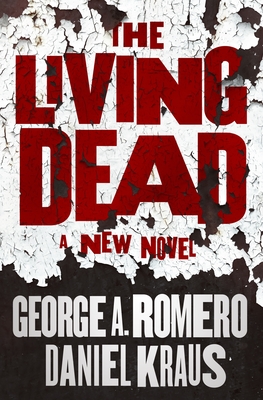
And because I’m on a roll when it comes to thrillers, I also grabbed Bitter Falls by Rachel Caine with thanks to Thomas & Mercer via NetGalley. This is the fourth book of the Stillhouse Lake series which has been going really strong, and I’m hoping to start it by the end of the month. And huge thanks to Kaye Publicity for hooking me up with eARCs of Bent Heavens by Daniel Kraus, a YA horror sci-fi coming out from Henry Holt & Company, as well as The Living Dead by George A. Romero and Daniel Kraus, a zombie horror coming out from Tor Books this summer. Daniel Kraus is the author who co-wrote, with Guillermo del Toro, the novel The Shape of Water (which I loved) based on the movie of the same name. I’m very excited about these next projects of his, especially in the case of The Living Dead, which is the novel left unfinished by George Romero when he died, and Kraus was tapped by his estate to do the honors of completing it.
Reviews
The Tenant by Katrine Engberg (4 of 5 stars)
The Vanished Birds by Simon Jimenez (4 of 5 stars)
The Night Country by Melissa Albert (4 of 5 stars)
Mr. Nobody by Catherine Steadman (3 of 5 stars)
This Week’s Reads


Have you heard of or read any of the books featured this week? What caught your eye? Any new discoveries? I hope you found something interesting for a future read! Let me know what you plan on checking out. Until next time, see you next Roundup!
Friday Face-Off: Chinese New Year
Posted on January 24, 2020 26 Comments
Welcome to The Friday Face-Off, a weekly meme created by Books by Proxy! Each Friday, we will pit cover against cover while also taking the opportunity to showcase gorgeous artwork and feature some of our favorite book covers. If you want to join the fun, simply choose a book each Friday that fits that week’s predetermined theme, post and compare two or more different covers available for that book, then name your favorite. A list of future weeks’ themes are available at Lynn’s Book Blog.
This week’s theme is:
“Year of the Rat”
~ Chinese New Year
Mogsy’s Pick:
The Poppy War by R.F. Kuang
Happy Lunar New Year! January 25, 2020 officially kicks off the Year of the Rat, which is especially important to me, because the Rat is my year 🙂 For a lot of Chinese families, this is probably THE most significant and biggest holiday of the year, and growing up, mine has always celebrated with lots of fireworks, catching up with friends and relatives, feasts and lots of color and brightness–in other words, not typically the things you’d find on book covers in the western publishing world featuring rats, which aren’t really the darlings of the animal world, I’m afraid. So today, in honor of Chinese New Year, I’ve decided to feature a book with covers that are inspired by Chinese culture instead.
And so, I give you The Poppy War, which is an incredible book, and I’m also glad to see it has some beautiful covers:
From left to right:
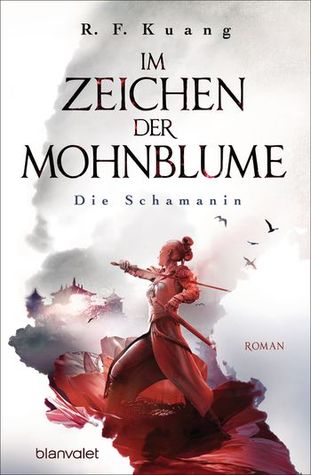
Harper Voyager (2018) – Bulgarian Edition (2019) – Indonesian Edition (2019)


German Edition (2020) – Polish Edition A (2020) – Polish Edition B (2020)


Winner:
So many great choices, but I think I gotta go with the Indonesian edition this week. So gorgeous, with the poppies in the foreground and the phoenix in the back.
But what do you think? Which one is your favorite?
Audiobook Review: The Tenant by Katrine Engberg
Posted on January 23, 2020 17 Comments
I received a review copy from the publisher. This does not affect the contents of my review and all opinions are my own.
Mogsy’s Rating (Overall): 4 of 5 stars
Genre: Mystery, Thriller
Series: Book 1 of Kørner/Werner
Publisher: Simon & Schuster Audio (January 14, 2020)
Length: 10 hrs and 21 mins
Author Information: Website
Narrator: Graeme Malcolm
Apparently, I have been living under a rock because I hadn’t heard of Danish mystery author extraordinaire Katrine Engberg until now, but in my defense, this isn’t my usual genre, and I’ve only started branching out into crime noir fiction recently. Considering this, I think I scored pretty big stumbling upon The Tenant, the first book of the Kørner/Werner series which is already on its third volume in its original language but has just now been translated into English for its US release. I was in the mood for a gritty and compulsive murder mystery, and this one sure didn’t disappoint!
True to form, the novel started off with the discovery of a body. In the wee hours of the morning, an old man discovers the door to one of his neighbor’s apartment standing ajar, and peers in to find a grisly sight. The tenant of the unit, a young woman named Julie Stender, has been brutally murdered, her beautiful face mutilated by mysterious symbols carved into her flesh. Copenhagen police detectives Jeppe Korner and his partner Anette Werner are called in to investigate, and the two waste no time in questioning the victim’s family, friends, and acquaintances. Very soon, they have themselves a list of suspects, but still no reason for motive or why anyone would want to kill Julie, who was seemingly just an ordinary university student from a good background and well-to-do family.
Still, there is more to the case than meets the eye. The building’s owner and Julie’s landlady, a retired professor and an aspiring mystery writer named Esther de Laurenti is shocked to hear that one of her tenants had been murdered on the property, but there is also confusion and guilt when she hears about the details of the crime. Somehow, the circumstances around the killing are eerily similar to the plot of her novel-in-progress, a story where the female victim—incidentally based on Julia—is targeted by a charming yet psychopathic predator. What’s more troubling is that according to a close friend, Julie had just started seeing someone new recently, a man with whom she seemed to have fallen madly in love after only a few weeks—again, mirroring Esther’s book—which is very unlike the young woman. It should be impossible, but life seems to be imitating art, even though the work in question is still unfinished and few are even aware of it.
If you’re looking for classic whodunnit mystery, The Tenant will check all the right boxes. This is a story that involves good old-fashioned detective work, where the clues are unearthed gradually, piece-by-piece with steadfast tenacity by our protagonist, Jeppe Korner. Though we also see events unfold from the points-of-view of a few other characters, including Anette and Esther, Jeppe seems to get the lion’s share of the page time. As well, he’s the lead on the case, so he’s our guide as the threads of the mystery slowly come together to reveal who killed Julie and the others—because you can damn well bet that by the time we come to end, this one racks up a body count.
Speaking of which, while some of the mystery elements of The Tenant may feel a bit familiar, that doesn’t mean there aren’t also plenty of unexpected twists. I liked how the plot was built on top of the conundrum surrounding Esther’s novel, and how was even a meta factor in the way her story played out versus the progress the police were making in their investigation. The best feeling was being aware how all the characters had to be somehow connected, but you just didn’t know how—though that didn’t stop me from guessing. Reading this book was like putting together a huge jigsaw puzzle watching the image become clearer and more complete, but until the final pieces click into place, you are still left in taut suspense until the end. Sprinkle in some personal relationship issues and a few juicy scandals, and you have yourself a nervy, addictive read.
The writing was also superb. I had some early misgivings, as I often do with translated works, knowing how sometimes even the best translations can miss out on certain nuances. Happily though, I found the prose surprisingly easy on the ears (I listened to the audiobook) and very natural. The setting also felt distinctly Danish/Scandinavian or what some folks call “Nordic Noir”, though not jarringly so, and while there were certainly a few quirks in the writing which were strong tells that this was not originally written in English, these did not distract from the overall experience or my enjoyment of the story.
And despite The Tenant being more of a plot-driven novel, as most in its genre usually are, I still found myself drawn to its characters, especially Jeppe. He makes some pretty questionable (and downright unethical) decisions here, but I can’t help but feel for him and hope that brighter times will come to him in the next book.
Needless to say, I’m excited to have found a new mystery series to follow—and now I just have to patiently wait for the rest to be translated.
Audiobook Comments: I was very impressed with the narration by Graeme Malcolm, who I think has a great voice perfectly suited for a gritty murder mystery—he brought life to the characters, plot, setting—everything. I really enjoyed his performance overall and couldn’t have asked for more.

Waiting on Wednesday 01/22/20
Posted on January 22, 2020 19 Comments

“Waiting On Wednesday” is a weekly meme that first originated at Breaking the Spine but has since linked up with “Can’t Wait Wednesday” at Wishful Endings now that the original creator is unable to host it anymore. Either way, this fun feature is a chance to showcase the upcoming releases that we can’t wait to get our hands on!
Mogsy’s Pick
Out of Body by Jeffrey Ford (May 26, 2020 by Tor.com)
Ever since reading Twilight Pariah, Jeffrey Ford is an author I’ve been wanting to try again. Out of Body sounds like something I would like better though, and not least because the concept of sleep paralysis intrigues me. I’ve experienced it only once before, and it was both scary and disturbing, but somehow that only makes me want to read this all the more!
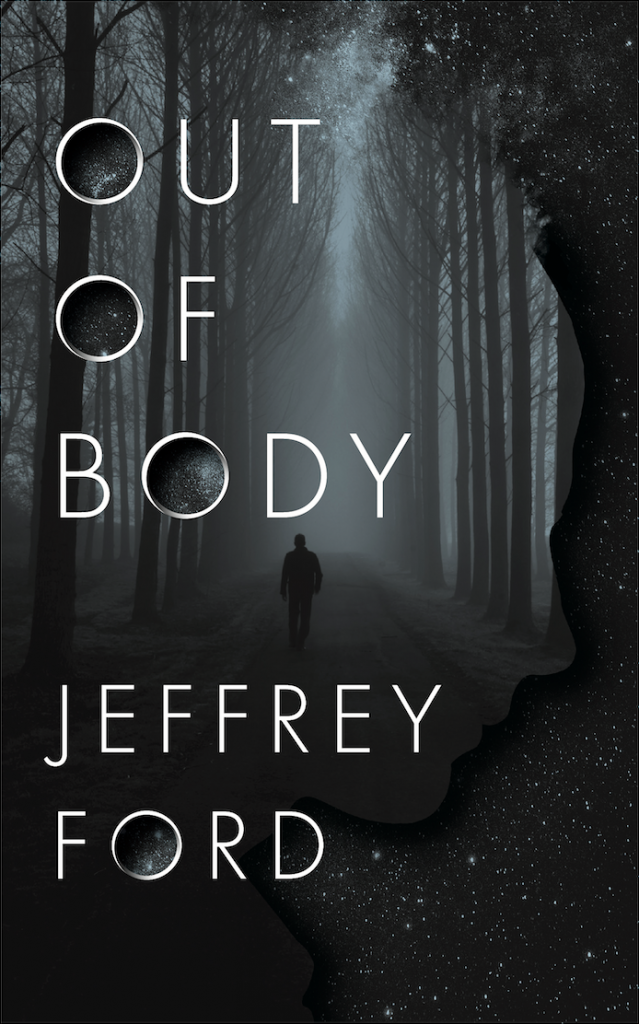 “The horrors of sleep paralysis become so much more in Jeffrey Ford’s new novella Out of BodyA small-town librarian witnesses a murder at his local deli, and what had been routine sleep paralysis begins to transform into something far more disturbing. The trauma of holding a dying girl in his arms drives him out of his own body. The town he knows so well is suddenly revealed to him from a whole new perspective. Secrets are everywhere and demons fester behind closed doors.
Worst of all, he discovers a serial killer who has been preying on the area for over a century, one capable of traveling with him through his dreams.”
Book Review: The Vanished Birds by Simon Jimenez
Posted on January 21, 2020 26 Comments
I received a review copy from the publisher. This does not affect the contents of my review and all opinions are my own.
 The Vanished Birds by Simon Jimenez
Mogsy’s Rating: 4 of 5 stars
Genre: Science Fiction
Series: Stand Alone
Publisher: Del Rey (January 14, 2020)
Length: 400 pages
Author Information: Website
I enjoyed The Vanished Birds very much, which surprised me, because it ended up not being the kind of book I would typically like at all! I would definitely recommend it, though I think convincing others that they should check it out will be tough, since the novel is difficult to categorize and the story itself can be a bit strange. By the end of it though, it filled me with a mix of complex emotions, some happy and bittersweet.
Told in multiple parts, and via multiple timelines across a huge time frame, the beginning of The Vanished Birds first introduces to Nia Imani who captains a transport ship, carrying goods and harvest products from their origin planets for her employers, the all-powerful Umbai Company. On one of her runs to a backwater planet, a mysterious boy falls out of the sky and into Nia’s life, giving it a new purpose and meaning. The boy doesn’t speak, but through music, he begins to form a connection with Nia, playing beautiful songs on his flute that tugs on something inside of her. There’s something about the boy, whose name is Ahro, as Nia and her crew eventually find out. He is special, though none of them really know why, but his existence eventually catches the attention of some influential and dangerous people.
Readers also get to meet aerospace engineering designer Fumiko Nakajima, who helped create Umbai’s massive space stations that allowed them to dominate the industry. It’s a decision she has always regretted, since it had meant choosing her work over love many years ago. But her employers are ever demanding more from her, including a way to make travel through space faster and more efficient. When Fumiko learns of a boy who has abilities that could potentially revolutionize space travel, she reaches out with an offer to Nia, who has since grown close to Ahro.
Shifting between points-of-view of characters, some of whom are more than hundreds of years old due to the time dilation effects of space travel and technology like suspended animation, the novel tells a saga that spans more than a millennium. In this way, the story explores a lot of the themes and issues that affect human civilization and history, among them environmental and resource depletion, corporate greed on steroids. That said, the book also takes a look at life on a more personal level, as the plot follows the loves, desires, and ambitions of characters over a thousand years. Not a lot of futuristic fiction have the advantage of being told on a scale this vast, which gives The Vanished Birds a somewhat unique angle on a premise that is already very imaginative.
However, this can also make the book quite difficult to parse, with its convoluted timelines and beginnings that aren’t really beginning and endings that aren’t really endings. If this sounds confusing, that’s because it is; this story has many layers, and they gradually peel away to reveal all the connections and answers that ultimately make this novel so satisfying. The experience requires patience and commitment to the characters and their individual journeys, because their purpose might not become clear until much later, even as the circumstances surrounding them become stranger and more abstract.
Luckily though, this is a very character-focused novel, and becoming invested in them isn’t difficult. Simon Jimenez’s writing is deep and soulful in its handling of our characters’ secret hearts and minds. The overall tone of the story can be described as quiet and emotional, but what it lacks in excitement and action it makes up for with meaningful relationships and the weight of personal decisions. I loved the bond between Nia and Ahro, which grew into something very beautiful and pure. Fumiko’s sacrifices for knowledge and progress damn near broke my heart. And speaking of heartbreak, I won’t be giving away any details of the ending, but certain elements of it did leave me feeling devastated and stricken. And yet, amidst all the losses, there is still light, and I hold tight to the hope that the words on the final page made me feel.
So if The Vanished Birds sounds like something you might like, I highly encourage you to give it a try, bearing in mind some of its twisted complexities, apparent agendas, and aspects that are just downright bizarre. However, if you are a fan of character-driven novels with emphasis on interpersonal relationships and choices that shape the world and their future, it is absolutely worth your time and attention. This is an excellent, thoroughly enchanting debut by Simon Jimenez.
Book Review: The Night Country by Melissa Albert
Posted on January 20, 2020 23 Comments
I received a review copy from the publisher. This does not affect the contents of my review and all opinions are my own.
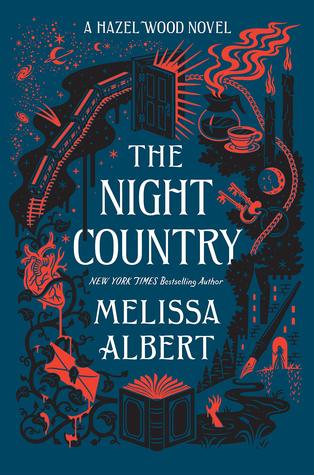 The Night Country by Melissa Albert
Mogsy’s Rating: 4 of 5 stars
Genre: Fantasy, Young Adult
Series: Book 2 of The Hazel Wood
Publisher: Flatiron Books (January 7, 2020)
Length: 352 pages
Author Information: Website | Twitter
The theme for 2020 so far seems to be sequels with a different tone or feel than their originals. The latest book to fall into this pattern appears to be The Night Country, the follow-up to Melissa Albert’s debut The Hazel Wood, which I really enjoyed. Believe it or not, this one goes even deeper in already dark territory, but I loved how these changes enhanced the story’s haunted atmosphere and complex characters.
Anyway, as with all my sequel reviews, the usual caveat applies: the following may contain discussion involving plot details from earlier books in the series, so be sure to be caught up with The Hazel Wood before proceeding! The beginning of The Night Country takes us back to the story of Alice Proserpine, once called Alice-Three-Times, a princess of a fairy-tale realm known as the Hinterland. With the help of her friend Ellery Finch, she was able to escape the Hinterland’s clutches to attempt living as a mortal in the heart of New York City. However, the shadow cast by her enigmatic grandmother is long, and for Alice and the other survivors who were caught up in the sudden exodus, things will never be the same again. Alice, for one, is finding that living a wholly average and non-magical life as a normal teenager is tougher than she thought, not to mention someone is also out there hunting Hinterland’s ex-inhabitants, killing them in a horrible, gruesome manner…
Meanwhile, Finch finds himself wandering the many pathways of the otherworld dimensions, navigating its mysteries and attempting to unlock its many secrets. He is determined to make his way back to Alice, while trying to make sense of the strange things he encounters in this world where time passes differently and behaves in bizarre ways. On his journey, he learns of a place called The Night Country, which may be his key to understanding Alice and to reunite with her.
With the narrative alternating between Alice’s and Finch’s perspectives, the tone of The Night Country is moodier and has a lot more bite now that the two of them are mostly apart, without their banter to lighten things up. In fact, their story lines don’t come together until nearly the end, when the plot culminates into a stunning climax and conclusion. Until that point though, there’s still plenty of intrigue and darkness in both threads to keep the reader’s attention hooked. Melissa Albert’s handling of the whole “fairy tale genre” is certainly different, putting an imaginative and macabre twist on her storytelling. The little vignettes woven throughout were stroke of genius and added so much to the overall haunting vibes of the novel.
I also liked what has been done with the characters. Alice’s experiences, as well as the knowledge she has gained from the first book have mellowed her out. She’s reached another stage of her life, trying to figure out her next steps. The revelations about her past have turned her world upside down, made her confused about her identity. She’s also trying to work out her feelings for Ellery Finch, and one of the things I enjoyed about this sequel was the way it handled their relationship. I really liked Finch from the first book and was so happy to get so much from his point-of-view, immersing myself in his exploration and discoveries. Without delving too much into the romance that was lightly teased in the first book, The Night Country still managed to create a deeply nuanced and meaningful dynamic between him and Alice.
The author has also made great strides in her writing, tightening up her descriptions and dialing up the atmosphere to make this one an engaging read. Combining fairy tale elements with urban fantasy can be a challenging task, but Albert seems to have no trouble finding the right balance. Her prose ranges from whimsical to haunting, depending on what is required, creating memorable scenes and moments that leaped out at you.
All told, if you enjoyed The Hazel Wood, then you must do yourself a favor and pick up The Night Country, a worthy follow-up that is even more luscious, imaginative, and satisfying. It’s dark yet compelling, and I have to say this new direction has made me even more interested in seeing what the author will do next. Apparently, she will have a short story collection set in the same world called Tales from the Hinterland. I’m not really into anthologies, but I might have to read this one, because I’m just loving the hell out of Melissa Albert’s approach to fairy tales.
More on The BiblioSanctum:
Review of The Hazel Wood (Book 1)
Audiobook Review: Mr. Nobody by Catherine Steadman
Posted on January 19, 2020 13 Comments
I received a review copy from the publisher. This does not affect the contents of my review and all opinions are my own.
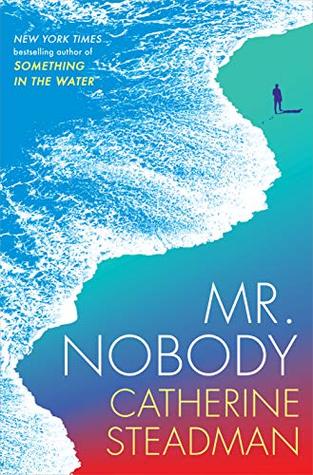 Mr. Nobody by Catherine Steadman
Mogsy’s Rating: 3 of 5 stars
Genre: Mystery, Suspense
Series: Stand Alone
Publisher: Random House Audio (January 7, 2020)
Length: 11 hrs and 32 mins
Author Information: Website | Twitter
Narrator: Catherine Steadman
Well, this wasn’t bad, but I’m not going to pretend it wasn’t a disappointment after the hard-hitting psychological suspense and intense thriller that was Something in the Water, Catherine Steadman’s debut. Clearly, she tried to capture the same kind of magic in Mr. Nobody, but I regret to say that it just wasn’t there.
Told mainly from the point-of-view of Dr. Emma Lewis, one of the UK’s leading authorities on memory disorders, the story begins when she receives a phone call from a colleague offering to connect her with a high profile case involving a man found washed up on a beach. Dubbed “Matthew” because he has no recollection of what his real name is or where he came from, the man has been taken to a nearby hospital where he is being closely monitored, while teams of police and healthcare providers work around the clock to determine who he is. Could he be a refugee, with no ties to the country and that’s why no one has come forward to identify him despite his face plastered all over the news? Or might he be a soldier, suffering from PTSD which has affected his ability to remember and communicate? From all reports, Matthew hasn’t uttered a word since being found, but apart from that and the complete memory loss, he appears to be in good health and spirits.
Having dedicated her life to studying retrograde amnesia, Emma is thrilled at the prospect of being able to work with their “Mr. Nobody”, but there is one catch. The hospital where they have taken Matthew is in her hometown, a place she thought she’d left behind forever. For you see, our protagonist hasn’t always been known as Emma Lewis, and only a handful of people know that. During her first meeting with Matthew, however, not only does the amnesic man speak for the first time when he sees her, but he says her name—her true name, the one she had before she had to change it and move away.
Emma knows it shouldn’t be impossible, because she’s pretty sure she’s never seen Matthew before in her life. Yet somehow, he seems to recognize her and is familiar with certain details of her past. But how can that be? What is their connection? These questions and more were what made the first part of this novel so addictive and fascinating. I love a good amnesia story, and credit goes to Steadman for laying down the groundwork and establishing the mystery so effectively. The intrigue only deepened with every interaction between our characters, especially once Emma begins putting Matthew through various neurological scans and tests, revealing the curious nature of his fugue.
Thing is though, I thought I had signed up for a thriller, and I’m afraid in that area, Mr. Nobody kind of fell flat. I think it’s safe to say it works far better as a slow-burn novel of mystery and suspense. The pacing slowed to crawl in places, and overall, the story just didn’t have the energy or momentum I’d been hoping for. The book’s structure was also frustrating, jumping between multiple POVs with frequent switches in narrative modes. It wasn’t very ideal for this story, since for it to work, so much depended on our two main characters keeping certain details from the reader, and after a while this grew very awkward and tiresome.
Then there was the big reveal in the climax and ending. Unfortunately, that whole section felt rushed with explanations and answers that were glossed over. It was sufficient enough, I suppose, but ultimately I was left feeling unsatisfied and a little cheated. I also didn’t think many of the side plots involving supporting characters were resolved or integrated too well, compared to Something in the Water where all the separate pieces fell into place so perfectly in the end. The final chapters of Mr. Nobody, on the other hand, felt rather slapdash and thrown together haphazardly, thus muting the impact and shock value from the so-called final twist.
All told, what began as a promising intro eventually morphed into a pretty weak-sauce thriller that felt more like a medical mystery at times, which is fine if that’s what you’re looking for. However, I was in the mood for something punchier, and was disappointed when Mr. Nobody failed to deliver. Like I said, it’s not a bad book, but sadly the style of it did not mesh very well with my overall expectations.
Audiobook Comments: Catherine Steadman, known for being on Downton Abbey, is an experienced and accomplished actress so it was no surprise when I saw that she was narrating her own book again. Once more, she delivered a professional and stunning performance, and the novel was definitely made better because she, as the author, knew exactly which tone to take and when to stress certain lines. I think the only change that would have improved the audiobook version of Mr. Nobody is if they had brought in a second reader for Matthew’s sections, which would have lessened the confusion between POV skips, but other than that I really have no complaints about the narration.

Bookshelf Roundup 01/18/20: Stacking the Shelves & Recent Reads
Posted on January 18, 2020 31 Comments
Bookshelf Roundup is a feature I do every weekend which fills the role of several blog memes, like Stacking the Shelves where I talk about the new books I’ve added to my library or received for review, as well as It’s Monday! What Are You Reading? where I summarize what I’ve finished reading in the last week and what I’m planning to read soon. Mostly it also serves as a recap post, so sometimes I’ll throw in stuff like reading challenge progress reports, book lists, and other random bookish thoughts or announcements.
Received for Review
My thanks to the publishers and authors for the following review copies received, and be sure to click the links to their Goodreads pages for more details and full descriptions!

First, a big thank you to William Morrow for sending me a surprise copy of Dead to Her by Sarah Pinborough! This is on my list of highly anticipated books for February, so I was pretty excited. Also thank you to Tor for sending along A Queen in Hiding by Sarah Kozloff, the first book in a four-volume series called The Nine Realms. All the books will be published within a month of each other, so looks like I’ll be kept quite busy if I end up enjoying this! And from Minotaur Books, I received The Hollows by Jess Montgomery. Even though it is the second book in a series called Kinship, I believe it can be read as a standalone and I am quite curious to check out this historical mystery.



In the digital pile, I received a few audiobooks for review this week. With thanks to Tantor Audio for a listening copy of Watchdog by Will McIntosh, his 2017 middle grade novel that’s finally getting an audio release. Also from Listening Library I received Rebelwing by Andrea Tang which I’m really curious about, and from HarperAudio I received Infinity Son by Adam Silvera, a YA fantasy which seems to be getting quite a lot of buzz lately.
I’ve also been maintaining a pretty high ratio on NetGalley these days, so I figured a few more requests this week wouldn’t hurt. With thanks to Delacorte I received the eARC of Shielded by KayLynn Flanders, a book I recently featured for Waiting on Wednesday. I was also thrilled to have my request of Untamed Shore by Silvia Moreno-Garcia be approved by the folks at Polis Books. And finally, because I enjoyed the first book so much, I grabbed Ballistic by Marko Kloos, the second novel of The Palladium Wars.
Reviews
The God Game by Danny Tobey (5 of 5 stars)
The Hanged Man by K.D. Edwards (4 of 5 stars)
The Dragon Republic by R.F. Kuang (4 of 5 stars)
Roundup Highlights:

This Week’s Reads

Have you heard of or read any of the books featured this week? What caught your eye? Any new discoveries? I hope you found something interesting for a future read! Let me know what you plan on checking out. Until next time, see you next Roundup!
Friday Face-Off: Horizon
Posted on January 17, 2020 25 Comments
Welcome to The Friday Face-Off, a weekly meme created by Books by Proxy! Each Friday, we will pit cover against cover while also taking the opportunity to showcase gorgeous artwork and feature some of our favorite book covers. If you want to join the fun, simply choose a book each Friday that fits that week’s predetermined theme, post and compare two or more different covers available for that book, then name your favorite. A list of future weeks’ themes are available at Lynn’s Book Blog.
This week’s theme is:
“Your ‘beautiful’ ship killed its crew, Doctor.”
~ a cover featuring a HORIZON
Mogsy’s Pick:
The Mad Scientist’s Daughter by Cassandra Rose Clarke
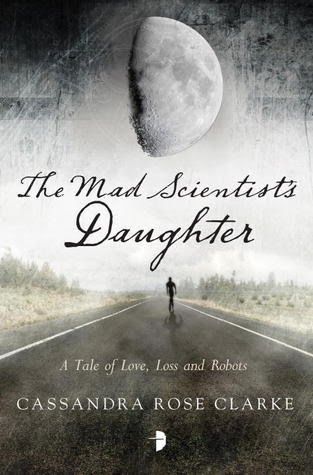
There’s something dreamy and everlasting about the concept of a horizon, which is probably why the original cover for this book immediately popped into my head when I saw what was today’s theme. At its core, The Mad Scientist’s Daughter is a love story, but it is also a heartbreaking character study of its protagonist Caterina Novak, daughter of a brilliant yet a eccentric inventor and cybernetics expert. We follow Cat’s development from childhood to her adult years, witnessing as, at five years old, she first lays eyes on Finn, the android her father brings home to be her tutor. But as Cat grows, she discovers Finn is different from other androids. With every year that passes, their relationship becomes increasingly complicated as Cat starts to see Finn as someone more than just a tutor and friend.
When Angry Robot was sold to Watkins Media, a lot of their books/authors also ended up being picked up and re-issued by Saga Press, and this was one of them. So today we’ll be doing a simple head to head, comparing the covers to these two editions:
Angry Robot (2013) vs. Saga Press (2016)

Winner:
Although the newer Saga cover has an edgier and more modern look, there’s a reason why the original Angry Robot cover works so well. I feel it is better at capturing the atmosphere and tone of the story, and the art style also lends the image quite a bit of nostalgia and personality, not to mention it uses the horizon to great effect.
But what do you think? Which one is your favorite?


 The BiblioSanctum