Book Review: The Red Winter by Cameron Sullivan
I received a review copy from the publisher. This does not affect the contents of my review and all opinions are my own.
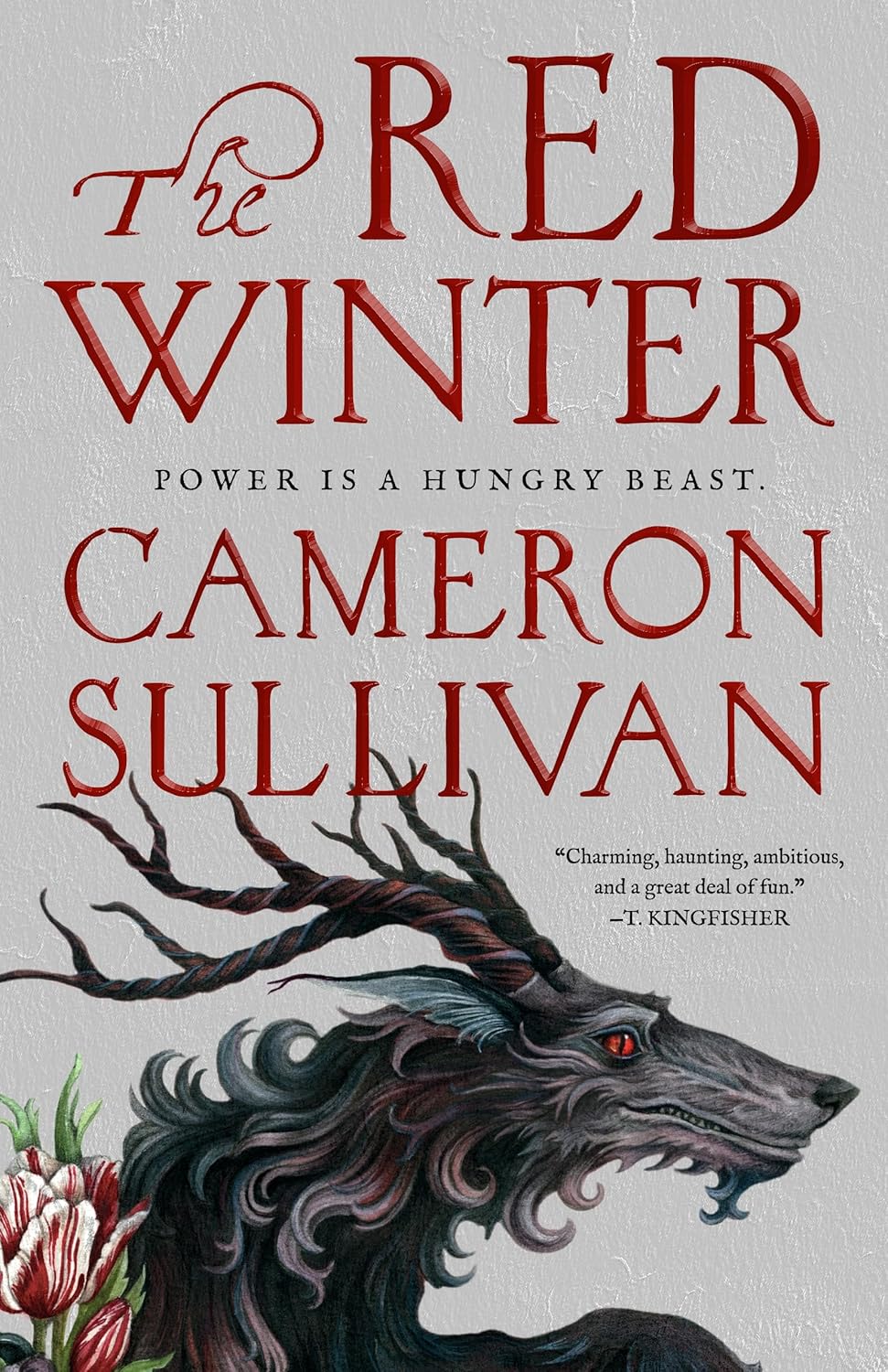 The Red Winter by Cameron Sullivan
Mogsy’s Rating: 4 of 5 stars
Genre: Horror, Historical Fiction
Series: Stand Alone
Publisher: Tor Books (February 24, 2026)
Length: 535 pages
Author Information: Website
Historical horror with a generous heaping of sardonic humor. That’s the way I would describe The Red Winter by Cameron Sullivan, which draws inspiration from the real-life mystery of the Beast of Gévaudan, the name given to the man-eating creature that terrorized the French countryside in the 1760s, killing more than a hundred people. This novel is a retelling of those events, with a mythical twist.
Told as a memoir written by an ancient warlock named Sebastian Grave, the main plot is a detailed account of his involvement in the hunt for the Beast. Split into two distinct timelines, one follows him in the past as he is called to the region to deal with the creature, and then the second one follows him years later, when he has been asked to return once the killings start up again. Could the attacks from these two periods be related? The story jumps between these two timelines as Sebastian tries to figure it out, reliving the past to find clues that might connect them to the present.
At the same time, running through the story are also a few side threads that gradually connect Sebastian’s backstory to the larger picture. With his body serving as a vessel for a powerful demon named Sarmodel, he has been wandering the earth for centuries, the arrangement giving him immortality as well as access to certain magical abilities. An additional narrative which unfolds in a series of interludes details the succubus Livia’s exploits as she is tasked with carrying out a mission related to Joan of Arc, then later the relic associated with her remains. All these pieces come together to give the novel a wider scope, revealing the events that helped set the stage for the beast itself and the forces driving the violence in Gévaudan.
Despite the shifting timelines, the story is easy enough to follow, though certain sections are more interesting than others. But even with its complex structure, the mystery is engaging, becoming more solid as each perspective adds more context little by little. Sullivan does a good job of dropping just enough information in each chapter to keep the reader satisfied and feeling like the developments are earned rather than rushed. However, I did occasionally find the interruptions from Livia’s interlude chapters distracting, since more than once they pulled the reader’s attention away just as the main storyline was reaching its most important moments. And speaking of distractions, this might also be a good time to mention the footnotes, which The Red Winter uses quite liberally. The book really leans into this stylistic quirk, so how much you enjoy them will probably depend on what kind of reader you are.
The book also undoubtedly falls into the horror genre and gets pretty gory and intense when it comes to the beast side of things, especially its attacks. That said, the author balances the brutality and carnage with plenty of humor, especially through the narration and those aforementioned footnotes. Sebastian is a fantastic character to spend time with, and as you might expect after centuries of life, he’s amassed a vast amount of knowledge and has at least one cynical observation to offer on just about everything. He and his demon Sarmodel provide lots of lighthearted back-and-forth, adding a much-needed layer of levity to what could otherwise be a very grim and heavy story.
For a debut, The Red Winter is genuinely impressive. Sure, there are a few pacing issues to smooth out, along with some timing hiccups and moments where the character development could have gone a bit deeper. Still, these are relatively minor in the grand scheme of things, and the book remains highly readable. Sullivan clearly knows the kind of story he wants to tell, and his confident storytelling reflects that. The blending of history, occult magic, and a touch of werewolf lore results in a very distinct vibe, and it’s this creativity and overall polish that give it an edge, helping the novel stand out from your typical werewolf tale.
If you enjoy stories that mix real historical events with speculative elements like horror and the supernatural, then The Red Winter will likely be right up your alley. It’s an entertaining read packed with atmosphere, combining bloody horror with a streak of irreverent humor that helps it feel fresh even in a genre that’s already pretty crowded.


 The BiblioSanctum
I desperately want to read this one sometime, I’ve seen a fair few rave reviews for it around and can’t help but find myself intrigued. I hadn’t realised the beast was drawn from a real life mystery somehow though. Its a shame it had a few pacing issues for you but this one sounds so intriguing overall. And I’m generally a fan of footnotes so I’ll consider those as a plus point for now 😅
LikeLike
footnotes
Pratchett over-used those in Discworld and ever since, I’ve had a bad reaction to them. I suspect I’d get annoyed at them here too.
LikeLike
I agree with everything you’ve said! I’m hoping to finish this today or tomorrow, and I’ve really enjoyed it. It’s quite ambitious with maybe a little too much going on (for my taste) but very impressive for a debut.
LikeLike
Excellent reveiw Mogsy! It indeed seems an excellent debut and I just added it to my TBR!
LikeLike
Pingback: Guide Overview: The Purple Winter by Cameron Sullivan - The Home of WEBFILMBOOKS
I’ve heard such good things about this one. I’ve picked up an audio copy so hoping to get to it soon.
Lynn 😀
LikeLike
I’m enjoying this book so far! I hope I get to finish it…soon.
LikeLike
Fantasy horror? Interesting
LikeLike