New Author Spotlight: Ramsey Isler
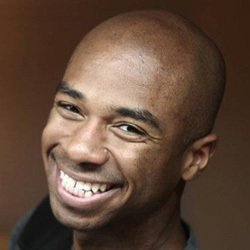
Ramsey Isler has figured out how to keep himself busy, balancing his professional techiness and column writing with his many novel writing projects. Somewhere in there he also finds time to blog about the geekier things in life, publishing and more.
1. What are your favourite books and how have they influenced your writing?
When I was 12 years old, I committed to reading Stephen King’s The Stand during my summer break from school. My much older brother had read it and I decided, as little brothers often do, to take interest in the same things he liked. The Stand is a massive book at around 1200 pages (I read the uncut edition), and to my twelve-year-old self it was the equivalent of trying to scale a mountain. But I did it. I’m sure many would question whether King’s graphic tales are “appropriate” for a kid that age, but I was mature enough to understand and enjoy the way King created a realistic fantasy (and the nightmares only lasted a couple days; no problem). That book really started my interest in writing and reading contemporary fantasy.
As a bona fide geek and engineer by training, I’ve also always been a fan of sci-fi. Shortly after college I really got into the Star Wars expanded universe novels, and discovered a book called Traitor by Matt Stover. Most people probably wouldn’t expect something as seemingly trivial as a Star Wars story to have a huge impact on a writer’s life, but this one really changed the way I write. It was more than a sci-fi story — it was filled with complex, mature philosophy and raw emotion. The plot focuses on Han and Leia’s son Jacen, a young Jedi trying to find his place in the universe as he struggles with reconciling his Uncle Luke’s teachings with a violent and cruel alien enemy. Jacen eventually becomes an unwilling student of Vergere, an avian alien who was a member of the Old Jedi Order back before Palpatine took over. She takes Jacen on a far different spiritual path than his Jedi teachings ever did — a journey that deals in many moral gray areas — and she does so through remarkably cruel tutelage. Throughout the book, you’re never quite sure what her motives are, but there’s a definite method to her madness. In the end, Vergere is on the side of the protagonists, but it’s not clear if you can call the protagonists the “good” guys, or if the antagonists are really the “bad” guys. It’s all a matter of perspective, and each character has elements of both light and dark. That book has become my guide for writing stories that go beyond simple black and white morality tales. I strive for something more thought-provoking instead.
2. What authors have inspired you?
As mentioned above, King and Stover definitely had an impact on me. Although King is often classified as a horror writer, he really is a master of many types of speculative fiction and he’s done some remarkable work in my favorite genres. The Dark Tower series is another of my inspirations.
Neil Gaiman has also been a big influence through what he does beyond his novels. He is a remarkable speaker and a wise tutor with plenty of practical advice that has guided my writing career.
Maya Angelou has been an inspiration since I was in grade school, but I came to appreciate her work more as I grew older. Her work taught me that you can say something extremely profound with only a few words. There’s an art to telling a big story in small passages. Her poetry provides many lessons on efficient storytelling.
3. Describe your writing process. How do you handle writer’s block and other challenges?My writing process is very cinematic (in my mind, at least). All my stories start out as cool ideas that I envision as “scenes” in my head. Then I develop these major scenes in the manner of a theatrical director choosing a setting, moving set pieces around, and guiding the actors to deliver the best performance. Then, once I have a series of juicy scenes that encompass the main plot points, the rest of the story develops organically from them. I very rarely know what a story will be from beginning to end when I start writing. It all develops during the process of coming up with these scenes and connecting them to each other.
I don’t really get writer’s block in the sense of not knowing what to write next. My writing challenges come when I know exactly what I want to say, but I have to ensure that it all make sense and fit in with other parts of the story. I despise plot holes, and I really dislike speculative fiction where elements aren’t explained adequately or the rules of the world aren’t consistent. But I also understand why so many writers are guilty of these things, because it is HARD. It’s hard to create fantastical worlds and fill them with believable characters, events, and inventions that just intuitively make sense to the reader without having them think too much about it. Much of writing is actually about thinking, and the most difficult parts of my writing come when I just have to sit down and hash out all the logical and factual issues with a part of my story. It can take a lot of time, but the story always comes out better because of it.
4. What are your future writing plans?I’m currently finishing up my new novel, Clockworkers. Here’s the plot in a nutshell: an entrepreneurial young woman inherits a special gift from her father – an elf. She puts him to work building products for her luxury watch company, but she soon discovers that there are certain dangers involved with employing elves. The book puts a brand new perspective on elf tales. The European-based work of Tolkien and the Grimms dominate what we think of as “elves”, even though almost every culture in the world has some sort of native folklore about mystical little people. Part of my motivation for writing Clockworkers was to show a more diverse elf cast, but I also just love creating modern folklore, and elves are a topic I’ve always wanted to explore and reinvent. Plus, I always wanted to write “scary” elves; there’s always a tiny bit of Stephen King in my writing.
I’m also working on a sci-fi novella. This one is about video games, artificial intelligence, death, and what happens when all three collide. Look for it on digital book stores in Summer 2013.
There’s also an impending sequel to my second novel, The Ninth Order. Sequels can be tough to write, and I want to spend a lot of time getting this one right, so it probably won’t be out until next year. But so far it’s proving to be very fun to write, and that usually means it will be very fun to read too.


 The BiblioSanctum